
Red Hickory (Carya ovalis)
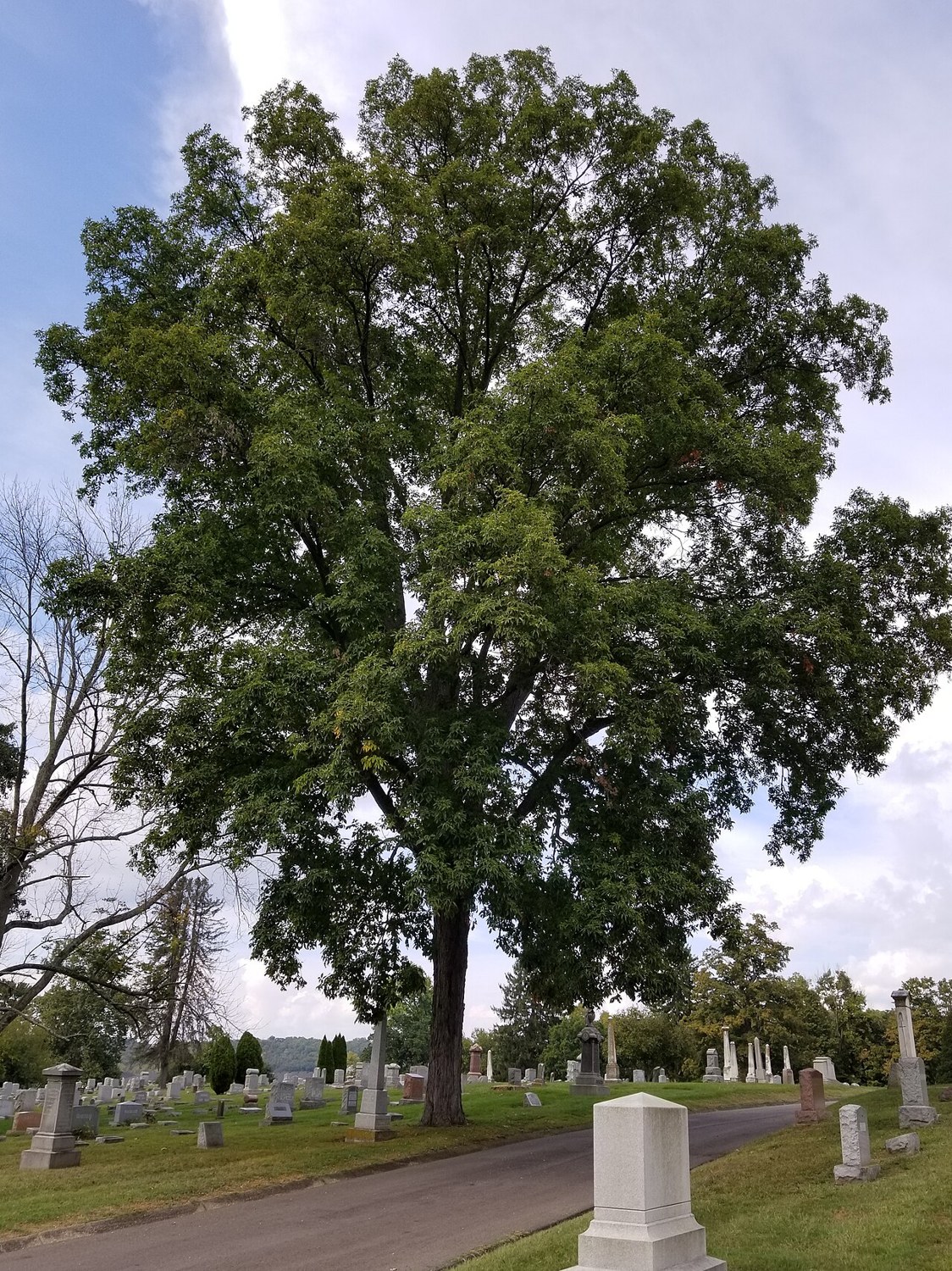
Carya ovalis, commonly known as Red Hickory or Sweet Pignut Hickory, is an uncommon but widely scattered tree of eastern hardwood forests. For decades botanists argued over whether it deserved its own name at all — many older floras lumped it into Pignut Hickory (Carya glabra) as a variety, and the debate over “is Red Hickory really distinct?” still shows up in field guides today. Most current treatments, including recent molecular and morphological work, recognize it as a separate species with a reddish inner bark, a narrower, more symmetrical nut, and a tendency to hold onto its lower branches longer than Pignut Hickory does. If you garden in the eastern half of the country and want a tough, long-lived shade tree that feeds wildlife for a century or more, Red Hickory deserves a look — even though you will rarely find it for sale at a regular nursery.
In the woods, Red Hickory favors dry, well-drained upland ridges and sandy or rocky slopes rather than rich bottomland soil. It grows as a tall, single-trunked tree with a dense, column-like crown of strong, ascending branches, eventually reaching 80 to 100 feet in the open stands where it does best. Individual trees are remarkably long-lived, with some documented specimens over 200 years old. Because it is never common anywhere in its range — scattered singly or in small numbers among oaks and other hickories — Red Hickory is more of a “found” native than a “bought” one, making a correctly identified specimen on your property or a nearby woodlot worth protecting.
Red Hickory is not a fast-food landscape tree. Like all true hickories it develops a deep taproot early and resents transplanting, so container-grown stock (where available from specialty native nurseries) or direct seeding are the realistic paths to establishing one. In exchange for patience, gardeners get a durable, drought-tolerant shade tree, strong fall color, and nuts that squirrels, chipmunks, and a range of birds rely on heavily in autumn and winter.
Identification
Red Hickory is a medium to large deciduous tree, typically growing 60 to 80 feet tall in forest settings and capable of exceeding 100 feet with age in open, favorable sites. The trunk is usually straight and continuous well up into the crown, though older trees sometimes split into a few large ascending limbs above the main stem. The overall silhouette is narrower and more upright than many other hickories, with branches that ascend sharply in the upper crown and droop gracefully lower down.
Bark
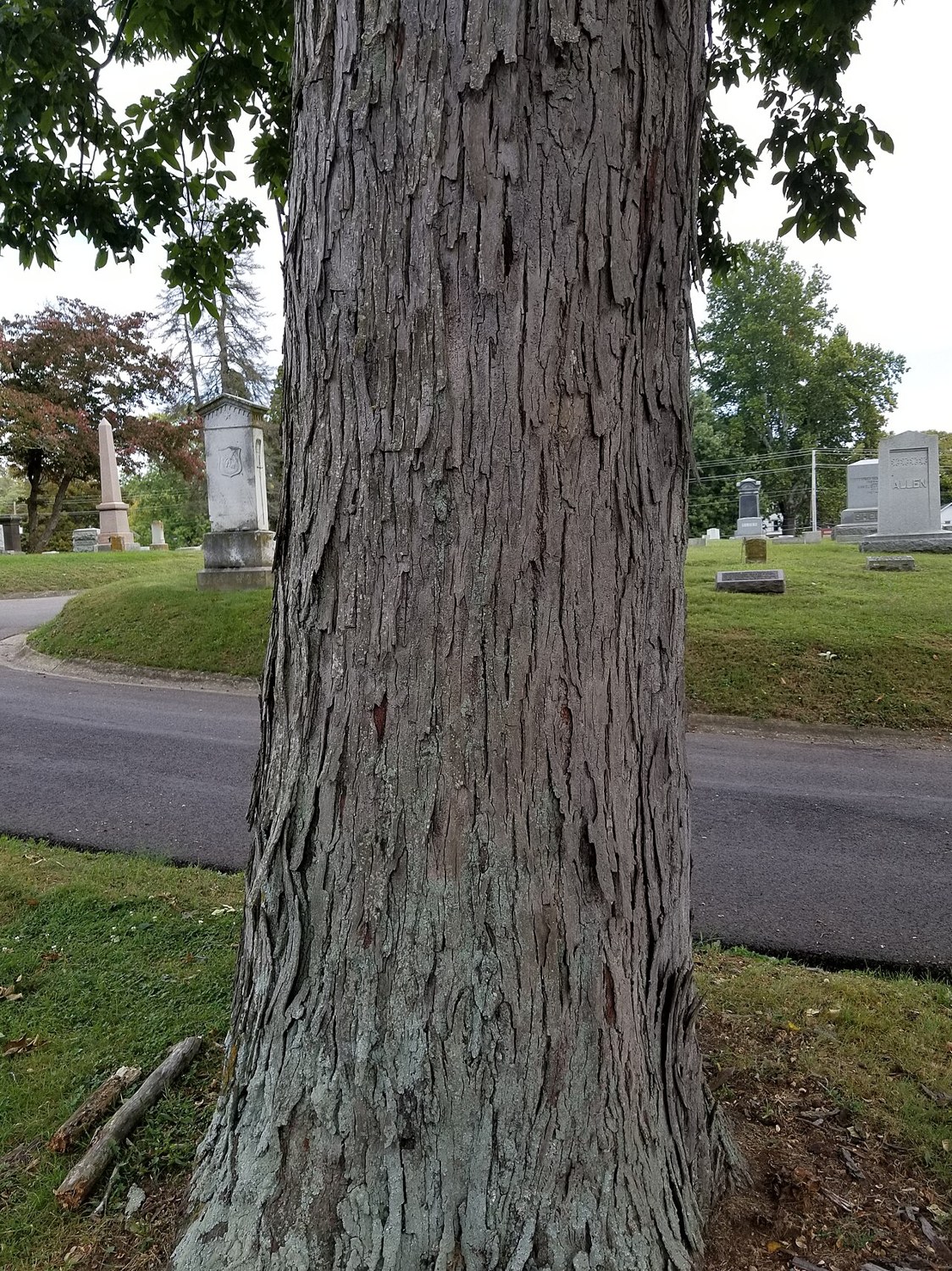
Young trees have smooth, gray bark that gradually develops shallow furrows and interlacing ridges with age, producing a tight, diamond-shaped or slightly shaggy pattern — never the loose, curling plates of Shagbark Hickory. The single best field mark that gives the tree its name is visible when you nick a twig or small branch: the inner bark and twig pith have a distinct reddish-orange to rust-colored tinge, in contrast to the whitish inner bark of Pignut Hickory.
Leaves
Leaves are pinnately compound, 8 to 12 inches long, usually with 7 leaflets (occasionally 5 or 9). The terminal leaflet is typically the largest, with the paired leaflets decreasing in size toward the base of the leaf stalk. Leaflets are lance-shaped to narrowly oval, broadest above the middle, with finely toothed margins and a somewhat drooping posture that distinguishes the foliage from the stiffer, more horizontal leaves of some other hickories. Fall color is a rich golden yellow to bronze.
Flowers & Fruit
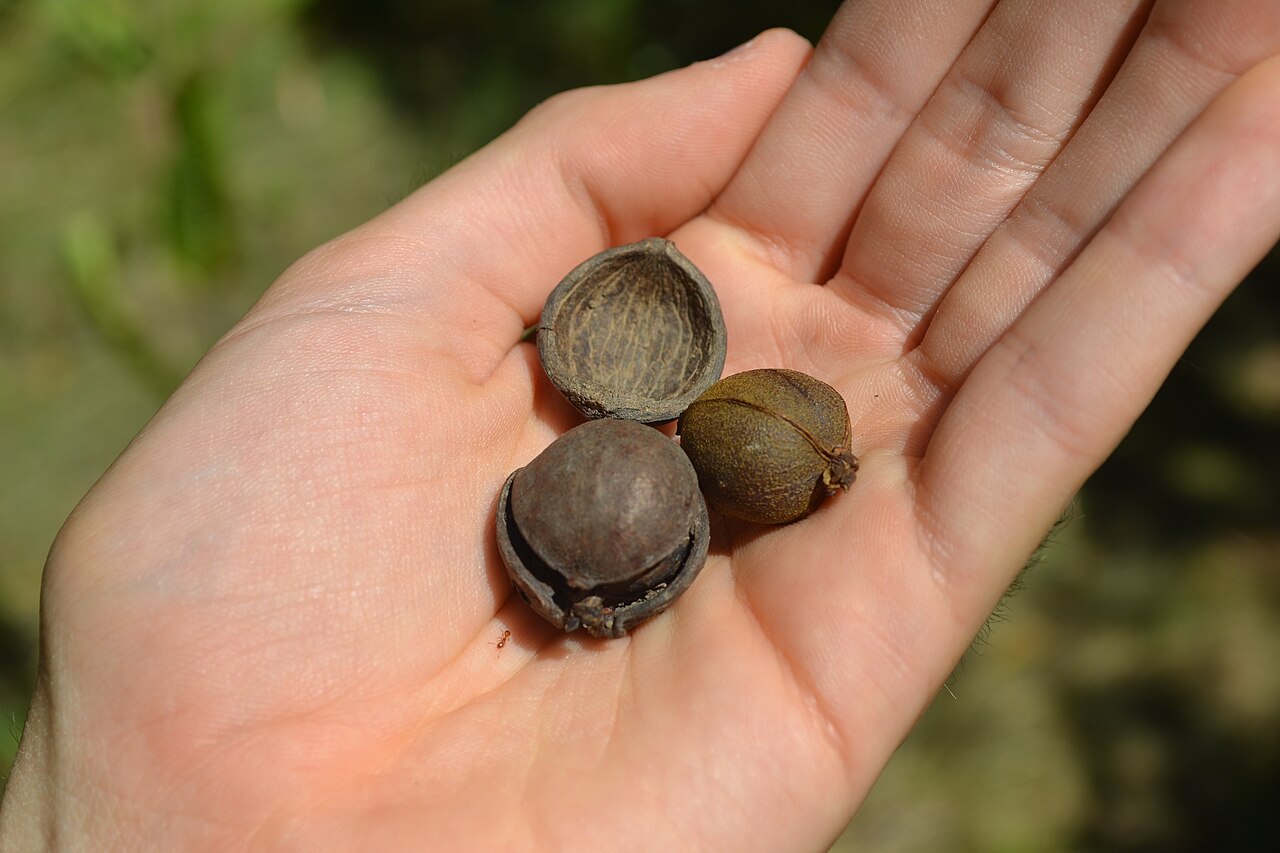
Like other hickories, Red Hickory is monoecious, with drooping yellow-green male catkins and inconspicuous female flowers appearing on the same tree in spring as the leaves emerge. The fruit is a nearly round to slightly oval nut encased in a thin husk that splits readily into four sections at maturity. The nut itself is thin-shelled compared to many hickories, with a sweet, edible kernel — one of the more palatable hickory nuts for both wildlife and foragers, though yields vary considerably from tree to tree and year to year.
Quick Facts
| Scientific Name | Carya ovalis |
| Family | Juglandaceae (Walnut) |
| Plant Type | Deciduous Tree |
| Mature Height | 60–100 ft |
| Mature Spread | 30–50 ft |
| Growth Rate | Slow to moderate |
| Sun Exposure | Full Sun to Partial Shade |
| Water Needs | Low to Moderate |
| Soil Type | Well-drained; sandy, loamy or rocky upland soils |
| Soil pH | Acidic to slightly acidic |
| Bloom Time | April – May |
| Fall Color | Golden yellow to bronze |
| Fruit | Thin-shelled, sweet-kerneled nut in a four-valved husk |
| Wildlife Value | High — nuts feed squirrels, chipmunks, and many birds |
| USDA Hardiness Zones | 5–9 |
Native Range
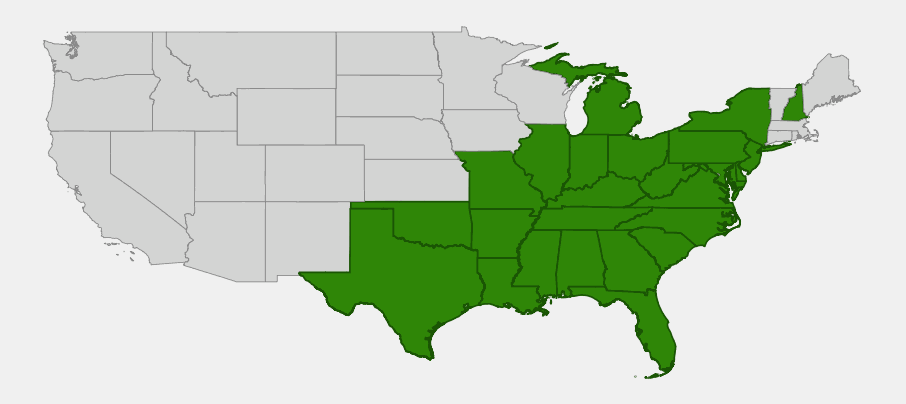
Red Hickory occurs across much of the eastern United States, from southern Ontario, Canada, east to New Hampshire, south through the Appalachians and Piedmont to the Florida panhandle, and west through the Mississippi and Ohio valleys into eastern Texas and Oklahoma. Within this broad outline it is never abundant; it turns up as scattered individuals on dry ridgetops and well-drained slopes rather than forming pure stands, which is one reason it was overlooked as a distinct species for so long.
The tree is most at home on dry, acidic upland sites — sandy ridges, rocky slopes, and the drier edges of oak-hickory forest — where it tolerates poor, thin soil better than many of its hickory relatives. It is rarely found in the wet bottomland sites favored by species like Water Hickory. Because Red Hickory was historically confused with Pignut Hickory, herbarium and county-level records likely undercount its true range somewhat; the broad outline above reflects current taxonomic consensus from Flora of North America and recent regional floras.
📋 Regional plant lists featuring Red Hickory: Georgia, Alabama & Mississippi · Arkansas, Louisiana, Eastern Oklahoma & Eastern Texas · Delaware, Southern New Jersey & Long Island · Illinois, Iowa & Missouri · Ohio & Indiana · Kentucky & Tennessee · Maryland, Virginia & West Virginia · Michigan, Wisconsin & Eastern Minnesota · North Carolina & South Carolina · New Hampshire, Maine & Vermont · New York, Pennsylvania & Northern New Jersey
Growing & Care Guide
Red Hickory is a low-maintenance tree once established, but getting it established takes patience — the same deep taproot that makes it so drought-tolerant also makes it intolerant of transplanting.
Light
Red Hickory grows best in full sun, which produces the fullest, most symmetrical crown. It tolerates partial shade as a young tree in the forest understory, where it can persist for years as a slow-growing sapling waiting for a gap in the canopy, but it will not flower or fruit heavily until it reaches full sun.
Soil & Water
This species prefers well-drained, acidic soils and is notably more drought-tolerant than hickories of wetter sites. Sandy or rocky upland soils that would stress many trees suit it well. Avoid heavy, poorly drained clay or consistently wet ground — Red Hickory performs best on the drier end of the moisture spectrum and does not thrive in bottomland conditions.
Planting Tips
Because of its deep taproot, Red Hickory is best started from a small container-grown seedling (ideally under 2 feet tall) or by direct-seeding ripe nuts in fall, protected from squirrels with wire mesh until germination. Bare-root transplanting of larger specimens has a poor success rate. Choose the planting site carefully, since the tree does not take kindly to being moved later. Give it plenty of room — 30 to 50 feet of eventual spread — away from structures and pavement.
Pruning & Maintenance
Established trees need little attention beyond removing dead, damaged, or crossing branches during dormancy. Young trees benefit from early structural pruning to establish a strong central leader, which helps the tree develop the straight, tall form typical of forest-grown specimens. Red Hickory has no major pest or disease problems beyond the general susceptibility of hickories to hickory bark beetle during periods of drought stress.
Landscape Uses
Red Hickory suits large properties, woodland restorations, and naturalized plantings where its eventual size and taproot are not a concern:
- Shade tree for large lots, parks, and rural properties
- Woodland restoration on dry, sandy, or rocky upland sites
- Wildlife plantings paired with Pignut Hickory and oaks like Post Oak
- Nut production for foragers and wildlife managers, where its sweeter kernels are an asset over bitter-nut relatives
- Long-term legacy tree for anyone planting for future generations — specimens commonly live over a century
Wildlife & Ecological Value
Hickories as a group are among the most valuable wildlife trees in eastern North America, and Red Hickory’s relatively sweet, thin-shelled nuts make it a particularly attractive food source where it grows.
For Mammals
Eastern gray squirrels and fox squirrels are the primary consumers and dispersers of hickory nuts, caching far more than they retrieve and effectively planting new trees in the process. Chipmunks, white-footed mice, and white-tailed deer also feed on nuts and foliage, with deer browsing young saplings heavily enough to limit regeneration in some areas.
For Birds
Wild turkeys and woodpeckers both make use of hickory nuts and the insects that live in and around the bark and deadwood of mature trees. The dense crown of a large, open-grown Red Hickory also provides valuable nesting and roosting cover.
For Pollinators & Insects
Hickories, including Red Hickory, host the larvae of a number of native moths and butterflies, including the hickory horned devil (larval stage of the regal moth), making them a quietly important contributor to the insect food web that in turn supports breeding songbirds.
Ecosystem Role
As a long-lived canopy and sub-canopy tree of dry oak-hickory forest, Red Hickory contributes to the structural diversity and resilience of this widespread eastern forest type. Its deep taproot helps stabilize dry, erodible slopes, and its slow decomposition rate means that dead hickory wood provides cavity and foraging habitat for years after a tree dies.
Cultural & Historical Uses
Like other true hickories, Red Hickory wood is exceptionally dense, strong, and shock-resistant, historically prized for tool handles, wagon wheels, and other applications demanding durability under repeated stress. Hickory wood remains a favorite for smoking meat, valued for the mild, sweet smoke it produces compared to stronger woods like mesquite. Indigenous peoples across the tree’s range used hickory nuts as a significant food source, pounding and boiling them to extract an oily, nutritious liquid sometimes called “hickory milk,” which was used in cooking and as a beverage base. This is a matter of historical record rather than a suggestion to forage and prepare nuts without proper identification and preparation knowledge.
Because Red Hickory was so often confused with Pignut Hickory in the past, much of the historical record for “hickory” uses in a given area may reflect a mix of several similar species growing together, with Red Hickory’s sweeter nut likely favored when trees could be told apart.
Frequently Asked Questions
How do I tell Red Hickory apart from Pignut Hickory?
The most reliable field mark is the inner bark and twig pith: Red Hickory’s is reddish-orange, while Pignut Hickory’s is whitish. Red Hickory also tends to have a rounder, thinner-shelled nut and often keeps a straighter, more cylindrical trunk with ascending lower branches, while Pignut Hickory’s lower branches tend to droop more.
Is Red Hickory the same as Shagbark Hickory?
No. Shagbark Hickory (Carya ovata) has distinctive bark that peels away in long, curling plates, giving the trunk a shaggy look. Red Hickory’s bark is tighter and more closely ridged, never developing that loose, shaggy character.
Can you eat Red Hickory nuts?
Yes, the kernels are edible and have a sweet flavor considered good among hickories, though the yield of usable kernel per nut is modest and varies by tree. As with any wild nut, confirm correct identification before eating, and be aware that squirrels usually get to the crop first.
Why is Red Hickory hard to find at nurseries?
Its deep taproot makes it difficult to grow in containers and transplant successfully, so most nurseries don’t stock it. It is more often a tree you identify and protect on an existing property, or grow from seed, than one you buy as a landscape specimen.
How fast does Red Hickory grow?
Like most hickories, it grows slowly to moderately, often adding less than a foot per year in its early years as it invests energy in its deep root system. Growth rate improves somewhat once the tree reaches full sun and a well-established root system, but hickories are never considered fast-growing trees.

Looking for a nursery that carries Red Hickory?
Browse our native plant nursery directory: Alabama & Arkansas · Delaware, Florida & Georgia · Illinois & Indiana · Kentucky, Louisiana, Maryland, Michigan, Mississippi & Missouri · New Hampshire, New Jersey, New York, North Carolina, Ohio & Oklahoma · Pennsylvania, South Carolina, Tennessee, Texas & Virginia · West Virginia

