
Modesty (Whipplea modesta)
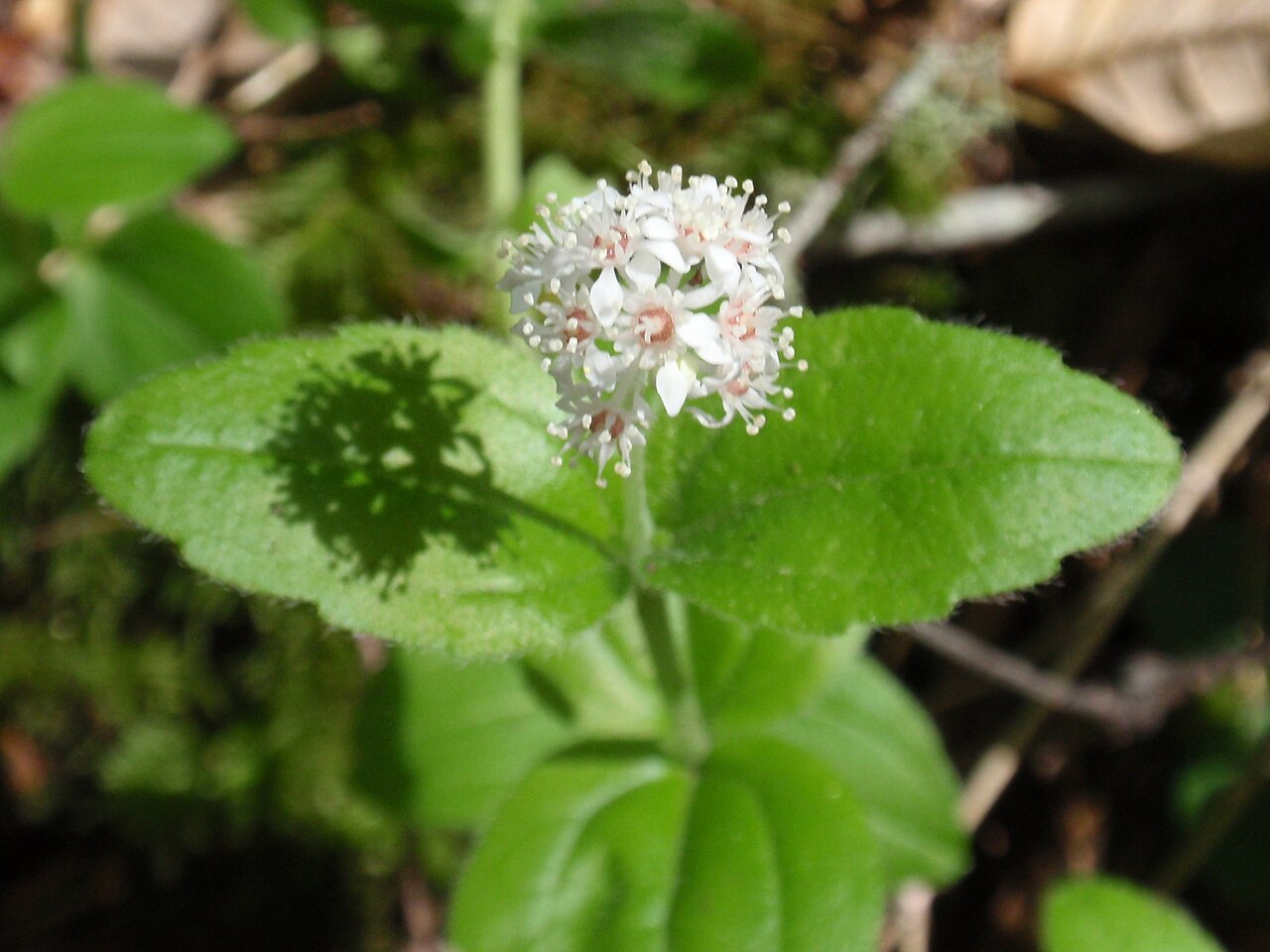
Whipplea modesta, known as Modesty (USDA: common whipplea) and also as yerba de selva, is a low, trailing native subshrub of the Pacific Coast. It is the only species in its genus and a member of the hydrangea family (Hydrangeaceae), related to mock orange and Bush Anemone. Slender, slightly woody stems trail across the ground for 1 to 5 feet, rooting as they go, and send up short, upright shoots only 4 to 12 inches tall.
In spring the shoots end in small, rounded clusters of tiny white flowers, giving the plant a quiet, understated charm that suits its name. The opposite, oval leaves are softly hairy and toothed, and they are slightly aromatic when crushed. The plant is semi-evergreen to deciduous, often losing some leaves in the summer dry season.
Modesty grows in open woods, chaparral edges and rocky, shaded slopes in the Coast Ranges, Klamath Mountains and western Cascade foothills, from central California north through western Oregon to the Puget Sound lowlands of Washington. For gardeners in its range, it is a useful, fine-textured native groundcover for dry shade under oaks, madrones and conifers.
Identification
Modesty is easy to overlook until it blooms. Look for low, trailing stems with paired, hairy leaves and small white puffs of flowers on the floor of dry, open woods.
Growth Habit
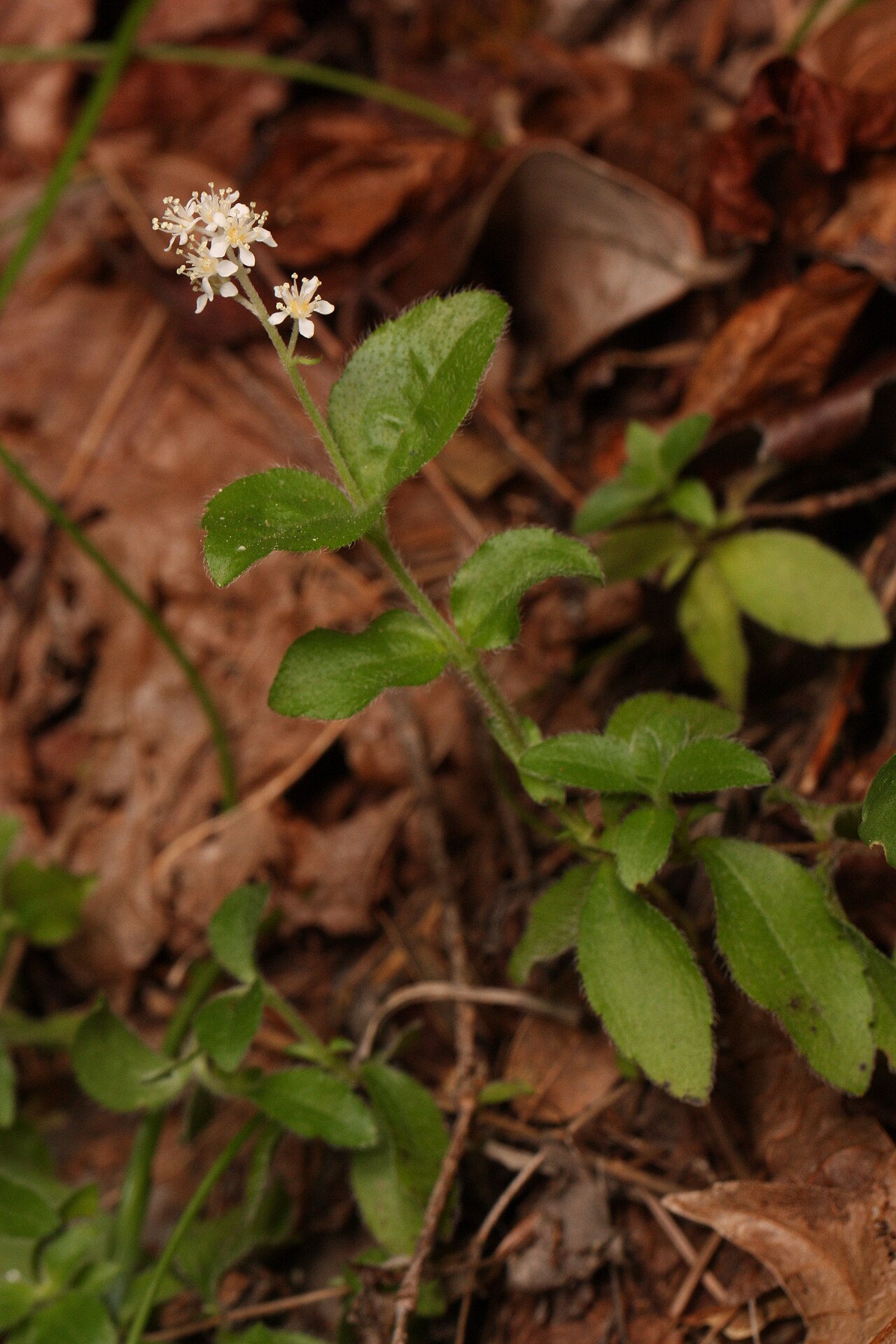
A low, sprawling subshrub with slender, weak, slightly woody stems 1 to 5 feet long that trail along the ground and root at the nodes. Short side shoots rise 4 to 12 inches. Plants can form loose mats or dense patches on banks and rocky slopes.
Leaves
Leaves are opposite, oval to elliptic, about 1/2 to 1 1/4 inches long, with toothed margins and three main veins from the base. Both surfaces are covered with stiff, flat-lying hairs, giving a slightly rough feel. The foliage is mildly aromatic. Plants may drop some leaves in summer drought.
Flowers
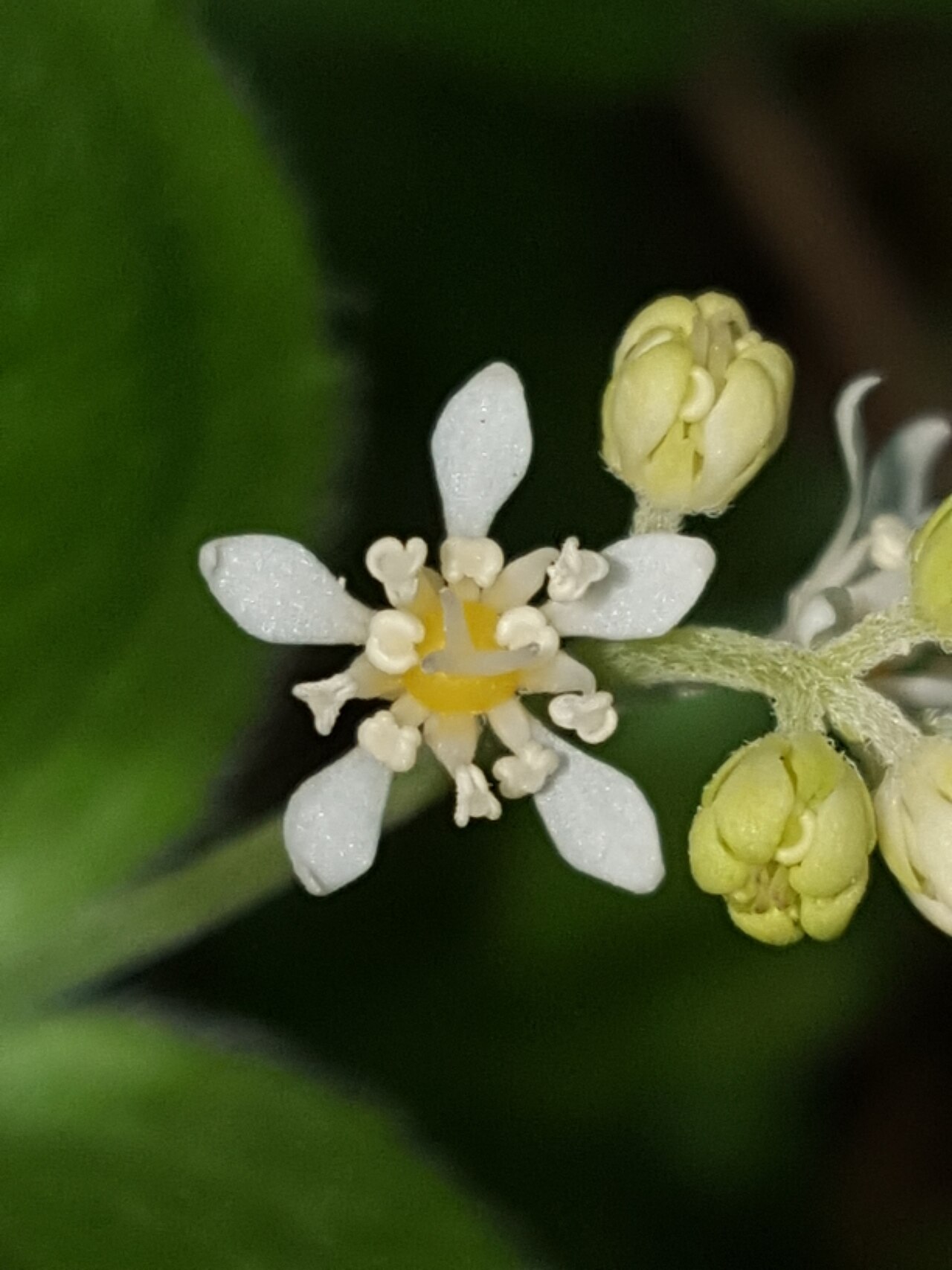
From about March or April to June, each upright shoot ends in a dense, rounded cluster (about 1/2 to 1 inch across) of small white flowers. Each flower is about 1/4 inch wide, with five or six white petals, ten stamens and a yellowish center. The clusters are lightly fragrant.
Fruit
The fruit is a small, dry capsule that splits into several sections when ripe, releasing tiny seeds in summer.
Look-alikes
Creeping Oregon Grape (Mahonia repens) and other low shrubs share its habitats but have very different, holly-like leaves. Twinflower (Linnaea borealis) is another trailing woodland plant with opposite leaves, but it has paired, pink, bell-shaped flowers. Bedstraws (Galium) have small white flowers but whorled leaves.
Safety
Modesty is not known to be toxic to people or pets. Like all plants, it should not be eaten.
Quick Facts
| Scientific Name | Whipplea modesta |
| Family | Hydrangeaceae (hydrangea family) |
| Plant Type | Trailing semi-evergreen subshrub; groundcover |
| Mature Height | 4–12 in |
| Mature Spread | 1–5 ft (trailing stems) |
| Growth Rate | Moderate |
| Sun Exposure | Partial shade to light shade; tolerates sun near the coast |
| Water Needs | Low; drought tolerant once established, appreciates occasional summer water |
| Soil Type | Rocky, gravelly or loamy, well-drained soil |
| Soil pH | About 5.5–7.0 |
| Bloom Time | March–June |
| Flower Color | White |
| Fall Color | Not significant; some leaves drop in summer drought |
| Fruit | Small, dry capsule |
| Deer Resistant | Moderately |
| USDA Hardiness Zones | 7–10 |
Native Range
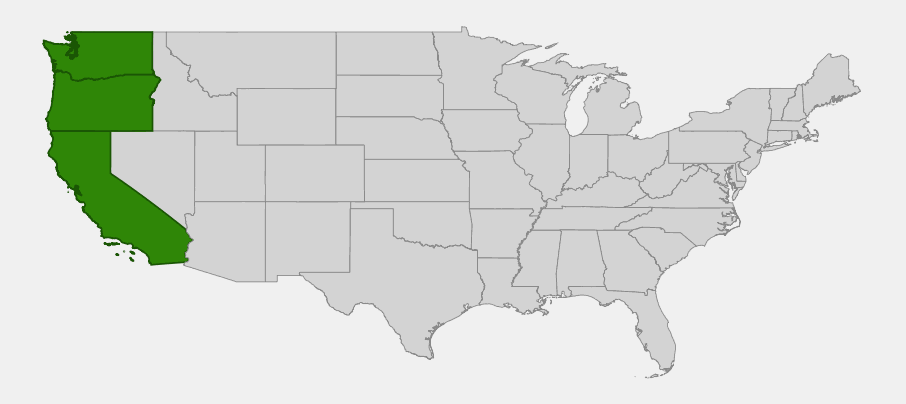
Modesty is native to the Pacific Coast of the United States. USDA PLANTS records it from California, Oregon and Washington. In California it grows mainly in the Coast Ranges from about Monterey County north and in the Klamath Mountains. In Oregon it grows through the Coast Range, the Klamath-Siskiyou region and the western foothills of the Cascades, and in Washington it reaches the southern Puget Sound lowlands around Olympia.
It grows west of the Cascade crest in Oregon and Washington and does not extend into the dry interior east of the mountains. It is most common in the Klamath-Siskiyou region of southwestern Oregon and northwestern California.
Typical habitats are open, dry to moist woods of Douglas-fir, oak, madrone, tanoak and redwood, chaparral edges, and rocky or gravelly slopes and road banks, mostly below about 4,500 feet. It often grows in partial shade and is especially common on banks where it can trail over rocks and soil.
📋 Regional plant lists featuring Modesty: Western Oregon & Western Washington · California & Nevada
Growing & Care Guide
Modesty is a quiet but useful native groundcover for dry, partly shaded places in Pacific Coast gardens. It is available from some native plant nurseries in California and Oregon and is easy to maintain once established.
Light
Partial or light shade is best, such as under the high canopy of oaks, madrones or pines. Near the coast it tolerates more sun; inland, afternoon shade keeps it from scorching.
Soil & Water
It needs well-drained soil and does well in rocky, gravelly or sandy loam. Once established it is drought tolerant, but an occasional deep watering in summer keeps it greener and fuller. Avoid heavy, poorly drained clay and frequent summer irrigation, which can cause root rot.
Planting Tips
Plant in fall or winter so roots can establish during the rainy season. Space plants 2 to 3 feet apart for groundcover, or let them trail over walls, rocks and banks. It combines well with Douglas iris, sword fern and other dry-shade natives.
Pruning & Maintenance
Little care is needed. Trim back long or straggly stems after flowering to keep plants compact, and leave fallen leaves as a natural mulch. Plants may look thin in late summer and refresh with autumn rains.
Propagation
Propagate by layering (pinning a trailing stem to the soil until it roots), by digging rooted sections from an established garden plant, or from seed sown in fall. The Lady Bird Johnson Wildflower Center notes that the seed needs no special treatment.
Landscape Uses
- Dry shade groundcover: fills in under oaks, madrones and conifers
- Banks and slopes: trailing, rooting stems help hold soil
- Rock gardens and walls: drapes gracefully over stone
- Woodland gardens: a fine-textured companion for ferns and Douglas iris
- Habitat restoration: part of the native understory of Pacific Coast woodlands
Wildlife & Ecological Value
Modesty is a small but integral part of the woodland understory, feeding early pollinators and covering the ground in dry, open forests.
For Pollinators
Its small, fragrant flowers are visited by small native bees, flies, beetles and butterflies in spring.
For Birds
Ground-foraging birds such as towhees and juncos search for insects among its low stems, and the plant adds cover to the forest floor.
For Mammals
Deer browse it occasionally, but it is not a preferred food. Small mammals use its mats for cover.
Ecosystem Role
Its trailing, rooting stems stabilize soil on banks and slopes, reduce erosion after disturbance, and add to the diversity of the dry woodland understory.
Cultural & Historical Uses
The genus Whipplea honors Amiel Weeks Whipple (1818–1863), a U.S. Army topographical engineer who led a Pacific Railroad Survey across the Southwest to California in 1853–1854. Botanist John Torrey described the plant from collections made on that survey. The species name modesta, “modest,” describes its small, unassuming flowers.
The Spanish name yerba de selva means roughly “herb of the forest,” reflecting its home on the forest floor. It is one of several monotypic genera (genera with a single species) that are found only in western North America.
Although it is not widely known, modesty is valued by native plant gardeners in California and Oregon as a tough, natural-looking groundcover for dry shade, a challenging spot in many West Coast gardens.
Frequently Asked Questions
Why is it called modesty?
The name comes from its species name, modesta, meaning “modest,” a reference to its small, inconspicuous white flowers and low, unassuming growth.
Is modesty a good groundcover?
Yes, for dry shade in its native range. It trails and roots along the ground, forming loose mats on banks and under trees, and needs little water once established.
Does modesty stay evergreen?
It is semi-evergreen. In dry summers it may drop some leaves, then refresh with autumn rains.
Where does modesty grow wild?
In open woods, chaparral edges and rocky slopes from central California north through western Oregon to the Puget Sound lowlands of Washington.
How do I propagate modesty?
Layer a trailing stem by pinning it to the soil until it roots, transplant rooted sections from a garden plant, or sow seed in fall.

Looking for a nursery that carries Modesty?
Browse our native plant nursery directory: California · Oregon · Washington