
ʻŌlulu (Brighamia insignis)
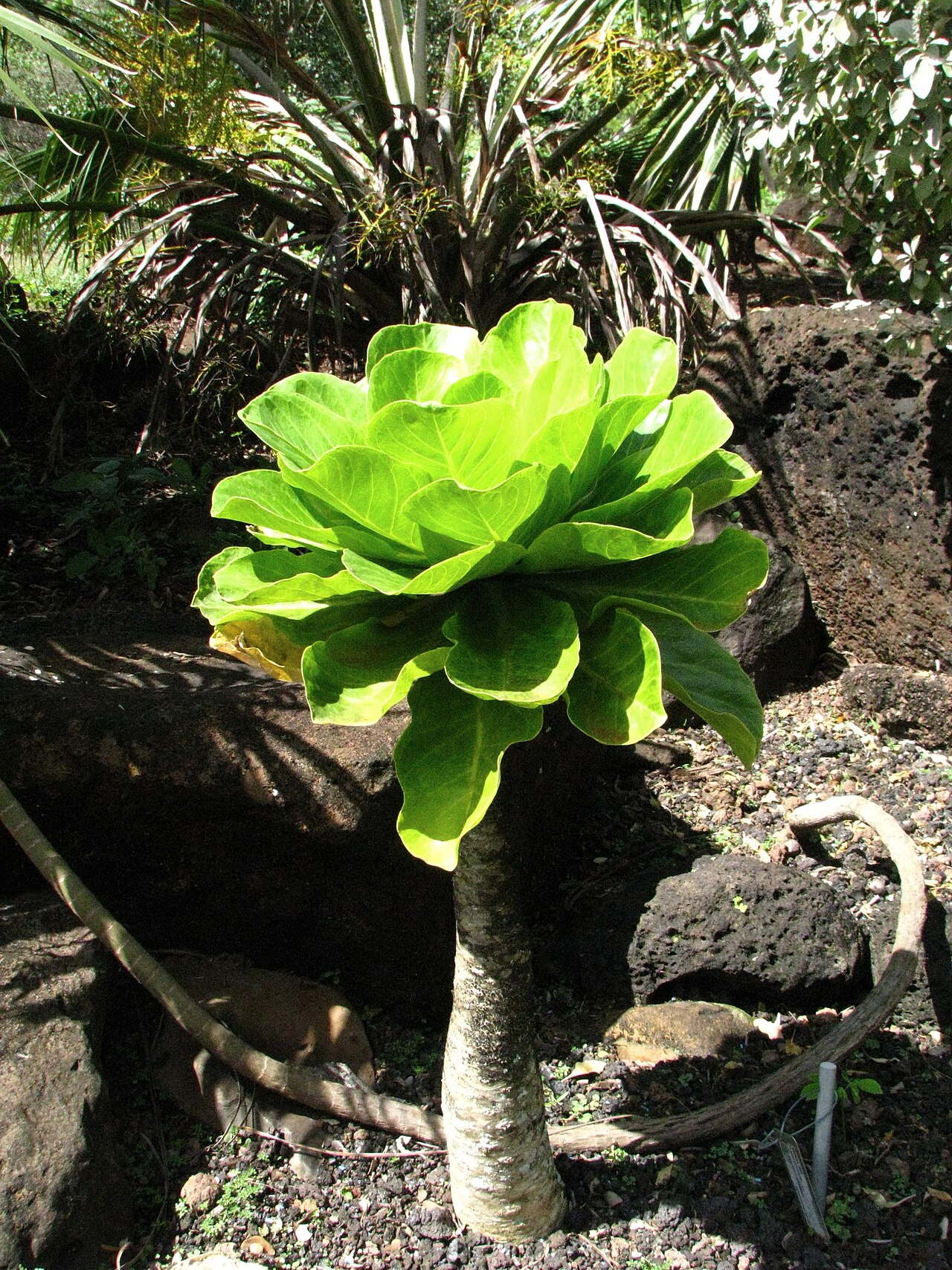
Brighamia insignis, known in Hawaiian as ʻŌlulu or ʻālula, and in the houseplant trade as vulcan palm, Hawaiian palm or cabbage on a stick, is a succulent plant in the bellflower family (Campanulaceae). It is not a palm at all, but one of the Hawaiian lobelioids, a group of plants that evolved only in Hawaii. It grows as a thick, unbranched or sparingly branched stem, swollen at the base like a bottle, topped by a rosette of fleshy, glossy leaves, and it bears fragrant, pale yellow trumpet flowers in fall.
ʻŌlulu is endemic to Hawaii: it grew naturally only on the sea cliffs of Kauaʻi and Niʻihau. USDA PLANTS lists it as native only in Hawaii. It is federally listed as endangered, and it is now considered extinct in the wild. The last known wild plant, on Kauaʻi’s Nā Pali coast, was last seen in 2012, and drone surveys in 2019 and 2020 could not find it. The species survives today because botanists hand-pollinated wild plants on the cliffs and grew their seed in nurseries and botanical gardens.
Thanks to that conservation work, ʻōlulu is now grown around the world as a striking houseplant, sold from legally propagated, nursery-grown stock. This guide explains how to recognize it, the story of its near extinction, and how to grow it in a Hawaiian garden or a sunny window.
Identification
Look for a single, smooth, gray-green succulent stem, thick and bulbous at the base and tapering upward, ending in a tight rosette of broad, fleshy, glossy leaves.
Growth Habit
ʻŌlulu is a short-lived perennial or small, succulent tree. The stem is usually 3 to 7 feet tall in the wild and can reach about 16 feet, but houseplants are usually 1 to 3 feet. It is smooth and gray-green, swollen at the base to store water, and usually unbranched, although older plants may form a few branches. Leaf scars ring the upper stem.
Leaves
The leaves form a dense rosette at the top of the stem. They are broad, spoon-shaped to oval, 5 to 8 inches long, fleshy and glossy, with a pale midrib, and they look like a head of lettuce or cabbage, which explains the name “cabbage on a stick.” Lower leaves yellow and drop as the stem grows, and plants may drop many leaves in cool or dry weather.
Flowers
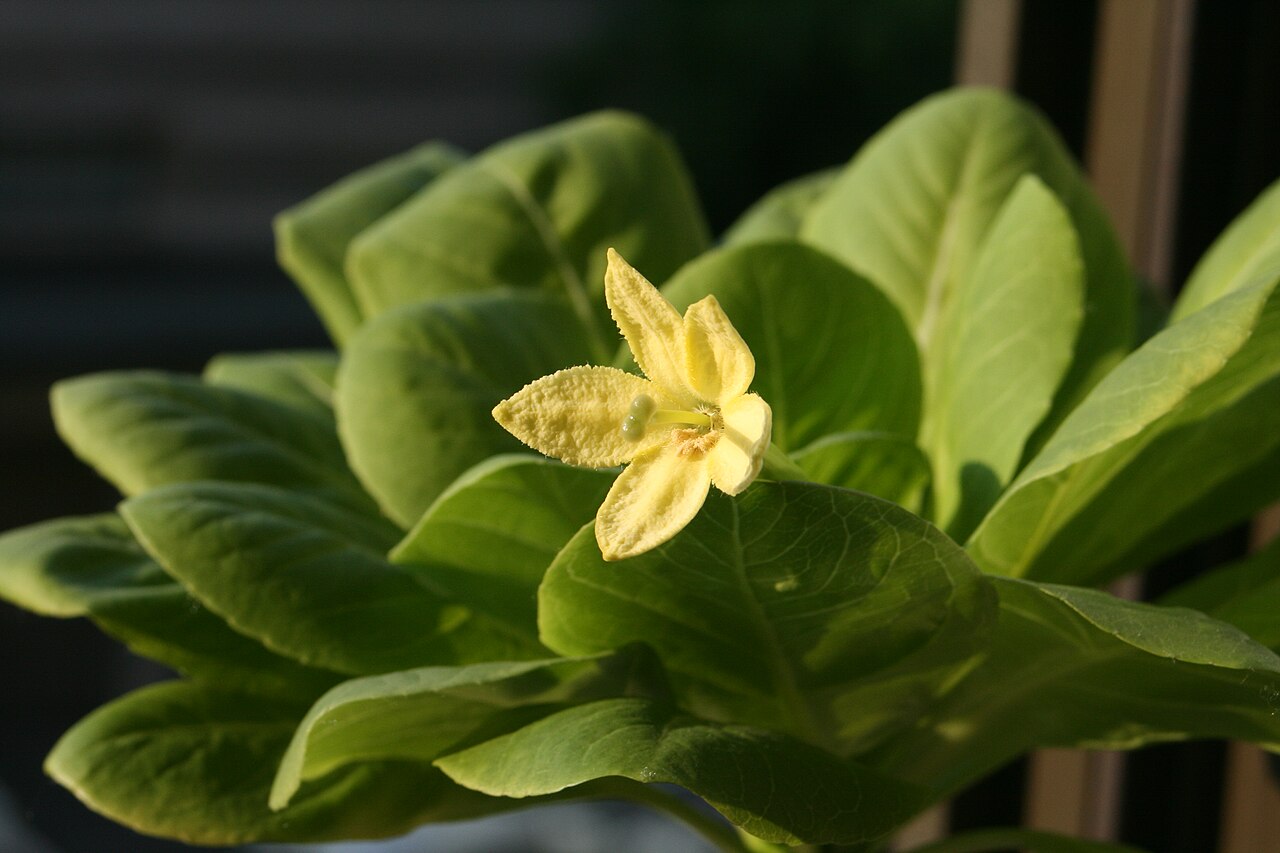
Clusters of three to eight flowers grow from the leaf axils, mainly from September to November. Each flower has a slender, greenish tube 3 to 5 1/2 inches long, opening to five spreading, pointed lobes, pale yellow to creamy white. They are fragrant, especially in the evening, with a scent often compared to honeysuckle.
Fruit & Seeds
After pollination, each flower develops a small, dry capsule about 1/2 to 3/4 inch long containing many tiny seeds. In cultivation, plants rarely set seed unless they are hand-pollinated.
Look-alikes
Its only close relative, Brighamia rockii (pua ʻala), grew on Molokaʻi, Maui and Lānaʻi and has white flowers with a shorter tube. Ponytail palm (Beaucarnea) also has a swollen base, but it has long, narrow, grass-like leaves. Desert roses (Adenium) have swollen stems but pink to red flowers and branch freely.
Quick Facts
| Scientific Name | Brighamia insignis |
| Family | Campanulaceae (bellflower family) |
| Plant Type | Succulent-stemmed perennial; Hawaiian lobelioid |
| Mature Height | 3–7 ft (1–3 ft as a houseplant) |
| Mature Spread | 1–2 ft |
| Growth Rate | Slow to moderate |
| Sun Exposure | Full sun to part shade (bright light indoors) |
| Water Needs | Low to moderate; let soil dry between waterings |
| Soil Type | Very well-drained, gritty or rocky soil; cactus mix |
| Soil pH | Slightly acidic to neutral (about 6.0–7.5) |
| Bloom Time | September–November |
| Flower Color | Pale yellow to creamy white |
| Fall Color | None (evergreen) |
| Fruit | Small dry capsule with many tiny seeds |
| Deer Resistant | Unknown |
| USDA Hardiness Zones | 10b–13 (houseplant elsewhere) |
Native Range
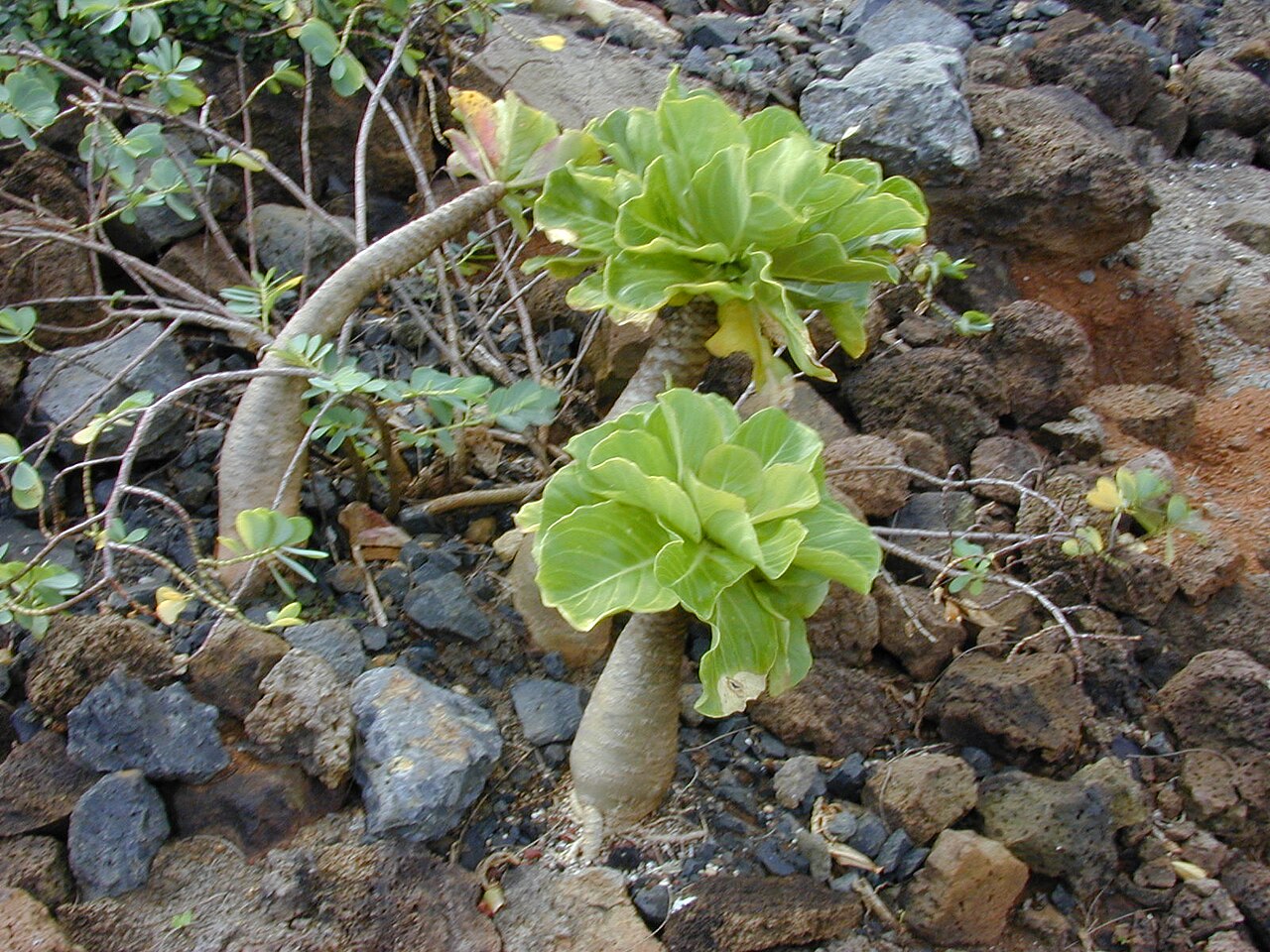
ʻŌlulu is endemic to the Hawaiian Islands. Historically it grew on the islands of Kauaʻi and Niʻihau, from sea level to about 1,600 feet, on steep sea cliffs and rocky ledges with little soil, in dry forest and mesic coastal shrubland receiving less than about 67 inches of rain a year. USDA PLANTS lists it as native only in Hawaii.
It declined for many years from feral goats, rats, slugs, invasive plants, fire, landslides and hurricanes, and above all from a lack of pollination. In 1994, when the U.S. Fish and Wildlife Service listed it as endangered, there were five populations totaling 45 to 65 plants. Hurricane Iniki in 1992 destroyed the populations on Kauaʻi’s southeast coast, and the north-coast plants dwindled until a single plant remained. It was last recorded in 2012, and by 2020 it too had disappeared.
Today ʻōlulu lives on in botanical gardens and nurseries, including the National Tropical Botanical Garden on Kauaʻi, and in conservation plantings and seed banks. All plants sold as houseplants come from cultivated stock. Never collect plants, seeds or cuttings from conservation sites, and buy only nursery-propagated plants.
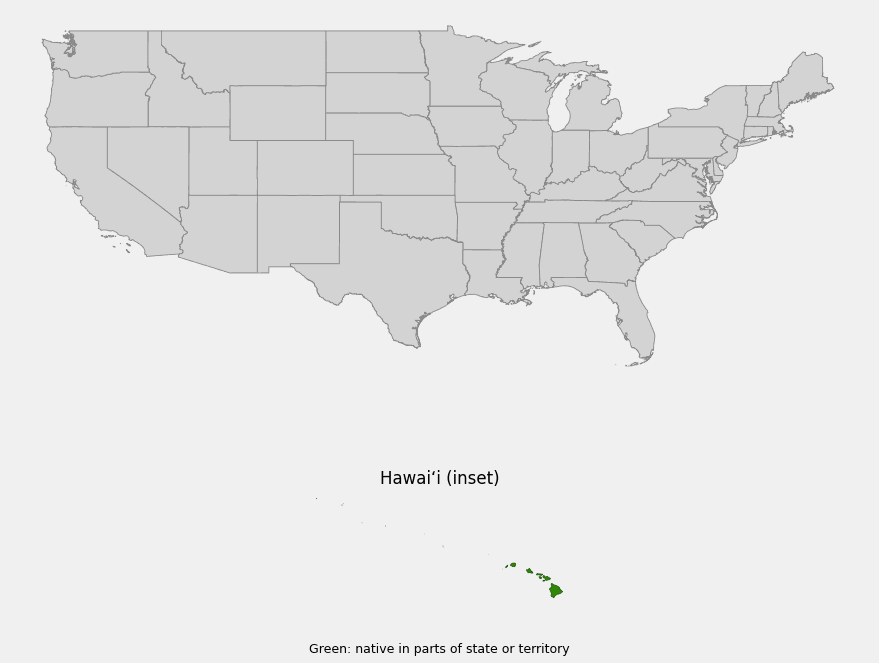
📋 Regional plant lists featuring ʻŌlulu: Hawaii
Growing & Care Guide
ʻŌlulu is surprisingly easy to grow once you treat it like a succulent. Outdoors it suits only frost-free climates (zones 10b to 13), such as coastal Hawaii; elsewhere it is grown as a houseplant. It dislikes temperatures below about 50°F and wet, cold soil.
Light
Outdoors in Hawaii, give it full sun to light shade; coastal plantings do well with bright morning sun. Indoors, give it the brightest window you have, such as a south- or west-facing window, or strong grow lights. In low light the stem stretches and the plant drops leaves.
Soil & Water
Use a very well-drained, gritty mix, such as cactus and succulent mix with extra pumice or perlite, in a pot with drainage holes. Water thoroughly, then let the top half of the mix dry before watering again. Water less in winter and when the plant drops leaves and rests. Overwatering, especially in cool weather, is the most common cause of stem rot. Outdoors, plant it in rocky, freely draining soil or a raised bed.
Planting Tips
Feed lightly with a diluted balanced fertilizer once a month in spring and summer. Repot every two to three years in spring into a pot only slightly larger. Keep it away from cold drafts and heating vents. Indoors, watch closely for spider mites, which are its most common pest, especially in dry winter air; rinse the leaves or use insecticidal soap if you see fine webbing or speckled leaves.
Pruning & Maintenance
No pruning is needed. Remove yellow, fallen leaves. A plant that drops most of its leaves in winter will usually regrow from the top in spring if the stem stays firm. A soft, wrinkled or mushy stem base means rot.
Propagation
ʻŌlulu is grown from seed, which is produced only when flowers are hand-pollinated: transfer pollen with a small brush between flowers on different plants. Sow the tiny seeds on the surface of a moist, sterile mix and keep warm and humid. Nurseries also propagate it by tissue culture. Buy plants from reputable nurseries; the commercial houseplant supply comes from cultivated stock.
Landscape Uses
- Houseplants: a sculptural, conversation-starting plant for a bright window
- Native Hawaiian gardens: a rare endemic for dry, rocky, sunny spots near the coast
- Containers & patios: grows well in pots outdoors in frost-free areas
- Rock and succulent gardens: pairs with ʻilima, pili and other dry-coast natives
- Conservation and education: a living example of Hawaiian plant evolution and extinction risk
Wildlife & Ecological Value
ʻŌlulu is a classic example of how closely Hawaiian plants and animals depended on each other.
For Pollinators
The long-tubed, night-fragrant flowers are thought to have been pollinated by a hawk moth, most likely the native fabulous green sphinx moth (Tinostoma smaragditis), a very rare Kauaʻi moth. With its pollinator scarce or absent, wild plants set almost no seed, which is why botanists rappelled down sea cliffs to pollinate them by hand.
For Birds
Native birds are not known to rely on ʻōlulu. Its flowers lack the curved shape that suits Hawaiian honeycreepers, unlike many other Hawaiian lobelioids.
For Mammals
Hawaii’s only native land mammal, the Hawaiian hoary bat, does not use the plant. Introduced goats, pigs and rats damaged wild populations and are a main reason the species could survive only on sheer cliffs.
Ecosystem Role
ʻŌlulu was part of the plant community on Kauaʻi and Niʻihau’s dry sea cliffs. Its story shows how loss of pollinators, introduced animals and storms can push an island species to the edge of extinction, and how conservation horticulture can keep it alive.
Cultural & Historical Uses
The genus Brighamia is named after William Tufts Brigham, the first director of the Bishop Museum in Honolulu. The species name insignis means “remarkable” or “distinguished.” The plant belongs to the Hawaiian lobelioids, a group of more than 100 species that evolved in Hawaii from a single ancestor and is one of the most famous examples of adaptive radiation in plants.
In the 1990s, field botanists from the National Tropical Botanical Garden rappelled down the Nā Pali sea cliffs to hand-pollinate the last wild plants and collect their seed. Seed from that work was grown in nurseries in Hawaii and later in Europe, where commercial growers began producing it as a houseplant, making a nearly extinct species one of the most widely grown Hawaiian plants in the world.
Botanical gardens continue to work on reintroducing ʻōlulu to protected cliff and coastal sites in Hawaii. The effort is a reminder that keeping a plant alive in pots is only the first step, because a species is fully recovered only when it can grow and reproduce in the wild again.
Frequently Asked Questions
Is ʻōlulu native to Hawaii?
Yes. It is endemic to Hawaii, meaning it grew naturally nowhere else, on the sea cliffs of Kauaʻi and Niʻihau. USDA PLANTS lists it as native only in Hawaii.
Is ʻōlulu extinct?
It is extinct in the wild, as the last known wild plant disappeared by 2020, but it survives in botanical gardens, conservation plantings and as a widely grown houseplant.
Is it legal to buy a vulcan palm?
Yes, when it is nursery-grown. Plants sold as houseplants come from cultivated stock. Never collect plants or seed from wild or conservation sites.
Why is my vulcan palm dropping its leaves?
Leaf drop is usually caused by low light, cold drafts, overwatering or spider mites. Plants also drop some leaves in winter and regrow them in spring if the stem stays firm.
Is vulcan palm a real palm?
No. Despite its common names, it is a succulent member of the bellflower family, closely related to Hawaiian lobelias, not a palm.

Looking for a nursery that carries ʻŌlulu?
Browse our native plant nursery directory: Hawaii

