
Orcutt’s Woodyaster (Xylorhiza orcuttii)
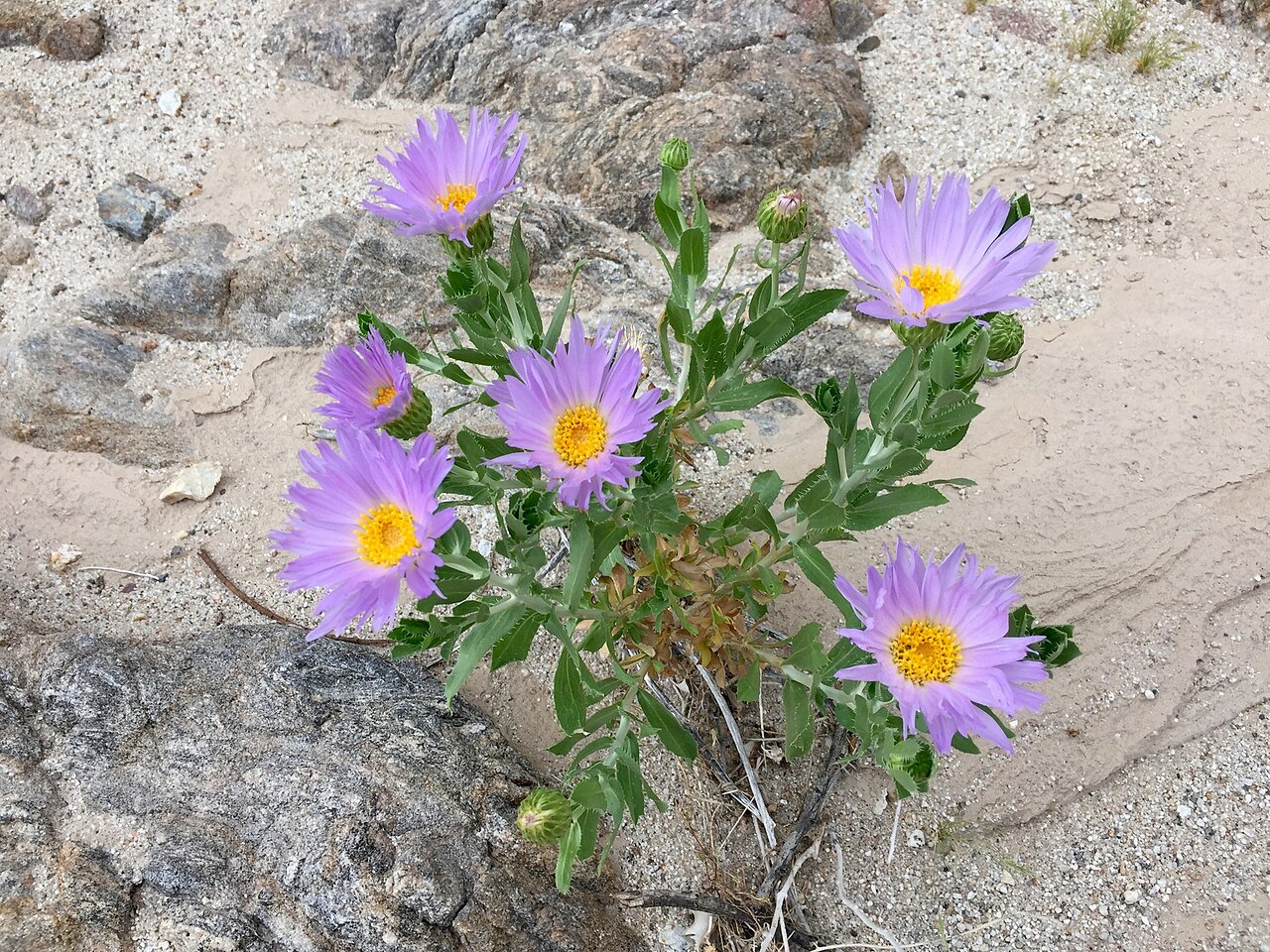
Xylorhiza orcuttii, known as Orcutt’s Woodyaster (USDA: Orcutt’s aster; also spelled Orcutt’s woody-aster), is a rare, shrubby member of the aster family (Asteraceae) from the Colorado Desert of southern California and adjacent Baja California. It has also been classified as Machaeranthera orcuttii and, originally, Aster orcuttii, so you may see those names in older books. The species honors Charles Russell Orcutt, a San Diego naturalist who collected widely in the region in the late 1800s.
It is a rounded subshrub with woody lower stems, smooth green leaves edged with spine-tipped teeth, and showy, daisy-like flower heads up to about 2 inches across. Each head has a ring of up to 40 or more long, lavender to pale blue rays around a yellow center, held singly at the tip of a long stalk. Plants bloom mainly in March and April, but after good rains they can start flowering in late fall or winter. The name Xylorhiza means “woody root.”
Orcutt’s woodyaster grows in a small area: arid canyons, washes and badlands of the Anza-Borrego Desert and nearby lowlands in San Diego and Imperial Counties. The California Native Plant Society lists it as California Rare Plant Rank 1B.2 (rare, threatened or endangered in California and elsewhere; moderately threatened in California), and the Bureau of Land Management treats it as a sensitive species. Never dig or collect plants or seed from the wild. Grow it only from nursery-propagated stock, and otherwise enjoy it where it grows.
Identification
When in bloom, Orcutt’s woodyaster is one of the most striking wildflowers of the Colorado Desert canyons. Look for a low, rounded shrub of bright green, spiny-toothed leaves topped with large lavender daisies on long stalks.
Growth Form
Plants are rounded subshrubs or small shrubs, usually 1 to 3 feet tall and about as wide, with many branching stems that are woody near the base and mostly hairless. Older stems may sprawl up to about 5 feet long. In drought the plant drops many of its leaves and looks dry and gray-brown, then leafs out again after rain.
Leaves
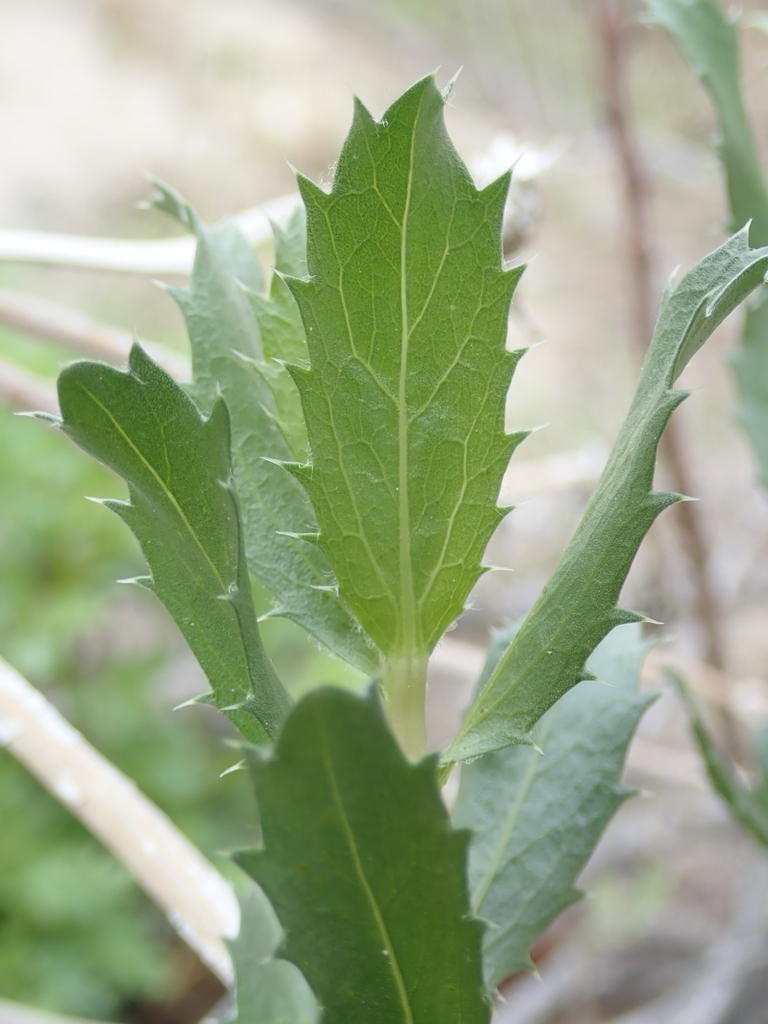
The leaves are alternate, smooth and bright green, about 1 to 3 inches long, and lance-shaped to oblong. Many have sharp, spine-tipped teeth along the edges, giving the foliage a holly-like look, while others are nearly smooth-edged. The upper leaves clasp the stem.
Flowers
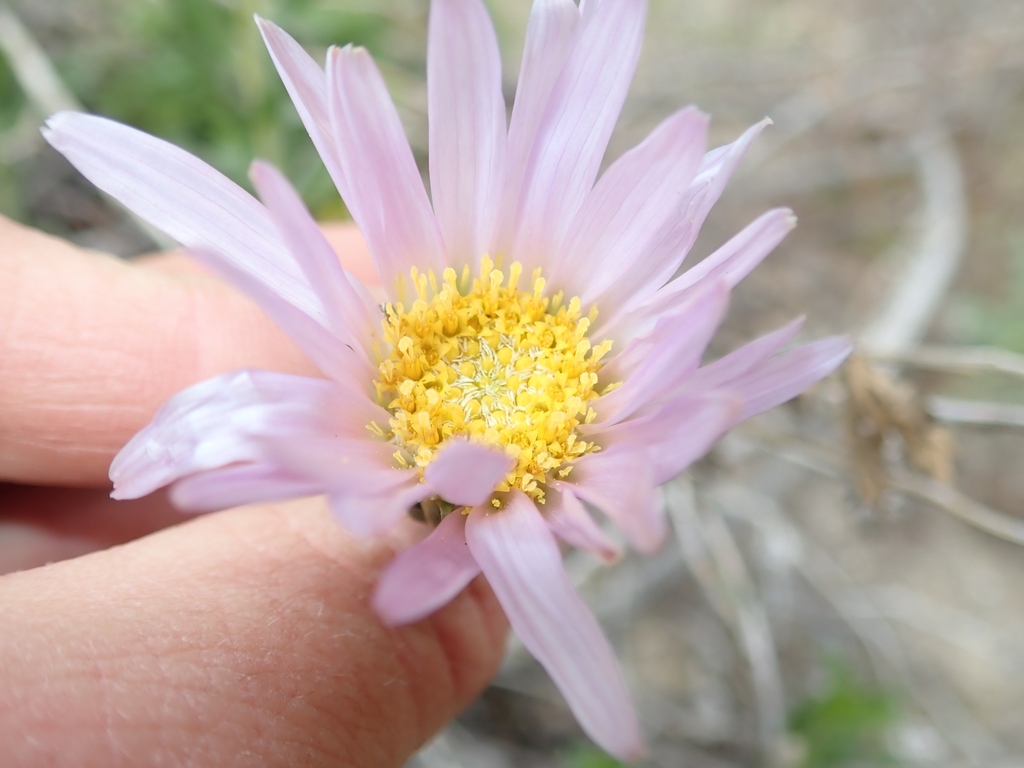
Each flower head sits alone at the end of a long, nearly leafless stalk. The head has up to about 40 or more ray florets, each more than an inch long, colored lavender to pale blue or nearly white, surrounding a broad disk of yellow tubular florets. The bracts under the head are in several overlapping rows. The main bloom is in March and April, with earlier flowering in some years.
Fruit & Seeds
After flowering, the head forms a tan, bristly seed head. Each hairy seed (cypsela) is topped with a tuft of bristles, and with them may be close to 1/2 inch long. The seeds are spread by wind.
Look-alikes
Mojave woodyaster (Xylorhiza tortifolia) grows farther north and east in the Mojave and Sonoran Deserts; its leaves are usually grayer and more hairy. Desert asters in the genus Dieteria and Machaeranthera have smaller heads and narrower, non-spiny leaves. Brittlebush (Encelia farinosa) grows in the same canyons but has silvery leaves and yellow flowers.
Conservation
Orcutt’s woodyaster is known from a limited number of sites in San Diego and Imperial Counties, many of them within Anza-Borrego Desert State Park, and from northern Baja California. Off-road vehicle use, development and other habitat disturbance are concerns at some sites. Stay on trails, never pick or dig plants, and report sightings to iNaturalist or the California Native Plant Society to help track populations.
Quick Facts
| Scientific Name | Xylorhiza orcuttii (syn. Machaeranthera orcuttii, Aster orcuttii) |
| Family | Asteraceae (aster family) |
| Plant Type | Rare desert subshrub; drought-deciduous |
| Mature Height | 1–3 ft |
| Mature Spread | 2–4 ft |
| Growth Rate | Moderate |
| Sun Exposure | Full sun |
| Water Needs | Very low; dry, fast-draining soil |
| Soil Type | Rocky, sandy or gravelly; also clay and alkaline badland soils |
| Soil pH | About 7.0–8.5 (neutral to alkaline) |
| Bloom Time | March–April; sometimes from late fall or winter after rain |
| Flower Color | Lavender to pale blue or nearly white rays with a yellow center |
| Fall Color | None; may drop leaves in drought |
| Fruit | Hairy seeds with a tuft of bristles in a fluffy seed head |
| Deer Resistant | Generally yes; spiny leaves are seldom browsed |
| USDA Hardiness Zones | 9–11 |
Native Range
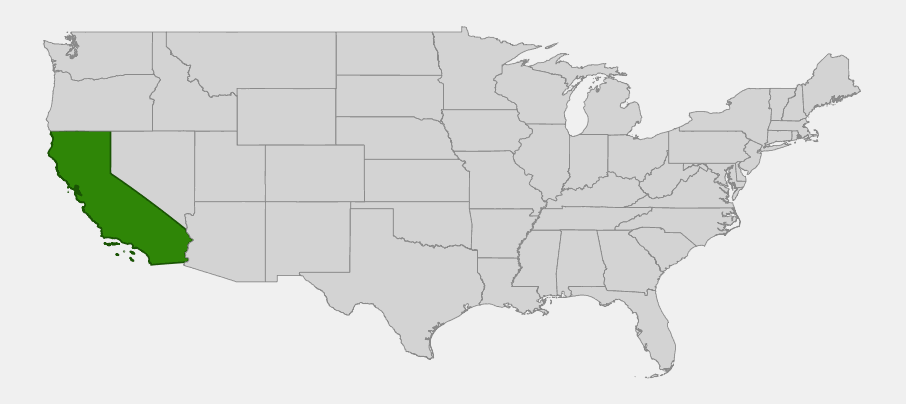
Orcutt’s woodyaster is native to the Colorado Desert, the western part of the Sonoran Desert, in southern California and northern Baja California, Mexico. USDA PLANTS lists it as native in the lower 48 states and records it only from California. The California Native Plant Society reports it from San Diego and Imperial Counties, centered on the Anza-Borrego Desert.
Within that area it is found in a limited number of arid canyons, washes and badland hills along the eastern base of the Peninsular Ranges and around the Borrego Valley, from near sea level to about 1,200 feet (365 m). It is one of several plants that link the Anza-Borrego region with the desert flora of Baja California.
It grows in Sonoran desert scrub on rocky and sandy slopes, in dry canyon bottoms and washes, and on clay and alkaline soils in badlands, often among cacti, agaves and other drought-tolerant shrubs. Rainfall in its range is typically only a few inches a year, and summers are extremely hot.
📋 Regional plant lists featuring Orcutt’s Woodyaster: California & Nevada
Growing & Care Guide
Orcutt’s woodyaster is a specialist of hot, very dry desert canyons and is only occasionally offered by native plant nurseries or botanic garden plant sales in Southern California. If you find it, buy only nursery-propagated plants, and never collect plants or seed from the wild. It suits low-desert gardens with full sun and sharp drainage; outside the low desert it is best left to specialists.
Light
Give it full sun with reflected heat if possible. In shade or in humid, cool coastal gardens it grows weak and is prone to rot.
Soil & Water
Plant it in fast-draining rocky, sandy or decomposed granite soil, or on a raised mound or slope. Water deeply but infrequently during its first cool season. Once established it needs little or no summer water in the low desert; occasional winter watering in dry years encourages bloom. Overwatering, especially in summer heat, is the most common cause of failure. Do not fertilize.
Planting Tips
Plant in fall or early winter, when temperatures are cool and winter rains can help it establish. Combine it with other Colorado Desert natives such as brittlebush, chuparosa, desert lavender, barrel cactus and agaves. A mulch of gravel or rock, rather than bark, keeps the crown dry.
Pruning & Maintenance
Leave it unpruned except to cut back old flowering stalks and any dead wood after bloom. Expect it to drop leaves and look dormant in summer; do not try to keep it green with extra water.
Propagation
It is grown from seed, which germinates best in cool weather when sown in a fast-draining mix and kept lightly moist. Use only seed from cultivated plants or licensed seed sources, not from wild populations. Seedlings are sensitive to overwatering and damping-off.
Landscape Uses
- Low-desert gardens: spring color from large lavender daisies
- Rock gardens and dry slopes: thrives in rocky, fast-draining soil and heat
- Pollinator plantings: early-season nectar and pollen for desert bees and butterflies
- Botanic garden and conservation collections: a showcase for the rare flora of the Anza-Borrego region
- Wildflower viewing: a highlight of spring bloom in Anza-Borrego canyons
Wildlife & Ecological Value
Like other desert asters, Orcutt’s woodyaster provides nectar and pollen at a time when desert insects are most active, and it gives cover in sparse canyon scrub.
For Pollinators
The large, open heads are visited by native desert bees, including many small solitary bees, as well as butterflies, bee flies and beetles. Spring bloom coincides with the peak of desert bee activity after winter rains.
For Birds
Small seed-eating birds such as sparrows and finches may feed on the seeds, and the twiggy, spiny shrubs provide a bit of cover in open desert scrub.
For Mammals
The spiny-toothed leaves are seldom browsed. Small desert rodents may gather fallen seeds.
Ecosystem Role
As a long-lived shrub of canyons and washes, it helps stabilize loose rocky and sandy soils, and its flowers support desert insect communities. Its restricted range makes healthy populations an indicator of intact Colorado Desert canyon habitat.
Cultural & Historical Uses
The species was first described by George Vasey and Joseph Nelson Rose as Aster orcuttii, based on plants collected by Charles Russell Orcutt. Orcutt was a San Diego naturalist and plant collector who explored Baja California and the deserts of San Diego County and published a natural history journal, the West American Scientist. Many plants of the region carry his name.
Botanists later moved it to Xylorhiza, a small genus of woody-based asters of the arid West, and some treatments placed it in the broader genus Machaeranthera (tansy-asters). Today most authorities, including USDA PLANTS, use Xylorhiza orcuttii.
Spring wildflower visitors to Anza-Borrego Desert State Park often look for Orcutt’s woodyaster in the park’s canyons, where its large lavender flowers stand out against the bare rock. Because it is rare, the best way to enjoy it is to photograph it and leave it in place.
Frequently Asked Questions
Is Orcutt’s woodyaster rare?
Yes. The California Native Plant Society lists it as California Rare Plant Rank 1B.2, and it grows only in parts of San Diego and Imperial Counties and northern Baja California. Never dig or collect it from the wild.
Is it the same as Machaeranthera orcuttii?
Yes. Machaeranthera orcuttii and Aster orcuttii are older names for the same plant, which is now usually called Xylorhiza orcuttii.
When does it bloom?
Mainly in March and April. After good fall or winter rains, plants can begin blooming earlier, sometimes from late fall into winter.
Can I grow it in my garden?
Yes, in hot, dry, low-desert gardens with full sun and fast-draining soil, if you can find nursery-propagated plants. It is easily killed by overwatering and is not suited to humid or cool coastal gardens.
Why does my plant look dead in summer?
It is drought-deciduous. In summer heat it drops many leaves and goes semi-dormant, then leafs out again after rain. Avoid watering it heavily in summer.

Looking for a nursery that carries Orcutt’s Woodyaster?
Browse our native plant nursery directory: California