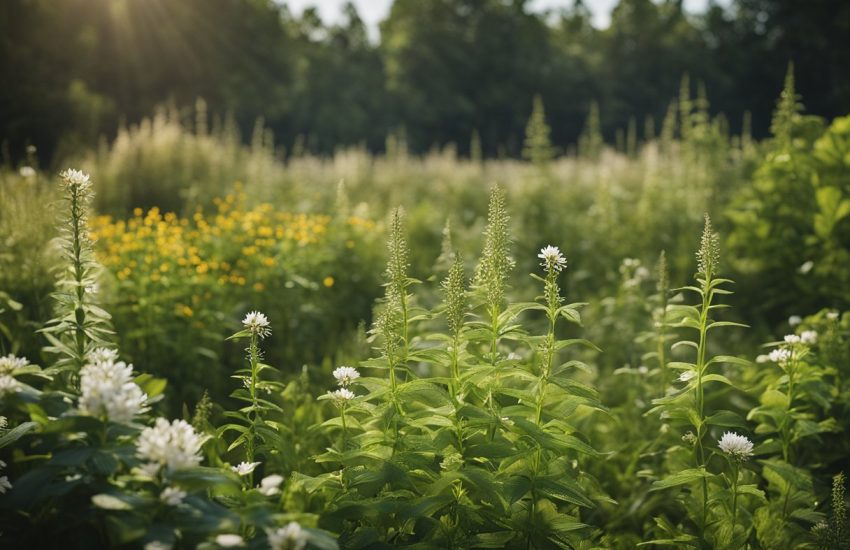
Pacific Willow (Salix lasiandra)
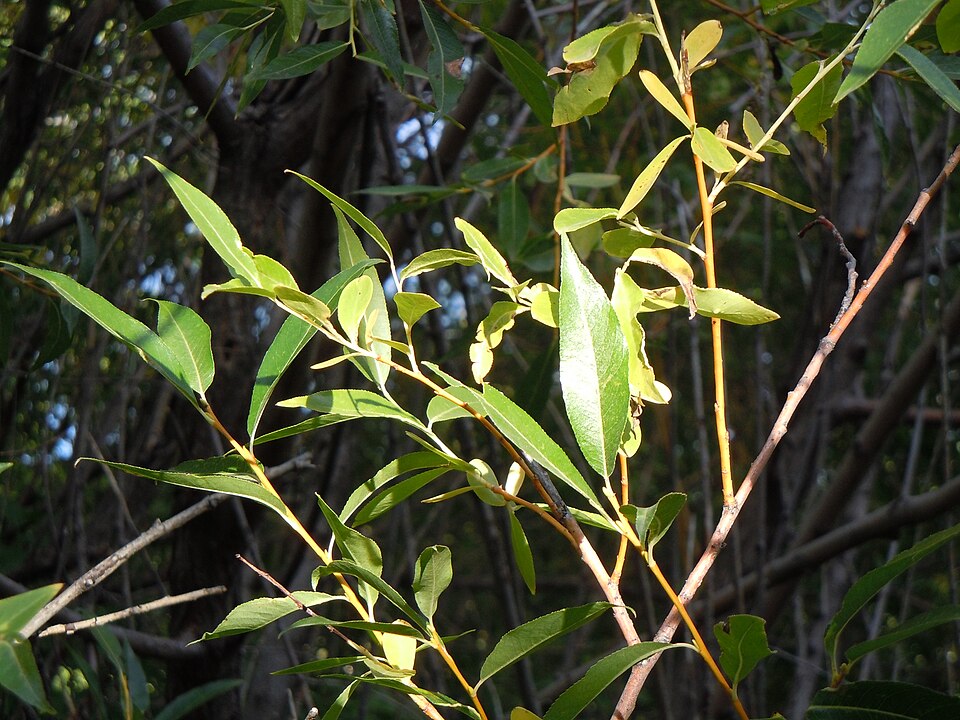
Salix lasiandra (also classified as Salix lucida subsp. lasiandra), commonly known as Pacific Willow, stands as one of the most impressive and ecologically significant willows of western North America. This fast-growing deciduous tree can reach heights of 40-60 feet, making it among the largest willows in the region. Distinguished by its glossy, lance-shaped leaves and brilliant yellow spring catkins, Pacific Willow creates stunning displays throughout the growing season while providing crucial riparian habitat for countless wildlife species. Native to streambanks, lakeshores, and wetlands from Alaska to New Mexico, this adaptable tree excels in restoration projects while serving as a cornerstone species in healthy riparian ecosystems.
Quick Facts
| Scientific Name | Salix lucida Muhl. ssp. lasiandra |
| Plant Type | Deciduous tree |
| Mature Height | 20 ft |
| Height | 40-60 feet (12-18 m) |
| Sun Exposure | Full Sun |
| Water Needs | High |
| Soil Type | Wet to moist, tolerates flooding |
| Soil pH | Acidic to slightly alkaline (5.5-7.5) |
| Bloom Time | March to May |
| Flower Color | Bright yellow catkins |
| USDA Hardiness Zones | 3-9 |
Identification
Pacific Willow ranks among the most distinctive and recognizable willows in western North America, combining impressive size with elegant form and striking seasonal displays. As one of the few native willows that regularly achieves true tree stature, it commands attention in any landscape where water is present.
Growth Form and Bark
Pacific Willow typically develops a single trunk or sometimes multiple trunks, reaching mature heights of 40-60 feet with a spread of 25-40 feet. In exceptional conditions along major rivers, specimens may exceed 80 feet in height and develop trunk diameters approaching 3 feet. The crown tends to be somewhat narrow and upright when young, broadening with age to create an oval to rounded canopy.
Young bark is smooth and greenish-brown to yellow-brown, developing shallow furrows and a grayish color with maturity. The branches are notably flexible and resilient, an adaptation that allows the tree to bend rather than break during floods and high winds. New growth appears bright yellow to reddish-brown, creating attractive winter interest even after leaves have fallen.
Leaves
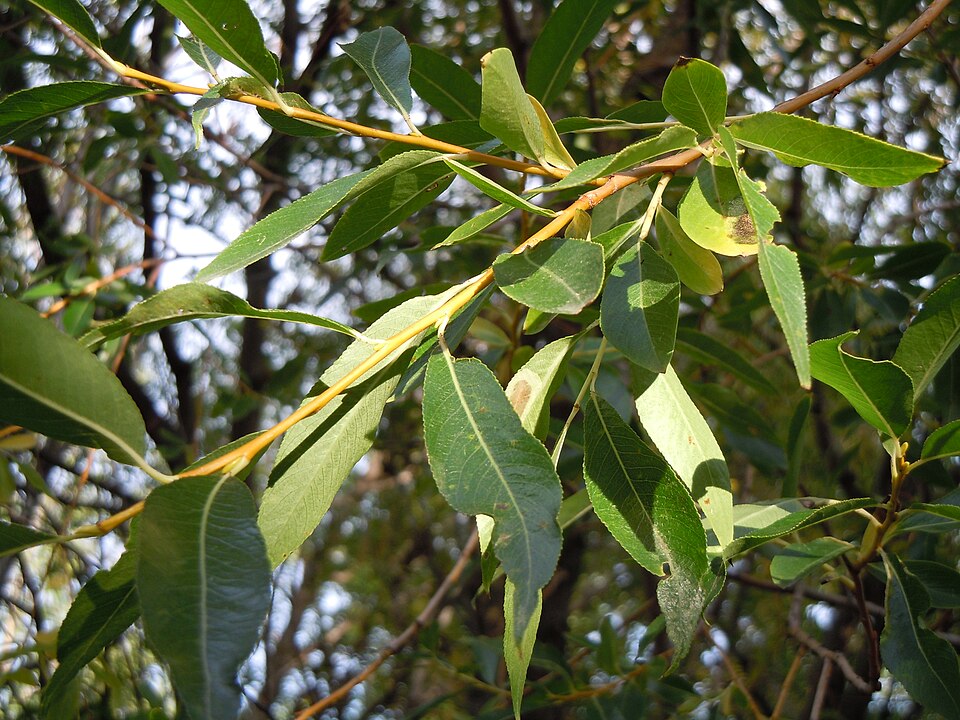
The leaves provide Pacific Willow’s most diagnostic feature, being notably large for a willow species and distinctively glossy. Individual leaves measure 4-7 inches long and 1-2 inches wide, with a classic willow shape that is narrowly elliptical to lance-shaped. The upper surface is dark green and conspicuously shiny, giving the tree its alternate common name of ‘shining willow.’
Leaf margins are finely serrated with small, glandular teeth that help distinguish Pacific Willow from similar species. The undersides are typically paler than the tops, ranging from light green to slightly glaucous (blue-green). Petioles (leaf stems) are relatively short, usually 0.25-0.75 inches long, and often have small glands near the leaf base.
Fall color, while not spectacular, provides pleasant yellow tones that add to the seasonal interest. However, Pacific Willow is among the first trees to leaf out in spring and among the last to drop leaves in fall, extending the green season significantly.
Flowers
Pacific Willow is dioecious, meaning individual trees are either male or female, with flowers appearing as catkins (aments) before or concurrent with leaf emergence in early spring. Male catkins are particularly showy, measuring 1-4 inches long and densely packed with bright yellow anthers that create brilliant color displays visible from considerable distances.
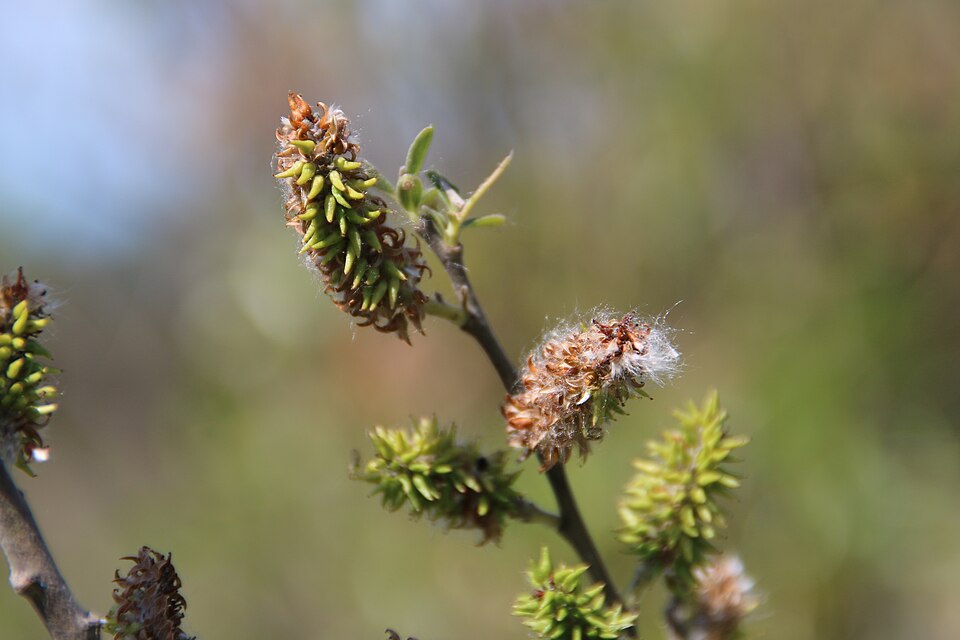
Female catkins are initially green and less conspicuous, typically 1-3 inches long, but they develop into attractive seed structures as the season progresses. Both types of catkins emerge from buds along the previous year’s growth, often clustering near branch tips in impressive displays.
The timing of catkin emergence varies with elevation and local climate, typically occurring from March at lower elevations to May in montane locations. This early flowering provides crucial nectar and pollen resources when few other plants are blooming, making Pacific Willow invaluable for early-season pollinators.
Seeds and Dispersal
Female trees produce abundant small seeds equipped with silky white hairs that enable wind dispersal over considerable distances. The seeds are contained in small capsules that split open in late spring to early summer, releasing clouds of cotton-like material that can create remarkable aerial displays.
Pacific Willow seeds remain viable for only a few days to weeks, requiring immediate contact with moist soil for successful germination. This characteristic makes the species an excellent pioneer colonizer of newly exposed mud flats, sandbars, and other disturbed riparian areas.
Native Range
Pacific Willow demonstrates one of the most extensive native ranges of any western North American willow, stretching from Alaska’s temperate rainforests to the high deserts of New Mexico and from sea level to elevations approaching 8,000 feet. This remarkable geographic range reflects the species’ adaptability to diverse climatic conditions while maintaining its fundamental requirement for abundant water availability.
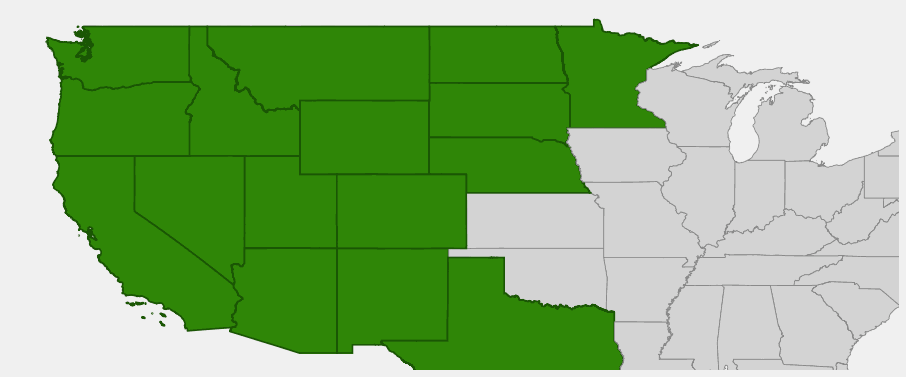
Throughout its vast range, Pacific Willow consistently occurs in riparian habitats, demonstrating unwavering fidelity to areas with permanent or seasonal water sources. Along the Pacific Coast, the species thrives in the moist, temperate climate where it often forms extensive riparian forests along major rivers and smaller streams. Here it associates with red alder, bigleaf maple, and various other moisture-loving trees and shrubs.
Moving inland, Pacific Willow adapts to increasingly arid conditions while maintaining its riparian habitat preferences. In the Great Basin and southwestern deserts, the species may be the only large tree present along intermittent streams, creating crucial oasis habitats that support diverse wildlife communities far from other forested areas.
The species’ northern range extends deep into Canada and Alaska, where it tolerates extreme cold but continues to require abundant summer moisture. In these regions, Pacific Willow often forms pure stands along river floodplains, creating some of the most extensive single-species forests in North America.
Elevational distribution varies significantly with latitude, occurring near sea level in northern regions but extending to nearly 8,000 feet elevation in southern portions of its range. This elevational adaptability allows Pacific Willow to inhabit both valley bottom rivers and high mountain streams, wherever adequate water and soil conditions exist.
📋 Regional plant lists featuring Pacific Willow: Western Oregon & Western Washington
Growing & Care Guide
Pacific Willow proves surprisingly easy to grow when its fundamental requirement for abundant water is met. The species’ rapid growth rate, adaptability to various soil types, and tolerance for challenging conditions make it excellent for restoration projects, while its impressive size and seasonal interest create valuable landscape specimens.
Site Requirements
Select sites with full sun exposure and access to permanent or reliable seasonal water sources. Pacific Willow tolerates partial shade but achieves optimal growth and form in bright, open locations. The species performs best along stream banks, pond edges, or in areas with high water tables where roots can access consistent moisture.
While Pacific Willow can tolerate temporary drought once established, prolonged water stress significantly reduces growth rates and may lead to branch dieback or tree mortality. In landscape settings without natural water sources, plan for regular irrigation throughout the growing season, particularly during hot, dry periods.
Wind tolerance is excellent due to the species’ flexible branching structure, making Pacific Willow suitable for exposed locations where other large trees might suffer damage. However, avoid planting near structures where the tree’s ultimate size and vigorous root system might cause problems with foundations or utilities.
Soil Adaptability
Pacific Willow demonstrates remarkable soil adaptability, thriving in everything from sandy alluvium to heavy clay, provided adequate moisture is available. The species particularly excels in periodically flooded sites where many other trees would perish, making it invaluable for floodplain restoration and stormwater management projects.
Soil pH tolerance ranges from moderately acidic to slightly alkaline (5.5-7.5), with optimal growth occurring in neutral to slightly acidic conditions. The species shows good tolerance for salt-affected soils, particularly in areas where road salt runoff or natural mineral deposits create challenging growing conditions.
Compacted soils present no significant challenges for Pacific Willow, as the species’ vigorous root system can penetrate dense substrates while actually helping to improve soil structure over time. This characteristic makes it valuable for reclamation projects on disturbed or degraded sites.
Planting and Establishment
Pacific Willow establishes readily from cuttings, seedlings, or young container plants, with each method offering distinct advantages for different applications. Cutting propagation provides the most economical approach for large restoration plantings and ensures rapid establishment when proper techniques are employed.
For cutting propagation, collect 12-24 inch sections of one-year-old wood during the dormant season (November through March). Plant cuttings immediately with approximately two-thirds buried in moist soil, spacing them 6-10 feet apart for restoration projects or according to landscape design requirements.
Container plants establish quickly when planted in early spring before bud break or in fall after growth cessation. Ensure planting holes are located where roots will have access to consistent moisture, and provide regular irrigation during the first growing season to encourage rapid root development.
Direct seeding is possible but challenging due to the short viability period of willow seeds and their specific germination requirements. For large-scale restoration projects, cutting propagation typically provides more reliable results at lower cost.
Growth Rate and Maintenance
Pacific Willow ranks among the fastest-growing native trees in western North America, potentially adding 3-6 feet of height annually under optimal conditions. This rapid growth makes it excellent for quick screens and erosion control but requires consideration of the tree’s ultimate size when planning landscape placements.
Pruning requirements are minimal for trees in naturalistic settings, though selective pruning can improve form and remove damaged branches. If pruning is desired, perform work during the dormant season to minimize stress and avoid attracting boring insects that may be active during the growing season.
Fertilization is typically unnecessary and may actually promote excessive soft growth that is more susceptible to storm damage and pest problems. Pacific Willow’s natural adaptation to nutrient-poor alluvial soils means it performs well without supplemental feeding in most situations.
Wildlife & Ecological Value
Pacific Willow stands among the most ecologically valuable trees in western North America, supporting an extraordinary diversity of wildlife species while providing crucial ecosystem services in riparian environments. Its early flowering, rapid growth, and complex habitat structure make it indispensable for healthy riparian ecosystems.
Pollinator Support
The early spring flowering of Pacific Willow provides critical nectar and pollen resources when few other plants are blooming, making it a cornerstone species for native pollinator communities. Native bees, including various mining bees (Andrena species), sweat bees (Halictus species), and bumble bees (Bombus species), depend heavily on willow flowers for early-season nutrition.
Male trees produce particularly abundant pollen, with their showy yellow catkins visible from great distances and attracting pollinators from wide areas. The extended blooming period, lasting 3-4 weeks in most locations, provides sustained resources during the critical spring buildup of pollinator populations.
Beneficial flies, beetles, and other insects also utilize willow flowers extensively, contributing to the complex food web that supports larger wildlife species. Many of these insects provide biological pest control services in surrounding agricultural and natural areas, multiplying the ecological benefits of Pacific Willow plantings.
Bird Communities
Pacific Willow supports some of the richest bird communities of any western tree species, providing nesting sites, food resources, and cover for dozens of species throughout the year. The complex branching structure and dense foliage create ideal nesting conditions for numerous songbird species, from tiny warblers to large hawks and owls.
Red-winged Blackbirds, Yellow Warblers, and Willow Flycatchers show particular affinity for Pacific Willow habitats, with the latter species being largely dependent on willow-dominated riparian areas for breeding success. Many of these species have experienced significant population declines due to habitat loss, making Pacific Willow conservation and restoration critically important for bird conservation.
The abundant insect life supported by Pacific Willow provides essential food resources for insectivorous birds throughout the growing season. Many warbler species, vireos, and other migrants depend on the reliable insect populations found in healthy willow stands during their spring and fall migrations.
During winter, the persistent seed structures and bark crevices harbor overwintering insects that provide crucial protein sources for resident bird species when other food sources are scarce.
Large Mammal Relationships
Beaver populations depend heavily on Pacific Willow as both food and construction material, with the species’ rapid regeneration following cutting making it a sustainable resource for beaver communities. The relationship between beavers and willows represents one of the most important ecological interactions in western riparian systems, with beaver activities creating habitat conditions that benefit numerous other species.
Moose, elk, and deer browse willow shoots and young bark, particularly during winter months when other forage is scarce. The species’ ability to resprout vigorously following browsing allows it to sustain moderate to heavy wildlife use while continuing to provide habitat benefits.
Black bears often feed on the inner bark of Pacific Willow during spring emergence from hibernation, when the sweet cambium provides important nutrition after months of fasting. The healing ability of willows allows trees to recover from this feeding with minimal long-term damage.
Aquatic Ecosystem Services
Pacific Willow provides crucial aquatic habitat benefits through its extensive root system and overhanging branches. The roots help stabilize streambanks while creating undercut areas that provide essential cover for juvenile fish, particularly salmon and trout species that depend on cool, shaded water for survival.
Leaf litter from Pacific Willow contributes significant organic matter to aquatic ecosystems, supporting the base of the food web that sustains numerous aquatic invertebrate species. These invertebrates, in turn, provide essential food resources for fish, amphibians, and aquatic birds.
The shade provided by mature Pacific Willow stands helps maintain cool water temperatures crucial for cold-water fish species while reducing algae growth that can degrade water quality. This temperature regulation becomes increasingly important as climate change puts additional stress on aquatic ecosystems.
During flood events, Pacific Willow stands help reduce water velocity and encourage sediment deposition, gradually building up floodplain soils while reducing erosion downstream. This natural flood control provides valuable protection for human communities while maintaining healthy riparian ecosystems.
Cultural and Historical Significance
Pacific Willow holds profound cultural significance for indigenous peoples throughout its range, representing one of the most versatile and important plant resources in traditional lifestyles. Every part of the tree found uses in traditional technologies, making it a cornerstone species in indigenous plant knowledge systems.
Traditional Technologies
The flexible, strong branches of Pacific Willow provided material for an incredible array of traditional technologies, from fishing weirs and traps to baskets and cradle boards. The species’ ability to produce long, straight shoots made it particularly valuable for creating framework structures that required both strength and flexibility.
Basketry represented perhaps the most sophisticated use of Pacific Willow, with different parts of the tree providing materials for various basket components. Young shoots provided weavers, while split stems created framework elements. The natural variation in bark color allowed traditional artisans to create intricate patterns without artificial dyes.
Winter harvesting was preferred for many traditional uses, as the dormant wood contained less water and would season more predictably for construction applications. Different tribal groups developed sophisticated sustainable harvesting practices that encouraged continued productivity while meeting community needs.
Medicinal Applications
Pacific Willow bark provided one of the most important traditional medicines throughout western North America, containing natural compounds related to modern aspirin. Traditional preparations were used to treat fever, pain, headaches, and various inflammatory conditions with remarkable effectiveness.
Inner bark was typically harvested in spring when sap flow made it easy to strip cleanly from branches. The bark was then dried, ground, or prepared as teas and poultices for various medicinal applications. Different preparation methods were used for different ailments, demonstrating sophisticated understanding of plant chemistry.
Many traditional medicinal uses of Pacific Willow have been validated by modern scientific research, confirming the effectiveness of traditional knowledge systems in identifying useful plant compounds. However, modern users should consult healthcare professionals rather than attempting to self-medicate with plant preparations.
Spiritual and Cultural Importance
Beyond its utilitarian applications, Pacific Willow held important spiritual significance in many indigenous cultures, often associated with water, renewal, and healing. The tree’s association with water sources made it a natural focal point for ceremonies and rituals related to purification and renewal.
The species’ rapid growth and ability to regenerate after cutting made it a powerful symbol of resilience and renewal, themes that appear frequently in traditional stories and teachings. Many contemporary indigenous communities continue to value Pacific Willow for both practical and cultural applications.
Modern Applications and Restoration
Pacific Willow has emerged as one of the most important species for riparian restoration projects throughout western North America, combining rapid establishment and growth with exceptional habitat value and ecosystem services. Its use extends from small-scale garden applications to massive watershed restoration efforts.
Restoration Applications
Large-scale restoration projects frequently rely on Pacific Willow as a pioneer species that quickly establishes vegetative cover while creating conditions suitable for other native plants. The species’ tolerance for disturbed soils and ability to grow from cuttings make it ideal for revegetating damaged streambanks, mine sites, and other degraded areas.
Erosion control represents one of the most important restoration applications, with Pacific Willow’s extensive root system providing excellent soil stabilization along streams and slopes. The species can be established on sites too harsh for most other trees, gradually improving conditions through organic matter additions and microclimate modification.
Wildlife habitat restoration projects benefit enormously from Pacific Willow plantings, as the species quickly creates structural complexity and food resources that attract diverse animal communities. The rapid growth allows restoration sites to provide meaningful habitat benefits within just a few years of planting.
Urban Applications
In urban settings, Pacific Willow serves valuable functions in green infrastructure projects, particularly those focused on stormwater management and riparian corridor restoration. The species’ tolerance for wet conditions and ability to process nutrients make it excellent for constructed wetlands and bioretention systems.
Parks and naturalized areas benefit from Pacific Willow plantings that create wildlife habitat while providing seasonal interest and educational opportunities. The species’ rapid growth allows landscape architects to create mature-looking installations relatively quickly compared to slower-growing native alternatives.
However, urban applications require careful consideration of the species’ ultimate size and vigorous root system, which can potentially interfere with infrastructure if not properly planned. Professional consultation is recommended for complex urban installations.
Climate Change Adaptation
Pacific Willow’s broad genetic diversity and extensive range make it a valuable species for climate change adaptation strategies in riparian ecosystems. The species’ tolerance for varying precipitation patterns and temperature extremes provides resilience as climate conditions shift.
Restoration projects increasingly focus on establishing diverse willow communities that can adapt to changing conditions while maintaining ecosystem function. Pacific Willow’s rapid generation time and high genetic variability allow populations to evolve quickly in response to environmental changes.
The species’ importance for water temperature regulation and flood control becomes increasingly valuable as extreme weather events become more frequent. Healthy Pacific Willow stands help buffer aquatic ecosystems against temperature fluctuations while providing natural flood protection for human communities.
Companion Planting and Design
Pacific Willow combines beautifully with numerous native plants to create diverse, functional riparian plant communities that support maximum wildlife diversity while providing outstanding seasonal interest. Successful companion plantings emphasize species that share similar moisture requirements while offering complementary growth habits and seasonal highlights.
Tree and Shrub Companions
Cottonwood species (Populus species) make excellent large-scale companions for Pacific Willow, sharing similar habitat requirements while providing different seasonal characteristics and wildlife values. The combination of willows and cottonwoods creates the classic riparian forest structure that supports the richest wildlife communities in western landscapes.
Red-osier dogwood (Cornus stolonifera) provides brilliant red winter stem color that complements Pacific Willow’s yellow branches, while sharing the willow’s tolerance for wet conditions and flooding. This combination creates outstanding four-season interest while providing diverse wildlife resources.
Native roses (Rosa species) can be established on slightly elevated sites adjacent to willows, providing fragrant flowers and colorful hips while creating habitat diversity. The roses benefit from the moisture retention and wind protection provided by mature willow stands.
Herbaceous Companions
Native sedges (Carex species) form natural understory communities beneath Pacific Willow, creating habitat structure while helping prevent erosion and weed establishment. Many sedge species provide important wildlife food and nesting materials while requiring minimal maintenance once established.
Wild mint species (Mentha species) thrive in the moist conditions preferred by Pacific Willow, providing aromatic groundcover and pollinator resources. These native mints spread naturally to create sustainable groundcover that requires no irrigation once established.
Native iris species add spectacular spring color to willow plantings while providing important early-season nectar resources for pollinators. The iris foliage remains attractive throughout the growing season, extending the ornamental value of the planting.
Pacific Willow represents an exceptional choice for gardeners and restoration practitioners seeking a fast-growing native tree that provides outstanding wildlife habitat while requiring minimal maintenance. Its combination of rapid establishment, impressive size, and crucial ecological value makes it indispensable for sustainable landscape design and ecosystem restoration throughout western North America.
Frequently Asked Questions
How fast does Pacific Willow grow?
Pacific Willow has a moderate growth rate under optimal conditions. Growth varies depending on soil moisture, light levels, and climate conditions. In favorable sites with adequate water and appropriate light, you can expect steady annual growth that will establish a mature specimen within several years.
Is Pacific Willow deer resistant?
Like most native plants, Pacific Willow may be browsed by deer, especially during winter months when other food sources are scarce. However, established plants are generally resilient to occasional browsing. Consider using physical barriers for young plants in areas with heavy deer pressure.
When is the best time to plant Pacific Willow?
Fall planting is ideal for Pacific Willow, as it allows the root system to establish during the cool, moist winter months before the stress of summer heat. Early spring planting is also successful if you can provide consistent watering through the first growing season.
Does Pacific Willow need special soil conditions?
Pacific Willow performs best in conditions that mimic its natural habitat. While adaptable to various soil types, it thrives in well-drained soil with adequate organic matter. Match the moisture and pH conditions of its native range for optimal health and growth.
Can Pacific Willow be grown in containers?
Young Pacific Willow plants can be successfully grown in containers for a time, making them suitable for patios, decks, or as temporary plantings. However, for long-term health and full development, transplanting to the ground is recommended once the plant reaches maturity.

Looking for a nursery that carries Pacific Willow?
Browse our native plant nursery directory: Oregon · Washington