Parsley Hawthorne (Crataegus marshallii)
Crataegus marshallii, known as the Parsley Hawthorne or Parsley Haw, is a small, graceful native tree of the southeastern United States, celebrated for its extraordinary leaf shape, its clouds of white spring flowers, and its vivid scarlet fruits that persist well into winter. Named for Humphry Marshall, the 18th-century American botanist who wrote one of the earliest systematic accounts of North American trees, Parsley Hawthorne stands apart from the bewildering array of North American hawthorns by its uniquely distinctive foliage: the leaves are deeply divided into narrow, finger-like lobes that bear a striking resemblance to flat-leaf parsley — giving the tree its evocative common name.
Growing naturally in the rich, moist bottomlands and stream margins of the southeastern Coastal Plain and Piedmont, Parsley Hawthorne is a tree of the forest understory — typically reaching 20 to 30 feet in height with a graceful, somewhat irregular crown. In early spring, before the leaves fully expand, it erupts in showy clusters of small white flowers that blanket the bare branches, creating a spectacle comparable to the best ornamental cherries and crabapples. By early summer the flowers give way to developing fruits, which ripen to brilliant scarlet in autumn and remain colorful on the tree through December and beyond — providing critical winter food for birds at a time when fruit is increasingly scarce.
For gardeners across the Southeast, Parsley Hawthorne represents a largely undiscovered treasure: a native small tree with four-season interest — spring flowers, summer foliage with its unique texture, brilliant fall color, and winter fruit. Its moderate size, understory adaptability, and exceptional wildlife value make it suitable for a wide range of garden applications, from naturalistic woodland plantings to formal foundation beds. Its tolerance for seasonally moist soils makes it especially valuable near water features, rain gardens, and low spots in the landscape.
Identification
Parsley Hawthorne is a small to medium deciduous tree or large shrub, typically 15 to 30 feet tall with a spread of 10 to 20 feet. The crown is rounded to irregular, with somewhat zigzagging branchlets typical of hawthorns. Like all hawthorns, it bears stout thorns — 1 to 2 inches long — along the branches. Young trees are often more shrubby and multi-stemmed; older specimens develop a clearer single trunk.
Bark
The bark is gray-brown to reddish-brown, peeling in thin, irregular scales or plates on older trunks to reveal lighter inner bark beneath — creating an attractive mottled effect similar to sycamore or birch. The peeling bark and thorny branches give the tree a distinctive structural interest in winter. Younger branches are smooth and reddish-gray, while the thorns are stout, straight, and conspicuous.
Leaves
The leaves are the tree’s most distinctive feature — immediately recognizable among all North American hawthorns for their deeply divided, parsley-like lobes. Each leaf is 1 to 3 inches long, with 5 to 7 deeply cut lobes that are themselves often toothed or further divided, creating a lacy, ferny texture. The lobes are narrow and finger-like, giving the leaf a completely different appearance from typical shallowly-lobed hawthorn leaves. The upper surface is bright to dark green and somewhat glossy; the underside is paler. In autumn, the foliage turns attractive shades of orange, red, and purple before dropping.
Flowers & Fruit
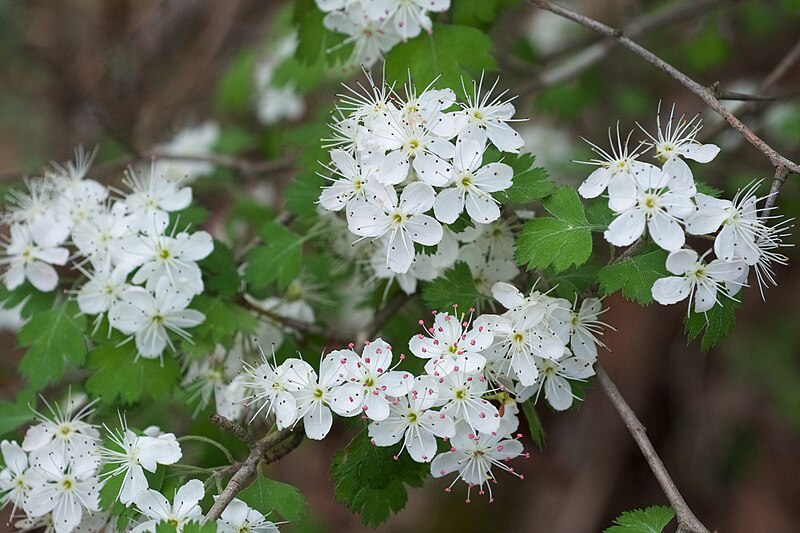
The flowers appear in clusters (corymbs) of 5 to 15 flowers from March to April, emerging just as the leaves begin to unfurl. Each flower is about ½ inch across, with five rounded white petals and prominent pinkish-purple stamens that give the clusters a delicate two-toned appearance. The floral display covers the tree with white for 2 to 3 weeks. The flowers are mildly fragrant and attract numerous pollinators including native bees, flies, and wasps.
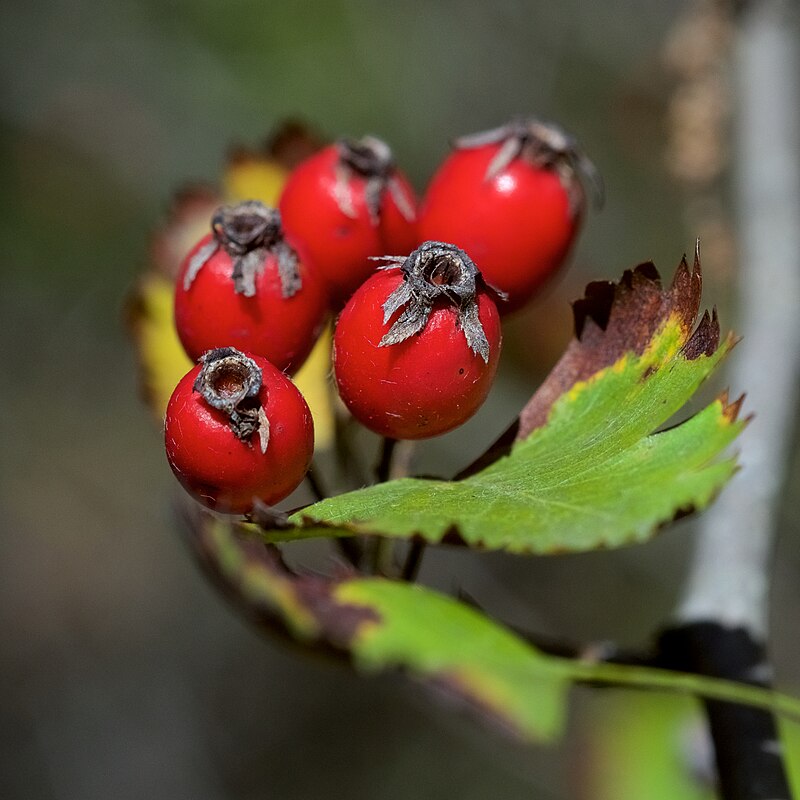
The fruits (haws) develop through summer from green to their final brilliant red, ripening in September and October. Each haw is small — about ¼ to ⅓ inch across — with mealy, apple-like flesh surrounding 2 to 5 hard seeds. The brilliant scarlet color persists through December and into January, making Parsley Hawthorne one of the most reliable winter-fruiting native trees for the Southeast. The fruits are edible for humans and are enthusiastically consumed by cedar waxwings, American robins, hermit thrushes, and numerous other bird species.
Quick Facts
| Scientific Name | Crataegus marshallii |
| Family | Rosaceae (Rose) |
| Plant Type | Deciduous Small Tree / Large Shrub |
| Mature Height | 30 ft |
| Sun Exposure | Part Shade to Full Sun |
| Water Needs | Moderate to High |
| Bloom Time | March – April |
| Flower Color | White with pinkish stamens |
| Fruit | Scarlet haws; persist through winter |
| USDA Hardiness Zones | 6–9 |
Native Range
Parsley Hawthorne is native to the southeastern and south-central United States, ranging from the Coastal Plain of Virginia south through the Carolinas, Georgia, Florida, Alabama, Mississippi, Louisiana, and Texas, north and west through Arkansas, Tennessee, Kentucky, Missouri, and Oklahoma. It is most abundant in the rich bottomland forests and streamside communities of the Gulf Coastal Plain, where moist, alluvial soils support the dense understory vegetation in which it thrives. The species reaches its northern limits in Virginia, Kentucky, and southern Missouri.
Within its range, Parsley Hawthorne occupies a distinctive ecological niche as a small tree of the forest understory and forest edges, particularly in the shrubby transitional zones between upland forest and bottomland wetlands. It grows alongside other characteristic bottomland species: Swamp Chestnut Oak (Quercus michauxii), Overcup Oak (Quercus lyrata), Water Hickory (Carya aquatica), Possumhaw (Ilex decidua), and American Beautyberry (Callicarpa americana). It is also found in upland settings along streams and in moist, rocky ravines of the Piedmont and lower mountains.
The species has a somewhat disjunct distribution in parts of its range, reflecting both its preference for specific bottomland habitats and historical range changes related to climate fluctuations. In areas of its core range across the Gulf Coastal Plain, it is common and not threatened, though bottomland forest clearing for agriculture and development has reduced its overall abundance relative to historic levels.
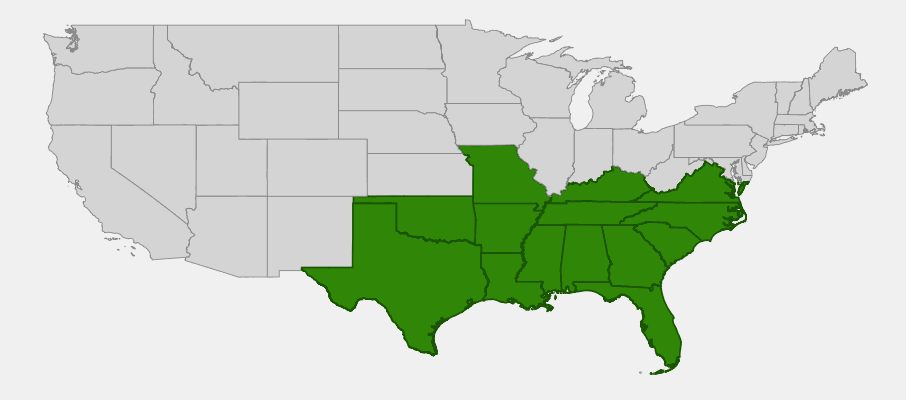
📋 Regional plant lists featuring Parsley Hawthorne: Alabama, Georgia & Mississippi
Growing & Care Guide
Parsley Hawthorne is an underused native tree that deserves far wider recognition in southeastern gardens. Its moderate size, adaptability to partial shade, and exceptional four-season interest make it a valuable addition to naturalistic gardens, woodland edges, and bird-friendly landscapes. Like most hawthorns, it benefits from good air circulation to minimize fungal disease and requires thoughtful placement to avoid contact problems with its thorns.
Light
Parsley Hawthorne is notably adaptable in terms of light — it thrives in everything from part shade (as it naturally does in the forest understory) to full sun at woodland edges and in open garden settings. In part shade, it flowers less prolifically but develops beautiful foliage and still produces attractive fruit. In full sun with adequate moisture, it flowers most abundantly and develops the most colorful fruit display.
Soil & Water
Parsley Hawthorne naturally inhabits moist, seasonally wet bottomland soils — rich, organically amended loams and alluvial deposits with good moisture retention. It tolerates brief flooding and performs well in rain garden settings. In drier sites, it requires more supplemental watering, particularly during summer. Well-drained but consistently moist soil is the ideal. pH adaptability is good — it grows in mildly acidic to mildly alkaline soils (pH 5.5–7.5). Avoid very dry, sandy, or compacted soils.
Planting Tips
Plant from containers in fall or early spring. Water regularly during the first two growing seasons to establish the root system. Mulch with 2–3 inches of organic material, kept away from the trunk, to retain moisture and moderate soil temperature. Allow adequate clearance around the plant for air circulation — crowding promotes powdery mildew and other fungal issues. Position away from high-traffic areas where the thorns could create safety concerns.
Pruning & Maintenance
Prune in late winter while dormant, before flower bud break. Remove dead, crossing, or crowded branches to maintain good air circulation. Parsley Hawthorne’s natural form is somewhat irregular and asymmetrical, which is part of its charm — avoid heavy shearing that would destroy this character. Hawthorns are prone to cedar-apple rust when eastern red cedar is present nearby; if galls appear on branches, remove and dispose of them. Fire blight can also affect hawthorns — prune affected wood 12 inches below the visible damage and sterilize pruning tools between cuts.
Landscape Uses
- Woodland garden specimen — outstanding four-season native small tree
- Bird garden centerpiece — winter fruits feed numerous bird species
- Rain garden anchor — tolerates periodic flooding
- Naturalistic hedgerow — thorny branches create wildlife-friendly cover
- Riparian restoration — ideal for streambank plantings
- Spring pollinator plant — flowers attract native bees and insects
Wildlife & Ecological Value
Parsley Hawthorne is a remarkably wildlife-friendly native tree, providing value across all four seasons. Its combination of early spring flowers, summer fruiting, winter-persistent haws, and thorny branch structure creates a complete habitat package that supports birds and insects from year to year.
For Birds
The scarlet haws are consumed by an impressive list of bird species, with Cedar Waxwings, American Robins, Hermit Thrushes, and Yellow-rumped Warblers being particularly avid consumers. The fruits persist into midwinter, providing critical food when berries and insects are scarce. The thorny branches provide secure nesting sites for Gray Catbirds, Brown Thrashers, and Northern Mockingbirds, which favor thorny shrubs for nest protection.
For Mammals
White-tailed deer browse the foliage and fruit of Parsley Hawthorne. Foxes, raccoons, and opossums consume the fallen fruit. The thorny thickets provide secure cover for cottontail rabbits and small mammals. Gray squirrels and fox squirrels sometimes cache the seeds for winter food.
For Pollinators
The spring flowers of Parsley Hawthorne are highly attractive to a diverse array of pollinators. Native bees — including bumblebees, sweat bees, mason bees, and mining bees — visit the flowers for nectar and pollen. Numerous fly species also visit hawthorn flowers, and the tree is a larval host for butterfly species including the Red-spotted Purple, Striped Hairstreak, and Gray Hairstreak. The flowers’ open, accessible design makes them welcoming to a wide range of pollinators.
Ecosystem Role
Parsley Hawthorne plays an important role in bottomland forest succession and edge habitats. Its thorny growth creates impenetrable thickets that protect the forest understory from deer browsing, allowing more palatable native plants to regenerate. Its root system stabilizes streambanks and prevents erosion in its natural riparian habitat. As part of the complex shrub layer of bottomland forests, it contributes to the vertical stratification of vegetation that increases habitat complexity and species diversity.
Cultural & Historical Uses
Hawthorns as a group have a long and rich history of human use throughout their global range. In North America, Indigenous peoples of the Southeast made extensive use of various native hawthorn species, and Parsley Hawthorne, being one of the most abundant hawthorns in the Gulf Coastal Plain, was certainly among them. The fruits were eaten fresh, cooked into sauces and preserves, and dried for winter storage. Hawthorn fruits (haws) are high in vitamin C and contain various flavonoids and antioxidant compounds, and were incorporated into medicinal preparations for heart conditions, digestive ailments, and as a general tonic.
The genus Crataegus has a remarkably deep history of medicinal use across cultures worldwide. In European herbal medicine, hawthorn preparations have been used for millennia to treat heart palpitations and circulatory disorders. Modern scientific research has confirmed that hawthorn extracts contain biologically active compounds — primarily oligomeric proanthocyanidins and flavonoids — that have measurable effects on cardiovascular function, including mild blood pressure reduction and improved blood flow.
The wood of hawthorns, while rarely used commercially due to the trees’ small size, is extremely hard and dense — among the hardest woods of any North American tree species. It was traditionally used for tool handles, mallets, and small woodworking projects where hardness was paramount. The thorny branches, cut and laid in lines, were historically used as fence barriers and hedgerows. The species name “marshallii” honors Humphry Marshall (1722–1801), a Pennsylvania Quaker botanist who published “Arbustrum Americanum” (1785), the first published account of North American trees and shrubs written by an American-born author — a landmark work in American botanical history.
Frequently Asked Questions
Are Parsley Hawthorne fruits edible?
Yes — the small red haws are edible for humans, though they’re quite seedy and mealy when eaten raw. They are best enjoyed cooked into jellies, syrups, and fruit leathers. The flavor is mildly sweet-tart with apple-like notes. The seeds contain amygdalin (like apple seeds) and should not be consumed in large quantities, but the flesh is safe to eat.
How do I deal with the thorns?
Wear thick leather gloves when working around Parsley Hawthorne — the thorns are sharp, stout, and can cause significant puncture wounds. When selecting a planting site, consider clearance from walkways, children’s play areas, and pet areas. In public settings, site the tree where casual contact is unlikely. The thorns are a feature, not a bug — they provide excellent nest protection for birds and create impenetrable cover for small wildlife.
What are the orange galls I see on hawthorn branches?
These are galls caused by cedar-apple rust fungi (Gymnosporangium spp.), a common disease of hawthorns and apples. The orange, gelatinous “tentacles” appear after rain in spring and release spores. The disease requires both hawthorn and Eastern Red Cedar (Juniperus virginiana) to complete its life cycle. Removing and disposing of the galls before the telial horns develop can reduce local disease pressure.
How should I use Parsley Hawthorne in a bird garden?
Plant Parsley Hawthorne as a focal specimen in a bird-friendly garden, positioning it where you can observe birds feeding on the winter fruits from inside the house. Pair it with other winter-fruiting native shrubs (Possumhaw Holly, American Beautyberry, Yaupon Holly) to extend the fruit display across the season. Leave the fallen fruits on the ground — many sparrows and other ground-feeding birds prefer to forage from fallen fruit.
Can Parsley Hawthorne grow in clay soil?
Yes — Parsley Hawthorne is more tolerant of heavy, moist clay soils than many other small trees, reflecting its natural habitat in bottomland areas with clay-rich alluvial soils. As long as the clay is not permanently waterlogged and the soil has some organic matter, the tree will perform adequately. Amending heavy clay with compost and ensuring good drainage within the root zone will improve establishment and long-term health.

Looking for a nursery that carries Parsley Hawthorne?
Browse our native plant nursery directory: Alabama · Georgia · Mississippi