Winged Elm (Ulmus alata)
Ulmus alata, commonly known as Winged Elm, is one of the most distinctive and widely distributed native elms of the southeastern United States — a graceful, fast-growing deciduous tree instantly recognizable by the remarkable corky, wing-like flanges that develop on its younger branches, creating a striking ornamental effect unlike any other native tree in its range. These wings, technically called “alae” (Latin for “wings”), are flat, corky outgrowths that project horizontally from opposite sides of the smaller branches, giving the winter silhouette of the tree an architectural, almost exotic quality that has made Winged Elm a favorite of both native plant enthusiasts and landscape architects.
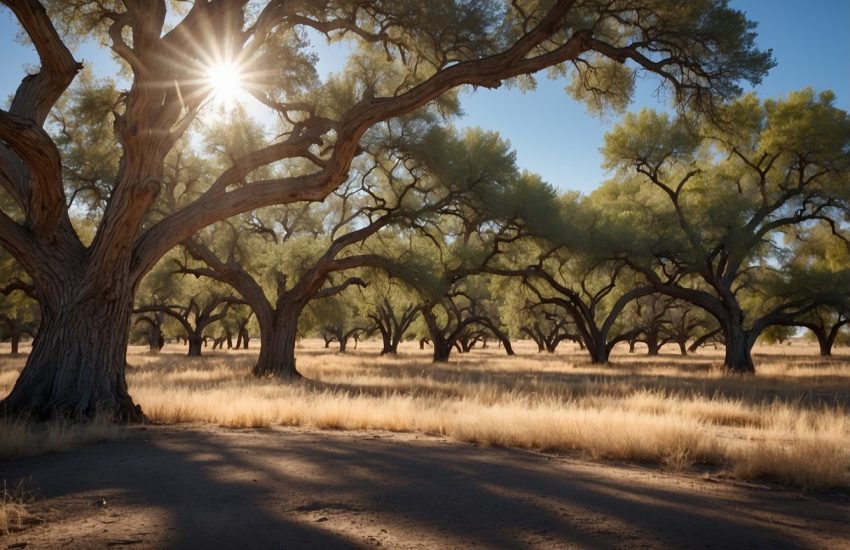
Winged Elm is a medium to large deciduous tree reaching 40 to 80 feet tall, with a broadly rounded, somewhat irregular crown and a strong, straight trunk. It is one of the most drought-tolerant of the native elms, growing naturally on dry rocky slopes, open woodlands, roadsides, and forest edges where its ability to thrive in relatively poor, well-drained soils gives it a competitive advantage over less resilient species. Unlike the iconic American Elm (U. americana), Winged Elm is not susceptible to Dutch Elm Disease in the same devastating way, making it a more reliable choice for contemporary landscapes where disease resilience is a priority.
Across its broad range — from Maryland and Virginia south through the Piedmont and Coastal Plain to Florida, west to Texas, and north to Missouri and Oklahoma — Winged Elm is one of the most ecologically generalist native trees, providing food and habitat for hundreds of insect species, nesting sites for birds, and the structural backdrop of open woodland and forest edge communities. Its small, wind-dispersed seeds ripen in spring (unusually early compared to most trees) and provide critical early-season food for birds and small mammals. For native plant gardeners seeking a tough, adaptable, ornamentally distinctive tree for challenging dry-site conditions, Winged Elm is an outstanding and underused choice.
Identification
Winged Elm is a deciduous tree typically growing 40 to 80 feet tall with a broadly rounded, often somewhat irregular crown. The trunk is straight and relatively slender compared to larger elms, reaching 1 to 2 feet in diameter on mature trees. Young trees develop a pyramidal crown that broadens and becomes more irregular with age. The most immediately recognizable feature at almost any season is the development of flat, corky, tan to gray-brown wings on the smaller branches and branchlets.
Bark & Corky Wings
The bark of mature Winged Elm is gray to reddish-brown, with shallow interlacing ridges separated by deep, narrow furrows — similar in pattern to other elms but somewhat finer in texture. Young bark is smooth and gray. The corky wings are the tree’s most distinctive identification feature: flat, irregular flanges of cork-like bark that develop on branches 1–2 years old, projecting horizontally from opposite sides of the stem. The wings are typically ¼ to ½ inch wide and vary considerably in expression — some trees develop particularly prominent, showy wings while others produce only modest flanges. Not every branch develops wings equally, and trees in very open, stressed conditions sometimes show less wing development than those in more typical woodland edge habitats.
Leaves
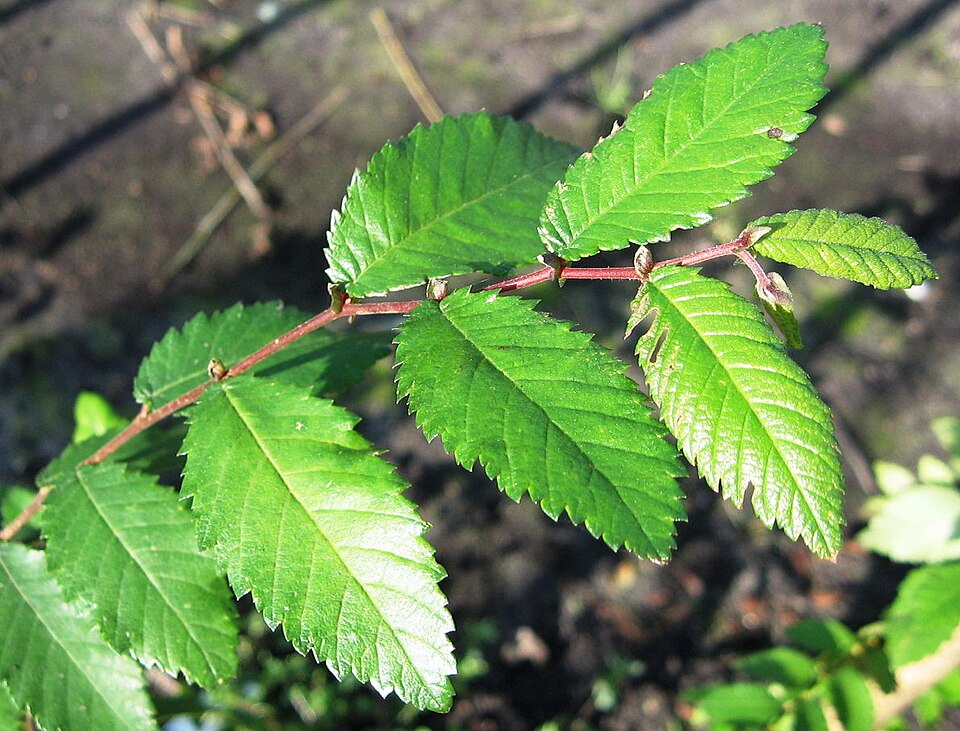
The leaves are simple, alternate, and deciduous — elliptic to oblong-ovate, 1 to 3 inches long and ¾ to 1¼ inches wide, smaller than those of American Elm or Slippery Elm. The leaf is doubly serrate along the margins (with both large and small teeth), and the base is characteristically unequal (asymmetric) — one side of the leaf base is distinctly lower than the other, a feature shared by all native elms. The upper surface is dark green and rough (scabrous) to the touch due to tiny, stiff hairs; the lower surface is slightly paler and softly hairy along the veins. Fall color is yellow, sometimes golden, providing a pleasant late-season display. The small leaves give the crown a fine texture compared to the large-leafed elms, making Winged Elm particularly attractive in landscapes where fine-textured foliage is desired.
Flowers & Fruit
Winged Elm blooms in late winter to very early spring (February–March), well before the leaves emerge — one of the earliest flowering native trees in its range. The flowers are tiny, reddish-brown, and inconspicuous, borne in small, dense clusters along the previous year’s branches. Individual flowers are perfect (containing both male and female parts) and are wind-pollinated. Though not showy, the reddish flower clusters provide a subtle, atmospheric display on bare winter branches in late February, and the mass of flowering twigs gives the crown a reddish blush visible from a distance before any other trees have awakened.
The fruit is a small, flat, oval samara (winged nutlet) about ¼ to ⅜ inch long, with a papery wing encircling a small seed at the center. The samaras ripen rapidly after flowering, typically in March and April, when the tree produces masses of the light, wind-dispersed fruits. The fruiting season is unusually early — most elms fruit in spring, but Winged Elm is among the earliest, providing critical spring food for birds and small mammals at a time when winter food sources are exhausted and spring fruiting has not yet begun for most species.
Quick Facts
| Scientific Name | Ulmus alata |
| Family | Ulmaceae (Elm) |
| Plant Type | Deciduous Tree |
| Mature Height | 80 ft |
| Sun Exposure | Full Sun to Part Shade |
| Water Needs | Low (Drought Tolerant) |
| Bloom Time | February – March |
| Flower Color | Red-brown (inconspicuous) |
| USDA Hardiness Zones | 6–9 |
Native Range
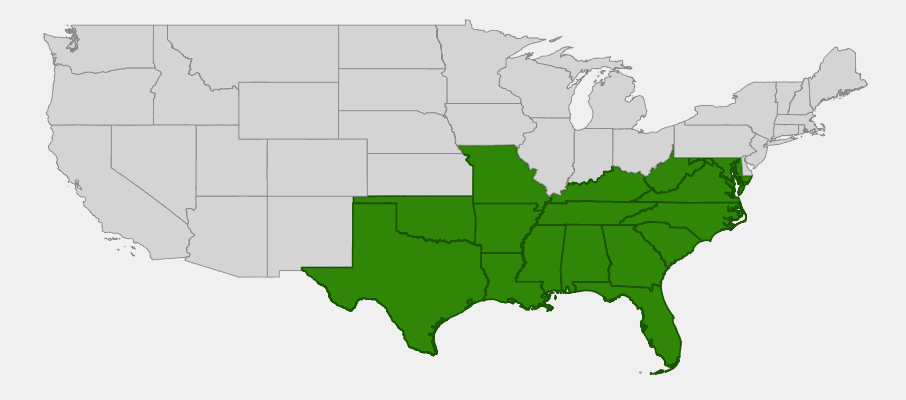
Winged Elm has one of the broadest distributions of any native elm in the United States, ranging from the Atlantic seaboard westward to central Texas and northward into the lower Midwest. Its native range extends from Maryland and Virginia south through the Piedmont and Coastal Plain of the Carolinas, Georgia, and Florida, west through Alabama, Mississippi, Louisiana, and Texas, and north through Arkansas, Oklahoma, Missouri, and Kentucky. Within this broad range, Winged Elm is common in the Piedmont region — the rolling, rocky country between the Appalachians and the Coastal Plain — where it grows on dry rocky slopes, open oak-hickory woodlands, and forest edges that are too dry or rocky for most other elms.
Unlike American Elm and Slippery Elm, which are most commonly associated with moist bottomland forests and floodplains, Winged Elm is primarily a species of dry to mesic upland sites. It grows naturally on rocky ridges, dry woodland slopes, roadsides, old fields, and disturbed forest edges throughout the Piedmont and Interior Highlands. In the Coastal Plain, it occurs on somewhat moister sites including stream banks and lower slopes, but it consistently favors better-drained conditions than the bottomland elms. This upland adaptation makes it particularly tolerant of drought and the dry, compacted soils of urban and suburban landscapes.
Winged Elm is also a pioneer species that establishes rapidly in disturbed habitats — old fields, roadsides, forest clearcuts, and urban waste areas. Its small, wind-dispersed seeds ripen and germinate in late spring, allowing it to colonize disturbed ground quickly. This pioneer character, combined with its drought tolerance and adaptability to poor soils, makes Winged Elm one of the most ecologically resilient native trees in the Southeast — capable of establishing and thriving in conditions that exclude many less adaptable species.
📋 Regional plant lists featuring Winged Elm: Alabama, Georgia & Mississippi
Growing & Care Guide
Winged Elm is one of the most adaptable and undemanding native trees for southeastern landscapes. Its drought tolerance, pest resistance, and rapid establishment from seed or transplant make it an excellent choice for challenging dry-site conditions where more sensitive trees would struggle.
Light
Winged Elm grows best in full sun to part shade and is at its most vigorous in open, sunny positions. In full sun, it develops the fastest growth, the fullest crown, and the most prominent corky wing development. It tolerates light to moderate shade but becomes more open and rangy with less sunlight. In its natural habitat, Winged Elm is most common in open woodland edges, forest gaps, and roadsides where it receives substantial direct sun. For best ornamental results and strongest branch wing development, plant in the sunniest position available.
Soil & Water
Winged Elm is one of the most drought-tolerant native elms and thrives in dry, rocky, or sandy soils where other elms cannot survive. It performs best in well-drained to moderately moist soils and shows excellent adaptability to clay, loam, sand, and rocky substrates across a wide pH range (5.0–7.5). It is not suited to persistently wet or flooded soils — unlike Bald Cypress or Cassine Holly, Winged Elm requires reasonable drainage. Once established, it typically needs no supplemental irrigation except during severe, extended droughts. Its deep root system allows it to access moisture unavailable to shallow-rooted trees during dry periods.
Planting Tips
Plant Winged Elm in fall or early spring from balled-and-burlapped or container stock. It transplants easily and establishes quickly in most soil types. Allow 20–30 feet of spacing from structures and other large trees to accommodate the broad, spreading crown at maturity. Winged Elm is an excellent street tree in areas with dry, compacted soils where more sensitive trees struggle. It is also fast enough to provide useful screening and canopy within 5–10 years of planting. Mulching out to the drip line helps retain moisture during establishment but is not strictly necessary on moist sites.
Pruning & Maintenance
Winged Elm is a relatively low-maintenance tree. Prune to shape and remove dead or crossing branches in late winter or early spring before growth begins. Lower branches can be gradually removed to raise the crown if needed. The tree is susceptible to elm leaf beetle and elm leaf miner — insects that cause cosmetic leaf damage but rarely threaten the tree’s health. Dutch Elm Disease is primarily a disease of American Elm and Slippery Elm; Winged Elm shows greater natural resistance, though it is not fully immune. Overall, Winged Elm is a tough, resilient tree that requires minimal intervention once established.
Landscape Uses
Winged Elm’s combination of drought tolerance, ornamental character, and ecological value makes it suitable for many landscape settings:
- Dry-site specimen tree — thrives where other elms fail in rocky, sandy, or dry clay soils
- Street tree — tolerates compaction, drought, and urban heat island conditions
- Naturalized woodland edge — excellent pioneer species for dry forest edge plantings
- Wildlife habitat planting — early spring fruit feeds birds when other sources are exhausted
- Fast-growing shade tree — provides canopy cover within a few years of planting
- Ornamental accent — the corky winged branches are visually striking in all seasons
- Erosion control — deep root system stabilizes dry slopes and road cuts
Wildlife & Ecological Value
Winged Elm provides wildlife habitat across all seasons, from its early spring fruit to its summer canopy and the structural complexity of its branchy winter form. As one of the most widely distributed native trees in the Southeast, it is an important component of forest edge and upland woodland wildlife communities.
For Birds
The small samaras (winged seeds) of Winged Elm ripen unusually early — in March and April — providing critical spring food for resident and migrant birds at a time when winter food sources are depleted and most trees have not yet begun fruiting. American Goldfinch, Purple Finch, Eastern Towhee, and various sparrows eagerly consume the seeds. American Redstarts, Yellow Warblers, and other neotropical migrants passing through in spring find the fresh foliage of Winged Elm loaded with early-season caterpillars and other invertebrates. The broadly spreading crown of mature Winged Elm trees provides excellent nesting habitat for American Robins, Blue-gray Gnatcatchers, Eastern Wood-Pewees, and various woodpeckers that excavate cavities in older, softer wood.
For Mammals
Eastern Gray Squirrels and Fox Squirrels consume Winged Elm seeds and use the tree’s broad crown for nest (drey) construction. White-tailed Deer browse the small leaves and twigs, particularly in winter. Eastern Cottontail and Swamp Rabbit consume the bark of young stems during winter when other food is scarce. Winged Elm is also used as a rubbing and antler-polishing tree by White-tailed Deer in the fall, which can damage young specimens — protect trunks of newly planted trees with wire guards in deer-abundant areas.
For Pollinators
Winged Elm is an important caterpillar host plant for a substantial number of native moth and butterfly species. The larvae of the Question Mark butterfly (Polygonia interrogationis), Eastern Comma (P. comma), and several prominent and underwing moth species feed on elm foliage. These caterpillars are in turn critical food for nesting birds, particularly species like Baltimore Oriole and Red-eyed Vireo that depend heavily on caterpillars to feed nestlings. Research by Dr. Doug Tallamy has documented over 200 caterpillar species associated with native elms — making the genus Ulmus one of the most caterpillar-supporting tree genera in eastern North America.
Ecosystem Role
Winged Elm is a keystone component of dry upland woodland communities throughout the Piedmont and southeastern Interior Highlands. As a pioneer species and gap-colonizer, it plays an important role in forest succession, rapidly establishing in disturbed areas and providing canopy cover that allows more shade-tolerant species to establish beneath it. Its early spring fruiting provides an important phenological food source that bridges the gap between winter food caches and the main spring flush of production. The deeply furrowed bark of mature trees provides sheltered microhabitat for bark beetles, spiders, and other invertebrates, while old cavities in larger specimens are used by Screech Owls, Wood Ducks (in bottomland populations), and various small mammals.
Cultural & Historical Uses
Elm trees hold a prominent place in the cultural history of North America and Europe, and Winged Elm shares in this heritage as one of the most characteristic trees of the southeastern American landscape. Indigenous peoples of the Southeast — including the Cherokee, Creek, Choctaw, and numerous other nations — used elm bark extensively. The inner bark of elm trees was prepared as a poultice for wounds and skin irritations, taken as a tea for sore throats (the mucilaginous inner bark was soothing to irritated tissues), and woven into cordage and rope for a variety of uses. Cherokee traditional medicine used elm bark preparations for a range of conditions including childbirth complications, dysentery, and wound treatment, reflecting the wide pharmacological utility of the mucilaginous compounds in elm bark.
Early European settlers in the Southeast learned many of these uses from Indigenous peoples and added their own applications. Winged Elm wood is hard, heavy, and tough — with interlocking grain that resists splitting — and was used for wheel hubs, tool handles, barrel staves, and other applications requiring shock-resistant, split-resistant material. The name “elm” itself is related to the Old English and Germanic words for the tree, reflecting its importance across the Northern Hemisphere. While Winged Elm was never commercially significant as a timber tree in the way that American Elm was, it was a practical and reliable source of small-diameter hardwood for frontier woodworking throughout the Southeast.
In the 20th century, the devastation of American Elm (Ulmus americana) populations by Dutch Elm Disease — first detected in the United States in 1930 — prompted new interest in native elm species with greater disease resistance. Winged Elm’s superior resistance to Dutch Elm Disease, combined with its drought tolerance and ornamental corky wings, has made it an increasingly popular subject for urban forestry programs and native plant restoration efforts. Contemporary landscapers and urban foresters working in the dry, compacted soils of southeastern cities have found Winged Elm to be one of the most reliable and ecologically valuable native trees available for street tree programs, where its adaptability, fast growth, and wildlife value make it a standout choice.
Frequently Asked Questions
Why does my Winged Elm have corky wings on some branches but not others?
Wing development on Winged Elm varies naturally — both between individual trees and between branches on the same tree. Not every branch develops prominent wings, and the expression is influenced by genetics, growing conditions, and tree age. Young trees often show less wing development; the wings typically become more prominent and consistent as the tree matures. This variation is a natural characteristic of the species and not an indicator of any problem with the tree.
Is Winged Elm susceptible to Dutch Elm Disease?
Winged Elm is considerably more resistant to Dutch Elm Disease than American Elm (Ulmus americana) or Slippery Elm (U. rubra), which have been devastated by the disease across much of their range. While not completely immune, Winged Elm rarely suffers the catastrophic, rapid decline seen in American Elm. For landscapes in areas where Dutch Elm Disease is present, Winged Elm is a much safer choice than the classic American Elm for long-term reliability.
How fast does Winged Elm grow?
Winged Elm has a moderate to fast growth rate, typically adding 1.5–3 feet per year under favorable conditions. This makes it one of the faster-growing native trees for dry, challenging sites where slower species would take many years to provide useful size. Under ideal conditions (good soil, full sun, consistent moisture during establishment), young trees can grow even faster, providing useful canopy cover within 5–10 years of planting.
When do Winged Elm seeds ripen?
Winged Elm is one of the earliest native trees to flower and fruit — the small reddish flowers appear in February or March, well before the leaves emerge, and the samaras (winged seeds) ripen and are released in March and April. This very early fruiting is ecologically significant because it provides a fresh food source for birds at the end of winter, when stored food is depleted and spring production from other trees has not yet begun. The timing varies slightly by latitude and year-to-year weather patterns.
Can Winged Elm grow in wet soil?
Winged Elm prefers well-drained to moderately moist soils and does not tolerate prolonged flooding or persistently wet conditions. This distinguishes it from American Elm and Slippery Elm, which grow naturally in moist bottomlands. For wet sites, Bald Cypress, Pond Cypress, or Swamp Bay would be much better choices. Winged Elm’s strength is in dry to mesic upland conditions where its drought tolerance and adaptability to poor soils give it a significant advantage.

Looking for a nursery that carries Winged Elm?
Browse our native plant nursery directory: Alabama · Georgia · Mississippi