Pearlyeverlasting (Anaphalis margaritacea)
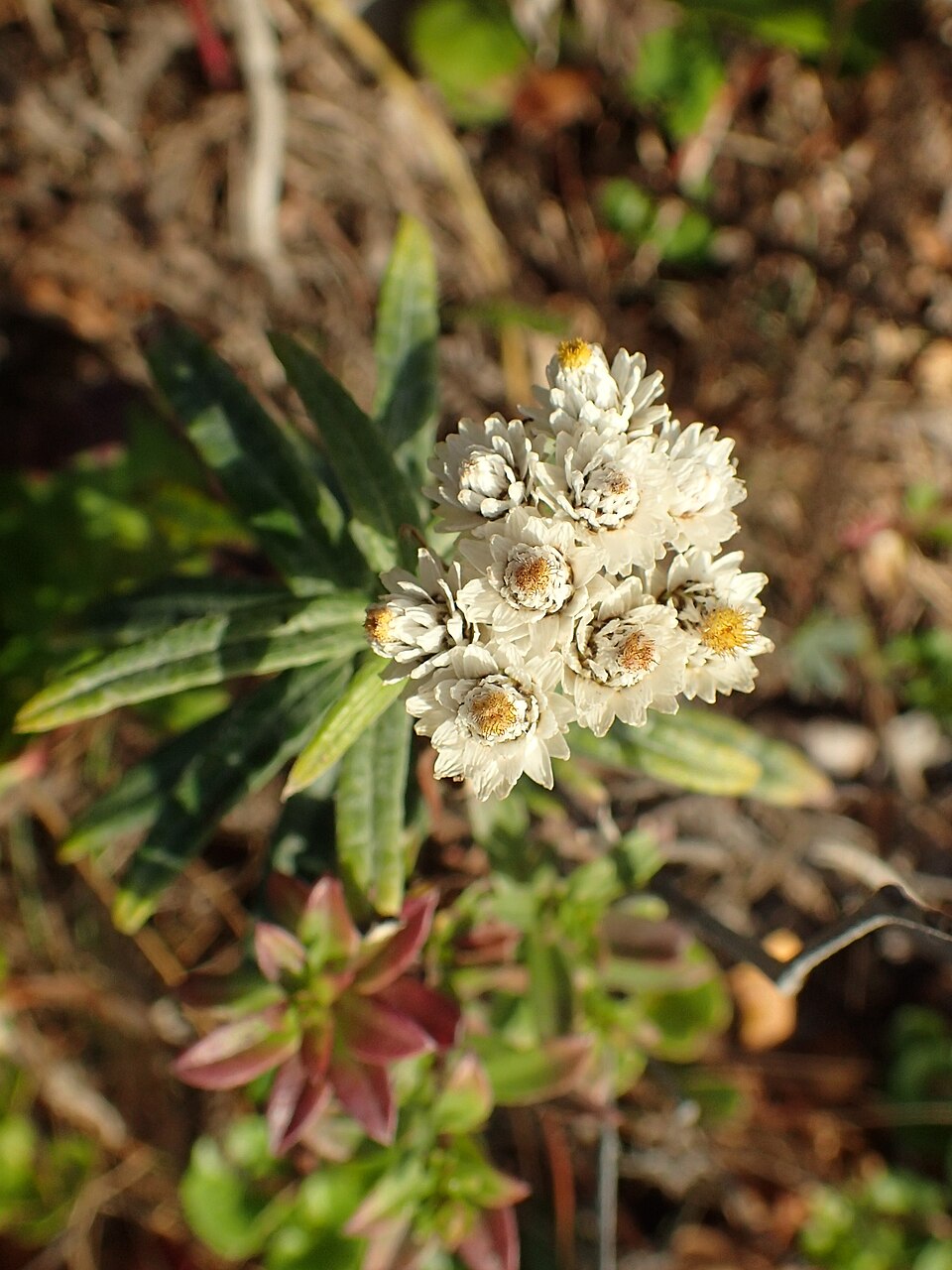
Anaphalis margaritacea, known as Pearlyeverlasting, is one of the most distinctive and recognizable native wildflowers of North America. Its name perfectly captures its essence: each flower head consists of bright white, papery, pearlescent bracts surrounding a golden-yellow center of tiny disc florets — flowers so dry and crisp that they persist beautifully long after cutting, making Pearlyeverlasting one of the premier native plants for dried floral arrangements. Margaritacea means “pearly” in Latin, a reference to the lustrous, almost porcelain-white appearance of the bracts.
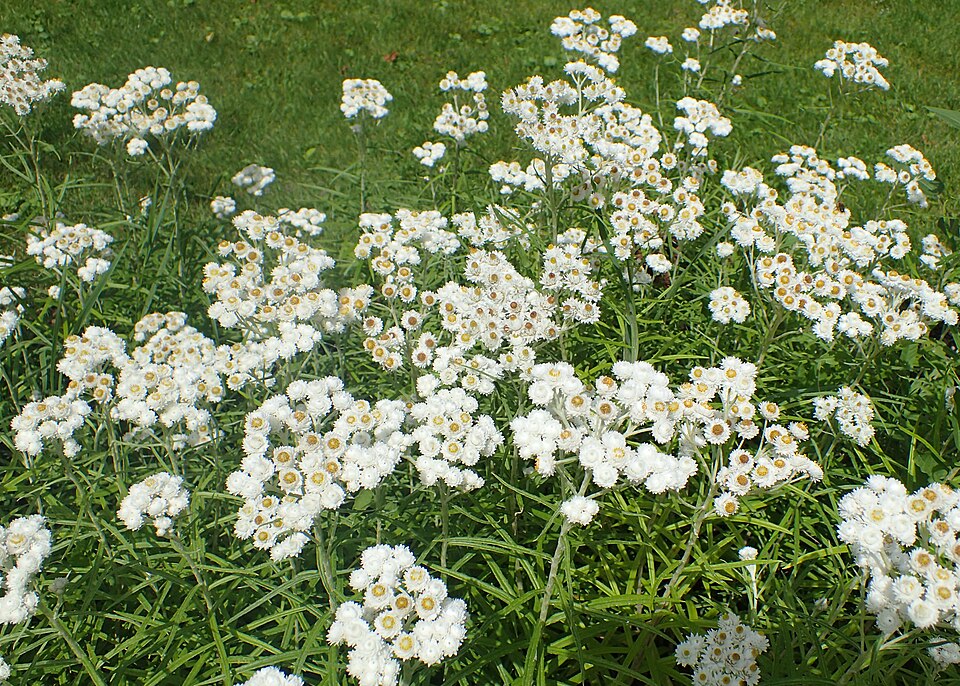
Unlike its close relatives in the genus Antennaria, Pearlyeverlasting grows as an upright, clumping plant rather than a mat-former — reaching 1 to 2 feet tall with clusters of 10 to 30 flower heads atop woolly stems. The leaves are distinctively two-toned: dark green above with a grayish-green midrib, and densely white-woolly beneath, giving them a silver-backed appearance that flickers attractively in a breeze. This woolly coating is an adaptation to drought and intense sun, reducing moisture loss from the leaf surface.
Pearlyeverlasting is widely distributed across North America and much of Asia and Europe, thriving in dry to moderately moist open habitats — meadows, roadsides, open forest edges, streambanks, and disturbed sites. In Montana and Wyoming, it is a common sight along roadsides, in dry mountain meadows, and on open slopes from the valleys up to subalpine elevations. It is one of the first colonizers of burned areas, often creating spectacular white-carpeted displays in the years following a wildfire.
Identification
Pearlyeverlasting is an erect, clump-forming perennial herb, growing 8 to 36 inches (20–90 cm) tall on multiple upright stems from a spreading root system. The stems are densely clothed in white woolly hairs, giving the plant a silver-white appearance throughout the growing season. Plants often form loose colonies through short rhizomes, though they are not aggressively spreading.
Leaves
The leaves are linear to narrowly lanceolate, 1.5 to 4 inches long and ¼ to ½ inch wide, alternate, and sessile (without stalks). The upper surface is dark green with a pale midrib, sometimes sparsely woolly when young; the lower surface is densely covered in bright white woolly hairs — the characteristic feature that distinguishes Pearlyeverlasting from most look-alikes. The leaves lack basal rosettes; they are arranged along the entire stem to near the flower clusters.
Flowers
The flower heads are small — about ¼ to ½ inch across — but are arranged in dense, flat-topped corymbs of 10 to 30+ heads at the stem tips. Each head consists of multiple rows of gleaming white, papery involucral bracts (phyllaries) that surround the tiny central disc florets. The inner phyllaries are often slightly longer and more spreading, giving the head a star-like appearance. The central disc florets are yellow, visible as tiny golden dots at the center of the white “petals.” The plant is dioecious — male and female flowers on separate plants — though both produce the distinctive white flower heads. Bloom time runs from July through September in Montana and Wyoming. Crucially, the dried flower heads persist on the plant well into winter, providing seed for wildlife and structural interest in the winter landscape.
Quick Facts
| Scientific Name | Anaphalis margaritacea |
| Family | Asteraceae (Aster / Composite) |
| Plant Type | Perennial Herb |
| Mature Height | 1–2 ft |
| Sun Exposure | Part Shade to Full Sun |
| Water Needs | Low (Drought Tolerant) |
| Bloom Time | July – September |
| Flower Color | White (papery bracts) with yellow center |
| Soil Type | Well-drained to moderately moist; tolerates rocky, sandy soils |
| Fire Response | Early fire colonizer; spreads rapidly after wildfire |
| USDA Hardiness Zones | 3–9 |
Native Range
Pearlyeverlasting is one of the most broadly distributed native wildflowers in North America, ranging from Alaska and the Yukon south through all of the western states, and east across southern Canada and the northern United States to the Atlantic coast. It is also native to eastern Asia (Japan, Korea, China) and has naturalized widely in Europe — a testament to its exceptional adaptability. In North America, it is absent only from the driest deserts and hottest parts of the deep South.
In Montana and Wyoming, Pearlyeverlasting is ubiquitous in open, dry-to-moderate habitats from valley floors to subalpine elevations. It is particularly common on roadsides and in disturbed areas, where its aggressive post-fire and post-disturbance colonization ability makes it one of the most visible wildflowers in the region. In the years following major wildfires in Glacier National Park and the greater Yellowstone region, Pearlyeverlasting typically becomes one of the dominant forbs, creating white-flowered meadows that attract massive concentrations of butterflies and other pollinators.
The species tolerates a remarkably wide range of moisture conditions — from quite dry, rocky sites to moist streambanks and meadow margins — reflecting its classification as drought tolerant yet adaptable. It is less common in dense, shaded forest interiors but thrives along forest edges, in gaps, and wherever light reaches the understory.
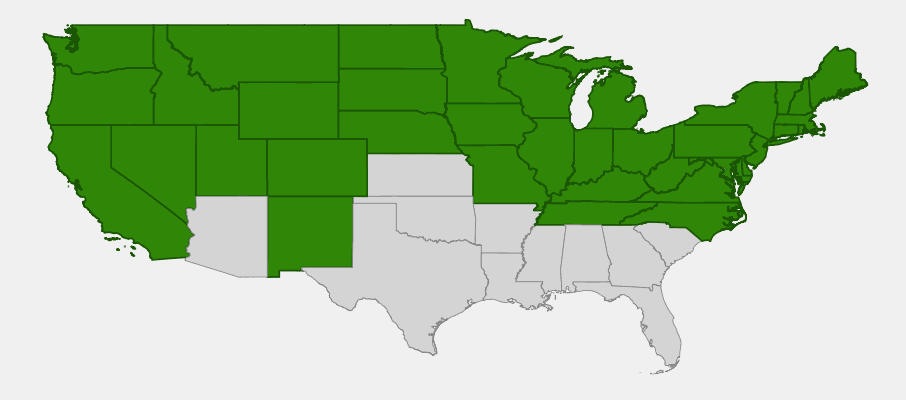
📋 Regional plant lists featuring Pearlyeverlasting: Montana & Wyoming
Growing & Care Guide
Pearlyeverlasting is among the easiest native wildflowers to grow in Montana and Wyoming. It establishes readily from seed or transplant, tolerates poor soils and drought, and requires minimal care — making it ideal for low-maintenance native gardens, wildflower meadows, and slope stabilization plantings.
Light
Pearlyeverlasting grows best in full sun to partial shade. In full sun it typically produces the most compact, floriferous growth; in partial shade it becomes slightly taller and more open but still flowers well. It is highly adaptable — making it useful for both sunny meadow plantings and partially shaded forest-edge situations.
Soil & Water
One of Pearlyeverlasting’s greatest virtues is its tolerance of poor, dry soils. Sandy, gravelly, rocky, or lean loamy soils are all suitable — in fact, rich soils often produce rank, floppy growth that is less attractive than the compact habit achieved in lean soils. It is drought tolerant once established, performing well in the dry summers typical of Montana and Wyoming. It can also tolerate somewhat moist conditions along streambanks and meadow margins, reflecting its wide natural distribution. Well-drained soils are preferred — standing water or heavy clay should be avoided.
Planting Tips
Pearlyeverlasting can be direct-seeded into prepared soil in fall for spring germination, or surface-sown indoors 8–10 weeks before the last frost (seeds need light to germinate — do not cover with soil). Transplanting container-grown stock in spring is reliable and faster than seed. Space plants 18–24 inches apart; they will spread gradually via rhizomes to fill gaps. The first season is devoted to root establishment; expect moderate height and few flowers. By the second year, plants typically produce full flowering stems.
Pruning & Maintenance
Very little pruning is required. Spent flower heads can be removed after peak bloom if a tidier appearance is desired, though leaving them provides food for seed-eating birds and excellent winter interest. Cut stems back to the ground in early spring to encourage vigorous new growth. If colonies spread beyond the desired area, simply dig and remove unwanted sections — the rhizomes are shallow and easy to remove. Divide large clumps every 4–5 years to maintain vigor.
Landscape Uses
- Dried flower gardens — the premier native plant for everlasting flower arrangements
- Wildflower meadows — naturalizes readily and blooms late-season when many other forbs have finished
- Butterfly gardens — essential larval host plant for American Lady butterfly
- Pollinator gardens — abundant late-season nectar for native bees and wasps
- Slope stabilization — rhizomatous roots help control erosion on dry slopes
- Fire-wise landscaping — drought tolerant and a rapid revegetator after disturbance
- Native borders — silvery foliage provides textural contrast with green-foliaged plants
Wildlife & Ecological Value
Pearlyeverlasting is a cornerstone plant for butterfly conservation and late-season pollinator support in western North America, with wide-ranging ecological benefits that extend across multiple animal groups.
For Butterflies
Pearlyeverlasting is the primary larval host plant for two of the most beautiful native butterflies in North America — the American Lady (Vanessa virginiensis) and the Painted Lady (Vanessa cardui, one of the world’s most widely distributed butterflies). Female Ladies seek out Anaphalis and Antennaria species for egg-laying; caterpillars construct distinctive silk-webbed nests among the woolly leaves. Planting Pearlyeverlasting is one of the most effective and reliable ways to attract both Lady butterfly species to your garden for breeding.
For Bees and Wasps
The late bloom season (July–September) makes Pearlyeverlasting an especially valuable nectar plant, filling a gap when many earlier-flowering native plants have finished. Native bees of many species visit the flowers, including bumblebees, sweat bees, and small carpenter bees. Various parasitoid wasps also feed on the nectar while hunting for caterpillar prey in the foliage — making Pearlyeverlasting a host plant for natural pest-control insects as well.
For Birds
American Goldfinches, Pine Siskins, and other small finches consume the tiny seeds of Pearlyeverlasting from the persistent dried flower heads in late summer and fall. The woolly plant fibers are sometimes collected by hummingbirds and other small birds for nest construction. The plant’s hollow dried stems can provide overwintering sites for small native bees that nest in pre-existing cavities.
Ecosystem Role
Pearlyeverlasting is a classic fire follower — among the first forbs to colonize burned land, where it can dominate the herbaceous layer for several years post-fire. This early colonization stabilizes disturbed soils, reduces erosion, and begins rebuilding the insect and pollinator community that was disrupted by the fire. As succession proceeds, Pearlyeverlasting gradually gives way to longer-lived native species, but may persist for decades in open, disturbed micro-sites. Its ecological role is thus as an opportunistic gap-filler that bridges the gap between bare, post-disturbance ground and a mature native plant community.
Cultural & Historical Uses
Pearlyeverlasting has a long history of use by Indigenous peoples across North America. The Okanagan-Colville, Blackfoot, Thompson, and many other groups used the dried plant medicinally — preparations of the leaves and flowers were used to treat colds, fevers, and respiratory ailments. The soft, woolly plant material was used as padding and insulation in moccasins and bedding, and as tinder for fire-starting. The Blackfoot people used dried Pearlyeverlasting as a ceremonial smoking mixture, often blending it with tobacco. The flowers were used decoratively in headdresses and as embellishments on garments during ceremonies.
Pearlyeverlasting’s most widespread traditional use, however, was as a medicinal plant for treating digestive problems and skin conditions. The Squaxin Island, Quinault, and other Pacific Northwest peoples used leaf poultices for skin infections and swellings. The Thompson Plateau peoples of British Columbia prepared a tea from the plant for treating diarrhea. The widespread, cross-cultural use of this plant across dozens of Indigenous nations — from Alaska to the Appalachians — reflects the remarkable medicinal properties that ethnobotanists have subsequently validated: Anaphalis extracts show antimicrobial, anti-inflammatory, and wound-healing activity in laboratory studies.
In European herbal tradition, Anaphalis margaritacea gained recognition shortly after being introduced to European gardens from North America in the 1600s. It became a popular dried flower, prized for its persistence and pearl-white appearance — a quality that led to its widespread cultivation in cottage gardens and for the cut-flower trade. By the 19th century, Pearlyeverlasting wreaths and dried arrangements were fashionable across Europe and eastern North America. Today, it remains one of the few native wildflowers with a robust following in both the gardening and dried-flower markets.
Frequently Asked Questions
How do I dry Pearlyeverlasting for arrangements?
For the best dried flowers, cut stems just as the first flower heads in a cluster begin to open — before the central disc florets are fully exposed. Bundle 10–15 stems, secure with a rubber band (which tightens as stems dry), and hang upside down in a warm, dark, well-ventilated location for 2–3 weeks. The flower heads will retain their shape and pearly color for years when kept away from direct sunlight.
Will Pearlyeverlasting spread and take over my garden?
Pearlyeverlasting spreads via short rhizomes and self-seeding, and can form sizable patches over time. In a wildflower meadow or naturalistic garden this spreading habit is an asset; in a formal border, it may need occasional division to keep it in bounds. It is not considered invasive but is moderately expansive.
Is it related to the garden plant known as everlasting or strawflower?
The common name “everlasting” is shared by several genera in the Asteraceae family, including Helichrysum (strawflower), Xerochrysum, and Gnaphalium (cudweeds). Pearlyeverlasting (Anaphalis) is distinct from all of these, though all share papery, dried-looking bracts that give them their everlasting character. Anaphalis margaritacea is the only North American native among the major “everlastings” commonly grown in gardens.
Is Pearlyeverlasting good for pollinators?
Yes — it is excellent, particularly for late-summer and fall pollinators. The long bloom season (July through September or October) provides nectar when many other native wildflowers have finished, making it a critical late-season resource for native bees, wasps, and butterflies preparing for fall migration or overwintering.
Can it tolerate shade?
Pearlyeverlasting tolerates light partial shade, especially in hot, dry regions where afternoon shade reduces moisture stress. However, it flowers most profusely in full sun and tends to become floppy and sparse in heavy shade. For best results, provide at least 6 hours of direct sun.