Redosier Dogwood (Cornus sericea)
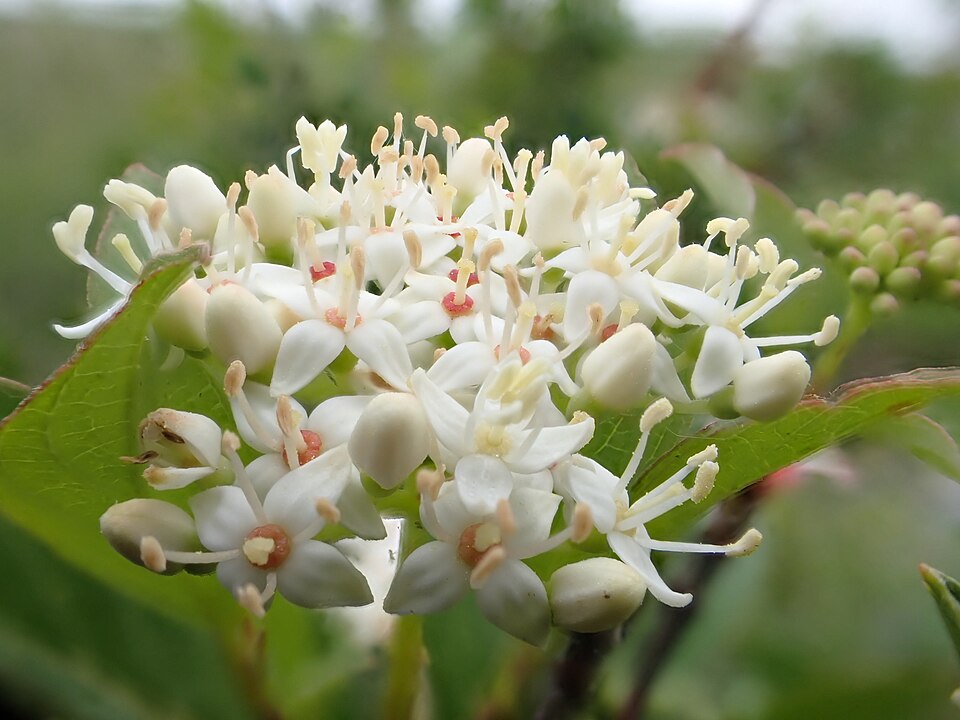
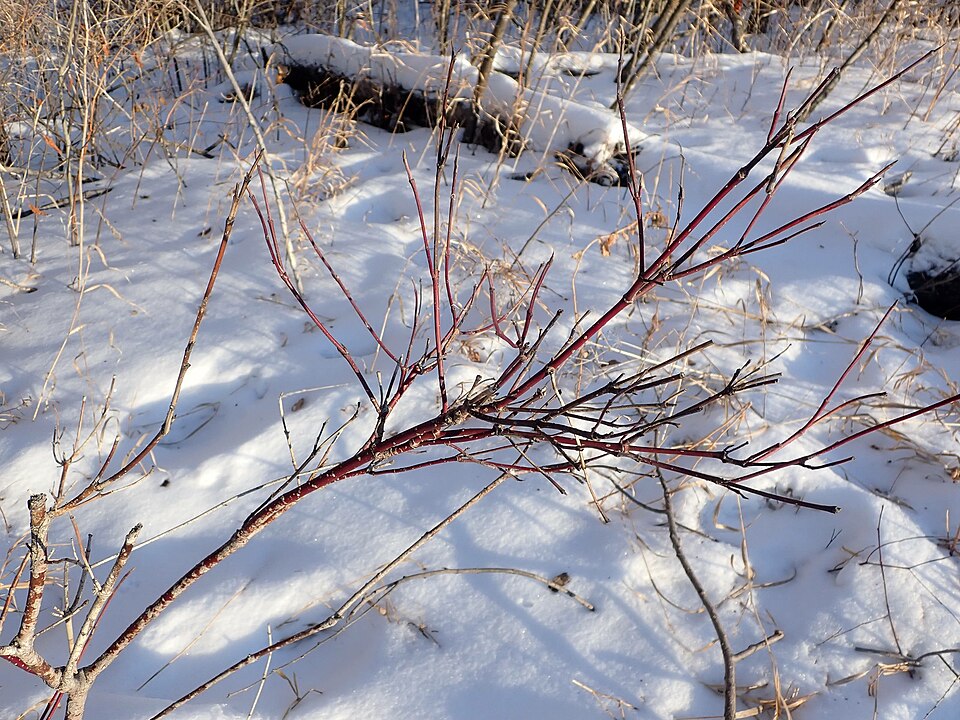
Cornus sericea (formerly Cornus stolonifera), commonly known as Redosier Dogwood or Red-twig Dogwood, is one of the most visually dramatic native shrubs in North America. For three seasons of the year it is a valuable but unassuming component of streamside and wetland communities, offering clusters of small white flowers in spring, white berries in summer, and burgundy-purple fall foliage. But in winter, when its leaves have fallen, Redosier Dogwood transforms into a spectacular ornamental spectacle — the young stems turn brilliant crimson-red, creating vivid splashes of color against snow-covered stream margins that are among the most iconic images of winter in the Northern Rockies.
In Montana and Wyoming, Redosier Dogwood is a dominant shrub along streams, rivers, pond margins, and in wet meadows and swales from valley floors to montane elevations. It is a thicket-forming species, spreading by underground rhizomes and layering to create dense colonies that provide exceptional wildlife habitat — particularly for nesting birds and over-wintering small mammals. The berries are a critical food source for dozens of bird species during fall migration and throughout the winter months when other food is scarce.
Beyond its immense wildlife value, Redosier Dogwood is one of the most important native shrubs for riparian restoration in the West. Its deep, spreading root system stabilizes streambanks against erosion, while its dense thickets filter runoff, intercept sediment, and provide shade that keeps stream temperatures cool enough for trout and other cold-water fish. Any riparian planting project in Montana or Wyoming should include Redosier Dogwood as a core species.
Identification
Redosier Dogwood is a deciduous shrub growing 6 to 15 feet (1.8–4.5 m) tall, though 6 to 8 feet is typical in the Northern Rockies. It spreads vigorously by underground rhizomes and stem layering, forming broad thickets when conditions allow. The most instantly recognizable feature is the brilliant red to dark crimson young stems that glow brightest in winter and early spring, fading to brown-green as they age past two or three years.
Stems & Bark
Young branches and twigs are smooth and waxy, ranging from blood-red to brilliant coral-red on new growth, gradually darkening and browning on older wood. The interior pith of stems is white. The red pigmentation is most intense on stems that receive full sun and are freshly grown — this is why hard pruning in late winter, which forces a flush of new red stems, is recommended for gardeners who want to maximize the winter color display.
Leaves
The leaves are simple, opposite, 2 to 4 inches (5–10 cm) long, ovate to elliptic, with 5 to 7 pairs of prominent veins that curve arcuately toward the leaf tip — the classic “dogwood vein” pattern that is diagnostic for the genus. The upper surface is medium green; the underside is paler and slightly hairy (the species name sericea means “silky”). In fall, the leaves turn shades of purple, burgundy, and red before dropping, adding a third season of visual interest to the plant’s year-round appeal.
Flowers & Fruit
The flowers are small — individually tiny at ¼ inch — but are borne in dense, flat-topped clusters (cymes) 1.5 to 2.5 inches across at the branch tips. Each flower has four white petals. Bloom time is May through July in Montana and Wyoming, often extending to midsummer. The flowers attract bees, flies, and butterflies. The fruit is a small white to off-white drupe, approximately ¼ inch in diameter, clustered in the flat-topped formation of the flower cyme. The berries ripen from late July through September and are eagerly consumed by birds throughout fall and winter.
Quick Facts
| Scientific Name | Cornus sericea (syn. C. stolonifera) |
| Family | Cornaceae (Dogwood) |
| Plant Type | Deciduous Shrub |
| Mature Height | 6–8 ft |
| Mature Spread | 6–10 ft or more (colony-forming) |
| Sun Exposure | Part Shade to Full Sun |
| Water Needs | High |
| Bloom Time | May – July |
| Flower Color | White |
| Fruit | White to cream drupes (berries), Aug–Oct |
| Fall Color | Purple to burgundy-red |
| Winter Interest | Brilliant red to coral-red young stems |
| USDA Hardiness Zones | 2–7 |
Native Range
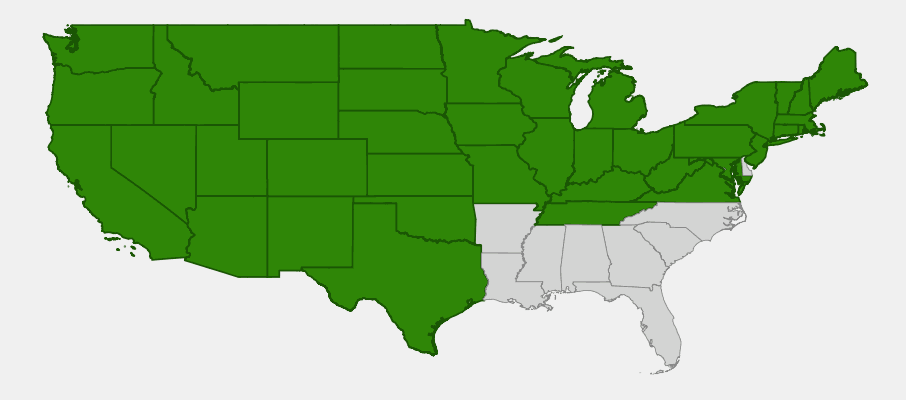
Redosier Dogwood is one of the most widely distributed native shrubs in North America, ranging from Newfoundland and Labrador west to Alaska, south through all of the Rocky Mountain states to northern New Mexico, and east across the upper Midwest and Great Lakes region. It extends into high-elevation mountains of the Southwest (Colorado, Utah, Arizona, New Mexico) and along the Pacific coast states. This vast range reflects the species’ adaptability to diverse climates as long as adequate moisture is present.
In Montana and Wyoming, Redosier Dogwood is a characteristic and dominant shrub of riparian zones — along streams, rivers, irrigation ditches, pond margins, and in wet meadows and swales. It thrives wherever the water table is near the surface or flooding occurs seasonally. In the Northern Rockies, it is a defining species of the willow-dogwood scrub community type that lines most mountain streams from the valley floor up to approximately 9,000 feet elevation. It is often found growing alongside Willows (Salix spp.), Thinleaf Alder (Alnus incana), and Bog Birch (Betula glandulosa).
The species is notably tolerant of flooding — it can survive prolonged periods of inundation that would kill most woody plants — and its spreading rhizomatous growth helps it maintain colonies even when some stems are lost to ice damage or flood scour. After wildfires in riparian areas, Redosier Dogwood is among the earliest woody plants to resprout from its extensive root system, quickly re-establishing streambank cover.
📋 Regional plant lists featuring Redosier Dogwood: Montana & Wyoming
Growing & Care Guide
Redosier Dogwood is one of the most rewarding native shrubs for moist sites in Montana and Wyoming, providing year-round interest with minimal care. It is especially indispensable for rain gardens, bioswales, streambank restoration, and any landscape where soil moisture is consistently high.
Light
Redosier Dogwood grows well in full sun to partial shade. Full sun produces the most brilliant red stem coloration, most abundant flowering, and heaviest berry crop. In partial shade — such as the north side of a building or the edge of a riparian forest — it grows taller and slightly more open, but still produces significant stem color and fruit. Deep shade reduces fruiting and stem color substantially; avoid planting in deeply shaded sites.
Soil & Water
This is a moisture-loving shrub that performs best in consistently moist to wet soils. It is ideal for rain gardens, bioswales, pond edges, and streambanks where other shrubs might struggle. It tolerates clay soils better than most shrubs, as long as drainage is adequate. Supplemental irrigation is necessary in dryer garden sites — the plant should receive at least 1 inch of water per week during the growing season in Montana and Wyoming’s typically dry summers. It tolerates periodic flooding and even standing water for short periods. Avoid planting in dry, well-drained soils where it will struggle and become susceptible to drought stress and powdery mildew.
Planting Tips
Plant Redosier Dogwood from container stock in spring or fall. Fall planting is often best in Montana and Wyoming, as it allows roots to establish during the cooler, moister fall and early-spring period before the dry summer arrives. Space plants 5–8 feet apart for individual specimens, or 3–4 feet apart for a privacy screen or windbreak. Hardwood cuttings root easily in late winter or early spring — simply push 6-inch lengths of dormant stem into moist soil, and most will root by summer. This is the easiest and least expensive propagation method.
Pruning & Maintenance
To maximize the brilliant red winter stem display, prune approximately one-third of the oldest, darkest stems to the ground each year in late winter. This forces vigorous new growth from the base — the new stems will be the brightest red. Without pruning, stems gradually lose their red color as they age beyond 2–3 years. An alternative approach is to cut the entire shrub back to 6 inches every 2–3 years for a uniform flush of vibrant new growth. Remove any stems that show disease symptoms (powdery mildew is the most common issue in humid conditions). Redosier Dogwood tolerates hard pruning well and recovers vigorously.
Landscape Uses
- Rain gardens and bioswales — one of the most effective native shrubs for wet-site conditions
- Streambank stabilization — prevents erosion, builds organic matter in riparian soils
- Wildlife hedgerows — exceptional bird habitat and food source
- Winter interest — brilliant red stems are spectacular against snow
- Native privacy screens — spreads to form dense, 6–8-foot thickets
- Pond and wetland margins — thrives at the water’s edge
- Large-scale restoration plantings along rivers and wetlands
Wildlife & Ecological Value
Redosier Dogwood is perhaps the single most valuable native shrub for wildlife in the Northern Rockies — providing food, nesting habitat, and cover across all seasons for an extraordinary diversity of species.
For Birds
The white berries of Redosier Dogwood are consumed by more than 40 species of birds, including American Robins, Cedar Waxwings, Wood Thrushes, Swainson’s Thrushes, Gray Catbirds, and dozens of species of migrating warblers and sparrows that stop to fuel up on the high-lipid fruits during fall migration. The dense thickets provide nesting habitat for a wide range of songbirds including Song Sparrows, Yellow Warblers, Common Yellowthroats, and Red-winged Blackbirds. Winter residents such as Ruffed Grouse consume both berries and buds.
For Mammals
White-tailed Deer, Mule Deer, and Moose browse the stems and leaves heavily throughout the growing season — Redosier Dogwood is among the top forage shrubs for deer and moose in riparian zones. Elk graze the stems in spring when the new growth is tender. Beavers consume both the bark and wood and use the stems in dam construction. Small mammals including Rabbits, Muskrats, and various mice and voles consume bark and stems during winter. Black Bears eat the berries when available.
For Pollinators
The flat-topped white flower clusters provide accessible nectar and pollen for bees, flies, beetles, wasps, and butterflies. The open flower structure is particularly accessible to short-tongued native bees and beneficial insects including parasitoid wasps and hover flies. Redosier Dogwood blooming in late spring provides a reliable nectar source at a critical time of year for establishing bee populations.
Ecosystem Role
In riparian ecosystems, Redosier Dogwood is a keystone structural species. The dense thickets provide thermal cover for wildlife — studies in Wyoming have documented that streamside dogwood thickets maintain temperatures 10–15°F warmer than open areas during cold winter nights, serving as critical survival habitat for songbirds and small mammals. The shade cast by dogwood thickets keeps stream water temperatures several degrees cooler in summer, directly benefiting cold-water fish communities including native Cutthroat Trout. Root networks stabilize streambanks against erosive high flows, and the thick leaf litter enriches riparian soils with organic matter. Few native shrubs contribute more to the health of Rocky Mountain stream ecosystems than Redosier Dogwood.
Cultural & Historical Uses
Redosier Dogwood (called “kinnikinnick” by some Indigenous groups, though this name is shared with Bearberry) was one of the most widely used native shrubs in North America. Indigenous peoples used virtually every part of the plant. The bark of the stems was a key ingredient in the ceremonial smoking mixtures used by many tribes across the Great Plains and Rocky Mountains — mixed with tobacco, dried bearberry leaves, or other plant materials, it was smoked in pipes during religious ceremonies and social gatherings. The name “kinnikinnick” (or its many variant spellings) comes from the Algonquian word for this type of smoking mixture.
The berries, while not particularly palatable to humans (they are somewhat bitter and fatty), were consumed when other food was scarce. The Thompson Plateau peoples of British Columbia and the Okanagan-Colville pressed the berries for their oil content, which was used as a preservative for other foods and as a hair grease. The flexible young stems were used in basket-making by numerous tribes, and the bark and stems were used medicinally — infusions were made for treating skin conditions, eye problems, and as a general tonic.
Modern ecological restoration practitioners in Montana and Wyoming regard Redosier Dogwood as perhaps the single most important shrub species for riparian restoration projects. Its ease of propagation (stem cuttings root readily), rapid growth, flood tolerance, and exceptional wildlife value make it a go-to species for restoring degraded streambanks, beaver-impact zones, and overgrazed riparian corridors throughout the Northern Rockies. NRCS (Natural Resources Conservation Service) programs in both states actively promote Redosier Dogwood planting as part of conservation easement and riparian buffer programs.
Frequently Asked Questions
How do I maintain the best red stem color?
Cut one-third of the oldest stems (those more than 2–3 years old, which have turned grayish-brown) to the ground each spring after the plant leafs out. The new stems that emerge will be brilliantly red. For a more dramatic effect, cut the entire shrub back to 6 inches every 2–3 years. This “coppicing” technique produces a uniform flush of vibrant new stems and is standard practice in ornamental gardens.
Is Redosier Dogwood the same as Red Twig Dogwood sold at nurseries?
“Red Twig Dogwood” is a common name applied both to the native Cornus sericea and to several cultivated varieties bred for especially intense stem color (e.g., ‘Cardinal’, ‘Arctic Fire’). The native species and its cultivars are all valid garden plants, but the straight native species provides the best wildlife value. If buying for a restoration, always request the native species — not cultivars, which may have reduced fruit production.
Can Redosier Dogwood grow in a rain garden?
It is one of the best shrubs for rain gardens and bioswales in Montana and Wyoming. It tolerates periodic flooding and standing water, then handles the dry spells between rain events. Its deep, spreading root system also helps manage stormwater by absorbing and filtering runoff. Plant it in the outer (drier) zone of a rain garden, or in the bottom if you have a high-capacity site.
Does it have problems with diseases or pests?
Powdery mildew can affect Redosier Dogwood in humid conditions or overly dense plantings. Improve air circulation by pruning to thin the interior of large clumps. Dogwood twig blight (Discula fungus) can occasionally cause tip dieback; prune affected stems and dispose of them away from healthy plants. In general, Redosier Dogwood in appropriate site conditions (moist, open) is quite healthy and pest-resistant.
Will deer eat it?
Yes — Redosier Dogwood is a preferred browse species for Mule Deer, White-tailed Deer, and Moose. In areas with heavy deer pressure, young plants may need protection with wire cages until established. However, established colonies are resilient — even heavy deer browsing rarely kills mature Redosier Dogwood, as it resprouts vigorously from the root system.