
Pepper Elder (Peperomia pellucida)
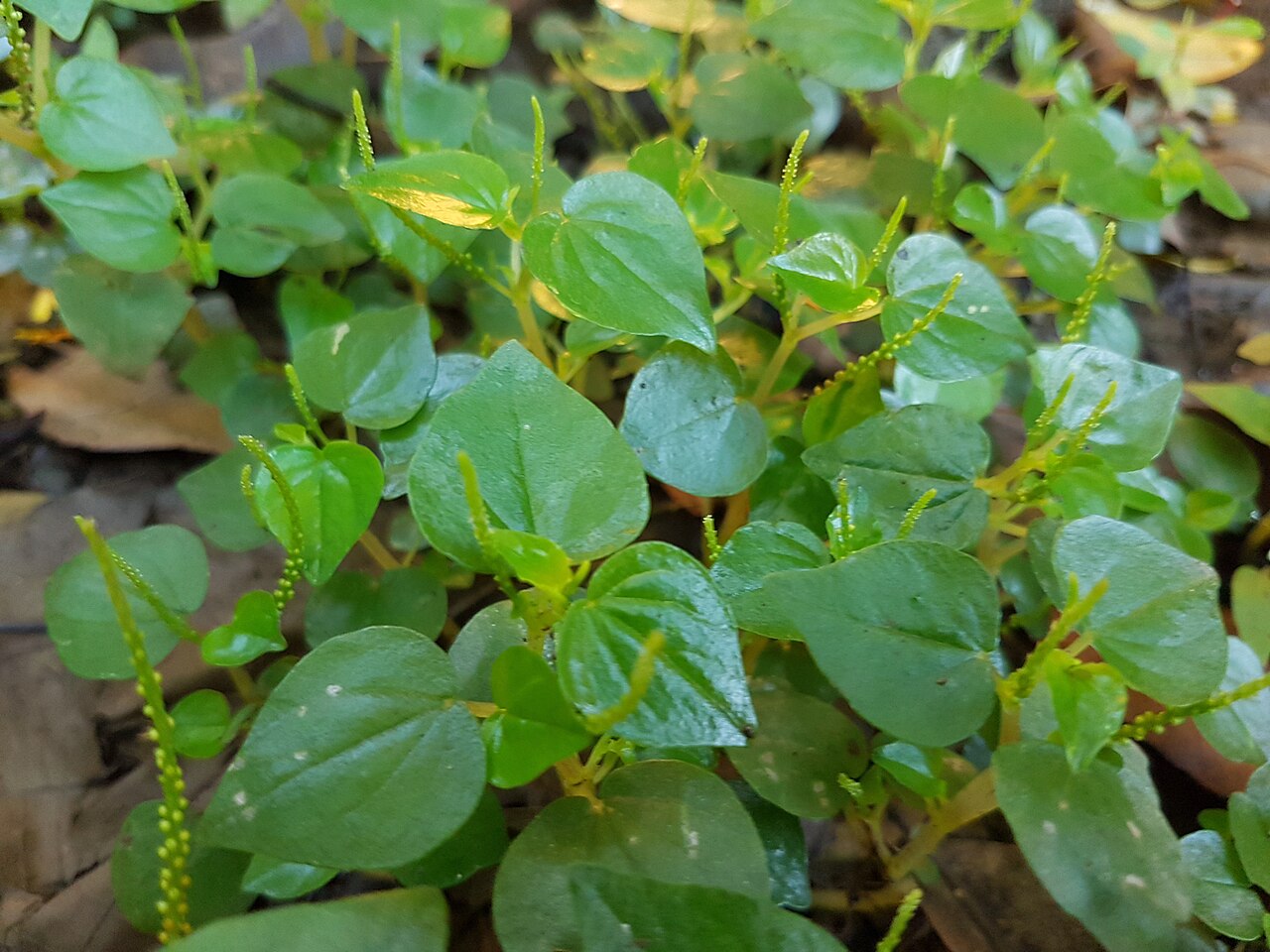
Peperomia pellucida, called Pepper Elder, shiny bush, shining bush plant, man-to-man or, in Puerto Rico, prenetaria, is a small, juicy annual herb in the pepper family (Piperaceae). It grows 6 to 18 inches tall from a shallow root system, with translucent, succulent stems, glossy heart-shaped leaves, and thin upright spikes that look like tiny green rat tails. Crush a leaf and it gives off a mild, peppery, mustard-like smell. Within the U.S. flora it is native to Puerto Rico and the U.S. Virgin Islands.
Pepper elder is a native of tropical America, from Mexico and the Caribbean to South America, and over the centuries it has hitched rides in soil and plant pots to tropical and subtropical regions around the world. In Florida, Hawaii and much of Asia and Africa it is an introduced plant. Many people first meet it as a volunteer in the pots of houseplants and orchids, or as a “weed” in a shady, damp corner of a garden.
It is also a plant with a following. Across Southeast Asia, Africa and Latin America the whole plant is eaten raw as a crunchy salad green or cooked, and it has a long history in folk medicine. In the Philippines it is known as pansit-pansitan or ulasimang-bato. This guide explains how to recognize it, where it is native, and how to grow it in a tropical garden or as an easy pot plant.
Identification
Pepper elder is one of the easiest small herbs to recognize once you know its combination of see-through stems, shiny heart-shaped leaves and string-like flower spikes. Other Peperomia species in Puerto Rico are mostly perennials that grow on rocks, logs and tree trunks, with thicker, non-translucent leaves.
Stems & Roots
The plant is a soft, branching annual usually 6 to 18 inches (15 to 45 cm) tall. Its stems are pale green, smooth, juicy and almost glass-like, so you can often see through them when held up to the light. This is the origin of the species name pellucida, meaning transparent. The roots are fine and shallow, and plants pull up very easily.
Leaves
Leaves are alternate on short stalks, broadly heart-shaped to triangular-ovate, about ½ to 1½ inches (1 to 4 cm) long, bright green, smooth and very glossy above and paler beneath. They are thin but fleshy and somewhat translucent, with a few curved veins radiating from the base. When crushed they smell faintly of pepper or mustard.
Flowers
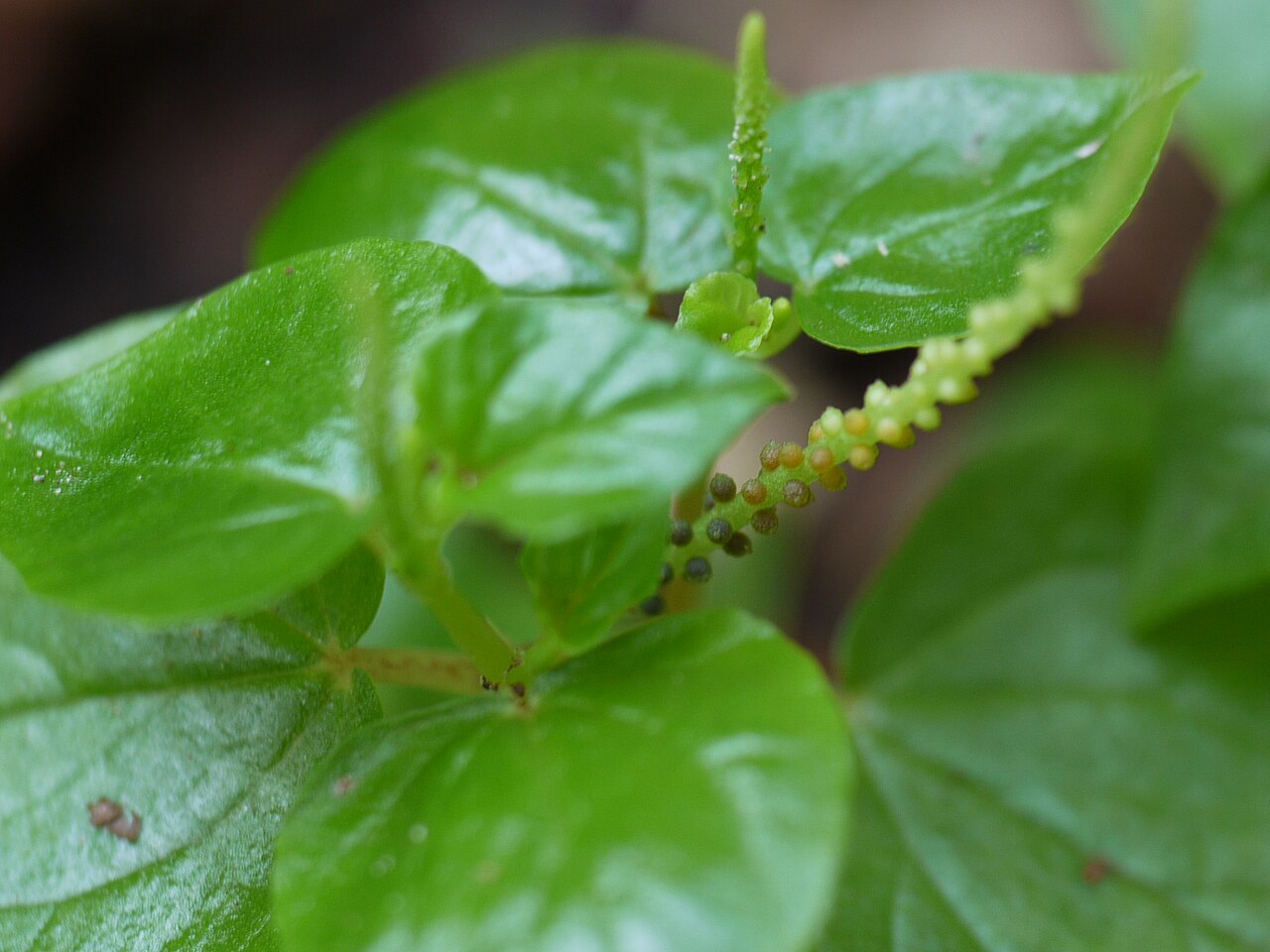
The flowers are tiny and without petals, packed along slender spikes 1 to 2½ inches (2 to 6 cm) long that stand up from the leaf axils and the tips of the stems. Each flower is little more than a bract, two stamens and a minute ovary. In the warm, humid tropics pepper elder flowers and sets seed year-round, often when the plants are only a few weeks old.
Fruit & Seeds
The fruits are dust-sized, rounded and green turning brown to black, studding the spike like beads. They are slightly sticky and fall close to the parent plant or are carried off in soil, water and on shoes and pots. Because a single plant produces many fruits and seedlings appear in a few weeks, a patch can maintain itself for years once established.
Quick Facts
| Scientific Name | Peperomia pellucida (L.) Kunth |
| Family | Piperaceae (pepper family) |
| Plant Type | Annual succulent herb (often self-sowing) |
| Mature Height | 6–18 in |
| Mature Spread | 6–12 in; forms patches by self-seeding |
| Growth Rate | Fast |
| Sun Exposure | Part shade to shade; bright indirect light indoors |
| Water Needs | Moderate to high; soil evenly moist but not waterlogged |
| Soil Type | Loose, humus-rich, well-drained soil; also crevices in rocks and old walls |
| Soil pH | About 5.5–7.5 |
| Bloom Time | Year-round in the tropics |
| Flower Color | Green (tiny flowers on slender spikes) |
| Fall Color | None; evergreen while it lives |
| Fruit | Minute, rounded, brown to black fruits along the spikes |
| Deer Resistant | Not applicable in most of its range; snails and slugs may feed on it |
| USDA Hardiness Zones | 10–13 outdoors (grown as a summer annual or indoor plant elsewhere) |
Native Range
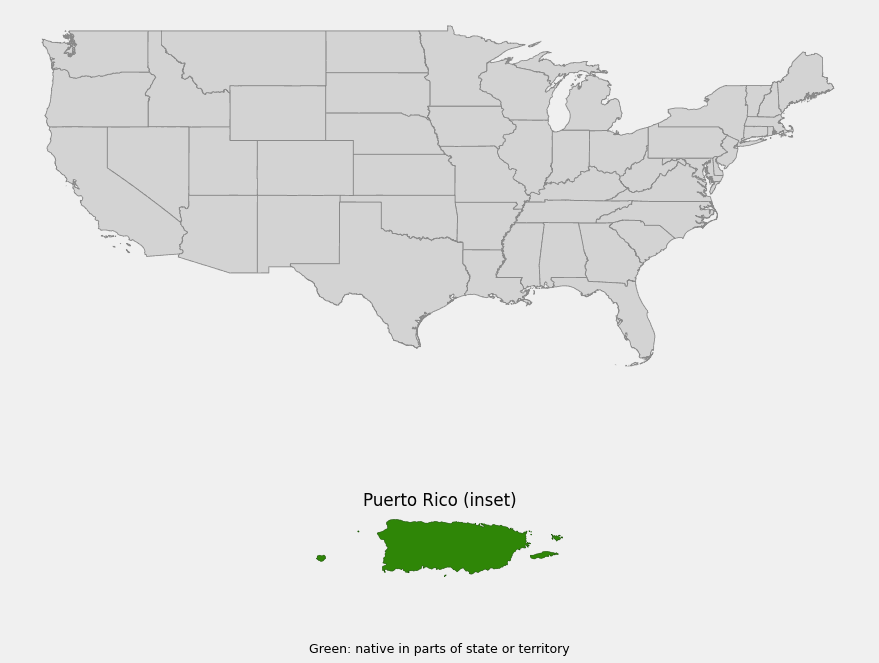
Pepper elder is native to the American tropics. Its natural range covers southern Mexico, Central America, the Caribbean islands and tropical South America. Within the area covered by USDA PLANTS, it is listed as native only in Puerto Rico and the U.S. Virgin Islands. On the USDA map it is introduced in the lower 48 states (in Florida, where it has escaped from cultivation and greenhouses), in Hawaii and in the Pacific Basin territories.
In Puerto Rico it is a common plant of shaded, moist places from the coast into the lower mountains: forest edges and clearings, stream banks, shaded rock outcrops and old stone walls, and also yards, sidewalks, gardens and the bases of trees in towns. It is one of those native plants that has adapted happily to human settlements, as long as there is shade and moisture.
Because it travels so easily in nursery soil, pepper elder is now pantropical and appears in greenhouses in temperate countries. That wide modern distribution is why some sources call it a weed. In its native Caribbean range, though, it is a natural part of the moist understory and ground flora.
📋 Regional plant lists featuring Pepper Elder: Puerto Rico
Growing & Care Guide
Pepper elder is about as easy as plants get, because it is essentially a self-planting tropical annual. The main thing it needs is shade or bright indirect light, warmth and steady moisture. In Puerto Rico and other frost-free areas (zones 10 to 13) it can be grown outdoors year-round, and everywhere else it does well in pots indoors or as a summer annual in a shady spot.
Light
Outdoors, grow it in light shade to full shade under trees, on the north side of buildings or among potted plants on a shaded patio. Strong midday sun scorches and yellows the thin leaves. Indoors, give it bright indirect light near an east or north window, or a few feet back from a sunny one. It also thrives under the lights of a seed-starting shelf or in a terrarium with some ventilation.
Soil & Water
Use a loose, humus-rich soil or a general potting mix with some perlite or fine bark for drainage. Keep it evenly moist. The plant wilts quickly if it dries out completely, but it also rots in waterlogged, airless soil. In humid tropical gardens rain usually takes care of watering. Indoors, water when the surface of the mix starts to feel dry, and grow it in a room with good humidity or on a tray of damp pebbles.
Planting Tips
The easiest start is to move a few seedlings, with a ball of soil, from a pot or garden bed where they have appeared. You can also sprinkle ripe spikes over the surface of moist potting mix; do not bury the seed. Keep the pot at 70 to 90°F (21 to 32°C), covered loosely with clear plastic until seedlings appear. In the garden, plant it as an edging along shady paths, in a pot near the kitchen if you want to harvest it, or between stepping stones.
Pruning & Maintenance
Little care is needed. Pinch back stems to keep plants bushy and to harvest leaves for the table. Because plants are annual, a patch looks best when you let some plants set seed and pull the old, straggly ones. If you do not want it spreading into other pots, remove the fruiting spikes before they ripen and check nearby containers for seedlings. Fertilizer is rarely needed; a weak liquid feed once a month is plenty for potted plants.
Propagation
Seed is the usual method and works without any effort. Seedlings appear on moist soil within a few weeks and flower when still small. Stem cuttings also root easily in water or damp mix in warm conditions. Because it moves so readily in soil, do not move potting soil or pots with pepper elder seedlings outside its native or already-naturalized range.
Landscape Uses
- Shade gardens in Puerto Rico: a native groundcover for damp, shady beds and the bases of trees
- Houseplant and terrarium plant: fast, glossy filler for bright indirect light
- Edible green: crisp leaves and stems for salads, harvested from clean, pesticide-free plants
- Container accent: soft filler at the base of potted palms, orchids and ferns
- Teaching plant: a quick-growing example of the pepper family for school gardens
Wildlife & Ecological Value
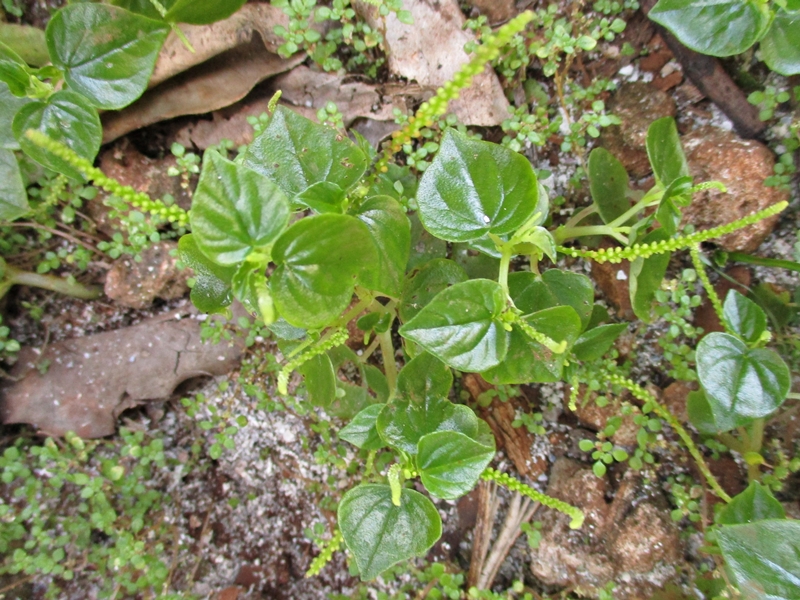
Pepper elder is a small, short-lived plant, but in shady tropical ground it adds a fast-growing layer of tender, moist leaves that other organisms use.
For Pollinators
The tiny petal-less flowers are not showy and are probably pollinated mostly by small insects, and many may self-pollinate. They are not an important nectar source for butterflies or bees.
For Birds
Ground-foraging birds may pick at the fruits and the insects sheltering among the leaves. The plant’s main value to birds is indirect, as part of the moist leaf layer where insects live.
For Mammals
In its native range the soft, succulent plants are eaten by small grazers and invertebrates. In gardens, snails and slugs are its most frequent visitors.
Ecosystem Role
As a fast-growing annual it quickly covers bare, shaded soil after disturbance, such as fallen trees and landslide edges, holding soil and adding organic matter. Its tiny fruits stick to soil and animals, which helps it reach new openings.
Cultural & Historical Uses
Linnaeus first described this plant in 1753 as Piper pellucidum, placing it in the black-pepper genus. In 1816 the German botanist Carl Sigismund Kunth moved it to Peperomia, the second-largest genus in the pepper family and the source of many popular houseplants such as the baby rubber plant and watermelon peperomia. A native relative in the continental U.S. is Florida Peperomia.
Pepper elder is eaten as a raw salad green or a cooked vegetable in many tropical countries, and its crisp, juicy stems and peppery taste have made it popular with foragers. It has a long list of traditional medicinal uses in Latin America, Africa and Asia, and in the Philippines it is one of ten herbal medicines endorsed by the Department of Health. Laboratory studies have explored its anti-inflammatory and antimicrobial properties, but those findings are preliminary.
Safety note: pepper elder is considered edible, but harvest only from clean soil away from roadsides, sprayed lawns and pots that have received pesticides or systemic insecticides, and wash it well. Some people are sensitive to it and have had allergic or asthma-like reactions. Do not use it as medicine in place of medical care, and ask a health professional before using it if you are pregnant, nursing or taking medication.
Frequently Asked Questions
Is pepper elder edible?
Yes. The leaves and tender stems are eaten raw in salads or cooked in many tropical countries. Harvest only from clean, unsprayed plants, start with a small amount, and avoid it if you have allergies to it.
Is Peperomia pellucida native to the United States?
It is native to Puerto Rico and the U.S. Virgin Islands, part of its wider native range in tropical America. In Florida and Hawaii it is an introduced plant that has escaped from greenhouses and gardens.
Why does pepper elder keep popping up in my houseplant pots?
Its tiny seeds travel in nursery soil and germinate in any warm, moist pot. If you like it, let it grow; if not, pull the seedlings before they form their slender seed spikes.
Can I grow pepper elder indoors?
Yes. It grows well in a pot or terrarium in bright, indirect light with evenly moist soil and warm temperatures. Because it is an annual, let it reseed in the pot or sow fresh seed every few months.
Is pepper elder the same as other houseplant peperomias?
It is in the same genus as houseplants such as the baby rubber plant (Peperomia obtusifolia), but it is a short-lived annual with thin, translucent leaves, while most houseplant peperomias are long-lived perennials with thick, waxy leaves.

Looking for a nursery that carries Pepper Elder?
Our nursery directory does not yet include Puerto Rico. Browse the native plant nursery directory by state: Alabama–Arkansas · California · Colorado–Hawaii · Idaho–Kansas · Kentucky–Montana · Nebraska–Oklahoma · Oregon · Pennsylvania–Virginia · Washington · West Virginia–Wyoming

