
Riverbank Lupine (Lupinus rivularis)
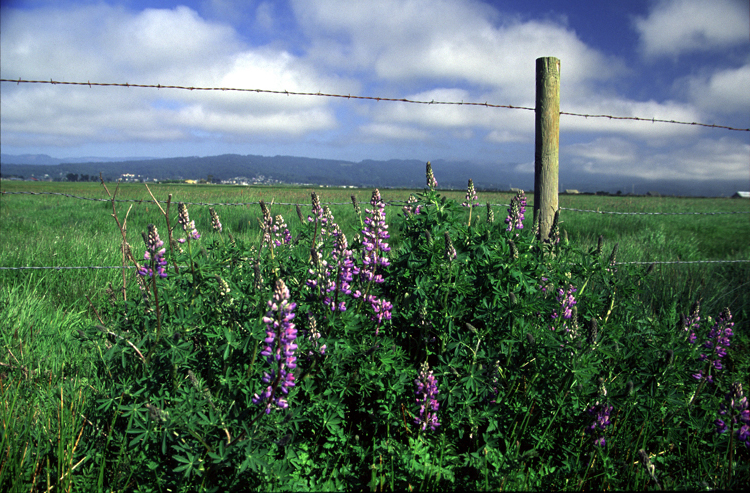
Lupinus rivularis, the Riverbank Lupine (also called river lupine or streambank lupine), is a robust, bushy perennial lupine of the Pacific Coast, native from southwestern British Columbia south through western Washington and Oregon to northwestern California. It grows on sandy and gravelly river bars, stream banks, coastal dunes, prairies and roadsides, mostly west of the Cascades.
It reaches 2 to 3 feet tall (sometimes more), with thick, hollow, reddish stems, bright green palmate leaves and spikes of light purple to violet pea flowers from spring into summer. Like other lupines, it fixes nitrogen and thrives in poor, sandy soil, which makes it a good pioneer plant for erosion control and restoration.
Although it is common in parts of its U.S. range, riverbank lupine is listed as endangered in Canada, where only a few populations remain. Like all lupines, it contains alkaloids, and its seeds and pods should be considered toxic to people and livestock. This guide covers how to identify it, where it grows, how to grow it and its value to pollinators and wildlife.
Identification
Riverbank lupine is a tall, bushy, short-lived perennial with thick reddish stems, broad palmate leaves and long spikes of purple-and-white pea flowers.
Stems & Habit
It grows as an erect, many-branched perennial herb or subshrub, usually 1½ to 3 feet tall (up to about 4 feet), from a long taproot. The stems are thick, hollow and often reddish, and mostly hairless. Older plants can become slightly woody at the base.
Leaves
The alternate, long-stalked leaves are palmately compound, with 5 to 9 fairly broad leaflets, each about ¾ to 1½ inches long. The leaflets are bright green and smooth or nearly so on top and sparsely hairy underneath.
Flowers
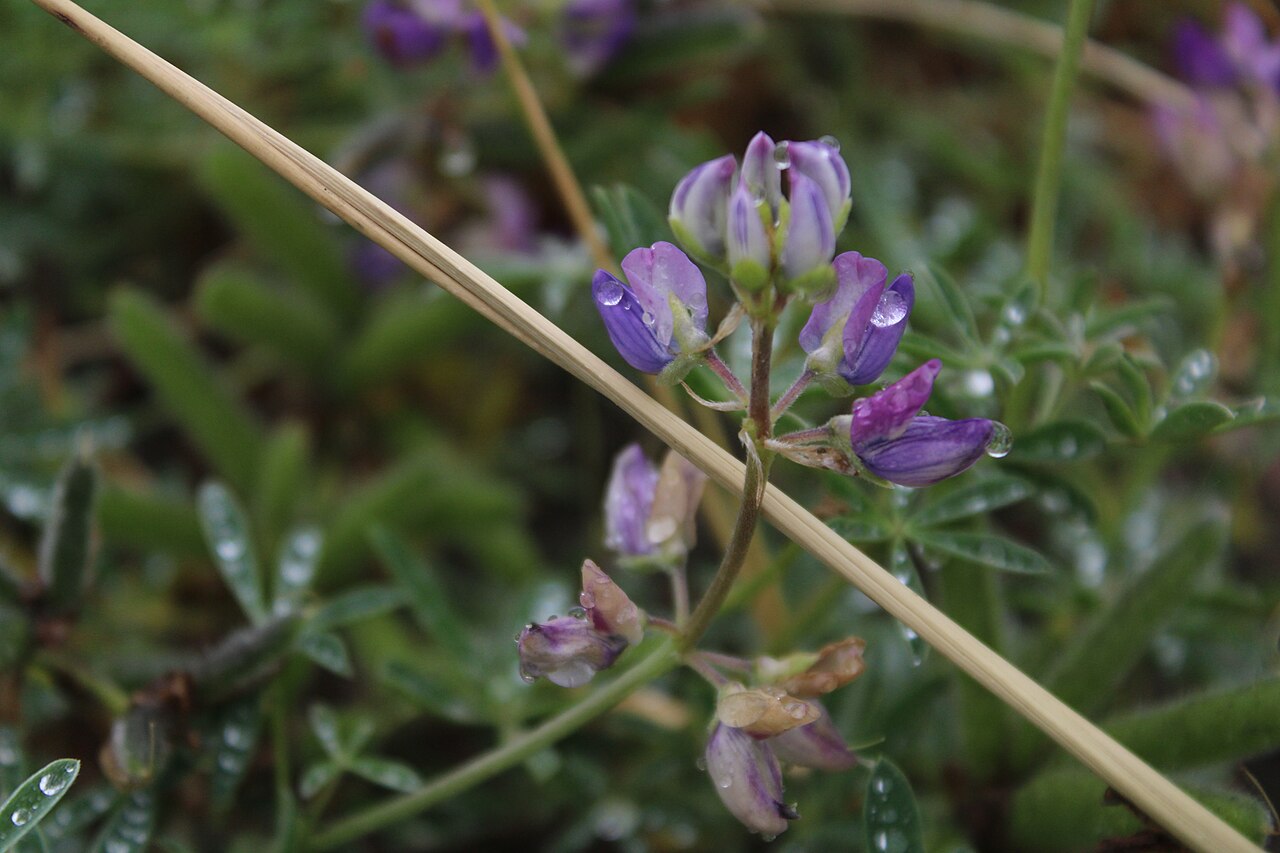
The flowers are borne in long, open spikes (racemes) 4 to 12 inches long, sometimes in loose whorls. Each pea-shaped flower is about ½ inch long, light purple to blue-violet, often with white or pale areas on the banner petal. It blooms from about March to July, with each plant flowering for several weeks.
Fruit & Look-alikes
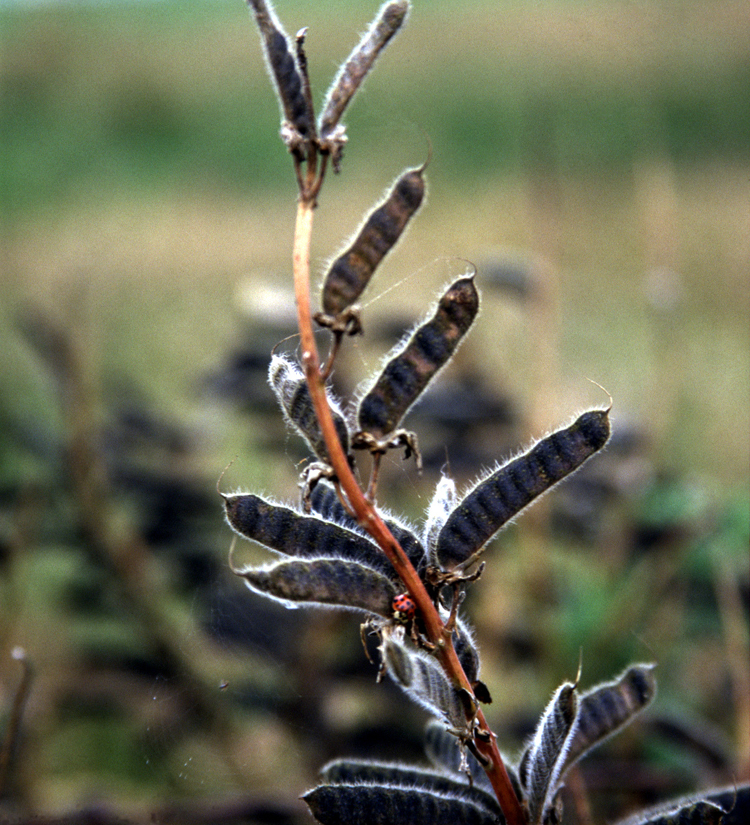
The pods are 1½ to 2¾ inches long, flattened and hairy, ripening dark brown to black and splitting explosively to scatter 6 to 10 seeds. Big-leaf Lupine is similar but has more leaflets (often 9 to 17) and denser flower spikes, and the two can hybridize. Nootka Lupine is a northern coastal species with hairy leaves. Shrubby yellow bush lupine (Lupinus arboreus) has woody stems and usually yellow flowers.
Quick Facts
| Scientific Name | Lupinus rivularis Douglas ex Lindl. |
| Family | Fabaceae (pea family) |
| Plant Type | Herbaceous perennial or subshrub |
| Mature Height | 1½–3 ft (occasionally 4 ft) |
| Mature Spread | 2–3 ft |
| Growth Rate | Fast |
| Sun Exposure | Full sun |
| Water Needs | Moderate; tolerates dry summers once established |
| Soil Type | Sandy or gravelly, well-drained, low-nitrogen |
| Soil pH | About 5.5–7.5 |
| Bloom Time | March–July |
| Flower Color | Light purple to blue-violet with white |
| Fall Color | None notable |
| Fruit | Hairy pod; seeds toxic |
| Deer Resistant | Moderately; alkaloids deter browsing |
| USDA Hardiness Zones | 7–9 |
Native Range
Riverbank lupine is native along the Pacific Coast from the lower Fraser Valley and southern Vancouver Island in British Columbia south through western Washington and western Oregon to northwestern California. USDA PLANTS records it in California, Oregon and Washington. Most of its range lies west of the Cascades, in the Puget Trough, the Willamette Valley, the lower Columbia River and the coastal strip.
In California it is mainly a plant of the North Coast, on coastal dunes, bluffs, prairies and river bars of the northern counties. In Canada it is listed as endangered, with only a few small populations left; habitat loss, invasive plants and hybridization with garden lupines (Russell hybrids bred largely from Lupinus polyphyllus) are the main threats there.
It grows on sandy or gravelly river bars and banks, coastal dunes and bluffs, open prairies, meadows and disturbed ground such as roadsides and gravel pits, where competition is light. It prefers full sun and areas with about 20 to 100 inches of yearly precipitation.
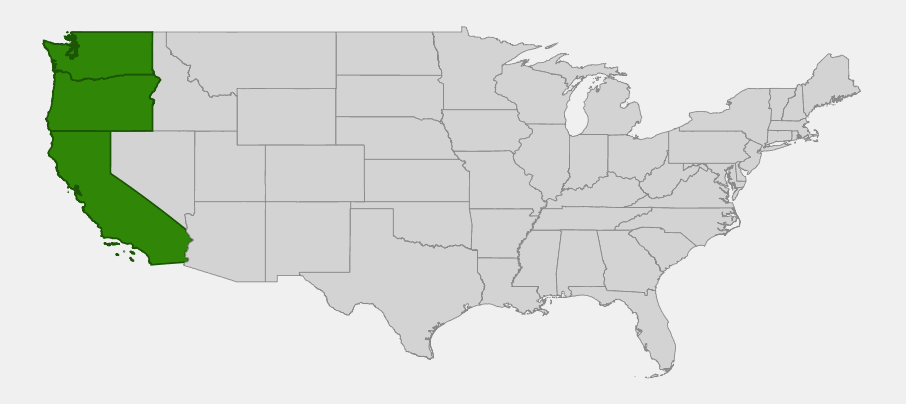
📋 Regional plant lists featuring Riverbank Lupine: Western Oregon & Western Washington · California & Nevada
Growing & Care Guide
Riverbank lupine is easy to grow in sunny, sandy or gravelly sites within its native region, and seed is sold by Pacific Northwest native seed suppliers for restoration and pollinator plantings. In British Columbia, where it is endangered, plant only seed from legal, nursery or seed-company sources and never dig up wild plants. Toxicity note: lupines contain quinolizidine alkaloids, which are concentrated in the seeds and pods. Large amounts can poison livestock, especially sheep, and people should never eat the seeds. Avoid planting it where livestock graze heavily.
Light
Full sun. In shade it becomes lanky, flowers poorly and is more prone to mildew.
Soil & Water
Sandy or gravelly, fast-draining soil is best, and it does well in poor, low-nitrogen ground because it fixes its own nitrogen. Water regularly the first season; after that it handles the dry summers of its region, though occasional deep watering keeps it flowering longer.
Planting Tips
Sow seed where it is to grow, or plant young seedlings, since the long taproot makes older plants hard to move. Space plants 2 to 3 feet apart. Avoid planting near garden lupines (Lupinus polyphyllus hybrids), which can cross with it.
Pruning & Maintenance
Cut back spent flower spikes to tidy the plant and sometimes encourage more blooms, or leave some to set seed. Individual plants are often short-lived, but they reseed readily in open, sandy ground. Aphids can gather on the flower spikes in early summer; a strong spray of water usually takes care of them.
Propagation
Grow it from seed. Nick the hard seed coat or soak seeds in hot water overnight before sowing in fall or early spring. Seedlings benefit from soil that already grows lupines, which supplies the nitrogen-fixing bacteria.
Landscape Uses
- Erosion control and restoration: pioneer species for sandy, disturbed ground and river bars
- Pollinator gardens: long spikes of bumble bee flowers from spring to summer
- Coastal and dune gardens: tolerates sand, wind and salt air
- Soil improvement: fixes nitrogen in poor soils
Wildlife & Ecological Value
Riverbank lupine is a strong pollinator plant and an important pioneer in open, sandy habitats.
For Pollinators
Its flowers are pollinated mainly by bumble bees, including the black-tailed bumble bee, and by other native bees strong enough to open the keel and release the pollen. Lupines are larval host plants for several butterflies, including blues such as the silvery blue and some duskywings and elfins.
For Birds
Seed-eating birds such as quail, sparrows and finches eat the seeds, and the bushy clumps provide cover for ground-nesting and foraging birds.
For Mammals
Small mammals eat the seeds. The alkaloids make the foliage unpalatable to many grazers, though deer and elk may browse it lightly.
Ecosystem Role
As a nitrogen-fixing pioneer, it enriches poor, sandy soils on river bars, dunes and disturbed ground, helping other plants to establish. Its deep taproot helps stabilize loose sand and gravel.
Cultural & Historical Uses
The Scottish plant explorer David Douglas collected riverbank lupine in the Pacific Northwest in the 1820s, and John Lindley published the name Lupinus rivularis from his material. The species name means “of streams or riverbanks.”
The Nlaka’pamux (Thompson) people of British Columbia are reported to have used riverbank lupine medicinally. Lupine seeds are toxic unless specially processed, so they should never be eaten.
Because it fixes nitrogen and grows quickly in poor ground, riverbank lupine has been used for soil improvement and erosion control. In British Columbia, it is now protected as an endangered species under Canada’s Species at Risk Act.
Frequently Asked Questions
Is riverbank lupine toxic?
Yes. Like all lupines, it contains alkaloids, especially in the seeds and pods. Do not eat any part of it, and avoid planting it where livestock, particularly sheep, graze heavily.
Where does riverbank lupine grow?
From southwestern British Columbia through western Washington and Oregon to northwestern California, on river bars, stream banks, coastal dunes, prairies and roadsides.
How tall does riverbank lupine get?
Usually 1½ to 3 feet tall and about as wide, sometimes up to 4 feet in good conditions.
Is Lupinus rivularis endangered?
It is listed as endangered in Canada, where few populations remain. In Washington, Oregon and California it is still fairly common.
How do I grow riverbank lupine from seed?
Scarify or soak the seeds, then sow them in full sun in sandy, well-drained soil in fall or early spring. Plant seedlings young to avoid disturbing the taproot.

Looking for a nursery that carries Riverbank Lupine?
Browse our native plant nursery directory: California · Oregon · Washington

