
Rubbervine (Rhabdadenia biflora)
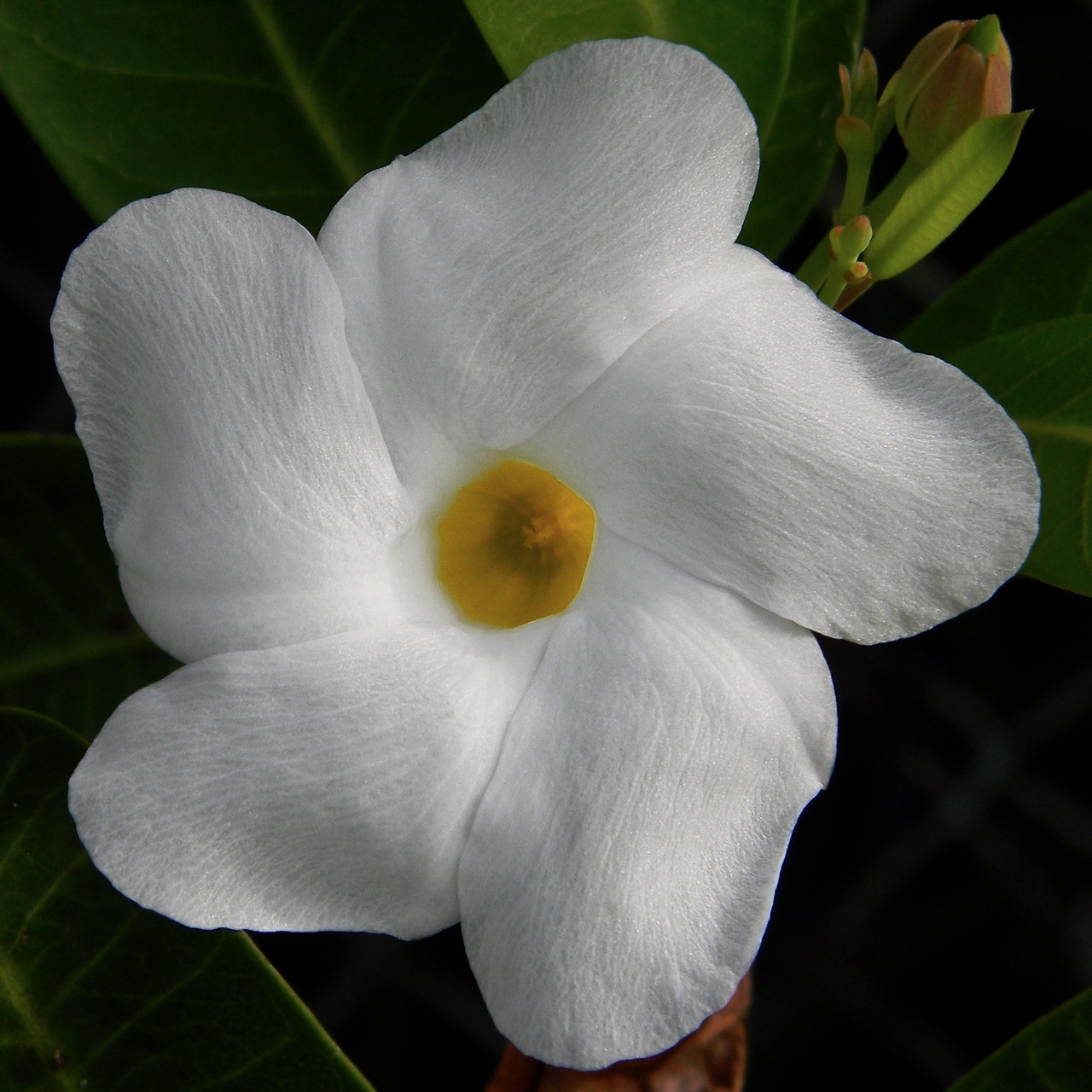
Rhabdadenia biflora, known as Rubbervine, mangrove rubbervine or mangrovevine, is an evergreen twining vine of the mangrove fringes and coastal swamps of South Florida and the American tropics. It scrambles over mangroves and other shrubs on slender stems up to 12 feet or more, and blooms almost all year with large, funnel-shaped white flowers, 2 to 3 inches across, with a bright yellow throat. It belongs to the dogbane family (Apocynaceae).
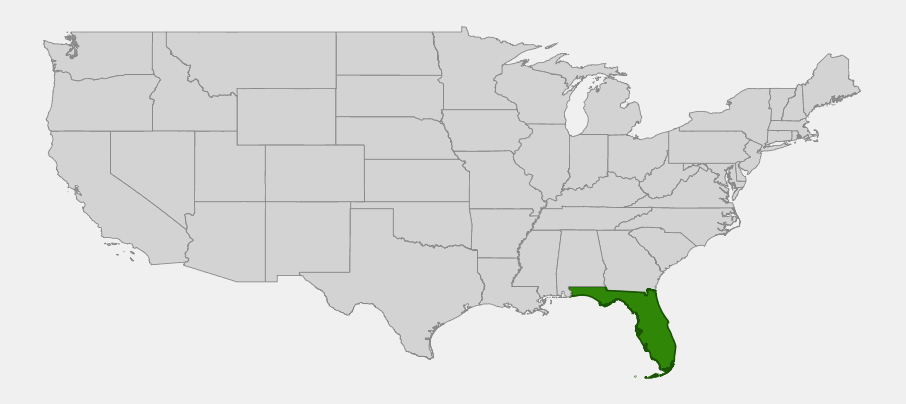
USDA PLANTS uses the common name mangrovevine and lists it as native to Florida, Puerto Rico and the U.S. Virgin Islands. In the continental United States it grows only in Florida, mainly along the coasts of the southern peninsula and in the Florida Keys. It is not listed as threatened by the State of Florida. Like many members of its family, it has milky sap that oozes from broken stems and leaves.
Rubbervine is rarely seen in gardens but makes an unusual, salt-tolerant flowering vine for a trellis or fence in coastal South Florida. This guide covers how to recognize rubbervine, where it grows, and how to grow it.
Identification
Rubbervine is easy to overlook when not in flower, since its leaves blend with mangrove foliage. Look for slender, twining stems with smooth, opposite leaves and, most of the year, large white trumpet flowers with yellow centers.
Growth Habit
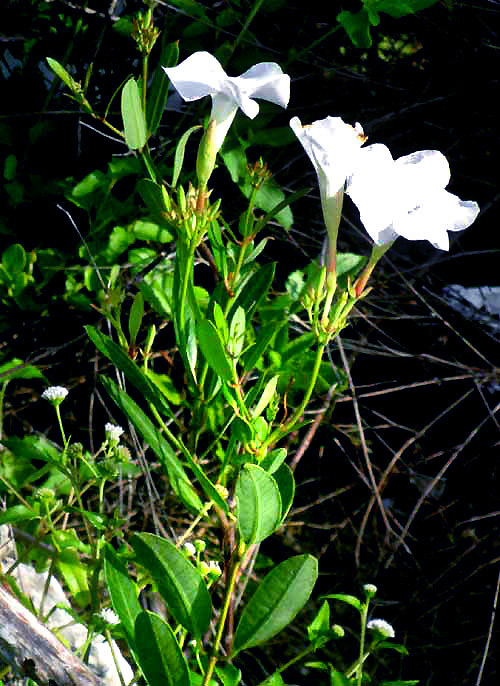
A perennial, mostly hairless, twining vine or climbing shrub. Stems twine around and scramble over mangroves and other shrubs, reaching 12 feet or more. FNPS notes that it spreads by underground suckers and can form colonies. Broken stems and leaves release a milky sap.
Leaves
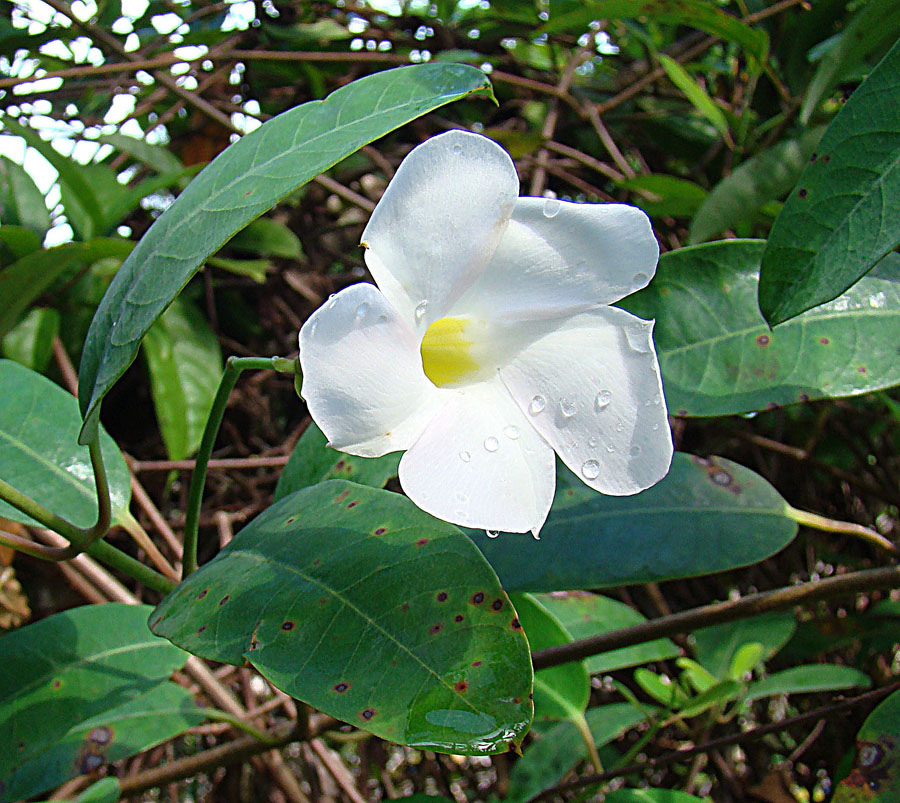
The leaves are opposite, simple and smooth-edged, oblong to elliptic, up to about 4 1/2 inches long and 1 1/2 inches wide, on short stalks. They are glossy green above and quite variable in size, even on one plant.
Flowers
Flowers are borne in clusters of one to three, sometimes five, on long stalks from the leaf axils. The corolla is funnel-shaped, up to about 2 3/4 inches long, flaring into five broad, rounded lobes. It is white, sometimes tinged rose or yellowish, with a yellow throat. The Lady Bird Johnson Wildflower Center lists flowering in every month, and FNPS notes that it flowers all year except during cold spells.
Fruit & Seeds
The fruit is a pair of long, very slender pods (follicles), up to about 7 inches long. They split open to release seeds topped with tufts of cream-colored silky hairs that carry them on the wind, like milkweed seeds.
Similar Species
Devil’s potato (Echites umbellatus), another native vine of the dogbane family in South Florida coastal areas, also has white funnel-shaped flowers, but its petal lobes are twisted like a pinwheel and its greenish-white flowers are held in larger clusters. Wild allamanda (Pentalinon luteum) has bright yellow flowers. The broad, pure white flowers with a yellow throat, in a mangrove setting, are distinctive of rubbervine.
Quick Facts
| Scientific Name | Rhabdadenia biflora (accepted by USDA PLANTS and the Atlas of Florida Plants) |
| Family | Apocynaceae (dogbane family) |
| Plant Type | Evergreen twining vine |
| Mature Height | Climbs 12 ft or more |
| Mature Spread | Spreading; forms colonies by suckers |
| Growth Rate | Moderate |
| Sun Exposure | Full sun to part sun |
| Water Needs | Moderate to high; moist soil, drought tolerant once established |
| Soil Type | Sand, marl or limestone; mangrove peat in the wild |
| Soil pH | Alkaline (calcareous) |
| Bloom Time | Year-round, except in cold spells |
| Flower Color | White with a yellow throat |
| Fall Color | None; evergreen |
| Fruit | Paired slender pods with silky-tufted seeds |
| Deer Resistant | Likely; milky-sapped vines are seldom browsed |
| USDA Hardiness Zones | 9b–11 |
Native Range
Rubbervine is a plant of tropical America. In the United States it occurs only in Florida, and USDA PLANTS also lists it as native to Puerto Rico and the U.S. Virgin Islands. Beyond the U.S. it is found along the Gulf and Caribbean coasts of Mexico and Central America, throughout the Caribbean, and in coastal northern South America on both the Atlantic and Pacific sides.
In Florida it grows along the coasts of the southern peninsula and in the Florida Keys. FNPS lists its native habitat as the fringes of mangrove swamps, and the Lady Bird Johnson Wildflower Center lists mangrove swamps and coastal hammocks. It is typically found on the landward edge of mangrove forests and in coastal swamps with fresh to brackish water, twining up through mangroves and buttonwoods.
It is not state-listed, but it is uncommon in cultivation and depends on intact mangrove fringes, which have been lost to coastal development in many places. Obtain plants only from specialty native nurseries, and do not collect from the wild.
📋 Regional plant lists featuring Rubbervine: North & South Florida
Growing & Care Guide
Rubbervine is an interesting choice for coastal South Florida gardens, though it is hard to find. FNPS lists it as available from specialty providers and suggests growing it on a trellis, kept fairly short so the flowers are at eye level, or in a container.
Light
Plant in full sun to part sun. More sun gives more flowers.
Soil & Water
FNPS lists sand and limestone soils with a high (calcareous) pH. It grows naturally in moist to wet ground and may need substantial water while it becomes established, but FNPS notes it is then fairly drought tolerant. FNPS rates it as moderately tolerant of salty wind and some salt spray, but not of flooding with salt water.
Planting Tips
Give it a sturdy trellis, fence or arbor to twine on, or let it scramble over a low shrub. It suits gardens in zones 9b to 11, and is frost-tender. In colder areas, grow it in a container and move it indoors in winter. As with other milky-sapped plants, wear gloves when pruning and wash off any sap that gets on your skin.
Pruning & Maintenance
FNPS notes that pruning encourages flowering and that, since it spreads by underground suckers, it may need some root and stem pruning to keep it to size. Trim long runners after a flush of bloom. It needs little fertilizer.
Propagation
FNPS lists propagation from seed or by division of suckers. Sow fresh seed from ripe pods on the surface of a moist mix, or dig and pot rooted suckers from nursery stock.
Landscape Uses
- Coastal trellises and fences: a flowering native vine for salty, sunny sites
- Mangrove-fringe restoration: part of the natural vine layer at the landward edge of mangroves
- Container gardens: can be grown in a pot on a small trellis
- Moth gardens: large white flowers may attract sphinx moths
- Native plant collections: an unusual Florida native rarely seen in gardens
Wildlife & Ecological Value
Rubbervine adds flowers and structure to the mangrove edge, a habitat with relatively few flowering plants.
For Pollinators
FNPS notes that it may attract sphinx moths. Large, pale, funnel-shaped flowers like these are typical of plants visited by long-tongued moths and bees.
For Birds
The tangled vines provide perches and cover for small birds that forage along mangrove edges.
For Mammals
Its value to mammals is not well documented. The milky sap likely discourages browsing.
Ecosystem Role
Rubbervine is part of the vine layer of mangrove fringes and coastal swamps, adding structure and flowers to these habitats. Its wind-dispersed seeds allow it to colonize new mangrove edges along the coast.
Cultural & Historical Uses
The species was first described by the Dutch-born botanist Nikolaus Joseph von Jacquin from the Caribbean in the eighteenth century, and later placed in the genus Rhabdadenia by Johannes Müller Argoviensis. The species name biflora means “two-flowered,” referring to its small flower clusters.
Its common names reflect its habitat and its sap. Mangrovevine and mangrove rubbervine describe where it grows, and rubbervine refers to the milky latex in its stems, a feature of many plants in the dogbane family.
Rhabdadenia biflora is very similar to two other tropical American species in its genus, and botanists note that they are hard to tell apart without magnification. Only R. biflora reaches the United States.
Frequently Asked Questions
Where does rubbervine grow in Florida?
Along the coasts of the southern peninsula and in the Florida Keys, on the fringes of mangrove swamps and in coastal swamps and hammock edges.
Does rubbervine have milky sap?
Yes. Broken stems and leaves release a milky sap, as in many plants of the dogbane family. Wear gloves when pruning and wash off any sap that gets on your skin.
When does rubbervine bloom?
Almost all year. FNPS notes that it flowers year-round except during cold spells.
Can I grow rubbervine in my garden?
Yes, in coastal South Florida, on a trellis or fence in sun to part sun. It is frost-tender and best in zones 9b to 11. Buy plants from specialty native nurseries rather than collecting them.
Is rubbervine the same as mangrovevine?
Yes. Mangrovevine is the USDA PLANTS common name for Rhabdadenia biflora, which is also called rubbervine and mangrove rubbervine.

Looking for a nursery that carries Rubbervine?
Browse our native plant nursery directory: Florida