Ruby Chalice Clarkia (Clarkia rubicunda)
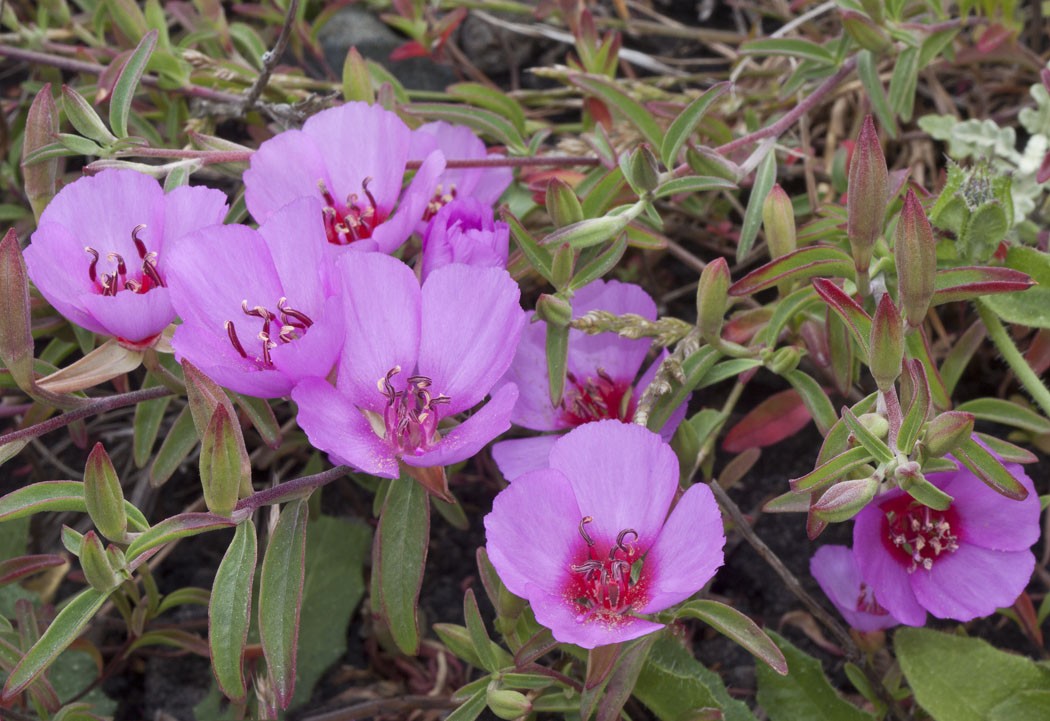
Clarkia rubicunda, known as ruby chalice clarkia, is a California-endemic spring annual prized for its wide, cup-shaped magenta-pink flowers with a deep ruby-red throat. A member of the evening primrose family, it grows wild on the grassy slopes, coastal bluffs, and woodland openings of the Central Coast and San Francisco Bay Area, where its showy blooms are one of the signature sights of the late-spring wildflower season.
Ruby chalice clarkia is closely related to, and sometimes confused with, farewell-to-spring (Clarkia amoena); both share the common name “farewell to spring” in some references, but ruby chalice clarkia is distinguished by its broader, more deeply cupped petals and the solid, ruby-colored blotch that spreads across the base of each flower. Like other California clarkias, it germinates with winter rain, grows quickly through late winter, and flowers in a single burst before setting seed and dying back for the summer.
For gardeners in coastal and Bay Area California, ruby chalice clarkia is an easy, undemanding annual for a dry, sunny wildflower patch. It needs no summer water once established, reseeds reliably, and offers some of the largest, most vividly colored flowers of any native California clarkia.
Identification
Ruby chalice clarkia is an erect to sprawling annual herb, typically 1 to 3 feet (30–90 cm) tall, with slender branching stems that often lean or sprawl through surrounding grasses rather than standing fully upright. The overall form is loose and airy, with flowers held above narrow foliage on thin, wiry stalks.
Leaves & Stems
Stems are thin and often reddish, especially in exposed, sunny sites. Leaves are narrow and lance-shaped, 1 to 3 inches (2.5–7.5 cm) long, arranged alternately, with smooth or slightly wavy margins. Foliage is sparse enough that it rarely competes visually with the large flowers.
Flowers
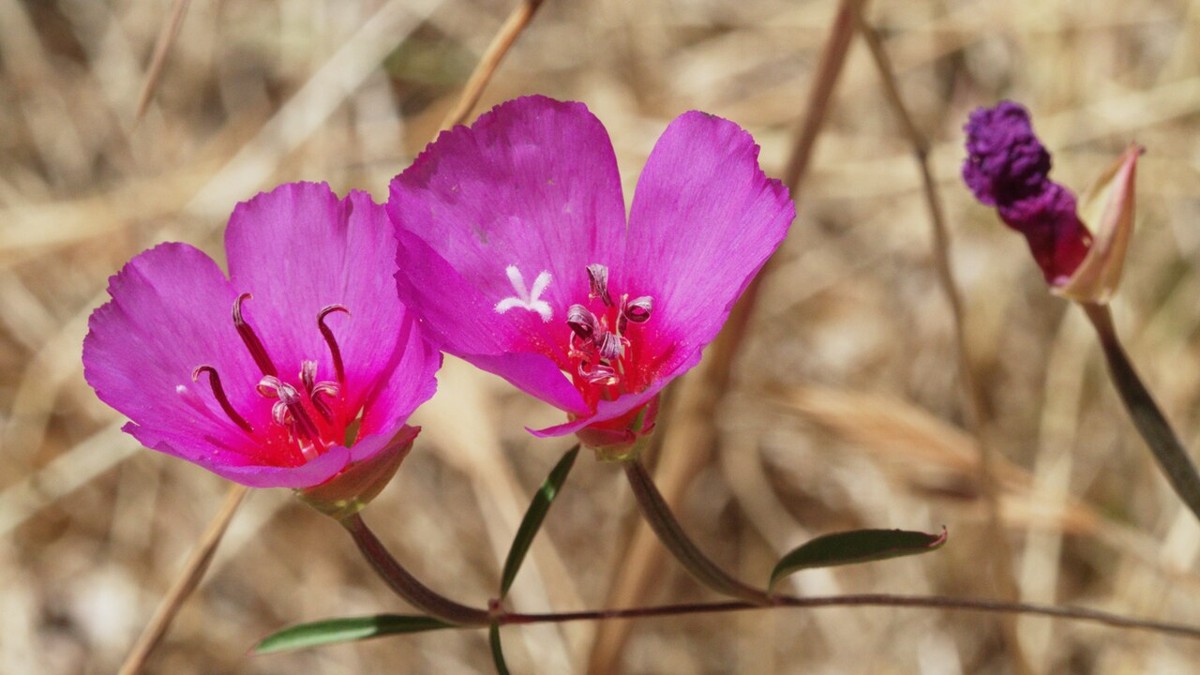
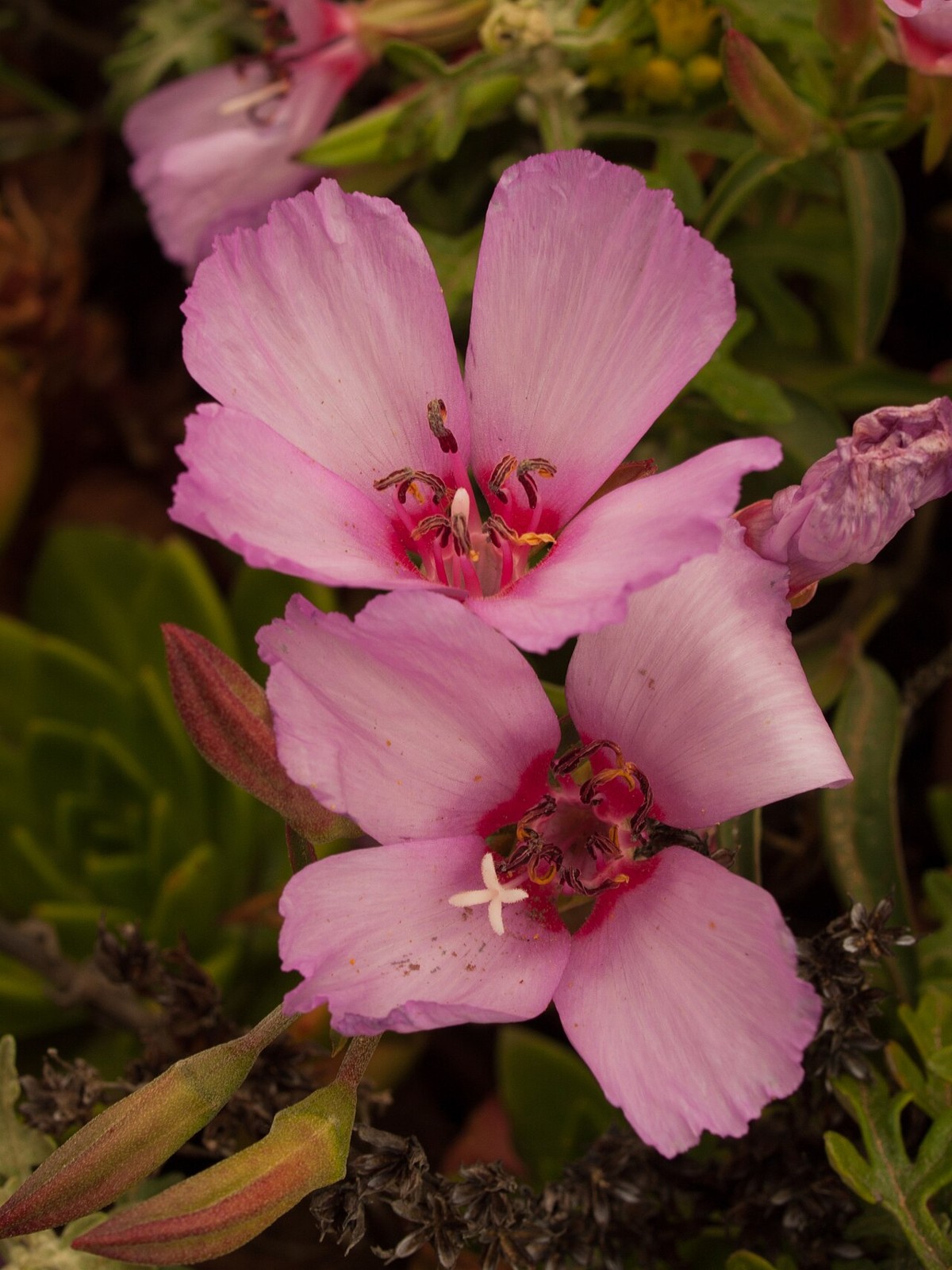
The flowers are the plant’s main attraction: four broad, overlapping, fan-shaped petals form a wide, shallow cup 1.5 to 3 inches (4–7.5 cm) across, among the largest of any California clarkia. Petal color ranges from bright magenta-pink to rose-purple, with a solid, deep ruby-red to maroon patch spreading across the lower half of each petal, giving the flower center an intense, glowing “chalice” of color. Eight stamens and a prominent four-lobed stigma sit at the flower’s center. Bloom occurs from April through June, with buds opening dark purple-red before unfurling into the full flower.
Fruit & Seeds
After flowering, the plant forms a narrow, elongated seed capsule that dries and splits open to release numerous small seeds in early summer. As an annual, ruby chalice clarkia completes its entire life cycle from germination to seed set in a single growing season, then dies back completely, persisting in the landscape only as seed until the following winter’s rains trigger germination.
Quick Facts
| Scientific Name | Clarkia rubicunda |
| Family | Onagraceae (Evening Primrose) |
| Plant Type | Annual Wildflower |
| Mature Height | 1–3 ft (30–90 cm) |
| Mature Spread | 1–2 ft (30–60 cm) |
| Growth Rate | Fast (single growing season) |
| Sun Exposure | Full Sun to Partial Shade |
| Water Needs | Low |
| Soil Type | Well-drained; clay, loam, or sandy |
| Soil pH | 6.0–7.5 (neutral) |
| Bloom Time | April – June |
| Flower Color | Magenta-pink with ruby-red throat |
| Fall Color | None; plant dies back after seed set |
| Fruit | Narrow dry seed capsule |
| Deer Resistant | Generally yes (not a preferred browse) |
| USDA Hardiness Zones | 8–10 (grown as a self-sowing annual) |
Native Range
Ruby chalice clarkia is endemic to California, meaning it grows naturally nowhere else in the world. Its range is centered on the Central Coast and San Francisco Bay Area, extending from the North Coast ranges south through the Santa Cruz Mountains and into the Central Coast as far as the San Luis Obispo area, generally staying within the fog belt and coastal foothill country rather than venturing far inland.
Within this range, ruby chalice clarkia favors open, sunny ground: grassy coastal bluffs, serpentine and clay grassland, chaparral and oak woodland openings, and disturbed slopes, typically from near sea level up to around 2,000 feet (600 m) in elevation. It is especially associated with the grassland preserves and open-space districts of the Bay Area, where protected sites such as Edgewood County Park are known for notable spring displays.
As with other California clarkias, population size varies year to year with winter rainfall, and the species depends on an intact soil seed bank rather than persistent above-ground plants. Because it is endemic and regionally restricted, gardeners outside its native coastal California range should treat it as a regional specialty rather than a universally adapted annual.
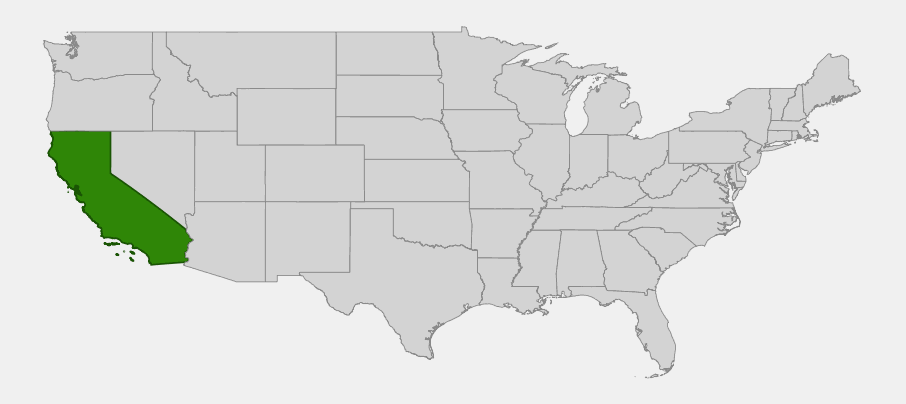
📋 Regional plant lists featuring ruby chalice clarkia: California & Nevada
Growing & Care Guide
Ruby chalice clarkia is an easy, low-maintenance annual for California gardeners who want a bold splash of color from a true regional native, especially on dry, sunny slopes where little else blooms so vividly in late spring.
Light
Full sun gives the most compact growth and heaviest bloom, matching its open grassland and bluff habitat. Along the foggy coast, where it grows wild, it tolerates the region’s filtered light and cooler summers well; in hotter inland gardens, a little afternoon shade can help prevent the plant from finishing its bloom too quickly.
Soil & Water
This clarkia is adaptable to clay, loam, or sandy soils as long as drainage is adequate, and it does not need or want fertile, heavily amended garden beds. Water to establish fall- or winter-sown seedlings, then reduce watering as the rainy season ends. Established plants are drought-tolerant and bloom best when allowed to dry down naturally in late spring, following the same wet-winter, dry-summer rhythm as its wild Central Coast habitat.
Planting Tips
Sow seed directly in fall or early winter, since this species germinates with the first cool-season rains and resents transplanting once established. Scatter seed over cleared, lightly raked soil on a sunny slope or open bed, pressing it in rather than burying it deeply. It combines well with California poppy and other native annuals in a naturalistic wildflower seed mix. No fertilizer is necessary.
Pruning & Maintenance
No pruning is needed. Deadheading is optional; most gardeners allow the plant to set seed so it self-sows for future years. Once the plant finishes blooming and dries out in early summer, it can be left to drop seed in place or cleared as part of routine garden cleanup.
Landscape Uses
Ruby chalice clarkia fits naturally into several Central Coast and Bay Area garden styles:
- Spring wildflower meadows mixed with poppies and lupines
- Coastal bluff and slope plantings that mimic its wild habitat
- Pollinator gardens that benefit from large, nectar-rich blooms
- Dryland restoration on disturbed grassland and chaparral edges
- Low-water gardens that rely on seasonal rainfall rather than irrigation
Wildlife & Ecological Value
As one of the showiest spring annuals of the Bay Area and Central Coast, ruby chalice clarkia provides a concentrated nectar resource during the peak of the native wildflower bloom.
For Pollinators
The large, open flowers attract native bees, including specialist bees associated with the genus Clarkia, as well as bumblebees, syrphid flies, and butterflies. The wide, shallow cup shape and deep-colored throat make pollen and nectar easy to find, and the bold color contrast likely helps guide pollinators to the flower center.
For Birds & Other Wildlife
Seed-eating birds forage on the small seeds released from the dry capsules in early summer. The dense carpets ruby chalice clarkia can form in a good rainfall year also provide brief ground cover for small insects and invertebrates during the bloom season.
Ecosystem Role
Ruby chalice clarkia is part of the fire- and disturbance-adapted guild of California spring annuals that complete their life cycle between winter rains and summer drought, contributing to the soil seed bank that sustains native grassland diversity. Its showy flowers and endemic status also make it a valued indicator species for the health of remaining Bay Area and Central Coast grassland preserves.
Cultural & Historical Uses
The genus Clarkia commemorates Captain William Clark of the Lewis and Clark Expedition, and ruby chalice clarkia has long been recognized by California botanists as one of the most striking of the state’s many native clarkias. Because it is endemic to a relatively narrow coastal California range, it has been studied and documented extensively by regional botanists and conservation groups working to protect Bay Area grassland habitat.
The species does not have a well-documented history of food, medicinal, or craft use among Indigenous peoples of California in available records, and its chief cultural significance today is as a conservation and horticultural icon of the region’s grassland preserves. Protected sites such as San Mateo County’s Edgewood County Park are noted for hosting some of the most accessible wild displays of this species, drawing wildflower enthusiasts each spring.
In recent decades, native plant nurseries and seed companies in California have increasingly offered ruby chalice clarkia for home gardens and habitat restoration, helping extend public appreciation for a wildflower that, within living memory, was known mainly to local botanists and hikers.
Frequently Asked Questions
Is ruby chalice clarkia the same as farewell-to-spring?
They are closely related but distinct species. “Farewell to spring” is used as a common name for both Clarkia rubicunda and the separate species Clarkia amoena. Ruby chalice clarkia is distinguished by its especially wide, deeply cupped petals and solid ruby-red basal blotch.
Where does ruby chalice clarkia grow in the wild?
It is endemic to California’s Central Coast and San Francisco Bay Area, found on grassy coastal bluffs, serpentine and clay grasslands, and chaparral or woodland openings, generally within or near the coastal fog belt.
Does ruby chalice clarkia come back every year?
It is a true annual that dies after flowering and setting seed each year. It returns by self-sowing, with new plants germinating from the soil seed bank when fall and winter rains arrive.
How much water does ruby chalice clarkia need?
Very little once established. It relies on winter and spring rainfall in its native range and generally needs no supplemental irrigation in a coastal California garden once seedlings are established.
Can I grow ruby chalice clarkia outside California?
It is endemic to coastal California and best suited to gardens within or climatically similar to that range. Gardeners elsewhere should check whether local conditions — mild, wet winters and dry summers — can support it before planting.

Looking for a nursery that carries ruby chalice clarkia?
Browse our native plant nursery directory: California