
Savannah Aster (Symphyotrichum chapmanii)
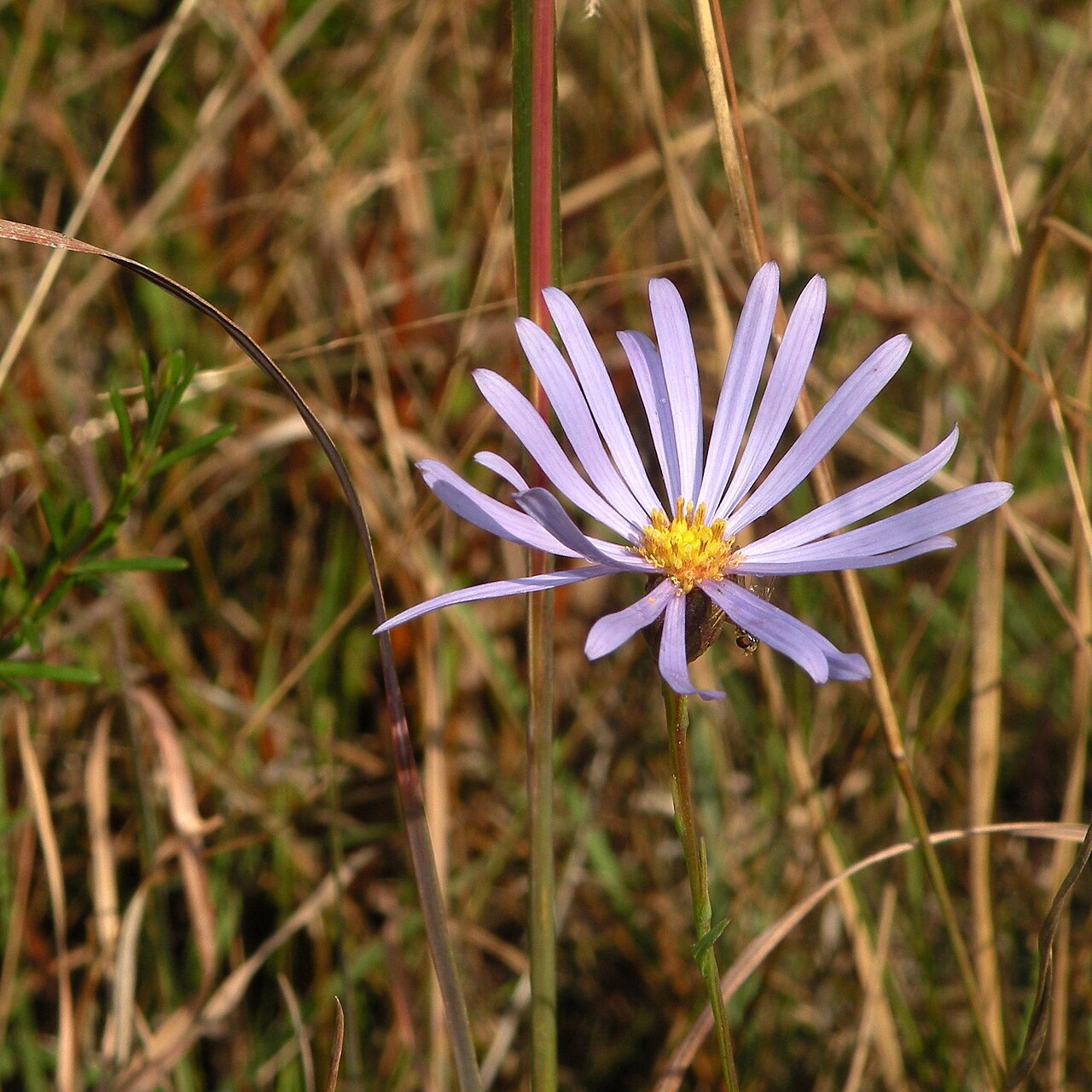
Symphyotrichum chapmanii, the Savannah Aster (also spelled savanna aster, and called Chapman’s aster), is a slender, late-blooming aster of the wet pine savannas around the Apalachicola River. In fall its wiry stems, 1 to 2½ feet tall, carry a few large flower heads with long, lavender-blue to purple rays and pale yellow centers that stand out against the tawny grasses of the savanna. It belongs to the aster family (Asteraceae).
This species has had several scientific names. It was first described as Aster chapmanii, later treated as Heleastrum chapmanii and then as Eurybia chapmanii, the name USDA PLANTS still uses. DNA studies by Luc Brouillet, John Semple and colleagues showed that it belongs in Symphyotrichum, the genus of most North American asters, and that name is used by the Atlas of Florida Plants, the Flora of North America and the Florida Native Plant Society. It is an unusual member of the genus, placed in its own subgenus.
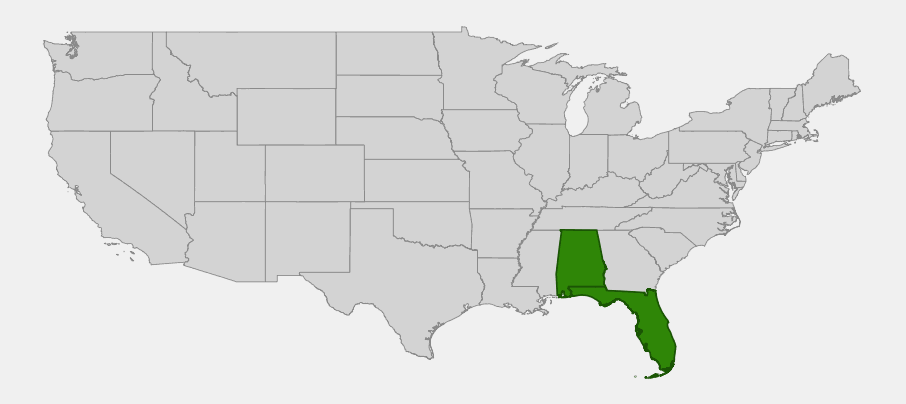
Savannah aster has a very small range: the Apalachicola River drainage of the Florida Panhandle and the adjacent corner of southeastern Alabama, where it may now be extirpated. NatureServe ranks it as globally imperiled (G2). It is not listed as Endangered or Threatened by the state of Florida, but it depends on a shrinking habitat. Anyone who grows it should use only nursery-propagated plants and never dig plants or collect seed from the wild. This guide covers how to recognize it, where it grows, and how to care for it.
Identification
Savannah aster is easy to overlook until it flowers. Its few, large, long-rayed heads on thin, nearly leafless stems are distinctive among the asters of Panhandle savannas, most of which have smaller heads in larger clusters.
Stems & Roots
Plants grow from a short, thick, corm-like rootstock with rhizomes, and produce one to three slender, smooth (hairless) stems. The Flora of North America gives a height of about 12 to 31 inches (30 to 80 cm). The Lady Bird Johnson Wildflower Center notes plants to about 32 inches.
Leaves
The leaves are narrow, grass-like and smooth. The lower ones are the longest, linear and often withered by flowering time, while those on the upper stem are short and scattered, making the flowering stems look almost bare. This sparse foliage helps it blend in with the grasses and sedges around it.
Flowers
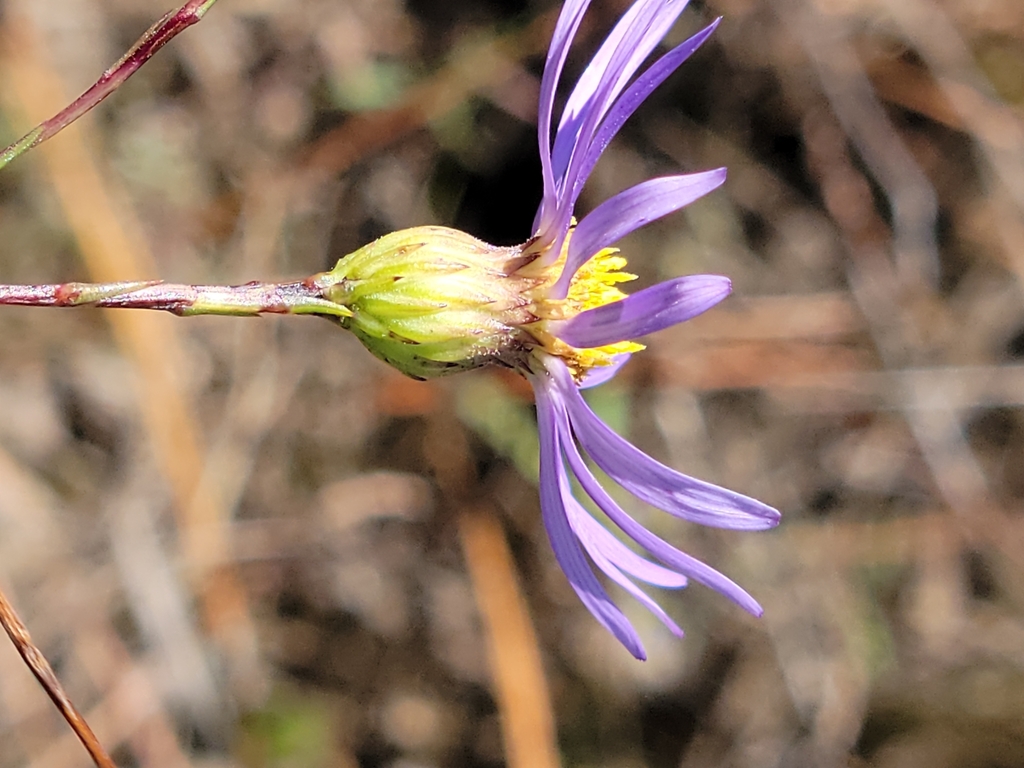
Flower heads are borne singly or a few together at the tips of the branches. Each head has 8 to about 23 ray florets, purple to pale bluish-purple and ½ to ¾ inch long, around 47 to 57 pale yellow disk florets. The involucre below the head is cylindrical to bell-shaped, with green, often purple-tipped bracts (phyllaries) in four to six overlapping rows. Savannah aster blooms from September into December, peaking in October and November.
Fruit & Seeds
Each floret forms a small cypsela (achene) topped by a pappus of bristles. Semple and Hood noted that this species has an unusual triple pappus with three kinds of bristles. The bristles help carry the seeds on the wind.
Similar Species
Other fall-blooming asters in Panhandle savannas, such as late purple aster (Symphyotrichum patens) and Walter’s aster, have more and smaller heads and leafier stems, and most grow in drier sites. Savannah aster has fewer, larger heads on almost leafless stems, and it grows in wet savannas and bogs.
Quick Facts
| Scientific Name | Symphyotrichum chapmanii (Torr. & A. Gray) Semple & Brouillet (syn. Eurybia chapmanii, Aster chapmanii) |
| Family | Asteraceae (aster family) |
| Plant Type | Herbaceous perennial wildflower |
| Mature Height | 1–2½ ft |
| Mature Spread | 6–12 in |
| Growth Rate | Moderate |
| Sun Exposure | Full sun |
| Water Needs | High; moist to wet, seasonally saturated soil |
| Soil Type | Wet, acidic sands and peaty sands |
| Soil pH | Acidic (about 4.5–6.0) |
| Bloom Time | September–December |
| Flower Color | Lavender-blue to purple rays; pale yellow disk |
| Fall Color | None notable; blooms in fall |
| Fruit | Small cypselae (achenes) with bristly pappus |
| Deer Resistant | Unknown |
| USDA Hardiness Zones | 8–9 |
Native Range
Savannah aster is one of the most range-restricted asters in North America. USDA PLANTS (as Eurybia chapmanii) and the Lady Bird Johnson Wildflower Center record it only from Florida and Alabama. Goldenrod and aster specialist John Semple describes it as native to the Apalachicola drainage of the Florida Panhandle and adjacent Alabama, where it may be extirpated, with two isolated collections from peninsular Florida.
In Florida, county records compiled from USDA data include Bay, Calhoun, Franklin, Gulf, Jackson, Liberty, Okaloosa, Santa Rosa, Wakulla, Walton and Washington counties in the Panhandle, plus scattered records from Alachua and St. Lucie counties. The Alabama records are from Geneva and Houston counties in the far southeastern corner of the state. The heart of the range is in and around the Apalachicola National Forest.
Its habitat is wet pine savannas, wet pine flatwoods, bogs and the edges of acid swamps. These are open, grassy places with a high water table and frequent fire. Without fire, shrubs and small trees shade out the herbaceous layer and the aster disappears. Drainage, pine plantations and development have removed much of its former habitat, which is why NatureServe considers it imperiled.
📋 Regional plant lists featuring Savannah Aster: North & South Florida · Alabama, Georgia & Mississippi
Growing & Care Guide
Savannah aster is rarely offered for sale, and it is a plant of conservation concern: NatureServe ranks it as globally imperiled, and it grows naturally only in a small part of the Florida Panhandle and adjacent Alabama. If you grow it, buy only nursery-propagated plants from a reputable native nursery, and never dig plants or collect seed from wild populations. It is best suited to gardeners and restoration projects within its native range who can provide a sunny, wet, acidic site.
Light
Full sun. It needs open conditions with no overhead shade, like the fire-maintained savannas where it grows wild.
Soil & Water
Plant it in acidic, sandy or peaty soil that stays moist to wet most of the year, such as a bog garden, a rain garden, or a naturally wet, sunny low spot. Brief dry periods in late fall and winter are normal in its habitat, but the soil should not dry out for long during the growing season. Do not fertilize.
Planting Tips
Plant in spring among low grasses and wildflowers that will not overtop it, such as pipeworts, yellow-eyed grasses and meadow beauties. Its thin stems are less likely to flop when supported by surrounding grasses.
Pruning & Maintenance
Leave the flower stems standing after bloom so the seed can ripen and disperse. In late winter, cut back or burn the old growth (where permitted) to mimic the frequent fires of its habitat. Keep shrubs and taller perennials from shading it.
Propagation
It can be grown from seed sown on moist, acidic soil in fall or late winter, or by careful division of established clumps. Seed collection from wild plants should be left to permitted conservation and restoration programs.
Landscape Uses
- Bog and rain gardens: within its native range, in sunny, constantly moist spots
- Wet savanna restoration: in the Apalachicola region, using locally sourced, propagated plants
- Fall pollinator plantings: late-season nectar for bees and butterflies
- Florida endemic and rare plant collections: for gardeners focused on regional specialties
Wildlife & Ecological Value
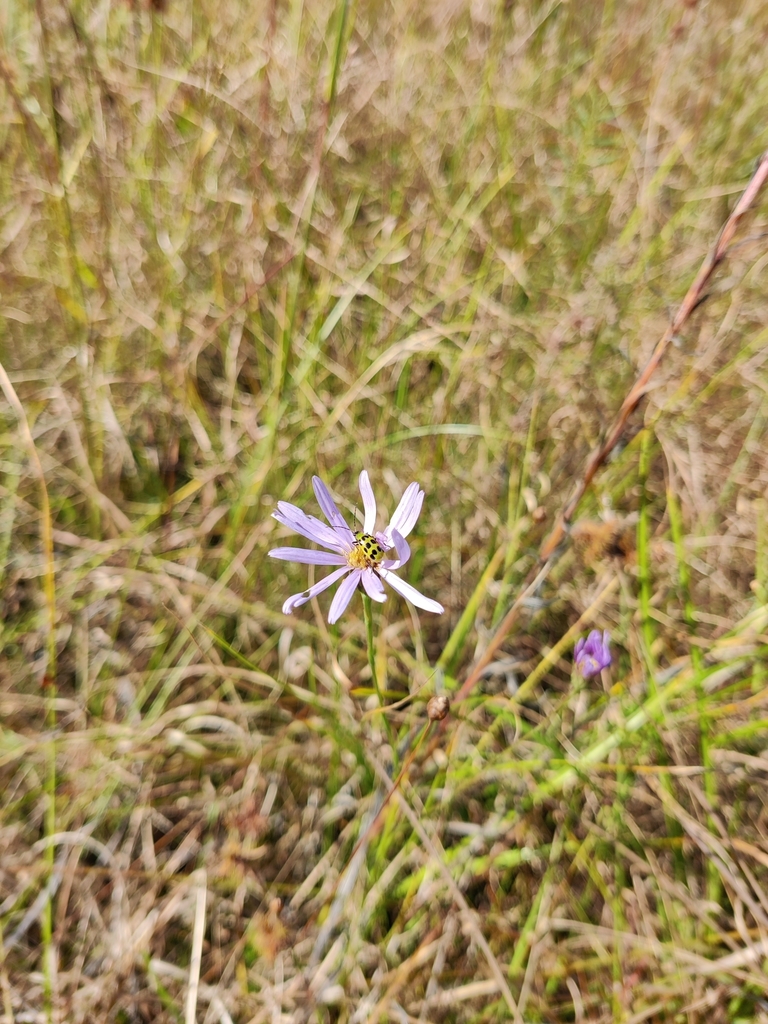
Savannah aster flowers late in the year, when the Panhandle savannas are turning brown and most other wildflowers have finished.
For Pollinators
Like other asters, its flower heads offer nectar and pollen to native bees, including bumblebees and smaller solitary bees, and to butterflies, skippers and flies. Its late bloom makes it valuable to insects preparing for winter and to butterflies migrating through the Panhandle in fall.
For Birds
The plant has little direct food value for birds, though sparrows and other seed-eaters may take the small seeds. Its savanna habitat is home to Bachman’s sparrows, brown-headed nuthatches and other birds of open longleaf pine ecosystems.
For Mammals
It has little importance to mammals. Deer may browse it in open savannas.
Ecosystem Role
Savannah aster is one of many plants that make the Apalachicola region a hotspot of plant diversity. It depends on frequent fire and a natural water table. Its presence indicates an intact, regularly burned wet savanna, and its decline reflects the loss and degradation of that habitat.
Cultural & Historical Uses
John Torrey and Asa Gray named the plant Aster chapmanii in honor of Alvan Wentworth Chapman (1809–1899), a physician and botanist who lived in Apalachicola, Florida, for most of his life. Chapman wrote the Flora of the Southern United States (1860), the first comprehensive flora of the region, and many Panhandle plants carry his name.
Its later history shows how DNA studies have changed plant classification. Lloyd Shinners moved it to Heleastrum in 1969, and Guy Nesom moved it to Eurybia in 1994, based on its corm-like rootstock. In 2001, Brouillet and colleagues showed with DNA sequences that it actually belongs in Symphyotrichum, near the base of that genus, and it was renamed Symphyotrichum chapmanii.
Savannah aster has no known traditional uses. Today it is a sought-after plant for botanists visiting the Apalachicola National Forest in fall, and a reminder of how much of the region’s natural heritage depends on frequent prescribed fire and protected wetlands.
Frequently Asked Questions
Is savannah aster the same as Eurybia chapmanii?
Yes. USDA PLANTS uses Eurybia chapmanii, while the Atlas of Florida Plants, the Flora of North America and the Florida Native Plant Society use Symphyotrichum chapmanii. It was originally named Aster chapmanii.
Is savannah aster rare?
Yes. NatureServe ranks it as globally imperiled (G2), and it is found mainly in a few Panhandle counties around the Apalachicola River. It may be extirpated in Alabama. It is not listed as Endangered or Threatened by the state of Florida.
When does it bloom?
From September into December, with peak bloom usually in October and November.
Can I grow savannah aster?
Within its native range, yes, if you can provide full sun and acidic soil that stays moist to wet. Use only nursery-propagated plants, and never dig plants or collect seed from the wild.
Where can I see it?
In wet pine savannas and flatwoods of the Apalachicola National Forest and nearby public lands in the Florida Panhandle, mainly in October and November.
