
Smallflower Pawpaw (Asimina parviflora)
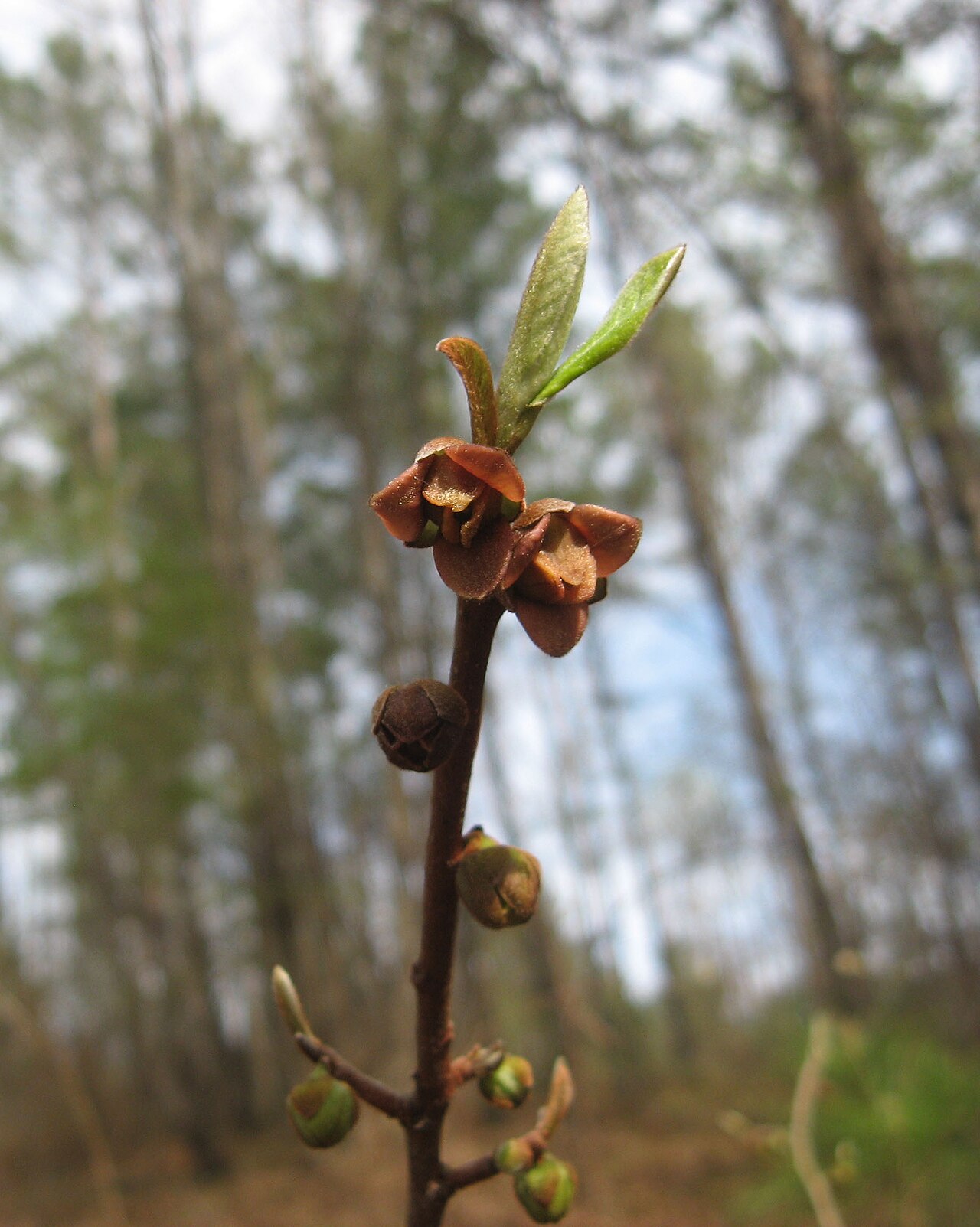
Asimina parviflora, the Smallflower Pawpaw (also called dwarf pawpaw), is a shrubby southern cousin of the familiar pawpaw tree. It is a deciduous understory shrub, usually 3 to 8 feet tall, with large, dark green, pleasantly aromatic leaves, small maroon flowers in early spring and short, edible, banana-scented fruits in late summer. It belongs to the custard apple family (Annonaceae), a mostly tropical family that includes cherimoya and soursop.
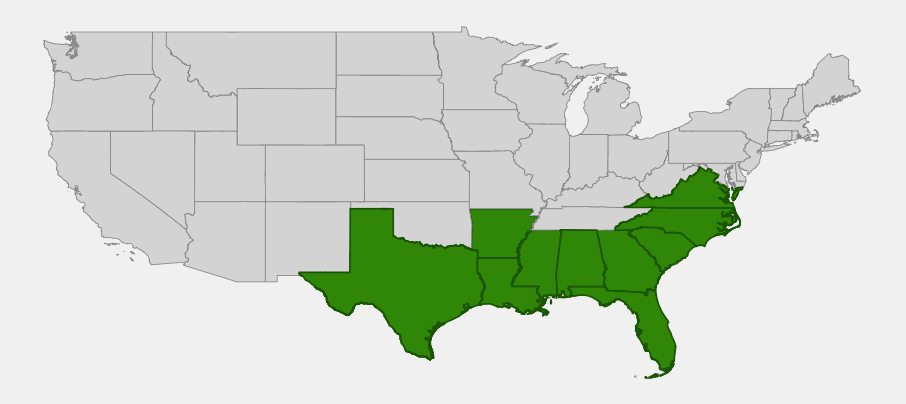
It grows in the shade of pines and oaks across the southeastern Coastal Plain and lower Piedmont, from southeastern Virginia to central Florida and west to eastern Texas and Arkansas. In Florida it is found in the panhandle and the northern and central peninsula, in hammocks, upland mixed woods and the edges of sandhills and flatwoods.
For gardeners, smallflower pawpaw is a compact, shade-tolerant alternative to the common pawpaw (Asimina triloba), and it is a larval host for the zebra swallowtail butterfly. This guide covers how to identify it, where it grows and how to grow it from nursery plants or seed.
Identification
Smallflower pawpaw looks like a scaled-down version of the common pawpaw. The best clues are its smaller size, smaller flowers and fruit, and the rusty hairs on its new growth.
Form & Bark
It is a slender, upright shrub, usually 3 to 8 feet tall and occasionally taller, with one or a few stems. It can form small open patches by root suckers, but less aggressively than the common pawpaw. The bark is thin, smooth and gray-brown, with small raised lenticels. Young twigs and buds are covered with dense rusty-brown hairs, which wear off as the twigs age.
Leaves
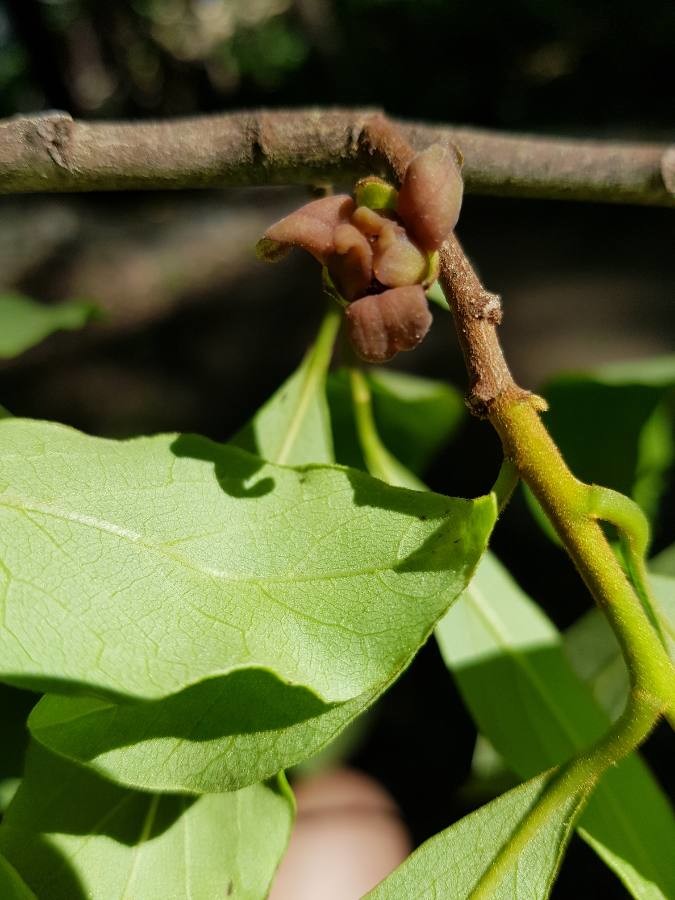
The leaves are alternate, simple and obovate (widest above the middle), usually 4 to 8 inches long, with a short pointed tip and a tapering base. They are thinner and smaller than common pawpaw leaves. New leaves are coated with rusty hairs, especially beneath, and become smooth and dark green above as they mature. Crushed leaves have a strong, musky, slightly green-pepper scent. In fall they turn yellow before dropping.
Flowers
The flowers appear in early spring, from about March in Florida to April and May farther north, singly in the axils of last year’s leaves as the new leaves are expanding. They are small, under 1 inch across, nodding, and maroon to purplish-brown, with three small outer petals and three smaller inner petals. They have a faint, slightly fetid odor that attracts flies and beetles, the main pollinators of pawpaws.
Fruit
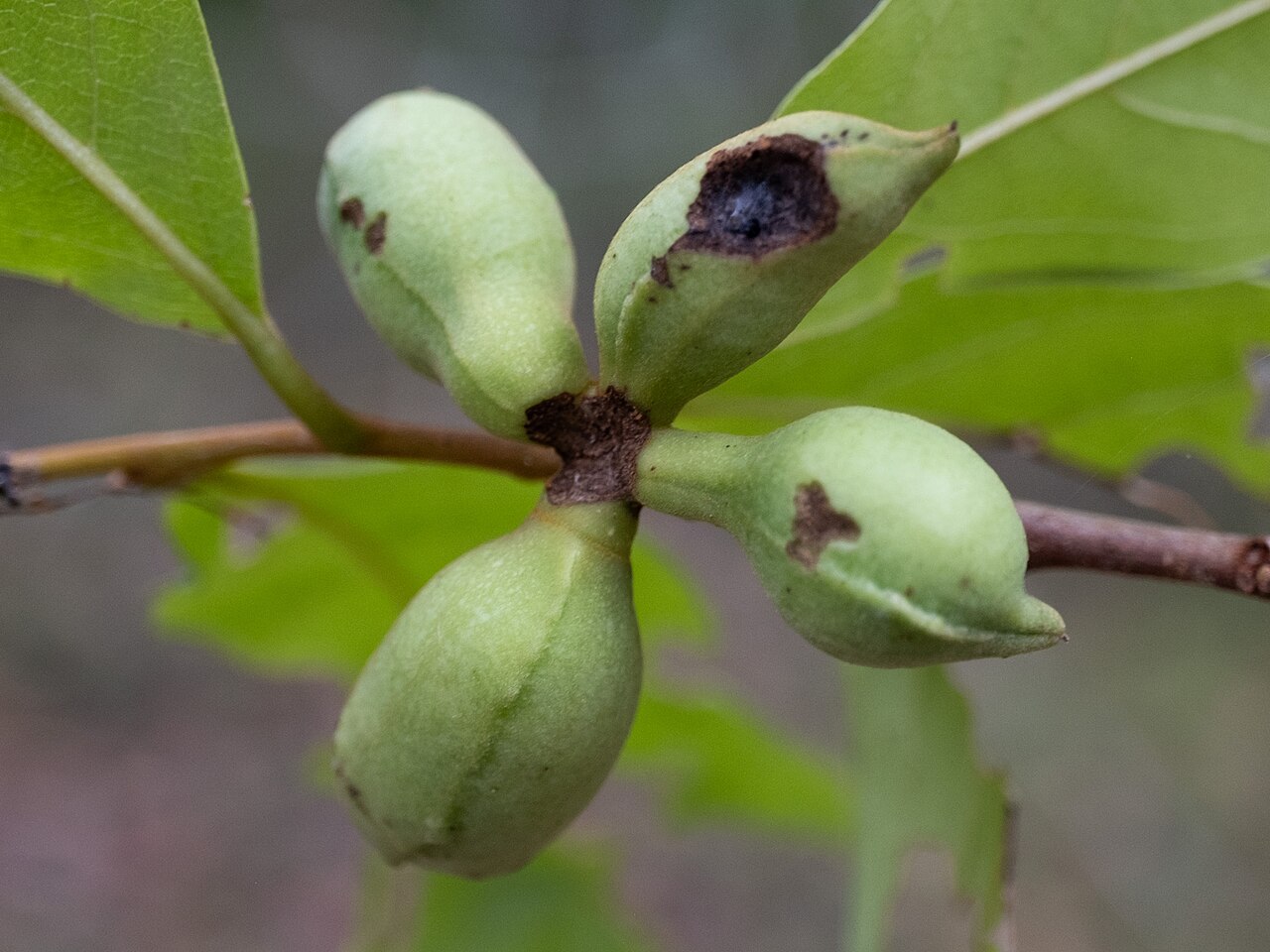
The fruit is a short, plump, cylindrical berry, usually 1 to 2½ inches long, green ripening to yellowish or brownish in late summer, sometimes in clusters of two to four. The soft, custard-like flesh tastes like a smaller common pawpaw and surrounds several large, flat, brown seeds. Fruits often drop while still firm and soften on the ground.
Similar Species
Common pawpaw (A. triloba) is a small tree with leaves 6 to 12 inches long, flowers 1 to 2 inches across and fruits up to 6 inches long. Several other Florida pawpaws, such as the flag pawpaws and dwarf pawpaw (A. pygmaea), are low shrubs of dry sand with cream or white flowers.
Quick Facts
| Scientific Name | Asimina parviflora (USDA symbol ASPA18) |
| Family | Annonaceae (custard apple family) |
| Plant Type | Deciduous shrub |
| Mature Height | 3–8 ft; occasionally to about 10 ft |
| Mature Spread | 3–6 ft; may form small colonies by suckers |
| Growth Rate | Slow |
| Sun Exposure | Part shade to shade; tolerates sun with moisture |
| Water Needs | Moderate; moist but well-drained soil |
| Soil Type | Loose, fertile sandy loam or loam rich in leaf litter |
| Soil pH | About 5.0–6.5 (acidic) |
| Bloom Time | March–May, as new leaves emerge |
| Flower Color | Maroon to purplish-brown |
| Fall Color | Yellow |
| Fruit | Small edible pawpaw, 1–2½ in, ripens late summer |
| Deer Resistant | Yes; leaves are rarely browsed |
| USDA Hardiness Zones | 7–9 |
Native Range
Smallflower pawpaw is a southeastern species. USDA PLANTS and the Lady Bird Johnson Wildflower Center list it from ten states: Virginia, North Carolina, South Carolina, Georgia, Florida, Alabama, Mississippi, Louisiana, Arkansas and Texas. Its range follows the Coastal Plain from southeastern Virginia to central Florida and west to eastern Texas, extending onto the lower Piedmont in the Carolinas and Georgia.
In Florida, the Atlas of Florida Plants records it across the panhandle and the northern and central peninsula into the central part of the state. It grows in upland hardwood and mixed forests, hammocks, bluffs, the edges of sandhills and flatwoods, and along wooded stream banks, usually in partial shade under oaks, hickories and pines.
It is widespread but usually scattered, occurring as single plants or small groups in the shrub layer rather than in large thickets. It is not listed as threatened or endangered in Florida.
📋 Regional plant lists featuring Smallflower Pawpaw: North & South Florida · Alabama, Georgia & Mississippi · North & South Carolina · Maryland, Virginia & West Virginia · Arkansas, Louisiana, Eastern Oklahoma & Eastern Texas
Growing & Care Guide
Smallflower pawpaw is an easy, low-maintenance shrub for shady gardens in the Southeast, and it is sold by native nurseries in Florida, Georgia and the Carolinas. It grows slowly and resents transplanting once established, so start with a small container plant.
Light
Part shade is ideal, such as the dappled light under tall pines or high oaks. It tolerates fairly deep shade, though it flowers and fruits less there. It can take more sun if the soil stays moist, but in hot, dry, sunny sites the leaves scorch.
Soil & Water
It prefers loose, fertile, acidic soil that stays moist but drains well, like the leaf-rich soil of a woodland. Sandy soils are fine if amended with leaf mulch. Water regularly during the first year. Once established it tolerates moderate drought but looks best with occasional watering in long dry spells.
Planting Tips
Plant small container plants in fall or late winter. Pawpaws have a long taproot and few fibrous roots, so handle the root ball gently and do not let it dry out. Mulch with leaf litter. Plant two or more if you want fruit, since pawpaws generally need cross-pollination from a different plant to set fruit well.
Pruning & Maintenance
It needs little pruning. Remove dead wood and, if you want a single-stemmed shrub, remove root suckers. Leave a few if you want a small thicket. Do not spray for caterpillars on the leaves; they are probably zebra swallowtail larvae and do little lasting damage.
Propagation
Fresh seed is the usual method. Collect ripe fruits in late summer, clean the seeds and do not let them dry out. Sow them outdoors in fall or keep them moist and cold (about 40°F) for 60 to 90 days before sowing in spring. Germination can be slow, and seedlings grow slowly for the first couple of years. Plants can also be increased from root suckers, layering or root cuttings.
Landscape Uses
- Woodland gardens: a compact understory shrub under pines and oaks
- Butterfly gardens: larval host for the zebra swallowtail
- Edible landscapes: small, sweet pawpaw fruits for the patient forager
- Shady borders and foundation plantings: bold, tropical-looking foliage in shade
- Naturalizing: for restoring the shrub layer in southeastern upland woods
Wildlife & Ecological Value
Smallflower pawpaw supports a small but specialized group of wildlife, from one of the most beautiful swallowtails to fruit-eating mammals.
For Pollinators
Pawpaws, including this species, are the only larval host plants of the zebra swallowtail (Protographium marcellus), a striking black-and-white butterfly. Females lay single eggs on the new leaves, and the caterpillars feed on the foliage, taking up compounds that make them distasteful to predators. Pawpaws also host the pawpaw sphinx moth. The flowers are pollinated mainly by flies and beetles attracted by their dark color and faint odor.
For Birds
Birds make limited use of the fruit, which is large and soft, but the shrub provides cover and nesting sites in the forest understory.
For Mammals
The fruits are eaten by raccoons, opossums, gray foxes, squirrels and other mammals, which also help spread the seeds. The leaves contain natural insecticidal compounds (acetogenins), and deer seldom browse them.
Ecosystem Role
As an understory shrub in southern upland forests, it adds structure and food for wildlife. Its fruits ripen at the end of summer, when food is useful for animals building fat reserves for fall and winter.
Cultural & Historical Uses
French botanist André Michaux, who explored the southeastern United States in the late 1700s, described the species as Orchidocarpum parviflorum, and Michel Félix Dunal later moved it to Asimina. The genus name comes from assimin, a name used by Native Americans for the pawpaw and recorded by French colonists.
Pawpaw fruits were gathered and eaten by Native Americans and later by settlers across the eastern United States. Most records refer to the larger common pawpaw, but the smaller fruits of smallflower pawpaw are edible in the same way, eaten fresh when soft and ripe.
Today smallflower pawpaw is mainly a plant for native gardeners and butterfly enthusiasts. As interest in pawpaws as a fruit crop has grown, it has also attracted attention as a compact relative of the common pawpaw. Eat only small amounts of any pawpaw fruit at first; some people experience stomach upset, and the seeds and skin should not be eaten.
Frequently Asked Questions
Is smallflower pawpaw fruit edible?
Yes. The fruits are smaller than those of the common pawpaw, usually 1 to 2½ inches long, but have similar soft, sweet flesh. Eat only ripe fruit, discard the skin and seeds, and try a small amount first, as some people react to pawpaws.
How is smallflower pawpaw different from common pawpaw?
Smallflower pawpaw is a shrub usually under 8 feet tall with leaves 4 to 8 inches long, flowers under an inch across and short fruits. Common pawpaw is a small tree with larger leaves, flowers and fruit, and it ranges much farther north.
Will smallflower pawpaw attract butterflies?
Yes. It is a larval host for the zebra swallowtail, which lays its eggs only on pawpaws. Expect some leaf feeding by the caterpillars in spring and summer.
Can smallflower pawpaw grow in full sun?
It prefers part shade. It can grow in sun if the soil stays moist, but in hot, dry, sunny sites the leaves often scorch.
Does smallflower pawpaw need a second plant to fruit?
Usually yes. Pawpaws are largely self-incompatible, so planting two or more plants from different seed sources improves fruit set.

Looking for a nursery that carries Smallflower Pawpaw?
Browse our native plant nursery directory: Alabama & Arkansas · Florida & Georgia · Louisiana & Mississippi · North Carolina · South Carolina, Texas & Virginia