
Florida Prickly Pear (Opuntia austrina)
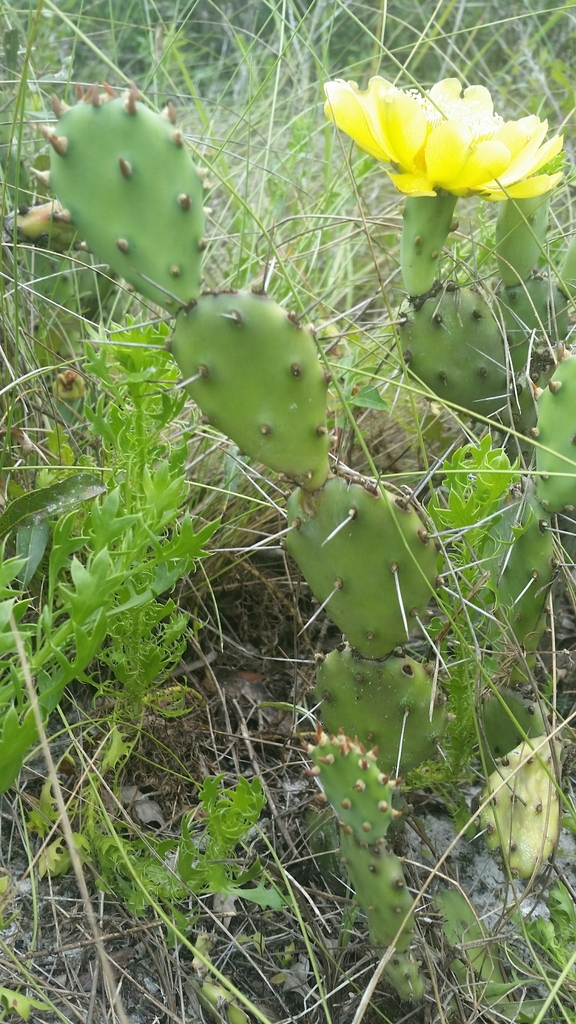
Opuntia austrina, known as Florida Prickly Pear or devil’s-tongue, is a low to knee-high cactus of the dry, sandy uplands of Florida. It forms clumps of flat, oval, blue-green pads armed with long spines, and in spring it opens large, satiny yellow flowers 2 to 3 inches across. Purplish, fleshy fruits follow. It belongs to the cactus family (Cactaceae) and is one of several prickly pears native to Florida.
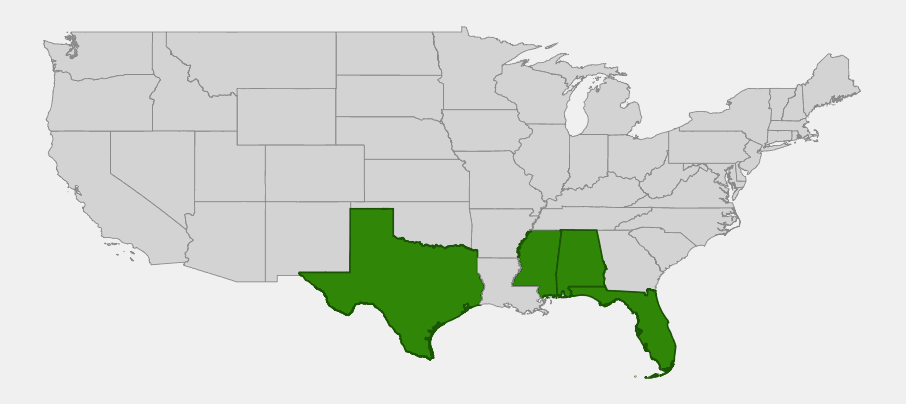
The Atlas of Florida Plants treats Florida prickly pear as endemic to Florida, meaning it grows naturally nowhere else. Cactus taxonomy is notoriously difficult, though, and USDA PLANTS also records the name from Alabama, Mississippi and Texas. Some botanists treat it as a variety of the widespread eastern prickly pear (O. humifusa var. austrina), and range maps differ depending on which treatment they follow. It is not on Florida’s state list of endangered or threatened plants.
Florida prickly pear is a striking, low-maintenance plant for dry, sunny gardens, and an important food source for gopher tortoises and other scrub wildlife. This guide covers how to identify it, how it differs from eastern prickly pear, where it grows, and how to grow it. Buy nursery-propagated plants or start them from pads given by other gardeners, and never dig or collect plants from the wild.
Identification
All prickly pears share flat, jointed stem segments (pads), clusters of tiny barbed bristles called glochids, and showy flowers. Separating the species takes a look at the growth form, spines and roots, and there is no substitute for comparing several plants in one population.
Pads & Growth Form
The pads are oval to oblong, usually 2 to 5 inches long, green to blue-green, and fairly thick. Young plants often lie on the ground, but older plants typically form upright or sprawling clumps of stacked pads up to about 2 to 3 feet tall. Older stems at the base can become woody and nearly round.
Spines & Glochids
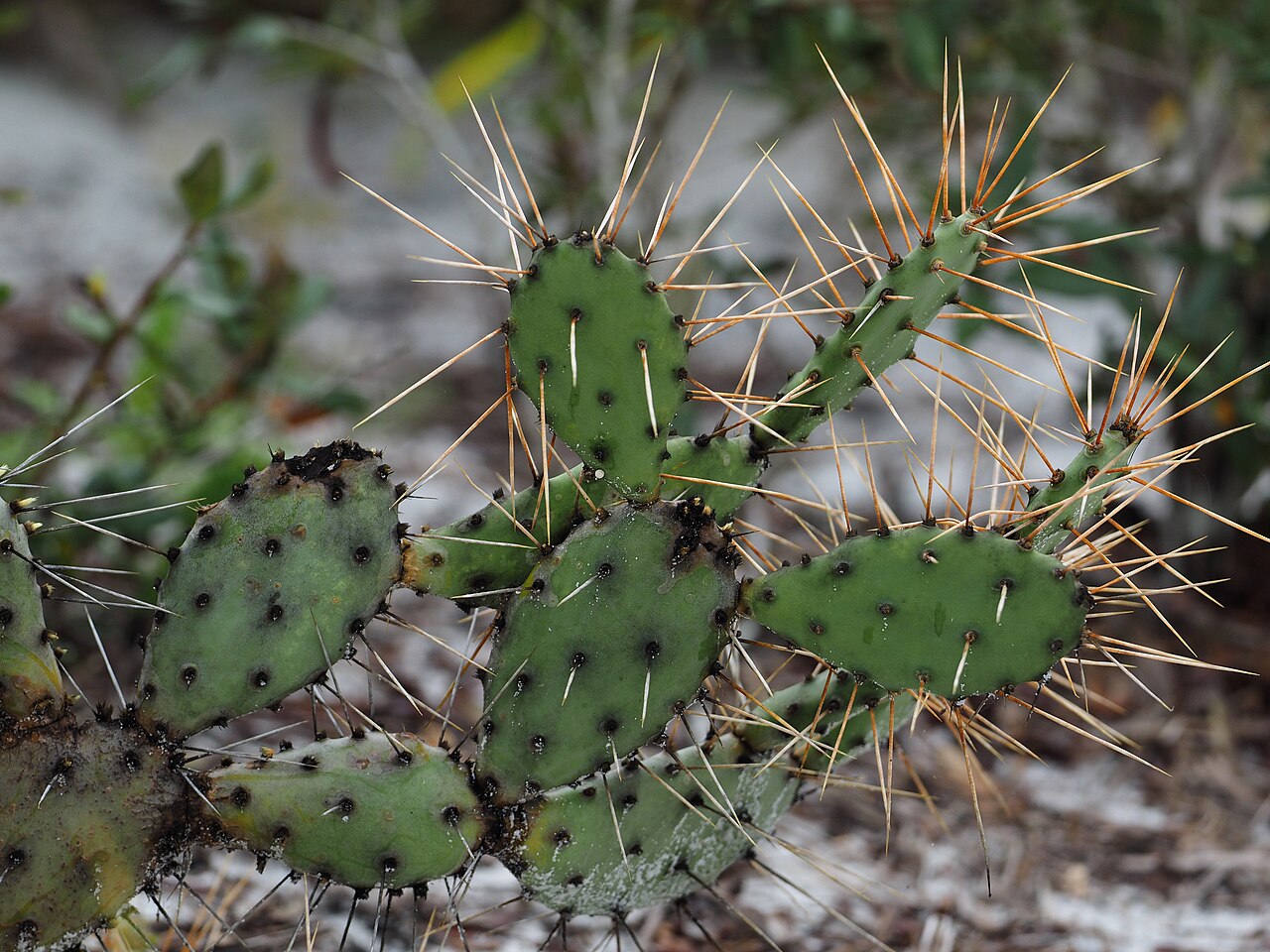
The areoles (the small, raised dots on the pads) carry tufts of yellow to reddish-brown glochids and, on most plants, one to several stiff spines up to 2 inches or more long. The spines are whitish, gray or tan, often with darker tips. Plants are usually much spinier than eastern prickly pear. Handle with thick gloves and tongs: the glochids detach at a touch and are harder to remove than the spines.
Roots
Many plants have thickened, tuber-like roots that store water and food, an adaptation to the deep, dry, sandy soils and periodic fires of Florida uplands. When a fire burns or a drought shrivels the pads, the plant can resprout from these roots.
Flowers
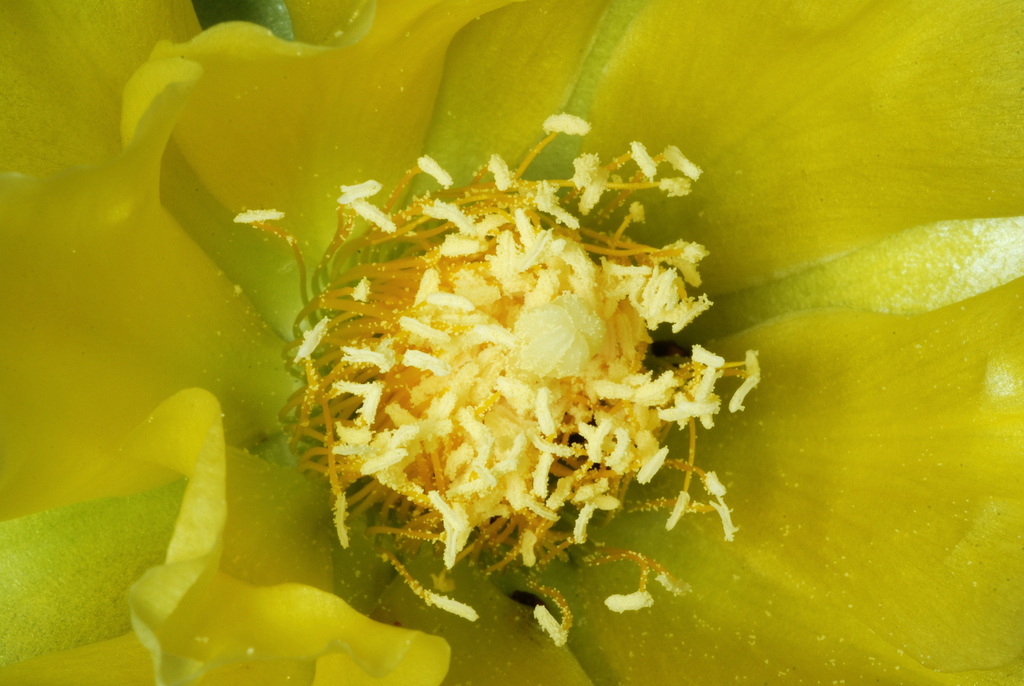
The flowers are bright lemon-yellow, sometimes with a faint orange or reddish blush at the base of the petals, and 2 to 3 inches wide. They open on sunny days from late winter through summer, mainly from March to June in Florida. Each flower lasts a day or two. Inside, a dense ring of stamens surrounds a stout style with white stigma lobes. Like many prickly pears, the stamens are touch-sensitive and curl inward when a bee brushes them, dusting it with pollen.
Fruit & Seeds
The fruit is a fleshy, egg-shaped to club-shaped berry 1 to 2 inches long, ripening from green to reddish-purple in summer and fall. It is edible once the glochids are removed, with mildly sweet, juicy pulp and many hard, flat seeds.
Florida Prickly Pear vs. Eastern Prickly Pear
Eastern prickly pear (O. humifusa) ranges across much of the eastern United States. It typically lies flat or nearly flat on the ground, has fibrous roots, and carries few spines or none at all, often just one on the upper areoles. Florida prickly pear is usually more upright, more heavily spined, and has tuberous roots. Intermediate plants are common where the two meet, which is why some botanists treat them as one species. Coastal erect prickly pear (O. stricta), on Florida’s beaches and shell mounds, is a taller plant with larger, often nearly spineless pads.
Quick Facts
| Scientific Name | Opuntia austrina Small (syn. O. humifusa var. austrina) |
| Family | Cactaceae (cactus family) |
| Plant Type | Perennial cactus (shrubby succulent) |
| Mature Height | 1–3 ft |
| Mature Spread | 2–4 ft clumps |
| Growth Rate | Slow to moderate |
| Sun Exposure | Full sun |
| Water Needs | Very low; extremely drought tolerant |
| Soil Type | Deep, well-drained sand; also shell and limestone sand |
| Soil pH | About 5.0–8.0 |
| Bloom Time | March–June (sporadically to August) |
| Flower Color | Lemon-yellow |
| Fall Color | None; pads may turn purplish in cold or drought |
| Fruit | Fleshy reddish-purple berry (tuna), edible |
| Deer Resistant | Yes, mostly; tortoises and some mammals eat pads and fruit |
| USDA Hardiness Zones | 8–11 |
Native Range
Florida prickly pear grows throughout most of Florida, from the Panhandle and north Florida south through the central ridges to the southern peninsula. The Atlas of Florida Plants, which follows a narrow concept of the species, treats it as a Florida endemic. USDA PLANTS and the Lady Bird Johnson Wildflower Center, which follow a broader species concept, also list Alabama, Mississippi and Texas. The map on this page shows the USDA states; outside Florida, plants assigned to O. austrina are scattered and their identity is debated.
Its home is deep, dry, sandy ground in full sun. It is characteristic of Florida scrub, sandhills, and scrubby flatwoods, and it also grows on old dunes, dry hammocks, pastures and roadsides where the sand is undisturbed. It is frequent on the Lake Wales Ridge and other ancient dune ridges of the peninsula.
Florida prickly pear is still common within its range and is not considered threatened. Like other scrub plants, though, it has lost habitat to development and citrus groves, and fire suppression lets shrubs grow tall and shade it out. Populations on protected scrub and sandhill lands are important for the wildlife that depends on it.
📋 Regional plant lists featuring Florida Prickly Pear: North & South Florida · Alabama, Georgia & Mississippi
Growing & Care Guide
Florida prickly pear is one of the easiest native plants for hot, dry, sandy spots, and it needs almost no care once planted. Because the Atlas of Florida Plants treats it as a Florida endemic, buy nursery-propagated plants from a native nursery, or root a pad from a friend’s garden plant. Never dig plants or collect pads from the wild, and remember that collecting on public lands requires a permit. Plant it where people and pets will not brush against it.
Light
Plant in full sun. In shade the pads become thin and elongated, the plant leans, and it rarely flowers.
Soil & Water
Use deep, well-drained sand, the leaner the better. It also grows well in sandy or shelly coastal soils and in raised, gravelly beds. It does not tolerate soil that stays wet; rot is the main way gardeners kill it. Water a new planting once or twice in the first few weeks if the weather is dry, then stop. Established plants live on rainfall alone and should never be fertilized.
Planting Tips
Plant potted plants at the same depth as in the pot. To start from a pad, let a cut pad dry for a week until the cut end calluses, then set it upright with about a third of it in dry sand. Roots form within a few weeks in warm weather. Wear thick leather gloves and handle pads with tongs or folded newspaper. Give each plant 2 to 4 feet of space, and keep it well back from paths, play areas and driveways.
Pruning & Maintenance
Very little care is needed. Remove dead or rotting pads, and cut back pads that reach into paths. Weeding around a prickly pear is the hardest chore; a mulch of coarse sand or a few pine needles keeps weeds down. If glochids get into your skin, press white glue or tape over the area, let it dry and peel it off.
Propagation
Propagation from pads is simple, as described above. Seeds can also be sown in sandy mix in warm weather after cleaning them of pulp; they germinate slowly and irregularly. Use only plants from your own garden or a nursery.
Landscape Uses
- Xeriscape and rock gardens: an almost care-free plant for dry, sunny spots in deep sand
- Scrub and sandhill gardens: with scrub oaks, Florida rosemary and wiregrass
- Wildlife gardens: pads and fruit feed gopher tortoises; flowers feed bees
- Barrier plantings: spiny clumps discourage foot traffic under windows or along fences
- Edible landscaping: fruit (tunas) can be made into jelly and syrup once the glochids are removed
Wildlife & Ecological Value
In Florida scrub and sandhills, prickly pears are a key food plant. Their pads, flowers and fruit support everything from bees to tortoises.
For Pollinators
The large yellow flowers are visited mostly by bees, including bumblebees, sweat bees and specialist cactus bees, which collect the abundant pollen. The touch-sensitive stamens curl around visiting bees and cover them with pollen.
For Birds
Mockingbirds, Florida scrub-jays and other birds eat the ripe fruit and help spread the seeds. Small birds sometimes nest or shelter in the protection of spiny clumps.
For Mammals
Raccoons, opossums, foxes and other mammals eat the fruit, and some rodents chew the pads. Deer generally leave the spiny pads alone.
Ecosystem Role
Prickly pears are an important food source for the gopher tortoise, a keystone species of Florida uplands that eats the pads, flowers and fruit and disperses the seeds in its droppings. The plants also host the cactus-feeding insects of the region, including cochineal scale insects, which produce a red dye. Their ability to resprout from tuberous roots after fire lets them persist in fire-maintained scrub and sandhill.
Cultural & Historical Uses
John Kunkel Small, the New York Botanical Garden botanist who explored Florida extensively in the early twentieth century, described Opuntia austrina in 1903. The name means “southern,” for its home in the southern peninsula. Small described many Florida cacti as separate species, and later botanists combined many of them, which is why the classification of Florida prickly pears is still debated.
Prickly pear fruits and young pads have been eaten across the Americas for thousands of years, and they were part of the diet of many Native peoples. The pads, with spines and glochids removed, can be cooked as a vegetable (nopales), and the fruit makes jelly and syrup. If you try them, use only your own garden plants, and remove every glochid by burning or scrubbing.
Today Florida prickly pear is valued as part of the state’s distinctive scrub flora, and it is often grown in tortoise-friendly gardens. The name devil’s-tongue, recorded by USDA and the Atlas, probably refers to the tongue-shaped pads and their long, painful spines.
Frequently Asked Questions
Is Florida prickly pear endemic to Florida?
The Atlas of Florida Plants treats it as a Florida endemic. USDA PLANTS also lists Alabama, Mississippi and Texas, reflecting a broader species concept. Range maps vary because botanists disagree about how to divide the prickly pears of the Southeast.
How is it different from eastern prickly pear?
Eastern prickly pear (Opuntia humifusa) usually lies flat on the ground, has few or no spines and fibrous roots, and grows across much of the eastern U.S. Florida prickly pear is usually more upright, more spiny, and has tuberous roots. Some botanists treat it as a variety of eastern prickly pear.
Can I take a pad from a wild plant?
No. Buy plants from a native nursery or root a pad from a garden plant. Collecting plants or pads on public lands requires a permit, and the Atlas treats this species as a Florida endemic.
Is the fruit edible?
Yes. The ripe, purple fruit is edible after all glochids are removed. It can be eaten fresh or made into jelly. Always use fruit from your own plants.
How do I remove glochids from my skin?
Use tape or a thin layer of white glue: press it on, let it dry, and peel it off. Tweezers work for larger spines. Avoid rubbing the area, which breaks the glochids and pushes them deeper.

Looking for a nursery that carries Florida Prickly Pear?
Browse our native plant nursery directory: Alabama · Florida · Mississippi · Texas