Smooth Coneflower (Echinacea laevigata)
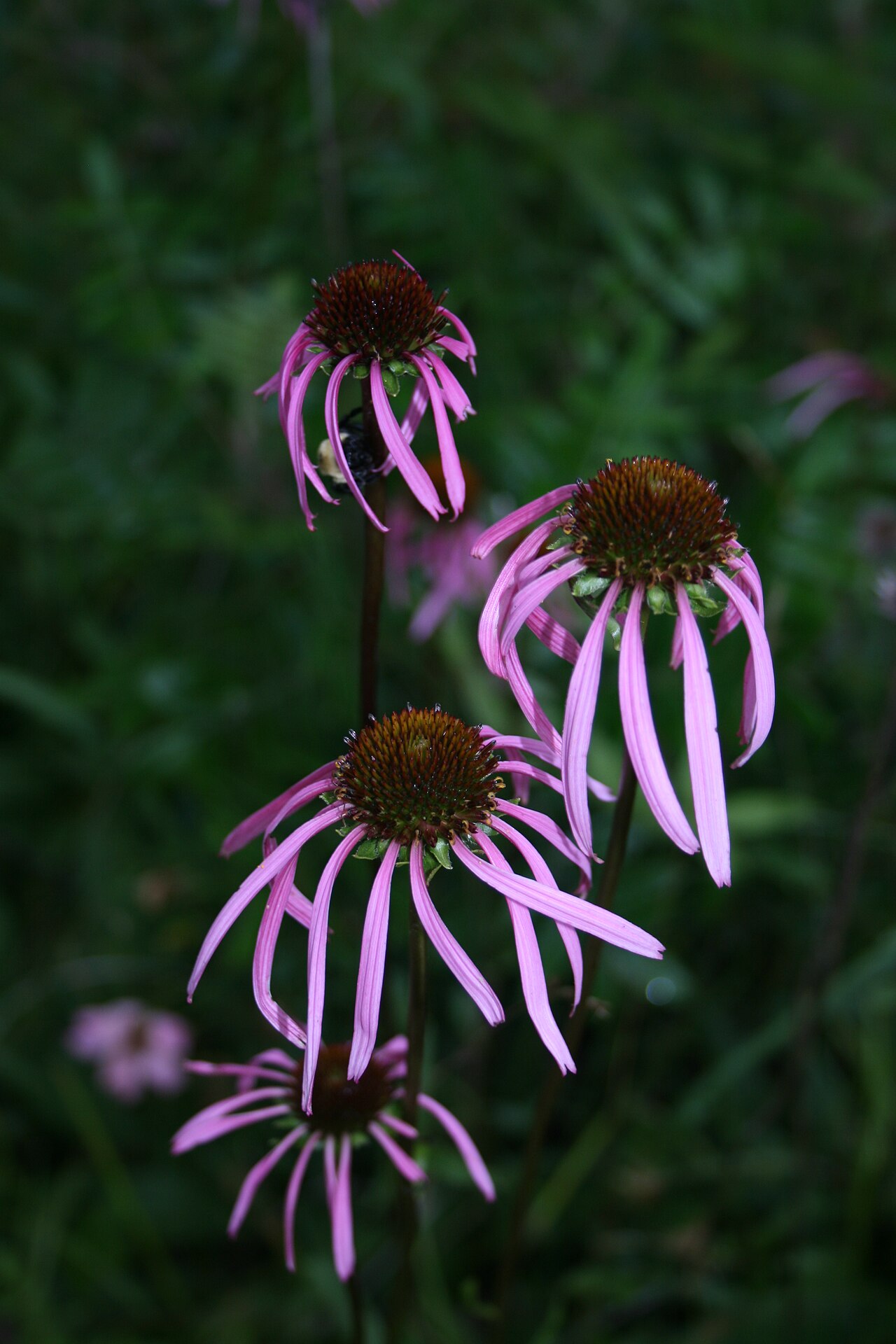
Echinacea laevigata, the Smooth Coneflower, is a rare herbaceous perennial wildflower of the southeastern Piedmont, found only in scattered populations across Georgia, North Carolina, South Carolina, and Virginia. It is a member of the aster family (Asteraceae) and one of the nine recognized Echinacea species, closely resembling the far more common Purple Coneflower but distinguished by its smooth, hairless leaves and stems — the trait that gives the species its name.
Smooth Coneflower was federally listed as endangered in 1992 after decades of habitat loss, and in 2022 the U.S. Fish and Wildlife Service reclassified it from endangered to threatened under the Endangered Species Act, reflecting real recovery driven by habitat protection and management. It still faces real pressure: it depends on periodic disturbance — fire, mowing, or grazing — to keep competing vegetation from shading it out, and most of its historic habitat along woodland edges, glades, and roadsides has been lost to development, fire suppression, and forest succession.
Smooth Coneflower is not a plant to dig from the wild or even to casually collect seed from; it remains federally protected, and every population matters to its recovery. For gardeners within its native range who want to support this species, the right path is nursery-propagated plants and seed sourced from conservation-approved growers, planted in the sunny, well-drained, disturbance-tolerant conditions it needs to thrive.
Identification
Smooth Coneflower grows as an upright perennial from a stout taproot, typically reaching 2 to 3 feet tall, with one to several unbranched or sparsely branched flowering stems rising from a basal rosette of leaves. Its overall form closely parallels Purple Coneflower, and the two are often confused where their ranges overlap.
Leaves
The defining feature is smoothness: leaves and stems are hairless or nearly so, in contrast to the noticeably rough, hairy leaves and stems of Purple Coneflower. Basal leaves are elliptical to oblong, 4 to 8 inches long, tapering to a winged petiole, and are never heart-shaped at the base — another reliable way to tell Smooth Coneflower apart from Purple Coneflower, whose lower leaves are broader and heart-shaped. Stem leaves are smaller, narrower, and progressively more stalkless higher on the plant. The foliage has a somewhat glaucous, slightly waxy blue-green cast.
Flowers
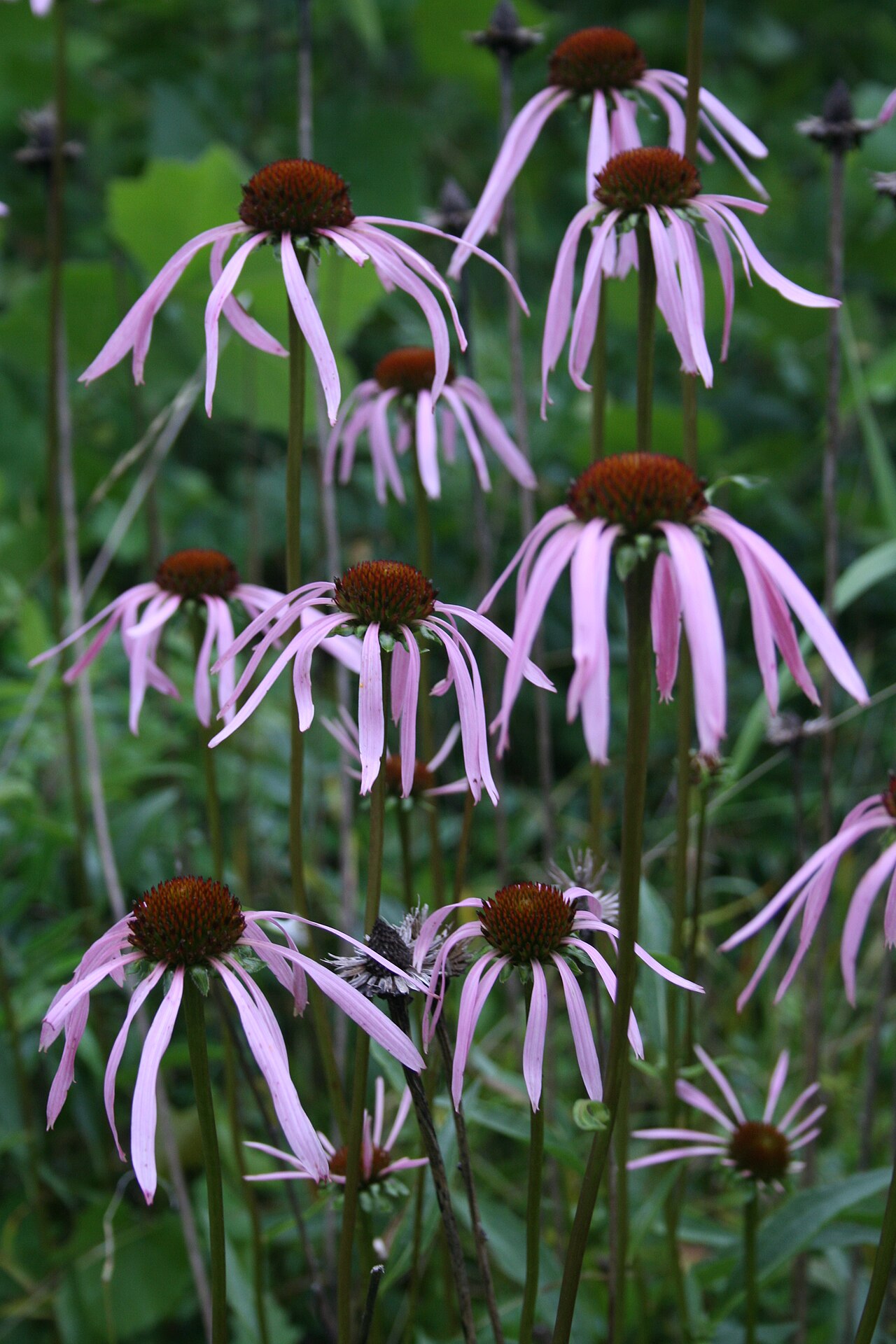
Each stem produces a single flower head 3 to 4 inches across, blooming from late spring into mid-summer. The 12 to 20 ray florets are narrow, pale pink to light purple, and characteristically droop downward, often emerging rolled or twisted before unfurling into their final shape. The raised central cone of disc florets is reddish-brown to orange-brown, with a spiny, bristled texture typical of the genus. Compared with Purple Coneflower, the ray petals of Smooth Coneflower tend to be paler and narrower, and the overall flower slightly smaller and more delicate-looking.
Fruit & Seeds
After flowering, the cone dries and darkens, and each disc floret matures into a small four-angled achene. Smooth Coneflower reproduces both by seed and vegetatively by rhizomes, which can produce multiple rosettes from a single parent plant — a trait that helps established colonies persist and slowly expand even where seed production is limited.
Quick Facts
| Scientific Name | Echinacea laevigata |
| Family | Asteraceae (Aster/Sunflower) |
| Plant Type | Herbaceous perennial wildflower |
| Mature Height | 2–3 ft |
| Mature Spread | 1–1.5 ft, slowly expanding by rhizome |
| Growth Rate | Moderate |
| Sun Exposure | Full Sun to Part Sun |
| Water Needs | Low to moderate; good drought tolerance once established |
| Soil Type | Well-drained, often over mafic or calcareous (basic) rock |
| Soil pH | Circumneutral to slightly alkaline |
| Bloom Time | May – July |
| Flower Color | Pale pink to light purple with a reddish-brown cone |
| Fall Color | None notable; dried seed heads persist |
| Fruit | Small achenes in the dried cone |
| Deer Resistant | Generally yes, though not browse-proof |
| USDA Hardiness Zones | 6–9 |
Native Range
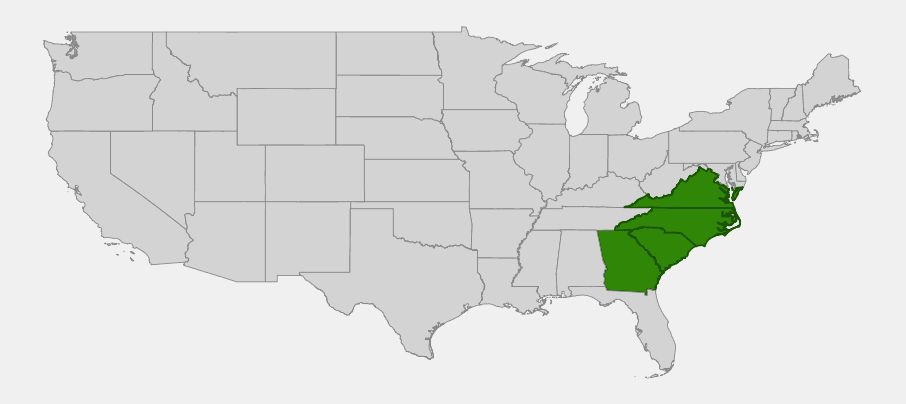
Smooth Coneflower is native to the Piedmont and adjacent areas of the southeastern United States, with confirmed populations in Georgia, North Carolina, South Carolina, and Virginia. Within this range it is never common; it survives in small, scattered, often isolated colonies rather than broad stretches, and many known sites hold only a handful of plants.
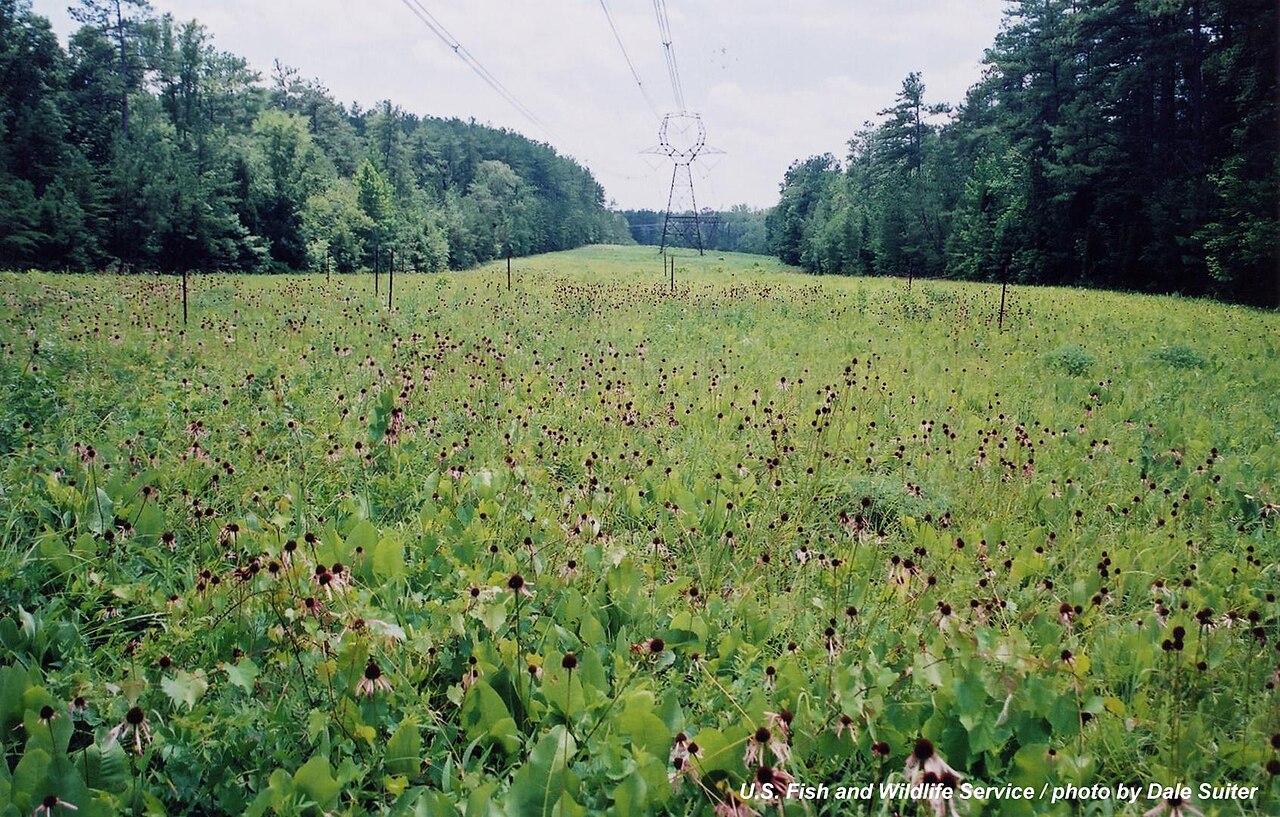
Typical habitat includes open woodlands and woodland edges, clearings over mafic or calcareous (basic, nutrient-rich) rock types, dry limestone or diabase glades, and disturbed corridors such as roadsides, utility rights-of-way, and old fields where periodic mowing or clearing keeps competing vegetation in check. This dependence on disturbance is central to the species’ ecology: without fire, mowing, or other management, taller grasses, shrubs, and trees shade out Smooth Coneflower within a few years, which is why rights-of-way and managed glades have become unexpectedly important refuges for the species.
Habitat loss and fire suppression are the leading causes of Smooth Coneflower’s decline, compounded in the past by over-collection for the herbal trade that also pressured Purple Coneflower. The 2022 federal reclassification from endangered to threatened reflects stabilized and, in some areas, increasing populations thanks to habitat management and protection — but the species remains legally protected, and digging plants or collecting seed from wild populations is both illegal and ecologically harmful. Choose nursery-propagated stock only.
📋 Regional plant lists featuring Smooth Coneflower: Georgia, Alabama & Mississippi · North Carolina & South Carolina · Maryland, Virginia & West Virginia
Growing & Care Guide
Smooth Coneflower is garden-friendly once established, needing much the same sunny, well-drained conditions as its popular cousin Purple Coneflower. Because it is a species of conservation concern, plant only nursery-propagated material from reputable native plant growers, never wild-collected plants or seed.
Light
Provide full sun to light part sun. In the wild it grows best in open woodlands, glade clearings, and managed rights-of-way where it gets several hours of direct light daily; too much shade reduces flowering and eventually causes populations to decline as taller vegetation closes in.
Soil & Water
Plant in well-drained soil; Smooth Coneflower is naturally associated with mafic or calcareous rock types that produce circumneutral to slightly alkaline, nutrient-richer soils than the acidic sands and clays typical of much of the Southeast. It adapts to ordinary garden soil as long as drainage is good. Water regularly during the first growing season to establish the taproot; mature plants tolerate moderate drought well but appreciate occasional deep watering during extended dry spells.
Planting Tips
Set out container-grown plants in spring or fall, spacing them 12 to 18 inches apart. Choose a permanent site, since the taproot makes established plants difficult to move successfully. A site that receives some periodic disturbance — an annual fall mowing after seed drop, for instance — mimics the natural management that keeps Smooth Coneflower populations healthy in the wild and helps prevent it from being crowded out by more aggressive neighbors.
Pruning & Maintenance
Leave spent flower heads standing into fall and winter for seed-eating birds, then cut old stems back in late winter before new growth emerges. An occasional light mowing or cutback of the surrounding bed in late fall, after seed has dropped, helps replicate the disturbance regime the species depends on in the wild and keeps woody encroachment at bay.
Landscape Uses
- Native pollinator gardens within its home range of Georgia, the Carolinas, and Virginia
- Piedmont prairie and glade restoration plantings using regionally sourced, nursery-propagated stock
- Conservation and rare-plant demonstration gardens at native plant societies and botanical gardens
- Meadow plantings alongside Purple Coneflower and other sun-loving Piedmont natives
- Roadside and right-of-way plantings where periodic mowing maintains open habitat
For other Georgia natives that share Smooth Coneflower’s need for well-drained, sun-baked soil, see our guide to low-maintenance native plants for Georgia; Virginia and Carolina gardeners can find companion plants in our low-maintenance Virginia natives roundup and our list of drought-tolerant North Carolina natives, which flags coneflowers as a reliable, pollinator-friendly choice for dry sites.
Wildlife & Ecological Value
Despite its rarity, Smooth Coneflower plays the same ecological role in Piedmont glades and open woodlands that its more common relatives play across the rest of the eastern United States.
For Pollinators
The flower heads attract native bees, butterflies, and other pollinating insects throughout the May–July bloom period. Long-tongued bees and butterflies favor the nectar-rich ray florets, while the dense disc florets provide pollen for a range of smaller bees and beetles. In fragmented Piedmont habitats with few other large, nectar-rich summer blooms, surviving Smooth Coneflower populations can be locally important pollinator resources.
For Birds
As with other coneflowers, the dried seed heads that persist after bloom are worked by goldfinches and other seed-eating songbirds through fall, which is one more reason to leave spent flower stalks standing rather than cutting them back immediately after bloom.
For Mammals
Foliage is not a preferred browse for deer, though young plants in high-deer-density areas can still be nibbled occasionally. In general the species is considered reasonably deer resistant, which helps remaining wild populations persist in areas with heavy deer pressure.
Ecosystem Role
Smooth Coneflower is an indicator of open, disturbance-maintained Piedmont habitat — glades, woodland edges, and managed rights-of-way that are themselves increasingly rare. Its deep taproot helps it persist through drought and fire, and its presence often signals a site with the kind of periodic disturbance regime that supports a broader community of regional prairie and glade specialists, making protection of its populations valuable well beyond the species itself.
Cultural & Historical Uses
Smooth Coneflower was not as widely documented in traditional use as its far more abundant relative Purple Coneflower, likely in part because its naturally small, scattered populations made it a far less available resource across its range. Species in the Echinacea genus broadly have a long history of use among Indigenous peoples of the eastern and central United States, who used various coneflowers for a range of traditional purposes.
In more recent history, the species became entangled with the broader herbal “echinacea” trade of the twentieth century, when demand for Echinacea root and other plant parts for herbal products contributed to over-collection pressure on wild coneflower populations generally, compounding the habitat loss that was already reducing Smooth Coneflower’s numbers. This pressure, combined with the loss of open Piedmont habitat to development, fire suppression, and forest succession, led to its federal listing as endangered in 1992.
Today Smooth Coneflower’s story is primarily one of conservation success in progress: decades of habitat protection, prescribed burning, and cooperative management on rights-of-way and conservation lands supported its 2022 reclassification from endangered to threatened. It remains a federally protected species, and its continued recovery depends on protecting existing populations and the open, periodically disturbed habitat they need — not on any collection or use of the plant itself.
Frequently Asked Questions
Is Smooth Coneflower still endangered?
No longer endangered, but still protected. In 2022 the U.S. Fish and Wildlife Service reclassified Smooth Coneflower from endangered to threatened under the Endangered Species Act, reflecting genuine recovery. It remains illegal to collect it from the wild, and conservation of existing populations is still a priority.
Can I dig up or collect seed from wild Smooth Coneflower?
No. As a federally protected species, Smooth Coneflower may not legally be collected from wild populations on protected lands, and doing so anywhere undermines its ongoing recovery. Always buy nursery-propagated plants or seed from reputable native plant growers instead.
How can I tell Smooth Coneflower from Purple Coneflower?
Look at the leaves and stems: Smooth Coneflower is hairless, with narrow, elliptical (never heart-shaped) basal leaves, while Purple Coneflower has noticeably rough, hairy leaves and stems, with broader, heart-shaped lower leaves. Smooth Coneflower’s ray petals also tend to be paler pink and narrower.
Why does Smooth Coneflower need mowing or fire to survive?
In the wild, it grows in open glades, woodland edges, and rights-of-way that stay sunny only because of periodic disturbance. Without fire, mowing, or grazing, taller grasses, shrubs, and trees quickly shade these sites out, which is why managed roadsides and utility corridors have become unexpectedly important refuges for the species.
Is Smooth Coneflower used medicinally like other Echinacea?
It should not be harvested for any use. Unlike Purple Coneflower, which is widely cultivated for the herbal market, Smooth Coneflower’s rarity and federal protection mean collecting it for any purpose, medicinal or otherwise, is both illegal in many contexts and harmful to its recovery. Any Echinacea products on the market come from cultivated Purple or Narrow-leaf Coneflower, not this species.

Looking for a nursery that carries Smooth Coneflower?
Browse our native plant nursery directory: Georgia · North Carolina · South Carolina & Virginia