Yellow Coneflower (Echinacea paradoxa)
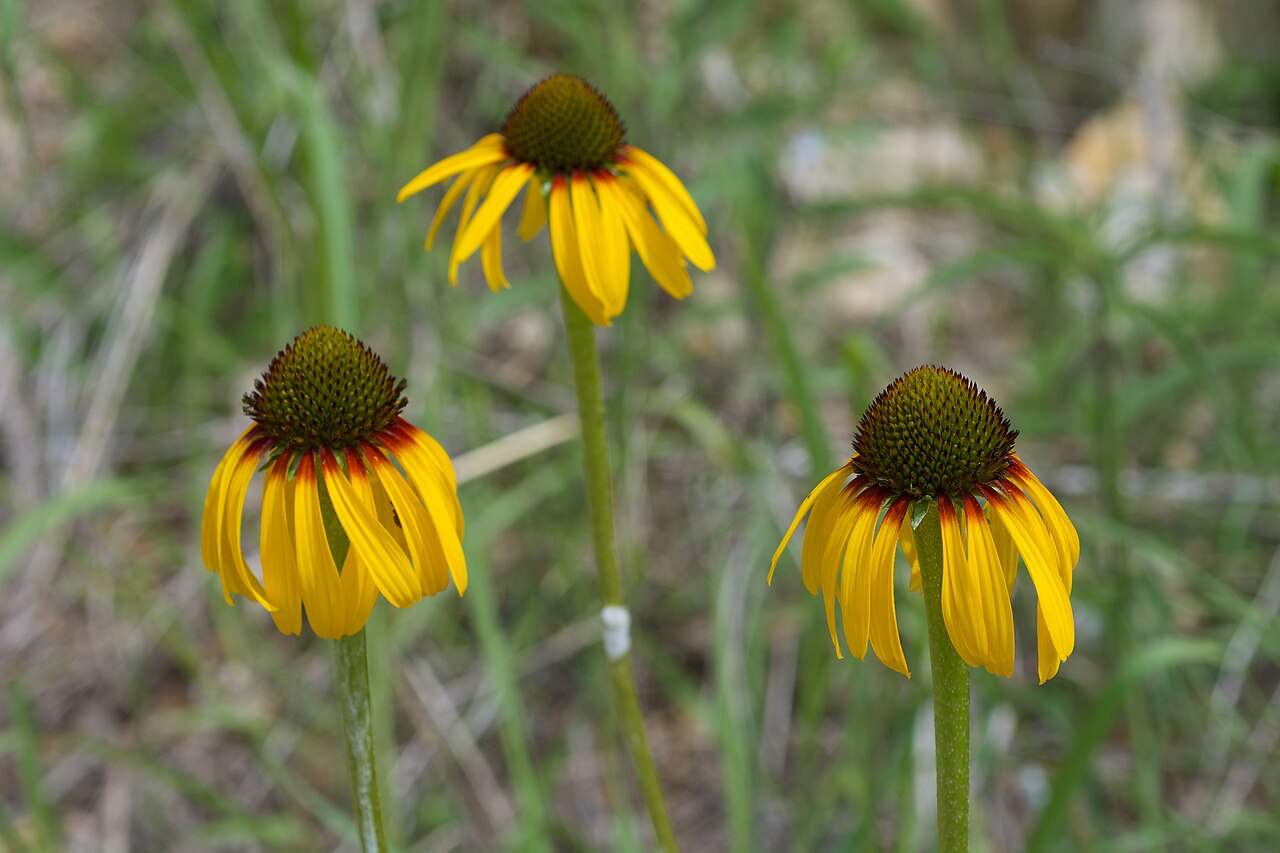
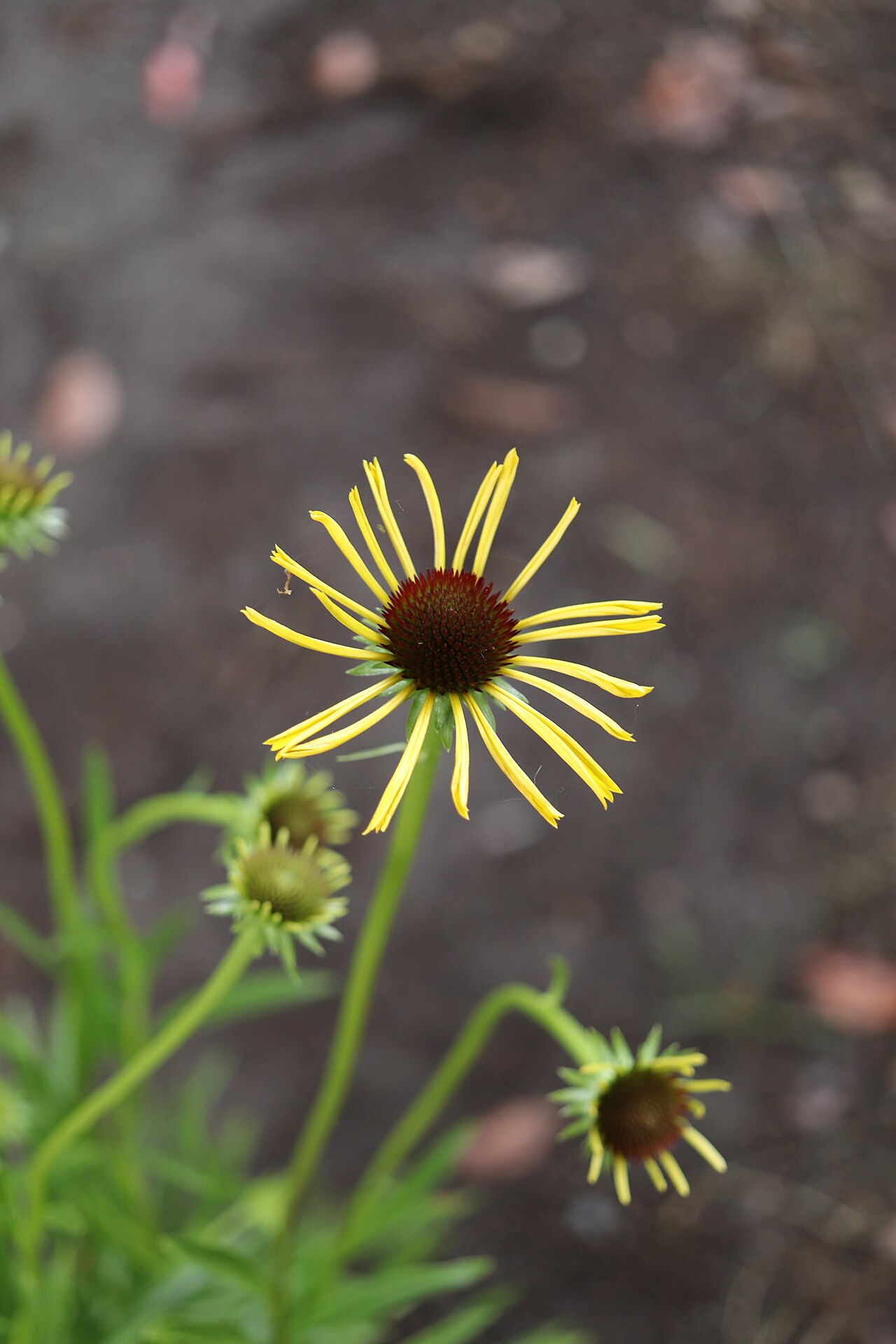
Echinacea paradoxa, the Yellow Coneflower — also called Bush’s Coneflower or Ozark Coneflower — is the one truly “paradoxical” member of its genus: every other Echinacea blooms pink or purple, but this one produces bright lemon-yellow ray flowers around a tall, dark maroon-brown cone. It is a clump-forming herbaceous perennial in the aster family (Asteraceae), native only to a small corner of the south-central United States, where it grows on limestone and dolomite glades in the Ozark Highlands of Missouri, Arkansas, and south-central Oklahoma.
In the wild, Yellow Coneflower is a glade specialist. It roots into thin, rocky soil over exposed bedrock, in open, sun-baked sites where taller grasses and woody plants struggle to compete. From that harsh habitat comes a tough, deep-rooted, drought-hardy wildflower that is increasingly popular in native plant gardens well outside its native range — though gardeners in the Midwest and Plains should know it is a true glade endemic, not naturally occurring throughout the “Missouri south to Texas” swath sometimes cited for the genus as a whole.
For gardeners in its native Ozark region and beyond, Yellow Coneflower combines months of pollinator-friendly bloom with minimal upkeep once established. It thrives in lean, well-drained soil, shrugs off summer heat and drought, and its sturdy stems and seed-filled cones give it structure and winter interest long after the petals drop. Because wild populations are limited and the species is tracked as rare or threatened in parts of its range, buy nursery-propagated plants or seed rather than collecting from glades.
Identification
Yellow Coneflower grows from a stout taproot and woody crown as an upright perennial 2 to 3 feet tall, usually with one to several branched flowering stems rising from a basal rosette of leaves. The whole plant has a lean, wiry look suited to its rocky glade habitat, quite different from the leafier, bushier form of its purple-flowered cousins.
Leaves
Leaves are narrow and lance-shaped, 4 to 8 inches long, tapering at both ends, with three prominent parallel veins running the length of the blade — a identification trait shared across the Echinacea genus. Basal leaves are the largest and are held on long stalks; stem leaves are smaller, narrower, and nearly stalkless higher up the plant. The foliage is rough-textured with short, stiff hairs, and is medium to grayish green.
Flowers
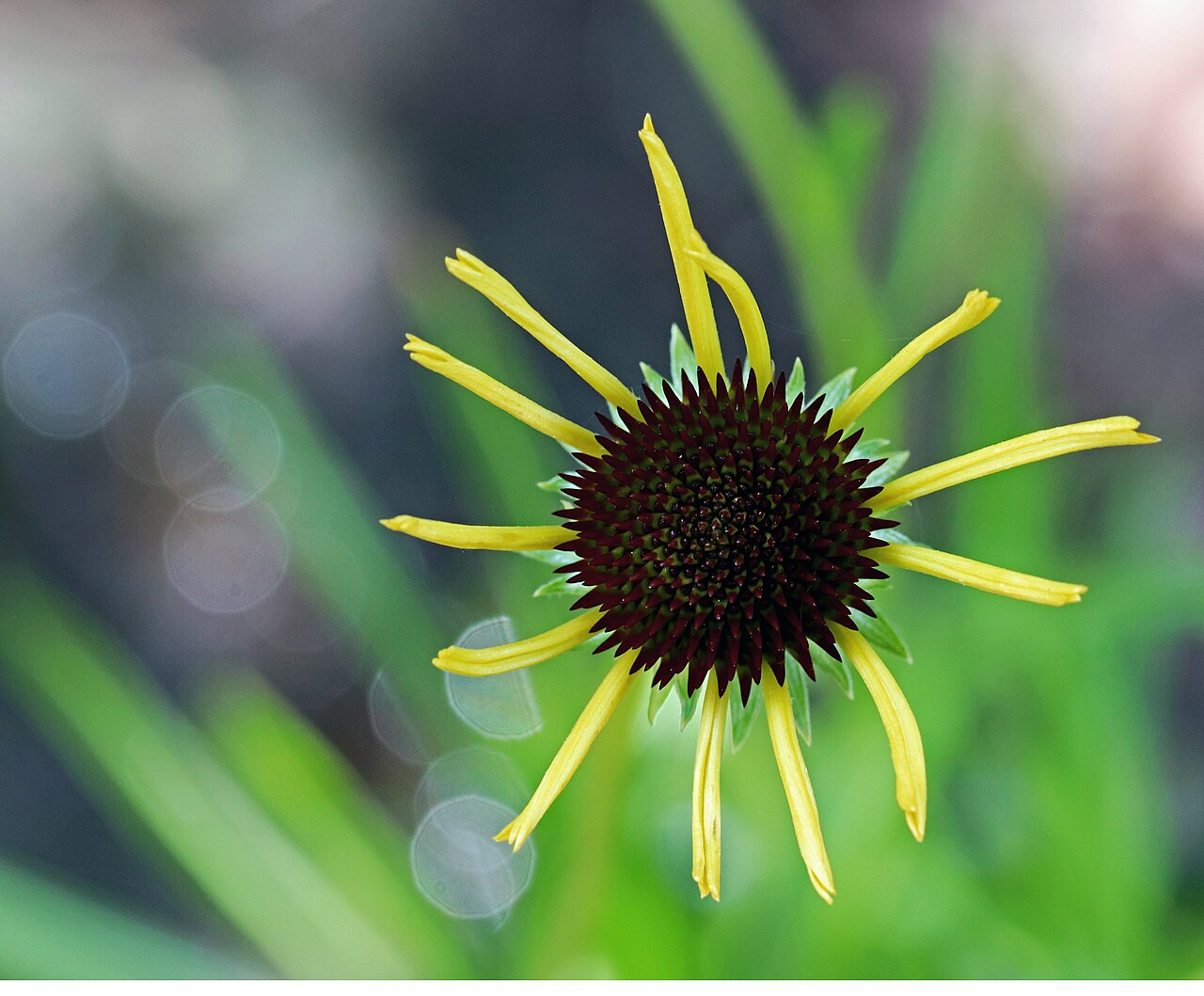
Each flowering stem carries a single large flower head, 3 to 4 inches across, from late spring into midsummer. The 12 to 20 ray florets are narrow, strap-shaped, and bright yellow, drooping downward and slightly backward from the central cone in the same reflexed posture seen in Purple Coneflower. The raised central disc is made up of densely packed, dark maroon to blackish-brown disc florets tipped in orange, giving the cone a spiny, almost bristled look up close. This dark cone against bright yellow petals is the plant’s most distinctive field mark.
Fruit & Seeds
After bloom, the cone dries and darkens, holding its shape through fall and winter. Each disc floret matures into a small four-angled, seed-like achene (cypsela) that remains tightly packed in the cone. Goldfinches and other seed-eating birds work the dried cones through autumn, so it is worth leaving spent flower heads standing rather than deadheading them all.
Quick Facts
| Scientific Name | Echinacea paradoxa |
| Family | Asteraceae (Aster/Sunflower) |
| Plant Type | Herbaceous perennial wildflower |
| Mature Height | 2–3 ft |
| Mature Spread | 1–1.5 ft (forms a tight clump) |
| Growth Rate | Moderate |
| Sun Exposure | Full Sun |
| Water Needs | Low once established; excellent drought tolerance |
| Soil Type | Lean, rocky or gravelly, well-drained; tolerates limestone |
| Soil pH | Neutral to alkaline (about 6.5–8.0) |
| Bloom Time | June – July |
| Flower Color | Bright yellow with a dark maroon-brown cone |
| Fall Color | None notable; dried seed heads persist |
| Fruit | Small achenes held in the dried cone, eaten by birds |
| Deer Resistant | Yes, generally avoided |
| USDA Hardiness Zones | 4–8 |
Native Range
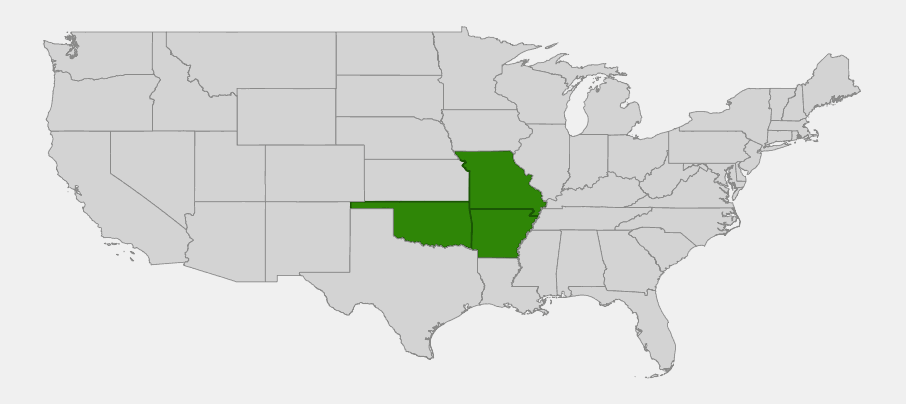
Yellow Coneflower has one of the most restricted native ranges of any Echinacea species. It is found almost entirely within the Ozark Highlands, centered on southern Missouri and northern Arkansas, with scattered populations extending into south-central Oklahoma. It is not a broadly distributed prairie species like Purple Coneflower; it is a true glade endemic, confined to a particular kind of rocky, open habitat within that region.
Typical habitat is a dolomite or limestone glade: a thin-soiled, sun-exposed opening within otherwise wooded hill country, often on south- or west-facing slopes where bedrock lies close to the surface. These glades bake in summer heat and drain quickly after rain, favoring deep-rooted, drought-adapted plants over moisture-loving ones. Yellow Coneflower shares these glades with other regional specialists such as Prairie Dropseed, Missouri Coneflower relatives, and various glade-adapted asters and milkweeds, and it depends on periodic fire or other disturbance to keep the glades open and free of encroaching cedar and brush.
Botanists recognize two varieties. The yellow-rayed var. paradoxa is the Ozark glade plant this page describes. A second, purple-rayed variety, var. neglecta, grows on rocky prairies in Oklahoma and Texas and looks much more like an ordinary purple coneflower in bloom. If you are shopping for the yellow-flowered plant, check that the label says var. paradoxa or simply Echinacea paradoxa with yellow flowers.
Because glade habitat is naturally limited and has been reduced by fire suppression, quarrying, and development, Yellow Coneflower is tracked by state natural heritage programs as uncommon in parts of its small range. Garden and restoration plantings use nursery-propagated stock; never dig plants or collect seed from wild glade populations.
📋 Regional plant lists featuring Yellow Coneflower: Illinois, Iowa & Missouri · Arkansas, Louisiana, Eastern Oklahoma & Eastern Texas
Growing & Care Guide
Gardeners who struggle with heavy clay or soggy soil will find Yellow Coneflower refreshingly easy — the main trick is resisting the urge to pamper it. Treat it like the glade plant it is: lean soil, full sun, and minimal fuss produce the sturdiest, longest-lived clumps.
Light
Give Yellow Coneflower full sun — at least 6 hours of direct light daily. In its native glades it grows in fully exposed, unshaded rock openings, and it blooms best and stays most compact in similarly bright conditions. Partial shade will stretch and weaken the stems and reduce flowering.
Soil & Water
This is a plant for lean, fast-draining soil — rocky, gravelly, or sandy ground suits it far better than rich garden loam. It is naturally adapted to neutral to alkaline, calcium-rich soils over limestone or dolomite bedrock, though it adapts to ordinary well-drained garden soil as long as it does not stay wet. Water new plants regularly through their first season to establish the taproot; after that, established clumps need little supplemental water and tolerate extended summer drought without complaint. Soil that stays wet, especially in winter, is the most common cause of failure.
Planting Tips
Plant container-grown Yellow Coneflower in spring or fall, siting it where the soil drains quickly — a raised bed, rock garden, or gravel-amended border all work well. Space plants 12 to 18 inches apart to let the narrow clumps fill in. Because it forms a deep taproot, it resents transplanting once established, so choose a permanent spot from the start. It combines naturally with other glade and prairie natives that share its need for lean, sunny conditions.
Pruning & Maintenance
Little maintenance is needed beyond an annual cleanup. Leave spent flower stalks standing through fall and winter for seed-eating birds and winter interest, then cut the dried stems back to the basal rosette in late winter before new growth begins. Deadheading through the bloom season can encourage a few additional flowers but is not required. Established plants rarely need fertilizer, and excess nitrogen tends to produce floppy, weak-stemmed growth.
Propagation
Propagate from seed sown in fall or after a period of cold-moist stratification, since the seed benefits from a winter chilling period to germinate reliably in spring. Established clumps can also be divided in early spring, though the taproot makes division less successful than with fibrous-rooted perennials; seed propagation is generally more reliable.
Landscape Uses
- Rock gardens and gravel gardens, where its lean-soil preference and drought tolerance shine
- Glade and prairie restoration plantings throughout the Ozark region
- Pollinator and butterfly gardens paired with Purple Coneflower or Pale Purple Coneflower for a mix of flower colors
- Xeriscaping and low-water borders in hot, sunny sites
- Cut flower gardens, since the sturdy stems and unusual yellow color hold up well in arrangements
- Winter-interest plantings, where the dark, persistent seed cones stand through snow
Missouri gardeners building a wider native palette around Yellow Coneflower can find more Ozark-region picks in our roundup of native Missouri plants for landscaping, and tips on combining it with grasses and other sun-loving wildflowers in our guide to planting a wildflower meadow in Missouri.
Wildlife & Ecological Value
Despite its small native range, Yellow Coneflower pulls a lot of ecological weight on the glades where it grows, feeding pollinators through the summer and seed-eating birds into winter.
For Pollinators
The large flower heads attract a wide range of native bees, honeybees, and butterflies throughout the June–July bloom period. Long-tongued bees and butterflies work the ray florets for nectar, while the densely packed disc florets provide pollen that short-tongued bees and beetles can also access. On open, sun-baked glades with relatively few other broad, nectar-rich blooms at that season, Yellow Coneflower is an important mid-summer resource.
For Birds
American Goldfinches are especially fond of the ripening seed heads, clinging to the dried cones to extract the small achenes through late summer and fall. Leaving flower heads standing rather than deadheading extends this food source well past the bloom season.
For Mammals
The foliage is bitter and generally unpalatable, which is part of why the species is considered deer resistant; deer and rabbits typically leave established plants alone, focusing instead on more tender neighboring vegetation. This makes Yellow Coneflower a reliable choice in gardens with heavy browsing pressure.
Ecosystem Role
As a glade specialist, Yellow Coneflower is part of a distinctive community of plants adapted to thin, rocky, fire-maintained openings in the Ozark landscape. Its deep taproot helps stabilize thin glade soils and draw moisture from depth during dry spells, and along with its glade companions it depends on periodic fire or mechanical clearing to prevent eastern redcedar and other woody plants from shading out the open habitat it needs.
Cultural & Historical Uses
Like other members of the genus, Echinacea species have a long history of use among Indigenous peoples of the central United States, including the Osage and other nations whose territories overlapped the Ozark Highlands, who used various coneflowers for a range of traditional purposes passed down through generations. Because Yellow Coneflower’s range is narrow and its glade habitat limited, it was likely a more localized resource than the broadly distributed Purple Coneflower and Narrow-leaf Purple Coneflower, which became far better documented in both traditional use and later herbal commerce.
In recent decades, Yellow Coneflower has moved from a little-known regional endemic to a sought-after garden plant, prized above all for its unusual yellow color in a genus otherwise dominated by pink and purple. Plant breeders have also used it in hybridizing many of the orange, yellow, and bicolor Echinacea cultivars now sold at nurseries, though straight species plants grown from regionally sourced seed remain the better choice for habitat gardens and native plant restoration.
Today, interest in Yellow Coneflower centers on horticulture and conservation rather than historical use: as a distinctive, drought-tolerant native for gardens, and as a glade indicator species whose presence signals a healthy, fire-maintained Ozark plant community worth protecting.
Frequently Asked Questions
Is Yellow Coneflower the same as Purple Coneflower?
No. Yellow Coneflower (Echinacea paradoxa) is a separate species, distinguished chiefly by its bright yellow ray petals around a dark maroon-brown cone, rather than the pink-purple petals of Purple Coneflower (Echinacea purpurea). It also has a much smaller native range, limited to Ozark glades in Missouri, Arkansas, and Oklahoma.
Will Yellow Coneflower grow outside its native Ozark range?
Yes, it adapts well to garden conditions across USDA zones 4–8 as long as it gets full sun and sharp drainage. It is not native to most of the places it is now planted, so gardeners outside Missouri, Arkansas, and Oklahoma are growing it as a well-behaved regional native rather than a local species — worth noting if you are specifically building a native plant garden for your own area.
Why does my Yellow Coneflower have floppy, weak stems?
This usually points to soil that is too rich or too moist, or too little direct sun. Yellow Coneflower is adapted to lean, rocky, sun-baked glade soil; overly fertile or shaded conditions produce taller, weaker growth prone to flopping. Move it to a sunnier, leaner spot or avoid fertilizing it.
Is Yellow Coneflower rare or protected?
It has a naturally small native range and is considered rare in parts of it, including a threatened listing in Arkansas, mainly because its glade habitat is limited and has been reduced by fire suppression and development. Buy only nursery-propagated plants or seed, never wild-collected material, and support glade conservation where you can.
Do pollinators prefer Yellow Coneflower over Purple Coneflower?
Both attract a similar range of bees and butterflies, and planting several Echinacea species together — Yellow Coneflower alongside Purple Coneflower or Narrow-leaf Purple Coneflower — extends the bloom season and broadens the mix of pollinators a garden supports, since bloom timing and flower structure vary slightly between species.