Southern Honeysuckle (Lonicera subspicata)
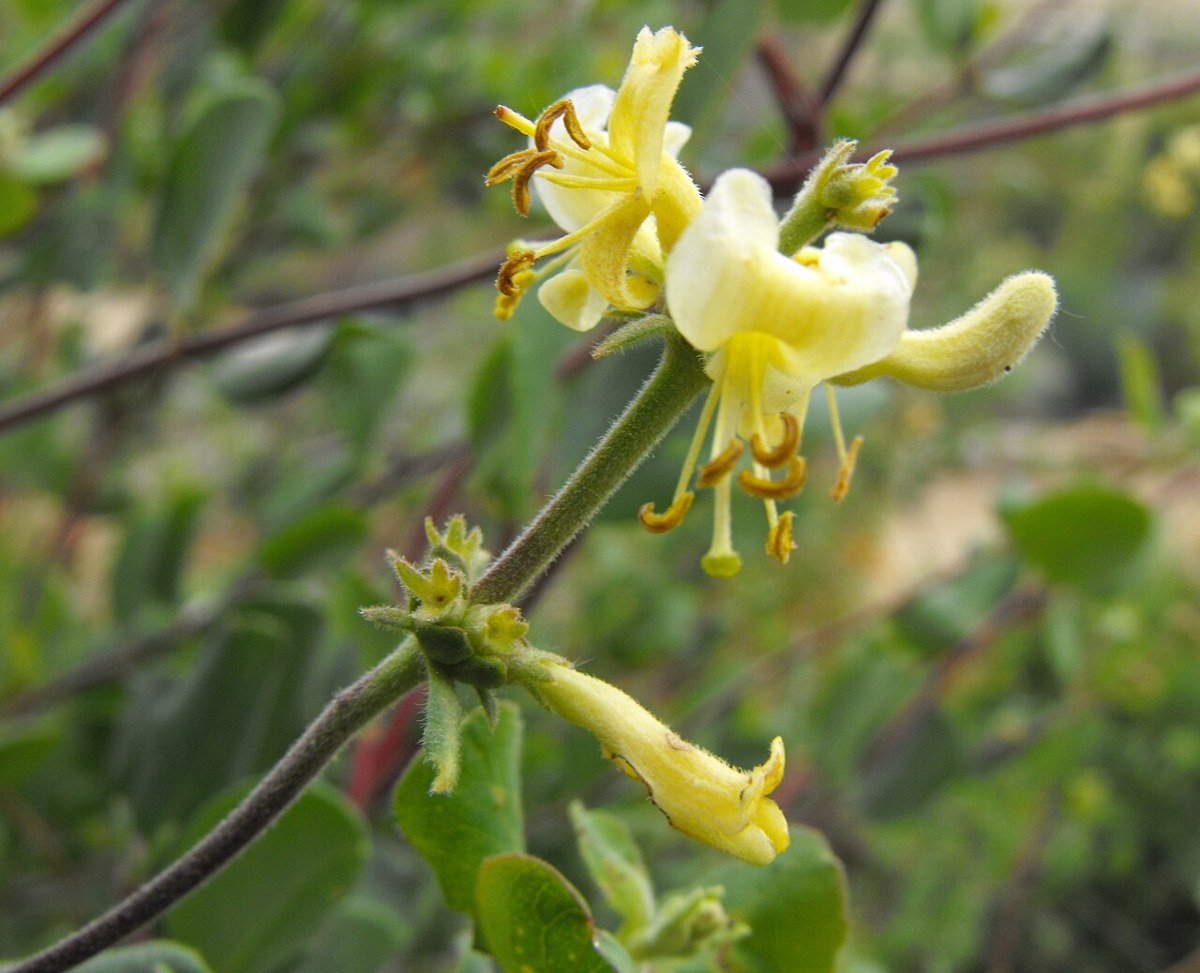
Lonicera subspicata, commonly known as southern honeysuckle or Santa Barbara honeysuckle, is a California native shrub and sprawling vine found in the chaparral and oak woodlands of the Central and South Coast ranges. Unlike the bold trumpet-flowered honeysuckles grown widely in gardens, southern honeysuckle is a subtler plant — a twiggy, scrambling shrub with small, pale yellow flowers that quietly support local pollinators rather than putting on a showy floral display.
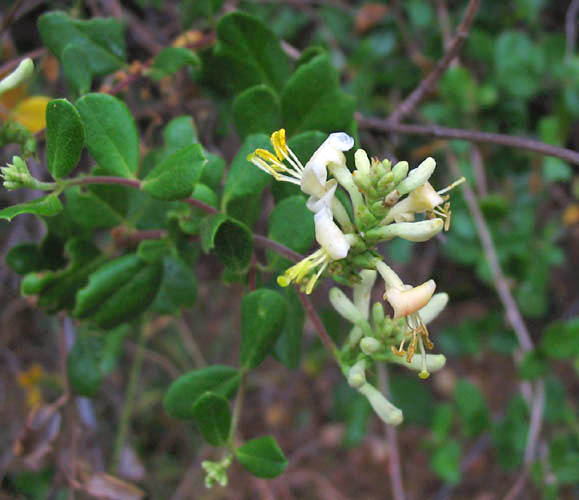
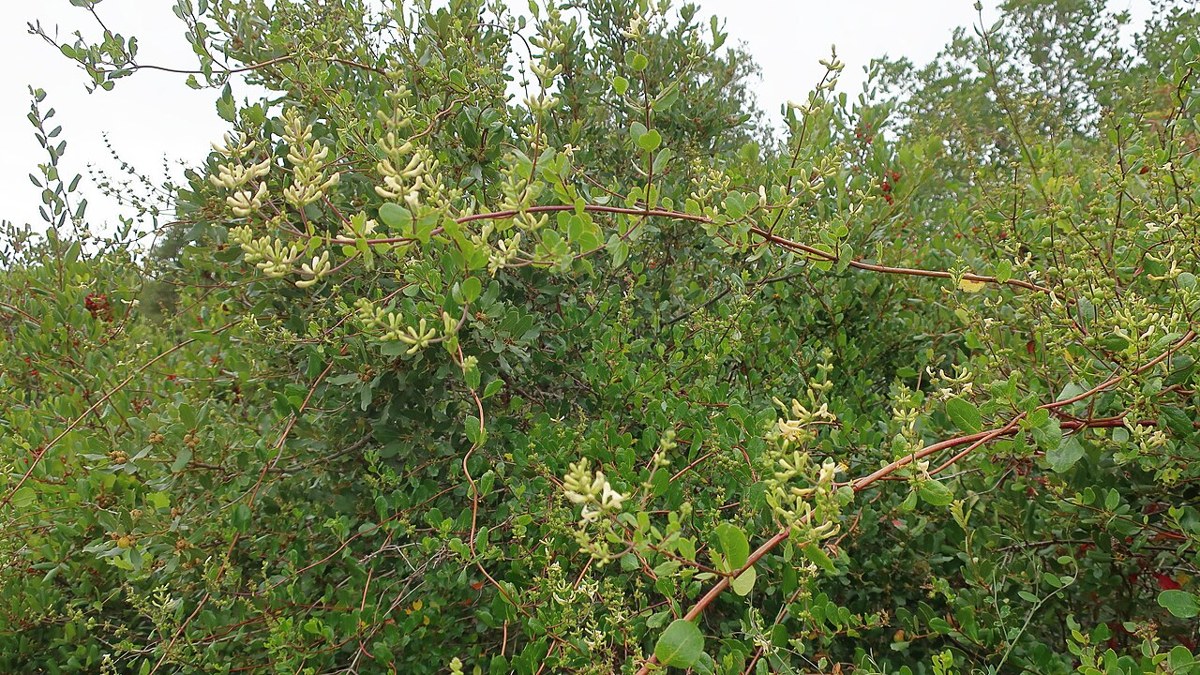
This species typically grows as a low, mounding to loosely sprawling shrub 2 to 6 feet tall, sometimes scrambling into neighboring shrubs where it can appear almost vine-like. Its small, rounded, gray-green leaves are paired opposite each other along slender, often reddish stems. From spring into summer, clusters of small, slender, pale yellow to cream tubular flowers appear at branch tips and leaf axils, followed by small red berries.
For gardeners within its native range, southern honeysuckle offers a tough, low-water shrub for naturalistic chaparral and woodland gardens, along with wildlife value that outweighs its modest floral display. It is best appreciated as a textural, ecologically useful component of a native planting rather than a showpiece specimen.
Identification
Southern honeysuckle is a low, twiggy shrub, usually 2 to 6 feet tall, with a loose, somewhat sprawling or mounding habit. In shaded or crowded settings it can lean on neighboring shrubs and take on a scrambling, semi-vining form, though it does not climb aggressively the way some honeysuckle vines do.
Stems
Stems are slender and often reddish-brown, frequently covered in fine hairs, especially on new growth. The paired (opposite) leaf arrangement along these thin stems is a useful field mark, as is the plant’s tendency to form loose, tangled thickets rather than a single clean form.
Leaves
The leaves are opposite, oval to rounded, typically ½ to 1½ inches long, with smooth margins. They are gray-green to dull green, often somewhat hairy, especially on the undersides and margins. Leaf size and hairiness can vary noticeably between individual plants and across the species’ range, which has led botanists to recognize several varieties.
Flowers & Fruit
Flowers bloom from around April into July in small clusters at the branch tips and leaf axils. Each flower is a narrow, two-lipped tube about ⅓ to ½ inch long, pale yellow to cream, sometimes aging to a deeper yellow. The blooms are smaller and less showy than many cultivated honeysuckles, but they still attract bees and other small pollinators. The flowers develop into small, round, red berries about ¼ inch across, which ripen in summer and are eaten by birds.
Quick Facts
| Scientific Name | Lonicera subspicata |
| Family | Caprifoliaceae (Honeysuckle) |
| Plant Type | Deciduous to semi-evergreen shrub (scrambling) |
| Mature Height | 2–6 ft |
| Mature Spread | 3–6 ft (wider if scrambling into neighboring shrubs) |
| Growth Rate | Moderate |
| Sun Exposure | Full Sun to Part Shade |
| Water Needs | Low to moderate; drought tolerant once established |
| Soil Type | Rocky, sandy, or loam; well-drained |
| Soil pH | Slightly acidic to neutral (about 6.0–7.0) |
| Bloom Time | April – July |
| Flower Color | Pale yellow to cream |
| Fall Color | None notable |
| Fruit | Small round red berries, about ¼ in |
| Deer Resistant | Moderate (occasionally browsed) |
| USDA Hardiness Zones | 8–10 |
Native Range
Southern honeysuckle is native to California, where county-level records confirm it through the Central Coast and South Coast ranges — from roughly Monterey and San Benito counties south through Santa Barbara, Ventura, Los Angeles, Orange, Riverside, and San Diego counties. It is a characteristic understory and edge species of the chaparral and oak woodland belt running down the state’s coastal mountains.
It grows most often in chaparral, coastal sage scrub, and the edges of oak woodland, typically on dry slopes and canyon sides from near the coast inland to the lower mountains, usually below about 5,000 feet elevation. It often grows tangled among larger shrubs such as chamise and scrub oak, using their branches for partial support.
Southern honeysuckle is not rare and is not known to be invasive anywhere; it remains a common, if inconspicuous, component of California’s coastal chaparral and oak woodland plant communities.
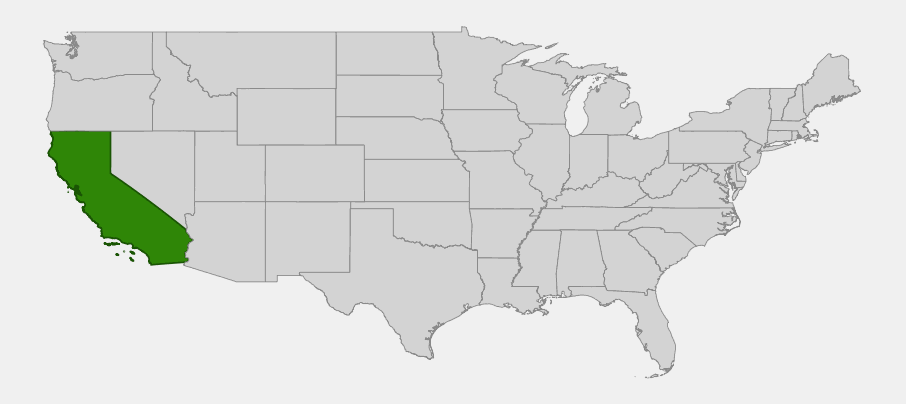
📋 Regional plant lists featuring Southern Honeysuckle: California & Nevada
Growing & Care Guide
Southern honeysuckle is an easygoing, low-key shrub for gardeners who want authentic chaparral texture and wildlife value more than a showy bloom display.
Light
It grows well in full sun along the coast and tolerates part shade further inland or beneath open woodland canopies, where it naturally occurs at woodland edges. In hotter interior gardens, some afternoon shade helps keep the foliage from looking stressed in summer.
Soil & Water
Southern honeysuckle prefers well-drained soil — rocky, sandy, or loam — and does not tolerate heavy, waterlogged ground. Once established, typically after the first year or two, it needs only occasional supplemental water and handles the dry California summer reasonably well, though it appreciates a little more moisture than the driest chaparral specialists.
Planting Tips
Plant in fall or winter so roots can establish with seasonal rainfall. Give it a well-drained site and, if a looser, scrambling effect is wanted, place it near other shrubs it can lean into. For a tidier, more self-supporting shrub form, give it open space and light structural pruning while young. Space plants 3 to 5 feet apart for a naturalistic thicket, or further apart for individual specimens.
Pruning & Maintenance
Little pruning is required. Thin out crowded or wayward stems after flowering if a tidier form is preferred, or leave the plant to sprawl naturally for a more wildlife-friendly thicket. It needs no regular fertilizer and has few pest or disease problems when grown in well-drained soil with appropriate sun exposure.
Landscape Uses
- Naturalistic chaparral and woodland-edge gardens where a loose, scrambling form fits the setting
- Wildlife gardens, since the berries and flowers support birds and pollinators
- Informal screening when allowed to sprawl among other shrubs
- Erosion control on dry slopes within its native range
- Understory plantings at the edges of oak woodlands
- Restoration plantings in coastal sage scrub and chaparral projects
Wildlife & Ecological Value
Despite its modest flowers, southern honeysuckle plays a real role supporting pollinators and birds in California’s chaparral and oak woodland ecosystems.
For Pollinators
The small tubular flowers attract native bees and other small pollinating insects that can access the relatively narrow flower tube. Though less flashy than larger honeysuckle blooms, they provide a steady nectar source during the late spring and summer bloom period.
For Birds
The small red berries that follow the flowers are eaten by a variety of birds, which helps disperse the seeds throughout the chaparral. The tangled, twiggy growth habit also provides cover and nesting sites for small songbirds that favor dense, low shrub cover.
For Mammals
The dense, scrambling growth offers hiding cover for small mammals moving through chaparral habitat. Deer occasionally browse the foliage, though it is not a preferred food source compared to more palatable chaparral plants.
Ecosystem Role
As a shrub that often grows tangled among larger chaparral species, southern honeysuckle adds structural complexity at a lower, denser layer than the dominant shrubs around it, creating additional cover and microhabitat for insects, birds, and small mammals within the chaparral community.
Cultural & Historical Uses
Southern honeysuckle has a less prominent documented history of traditional use compared to many California chaparral plants, likely reflecting its modest size, scattered distribution, and lack of large edible or fiber-producing parts. It is primarily known today through its role in the native flora rather than through recorded historical human use.
The genus Lonicera is named for the sixteenth-century German botanist Adam Lonitzer, connecting this California native to a broader group of honeysuckles found across the Northern Hemisphere, many of which have long and well-documented histories of ornamental cultivation in Europe and eastern North America.
In California, southern honeysuckle’s main significance today is ecological and horticultural — valued by native-plant gardeners and restoration practitioners for its role in authentic chaparral and oak woodland plant communities rather than for any historical or commercial use.
Frequently Asked Questions
Is southern honeysuckle a vine or a shrub?
It is primarily a shrub, but it often has a loose, scrambling habit and may lean into or climb partway up neighboring shrubs, giving it a semi-vining appearance in some settings. It does not twine aggressively the way some true honeysuckle vines do.
Are the berries of southern honeysuckle edible?
The small red berries are eaten by birds, but they are not a recommended food for people. This page does not suggest eating any part of the plant.
Why are the flowers so small compared to other honeysuckles?
Southern honeysuckle is a different species from the large-flowered ornamental honeysuckles commonly sold in nurseries. Its smaller, more modest flowers reflect its adaptation to California’s dry chaparral, where it relies on small native pollinators rather than putting energy into large showy blooms.
How much water does southern honeysuckle need?
Moderate water during establishment, tapering to occasional deep watering once settled in. It is more drought tolerant than many garden shrubs but appreciates slightly more consistent moisture than the driest chaparral specialists like some sages and buckwheats.
Will southern honeysuckle take over my garden?
No. It is not aggressive or invasive; it grows at a moderate pace and stays within a manageable size, especially with occasional light pruning to control its scrambling habit.

Looking for a nursery that carries Southern Honeysuckle?
Browse our native plant nursery directory: California