Thick-leaf Yerba Santa (Eriodictyon crassifolium)
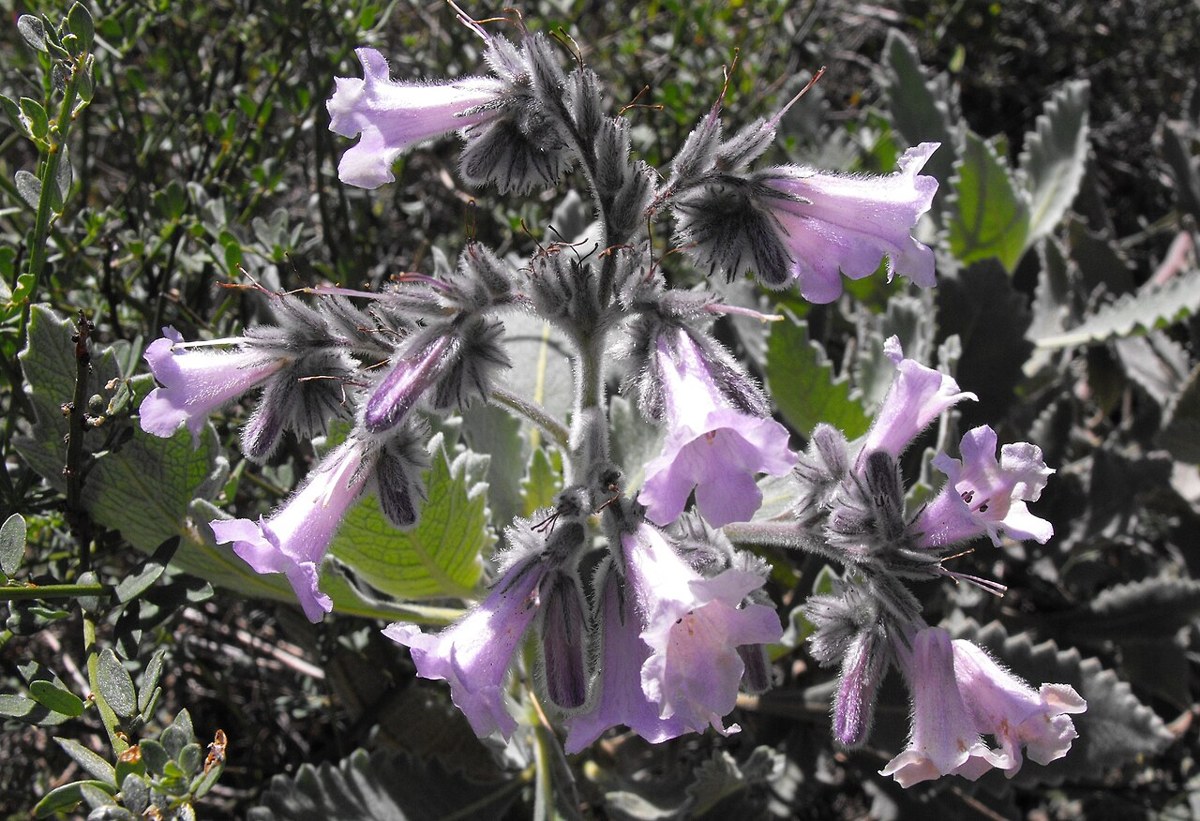
Eriodictyon crassifolium, commonly called thick-leaf yerba santa or felt-leaf yerba santa, is an evergreen shrub of the California chaparral and coastal sage scrub, prized for its silvery, felted foliage and its clusters of lavender, bell-shaped spring flowers. The name “yerba santa,” Spanish for “holy herb,” was given by early Spanish missionaries who learned from Native Californians that the leathery leaves could be steeped or chewed for sore throats and colds.
This shrub typically grows 3 to 8 feet tall, forming an upright, somewhat open mound of woody stems clothed in leaves that are thick, leathery, and covered on their undersides with a dense mat of white to gray hairs — the trait that gives the species its common and scientific names (crassifolium means “thick-leaved”). The upper leaf surface is dull green and sticky to the touch from resinous glands, while the undersides look almost felted or suede-like. In late spring, the shrub produces tight, coiled clusters of tubular lavender to pale violet flowers that are a magnet for native bees and hummingbirds.
Thick-leaf yerba santa is an excellent choice for dry, low-water gardens throughout its native range in Southern California. It asks for almost nothing once established, tolerates poor rocky soil, and rewards a sunny, well-drained spot with months of fragrant, pollinator-friendly bloom. It is also a valuable plant for post-fire chaparral restoration, since it readily resprouts and reseeds after burns.
Identification
Thick-leaf yerba santa is a rounded to upright evergreen shrub, usually 3 to 8 feet tall and nearly as wide, with multiple woody stems rising from a stout base. Older plants can become somewhat leggy and open at the base, with new growth concentrated near the stem tips.
Stems
Young twigs are covered in the same dense white wool found on the leaf undersides, giving new growth a frosted, gray-green cast. Older stems lose much of this covering and turn woody and gray-brown, with a somewhat brittle texture. Stems branch frequently near the top of the plant, creating the shrub’s characteristically bushy crown.
Leaves
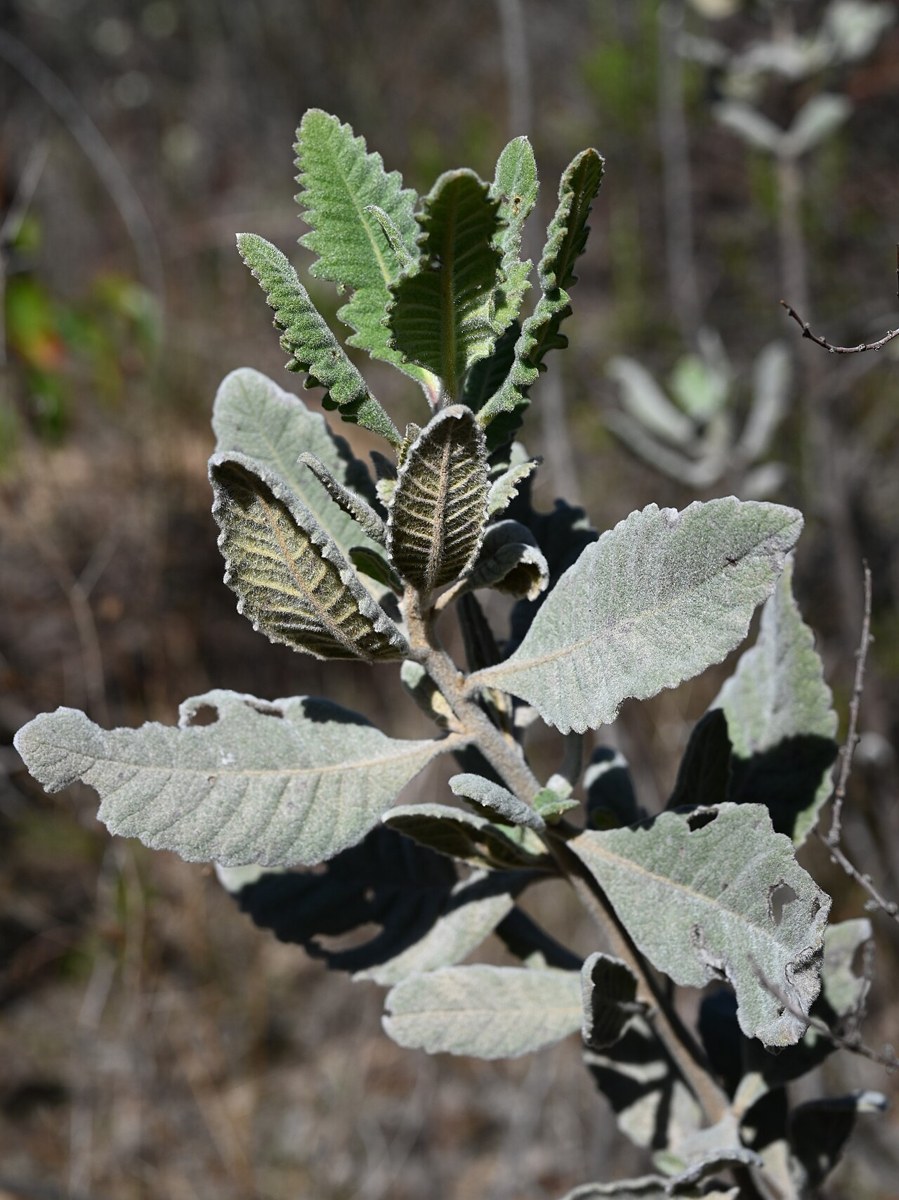
The leaves are alternate, lance-shaped to oblong, 2 to 5 inches long, with edges that are shallowly toothed or wavy. They are sessile or nearly so, clasping the stem without a distinct stalk. The upper surface is dull to glossy dark green and feels tacky from resin; the lower surface is densely covered in matted white to gray hairs (tomentum), a texture unlike almost any other chaparral shrub in its range and the single best field mark for the species. Leaves persist year-round, though older leaves lower on the stem often curl and yellow before dropping.
Flowers & Fruit
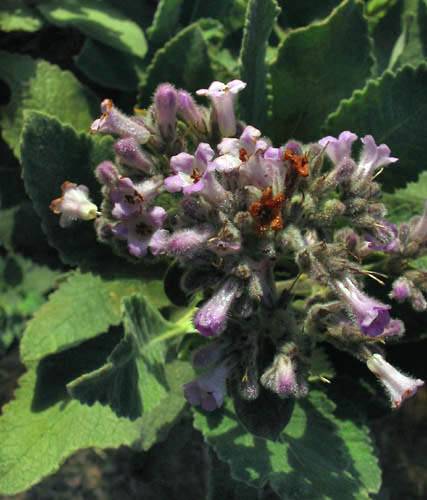
Flowers appear from April into June in coiled, one-sided clusters (scorpioid cymes) at the branch tips, typical of the borage family. Each flower is a narrow funnel or bell, about ⅓ to ½ inch long, in shades of lavender, pale violet, or occasionally near-white, with five shallow lobes at the mouth. The flower clusters and buds are covered in fine hairs, giving them a slightly fuzzy appearance before they open. After bloom, the plant sets small, dry, four-seeded capsules that split open to release tiny seeds, many of which require the heat or chemical cues of fire to germinate.
Quick Facts
| Scientific Name | Eriodictyon crassifolium |
| Family | Boraginaceae (Borage, formerly Hydrophyllaceae) |
| Plant Type | Evergreen shrub |
| Mature Height | 3–8 ft |
| Mature Spread | 3–7 ft |
| Growth Rate | Moderate |
| Sun Exposure | Full Sun to Part Shade |
| Water Needs | Low; drought tolerant once established |
| Soil Type | Rocky, sandy, or clay-loam; must drain well |
| Soil pH | Slightly acidic to neutral (about 6.0–7.5) |
| Bloom Time | April – June |
| Flower Color | Lavender to pale violet |
| Fall Color | None (evergreen) |
| Fruit | Small dry four-seeded capsules |
| Deer Resistant | Yes |
| USDA Hardiness Zones | 8–10 |
Native Range
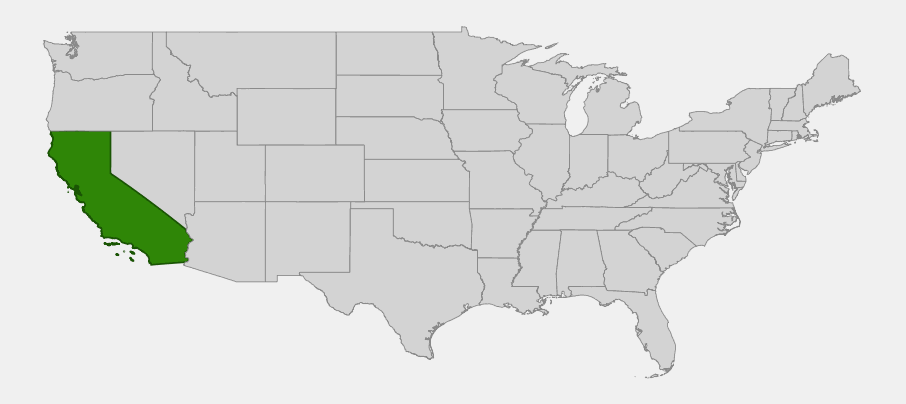
Thick-leaf yerba santa is native to California, where it grows through the South and Central Coast ranges, the Transverse and Peninsular ranges, and south into the San Diego County chaparral near the Mexican border. It is a characteristic shrub of dry, rocky slopes from Monterey County south through Santa Barbara, Ventura, Los Angeles, Orange, Riverside and San Diego counties.
It grows most commonly in chaparral and coastal sage scrub communities, from near the coast inland to the base of the mountains, typically below about 4,500 feet elevation. The species favors dry, sunny, rocky or gravelly slopes and canyon sides, often on disturbed ground or in openings created by fire, where its fire-stimulated seed germination gives it an early advantage over slower-recovering neighbors.
Thick-leaf yerba santa is not considered rare or at risk; it is a common, often locally abundant component of Southern California chaparral and regenerates readily after wildfire. It is not native outside California and should not be planted as a wild-collected specimen — nursery-propagated plants are the better choice for gardens.
📋 Regional plant lists featuring Thick-leaf Yerba Santa: California & Nevada
Growing & Care Guide
Thick-leaf yerba santa is an easygoing shrub for gardeners in its native range who want texture, fragrance, and reliable spring color without supplemental irrigation once the plant is settled in.
Light
Give it full sun for the densest, most compact growth and heaviest bloom. It will also grow in part shade, especially in hotter inland gardens, but tends to become looser and more open with fewer flowers. Coastal gardens can use full sun with no trouble; in hot interior valleys, a little afternoon shade helps the foliage stay fresher through summer.
Soil & Water
This shrub wants sharply drained soil — rocky, sandy, or lean clay-loam — and struggles in heavy, wet soils or anywhere water collects. Once established, usually after the first one to two summers, it needs little to no supplemental water and is an excellent candidate for a true dry garden. Overwatering, especially in summer, is the most common way to lose this plant to root rot.
Planting Tips
Plant in fall or winter so roots can establish during the rainy season before the first dry summer. Choose a site with excellent drainage, such as a slope or raised bed, and avoid low spots. Space plants 4 to 6 feet apart to allow for their mature spread and good air circulation, which helps prevent fungal problems in humid years. Thick-leaf yerba santa can be slow to establish from containers but is worth the patience.
Pruning & Maintenance
Prune lightly after flowering to maintain a tidy shape and remove any dead or winter-damaged wood. Avoid heavy pruning into old wood, which the plant may be slow to recover from. Established plants need no fertilizer and are rarely bothered by pests or disease, making this a genuinely low-maintenance choice once it has settled in.
Landscape Uses
- Dry, low-water gardens and xeriscapes where little or no irrigation is available
- Chaparral and coastal sage scrub restoration on slopes and disturbed ground
- Pollinator gardens paired with White Sage and other chaparral bloomers
- Slope stabilization on sunny, well-drained banks
- Fragrance gardens, since the resinous foliage releases a sweet, herbal scent in warm weather
- Fire-wise landscaping, planted well away from structures and thinned regularly like other chaparral shrubs
Wildlife & Ecological Value
Thick-leaf yerba santa plays a quiet but steady role in Southern California’s chaparral and coastal sage scrub ecosystems, offering nectar, cover, and post-fire recovery value.
For Pollinators
The tubular spring flowers are visited heavily by native bees, including bumblebees and carpenter bees, as well as honeybees and occasional hummingbirds drawn to the nectar-rich blooms. Because thick-leaf yerba santa flowers early in the dry chaparral season, it is an important nectar source when few other shrubs are in bloom.
For Birds
The dense, woody structure offers nesting cover and shelter for chaparral birds such as California towhees and wrentits, which favor the tangled branching habit for concealment. Small insect-eating birds forage among the foliage for the insects drawn to the sticky, resinous leaves.
For Mammals
Brush rabbits and other small mammals use the shrub’s cover for protection from predators and the sun. Like many chaparral shrubs, it is not a preferred browse plant for deer, which makes it a reliable choice in areas with heavy deer pressure.
Ecosystem Role
As a fire-adapted shrub, thick-leaf yerba santa is one of the first species to resprout and reseed after chaparral burns, helping to stabilize slopes and hold soil while slower-recovering species regenerate. Its early, abundant bloom after fire supports pollinator populations during a period when floral resources are otherwise scarce, making it a quiet but important player in post-fire recovery.
Cultural & Historical Uses
The name “yerba santa” — Spanish for “holy herb” — was given to several related Eriodictyon species by Spanish missionaries in California, who learned of their traditional use from Indigenous Californian peoples. Tribes across the shrub’s range, including Chumash and Cahuilla communities, historically chewed or brewed the leathery leaves of yerba santa species as a treatment for sore throats, coughs, and colds, and the leaves were sometimes smoked or carried for their strong, resinous fragrance.
During the Spanish mission period and into the nineteenth century, yerba santa leaves became a well-known folk remedy among California settlers as well, and the plant’s reputation spread into early American herbal medicine, where dried yerba santa leaf was used as a flavoring to mask the bitterness of other medicines. That history belongs to the past rather than to modern practice, and this page does not recommend using the plant medicinally.
Today thick-leaf yerba santa’s main value to people is horticultural and ecological — as a tough, fragrant, drought-tolerant native shrub for chaparral gardens and restoration plantings, and as a living link to the plant lore of Southern California’s Indigenous peoples and early settlers.
Frequently Asked Questions
Is thick-leaf yerba santa the same plant used in traditional “yerba santa” remedies?
It belongs to the same group of plants historically used this way by Indigenous Californians and later by Spanish missionaries and settlers, though several related Eriodictyon species share the common name. This page describes that history for background only and is not a recommendation to use the plant medicinally.
How do I tell thick-leaf yerba santa apart from other chaparral shrubs?
Look at the underside of the leaf. Thick-leaf yerba santa has a dense, white to gray felt of hairs on the leaf underside that feels almost suede-like, a texture not shared by most of its chaparral neighbors. The sticky, resinous upper leaf surface is another good clue.
Does thick-leaf yerba santa need regular watering?
No, not once established. Give it regular water for the first one to two summers after planting, then taper off. Mature plants are genuinely drought tolerant and often do better with little to no summer irrigation, since wet soil in summer can cause root problems.
Is thick-leaf yerba santa deer resistant?
Yes. Its resinous, sticky foliage is not a preferred browse for deer, which makes it a dependable choice in gardens where deer pressure is a problem.
Will thick-leaf yerba santa come back after a wildfire?
Yes. It is a fire-adapted chaparral shrub that typically resprouts from its base after fire and also regenerates from seed, since its seeds respond to the heat and chemical cues of burning. It is often one of the earlier shrubs to recover and bloom in a burned chaparral landscape.

Looking for a nursery that carries Thick-leaf Yerba Santa?
Browse our native plant nursery directory: California