
Spicewood (Calyptranthes pallens)
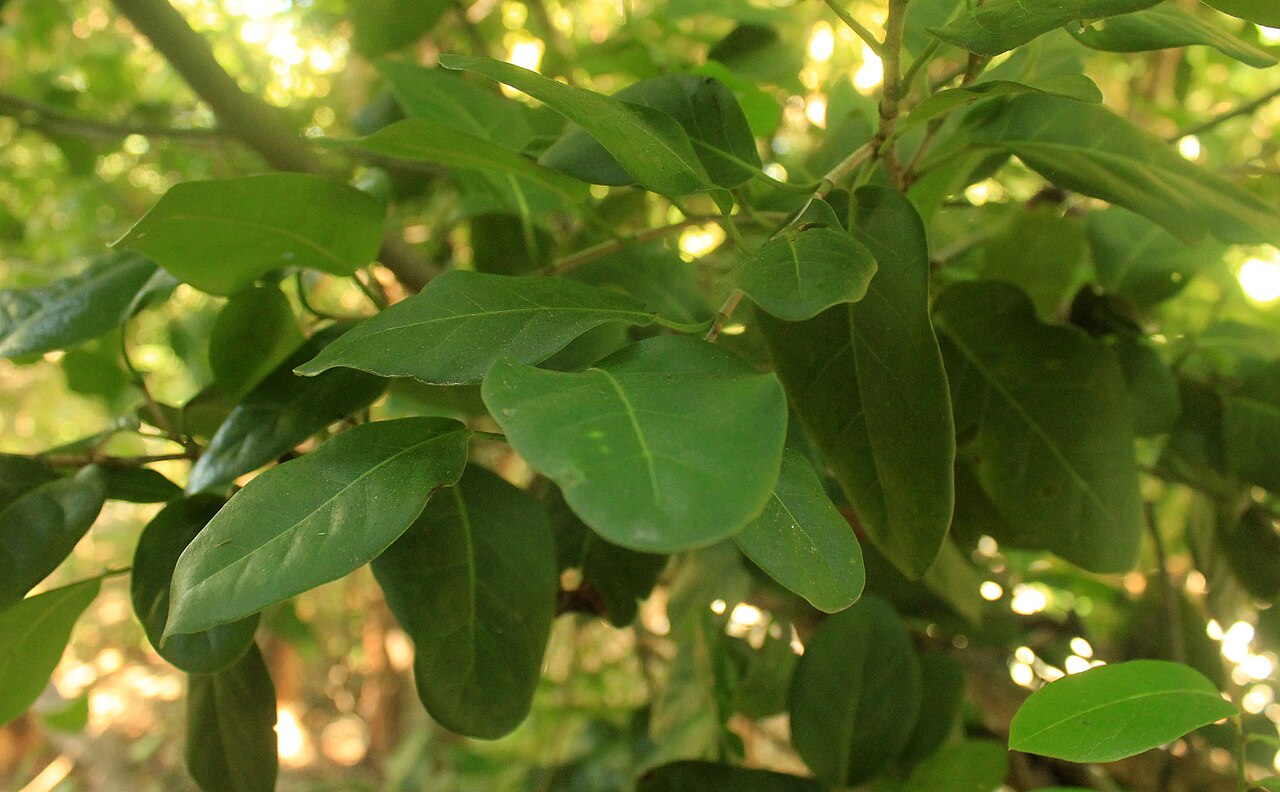
Calyptranthes pallens, commonly known as Spicewood or pale lidflower, is a dense, aromatic hammock shrub native only to the southernmost tip of Florida. Current botanical treatments place it in the genus Myrcia as Myrcia neopallens, though it is still almost universally known on nursery tags, in field guides, and in the horticultural trade by its long-standing name, Calyptranthes pallens — the name used throughout this page, consistent with how the plant is commonly bought, sold, and identified in Florida.
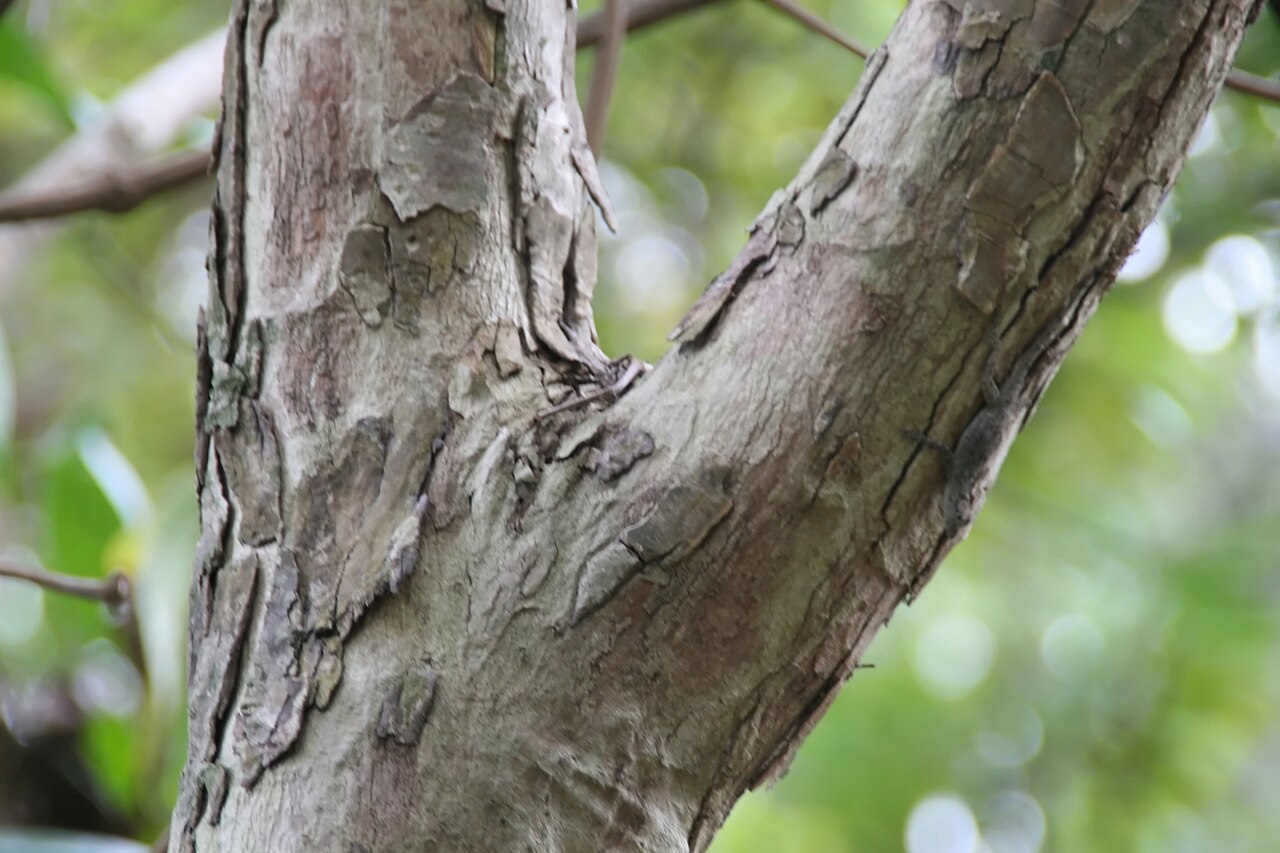
Spicewood typically grows as a large, multi-stemmed shrub or small tree, 10 to 20 feet tall, with a dense crown of glossy, leathery leaves that release a spicy, clove-like fragrance when crushed — the source of its common name. Like its hammock neighbors in the myrtle family, it bears small white flowers followed by berries that ripen through shades of red, purple, and nearly black, and its smooth, thin, flaking bark is often streaked in mottled tan and gray.
The State of Florida lists spicewood as a threatened species, a reflection of its narrow native range confined to a small part of the Florida Keys and adjacent mainland and the historical loss of the hammock habitat it depends on. In the landscape, it is valued as a dense, well-behaved native screening shrub that holds up well to the heat, alkaline soils, and occasional drought of South Florida.
Identification
Spicewood is best identified by the combination of its aromatic, spicy-scented foliage when crushed, opposite glossy leaves with small translucent oil dots visible when held to the light (a trait typical of the myrtle family), and thin, flaking, mottled bark.
Bark & Stems
Bark on mature stems is thin, smooth to slightly flaking, and mottled in tones of tan, gray, and light brown, often peeling in small, papery patches to reveal lighter inner bark beneath — a useful field mark distinguishing it from smoother-barked hammock associates.
Leaves
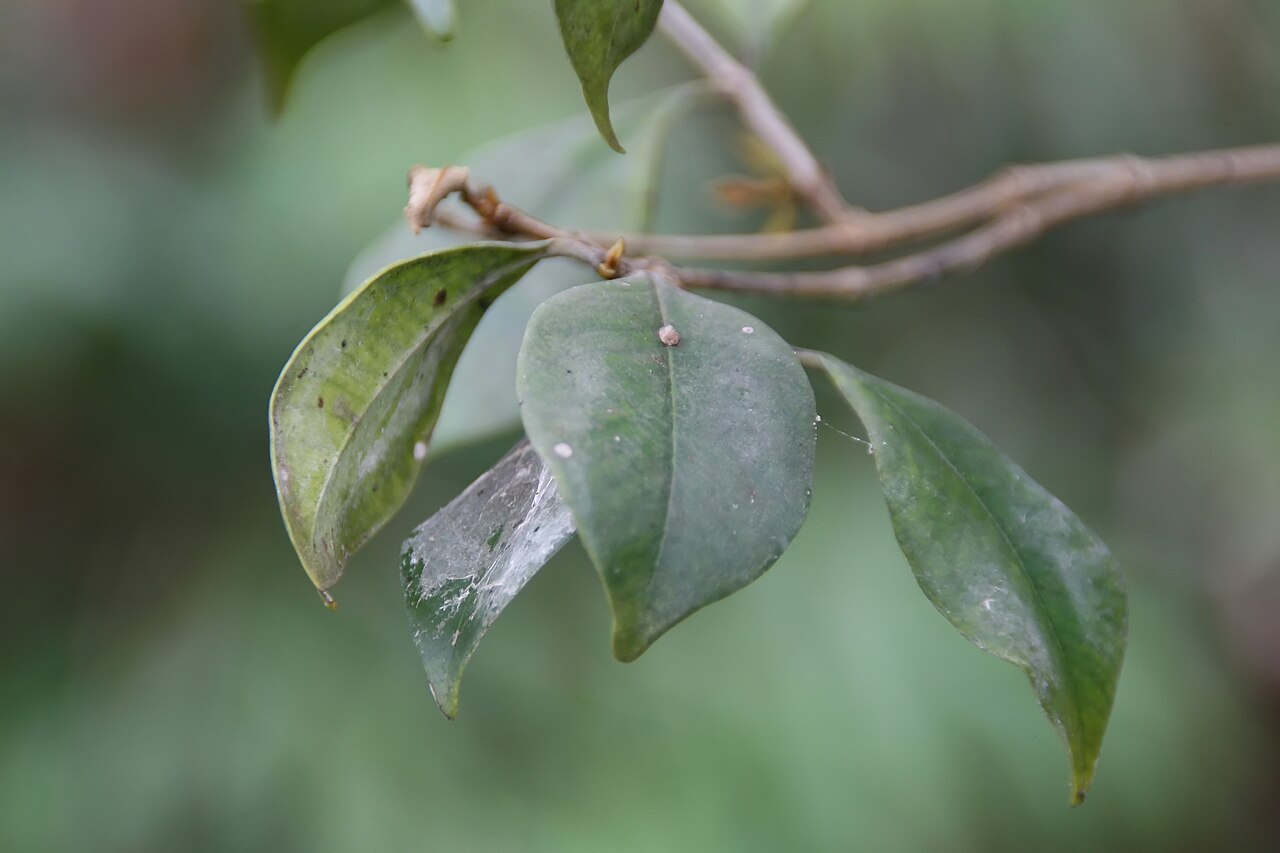
Leaves are opposite, elliptical to oval, 1.5 to 3 inches long, leathery and glossy dark green above with a paler underside, and dotted with tiny translucent oil glands typical of the myrtle family. Crushed leaves release a distinctly spicy, clove-like aroma, the most reliable way to confirm identification in the field.
Flowers
Small white flowers with a prominent cluster of stamens are borne in short branched clusters at the leaf axils, typical of the myrtle family. The flower buds are covered by a cap-like structure (calyptra) that splits and falls away as the flower opens — the botanical feature behind the genus name Calyptranthes and the related common name “lidflower.”
Fruit & Seeds
Fruit is a small, rounded berry that ripens through shades of red, purple, and finally nearly black, typically carried in small clusters at the branch tips. Each berry holds one or a few seeds and is readily eaten by birds once ripe.
Quick Facts
| Scientific Name | Calyptranthes pallens (syn. Myrcia neopallens) |
| Family | Myrtaceae (Myrtle) |
| Plant Type | Evergreen large shrub or small tree |
| Mature Height | 10–20 ft |
| Mature Spread | 5–10 ft |
| Growth Rate | Slow to moderate |
| Sun Exposure | Full Sun to Part Shade |
| Water Needs | Low to moderate once established |
| Soil Type | Shallow, rocky, limestone-based soils |
| Soil pH | Alkaline |
| Bloom Time | Spring–summer |
| Flower Color | White |
| Fall Color | Evergreen; no fall color |
| Fruit | Small berries ripening red to purple-black |
| Deer Resistant | Yes, generally |
| USDA Hardiness Zones | 10 – 11 |
Native Range
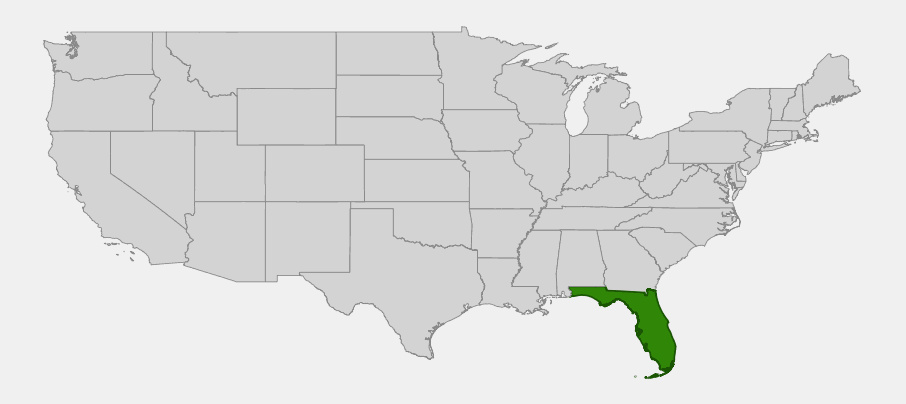
In the United States, spicewood is native only to extreme South Florida, occurring in the Monroe County Keys (becoming very rare or absent through the middle Keys) and in hammock remnants of Miami-Dade and Collier counties on the adjacent mainland. The State of Florida lists it as threatened, reflecting its naturally restricted range and the historical loss of South Florida’s hammock habitat.
Spicewood grows in tropical hardwood hammock, the dense broadleaf forest that develops on slightly elevated, well-drained limestone ground above the surrounding wetlands, typically as a sub-canopy or understory shrub beneath taller hammock trees. It tolerates both sun and considerable shade, often forming dense thickets where conditions suit it.
Outside the United States, spicewood is more widely distributed through the West Indies, Mexico, and Central America, where it occupies similar hammock and limestone-based habitats.
📋 Regional plant lists featuring Spicewood: none yet — no plantnative.org regional list currently covers South Florida; see our full native plant directory for other Florida-native species.
Growing & Care Guide
Spicewood is a reliable, low-maintenance native shrub for South Florida landscapes, valued for its dense, aromatic foliage and good tolerance of the region’s rocky, alkaline soils.
Light
It grows well in full sun to partial shade, forming a denser, more compact shrub in brighter conditions and a slightly more open habit in shadier, hammock-like settings.
Soil & Water
Spicewood is well adapted to the shallow, rocky, alkaline limestone soils typical of South Florida and tolerates drought reasonably well once established, though it appreciates occasional deep watering during extended dry periods, especially while young.
Planting Tips
Choose a well-drained site; spicewood does not tolerate standing water or constantly saturated soil. As with many slow-establishing hammock natives, consistent watering through the first year helps young plants develop a strong root system.
Pruning & Maintenance
Spicewood naturally forms a dense, multi-stemmed shrub and tolerates light shaping well if a more formal hedge form is desired, though it also looks attractive left to its natural, informal habit. Remove only dead or damaged wood on established plants.
Landscape Uses
Dense, aromatic foliage and a manageable size make spicewood a versatile shrub in South Florida gardens:
- Screening and privacy hedges thanks to its dense evergreen growth
- Hammock-style native plantings as an understory layer beneath taller trees
- Specimen or accent shrub where its fragrant foliage can be appreciated up close
- Wildlife gardens planted for its fruit and pollinator-friendly flowers
Wildlife & Ecological Value
As a fruiting hammock shrub, spicewood contributes to the food web of South Florida’s tropical hardwood hammocks, particularly for birds and pollinating insects.
For Birds
The small red-to-purple-black berries are eaten by a range of fruit-eating hammock birds, which help disperse the plant’s seeds to new areas of suitable habitat.
For Mammals
Small mammals native to hammock habitat occasionally feed on fallen fruit, and the dense branching structure of mature shrubs provides cover for small wildlife.
For Pollinators
The small white flowers, typical of the myrtle family, attract bees and other small pollinating insects during the spring and summer bloom period.
Ecosystem Role
Spicewood forms part of the dense understory and sub-canopy layer of mature tropical hardwood hammock, contributing to the structural complexity that supports South Florida’s hammock-dependent wildlife. Because the species is threatened and its range is naturally narrow, intact hammock populations represent an important part of the region’s remaining native plant diversity.
Cultural & Historical Uses
Spicewood’s common name comes directly from the spicy, clove-like fragrance released when its leaves are crushed, a trait long noted by botanists and collectors cataloging South Florida’s hammock flora, though it has little documented history of significant indigenous or colonial-era practical use in Florida itself. The related “lidflower” name describes the small cap, or calyptra, that covers the flower bud before splitting away as the bloom opens — a distinctive feature of the genus that botanists have used to identify these myrtle relatives for well over a century.
In recent decades, South Florida native-plant nurseries and conservation groups have promoted spicewood as a durable, low-maintenance alternative to non-native hedging shrubs, helping make nursery-propagated stock increasingly available to home gardeners who want an authentically native, hammock-appropriate screening plant.
Botanical gardens such as Fairchild Tropical Botanic Garden in Miami maintain spicewood specimens both for display and as part of broader efforts documenting and conserving South Florida’s native hammock flora, much of which — including spicewood — survives today only in scattered, often small remnant patches of habitat.
Frequently Asked Questions
Is spicewood the same plant as Myrcia neopallens?
Yes. Current botanical treatments place this species in the genus Myrcia as Myrcia neopallens, but it is still almost universally sold, labeled, and referred to in Florida as Calyptranthes pallens, the name used on this page.
Is spicewood endangered?
The State of Florida lists spicewood as a threatened species, one step below endangered, reflecting its naturally narrow range in the Florida Keys and adjacent South Florida mainland.
Why does it smell spicy?
Crushed leaves release a spicy, clove-like fragrance from tiny oil glands typical of the myrtle family — the trait that gives the plant its common name and one of the easiest ways to confirm identification in the field.
How big does spicewood get?
It typically grows as a large, multi-stemmed shrub or small tree, 10 to 20 feet tall, making it well suited to screening and hedging roles in a residential landscape.
Is spicewood good for a privacy hedge?
Yes. Its dense, evergreen, multi-stemmed growth habit and tolerance for light pruning make it a strong native option for South Florida screening and privacy plantings.

Looking for a nursery that carries Spicewood?
Browse our native plant nursery directory: Florida
For other South Florida hammock associates, see our pages on Gumbo Limbo and Wild Tamarind. For more screening ideas, see our guide to privacy trees for Florida.

