Tall Jacob’s-Ladder (Polemonium villosum)
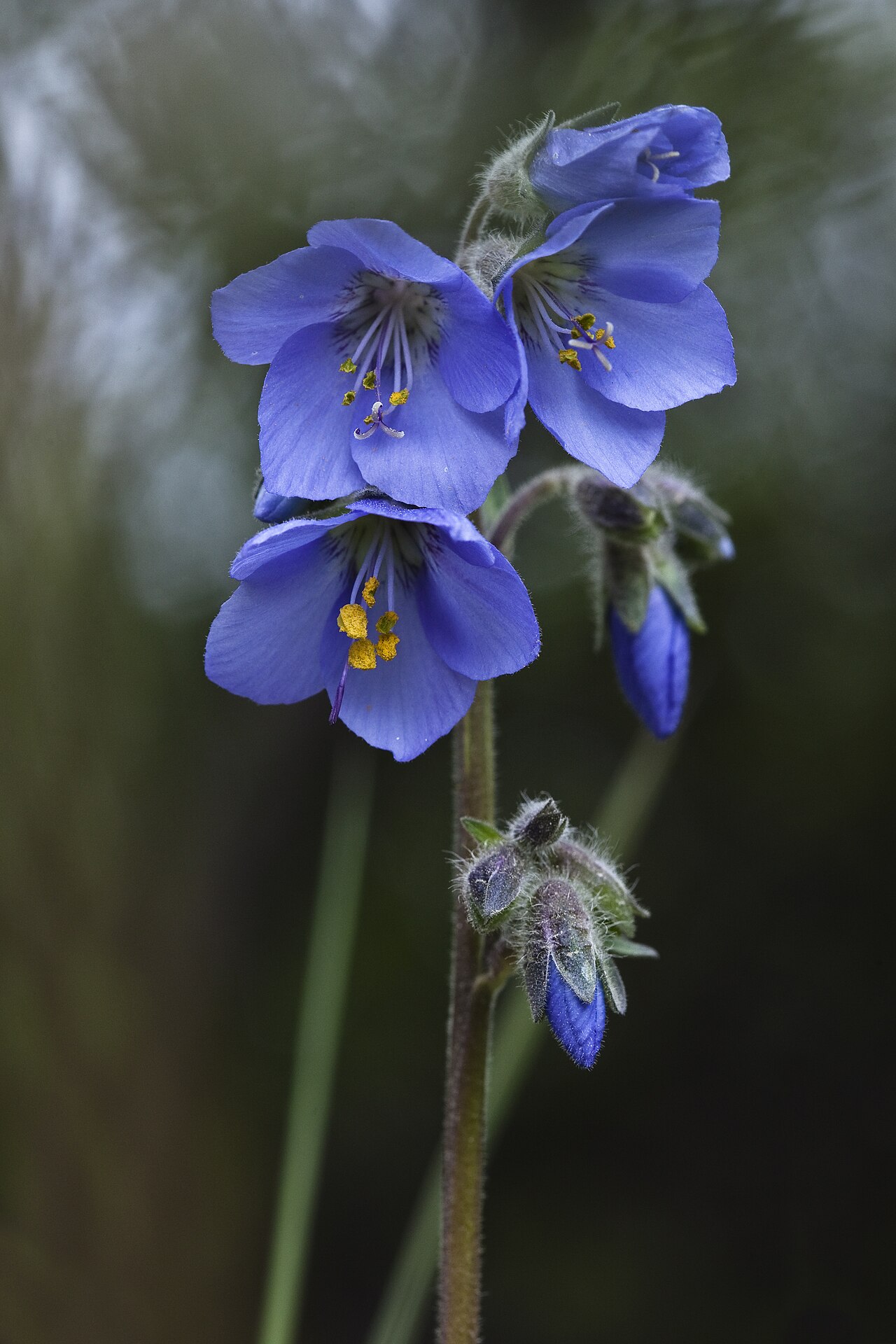
Tall Jacob's-ladder brings loose clusters of blue flowers above divided, ladder-like leaves in moist northern landscapes. It is familiar in Alaska as Polemonium acutiflorum, a name still used by regional floras and seed programs. This guide follows the current Kew name Polemonium villosum while retaining that familiar synonym.
The word tall is relative: exposed plants can be compact, while sheltered lowland plants may stand much higher. The old table value of 3–6 inches was too restrictive for this species. A gardener should allow for a leafy clump and upright flowering stems, not treat it as a uniformly tiny alpine cushion.
The best garden setting is cool, reasonably open and dependably moist. It can fit a northern flower border or a meadow-edge planting where its leaves remain visible between flowering periods. Correct identity matters because other Jacob’s-ladders have different ranges and habits; a generic Polemonium label does not guarantee an Alaskan native.
Identification
The ladder-like leaf
Each compound leaf has a series of leaflets along a central axis. That arrangement gives the plant its common name. The leaves themselves are borne along the stem, while the small paired or near-paired leaflets create the ladder effect. It is misleading to describe the whole plant simply as having alternating leaves like ladder rungs.
Blue bell-shaped flowers
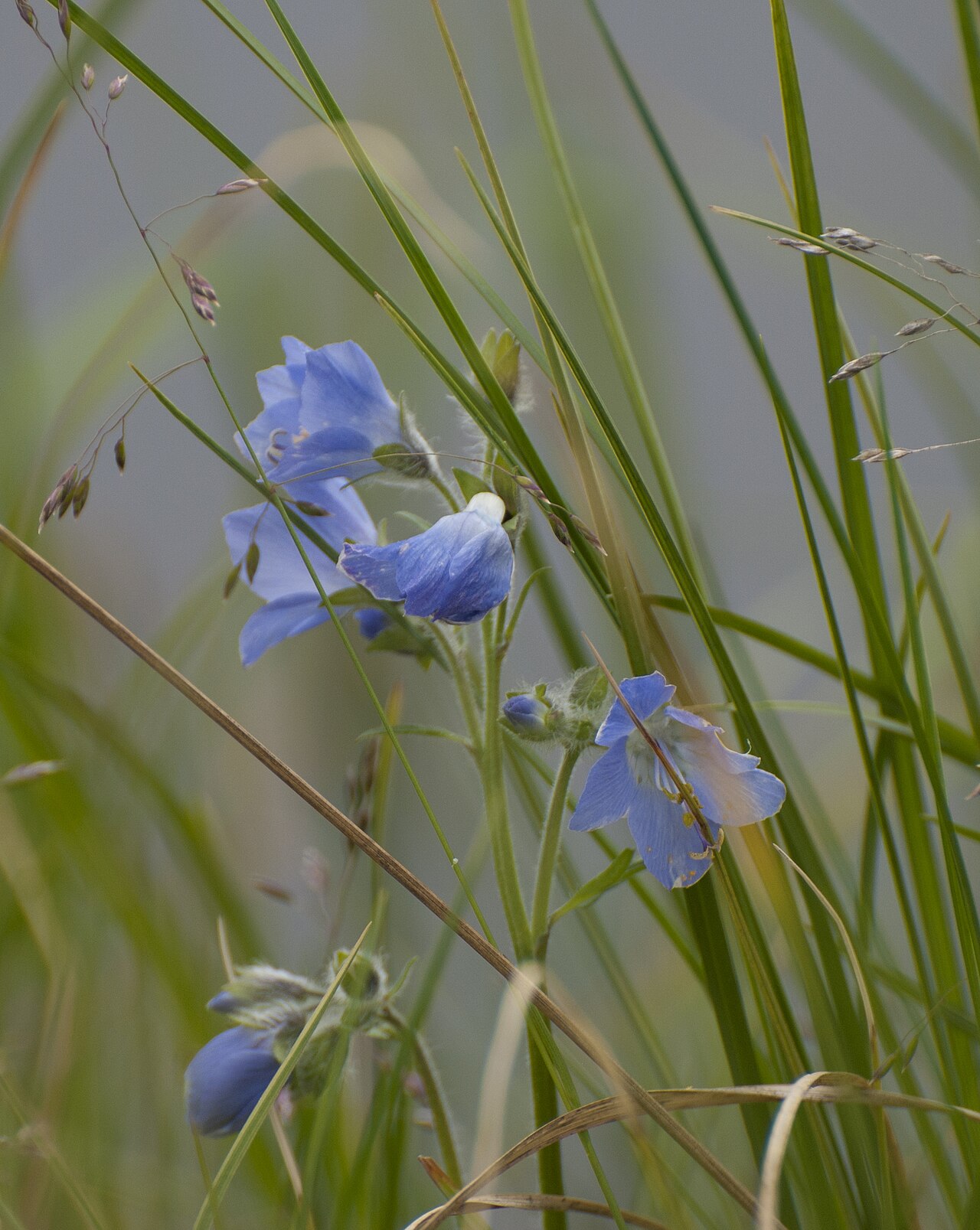
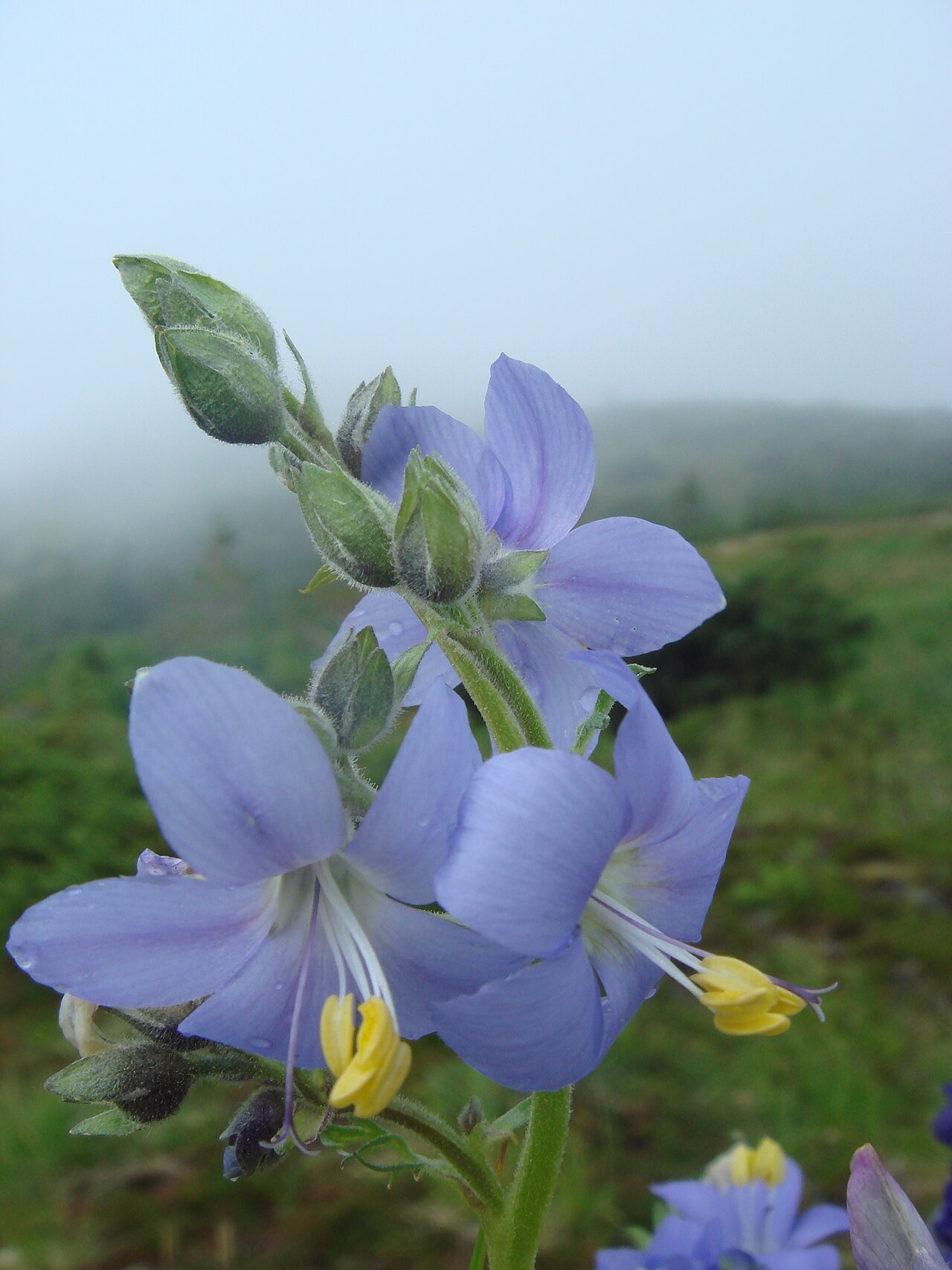
The flowers open into a bell-like form with five lobes. Yellow anthers are conspicuous in Alaskan field photographs. View both a flower and a leaf when identifying it; a blue bloom alone could belong to several unrelated plants or to another Polemonium.
Stature and habitat variation
Northern floras describe shorter plants than some sheltered Alaskan lowland observations. This variation is not a reason to label all tall or all short individuals as different species. Record the whole plant, its habitat and the floral details, then use a regional key when uncertainty remains.
Names that refer to this plant
Polemonium acutiflorum and Polemonium caeruleum subsp. villosum occur in older or alternative treatments. They are linked here to Polemonium villosum rather than being treated as three unrelated garden plants. That does not mean every plant sold as Polemonium caeruleum, without a subspecies or provenance, belongs to the native Alaskan concept.
Quick Facts
| Scientific Name | Polemonium villosum |
| Family | Polemoniaceae |
| Plant Type | Rhizomatous herbaceous perennial |
| Mature Height | Commonly 6–24 inches; taller lowland plants occur |
| Mature Spread | Clumping to gradually spreading; allow room for basal foliage |
| Growth Rate | Seasonal upright stems from a perennial base |
| Sun Exposure | Full sun to light partial shade in cool climates |
| Water Needs | Moist to wet, with a healthy aerated root zone |
| Soil Type | Moist meadow, streamside or humus-bearing garden soil |
| Soil pH | Match local conditions; avoid an unsupported narrow pH prescription |
| Bloom Time | Summer, varying with latitude and snowmelt |
| Flower Color | Blue to violet-blue; occasionally pale |
| Fall Color | Seasonal foliage dies back |
| Fruit | Dry capsules, not ornamental berries |
| Deer Resistant | No reliable deer-resistance rating established |
| USDA Hardiness Zones | Use northern source material suited to local conditions; no single zone range asserted |
Native Range
Under the accepted treatment used here, the species has a northern Eurasian and northwestern North American range. Alaska is the United States portion highlighted on the map; the range continues into northern and western Canada and across northern Eurasia. The map is deliberately not extended through the lower 48 simply because other Jacob’s-ladders occur there.
Regional botanical accounts describe moist meadows, streambanks, thickets and wetland-edge habitats. The Alaska Department of Fish and Game lists moist-to-wet soil for the plant under Polemonium acutiflorum. These habitat records support a moisture-retentive garden position, while still leaving room for local variation in exposure and soil.
The plant’s broad northern distribution is not a promise of equal performance in every climate. A cold winter alone does not reproduce a cool northern summer. For a local-native planting, obtain Alaskan or otherwise appropriate source material and retain its provenance rather than substituting an ornamental European garden strain with a similar common name.
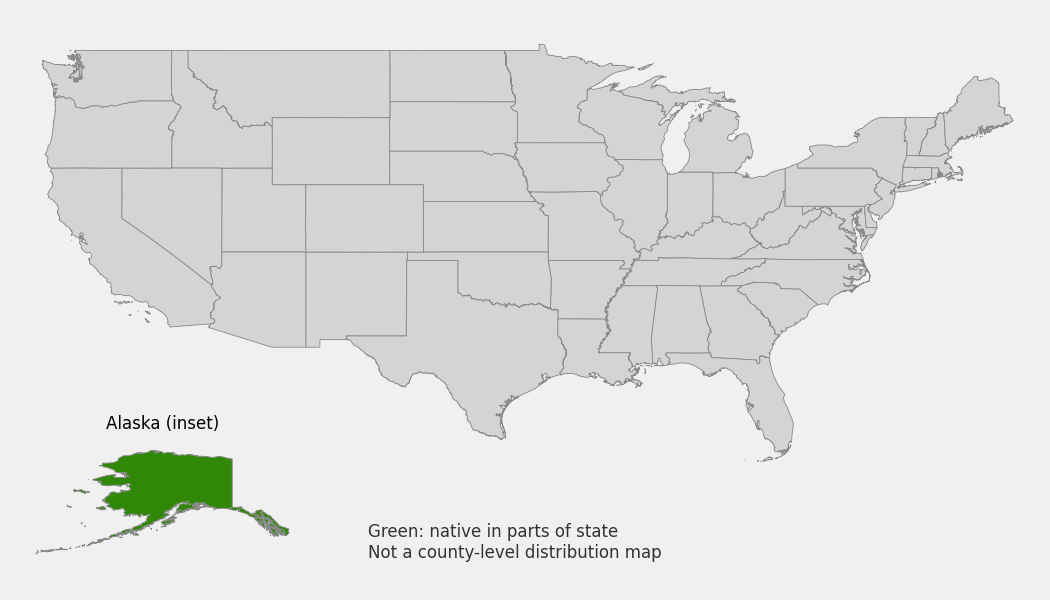
📋 Regional plant list: Alaska
Growing & Care Guide
Place it in a compatible bed
Choose a site that retains moisture without requiring continual rescue watering. A bed beside a lightly shaded meadow edge can be more suitable than a dry gravel strip. Leave enough space to see the basal foliage and to remove weeds before they overtop it. Do not judge spacing solely from a small first-year nursery pot.
Balance light and moisture
Open light generally supports sturdy growth, but a little shelter can help where sun and wind dry the soil. Deep, competitive shade is not the same as a cool moist site. Observe whether stems lean and whether the root zone dries quickly, then adjust the planting position rather than automatically adding fertilizer.
Plant at the existing crown level
Water the pot before planting and settle the plant without burying the crown. Backfill with soil compatible with the surrounding bed rather than creating an isolated pocket of rich compost. After watering in, check again for settling and keep heavy mulch away from the emerging stems.
Water according to the soil
A moist-to-wet habitat code is a guide to preference, not a demand for standing water in a container. Inspect below the surface and water deeply enough to reach the roots. If a plant wilts while the soil is saturated, investigate drainage and root health instead of assuming that more water is needed.
Mulch and fertility
A light surface layer can reduce rapid drying and make small weeds easier to remove, but it should not smother the crown. Use soil testing or observed deficiencies to guide feeding. Rich feeding cannot compensate for hot roots, incorrect identification or persistent waterlogging.
Seed and provenance
The Alaska Native Plant Society lists the species under Polemonium acutiflorum in its seed program, demonstrating a practical route to documented northern material. Availability changes, so check the current offering. Follow the supplier’s seed-lot instructions and keep labels through germination; do not mix packets from several Polemonium species into one tray.
Managing flowering stems
Let the plant complete its normal growth cycle if seed is wanted and the site can accommodate seedlings. If seed is not desired, remove spent stems before capsules open. Avoid cutting healthy basal leaves simply to make the bed look tidy; those leaves are part of the plant’s seasonal resource gathering.
Division and moving
If a mature clump needs moving, work in suitable cool weather and minimize root exposure. Keep the original planting depth and water carefully afterward. A small new plant should be allowed to establish before being repeatedly divided. For propagation beyond simple garden division, use a local nursery protocol rather than assuming all Jacob’s-ladders respond identically.
Troubleshooting
Separate a damaged flower stem from a failing crown when assessing problems. Wind, chewing animals, drying and root disease require different responses. Photograph the plant and note the season, soil moisture and source label before seeking help. That record is more useful than replacing it repeatedly under a different common name.
Landscape Uses
- A cool-climate native border with dependable moisture.
- A meadow or streamside garden edge where local conditions match.
- A close-viewed display of compound leaves and blue summer flowers.
- Not a drought-tolerant substitute for small dryland alpine plants.
Wildlife & Ecological Value
Flower visitors
Open blooms can be observed for insect visits, and an unsprayed planting allows those interactions to occur. This guide does not assign a specific larval-host relationship without evidence. Combine it with other locally appropriate species to provide a longer flowering season rather than relying on one short-lived display.
A component of moist northern vegetation
In nature, the plant grows among other herbs, graminoids and shrubs rather than in a bare isolated circle. A garden can reflect that structure while still limiting competition around a young crown. Keep neighboring plants compatible in moisture needs so irrigation for one does not damage another.
Source plants responsibly
Use propagated plants or documented seed. Wild removal can damage a population and may be prohibited. For a restoration, regional identity and source location are essential; attractive garden performance alone does not demonstrate suitability for a natural site.
Cultural & Historical Uses
The common name Jacob’s-ladder is a visual reference to the leaflets, and it has been applied to more than one species. That shared name is one reason botanical labels matter: an eastern woodland Jacob’s-ladder and this northern plant should not be combined simply because both have blue flowers.
Taxonomic treatments have placed the plant under Polemonium acutiflorum, under a subspecies of Polemonium caeruleum, and under Polemonium villosum. This guide makes the relationship explicit so older Alaskan publications remain usable. It does not silently discard the regional name or multiply a single taxon into several pages.
Northern gardeners and seed exchanges preserve useful practical knowledge about local plants. Keeping a record of source, flowering dates and performance contributes more than an unsupported claim that a species is universally easy or universally difficult. No food or medicinal use is recommended here.
Frequently Asked Questions
Why does the table show a different scientific name from my field guide?
The current Kew name used here is Polemonium villosum. Polemonium acutiflorum remains a familiar regional synonym and is retained in the table and text.
Is this the eastern Jacob’s-ladder?
No. Do not substitute Polemonium reptans or another species on the basis of the common name.
Is it only a few inches tall?
No. Height varies, and sheltered plants can reach well above a foot. The former 3–6-inch table value was not a useful general maximum.
Can I grow it in a hot dry bed?
A cool, moisture-retentive setting is the better match. Cold winter tolerance does not imply summer drought tolerance.
Do I need to keep the seed-source label?
Yes. It helps distinguish related species and provides provenance information for a local-native or restoration planting.
Sources & Further Reading
- Kew POWO — Polemonium villosum and synonyms
- University of British Columbia E-Flora — morphology and habitat
- Alaska Department of Fish and Game — native landscaping table
- Alaska Native Plant Society — seed distribution
- Alaska Wildflowers — field photographs and observed stature
- Government of Northwest Territories — habitat record
Find Native Plants
Ask growers about nursery propagation and regional provenance. Browse our AK native plant nurseries directory for suppliers. Explore the native nursery finder.