
Tenpetal Anemone (Anemone berlandieri)
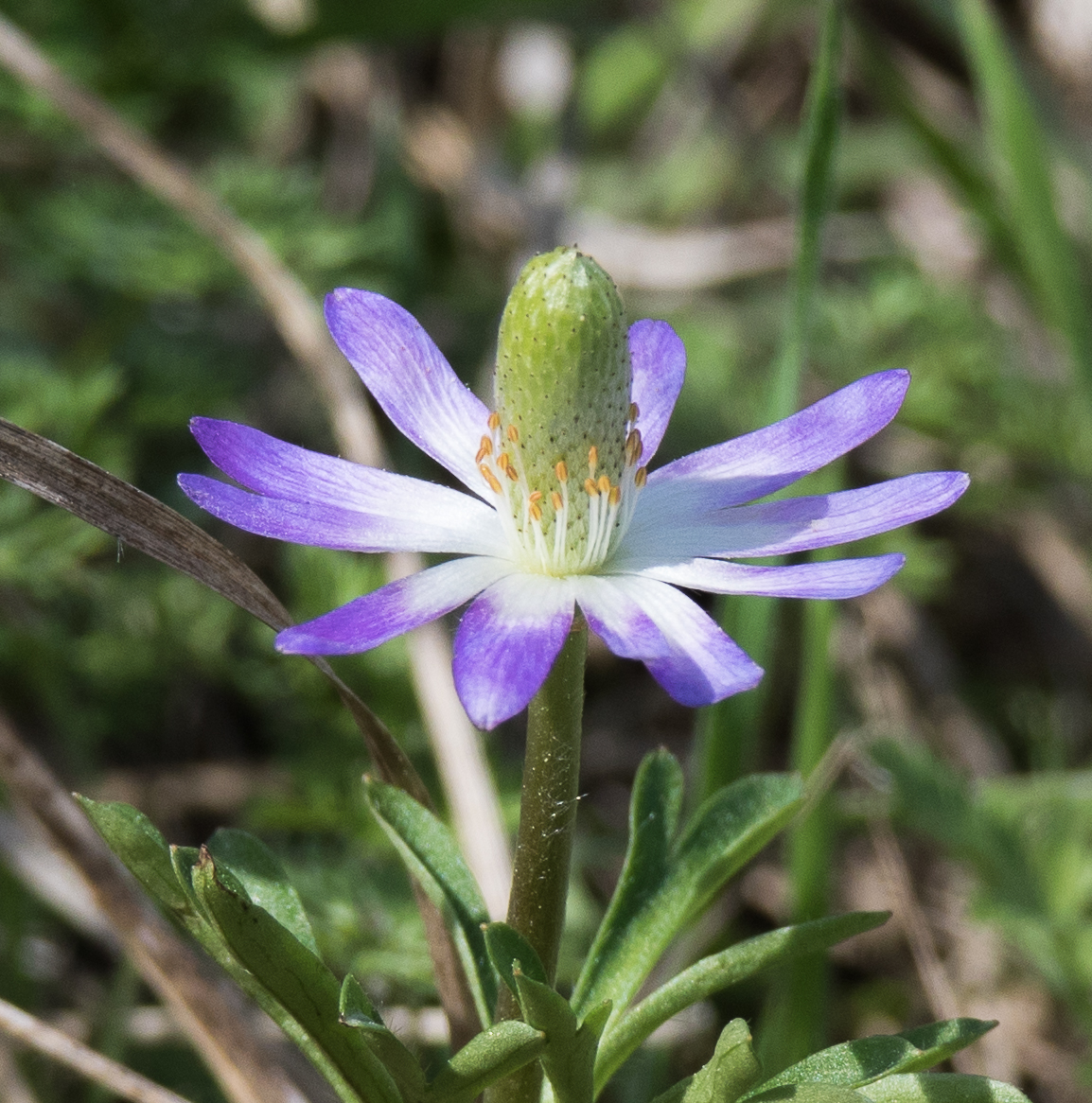
Anemone berlandieri, known as Tenpetal Anemone, tenpetal thimbleweed or southern windflower, is one of the first native wildflowers to bloom in the South each year. From late winter into early spring, single flowers 1 to 1½ inches wide open on slender stems 4 to 16 inches tall in prairies, open woods, roadsides and even unmowed lawns. They come in white, pale pink, lavender and soft blue, often all in one patch, each with a ring of narrow “petals” around a green, cone-shaped center.
The plant belongs to the buttercup family (Ranunculaceae). It is a spring ephemeral: it grows from a small, tuber-like rootstock, leafs out in winter, flowers, sets seed and then goes dormant and disappears by early summer. This short season lets it make the most of the cool, moist months before southern heat and summer competition arrive. The cottony seed heads that follow the flowers give it the names thimbleweed and windflower.
Tenpetal anemone ranges from Virginia and the Carolinas west to Kansas, Oklahoma and Texas, and south to Florida and northeastern Mexico. It is common in much of Texas and Oklahoma and more scattered farther east. For gardeners it is a charming early bulb-like wildflower for sunny, well-drained spots, rock gardens and lawns that are mowed late.
Identification
Tenpetal anemone is easy to recognize in late winter or early spring: a single, daisy-like flower with many narrow sepals on a tall, thin stem above a low cluster of divided leaves. The closest look-alike is Carolina anemone, which shares part of its range.
Leaves
The basal leaves are few and grow close to the ground. Each is divided into three leaflets, which are lobed or toothed and often cut again, so the clump has a loose, parsley-like look. Higher on the flowering stem there is a whorl of three stalkless, deeply divided leaves (bracts), usually well below the middle of the stem.
Flowers
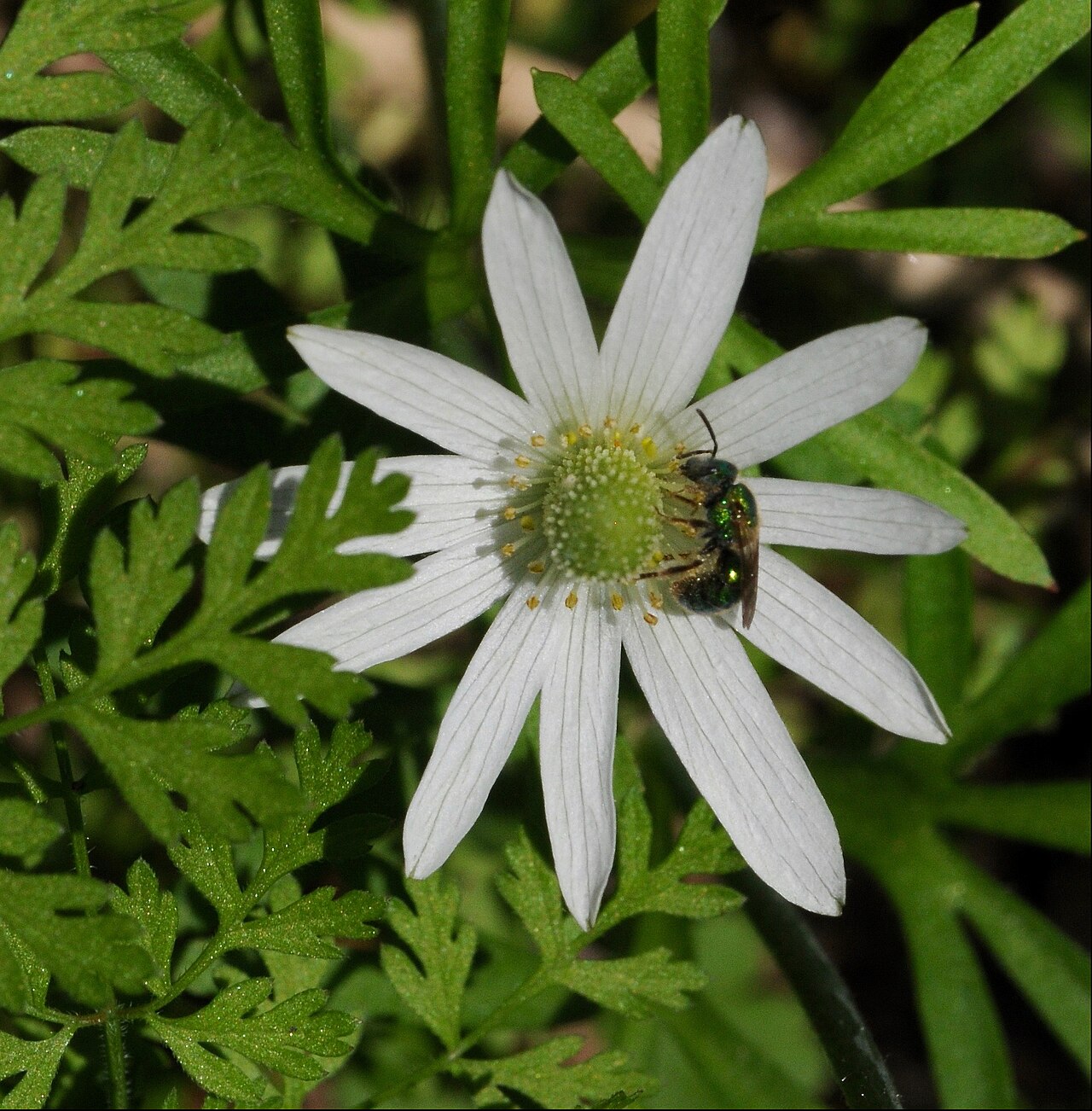
Each stem carries one flower about 1 to 1½ inches across. As in other anemones, there are no true petals. The showy parts are 10 to 20 narrow, petal-like sepals, which gave rise to the name “tenpetal.” Colors range from white and creamy to pink, lavender, purple and blue, and the backs of the sepals are often darker. In the center is a ring of many yellow stamens around a green, cone-shaped cluster of pistils. Flowers close on cloudy days and at night. Plants bloom mainly from February to April.
Fruit & Seeds
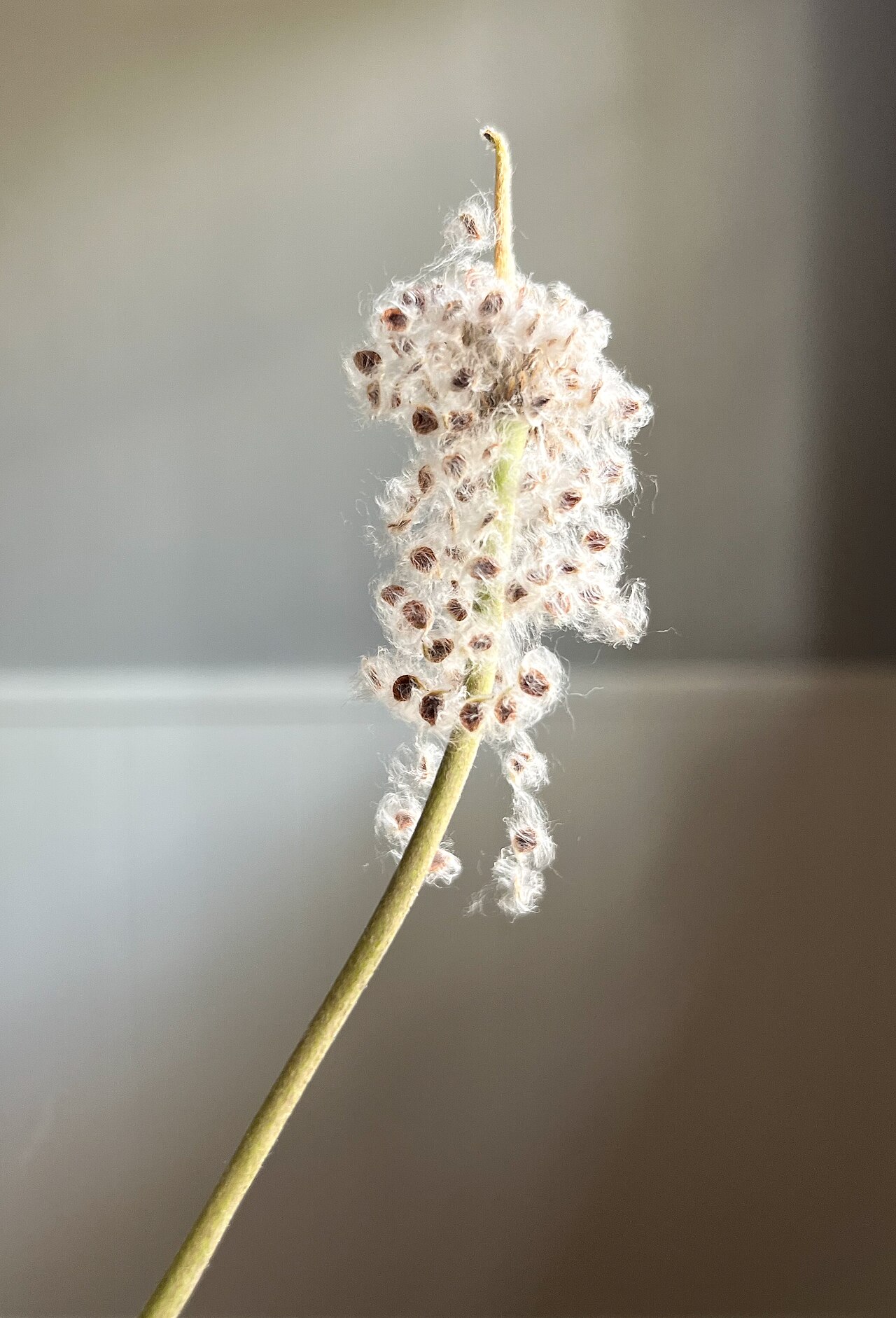
After flowering, the central cone lengthens into a cylindrical head about ¾ to 1½ inches long, shaped like a thimble. It is packed with small, woolly seeds (achenes). When ripe, the head turns fluffy and comes apart, and the seeds drift on the wind in late spring.
Roots & Life Cycle
The plant grows from a small, rounded, tuber-like rootstock. New leaves appear in late fall or winter, flowers in late winter or spring, and the leaves wither by early summer. Plants then stay dormant underground through the heat of summer.
Look-alikes
Carolina Anemone is very similar but has its stem leaves higher, near the middle of the stem, and is more common to the north and in the Midwest. Its rootstock also produces runners. Summer-blooming relatives such as Thimbleweed are much taller, leafier plants that flower in summer.
Quick Facts
| Scientific Name | Anemone berlandieri (syn. Anemone heterophylla, A. decapetala var. heterophylla) |
| Family | Ranunculaceae (buttercup family) |
| Plant Type | Herbaceous perennial; spring ephemeral from a tuber-like rootstock |
| Mature Height | 4–16 in |
| Mature Spread | 3–6 in |
| Growth Rate | Moderate |
| Sun Exposure | Full sun to part shade |
| Water Needs | Low to moderate; dry summer dormancy |
| Soil Type | Well-drained sandy, rocky or limestone clay soils |
| Soil pH | About 6.0–8.0 |
| Bloom Time | February–April |
| Flower Color | White, pink, lavender, purple or blue |
| Fall Color | None; dormant in summer, new leaves in winter |
| Fruit | Cylindrical “thimble” of woolly, wind-dispersed seeds |
| Deer Resistant | Generally yes; foliage is toxic and rarely browsed |
| USDA Hardiness Zones | 6–9 |
Native Range
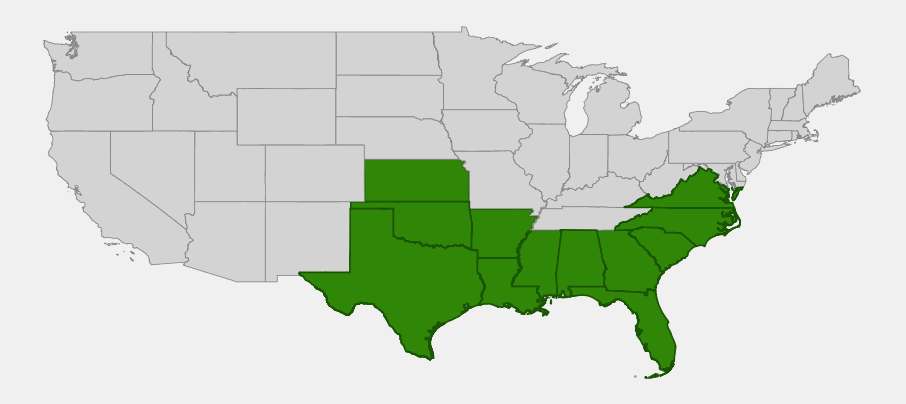
USDA PLANTS lists tenpetal anemone as native in 12 states: Alabama, Arkansas, Florida, Georgia, Kansas, Louisiana, Mississippi, North Carolina, Oklahoma, South Carolina, Texas and Virginia. It also grows in northeastern Mexico. The heart of its range is Texas and Oklahoma, where it is common across most of the state, from the Blackland Prairie and Edwards Plateau to the Cross Timbers and South Texas.
East of the Mississippi it is more scattered, mostly on the Coastal Plain and Piedmont from Louisiana and Florida to the Carolinas and Virginia, with isolated populations in the southern Appalachians. In Kansas it reaches the northern edge of its range in the southern part of the state.
It grows in open, sunny or lightly shaded places with well-drained soil: prairies, limestone and sandstone glades, rocky hillsides, open oak and juniper woodlands, sandy pinelands, roadsides, pastures, cemeteries and old lawns. Because it is dormant during the mowing season, it often survives in lawns and road verges that are left alone until late spring.
📋 Regional plant lists featuring Tenpetal Anemone: Nebraska, Kansas & Eastern Colorado · Maryland, Virginia & West Virginia · Alabama, Georgia & Mississippi · North & South Florida
Growing & Care Guide
Tenpetal anemone is easy to grow in a sunny, well-drained spot within its native range. The main thing to remember is its schedule: it grows in the cool season and disappears in summer. Buy seed or plants from native plant nurseries, or collect a little seed with permission, rather than digging wild tubers.
Light
Full sun to part shade. Because it grows and flowers before most trees leaf out, it does well under deciduous trees as well as in open meadows. It needs sun during its winter and spring growing season.
Soil & Water
Give it well-drained soil: sandy, gravelly or rocky soils and thin limestone clays all suit it. It does not tolerate soggy soil, especially in summer when the tuber is dormant. Winter and spring rains usually provide enough water. Do not water the dormant tubers in summer.
Planting Tips
Sow fresh seed on the soil surface in late spring or early summer, when it ripens, or in fall, and press it in lightly; seedlings appear in winter. Potted plants go in during fall or winter. Plant in drifts among low grasses and other spring wildflowers, and mark the spot so the dormant tubers are not dug up by mistake.
Pruning & Maintenance
Let the foliage wither on its own after seeding; it feeds the tuber for next year. In lawns and meadows, delay mowing until the seed heads have blown apart in late spring. No fertilizer is needed.
Propagation
Grow from seed sown fresh, or divide dormant tubers in summer or fall. Seedlings usually take a couple of years to reach flowering size. Plants often self-sow in suitable spots.
Landscape Uses
- Lawn and meadow wildflower: an early bloomer for lawns, verges and meadows mowed after late spring
- Rock gardens: thrives in gravelly, well-drained soil among small spring bulbs
- Early pollinator food: one of the first flowers for native bees in late winter
- Woodland edges: under deciduous trees that leaf out after it has flowered
- Prairie and glade restoration: within its native range in Texas, Oklahoma and the Southeast
Wildlife & Ecological Value
Blooming when little else is in flower, tenpetal anemone is an important early food source for small native bees.
For Pollinators
The open flowers offer plenty of pollen and are visited by small native bees, including sweat bees and mining bees, as well as flies and early butterflies. On cool late-winter days, when few other flowers are open, these flowers can be a significant source of pollen for bees emerging from hibernation.
For Birds
Small seed-eating birds may eat some of the seeds, but the plant is not a major bird food. The open, grassy places where it grows support sparrows, meadowlarks and other grassland birds.
For Mammals
Its foliage contains irritating compounds and is usually avoided by deer and rabbits.
Ecosystem Role
As a spring ephemeral, tenpetal anemone uses the light and moisture of late winter and early spring before taller plants grow up. Its quick cycle and summer dormancy fit it to prairies, glades and open woodlands with hot, dry summers. It helps support early pollinators that later serve other spring and summer wildflowers.
Cultural & Historical Uses
The species is named for Jean-Louis Berlandier, a French-Swiss physician and naturalist who collected plants in Texas and northern Mexico in the 1820s and 1830s. The genus name Anemone comes from Greek and is traditionally connected with wind, which is why anemones are called windflowers.
Safety note: like many members of the buttercup family, tenpetal anemone contains compounds (such as protoanemonin) that can irritate skin and mouth and cause stomach upset if eaten. All parts are considered toxic when fresh. Keep children and pets from eating it, and wear gloves if you handle a lot of fresh foliage. It is not an edible or medicinal plant.
Across Texas and Oklahoma tenpetal anemone is a familiar sign of spring, often in bloom in yards and cemeteries by February. It is one of the native “lawn flowers” that many people enjoy without knowing its name, and its color variety, from white to deep blue in one patch, makes it a favorite of wildflower photographers.
Frequently Asked Questions
Why is it called tenpetal anemone?
The flowers usually have around 10 or more narrow, petal-like parts. Botanically these are sepals, not petals, and their number varies from about 10 to 20.
Where did my anemones go in summer?
They are spring ephemerals. After flowering and seeding, the leaves wither and the plant goes dormant underground until late fall or winter. This is normal.
Is tenpetal anemone poisonous?
Yes, mildly. Like other buttercup family plants it contains irritant compounds, and fresh plants can cause mouth and stomach irritation if eaten and skin irritation in sensitive people. It is not for eating.
Can I grow it in my lawn?
Yes. Within its range it does well in thin, sunny lawns. Avoid mowing until the seed heads have blown away in late spring, and avoid broadleaf herbicides.
How is it different from Carolina anemone?
The two are very similar. Tenpetal anemone has its whorl of stem leaves low on the stem and grows from a tuber without runners. Carolina anemone has its stem leaves near the middle of the stem and spreads by runners from the tuber.

Looking for a nursery that carries Tenpetal Anemone?
Browse our native plant nursery directory: Alabama & Arkansas · Florida & Georgia · Kansas · Louisiana & Mississippi · North Carolina & Oklahoma · South Carolina, Texas & Virginia