Toumey Oak (Quercus toumeyi)
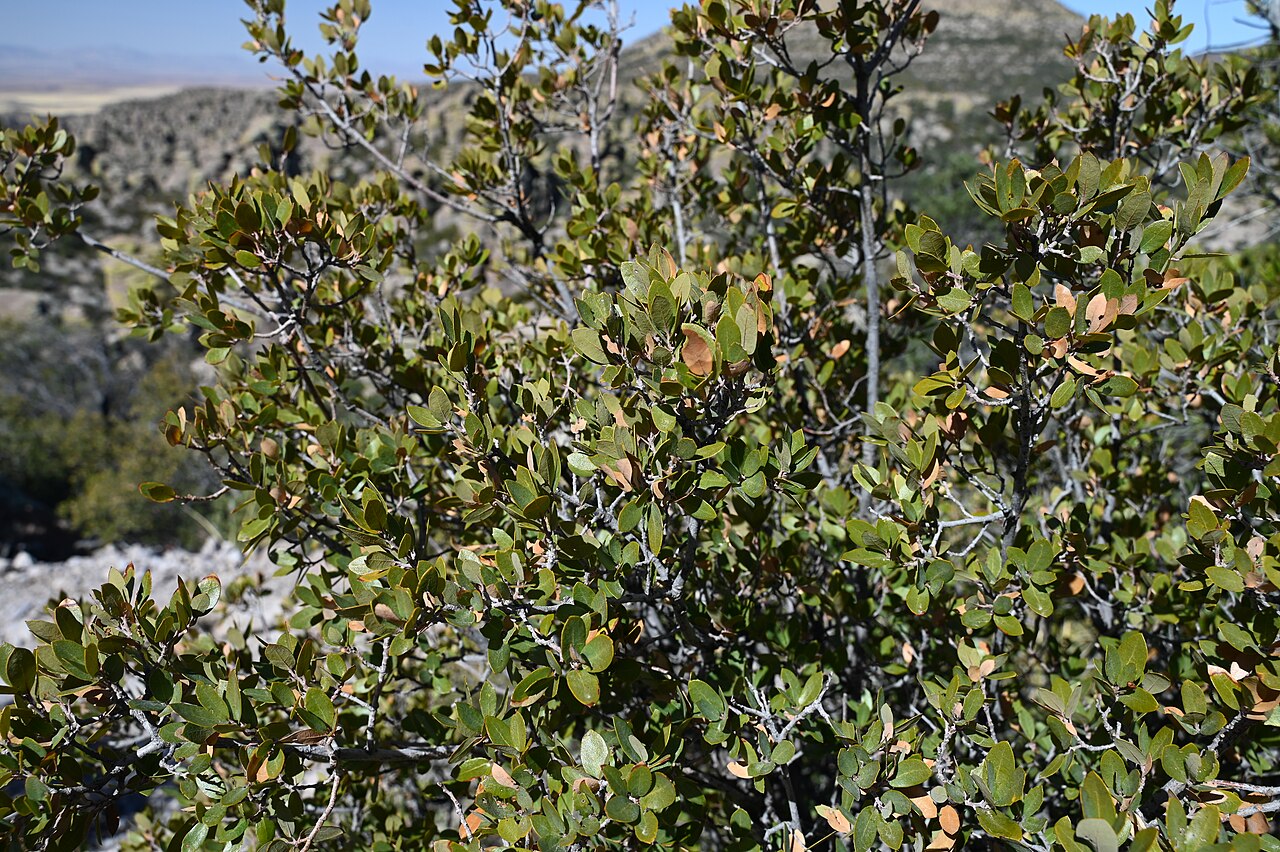
Quercus toumeyi, commonly known as Toumey Oak, is a small, shrubby evergreen oak of the Madrean sky-island mountains, named for American forester and botanist James William Toumey (1865–1932). It is remarkable for having the smallest leaves of any native tree-form oak in the United States — tiny, leathery, often less than an inch long — packed densely onto wiry, often thicket-forming branches.
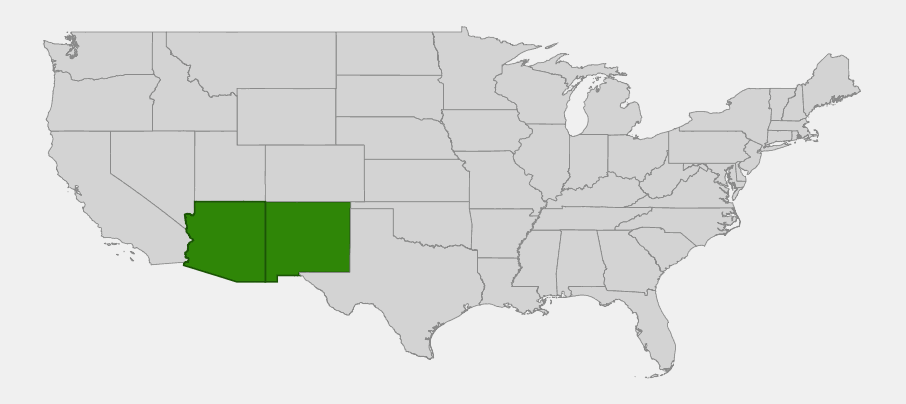
Toumey Oak occupies rocky canyons and slopes in a cluster of sky-island ranges in southeastern Arizona, with a more limited presence in far southwestern New Mexico, continuing south into northern Mexico. While not considered globally rare, its New Mexico populations are localized enough that the species appears on the New Mexico Rare Plants list, underscoring how narrow and specific its U.S. range really is, even though it can be locally abundant within that range.
For a rocky, well-drained Southwestern garden, Toumey Oak offers something few other native plants can: dense, fine-textured, evergreen structure at a manageable shrub-to-small-tree scale, with genuine regional authenticity and minimal water needs once established.
Identification
Toumey Oak most often grows as a dense, multi-stemmed shrub or thicket, typically 10 to 20 feet tall, though it can develop into a small single-trunked tree to 25 or 30 feet in favorable canyon-bottom sites. Its growth habit is often described as forming low, spreading thickets on exposed rocky slopes, in contrast to the more tree-like form it can take in sheltered locations.
Leaves
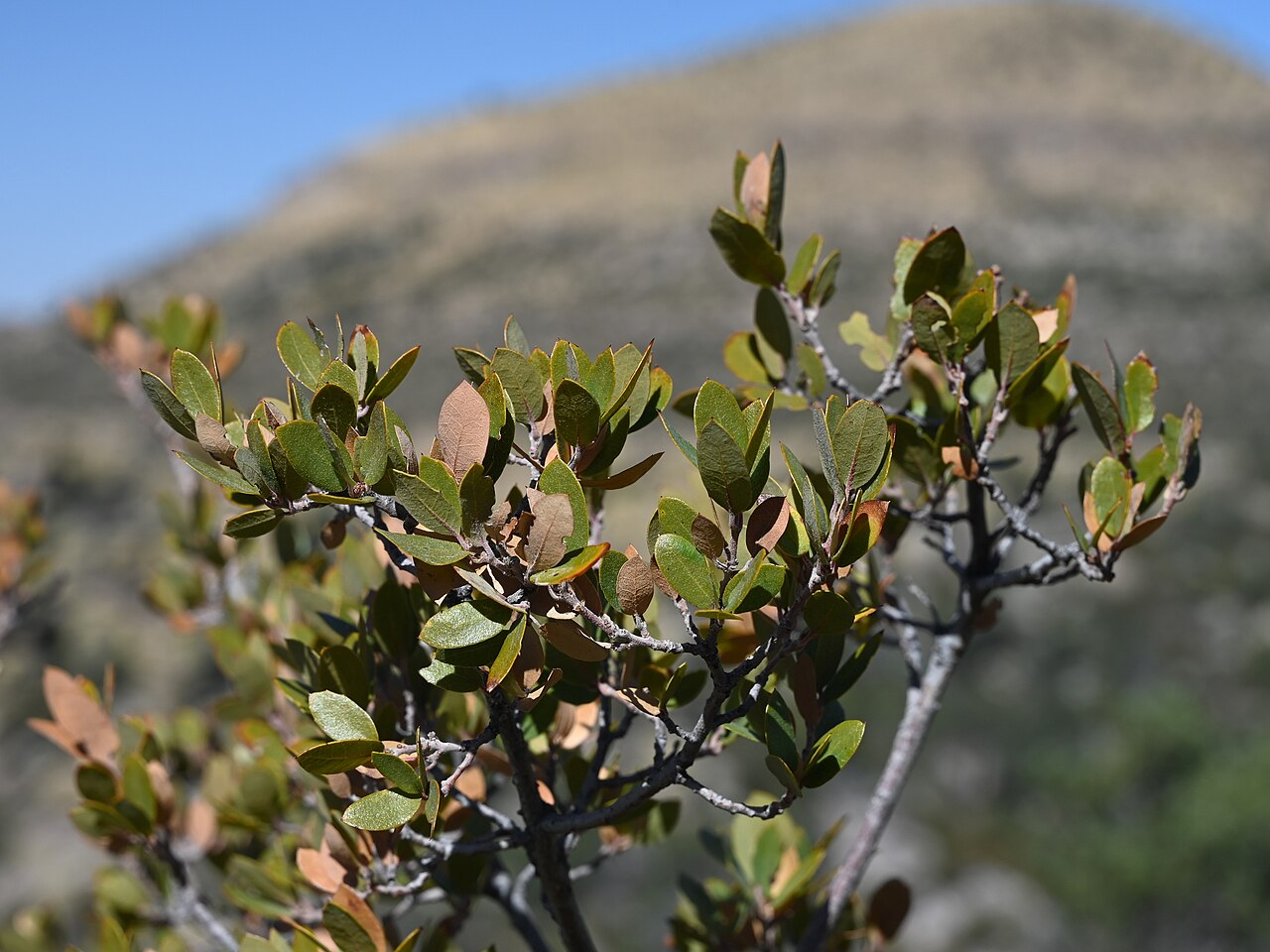
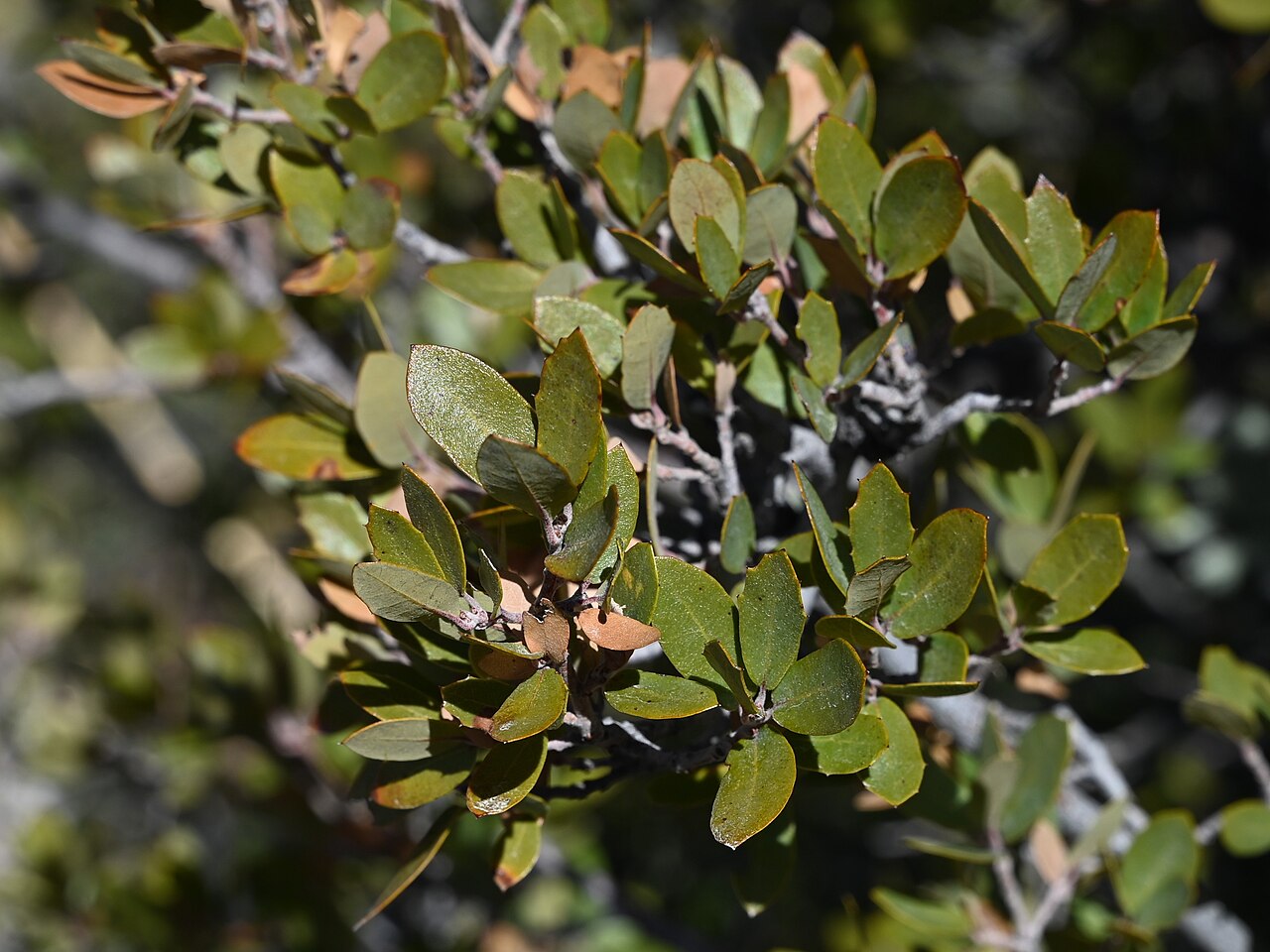
The leaves are the species’ most distinctive feature: evergreen, thick, and leathery, but strikingly small — typically only ½ to 1½ inches long, among the smallest of any native tree-form oak in the country. They are oval to elliptic, usually with smooth or only lightly spine-toothed margins, bluish-gray-green above, and finely hairy (pubescent) beneath. The dense, fine-textured foliage gives the whole shrub a distinctive gray-green cast visible from a distance.
Bark
Bark on young stems and branches is light gray and finely scaly, roughening somewhat with age but remaining relatively thin compared to larger Southwestern oaks.
Acorns
Acorns are small and narrow, maturing in a single growing season (annual, unlike some oaks that take two years), with a shallow, finely scaled cup. They are produced in variable quantity year to year and are an important late-season food source for sky-island wildlife.
Quick Facts
| Scientific Name | Quercus toumeyi |
| Family | Fagaceae (Beech/Oak) |
| Plant Type | Evergreen Shrub / Small Tree |
| Mature Height | 10–20 ft, occasionally to 25–30 ft |
| Growth Rate | Slow to moderate |
| Sun Exposure | Full Sun |
| Water Needs | Low (drought tolerant once established) |
| Soil Type | Rocky, gravelly, well-drained mountain soils |
| Soil pH | 6.5–8.0 |
| Foliage | Evergreen; smallest leaves of any native tree-form oak |
| USDA Hardiness Zones | 7–9 |
Native Range
Toumey Oak grows in a cluster of Madrean sky-island mountain ranges in southeastern Arizona, including the Chiricahua, Huachuca, Santa Rita, and Dragoon Mountains, where it is a conspicuous, sometimes dominant, component of rocky canyon and slope vegetation. Its range extends into far southwestern New Mexico, including the Peloncillo Mountains of Hidalgo County, where it is uncommon enough to be tracked by the New Mexico Rare Plants program despite not being considered globally threatened. From there its range continues south into the Sierra Madre Occidental of northern Sonora and Chihuahua, Mexico.
Within this range, Toumey Oak typically grows between roughly 4,500 and 6,500 feet elevation, on rocky slopes, canyon walls, and ridgelines with thin, well-drained soils, often alongside other Madrean evergreen oaks and Border Pinyon.
📋 Regional plant lists featuring Toumey Oak: Arizona & New Mexico
Growing & Care Guide
Toumey Oak is a tough, low-water evergreen that rewards a rocky, sun-baked site with dense, fine-textured structure and minimal ongoing care — provided drainage is sharp and the site isn’t overwatered.
Light
Plant Toumey Oak in full sun. It grows on exposed, rocky, often south- or west-facing slopes in the wild, and performs best with abundant direct light.
Soil & Water
Excellent drainage is essential. In its native range, Toumey Oak roots into thin, rocky soils over bedrock and tolerates the alkaline, mineral-rich conditions typical of Southwestern mountain slopes. Once established, it is quite drought tolerant and needs little supplemental water beyond the region’s natural rainfall; occasional deep watering during prolonged drought in the first few years after planting helps establishment, but it has very little tolerance for heavy, poorly drained, or consistently wet soil.
Planting Tips
Plant from container-grown nursery stock in fall or early spring, in the leanest, best-drained spot available — rocky slopes, raised beds, or decomposed-granite plantings suit it well. Growth is slow to moderate, so choose a well-rooted specimen and be patient. Because it often forms multi-stemmed thickets, give it room to spread, or prune selectively if a more tree-like single-trunk form is preferred.
Pruning & Maintenance
Little pruning is required. Remove dead or damaged wood as needed, and thin or shape the naturally dense, thicket-forming growth if a cleaner, more open form is desired. Established plants are low-maintenance and well adapted to heat, reflected sun, and lean soils.
Landscape Uses
Toumey Oak’s dense, fine-textured evergreen habit suits several landscape roles:
- Evergreen hedge or privacy screen in rocky Southwestern gardens
- Xeriscape and rock garden plantings needing low water and fine texture
- Wildlife thicket, offering dense cover and acorn forage
- Slope stabilization on rocky, erosion-prone hillsides
- Compact specimen where larger Southwestern oaks would outgrow the space
Wildlife & Ecological Value
Despite its small stature, Toumey Oak contributes meaningfully to the ecology of Madrean sky-island woodland, particularly as a year-round evergreen food and cover source.
For Birds & Mammals
Acorns are eaten by Mexican Jays, Acorn Woodpeckers, and other woodland birds, as well as by rock squirrels and other small mammals that cache and disperse seed. The dense, often thicket-forming branches provide excellent year-round cover and nesting habitat, especially valuable on exposed rocky slopes with little other vegetation structure.
Ecosystem Role
As an evergreen, often locally dominant shrub-oak, Toumey Oak adds structural diversity and year-round green cover to Madrean sky-island woodland, complementing the taller evergreen oaks and pines that share its range. Its tolerance of thin, rocky soils allows it to colonize sites too exposed or poor for many other woody plants, helping stabilize slopes and fill niches within the broader sky-island plant community.
Cultural & Historical Uses
Toumey Oak is named for James William Toumey (1865–1932), an American forester and botanist who studied Southwestern forest ecology in the late nineteenth and early twentieth centuries. Because of its relatively narrow, remote mountain distribution and modest, shrubby stature, it has seen limited documented traditional or commercial use compared to larger Southwestern oaks, and is valued today primarily for its ecological role and, increasingly, its ornamental potential in low-water regional landscaping.
Frequently Asked Questions
Why does Toumey Oak have such small leaves?
Small, thick, leathery leaves help reduce water loss, an adaptation suited to the hot, dry, rocky slopes Toumey Oak occupies. Its leaves are notably smaller than those of other native tree-form oaks in the United States.
Is Toumey Oak rare?
It is not globally rare and can be locally common within its narrow Arizona range, but its small New Mexico populations are limited enough to appear on the New Mexico Rare Plants list. Its overall U.S. range is naturally confined to a handful of sky-island mountain ranges.
Is Toumey Oak a shrub or a tree?
Both, depending on the site. It most often grows as a dense, multi-stemmed shrub or thicket on exposed rocky slopes, but can develop into a small single-trunked tree in more sheltered canyon-bottom locations.
How is Toumey Oak different from Gray Oak or Arizona Oak?
Toumey Oak is readily distinguished by its much smaller leaves — often under an inch long, compared to the larger foliage of Gray Oak and Arizona Oak — and its typically shrubbier, thicket-forming growth habit.
Does Toumey Oak need acidic soil?
No. It is adapted to the neutral to alkaline, mineral-rich rocky soils typical of Southwestern mountain slopes and does not need or prefer acidic conditions.

Looking for a nursery that carries Toumey Oak?
Browse our native plant nursery directory: Alabama, Alaska, Arizona & Arkansas · Nebraska, Nevada, New Hampshire, New Jersey, New Mexico, New York, North Carolina, North Dakota, Ohio & Oklahoma
For other Southwestern sky-island oaks, see our pages on Arizona Oak, Gray Oak, and Silverleaf Oak. For more on the region’s oaks, see our guide to New Mexico oak trees and our overview of privacy trees for Arizona.