
Western Burning Bush (Euonymus occidentalis)
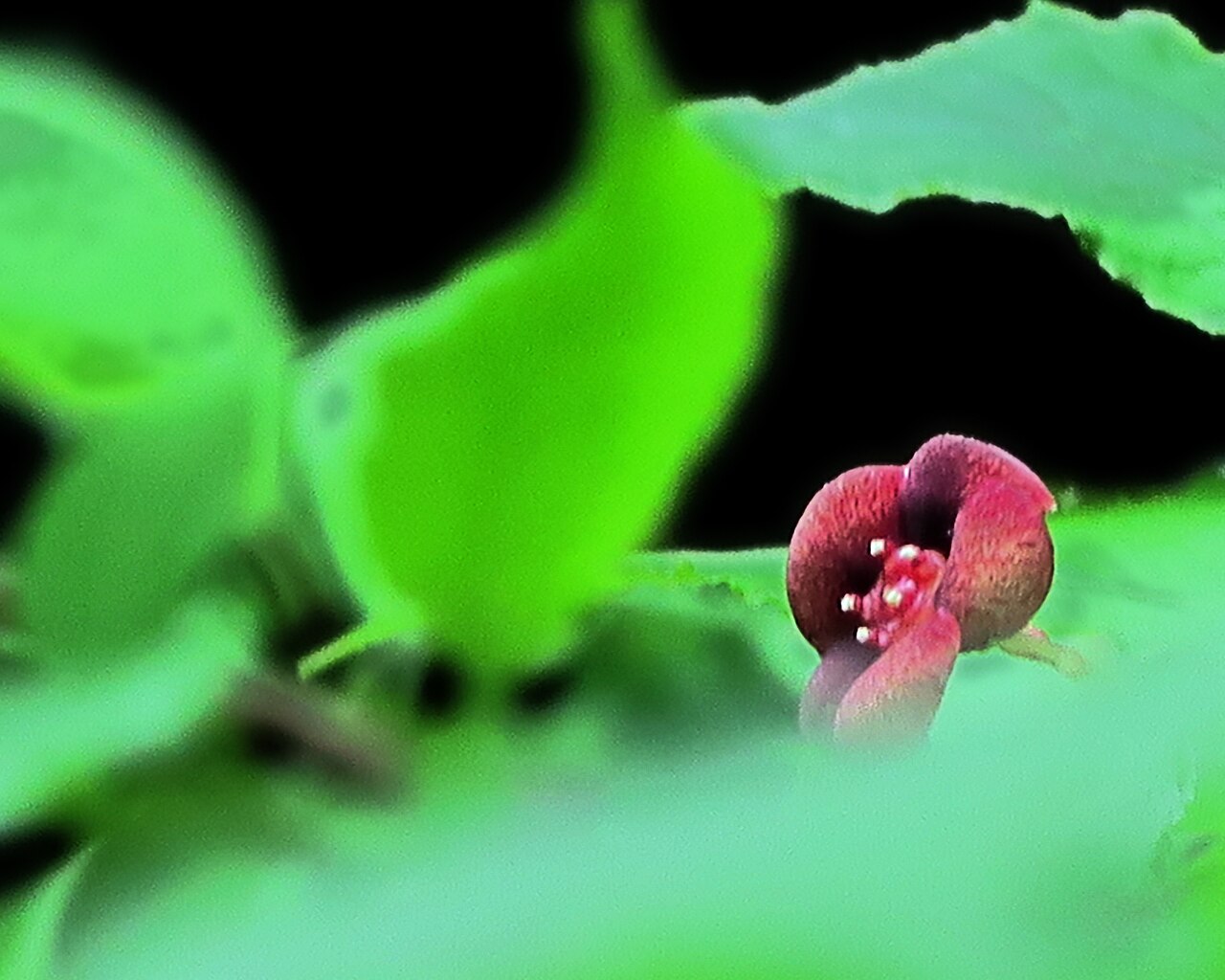
Euonymus occidentalis, the Western Burning Bush (also called western wahoo), is a native deciduous shrub of moist, shady forests along the Pacific Coast. It grows from southwestern British Columbia south through western Washington and Oregon to the Coast Ranges and Sierra Nevada of California, with a separate variety in the mountains of southern California.
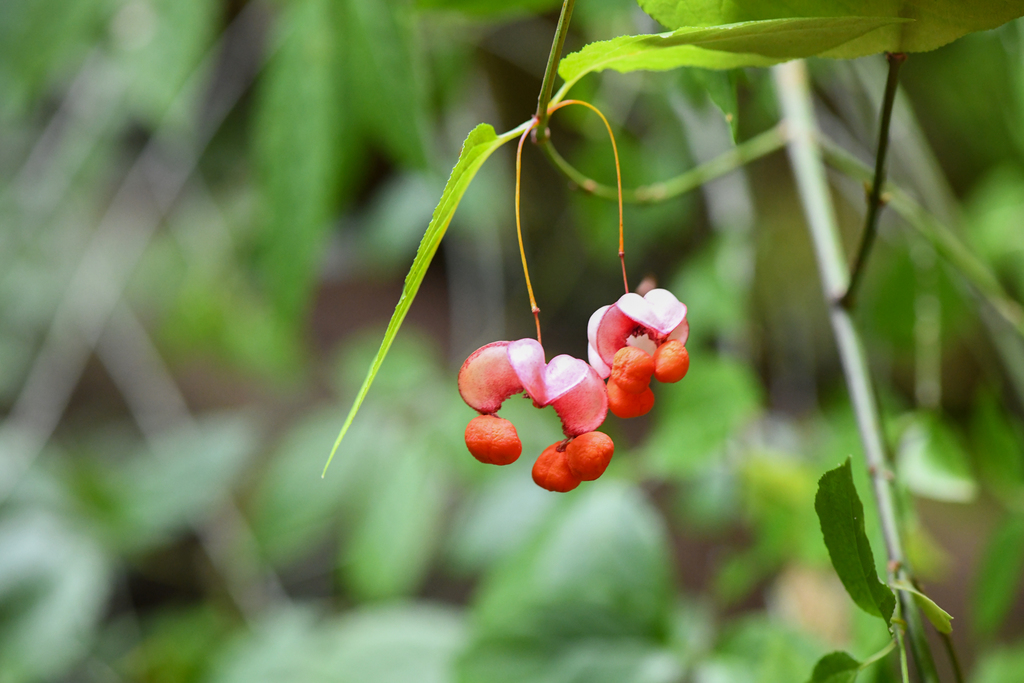
It is a graceful, open shrub with slender green twigs, thin, finely toothed leaves and small, maroon to brownish-purple flowers that dangle on long stalks in late spring. In fall it produces its showiest feature: pinkish capsules that split to reveal seeds wrapped in a brilliant orange-red coat.
It is the West Coast’s native counterpart to the invasive Asian burning bush (Euonymus alatus) sold in many nurseries, and a fine choice for shade gardens and woodland restoration. Its fruits are considered poisonous to people. This guide covers how to identify it, where it grows, how to grow it and its value to wildlife.
Identification
Western burning bush is a slender, open shrub with green twigs, opposite toothed leaves, small dangling maroon flowers and pinkish capsules that split to show orange-red seeds.
Growth Form
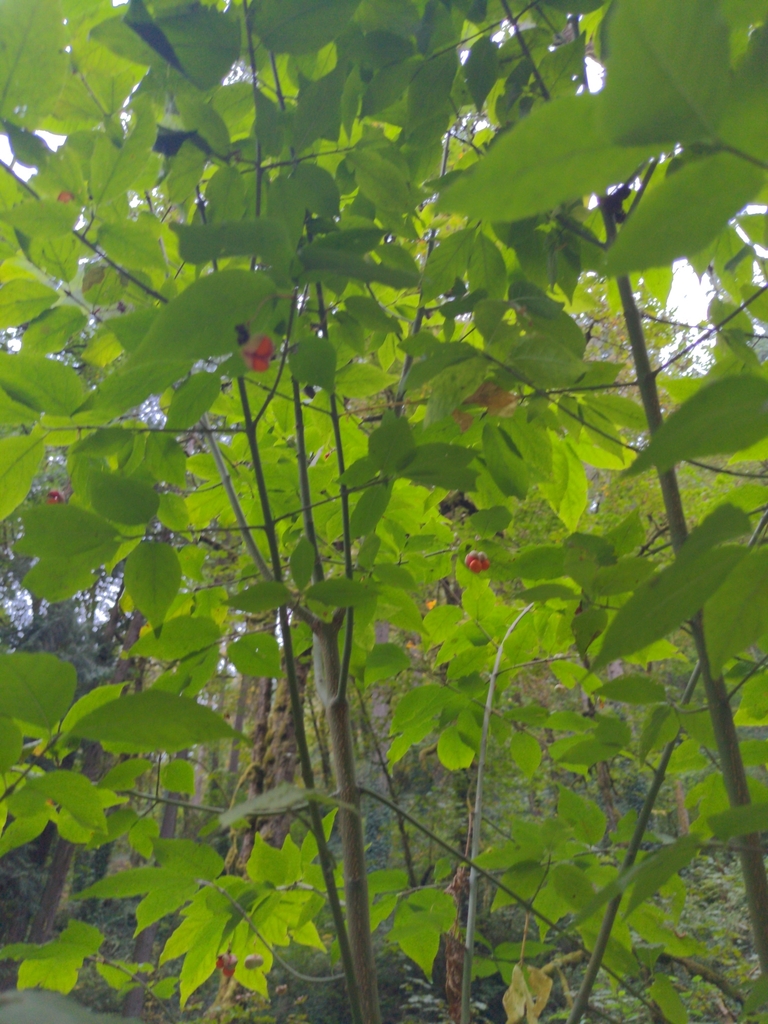
It is an upright to spreading, loosely branched shrub or small tree, usually 6 to 15 feet tall and sometimes to 20 feet, with slender, flexible stems. The young twigs are green and smooth, and older bark is gray-brown. In deep shade it often leans or sprawls through other shrubs.
Leaves
The leaves are opposite, thin, oval to lance-shaped, about 2 to 4½ inches long, with finely toothed edges and pointed tips. They are bright to dark green above and paler beneath, and turn yellow in fall.
Flowers
From about May to June, small clusters of one to five flowers hang from the leaf axils on long, threadlike stalks. Each flower is about ⅓ to ½ inch across, with five rounded petals that are deep maroon to brownish-purple, sometimes greenish with purple dots, around a flat, disk-like center.
Fruit & Look-alikes
By September and October, the flowers become smooth, three-lobed capsules, pinkish to purplish, that hang on long stalks and split open to show one to a few seeds covered by a bright orange-red aril. Eastern Wahoo is a related shrub of the East with purple flowers and four-lobed, pink-purple capsules. The invasive winged burning bush (E. alatus) has corky wings on its twigs, smaller leaves that turn bright red in fall, and is not native to North America.
Quick Facts
| Scientific Name | Euonymus occidentalis Nutt. ex Torr. |
| Family | Celastraceae (staff-tree or bittersweet family) |
| Plant Type | Deciduous shrub or small tree |
| Mature Height | 6–15 ft (occasionally to 20 ft) |
| Mature Spread | 4–10 ft |
| Growth Rate | Moderate |
| Sun Exposure | Partial shade to full shade |
| Water Needs | Moderate; prefers moist soil |
| Soil Type | Moist, humus-rich loam |
| Soil pH | About 5.5–7.0 |
| Bloom Time | May–June |
| Flower Color | Maroon to brownish-purple |
| Fall Color | Yellow |
| Fruit | Pinkish three-lobed capsule with orange-red seeds; poisonous |
| Deer Resistant | Low to moderate; browsed by deer |
| USDA Hardiness Zones | 7–9 |
Native Range
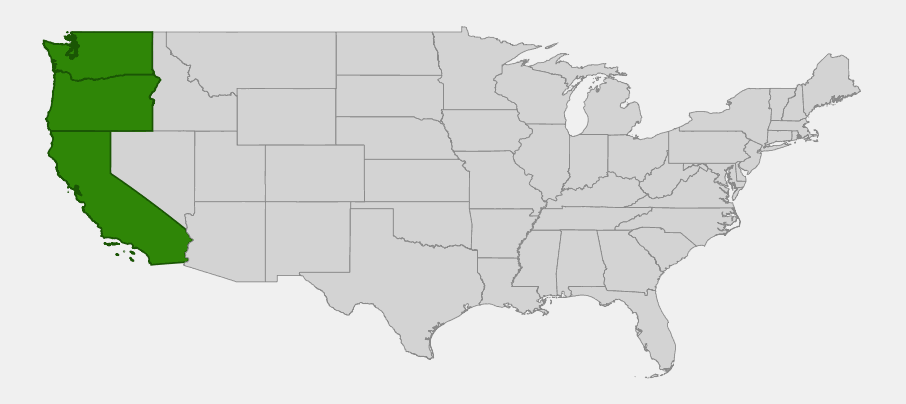
Western burning bush is a Pacific Coast plant. USDA PLANTS lists it as native in Washington, Oregon and California, and in British Columbia, where it is rare and limited to the southwest, including southern Vancouver Island.
In Washington and Oregon it grows mainly west of the Cascades, in the Puget Trough, the Coast Range, the Willamette Valley, the Columbia River Gorge and the western Cascade foothills. In California it is found in the North Coast Ranges, the Klamath Mountains, the San Francisco Bay Area and the western slope of the Sierra Nevada. The variety parishii grows in an isolated area of the Peninsular Ranges of southern California.
It grows in moist, shaded places: the understory of Douglas-fir, redwood and mixed evergreen forests, streambanks, canyon bottoms and north-facing slopes, from near sea level to the lower montane zone.
📋 Regional plant lists featuring Western Burning Bush: Western Oregon & Western Washington · California & Nevada
Growing & Care Guide
Western burning bush is offered by some native nurseries in the Pacific Northwest and California. It is an easy, graceful shrub for shady gardens, and a native alternative to invasive Asian burning bush. Plant it where children will not be tempted to eat the colorful fruit.
Light
Partial to full shade is best. It tolerates morning sun, especially near the coast, but hot afternoon sun can scorch its thin leaves.
Soil & Water
Plant in moist, well-drained, humus-rich soil, such as a woodland bed with leaf mulch. Water regularly through the first two summers. Once established, it tolerates some summer dryness in shade, but looks best with occasional deep watering in dry summers.
Planting Tips
Plant in fall or early spring, 5 to 8 feet apart, beneath tall trees, at the edge of a woodland, or along a shady stream. Combine it with sword fern, vine maple, Indian plum and other shade-loving natives. Its open, airy shape makes it a good background shrub for smaller plants.
Pruning & Maintenance
Prune lightly in late winter to remove dead or crossing stems, or cut a few older stems to the base to renew the shrub. It needs little else. Deer may browse the leaves and twigs.
Propagation
Sow cleaned seed in fall outdoors, or give it two to three months of cold, moist stratification before sowing in spring. Semi-hardwood cuttings taken in summer also root with rooting hormone.
Landscape Uses
- Shade and woodland gardens: graceful shrub with colorful fall fruit
- Native alternative: replaces invasive Asian burning bush
- Streamside and forest restoration: understory shrub for moist western woods
- Wildlife gardens: fall fruit for birds
Wildlife & Ecological Value
Western burning bush adds flowers for small insects and fall fruit for birds to the understory of Pacific forests.
For Pollinators
The small, flat, maroon flowers are pollinated mainly by flies, small bees and other small insects. Their dark color and open shape are typical of fly-pollinated flowers.
For Birds
The bright orange-red arils attract thrushes, robins, vireos and other fruit-eating birds, which eat them and spread the seeds.
For Mammals
Deer browse the leaves and twigs, and small mammals may eat the fallen seeds. Toxicity note: like other Euonymus, the fruit, seeds and bark are considered poisonous to people and pets and can cause vomiting and diarrhea. Do not eat them.
Ecosystem Role
It is part of the diverse shrub layer of moist Pacific forests and streambanks, where it adds structure and fall fruit. Unlike the Asian burning bush, it does not spread aggressively into native woods.
Cultural & Historical Uses
The English-American naturalist Thomas Nuttall first recognized this shrub from Pacific Coast specimens, and John Torrey published the name based on his work in the nineteenth century. The species name occidentalis means “western.”
The name “burning bush” refers to the fiery colors of the fruit and, in some species, the fall leaves. Another old name for Euonymus is “spindle tree,” because the hard wood of the European species was used to make spindles for spinning wool.
The eastern and Asian burning bushes, especially winged burning bush (Euonymus alatus), are widely planted for their red fall color but have become invasive in eastern forests. Western burning bush offers West Coast gardeners a native shrub with a similar name and colorful fruit.
Frequently Asked Questions
Is western burning bush native?
Yes. It is native to western Washington and Oregon, California and southwestern British Columbia. It is not the same as the invasive Asian burning bush.
Is western burning bush poisonous?
Yes. Like other Euonymus, its fruit, seeds and bark are considered poisonous to people and pets. Do not eat them.
How do I recognize western burning bush?
Look for a slender, open shrub in moist shade with green twigs, opposite toothed leaves, small maroon flowers on long stalks in spring, and pinkish capsules that split to show orange-red seeds in fall.
Does western burning bush turn red in fall?
Its leaves usually turn yellow, not bright red. Its fall color comes mostly from the pink capsules and orange-red seeds.
Where should I plant western burning bush?
In partial to full shade with moist, humus-rich soil, such as under tall trees or along a shady stream, within or near its native range.

Looking for a nursery that carries Western Burning Bush?
Browse our native plant nursery directory: California · Oregon · Washington

