
Coastal Mugwort (Artemisia suksdorfii)
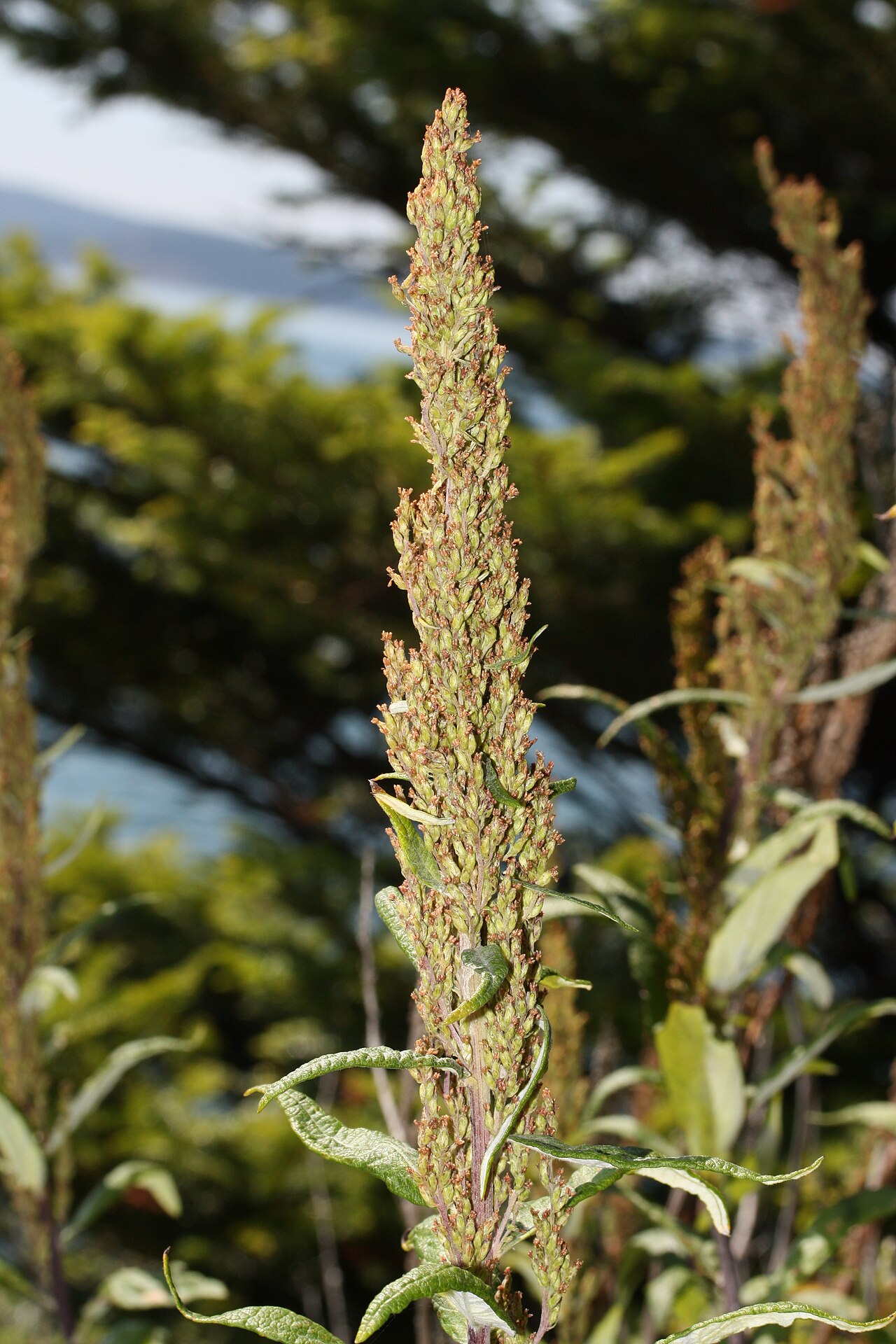
Artemisia suksdorfii, known as Coastal Mugwort, coastal wormwood or Suksdorf’s sagewort, is a tall, aromatic native perennial of the Pacific Coast. It grows on sea bluffs, coastal drainages, beach edges and in openings near the shore from British Columbia through Washington and Oregon to northern California, with a few isolated populations on Santa Catalina Island.
It spreads by rhizomes into leafy clumps of unbranched, brownish stems 2 to 6 feet tall. The leaves are green and smooth above and white-woolly beneath, and in late summer and fall the stems end in long, narrow, spike-like clusters of tiny yellowish flower heads.
Coastal mugwort is closely related to the familiar California Mugwort and is a tough, salt-tolerant plant for coastal native gardens and bluff restoration. This guide covers how to identify it, where it grows, and how to grow it.
Identification
Coastal mugwort is a tall, leafy mugwort of the immediate coast. Look for its two-toned leaves and its very narrow, dense, spike-like flower clusters.
Growth Habit
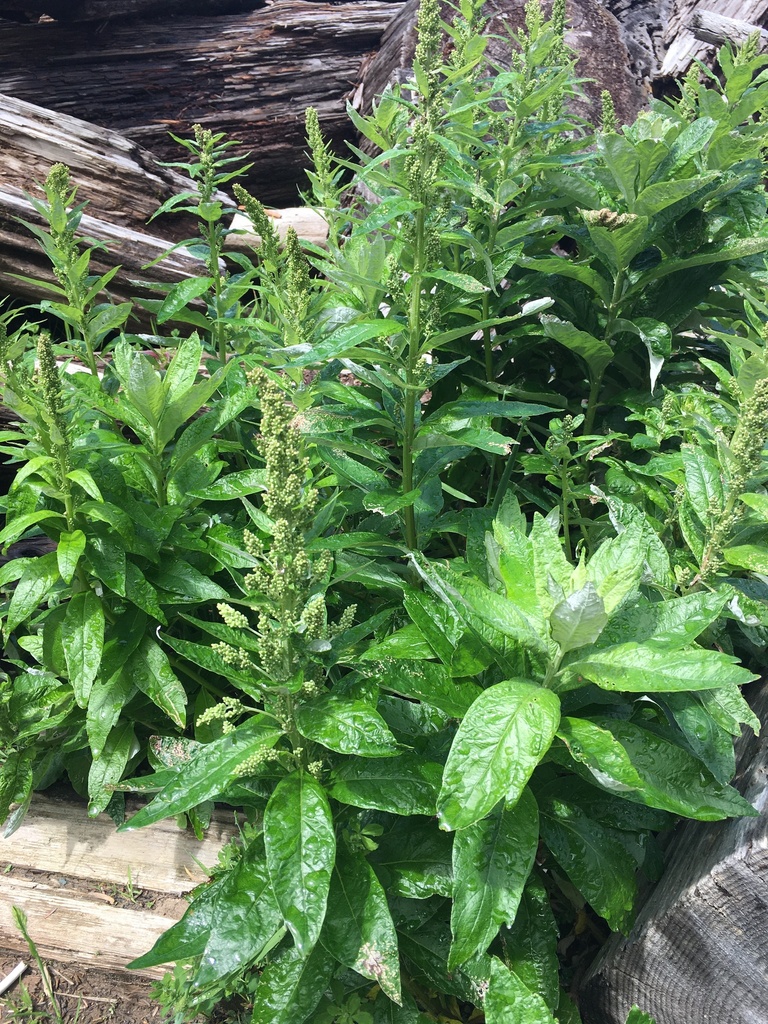
A rhizomatous perennial forming clumps or patches of many erect, usually unbranched stems 2 to 6 feet tall. The stems are brownish and become somewhat woody at the base. The plant dies back to the ground in winter in colder areas.
Leaves
The leaves are narrow, lance-shaped and often lobed, 2 to 6 inches long. They are green and smooth on top and densely white-woolly underneath, so the plant flashes silver in the wind. Crushed leaves have a typical sage-like mugwort scent.
Flowers & Fruit
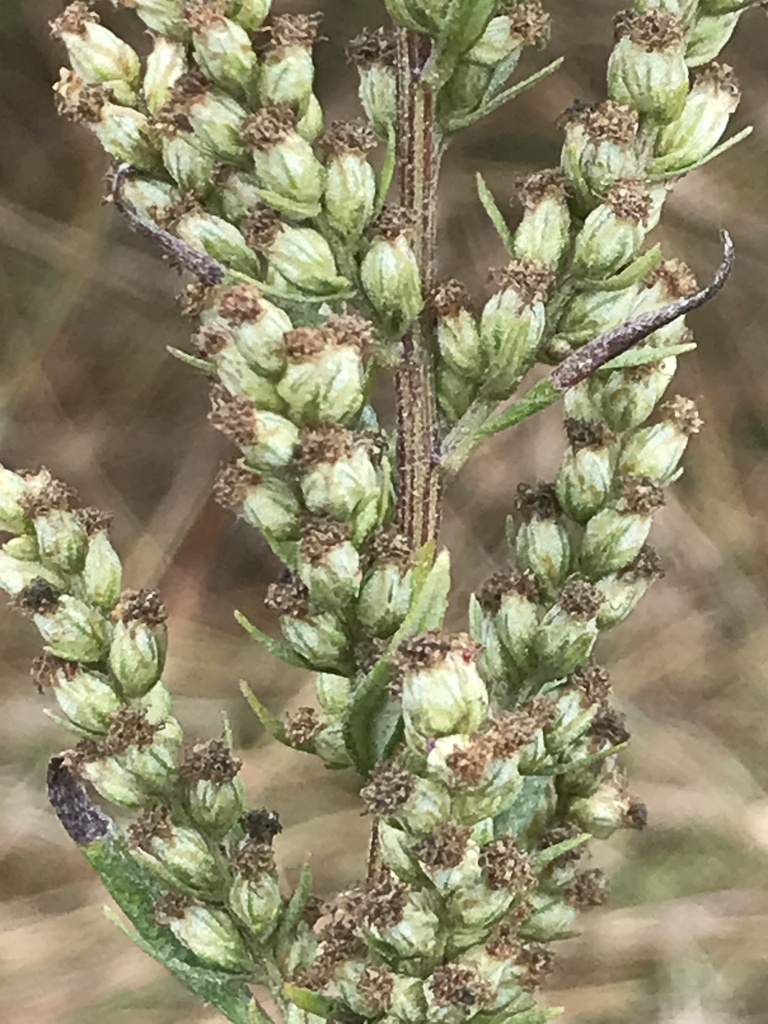
The flower heads are tiny, about ⅛ inch, rounded, with shiny pale green to yellowish bracts, and are packed into a long, narrow, spike-like cluster up to about 12 inches long at the top of each stem. Each head holds yellowish disk and pistillate florets with no showy rays. Flowering runs from summer into fall. The fruits are tiny achenes less than 1 mm long.
Look-alikes
California Mugwort (A. douglasiana) is more widespread inland, with broader leaves and more open, branching flower clusters. Louisiana Sage (A. ludoviciana) is white-woolly on both leaf surfaces. The introduced common mugwort (A. vulgaris) has deeply cut leaves and is a weed of roadsides and disturbed ground.
Quick Facts
| Scientific Name | Artemisia suksdorfii |
| Family | Asteraceae (aster family) |
| Plant Type | Rhizomatous herbaceous perennial |
| Mature Height | 2–6 ft |
| Mature Spread | 2–4 ft (spreads by rhizomes) |
| Growth Rate | Fast |
| Sun Exposure | Full sun to part shade |
| Water Needs | Medium; tolerates summer dryness on the foggy coast |
| Soil Type | Sandy, gravelly or loamy; tolerates salt spray |
| Soil pH | Slightly acidic to neutral |
| Bloom Time | July–October |
| Flower Color | Yellowish green (inconspicuous) |
| Fall Color | Stems turn brown; seed spikes persist |
| Fruit | Tiny achenes |
| Deer Resistant | Yes; aromatic foliage |
| USDA Hardiness Zones | 7–10 |
Native Range
Coastal mugwort is native to the Pacific Coast of North America. It ranges from southwestern British Columbia, including Vancouver Island, through coastal Washington and Oregon to northern California, reaching south to about Sonoma County. A few isolated populations grow far to the south on Santa Catalina Island off Los Angeles County.
It grows close to the ocean and along Puget Sound and the Salish Sea: on sea bluffs and cliffs, the upper edges of beaches, coastal drainages and stream mouths, and in openings in coastal scrub and forest. It is often found on unstable, sandy or gravelly slopes where its rhizomes help hold the soil.
It is not listed as rare overall, although it is uncommon in parts of its range. Coastal development, bluff stabilization and invasive plants such as Himalayan blackberry and Scotch broom have reduced some of its habitat.
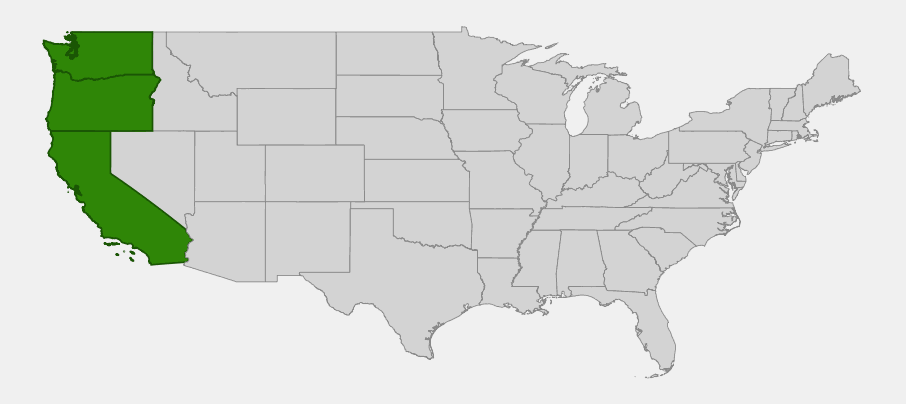
📋 Regional plant lists featuring Coastal Mugwort: California & Nevada · Western Oregon & Western Washington · Idaho, Eastern Oregon & Eastern Washington
Growing & Care Guide
Coastal mugwort is offered occasionally by native plant nurseries in the Pacific Northwest and northern California, and it is easy to grow near the coast. Its aromatic foliage and tolerance of wind and salt make it useful in seaside gardens.
Light
Full sun to part shade. On the foggy coast it does well in full sun; inland, it appreciates afternoon shade.
Soil & Water
Adaptable to sandy, gravelly or loamy soils, including poor soils on bluffs. Near the coast it needs little summer water once established; farther inland, water occasionally during long dry spells. It tolerates salt spray and seasonal seepage.
Planting Tips
Plant in fall or early spring, about 2 to 3 feet apart. Because it spreads by rhizomes, use it where a spreading clump is welcome: on slopes and bluffs, along fences, in rain garden margins or in large naturalistic plantings. It combines well with gumweed, yarrow, beach strawberry and native grasses.
Pruning & Maintenance
Cut the old stems to the ground in late winter, before new growth starts. Leaving the seed spikes standing through fall and winter provides seeds and shelter for wildlife. Dig out rhizomes that spread beyond where you want them.
Propagation
Easily propagated by dividing clumps or rhizomes in late fall or early spring, or from cuttings of new shoots in spring. It can also be grown from the tiny seeds, sown on the surface of a moist mix in fall.
Landscape Uses
- Coastal and seaside gardens: tolerates wind and salt spray
- Bluff and slope restoration: rhizomes help hold loose soil
- Aromatic gardens: fragrant, two-toned foliage
- Wildlife plantings: seeds and cover in fall and winter
Wildlife & Ecological Value
Coastal mugwort is part of the plant communities on bluffs and shorelines of the Pacific Northwest and northern California.
For Pollinators
Like most Artemisia, it is wind-pollinated and offers little nectar, but its leaves feed the caterpillars of many moths, and native sagebrushes and mugworts are host plants for the American painted lady butterfly and several other insects.
For Birds
Seed-eating birds such as juncos, sparrows and finches feed on the tiny seeds in fall and winter, and the dense clumps shelter small birds near the shore.
For Mammals
The bitter, aromatic foliage is generally avoided by deer. Small mammals use the clumps for cover.
Ecosystem Role
Its spreading rhizomes help stabilize sandy and gravelly bluffs and drainages along the coast, and its late-season flowering and standing stems add structure to coastal plant communities in fall and winter.
Cultural & Historical Uses
The species is named for Wilhelm Nikolaus Suksdorf (1850–1932), a German-American botanist who collected plants in Washington and the Columbia River Gorge for many decades and described many Pacific Northwest species.
The genus Artemisia is named for Artemis, the Greek goddess of the hunt and of childbirth. Its members, including sagebrush, wormwood and tarragon, are known for their aromatic oils, and several mugworts have long been used in traditional medicine.
Mugworts and wormwoods are generally bitter and can be toxic in large amounts. Coastal mugwort is grown for its foliage and habitat value, not as an herb; do not use it medicinally without expert guidance.
Frequently Asked Questions
How is coastal mugwort different from California mugwort?
Coastal mugwort grows right along the coast and has narrower leaves and very narrow, dense, spike-like flower clusters. California mugwort is more widespread inland and has broader leaves and more open flower clusters.
Does coastal mugwort spread?
Yes. It spreads by rhizomes into patches, which makes it useful for holding soil on slopes and bluffs but means it needs room in a garden.
Is it salt tolerant?
Yes. It grows on sea bluffs and beach edges and tolerates wind and salt spray, making it a good choice for coastal gardens.
Where does coastal mugwort grow?
Along the Pacific Coast from British Columbia through Washington and Oregon to northern California, with a few isolated populations on Santa Catalina Island.
Does it attract pollinators?
It is wind-pollinated, so bees do not depend on it, but its leaves feed many moth caterpillars and its seeds feed birds in fall and winter.

Looking for a nursery that carries Coastal Mugwort?
Browse our native plant nursery directory: California · Oregon · Washington

