Yellow Buckeye (Aesculus flava)
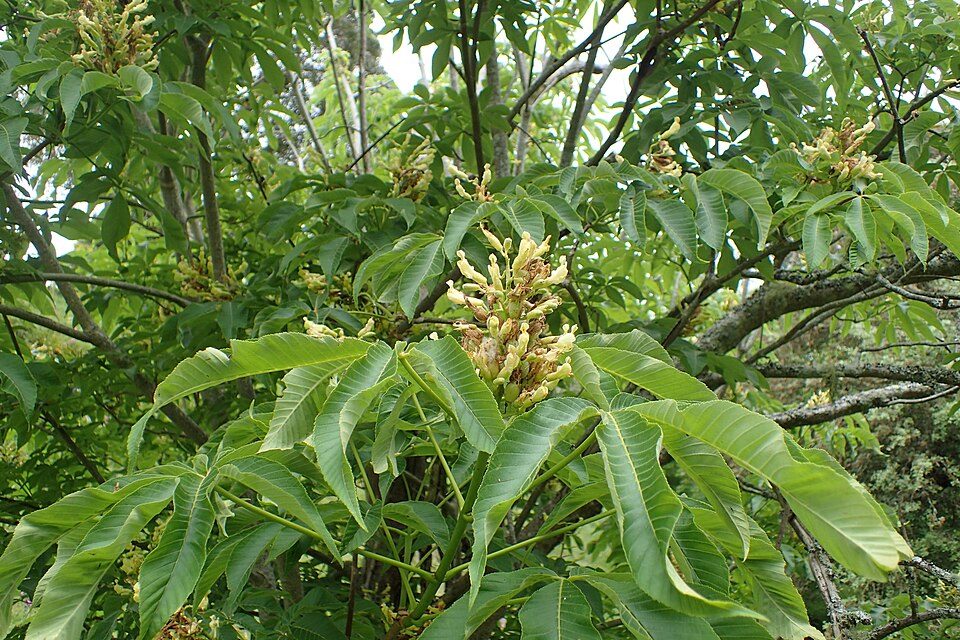
Aesculus flava, commonly known as Yellow Buckeye, Sweet Buckeye, or Big Buckeye, is a magnificent native deciduous tree that stands as one of the most impressive flowering trees in eastern North American forests. This stately member of the Hippocastanaceae (horse-chestnut family) can reach 50 to 75 feet in height, creating a broad, rounded canopy that provides excellent shade and seasonal beauty. The common name comes from its spectacular erect clusters of bright yellow flowers that bloom in late spring, creating tower-like displays that can be seen from considerable distances through the forest canopy.
Native to the Appalachian Mountains and surrounding regions, Yellow Buckeye thrives in the rich, moist soils and filtered light typical of its mountainous woodland habitat. The tree is distinguished by its large, palmate leaves composed of five leaflets that can each reach 4 to 6 inches long, creating an impressive tropical-looking foliage display. In autumn, these leaves transform into brilliant shades of yellow and orange, providing one of the most spectacular fall color shows among native trees. The tree also produces large, glossy brown nuts (buckeyes) enclosed in smooth husks, which have played important roles in folklore and traditional medicine.
What makes Yellow Buckeye particularly valuable in native landscaping is its combination of ornamental beauty and ecological function. Unlike its closely related non-native cousin, the Horse Chestnut, Yellow Buckeye evolved alongside native wildlife and provides nectar for native pollinators, including hummingbirds attracted to its tubular flowers. Its preference for part shade to full shade makes it an excellent choice for woodland gardens and naturalistic landscapes, while its impressive size and seasonal beauty make it suitable as a specimen tree in larger properties where space allows for its substantial mature dimensions.
Identification
Yellow Buckeye is a large deciduous tree that typically grows 50 to 75 feet tall with a spread of 30 to 50 feet, occasionally reaching up to 90 feet in ideal forest conditions. The tree develops a rounded to oval crown with a straight trunk that can reach 2 to 3 feet in diameter on mature specimens. Young trees have a more upright, pyramidal form that gradually becomes more rounded and spreading with age. The overall appearance is quite stately and impressive, particularly when in full bloom or displaying fall color.
Bark
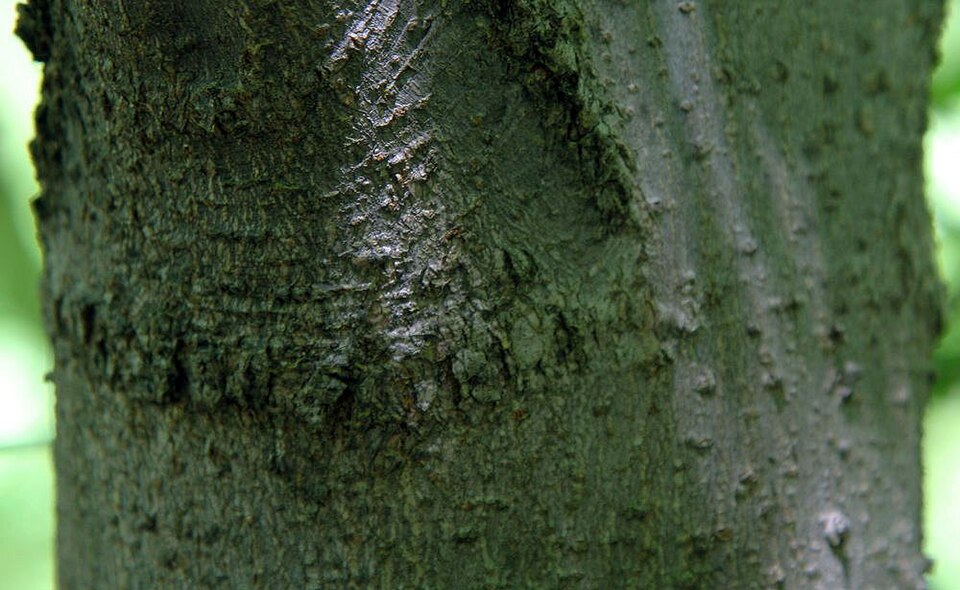
The bark of Yellow Buckeye is distinctive and changes character as the tree matures. On young trees, the bark is smooth and gray to light brown. As the tree ages, the bark develops a characteristic scaly appearance with irregular plates and shallow furrows, becoming darker gray-brown to almost black. The bark has a slightly rough texture and may show some fissuring on very old specimens. Unlike some buckeyes that have more deeply furrowed bark, Yellow Buckeye maintains relatively shallow furrows throughout its life.
Leaves
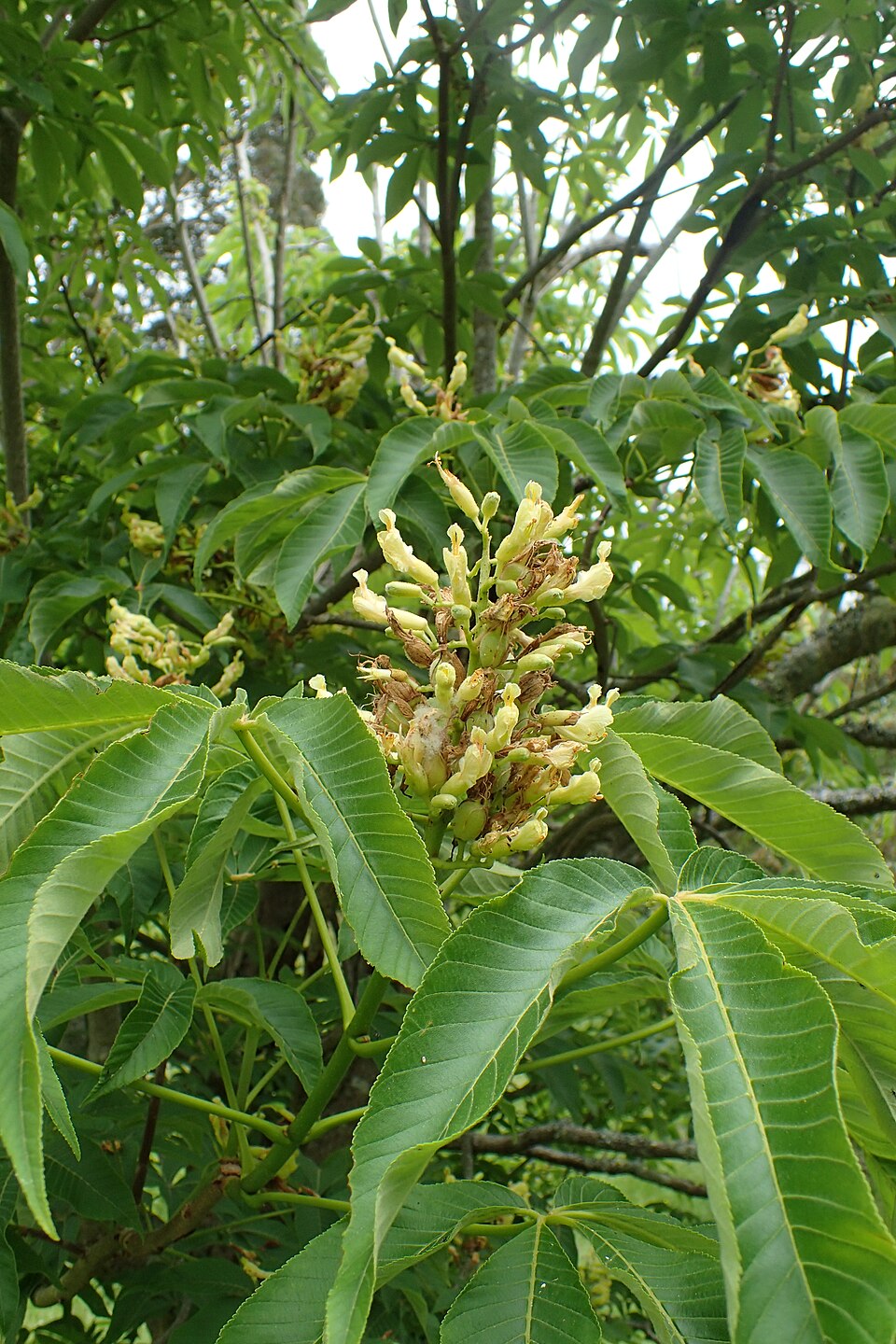
The leaves are the tree’s most recognizable feature — large, palmately compound leaves composed of five leaflets arranged in a hand-like pattern. Each leaflet is 4 to 6 inches long and 1.5 to 2.5 inches wide, with an elliptic to oblong shape and serrated margins. The leaflets are attached to a common petiole that can be 4 to 6 inches long. The foliage emerges bright green in spring, matures to rich medium green through summer, and transforms to brilliant yellow and orange in fall, creating one of the most spectacular autumn displays of any native tree.
Flowers & Fruit
Yellow Buckeye’s flowers are truly spectacular — large, erect panicles (clusters) that rise 4 to 7 inches above the foliage in late April to May. Each flower cluster contains numerous individual tubular flowers, each about 1 inch long, with four yellow petals and prominent red stamens. The flowers have a slight sweet fragrance and are rich in nectar, making them attractive to hummingbirds, butterflies, and native bees. The upright flower clusters create a candelabra effect that can be seen from considerable distances.
Following the flowers, the tree produces fruit in the form of smooth, leathery capsules (husks) that are 1 to 2 inches in diameter. Unlike the spiny husks of Horse Chestnut, Yellow Buckeye husks are smooth. Inside each husk are one to three large, glossy brown seeds called “buckeyes” due to their resemblance to deer eyes — dark brown with a lighter brown “eye” spot. These nuts are about 1 to 1.5 inches in diameter and ripen in early fall, dropping to the ground where they are gathered by wildlife or can be collected for propagation.
Quick Facts
| Scientific Name | Aesculus flava (syn. A. octandra) |
| Family | Hippocastanaceae (Horse-chestnut) |
| Plant Type | Deciduous Tree |
| Mature Height | 50–75 ft |
| Sun Exposure | Part Shade to Full Shade |
| Water Needs | Moderate |
| Bloom Time | April – May |
| Flower Color | Yellow with red stamens |
| USDA Hardiness Zones | 4–8 |
Native Range
Yellow Buckeye has a relatively concentrated native range centered in the Appalachian Mountains and their foothills, extending from southwestern Pennsylvania and southern Ohio south through West Virginia, Virginia, Kentucky, Tennessee, North Carolina, South Carolina, northern Georgia, and northeastern Alabama. This distribution reflects the tree’s adaptation to the cool, moist conditions and rich soils typical of Appalachian forests. The species reaches its greatest abundance and largest size in the central Appalachian region, particularly in the mountains of West Virginia, Virginia, and North Carolina.
Throughout its range, Yellow Buckeye typically grows as a component of rich, mixed deciduous forests, often in coves, ravines, and north-facing slopes where soil moisture remains more consistent. It’s frequently found growing alongside other Appalachian natives such as American Basswood, Sugar Maple, American Beech, Tulip Poplar, and various oak species. The tree shows a strong preference for well-drained but moisture-retentive soils with high organic content — the deep, fertile soils that characterize the best Appalachian forest sites.
Elevation-wise, Yellow Buckeye can be found from about 1,000 feet to over 4,000 feet in elevation, with the largest specimens typically occurring at middle elevations where growing conditions are optimal. The species is often considered an indicator of high-quality forest sites, as it thrives in the same rich, protected environments that support the greatest diversity of Appalachian forest plants and wildlife.
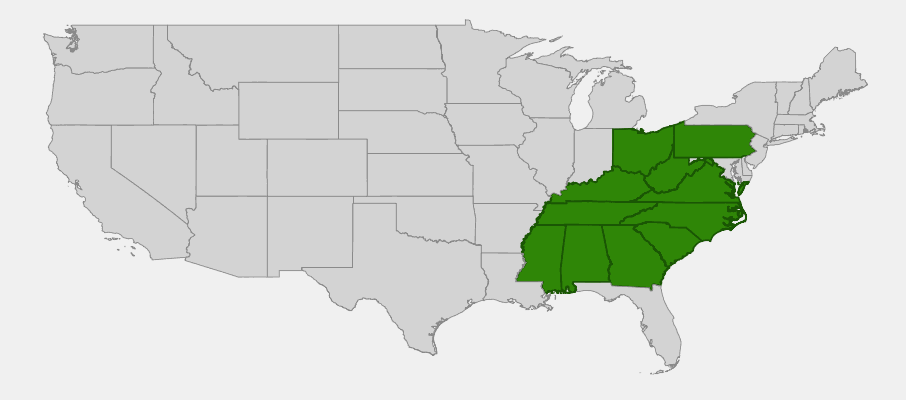
📋 Regional plant lists featuring Yellow Buckeye: North Carolina & South Carolina
Growing & Care Guide
Yellow Buckeye is a rewarding tree to grow for those with adequate space and appropriate site conditions. While it requires more specific growing conditions than some native trees, its spectacular flowers, impressive fall color, and wildlife value make the effort worthwhile for the right location.
Light
Yellow Buckeye performs best in part shade to full shade conditions, particularly in its southern range. In its native mountain habitat, it typically grows as an understory tree beneath larger canopy species, receiving filtered sunlight throughout the day. While young trees can tolerate more sun, mature specimens generally prefer protection from intense afternoon sunlight. In northern regions of its range, it may tolerate more sun, but consistent shade during the hottest part of the day is beneficial everywhere. Too much direct sun can cause leaf scorch and stress.
Soil & Water
Yellow Buckeye is quite particular about soil conditions and performs best in deep, rich, well-drained but consistently moist soils with high organic content. It prefers slightly acidic to neutral soil (pH 6.0–7.0) and benefits from regular additions of organic matter such as compost or leaf mold. Good drainage is essential to prevent root rot, but the soil should retain moisture during dry periods. The tree has moderate water needs and appreciates supplemental watering during dry spells, especially when young.
Planting Tips
Plant Yellow Buckeye in spring or fall when temperatures are moderate and rainfall is typically more abundant. Choose a location that mimics its natural mountain cove habitat — sheltered from strong winds and protected from intense afternoon sun, preferably in a depression or low area where moisture collects. The planting hole should be no deeper than the root ball but 2-3 times as wide. Amend the soil generously with organic matter and ensure good drainage while maintaining moisture-holding capacity.
Pruning & Maintenance
Yellow Buckeye requires minimal pruning and generally develops a good natural form without intervention. Remove dead, damaged, or crossing branches in late winter while the tree is dormant. Young trees may benefit from light structural pruning to establish a strong central leader, but mature trees should be pruned sparingly as they can be slow to heal from large wounds. The tree is generally pest and disease resistant, though it may occasionally be affected by leaf blotch or powdery mildew in humid conditions.
Landscape Uses
Yellow Buckeye’s impressive size and specific growing requirements make it best suited for certain landscape applications:
- Specimen tree for large properties with appropriate shade conditions
- Woodland gardens — excellent for naturalistic plantings
- Shade tree in parks and estates with adequate space
- Wildlife habitat — supports pollinators and provides nuts for wildlife
- Native plant gardens — cornerstone species for Appalachian-themed plantings
- Restoration projects — valuable for reforesting degraded mountain sites
- Stream corridors — helps stabilize soil in riparian areas
Wildlife & Ecological Value
Yellow Buckeye provides significant ecological benefits, supporting a variety of native wildlife species and playing an important role in Appalachian forest ecosystems. As a large native tree that produces abundant nectar, nuts, and habitat structure, it serves multiple ecological functions.
For Birds
Yellow Buckeye’s nectar-rich flowers attract Ruby-throated Hummingbirds, which are among the few bird species with the specialized bill structure needed to access the tubular flowers effectively. The large buckeye nuts are consumed by various bird species, including Wild Turkeys, Wood Ducks, and various woodpeckers who can crack open the large seeds. The tree’s substantial canopy provides nesting sites for many songbirds, while its position as a canopy or sub-canopy tree creates the layered forest structure that supports diverse bird communities. The insects attracted to the flowers also provide food for insectivorous birds during the critical spring breeding season.
For Mammals
White-tailed Deer occasionally browse young Yellow Buckeye foliage, though the tree is generally not heavily browsed. The large buckeye nuts are consumed by squirrels, chipmunks, and occasionally black bears, though the nuts contain compounds that make them somewhat toxic if consumed in large quantities. The tree’s extensive root system and large trunk create habitat for various small mammals and contribute to the complex soil ecosystem that supports many underground dwelling species.
For Pollinators
Yellow Buckeye’s flowers are particularly valuable for native pollinators, providing abundant nectar during late spring when many early wildflowers have finished blooming. The tubular flowers are specially adapted for hummingbird pollination, but they also attract various native bees, including bumblebees and carpenter bees that can access the nectar. Butterflies, particularly larger species like Eastern Tiger Swallowtails, also visit the flowers. The long blooming period (several weeks) provides a sustained nectar source during a critical time for many pollinator species.
Ecosystem Role
As a large canopy or sub-canopy tree in Appalachian forests, Yellow Buckeye helps create the complex three-dimensional structure that characterizes healthy mountain forests. Its extensive root system helps prevent soil erosion on steep mountain slopes, while its large leaves contribute significant organic matter to forest soils when they decompose. The tree’s preference for rich, moist sites means it often grows in the most fertile areas of mountain forests, where it contributes to maintaining soil quality and supporting high biodiversity. Yellow Buckeye also serves as an indicator species for high-quality forest sites, as it typically occurs only in the best growing conditions.
Cultural & Historical Uses
Yellow Buckeye has a rich cultural history deeply intertwined with the traditions of the Appalachian region and the Indigenous peoples who first inhabited these mountains. The Cherokee, who lived throughout much of the tree’s range, had extensive knowledge of buckeye’s properties and uses. They used various parts of the tree medicinally, preparing poultices from the bark and leaves to treat rheumatism and inflammation. The nuts, while toxic in their raw state, could be processed through extensive leaching to remove harmful compounds, then ground into a nutritious flour — though this was typically done only during times of food scarcity due to the extensive processing required.
The distinctive buckeye nuts held special significance in Cherokee and other Native American traditions as good luck charms and protective talismans. Warriors often carried buckeyes into battle, believing they would provide protection and bring victory. This tradition of buckeyes as good luck symbols persisted among European settlers and remains part of Appalachian folklore today. In fact, Ohio adopted the buckeye as its state tree and Ohioans are still commonly called “Buckeyes,” though that refers primarily to the Ohio Buckeye (Aesculus glabra) rather than Yellow Buckeye.
Early European settlers learned about buckeye’s medicinal properties from Indigenous peoples and incorporated it into their own folk medicine practices. The bark was used to treat various ailments, and buckeye extracts were believed to help with arthritis and circulation problems. However, it’s important to note that buckeye contains saponins and other compounds that can be toxic, and any medicinal use should be approached with extreme caution and professional guidance.
The wood of Yellow Buckeye, while not particularly durable or strong, found some specialized uses among mountain craftspeople. It was occasionally used for carving, particularly for items that wouldn’t bear heavy loads, and sometimes employed in furniture making where its light weight was an advantage. The wood carves easily and has a fine grain, making it suitable for decorative objects and small wooden items.
In modern times, Yellow Buckeye is primarily valued for its ornamental and ecological qualities rather than its utilitarian uses. However, it remains an important symbol of Appalachian heritage and is increasingly recognized as a valuable component of sustainable mountain landscaping and forest restoration efforts. The tree’s impressive spring flowers have made it a favorite among those seeking to showcase native Appalachian plants in their landscapes.
Frequently Asked Questions
Are Yellow Buckeye nuts safe to eat?
No, Yellow Buckeye nuts are toxic and should not be consumed raw. They contain saponins and other compounds that can cause severe digestive upset and other health problems. While Indigenous peoples developed methods to leach out these toxins for emergency food use, this required extensive processing and should not be attempted without expert knowledge. The nuts are best left for wildlife and as ornamental elements.
How does Yellow Buckeye differ from Ohio Buckeye?
Yellow Buckeye is generally larger (50-75 feet vs 20-40 feet for Ohio Buckeye), has yellow flowers (vs white or pale yellow), and typically has 5 leaflets per leaf (vs 5-7 for Ohio). Yellow Buckeye also prefers shadier conditions and has a more southern and mountainous distribution, while Ohio Buckeye tolerates more sun and occurs in a broader range of habitats across the Midwest.
Why do the leaves sometimes turn brown and drop early in summer?
This is often caused by drought stress or too much direct sun. Yellow Buckeye is adapted to consistently moist, shaded conditions, and when these aren’t provided, the tree may drop leaves early as a survival mechanism. Ensuring adequate water and shade, especially during hot summer weather, can prevent this problem.
How long does it take for Yellow Buckeye to flower?
Yellow Buckeye typically begins flowering when it reaches 15-20 years of age, though this can vary depending on growing conditions. Trees grown in optimal conditions (rich, moist, partially shaded sites) may flower sooner than those stressed by poor conditions. Once flowering begins, the displays become more impressive each year as the tree continues to mature.
Can Yellow Buckeye tolerate drought once established?
Yellow Buckeye has limited drought tolerance and performs best with consistent soil moisture. While mature trees can survive short periods of drought better than young ones, extended dry periods will stress the tree and may cause early leaf drop and reduced flowering. It’s best suited for sites with reliable moisture or where supplemental irrigation can be provided during dry spells.

Looking for a nursery that carries Yellow Buckeye?
Browse our native plant nursery directory: North Carolina · South Carolina