Organic Pest Control for Mayapple: Effective Strategies for Healthy Growth
Last updated: September 7, 2026
Mayapple stands out as a unique plant, but it’s not immune to pests. Aphids, slugs, and caterpillars can damage its leaves and slow its growth.
Organic pest control offers a way to protect mayapple without resorting to harsh chemicals. This approach preserves both the plant and the ecosystem.
You can manage pests on mayapple by using natural predators, homemade sprays, and simple maintenance. These methods are practical and keep things healthier all around.
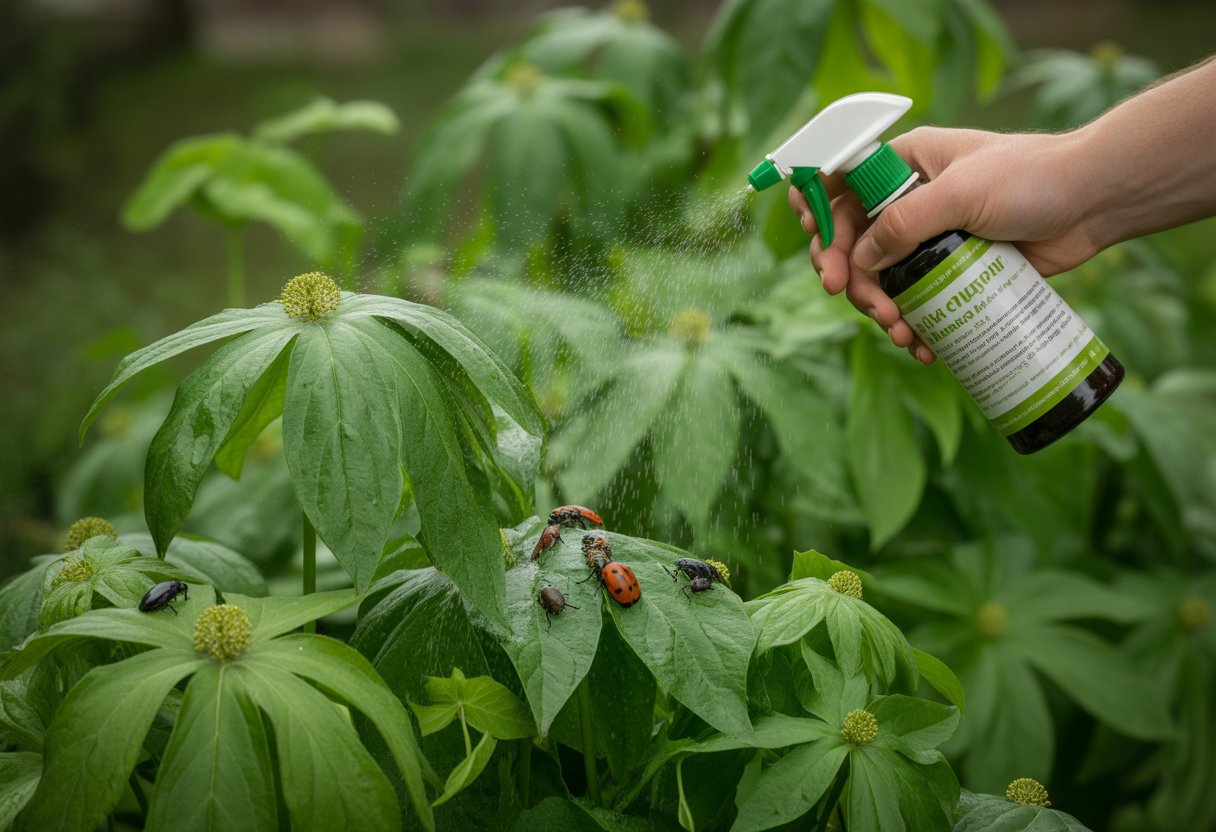
Spotting which pests are actually causing trouble is pretty important. Aphids, slugs, and caterpillars are the usual suspects, and you can take them on with organic techniques.
This kind of pest control avoids leaving chemical residues and helps your garden thrive naturally.
Understanding Mayapple and Its Growing Conditions
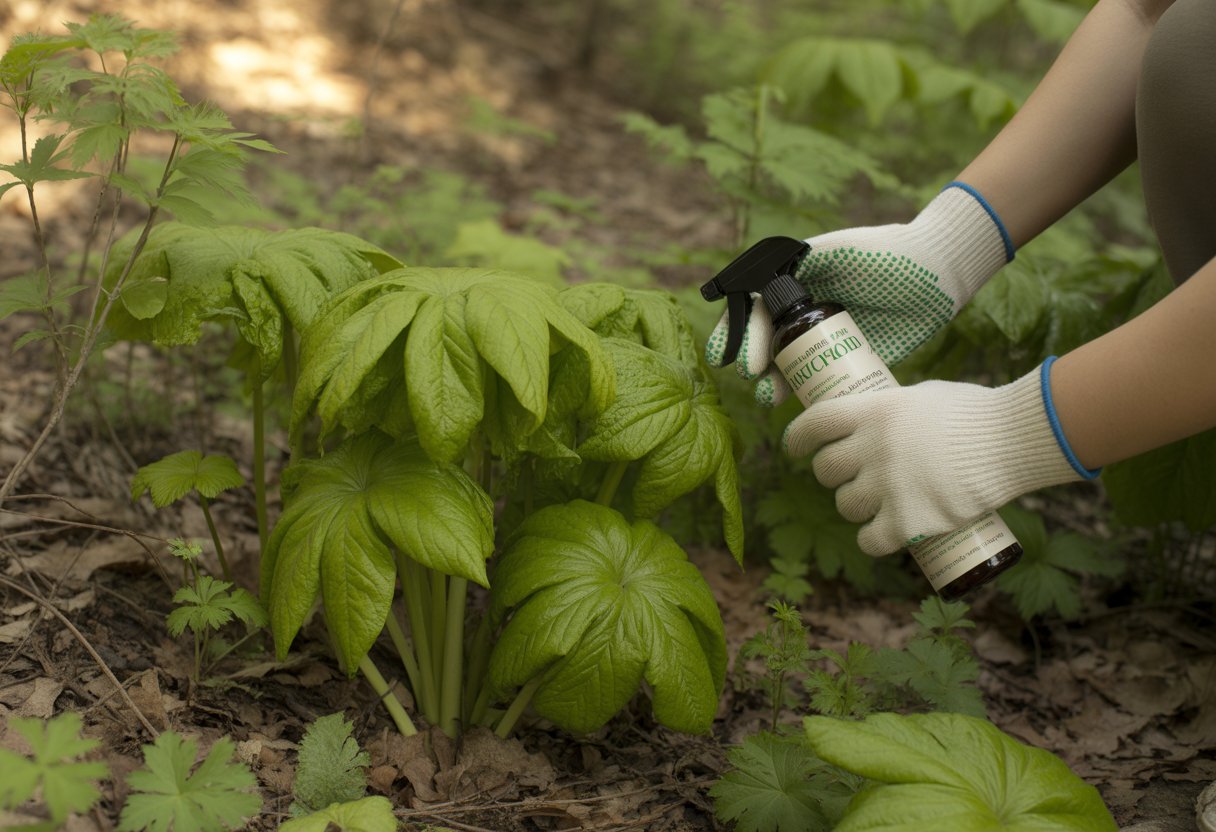
Mayapple is a native plant with a quirky look and a knack for adapting. Its growth habits and the way it spreads influence how you should care for it.
Mayapple Identification
Mayapple (Podophyllum peltatum) has big, palmate leaves split into 7–9 lobes that look like an open hand. Mature plants usually reach 12 to 18 inches tall.
In spring, you’ll find a single, nodding white flower tucked beneath the leaves. Later, it forms a green fruit—the so-called may apple.
It grows as a low, umbrella-like groundcover, with dense foliage. Just under the surface, its rhizomes link the stalks together.
Knowing these features helps you tell mayapple apart from other shade-loving plants.
Ideal Habitat for Growth
Mayapple likes partial shade to full shade, thriving in hardwood forests and shaded woodlands of eastern North America. It prefers moist, well-drained soil packed with organic matter.
Soil pH doesn’t have to be exact but usually falls between slightly acidic and neutral. Direct sunlight can scorch its leaves, so stick to diffused light.
It naturally pops up in spots with moderate moisture, often under deciduous trees. Leaf litter there boosts nutrients and keeps things humid.
Growth Patterns and Spread
Mayapple spreads pretty aggressively through its rhizomes, forming thick patches. Each spring, new shoots pop up from the connected roots, covering more ground.
Not all plants flower every year, but mature ones with multiple leaves often show off that signature white bloom. Growth peaks in spring, then slows, and by late summer or early fall, the foliage fades away.
This rhizomatous spread shapes how you manage or cultivate mayapple, whether in a forest or a garden.
Common Pests and Issues Affecting Mayapple
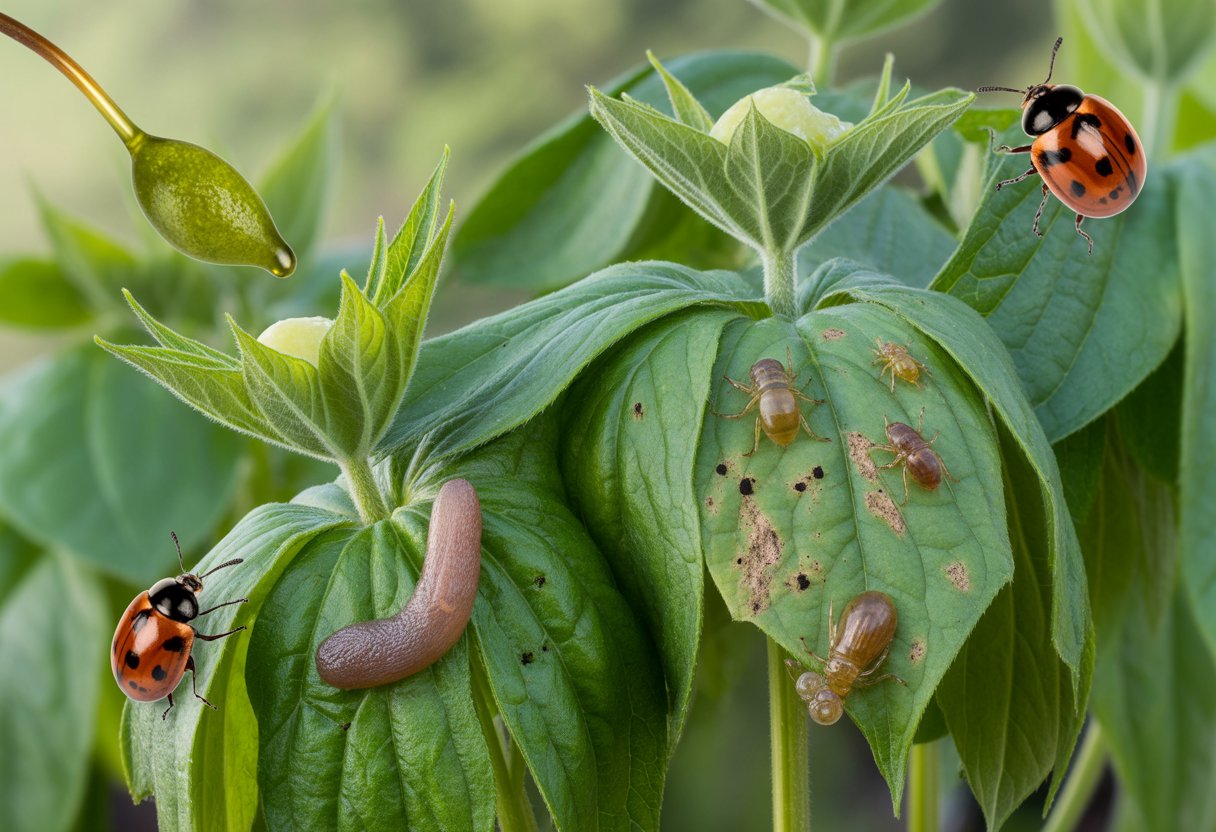
Mayapple runs into trouble with fungal infections, bugs, and environmental stress. These problems can mess up its leaves, stems, and roots, making it look rough and stunting growth.
Fungal Infections and Diseases
Fungal issues like leaf spots and root rot hit mayapple pretty often. Leaf spots show up as brown or black marks, which might cause leaves to drop early.
Root rot happens if the soil stays too wet, leading to wilting and yellow leaves. Fungal spores love damp, soggy spots.
Keeping soil well-drained and not overwatering goes a long way. If you need a treatment, organic options like sulfur-based sprays are better than chemical fungicides.
Insect Pests and Damage
Aphids, slugs, and caterpillars are the main insect problems for mayapple. Aphids suck the sap, causing leaves to curl and yellow.
Slugs chew holes in the leaves and leave shiny trails behind. Caterpillars can strip leaves, cutting down on photosynthesis.
Check your plants regularly so you can catch these pests early. Neem oil, insecticidal soap, or letting ladybugs do their thing can all help without hurting other helpful bugs.
Environmental Stress Factors
Sometimes, it’s not pests or disease—it’s just bad conditions. Nutrient shortages, inconsistent water, or poor soil can stress mayapple.
Yellowing leaves often mean not enough nitrogen. Wilting could be from drought or root problems.
Balanced fertilizer and steady watering keep plants in good shape. Shady, well-drained spots mimic mayapple’s natural home and help avoid stress from too much sun or soggy soil.
Organic Pest Control Strategies for Mayapple
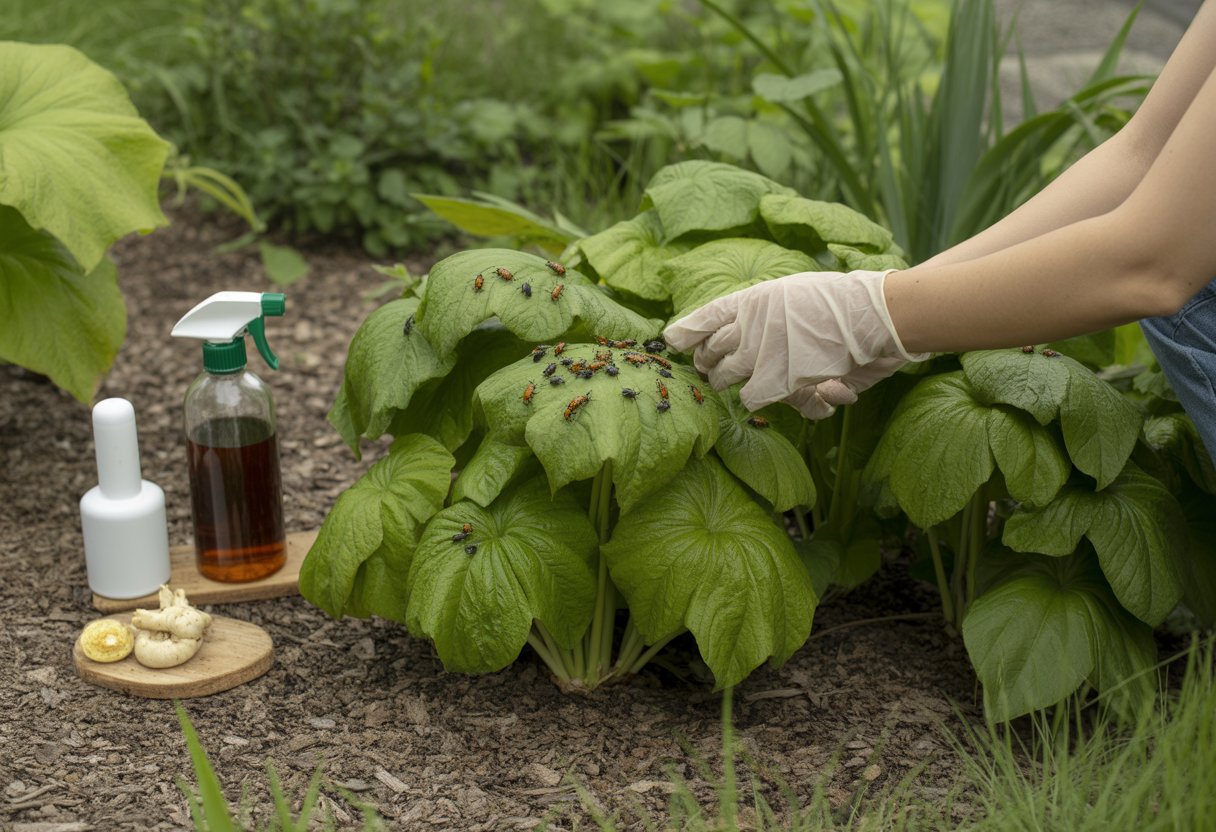
Managing pests on mayapple takes a mix of proactive care and natural fixes. Preventive steps help stop problems before they start, and beneficial insects keep things balanced.
Preventive Care and Regular Monitoring
Keep mayapple healthy and make it harder for pests to move in by removing weeds and debris. Avoid systemic herbicides—they can stress the plants and make them more vulnerable.
Check leaves and stems every week for signs of pests or damage. Visual checks and sticky traps help you spot trouble early.
If you see infested leaves, just remove them. Good drainage and not overdoing fertilizer also help mayapple resist pests.
Sometimes, switching up where you plant or rotating crops can mess with pest life cycles—no chemicals needed.
Beneficial Insects and Biological Controls
Bringing in or supporting beneficial insects is a smart move. Lady beetles, lacewings, and parasitic wasps eat aphids and caterpillars but leave your mayapple alone.
You can plant things like dill or fennel nearby to attract beneficial insects. Skip broad-spectrum insecticides—they wipe out the good bugs too.
Biological controls, like Bacillus thuringiensis (Bt), target caterpillars and break down quickly. They’re safer for mayapple and the soil than harsh chemical pesticides or herbicides.
Mixing these methods helps keep pests under control without messing up the natural balance.
Best Practices for Healthy Mayapple Growth
Getting mayapple to really thrive comes down to soil, water, and airflow. Paying attention to these basics can head off problems like root rot or weak growth.
Soil and Mulch Layer Recommendations
Mayapples love well-drained soil that’s loaded with organic matter. Mixing in compost before planting boosts nutrients and keeps the soil loose.
A 2-3 inch mulch layer of leaf mold or shredded bark helps hold moisture and keeps the soil temperature steady. It also stops weeds, but don’t pile mulch right up against the stems—rot is a real risk.
Swap out old mulch each year for fresh stuff. Go easy on fertilizer; too much, especially high-nitrogen kinds, means more leaves but fewer flowers.
Proper Watering and Moisture Management
Mayapples need consistent moisture when they’re growing. Water them deeply to encourage strong roots, but don’t drown them.
The soil should feel moist but never soggy. If you see puddles, it’s time to cut back or fix your drainage.
Water in the early morning so leaves dry out fast and fungal issues don’t get a foothold. Usually, rainfall is enough, but if there’s a dry spell, water at the base, not over the leaves.
Enhancing Air Circulation and Humidity Control
Good air circulation really cuts down on fungal disease because it dries leaves and stems fast. Give mayapples plenty of space—crowding, especially along pathways, just blocks the breeze.
Trim back nearby plants to let air move, but don’t go overboard and leave mayapples baking in the sun or battered by wind. Try to keep humidity in check; if things get too damp, mildew and mold can sneak in before you know it.
Raised beds or mounded soil help air flow around the roots. It’s worth keeping an eye on those little microclimates, tweaking things so humidity stays right for healthy mayapples.