
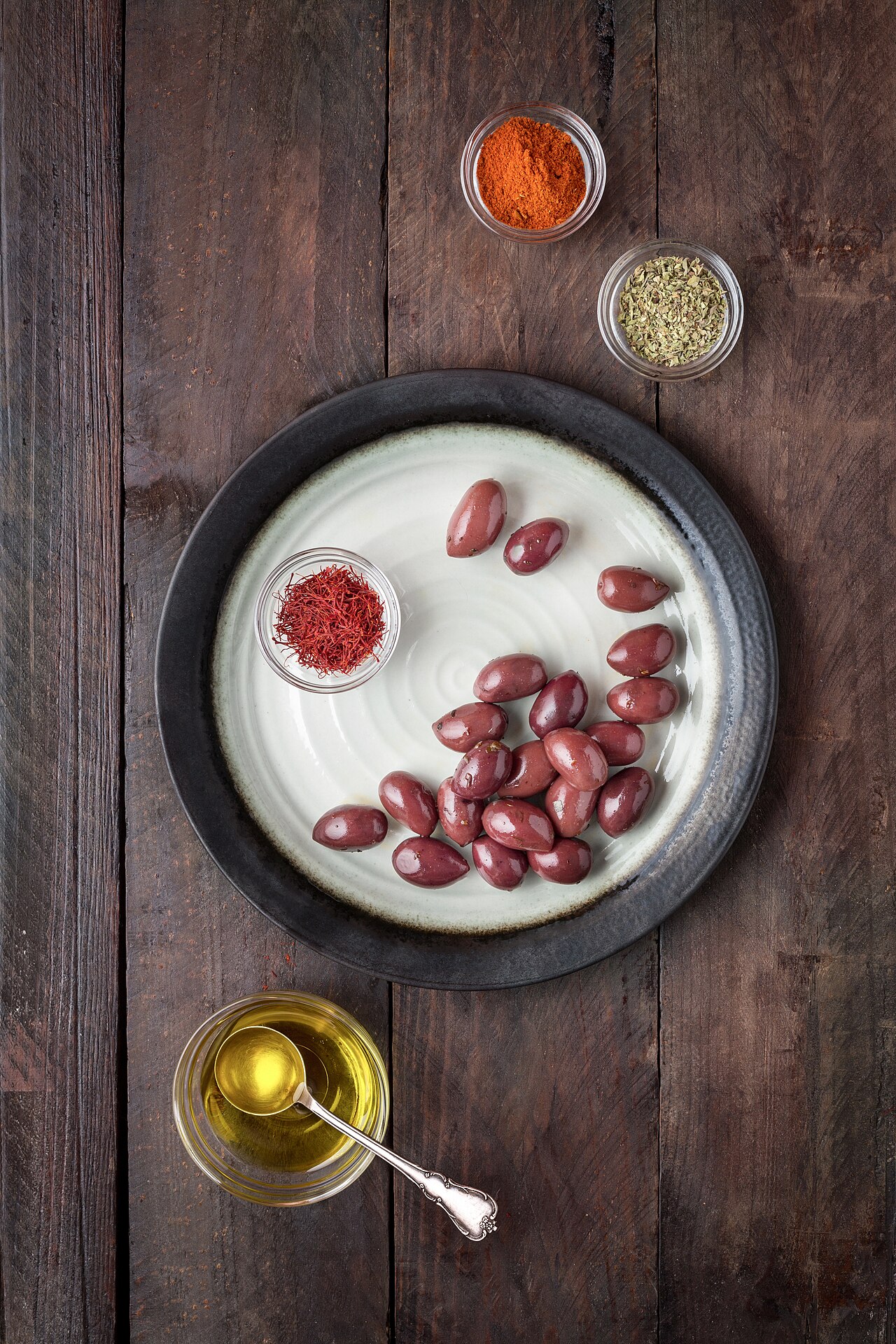
Cured Kalamata olives, showing the dark purple-black color and smooth, slightly asymmetric almond shape typical of the cultivar. Photo: Franciscotrullenque, via Wikimedia Commons (CC BY-SA
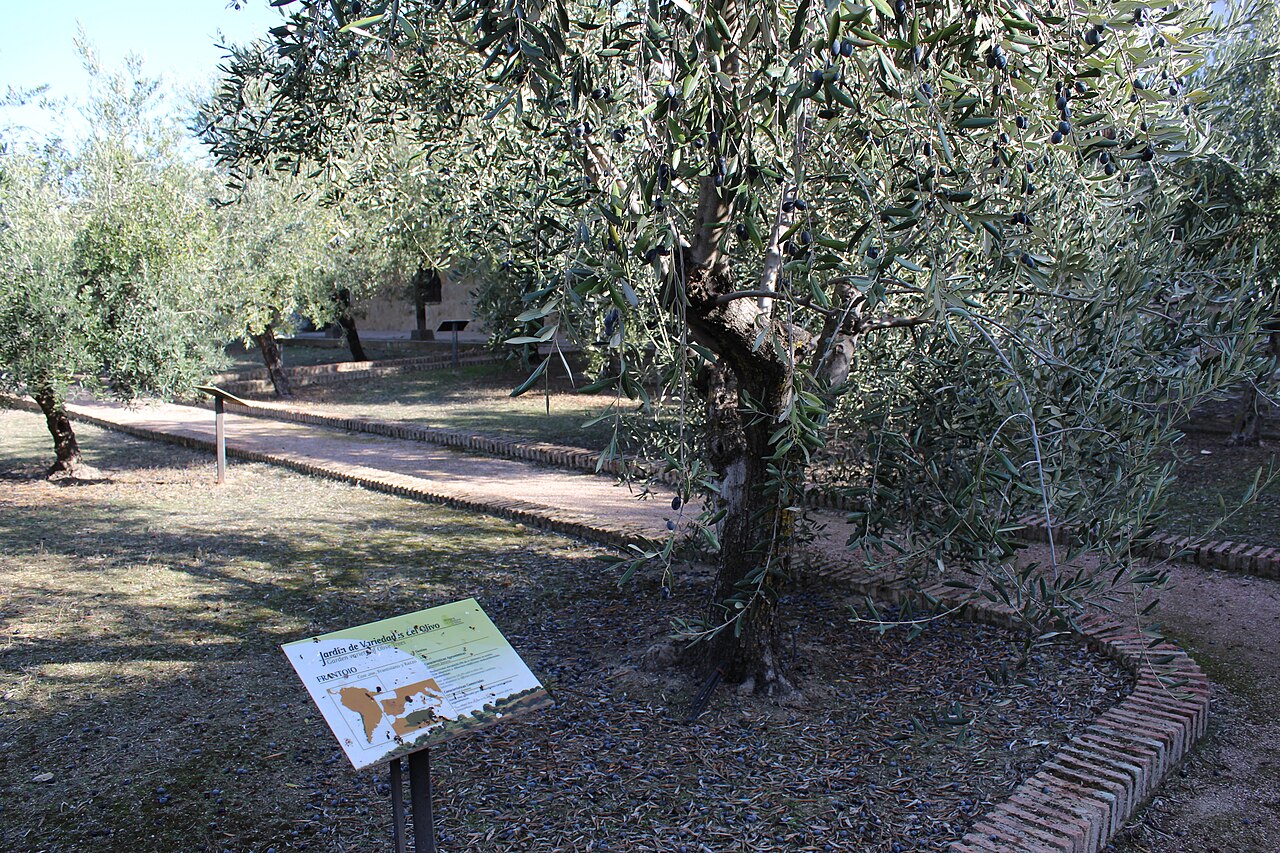
A mature Frantoio tree, labeled in the olive-variety garden at Hacienda La Laguna, Baeza, Spain, showing its upright, airy, tree-like habit. Photo: Veinticuatro de Jahén,
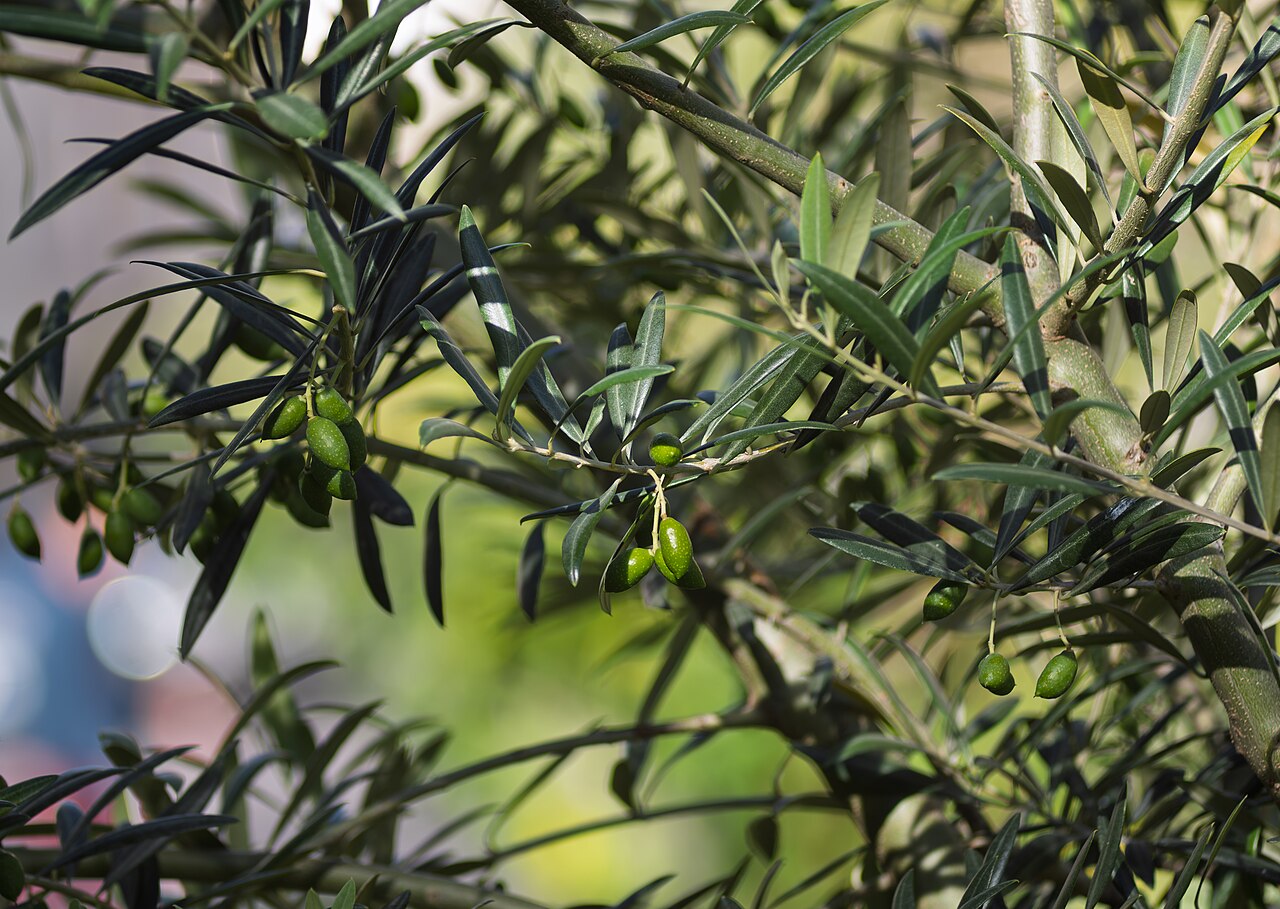
Branch of the species Olea europaea, the parent species; not Ascolana Tenera itself, shown here for general tree and fruiting habit. Photo: Jules Verne Times
A mature ‘Shishigashira’, showing the dense, congested branching and tightly clustered leaves typical of the cultivar. Photo: Jonathan Billinger, via Wikimedia Commons / geograph.org.uk (CC
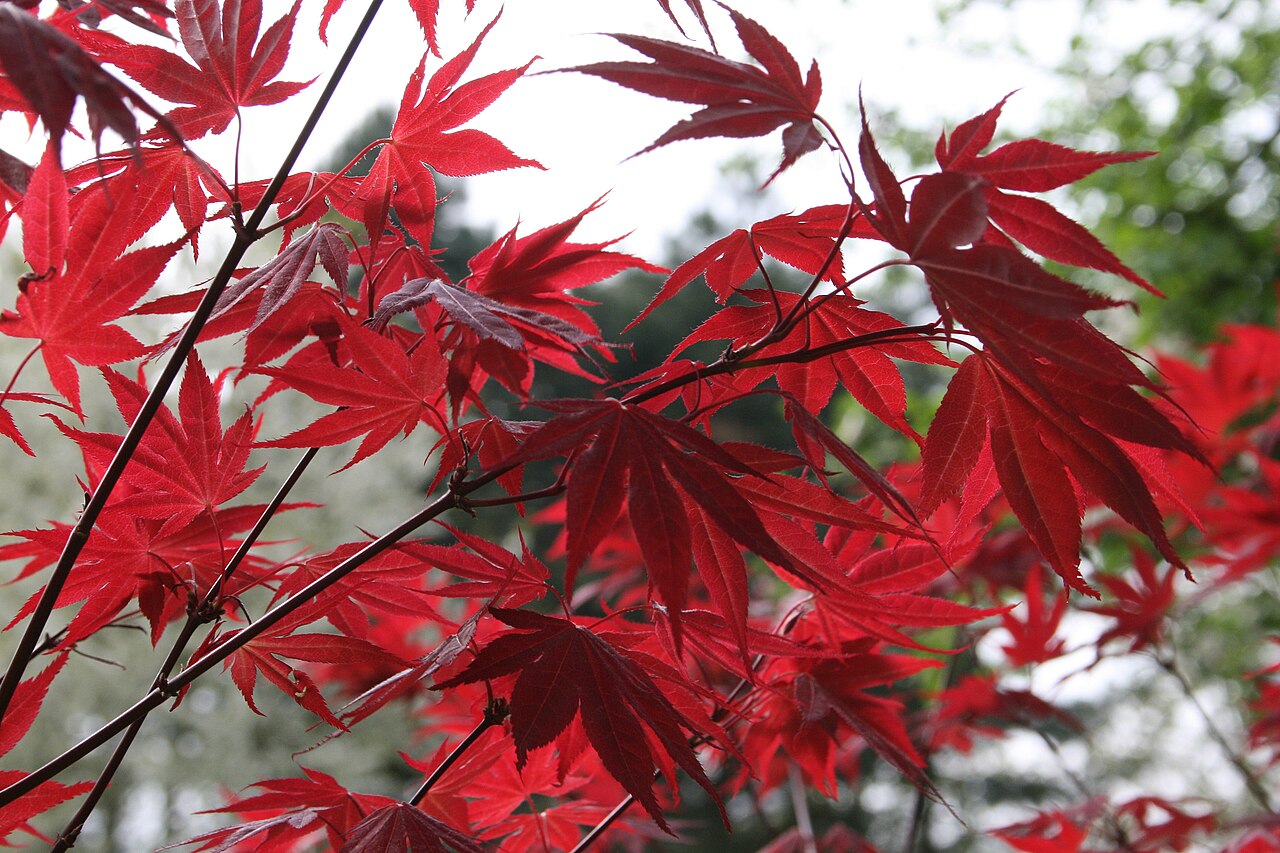
‘Oshio-beni’ holds strong reddish color through summer heat better than many red-leafed Japanese maple cultivars. Photo: Jean-Pol GRANDMONT, via Wikimedia Commons (CC BY 3.0) Acer
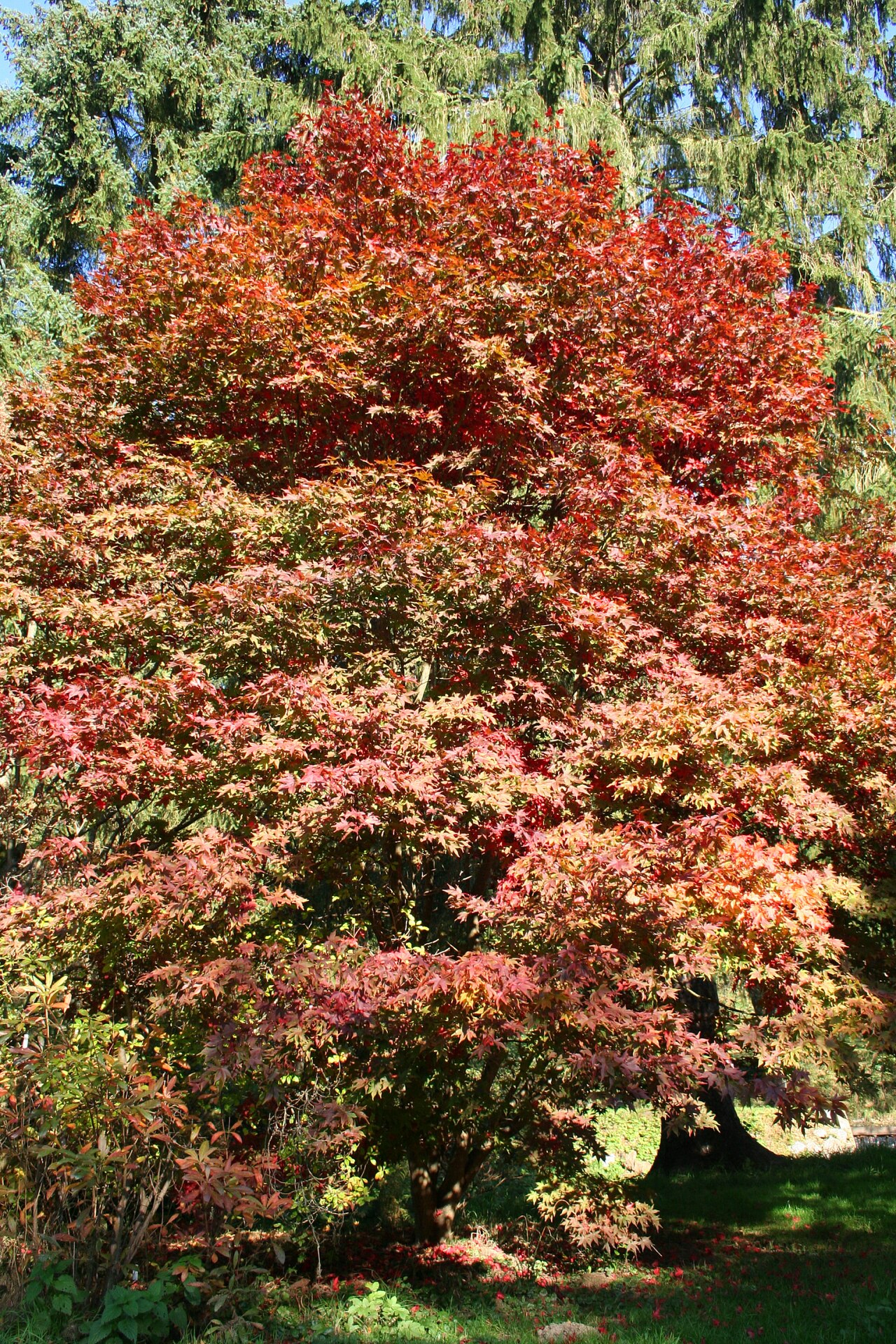
A mature ‘Osakazuki’ in full scarlet fall color, the trait this old cultivar is grown for above all else. Photo: Jean-Pol GRANDMONT, via Wikimedia Commons
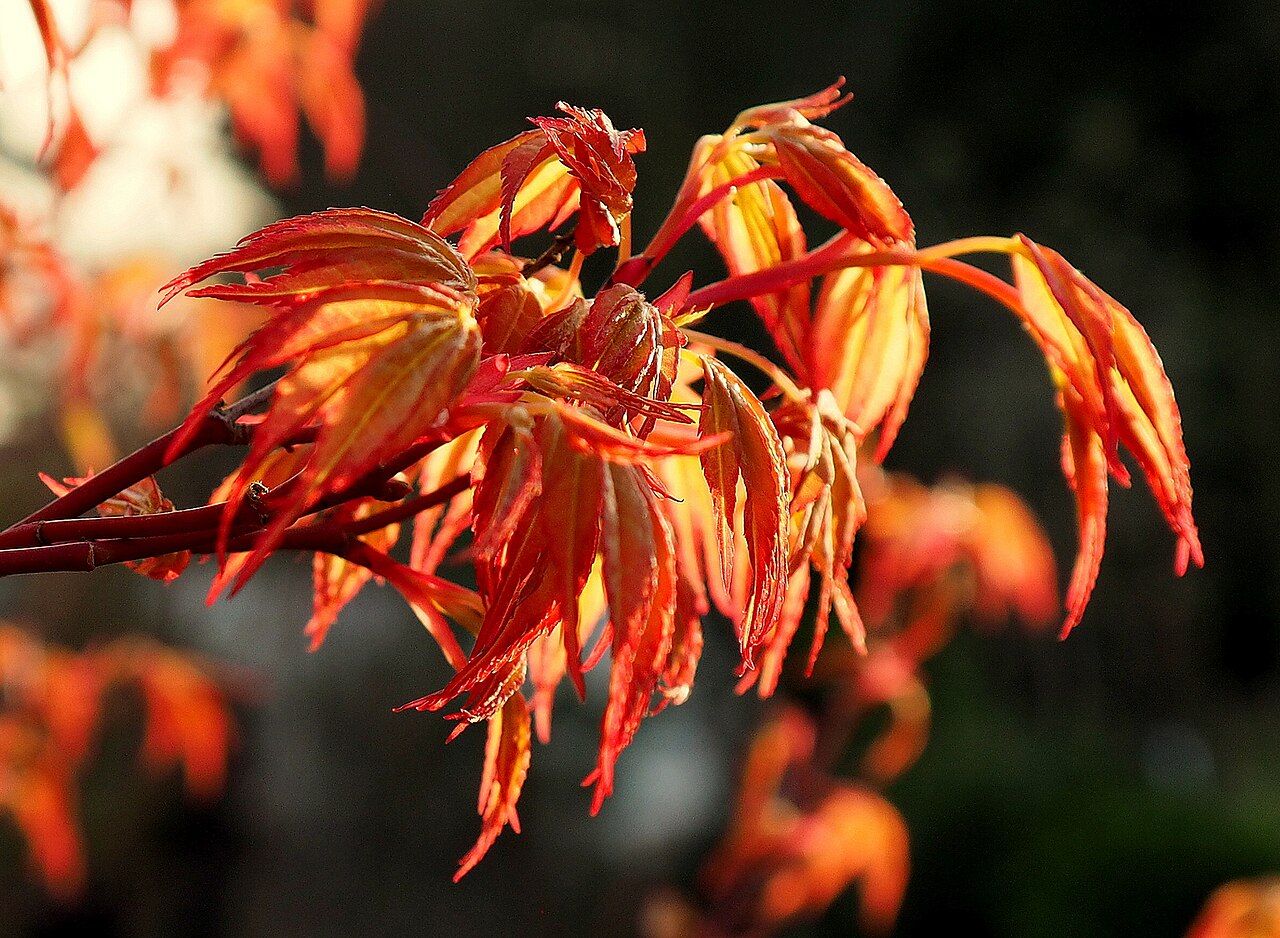
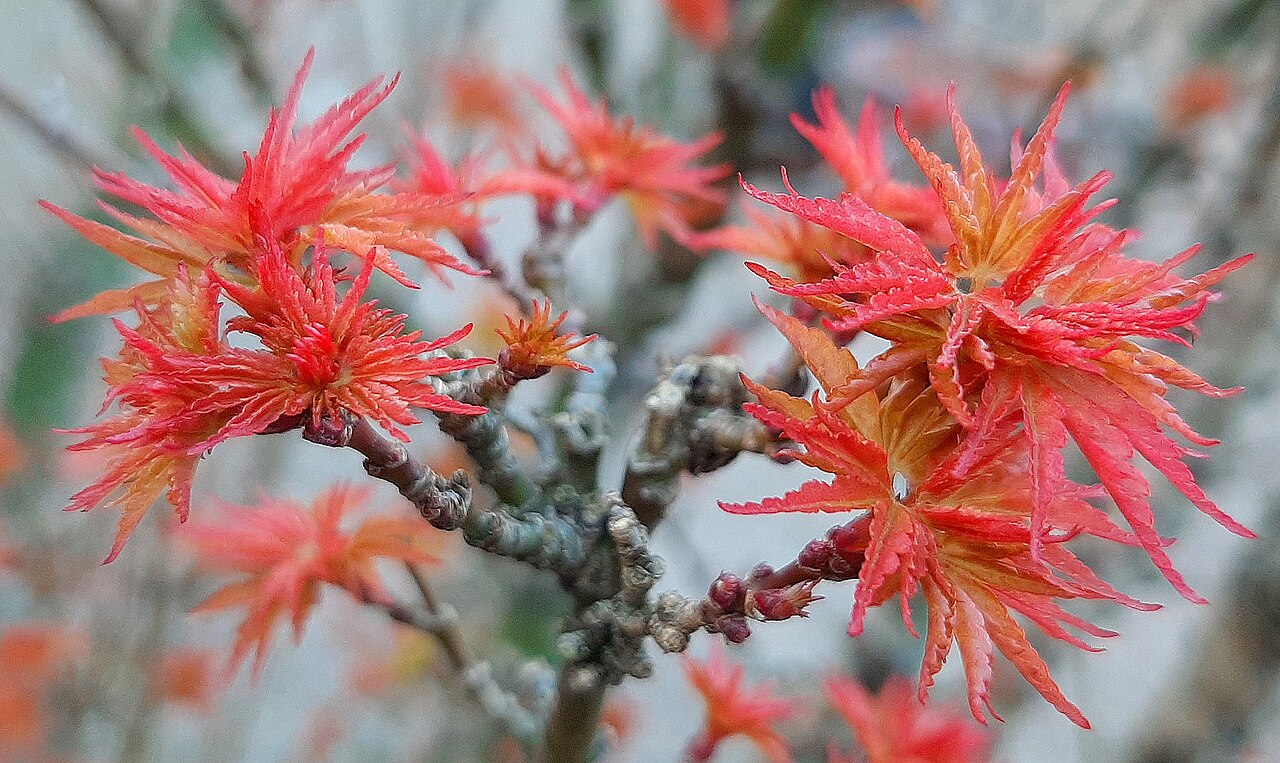
‘Katsura’ in spring, when its small leaves emerge in shades of orange and gold before settling to light green. Photo: Jonathan Billinger, via Wikimedia Commons
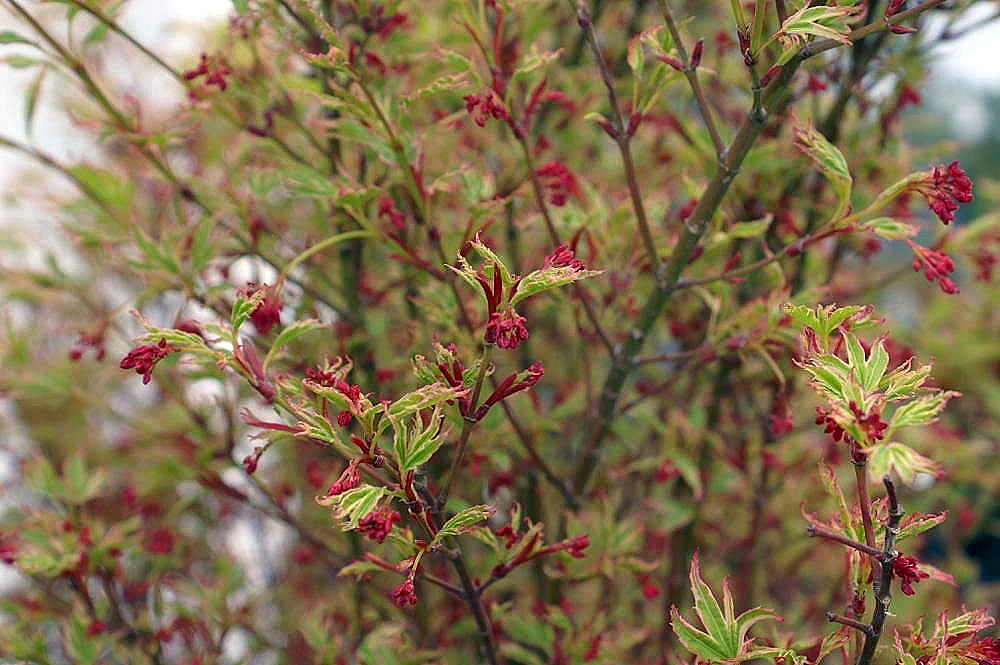
‘Butterfly’ in full variegation, its small gray-green leaves edged in white giving the whole shrub a light, airy look. Photo by David J. Stang, via
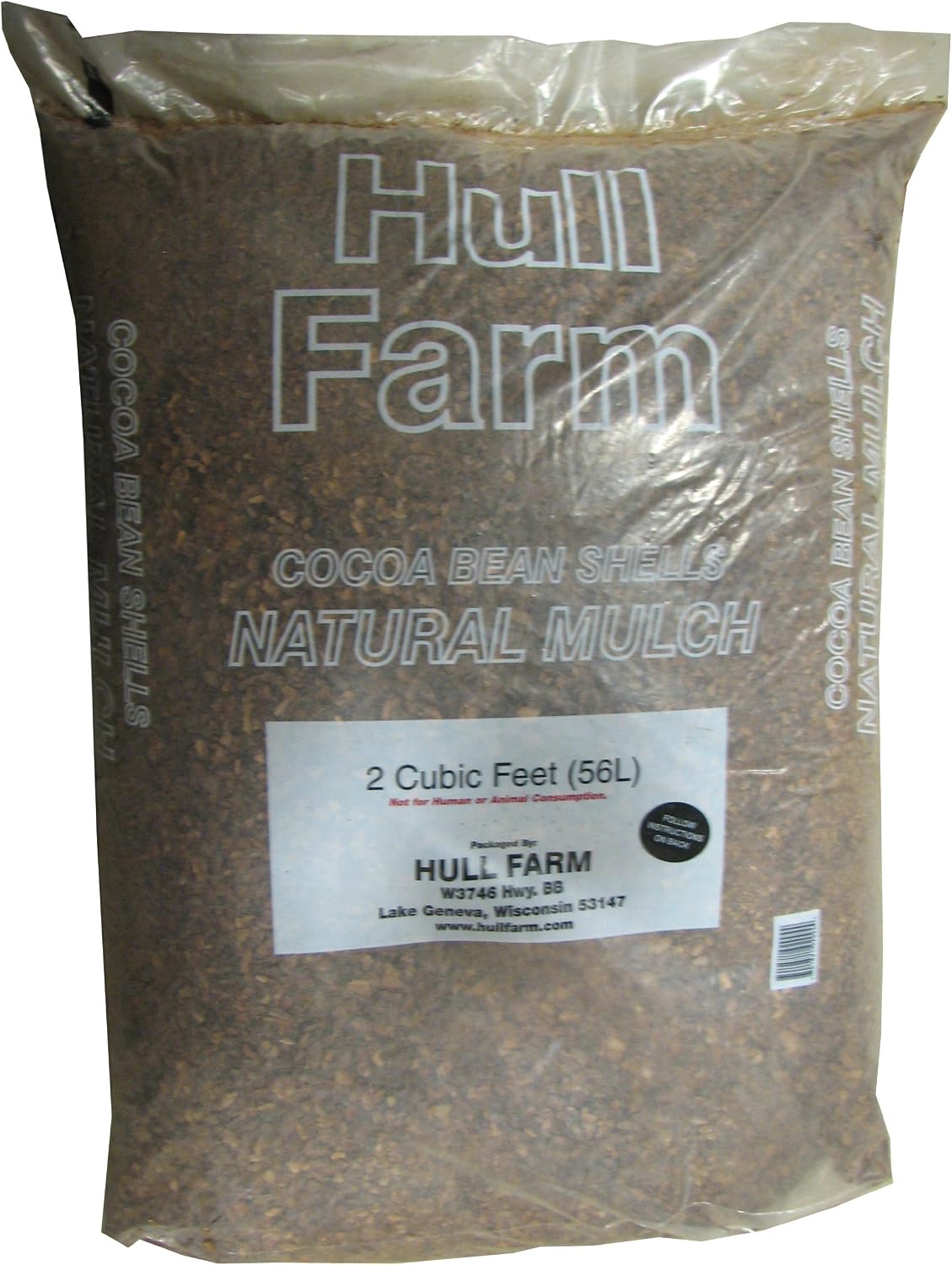
Mulch plays a crucial role in gardening and landscaping, offering numerous benefits for plant health and soil conservation. Natural mulches, in particular, are an excellent

Wisconsin has an abundant supply of native and nonnative flowering trees. If you’re looking to expand your garden and plant unique, breathtaking flowering trees in
View More