Step by Step Trillium Planting Guide for Healthy Growth and Care
Last updated: September 10, 2026
Trilliums stand out in the wildflower world with their three-petaled blooms and lovely, spreading habit. If you want to grow them in your garden, you’ll need to pay attention to soil, shade, and spacing.
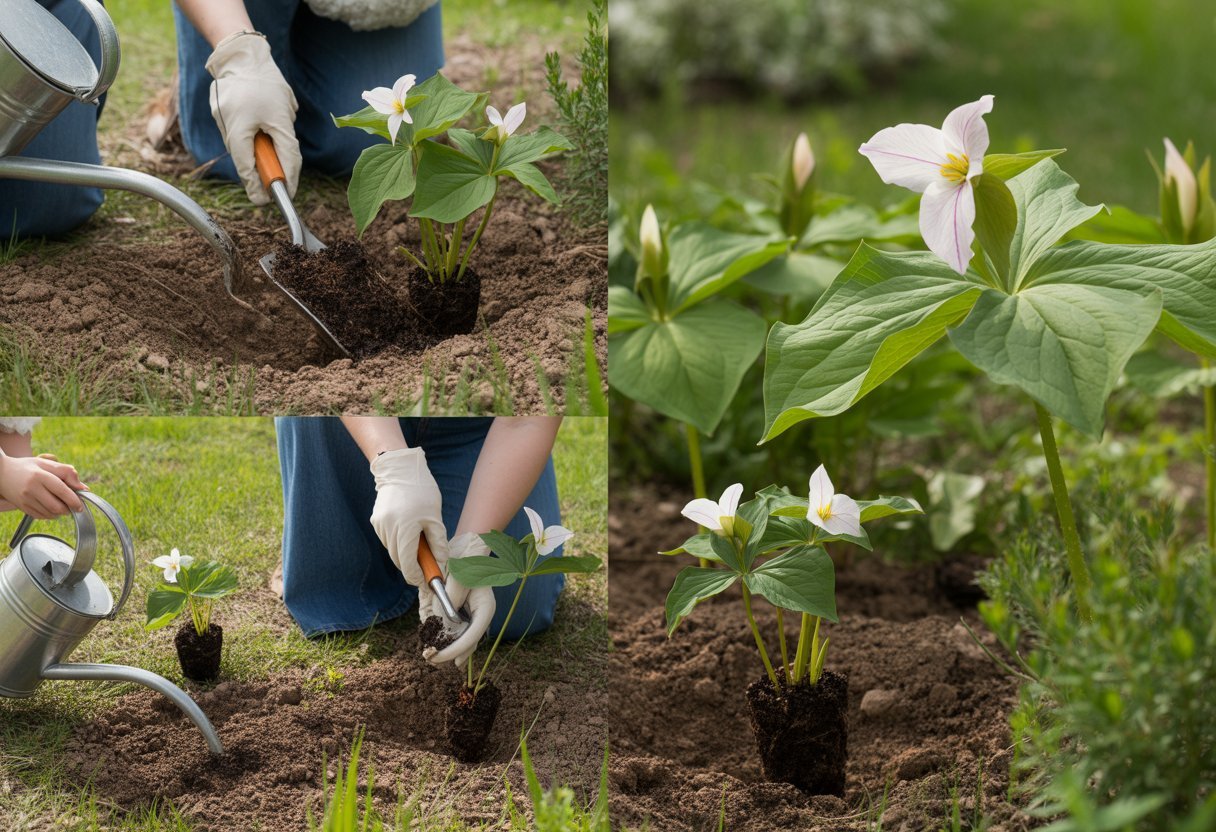
To get trilliums off to a good start, pick a shady spot with rich, well-drained soil. Plant the rhizomes just below the surface, and keep the soil moist—but not soggy. These plants do best when you try to copy their woodland home, so think partial to full shade.
Trilliums bring native beauty and a little wild magic to a garden, plus they give local wildlife a boost. Knowing how to plant them step by step makes the whole process easier and helps them stick around for years.
Choosing the Best Trillium Varieties
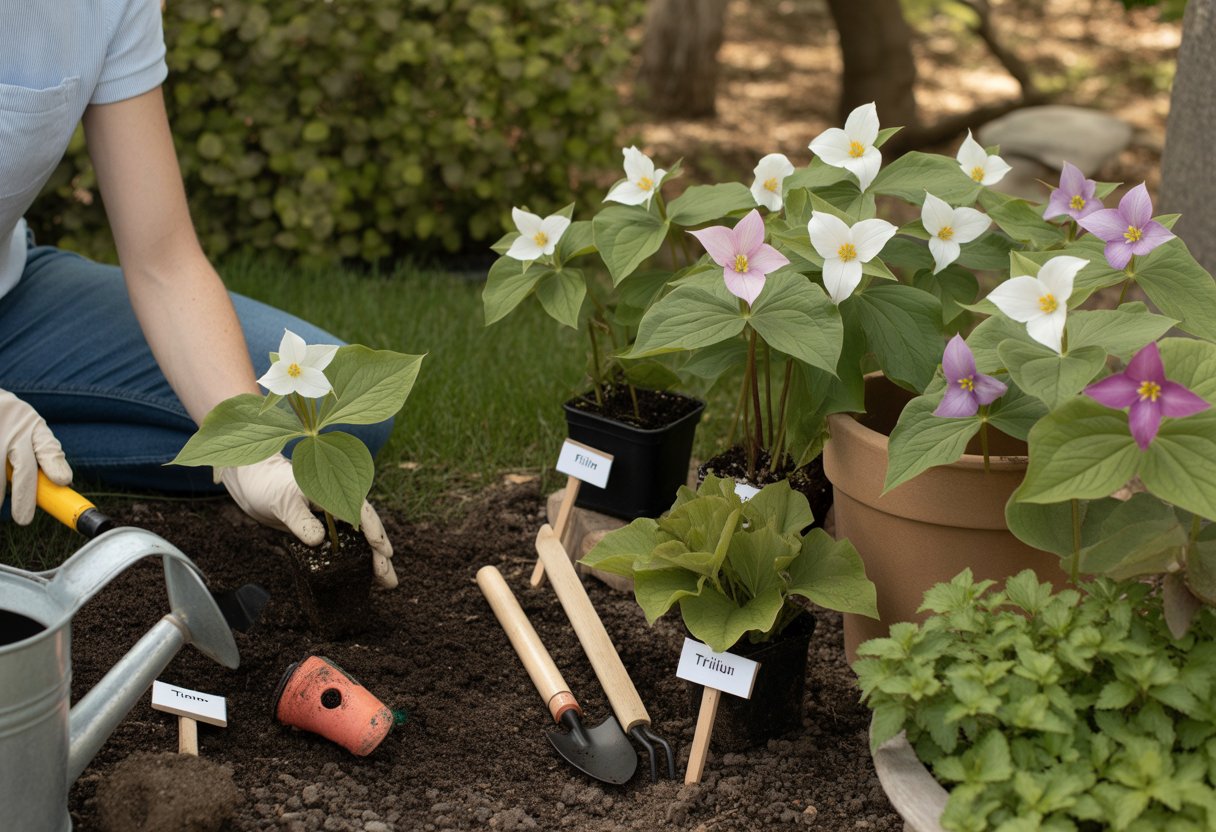
Picking trilliums isn’t just about what’s pretty. Flower color, size, and native habitat all matter. Some like deep shade, others want a bit more moisture. Knowing these details helps you find the best fit for your garden.
Red Trillium and Related Species
Red trillium, especially Trillium erectum, grabs attention with its rich maroon flowers. It usually blooms in early spring and loves rich, moist woods.
People also call it “wakerobin”—it’s slow to spread but pretty tough once it settles in. Related types like Trillium sulcatum and Trillium vaseyi offer similar colors but differ in size and height.
The strong scent draws pollinators like flies and beetles. Red trilliums work well in shade and rich soil, pairing nicely with wild ginger or other woodland plants.
White Trillium Varieties
White trilliums, especially Trillium grandiflorum, are famous for their big, elegant blooms. This “great white trillium” even serves as a state flower in some places.
They pop up in early spring, showing off broad white petals that turn pink as they age. These plants like cool, moist soil in shaded forests.
Other white types, like Trillium ovatum, bring subtle changes in petal shape and size but fill the same garden roles. They make excellent ground cover in woodland gardens thanks to their thick foliage.
Selecting Trillium by Bloom Color
Choosing by color lets you shape the look of your garden. Reds bring drama to dark corners, while white flowers brighten up shady spaces.
Color isn’t just for show—it affects pollinators too. Reds usually attract flies, whites bring in bees and beetles. Matching trillium colors with companion plants can really pull a look together.
Maintenance varies by color as well. Big white trilliums need steady moisture; reds can handle it a bit drier. If you stagger bloom times, you’ll get longer-lasting interest.
Site Preparation and Soil Requirements
Getting the site right is half the battle. You’ll want to think about light, soil, moisture, and spacing to give trilliums what they need.
Optimal Sun and Shade Conditions
Trillium likes shade or dappled sunlight best. Under deciduous trees, they get gentle morning sun but avoid harsh afternoon rays.
Too much sun stresses them out, leading to scorched leaves and sad plants. If you put them somewhere with consistent shade, they might grow slowly but at least won’t dry out. I’ve found that partial shade usually gives the best results—with strong blooms.
Soil Type and Amendments
Trillium wants rich, loamy, well-drained soil. Add plenty of leaf mold or compost to recreate the forest floor.
Got clay? Mix in organic matter to help drainage. Sandy soil? Add compost to hold moisture but don’t let it get swampy. Heavy, compacted soil is a no-go. Keep the pH slightly acidic to neutral (around 6.0-7.0) for best results.
Ensuring Consistent Moisture and Drainage
Trillium roots need steady moisture, but they’ll rot if the soil stays soggy. Good drainage keeps them healthy.
Aim for soil that holds water but drains well. Mulch with leaf mold or bark chips to lock in moisture and keep things cool. Avoid spots that flood or dry out completely.
Planning for Plant Spacing
Give trillium room to breathe. They need space for air and light, even in shade.
Plant them about 12 to 18 inches apart. If you crowd them, diseases spread and they’ll compete for water and nutrients. Proper spacing means healthier leaves and better blooms.
Step-by-Step Trillium Planting Process
Planting trilliums takes a gentle touch and good timing. You’ll usually work with rhizomes or bare root plants, and a bit of mulch helps them settle in.
Planting Rhizomes and Bare Root Trilliums
Start with rhizomes or bare root stock. Lay rhizomes horizontally about 2 inches deep, with the tip pointing out.
If you’re planting bare root plants, spread the roots gently in loose soil—don’t force or bend them. Leave at least 12 inches between each plant so they can form clumps over time.
Use humus-rich, well-drained soil to give roots a strong start. Don’t plant too deep or shoots might not make it up.
Best Time to Plant: Fall and Spring Guidance
Aim for early fall or spring when planting. September or October works best for fall, letting roots settle before winter.
Spring planting should wait until after the last frost, usually April or early May. Spring-planted trilliums might grow slower at first, but they’ll catch up. Avoid summer—heat and dryness can really stress new roots.
Mulching and Initial Care After Planting
Right after planting, spread a 2-3 inch layer of mulch—shredded leaves or bark works great. Mulch keeps soil cool and moist, and helps with weeds.
Keep mulch a bit away from the rhizome or crown to avoid rot. Water regularly but don’t drown them. In early growth, check soil moisture often, especially in spring and fall.
Once the plants are growing strong in late spring, pull back some mulch to let air in and keep fungus away.
Trillium Growth, Care, and Seasonal Considerations
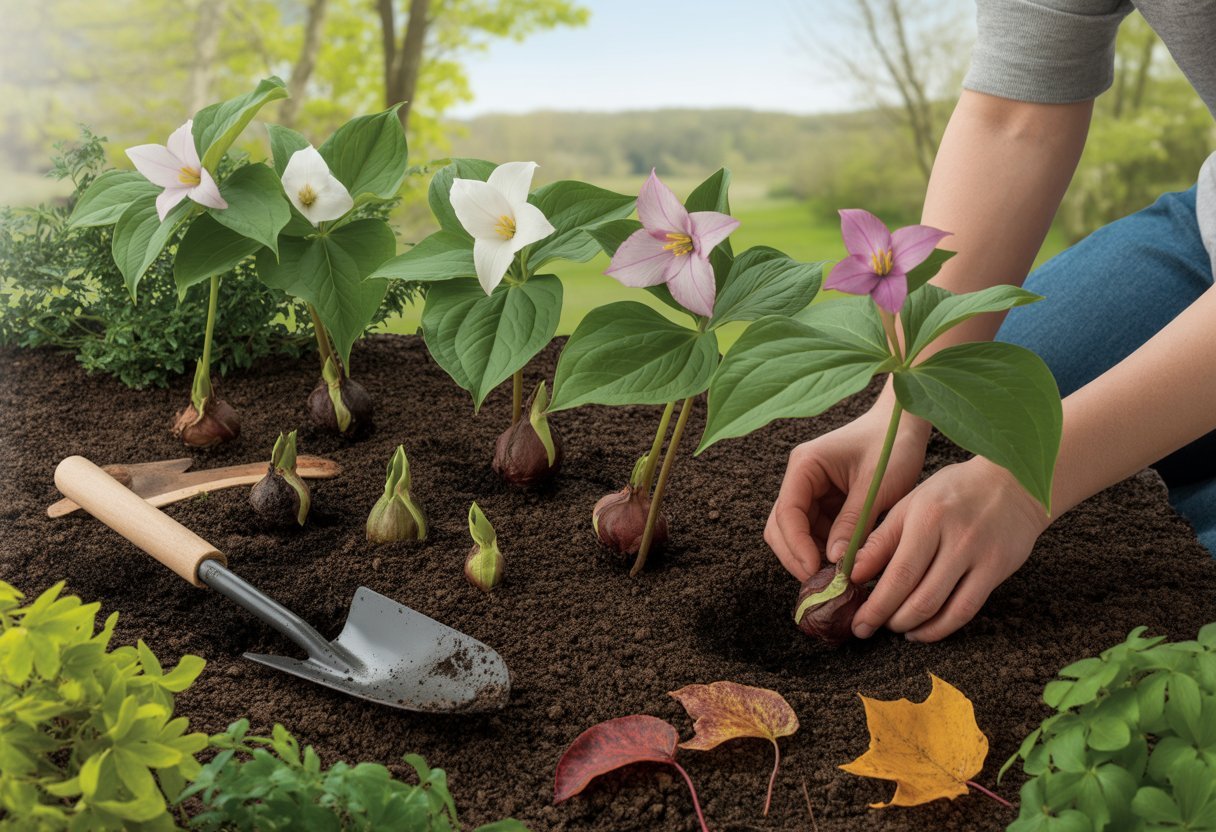
Trilliums have their quirks—they need the right timing for growth and rest. Their life cycle depends on soil, light, and moisture, and the seasons really shape how you care for them.
Germination and Growth Cycle
Trillium seeds take their sweet time—18 to 24 months to germinate, usually. Ants help out by carrying seeds underground, thanks to a little fleshy bit called an elaiosome. This is nature’s way of spreading seeds in the woods. Learn more about woodland seed dispersal.
After they finally sprout, trilliums grow slow and steady. They start from rhizomes, stay low (12–24 inches), and push out leaves before flowering. They stick to shaded, well-drained soil in zones 3 to 8.
Roots need moisture, but too much water brings rot. It takes patience—blooms might not show up until year three or four.
Flowering and Bloom Times
Most trilliums bloom in spring or early summer—April or May is typical. Flower color ranges from white to red or yellow, depending on the type.
The blooms are big, with three showy petals. After pollination, seeds develop quickly and usually drop by June. Ants then do their thing, moving seeds underground.
Good flowering needs enough light under trees and minimal disturbance. Protect your plants during bloom to get the most seeds and healthiest growth.
Managing Dormancy and Seasonal Changes
Trilliums go dormant in summer after they bloom, especially if it’s hot. Leaves turn yellow and die back, and the roots slow down.
Keep soil moist but not wet during dormancy to avoid root problems. Don’t dig around—roots are shallow and sensitive. Mulch with leaf litter to mimic the forest and keep soil cool.
Seasonal changes in light and temperature drive their growth. Trilliums like cool springs and falls, and they really don’t appreciate drought or heat that lasts too long.
Pest and Wildlife Interactions
White-tailed deer often munch on trillium leaves and flowers. This can really set back young plants.
You can try fencing to keep deer at bay. It’s not foolproof, but it helps.
Slugs and snails go after the leaves too, especially when it’s damp out. It’s honestly a bit of a battle in wet weather.
Pollinators like solitary bees and flies play a big role in flower fertilization. Without them, you’re not getting much seed set.
Cutting back on pesticides gives pollinators a fighting chance. It’s worth considering if you want those blooms to stick around.
Trilliums come from woodlands, so they get along with a lot of wildlife. They really seem to thrive when you give them a shady, moist spot that feels a bit wild.
Keeping an eye out for pests and watching the deer situation helps a lot. It’s not always easy, but it pays off over time.