Top 5 Picks: Advanced Planting Auger In-Depth for Professional Gardeners’ Efficiency and Precision
We independently select all products and services. If you click through links we provide, Plant Native may earn a commission with no extra cost to you.
Last updated: November 20, 2026
Planting augers really make life easier for professional gardeners tackling big planting jobs. These power-driven attachments dig uniform holes for seeds, bulbs, or young plants—so much less backache, and the whole process just flies by.
Advanced planting augers bring better durability, efficiency, and precision than the basic ones you might’ve started with. They come in all sorts of sizes and designs, so you can match them to your soil and planting needs.
Most of these attach to drills or power tools and use spiral blades that slice right through the dirt. Picking the right size and material for your auger bit makes a real difference in how well it works.
When we pick out an advanced planting auger, we pay close attention to bit diameter, blade shape, shaft length, and whether it’ll fit our drill. Steel quality and coatings matter, too, if you want it to last and not rust out.
We put quite a few augers through their paces to find the best ones for power, reliability, and ease of use.
Top 5 Picks: Advanced Planting Auger
Here are our top picks for advanced planting augers that make life easier for pros who need speed and precision. We focused on tools that are tough, easy to use, and work well in all kinds of soil.
Our top pick

- Cuts planting time way down compared to a shovel
- Works well in clay, sand, and most other soils
- Fits standard 3/8” hex drills—nice and simple
Cons
- Gets stuck in really dense soil and needs to be reversed out
- Needs a compatible drill (not included)
- Only makes holes up to about 4 inches wide—no good for big posts
This 4 x 12-inch auger bit takes a lot of effort out of planting bulbs and putting in small posts, and its heavy-duty steel is made for loose soil, hard ground, sand and clay.
You’ll want to use both hands to keep the drill steady, especially in hard ground. Its 12-inch length means you can dig deep enough for most plants and small posts without extra digging.
The spiral design pulls soil up when you reverse it, though it can jam in compact clay and takes some patience to clear. For repetitive planting jobs it can replace a trowel and save a lot of time.
It’s straightforward, durable, and fits any standard 3/8-inch hex drill. For bulbs, posts, or even mixing fertilizer, it’s worth a look.
Best runner-up

- Durable steel can handle tough soil
- Fits most standard 3/8″ hex drive drills
- Makes clean, even holes fast
Cons
- Can strain your wrist in rocky or root-filled soil
- The larger 3.5-inch bit needs a drill with plenty of torque
- Hole sizes might be too small for bigger plants
With this auger bit, planting goes a lot faster, especially in loose soil. It really cuts down on bending and manual digging, which is a relief on long days.
The heavy-duty steel build is designed for tough soil types, and both bits fit any standard 3/8-inch hex drive drill.
In rocky or root-heavy spots, the tool can jerk, so a steady grip is a must to avoid wrist pain. The two included sizes (1.6″ and 3.5″) cover most small to medium planting, but not big holes.
Still, for efficient, repeatable planting with a standard drill, it’s a reliable tool for pros.
Best budget option

- Cuts through hard and rocky soil with ease
- Fits standard 3/8” drills
- Useful for planting, mixing, and light digging
Cons
- Not sturdy enough for heavy-duty concrete mixing
- 1.6-inch diameter suits bulbs and small plants, not larger holes
- May not fit impact drivers without some fiddling
The MAXCCINO auger digs small holes with far less effort than a shovel, and the maker recommends an 18V or stronger drill. The upgraded blades and spiral shape break up ground well, even in clay or rocky spots.
It made planting bulbs and bare-root plants with a cordless drill much quicker. Cleanup is easy—just keep it free of soil and debris after use, and it carries a 2-year warranty.
It’s not really for big, heavy-duty jobs, but it suits most garden tasks, from planting to mixing soil and fertilizer. If you want a straightforward, effective auger without a lot of extra weight, this one fits the bill.
Best premium choice

- Multiple sizes and an extension for deeper holes
- Durable spiral-welded construction
- Simple to attach to a 3/8” drill
Cons
- Drill not included
- Struggles in very compact or clay-heavy soil with cordless drills
- Needs frequent clearing to keep soil from clogging
The set includes 1.6 x 12-inch, 3 x 12-inch and 2.6 x 15-inch bits plus a 16.5-inch extension, so you can dig quick holes for bulbs, small trees and posts. The extension saves bending and gives good reach for deeper planting.
The 360° spiral welding and alloy-steel drive shaft are built for heavy use.
For tough soils and clay, you’ll want to go slow and use a strong drill; otherwise, the auger can bind up or stall. With the right drill, it’s a reliable, versatile tool.
Also great
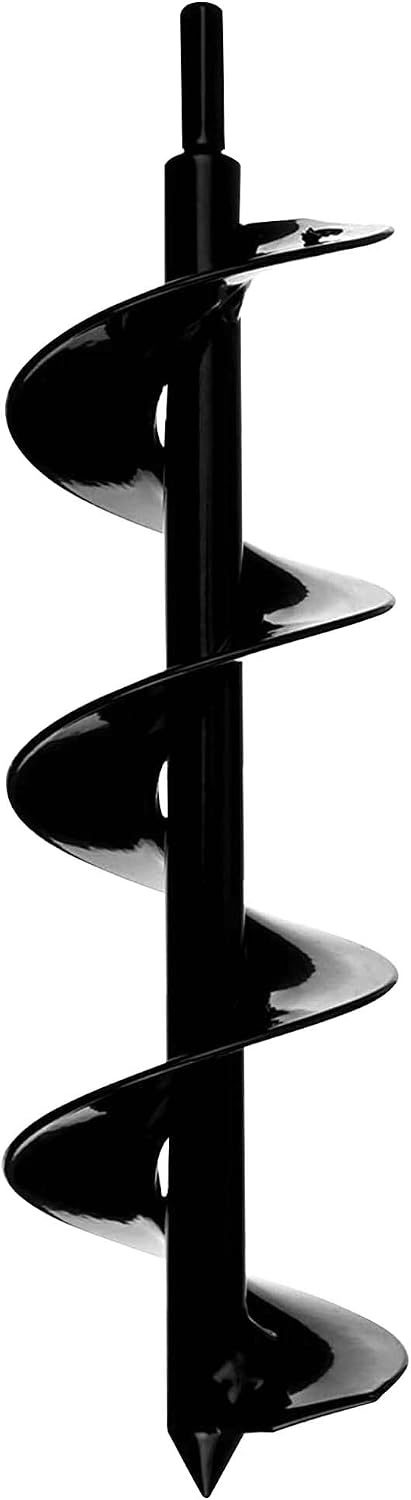
- Rated for dirt, clay, rocky soil and sand
- Non-slip 3/8-inch hex drive fits most cordless drills
- Leaves loose soil at the bottom of the hole to help new plants settle in
Cons
- Drill not included
- 12-inch length limits hole depth
- 3-inch diameter is too small for larger posts and trees
The Power Planter DIY Guru is a compact auger from an established auger manufacturer, sized for planting bulbs, perennials and small shrubs quickly with a cordless drill. It also doubles as a mixer for soil amendments and small batches of mortar.
Durability’s huge. We check for strong steel or hardened alloys, and sturdy handles that won’t leave your hands aching. Ergonomic grips help a lot if you’re available for hours.
Ease of use is another big one. Adjustable speeds and simple assembly are nice. Lighter models are easier to handle, but they still need to be stable.
Buying Guide
When we pick out an advanced planting auger, we always look at the power source first. Electric, battery, or gas—each has pros and cons for portability and runtime.
The auger bit size matters, too. You want the right diameter and length for the plants you’re working with. Big bits make wide holes for trees or posts; small bits are better for bulbs and close plantings.
Durability’s huge. We check for strong steel or hardened alloys, and sturdy handles that won’t leave your hands aching. Ergonomic grips help a lot if you’re available for hours.
Ease of use is another big one. Adjustable speeds and simple assembly are nice. Lighter models are easier to handle, but they still need to be stable.
If it’s electric, battery life and charging speed are deal breakers. For gas, we look for ones that don’t guzzle fuel. No one wants to stop work every hour to recharge or refuel.
Key Features to Compare
| Feature | What to Look For | Why It Matters |
|---|---|---|
| Power Source | Electric, battery, or gas | Offers portability and affects runtime |
| Bit Size | Diameter and length that fit your planting | Ensures you meet your planting needs |
| Build Quality | Steel or toughened alloys | Lasts longer and stays reliable |
| Ergonomics | Grips that actually feel good, balanced weight | Helps you avoid getting tired fast |
| Operation Speed | Adjustable, steady speed | Lets you handle different soils |
| Battery/Fuel Efficiency | Lets you work longer without stopping | Keeps you going without annoying breaks |
We independently select all products and services. If you click through links we provide, Plant Native may earn a commission with no extra cost to you. As an Amazon Associate I earn from qualifying purchases.