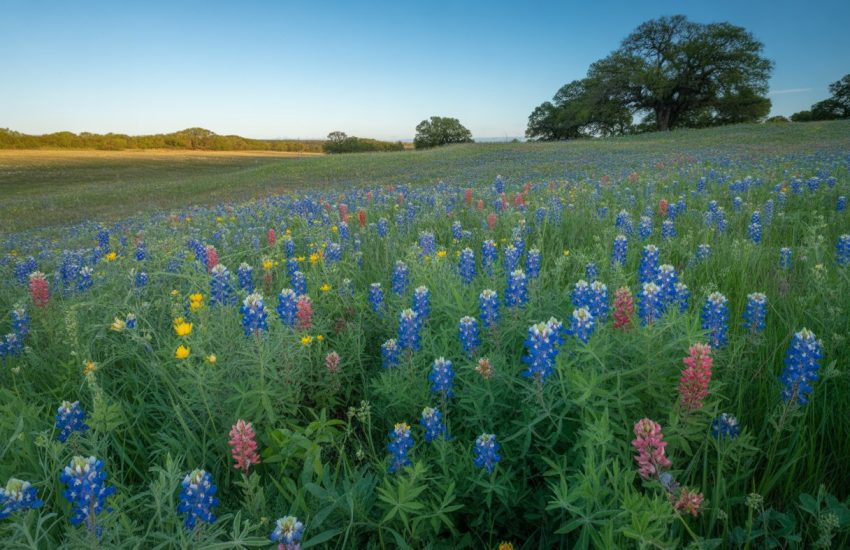
Wildflower Meadow Planting Michigan Guide for Successful Growth
Last updated: October 31, 2026
Creating a wildflower meadow in Michigan means picking native plant species that actually thrive in the state’s climate and soil. You’ll want to get the site ready and time things right if you want a healthy, sustainable meadow that brings in pollinators and wildlife.
Using region-specific seeds and keeping an eye on soil and site management is pretty much the key to wildflower meadow planting in Michigan.
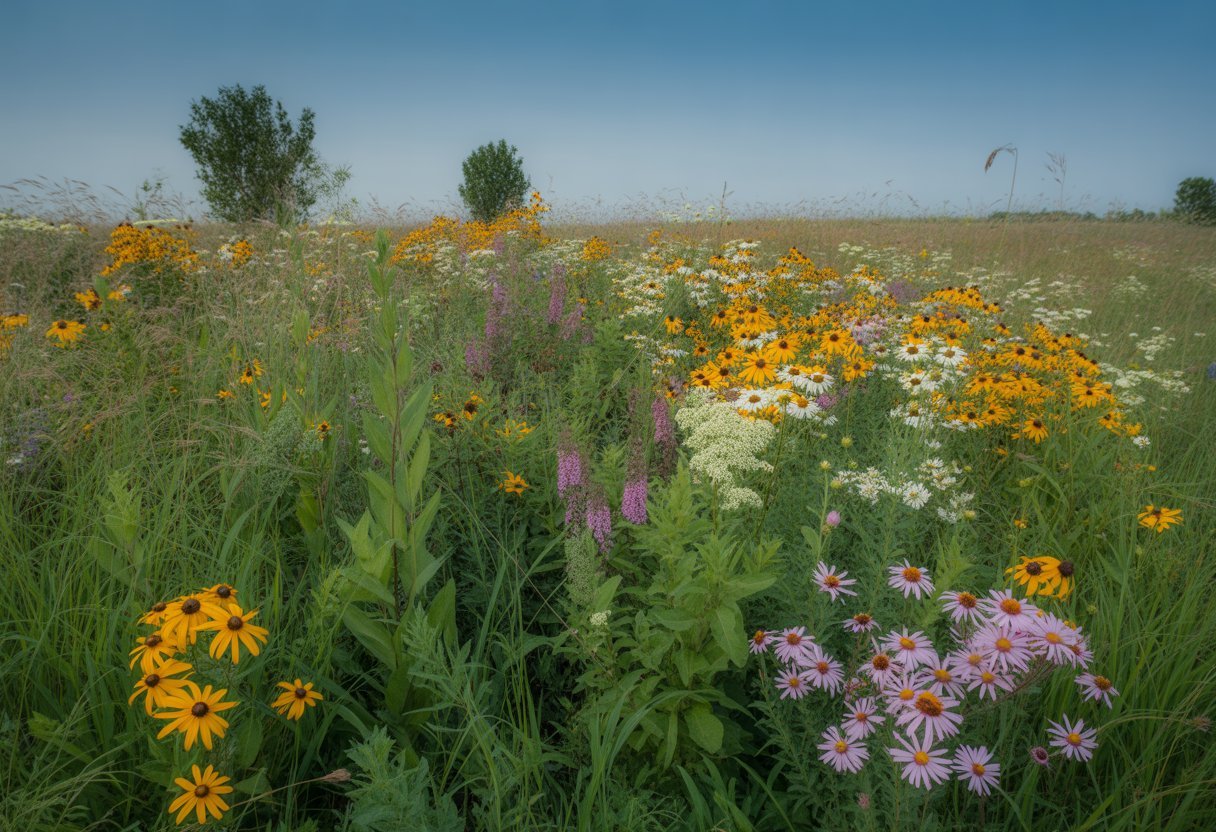
Wildflowers boost biodiversity and can cut down on lawn chores while improving soil health. If you’re not sure where to start, local experts and native plant specialists can help you pick seed blends and plan out planting schedules that fit Michigan’s growing zones.
Planting a wildflower meadow gives you seasonal color and helps restore natural habitats. Native wildflowers also mean you’ll use less water and fertilizer, which makes this a pretty eco-friendly landscaping move for the Midwest.
Planning a Wildflower Meadow in Michigan
You’ll need to think about plant species, site conditions, and the perks of going native. Picking species that match your local environment and knowing your soil and sunlight situation really helps with getting things started and keeping the meadow healthy.
Choosing the Right Wildflower Species
Go for wildflower species that are comfortable with Michigan’s climate. Perennials like Echinacea purpurea (purple coneflower) and Asclepias tuberosa (butterfly weed) stick around year after year. Annuals such as Cosmos bipinnatus give you fast color but need reseeding each season.
Wildflower mixes made for Michigan usually combine annuals and perennials, so you get a good mix of early and late blooms. Sunny spots call for drought-tolerant varieties, while shady areas need species that can handle low light. Always check seed labels for origin and bloom time if you want a colorful, diverse meadow.
Native Plants and Their Benefits
Native plants help local ecosystems by feeding and sheltering pollinators like bees and butterflies. Michigan natives handle the region’s weather swings, so they don’t need much water or fertilizer once they’re settled in.
Sticking with Michigan natives means you’ll spend less time on maintenance and worry less about invasive weeds. Plants like Solidago canadensis (Canada goldenrod) and Monarda fistulosa (wild bergamot) are tough, attractive to insects, and just plain useful.
Understanding Site Conditions
Check your soil, moisture, and sunlight before planting. Michigan soils run from sandy in the west to clay in the east, so you’ll want to know what you’re working with.
Most wildflowers like well-drained soil, but some are more flexible than others. Aim for full sun—at least six hours a day—if you can, though some species do fine in partial shade. Dry soils want drought-tolerant plants, and wetter spots need species that won’t mind getting a little soggy now and then. Testing soil pH helps; most wildflowers like it neutral to just a bit acidic.
Preparing and Planting the Wildflower Meadow
Getting the timing right, prepping the soil, and using the right tools makes a big difference for wildflower meadows in Michigan. Paying attention to the season and giving the soil some love sets you up for good seed germination.
The right planting tools help spread seeds evenly and make sure they touch the soil, which is honestly more important than people think.
When to Plant for Michigan’s Climate
In Michigan, plant wildflower seeds in early spring or late fall. Early spring works best after the last frost—usually mid-April to early May—so your seeds don’t get zapped by the cold.
Fall planting, from late September through early November, lets winter cold naturally stratify seeds so they sprout better. Don’t bother planting in the heat of summer or when the ground’s frozen solid. Spring seeds like cool, moist soil, and fall plantings get a little protection from the snow.
Preparing the Soil for Seeding
Clear out existing grass and weeds by mowing, solarizing, or tilling until you’ve got bare soil. If the ground’s packed tight, till it lightly about 3 to 6 inches deep to help roots get started.
Michigan soils can use a little compost—maybe 1 to 2 inches—to boost nutrients and hold moisture. Skip heavy fertilizer; it just encourages weeds and grasses over wildflowers. Rake the soil so it’s fine and even, but don’t pack it down. You want it firm, yet loose enough for seeds to settle in.
Selecting and Using Planting Tools
A seed spreader makes it easy to get wildflower seeds spread out evenly. Adjust the setting based on seed size and your meadow’s size—usually 1 to 3 pounds per 1,000 square feet is about right.
Hand broadcasting works well for smaller spots or tricky areas like slopes. After spreading, use a seed roller or gently press the seeds in with a flat board to make sure they touch the soil. This helps them soak up moisture and keeps them from blowing away or getting eaten.
Don’t bury seeds too deep—most wildflowers just need to sit on the surface or get a light dusting of soil. Water lightly after planting and keep the soil damp (not soaked) until you see seedlings. That’s usually enough to get things going.
Key Wildflowers and Grasses for Michigan Meadows
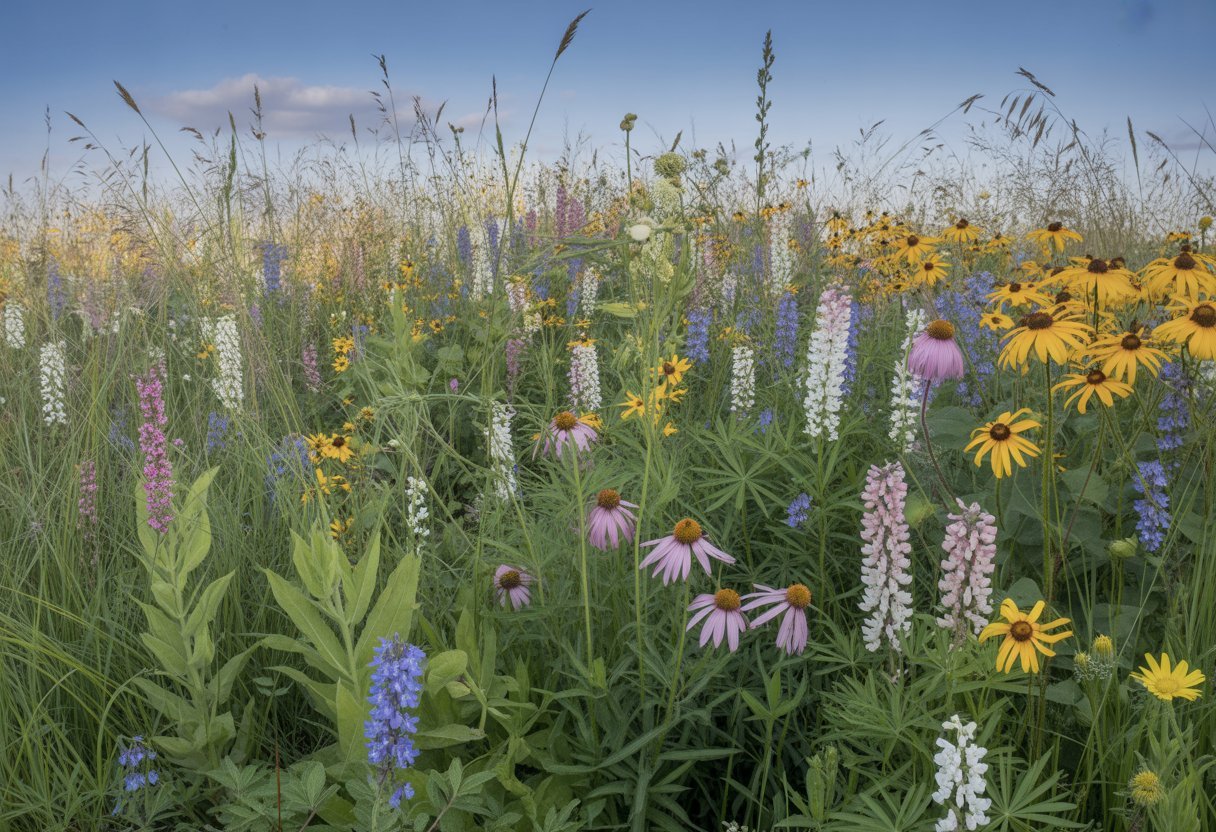
Michigan wildflower meadows do best with plants that are already used to the local climate and soil. Picking the right wildflowers and grasses helps pollinators and builds a meadow that can handle Michigan’s ups and downs.
Purple Coneflower and Echinacea purpurea
Echinacea purpurea, or purple coneflower, is a classic for Michigan meadows. It stands 2 to 4 feet tall and has purple-pink petals with a spiky orange-brown center.
Bees, butterflies, and birds love it. Purple coneflower shrugs off drought and poor soils, so it’s pretty low-maintenance. It blooms from mid to late summer and can reseed itself if you let it. It’s hard not to appreciate the color and wildlife it brings.
Milkweed and Butterfly Weed Varieties
Milkweed is a must for monarch butterflies and other pollinators in Michigan. Common milkweed (Asclepias syriaca) grows 3 to 5 feet tall with clusters of pinkish flowers and likes well-drained soil and full sun.
Butterfly weed (Asclepias tuberosa) is shorter—1 to 2 feet—with bright orange flowers. It handles sandy or rocky soil just fine and draws in butterflies and bees. Both are crucial for monarch caterpillars.
Black-Eyed Susan and Blanketflower
Black-eyed Susan (Rudbeckia hirta) has bright yellow petals and a dark brown center. It grows 1 to 3 feet tall and blooms from June into September. These plants handle many soil types and add a lot of color to the mix.
Blanketflower (Gaillardia pulchella) sports red and orange petals with yellow tips. It’s shorter—1 to 2 feet—and loves sunny, dry conditions. Both attract native bees and butterflies, making them solid picks for any meadow.
| Wildflower | Height | Bloom Time | Soil Preference | Pollinators Attracted |
|---|---|---|---|---|
| Purple Coneflower | 2-4 ft | Mid to late summer | Dry to average, well-drained | Bees, butterflies, birds |
| Common Milkweed | 3-5 ft | Summer | Well-drained, full sun | Monarchs, bees |
| Butterfly Weed | 1-2 ft | Summer | Sandy, rocky, dry | Butterflies, bees |
| Black-eyed Susan | 1-3 ft | June-Sept | Various, well-drained | Bees, butterflies |
| Blanketflower | 1-2 ft | Summer | Dry, sandy, sunny | Bees, butterflies |
Native Grasses and Supporting Flora
Native grasses give Michigan meadows their backbone. Little bluestem (Schizachyrium scoparium) and big bluestem (Andropogon gerardii) add texture and make great habitat for insects and little critters. Depending on the species, they’ll reach anywhere from 2 to 6 feet tall.
Grasses help keep soil from washing away and hold moisture. They pair nicely with wildflowers like Liatris aspera (rough blazing star), which sends up tall spikes of purple flowers in late summer. Wild lupine (Lupinus perennis) is another good one—it fixes nitrogen and brings in bees.
Mixing grasses with different wildflowers keeps your meadow healthy and buzzing with life.
Growing, Maintaining, and Supporting Wildlife
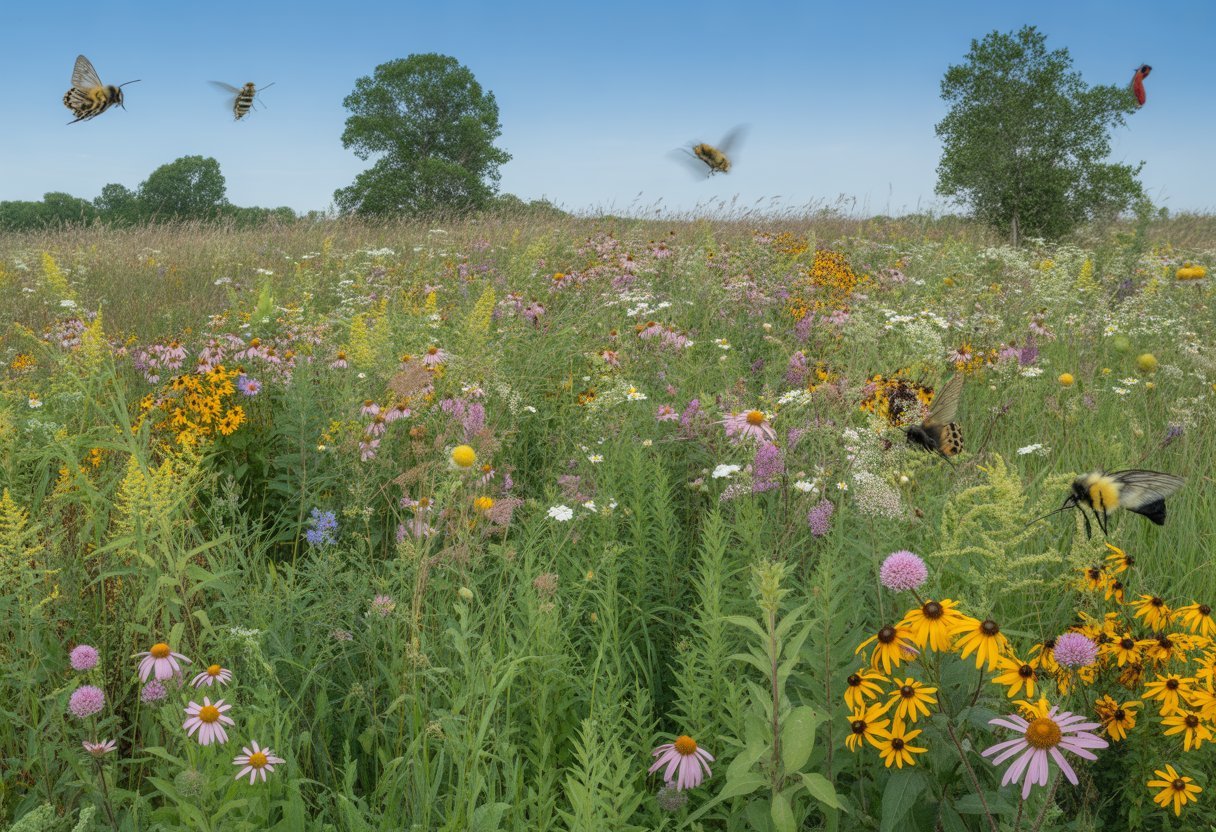
Wildflower meadows need a little ongoing care, especially with Michigan’s unpredictable weather and soil. Regular maintenance keeps plants growing strong and helps out the insects that depend on them.
Best Practices for Caring for Wildflower Meadows
Stick with native wildflowers—they’re made for Michigan’s climate, so you’ll water less and get better results. Early spring is a sweet spot for sowing seeds in prepared, well-drained soil, especially if you’ve cleared out weeds first.
Mow once or twice a year. A late fall cut keeps invasive grasses under control and lets wildflowers drop their seeds. Try not to mow during peak bloom; it’s better for pollinators and lets flowers go to seed.
For weeds, pull out aggressive non-natives by hand or spot-treat if you have to. Skip broad-spectrum herbicides—they’ll do more harm than good for your wildflowers and the insects you’re trying to help.
Attracting Pollinators and Beneficial Insects
Want to see more bees and butterflies? Try adding a diverse mix of flowers that bloom one after another, from spring all the way through fall.
Native plants like coneflowers, black-eyed Susans, and milkweed do a fantastic job. They just seem to know what local pollinators want.
Green lacewings and other beneficial insects love hunting garden pests. If you leave some leaf litter or build a little brush pile, you’ll probably notice more of these helpful bugs.
Skip the pesticides—those just wipe out the good guys along with the bad. Bold flower colors like red, purple, and yellow tend to attract more pollinators, and honestly, who doesn’t want a little more color in the yard?