Benefits of Planting Native Bloodroot for Enhancing Local Biodiversity and Soil Health
Last updated: July 17, 2026
Planting native bloodroot brings some practical benefits to both gardeners and the local ecosystem. It supports pollinators and improves soil health, since it adapts well to local conditions and doesn’t need much extra water or fertilizers.
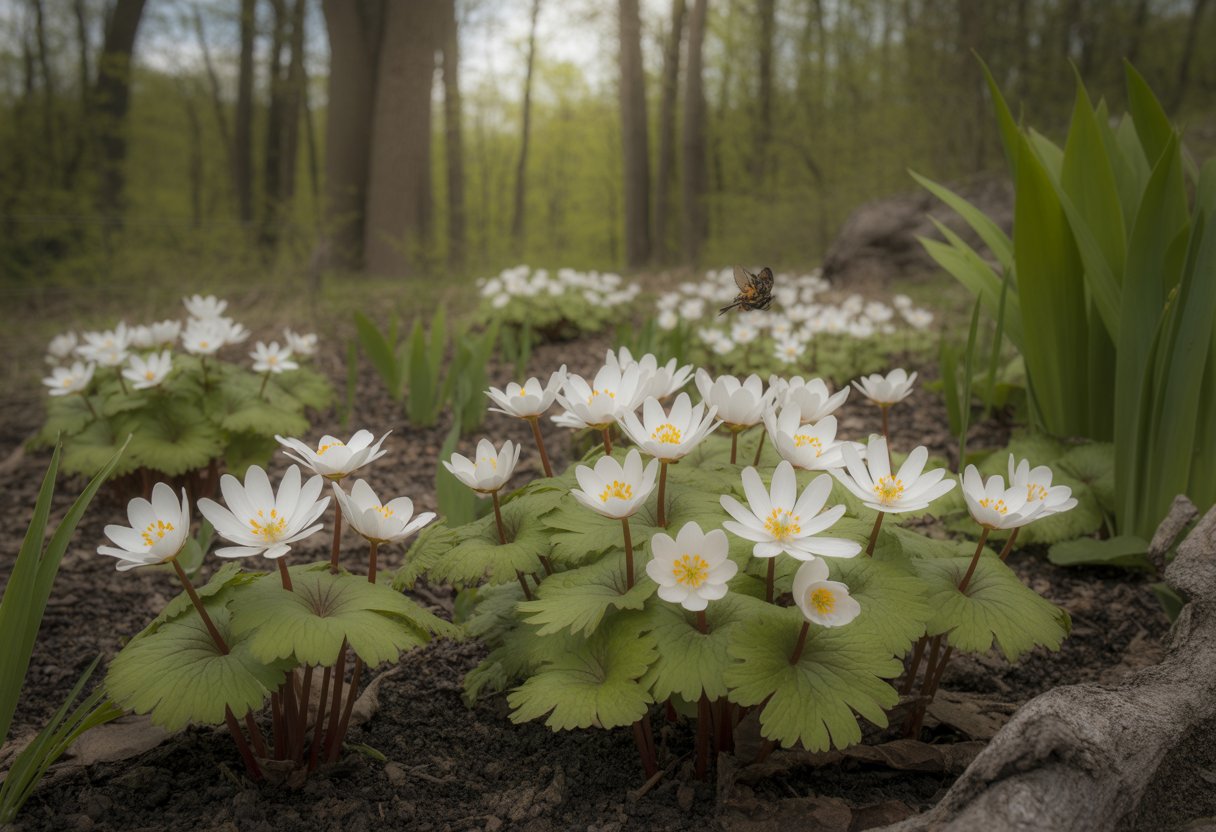
Bloodroot thrives naturally in shaded, wooded areas, making it a solid choice for sustainable gardening and habitat restoration. Its early spring blooms offer vital nectar to bees and other pollinators when not much else is flowering.
Native bloodroot boosts biodiversity and cuts down on the need for chemicals. It fits right in with shade gardens and woodland landscapes, so you get an option that’s both eco-friendly and honestly, just nice to look at.
Ecological and Environmental Benefits of Planting Native Bloodroot
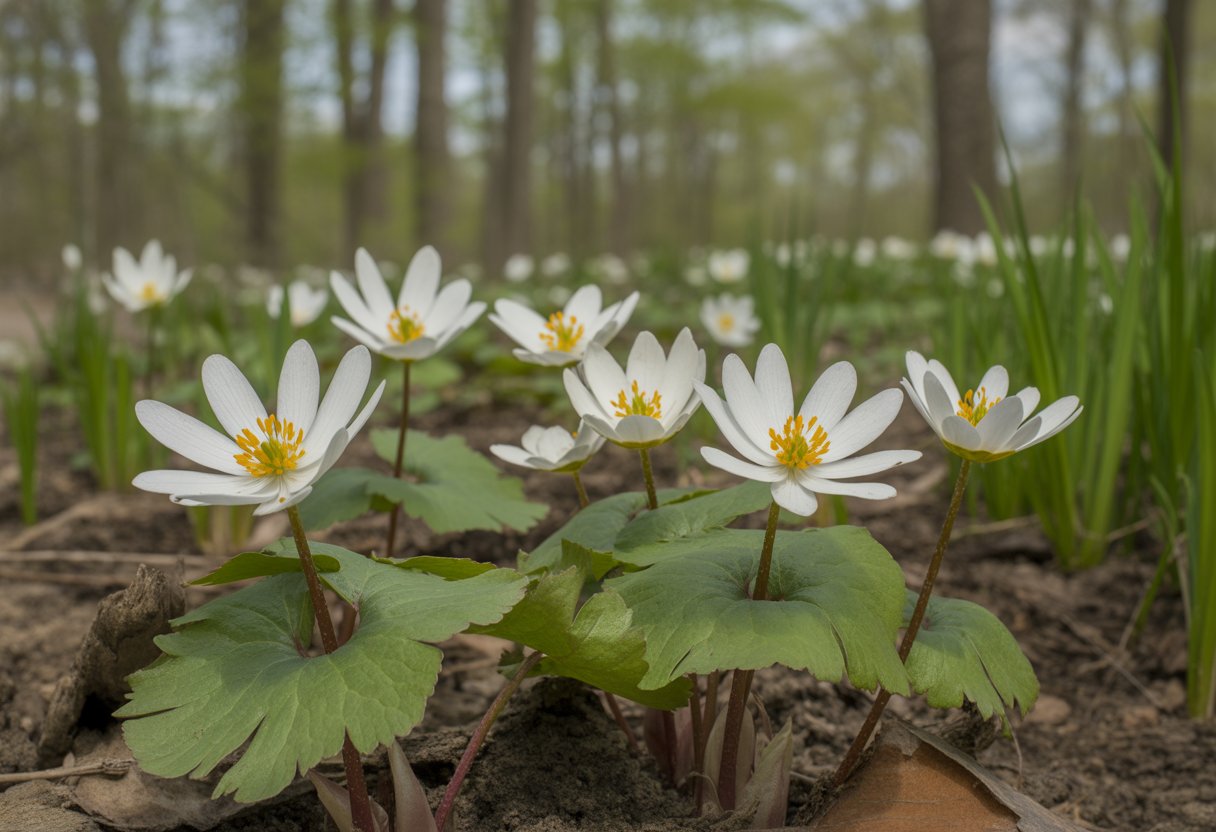
Planting bloodroot directly supports wildlife and keeps plant diversity strong. It also helps improve soil in those shady, moist spots you see all over eastern North America.
Supporting Local Biodiversity
Bloodroot (Sanguinaria canadensis) gives native pollinators like bees and butterflies a much-needed nectar source in early spring. Its flowers open up in shady places—think thickets and forest edges—right when food is scarce.
As a native perennial, it fits into the local food web. Insects that depend on eastern North American habitats use bloodroot, and those insects end up feeding songbirds and even some small mammals.
Keeping native species like bloodroot around helps keep invasive plants in check. That balance is key for healthy ecosystems.
Enhancing Wildflower Populations
Bloodroot likes partial shade and moist, well-drained soil with lots of organic matter. It mixes well with other wildflowers from eastern North America’s woodlands, adding to the diversity without being too pushy.
Ants help spread bloodroot seeds, moving them to new spots where they can thrive. This quirky partnership boosts wildflower variety in forested areas and helps native plant communities get stronger over time.
Improving Soil Quality
Bloodroot grows best in organic-rich soils and helps keep soil healthy by dropping leaf litter that breaks down into humus. That process bumps up organic matter and keeps nutrients cycling.
Its roots loosen up well-drained soils and help the forest floor hold onto moisture. By anchoring soil in shady spots that might erode, bloodroot supports long-term soil vitality, which benefits all sorts of plants and microbes.
Health and Medicinal Uses of Bloodroot
Bloodroot contains some interesting bioactive compounds, especially the alkaloid sanguinarine, which researchers have studied for its therapeutic properties. People have used it in traditional medicine for ages, and it even shows up in some modern oral hygiene products.
Traditional Medicine and Native American Uses
Native Americans used bloodroot’s sap to treat skin problems like warts and ringworm. They also made infusions to soothe sore throats and respiratory issues.
The root’s bright red sap served as a dye and played a role in ceremonies. But they had to be careful—raw bloodroot can be toxic, especially on open wounds.
Early practitioners paid close attention to dosing, balancing the benefits with the risks. Their use of bloodroot shows a deep understanding of plant medicine.
Potential Anti-Inflammatory and Antimicrobial Effects
Researchers have pinpointed sanguinarine as a key alkaloid with anti-inflammatory and antimicrobial properties. It slows down certain bacteria and reduces inflammation in lab tests.
Some studies hint that sanguinarine might help with skin cancer cell lines, but honestly, the evidence is still pretty early. Its knack for acting on microbial plaque and pathogens could explain why bloodroot works for skin and oral issues.
Modern Applications in Oral Hygiene Products
Bloodroot extracts—mainly sanguinarine—show up in toothpaste and mouthwash. These products target bacterial plaque and gingivitis, helping gums stay healthy.
Manufacturers keep an eye on sanguinarine levels to get the benefits without causing irritation. Reviews highlight bloodroot’s value in oral hygiene, but it’s smart to follow product directions to avoid side effects.
Cultivation and Plant Care for Bloodroot
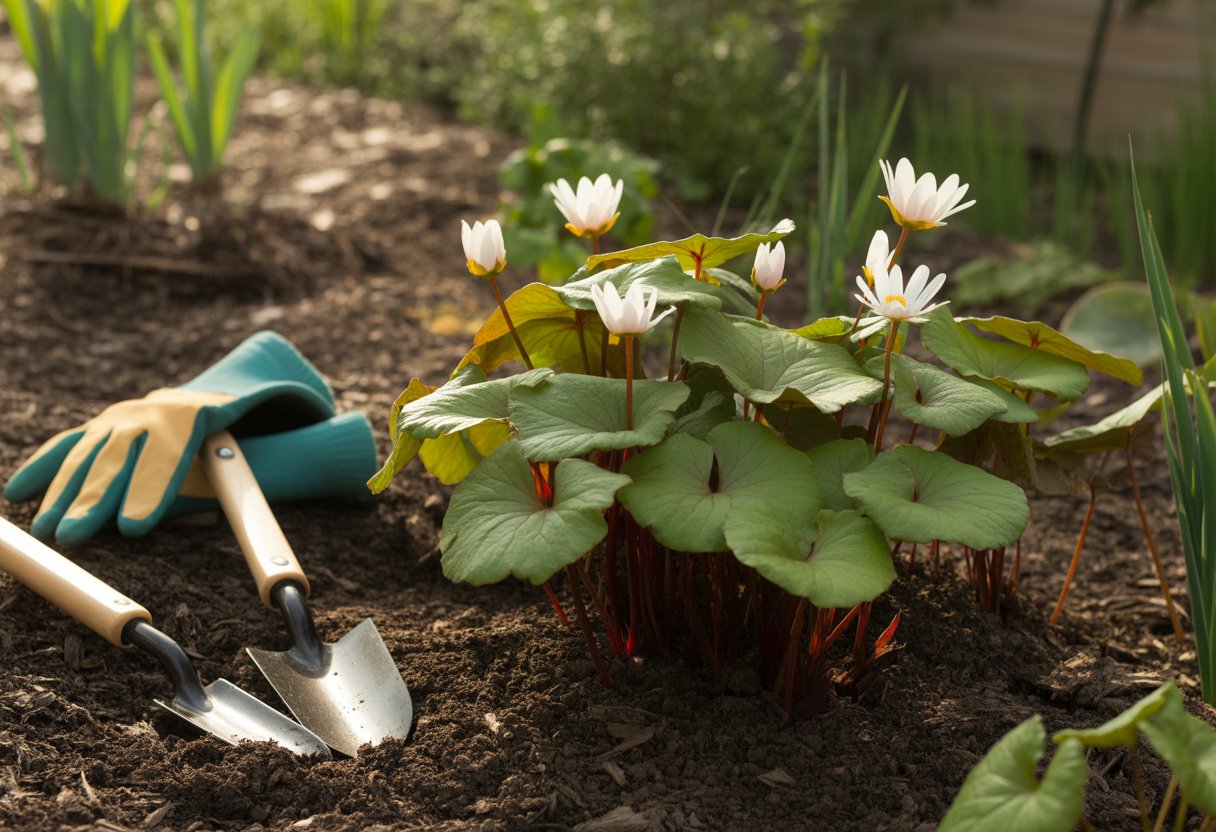
Bloodroot needs some specific conditions to really thrive. Good soil, the right amount of shade, proper watering, and thoughtful companion planting all matter.
Choosing Optimal Soil and Shade Conditions
Bloodroot prefers rich, well-draining soil with plenty of organic content. Loamy or silty soils that hold moisture but don’t get soggy are ideal.
Aim for a slightly acidic to neutral pH (around 6.0 to 7.0). Shade is crucial; bloodroot naturally grows in partial to full shade under deciduous trees.
Too much sun stresses it out and dries the soil fast. Giving it 60-80% shade helps mimic woodland conditions and keeps leaves and flowers looking good.
Propagation and Planting Techniques
Most people propagate bloodroot using rhizomes. Plant them in early spring or fall, about 2 inches deep with the growing point facing up.
You can also grow bloodroot from seed, but it takes patience—germination is slow, and you might wait years for flowers. Space rhizomes 6 to 12 inches apart so they have room to spread.
Maintaining Moisture and Preventing Dormancy
Bloodroot likes regular watering to keep soil consistently moist, especially during dry periods. Don’t let water pool, though, or the roots might rot.
Mulching with leaf litter or compost helps lock in moisture and mimics a natural woodland floor. The plant goes dormant in summer, so cut back on watering as that happens to avoid root rot.
Keep an eye on soil moisture to make sure the rhizome stays healthy until growth picks up again.
Companion Planting With Ginseng
Bloodroot and ginseng enjoy similar conditions: shade, moisture, and organic-rich soil. Planting them together can create a little microhabitat that benefits both.
They both do well in shaded woodland settings and help support a diverse understory. Just don’t crowd them—leave at least a foot between each plant to avoid competition.
Ornamental and Aesthetic Value of Bloodroot
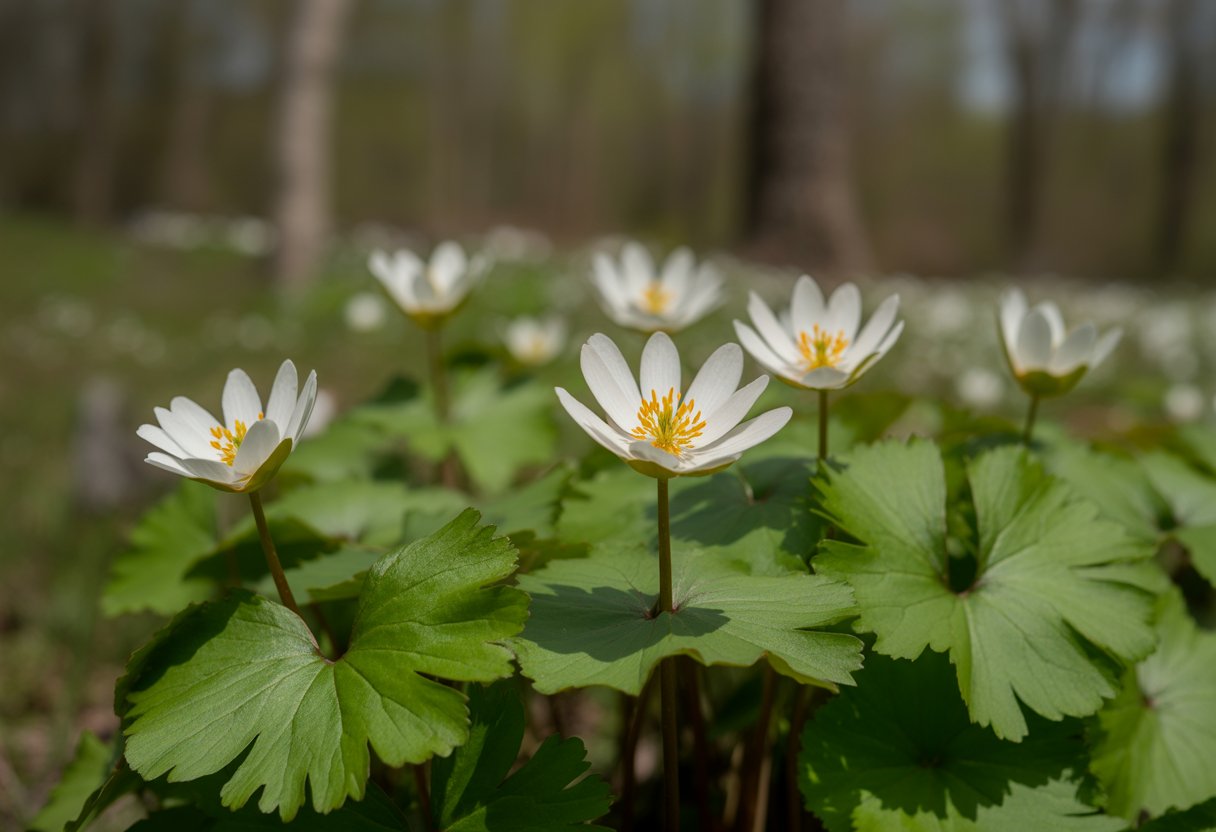
Bloodroot stands out with delicate white flowers and unique leaves. Its early bloom and perennial nature make it a reliable pick for naturalistic gardens and shaded yards.
Seasonal Appeal of White Flowers
Bloodroot puts out crisp, white flowers in early spring—sometimes before anything else wakes up. Each flower only lasts a few days, but they pop up in succession, so you get weeks of interest.
The star-shaped blooms rise above lobed, blue-green leaves, which makes for a pretty striking combo. This early show not only kicks off the growing season but also gives pollinators a much-needed food source.
Using Bloodroot in Landscape Design
Bloodroot is a low-maintenance perennial that works well in shaded or partially shaded garden beds. It pairs nicely with ferns, trilliums, and other native woodland plants, giving the area a relaxed, natural vibe.
Because of its moderate size and the way it spreads, bloodroot fits right in as groundcover under trees or along shady borders. Most gardeners like to plant bloodroot in small groups to really show off those flowers when they bloom.