Rain Garden Plant Selection Guide for Optimal Growth and Water Management
Last updated: August 16, 2026
Picking the right plants for a rain garden really matters if you want it to work well and look good. A successful rain garden plant selection includes native species that tolerate both wet and dry conditions, support local wildlife, and require minimal maintenance.
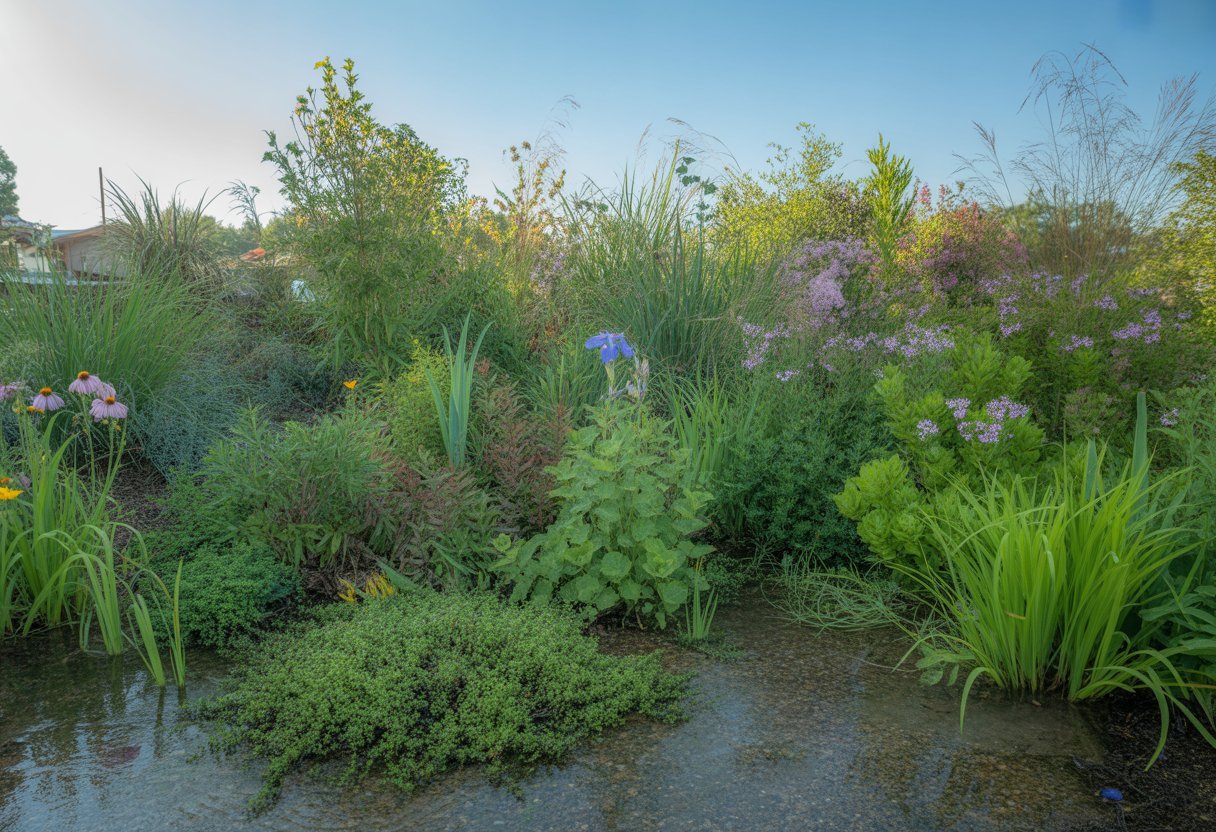
Understanding your site and picking plants that handle the garden’s wet and dry spots helps it soak up runoff. We’ll walk through which plants actually thrive in these conditions and how to set up a healthy, balanced planting scheme.
Understanding Rain Gardens and Their Benefits
Rain gardens handle stormwater runoff in a way that’s both practical and good for the environment. They slow down water, filter out contaminants, and support urban wildlife.
How Rain Gardens Manage Stormwater Runoff
Picture a shallow dip in your yard filled with native vegetation. That’s a rain garden—it collects runoff from roofs and driveways, letting water soak into the ground instead of flooding storm drains.
This whole thing, called bioretention, eases the flow and cuts down on runoff volume. By hanging onto water for a bit, rain gardens take pressure off stormwater systems and help prevent small-scale flooding.
Improving Water Quality and Reducing Pollutants
Rain gardens actually clean stormwater before it hits creeks or rivers. Plant roots and soil microbes break down and soak up nasties like fertilizer, oil, and heavy metals.
Sediment settles out too, so less gunk ends up in lakes and rivers. All this filtering protects aquatic life and keeps drinking water safer.
The Role of Rain Gardens in Green Infrastructure
Rain gardens play a big part in green infrastructure. They don’t just manage stormwater—they also boost urban biodiversity and help cool things down.
By treating runoff right where it falls, rain gardens lighten the load on sewers. They’re sustainable, practical, and make neighborhoods a bit greener.
Core Factors in Rain Garden Plant Selection
Choosing plants for a rain garden isn’t just about what looks nice. You’ve got to balance your local climate, soil, and how much water you want to manage.
Climate, Soil, and Sunlight Considerations
You’ll want to pick plants that can handle your area’s weather. Cold-hardy species do best up north, while drought-tolerant plants are a must in hotter spots.
Soil matters too. Sandy soil drains fast but doesn’t hold much nutrition, so you’ll need plants that don’t mind dry feet. Clay holds water longer, so go for species that won’t rot with wet roots.
Sunlight is another biggie. Most rain garden plants like full or partial sun, but if you’ve got a shady spot, look for shade-tolerant types. Matching plants to these factors just makes life easier for everyone—plants included.
Sizing and Garden Design For Maximum Impact
The size of your rain garden should fit the area it drains—usually about 20-30% of the impervious surface nearby. Too small, and you’ll get overflow; too big, and it’s just extra work.
Design-wise, go for gentle slopes and mix up plant heights. Put taller stuff in the center or back for stability, and keep the edges lower to help with erosion.
Don’t cram everything together. Give plants space to breathe and grow roots. A bit of planning here pays off with healthier plants and better water absorption.
Selecting for Water Infiltration and Soil Requirements
Look for plants that handle both soggy and dry spells. Deep-rooted species are great—they make channels for water to move through the soil.
You can add compost to help with infiltration, but don’t overdo it on fertilizer. Heavy feeding can actually make plants less efficient at soaking up water.
Mixing plants with different root depths keeps the soil loose and healthy. If you know how fast your soil drains, you’ll pick better plants for both the wettest and driest parts of your garden.
Choosing Native Plant Species For Biodiversity
Native plants are the real MVPs. They’re built for your climate, help local wildlife, and don’t need much fussing over.
Including native grasses, wildflowers, and shrubs brings in pollinators and good bugs. This mix keeps the ecosystem humming along.
Native species also help keep rainwater clean by filtering out pollutants naturally. Plus, you’re supporting the bigger picture—preserving habitat and encouraging sustainable landscaping.
Recommended Plant Types for Rain Gardens
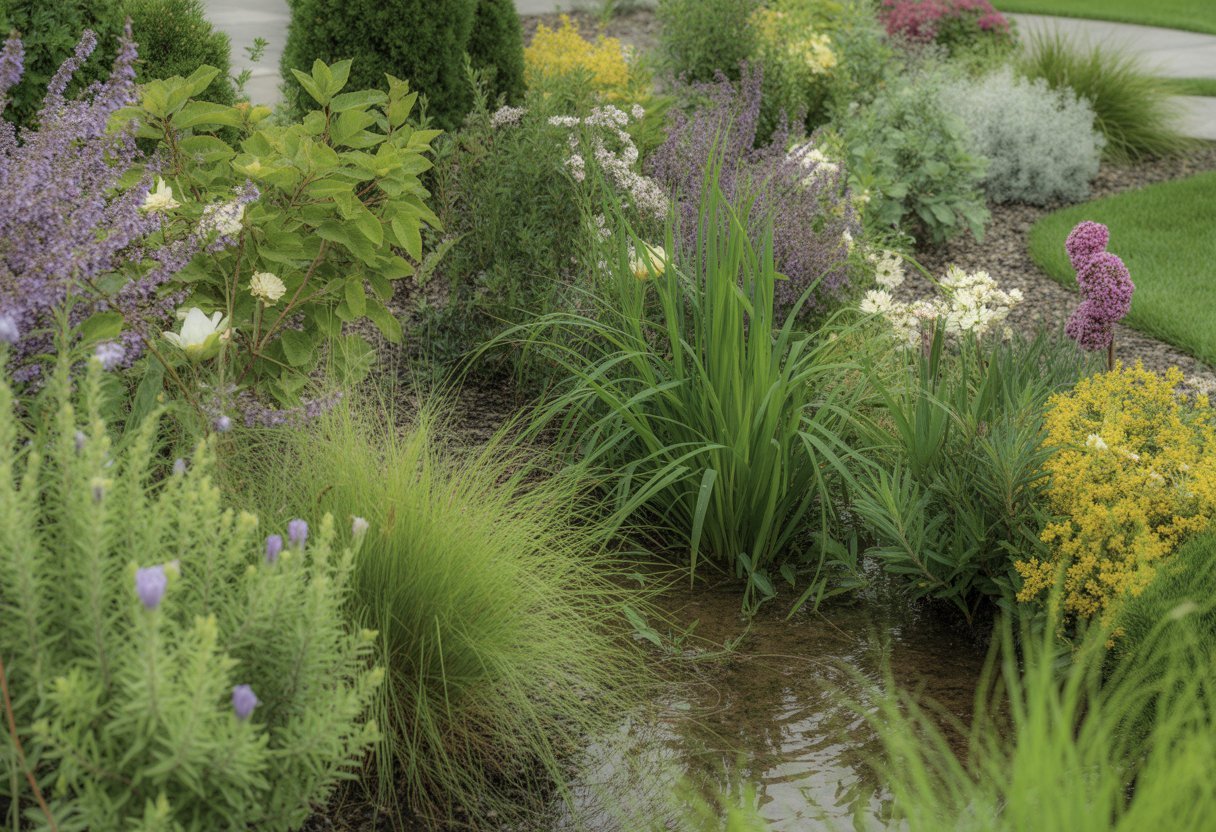
When picking plants for a rain garden, think about their water tolerance, whether they’re native, and what kind of soil they like. Go for species that handle both wet and dry, and mix up plant types to stabilize the soil and bring in wildlife.
Best Perennials for Rain Garden Success
Good rain garden perennials need to tolerate ups and downs in moisture and soil. Echinacea purpurea (purple coneflower), Iris versicolor (blue flag iris), and Asclepias tuberosa (butterfly weed) are solid choices.
Their roots hold soil in place and the blooms stick around through the seasons, which is great for pollinators. Native perennials are best—they’re low maintenance once they settle in, which is a relief for anyone who’d rather not fuss too much.
Top Grasses, Ornamental Grasses, and Sedges
Grasses and sedges do a lot of heavy lifting in rain gardens. Carex species (sedges) are champs in the wettest spots.
Ornamental grasses like Miscanthus sinensis (maiden grass) and Panicum virgatum (switchgrass) add height and texture. Their roots fight erosion and help water soak in.
They also offer seeds and shelter for birds and insects. It’s a win-win for stability and wildlife.
Utilizing Shrubs, Small Trees, and Ferns Effectively
Shrubs like Physocarpus opulifolius (ninebark) and Cornus amomum (silky dogwood) stabilize the soil and add some height. Small trees such as Amelanchier (serviceberry) give a bit of shade and are good for birds, but won’t take over the garden.
Ferns like Osmunda cinnamomea (cinnamon fern) do well in shady, damp spots. Their fronds help hold moisture and give bugs a place to hide.
Just don’t crowd woody plants too close together—leave room for air and undergrowth so things don’t get soggy.
Wildflowers and Support for Wildlife and Butterflies
Wildflowers bring in pollinators and butterflies, which every garden needs. Solidago (goldenrod) and Monarda fistulosa (wild bergamot) offer nectar and pollen when it’s needed most.
Mixing up your wildflowers means something’s always blooming, which keeps bees and butterflies coming back. Plus, the color changes with the seasons, making your rain garden a lot more fun to look at.
Rain Garden Maintenance and Success Tips
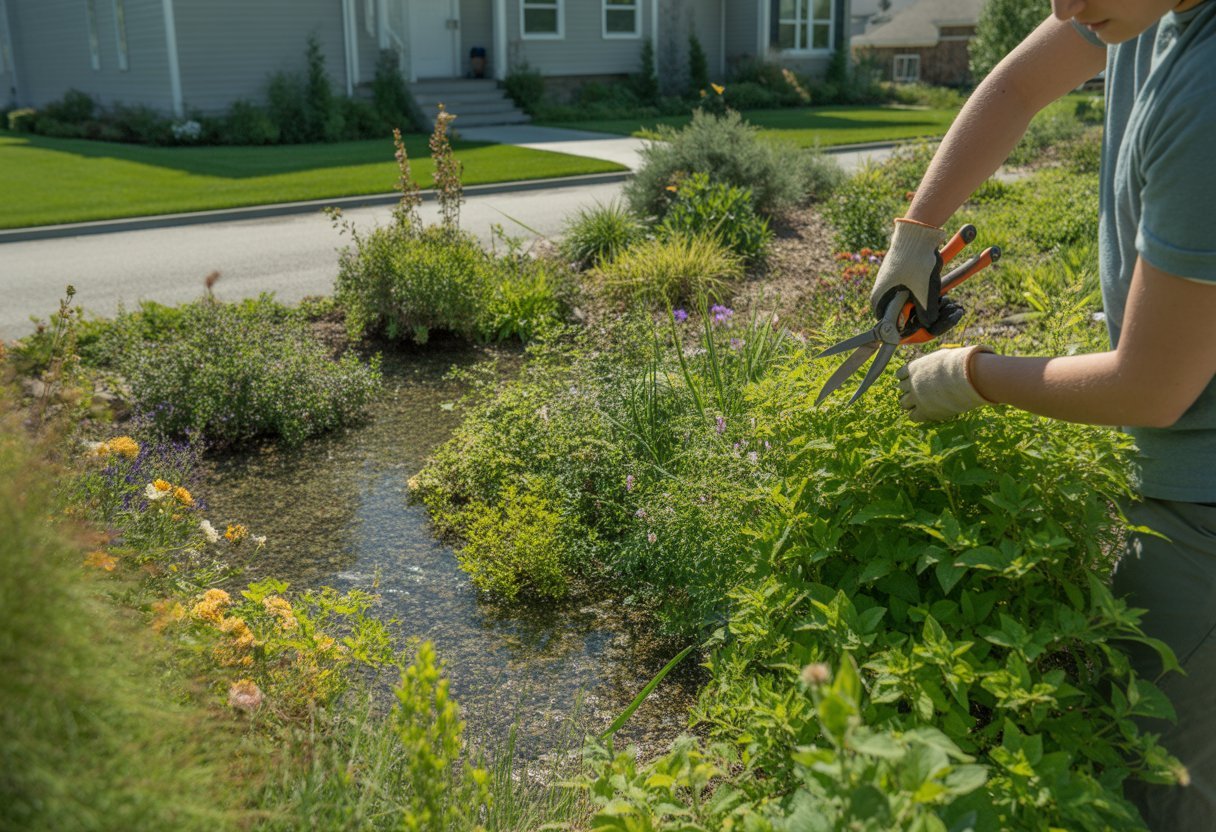
Keeping a rain garden going isn’t a set-it-and-forget-it deal. You’ll need to prune, water, and do some seasonal chores to keep things healthy and looking good.
Pruning, Watering, and Seasonal Care
When you prune, focus on cutting out dead or broken stems to encourage new growth. Early spring is usually the best time for this.
Deadheading flowers helps perennials bloom longer. Watering depends on the weather, but supplemental irrigation matters during dry spells, especially for new plants.
Deep watering is better than a quick sprinkle—it encourages roots to go deep. In fall, clear out leaf litter and add mulch to protect roots during winter.
After heavy rains, check the garden’s drainage. If water’s pooling too long, you might need to tweak your plant choices or soil.
Ensuring Plant Longevity and Bloom Time
Sticking with native and drought-tolerant species usually means less trouble down the road. Skip the fertilizer unless your soil is really lacking—organic matter is usually enough.
Keep an eye out for pests and disease. Catching problems early means you can handle them without hurting good bugs or water quality.
Mix it up with early, mid, and late bloomers so there’s always something flowering. That way, your rain garden stays interesting all season—not just for you, but for the wildlife, too.
Sustaining Your Rain Garden and Landscape
Long-term success really hinges on how well you blend the rain garden with the rest of your landscape. Steer clear of invasive species—they tend to muscle in and throw off the whole ecosystem.
Keep up with periodic weeding so unwanted plants don’t take over. Pulling out seedlings from aggressive species goes a long way in keeping your chosen plant community intact.
Every so often, tweak your planting schemes based on how things are growing and what’s happening on site. Staying responsive like this lets your rain garden keep looking good and doing its job for the environment.