
How to Prune Wild Strawberry for Healthier Growth and Better Fruit Yield
Last updated: October 1, 2026
Pruning wild strawberry (Fragaria vesca) matters if you want healthy plants and more fruit. The best way to prune wild strawberries? Remove dead leaves, trim runners, and thin out crowded spots so air and sunlight can get in.
This basic routine keeps disease at bay and gives you stronger, more productive plants.
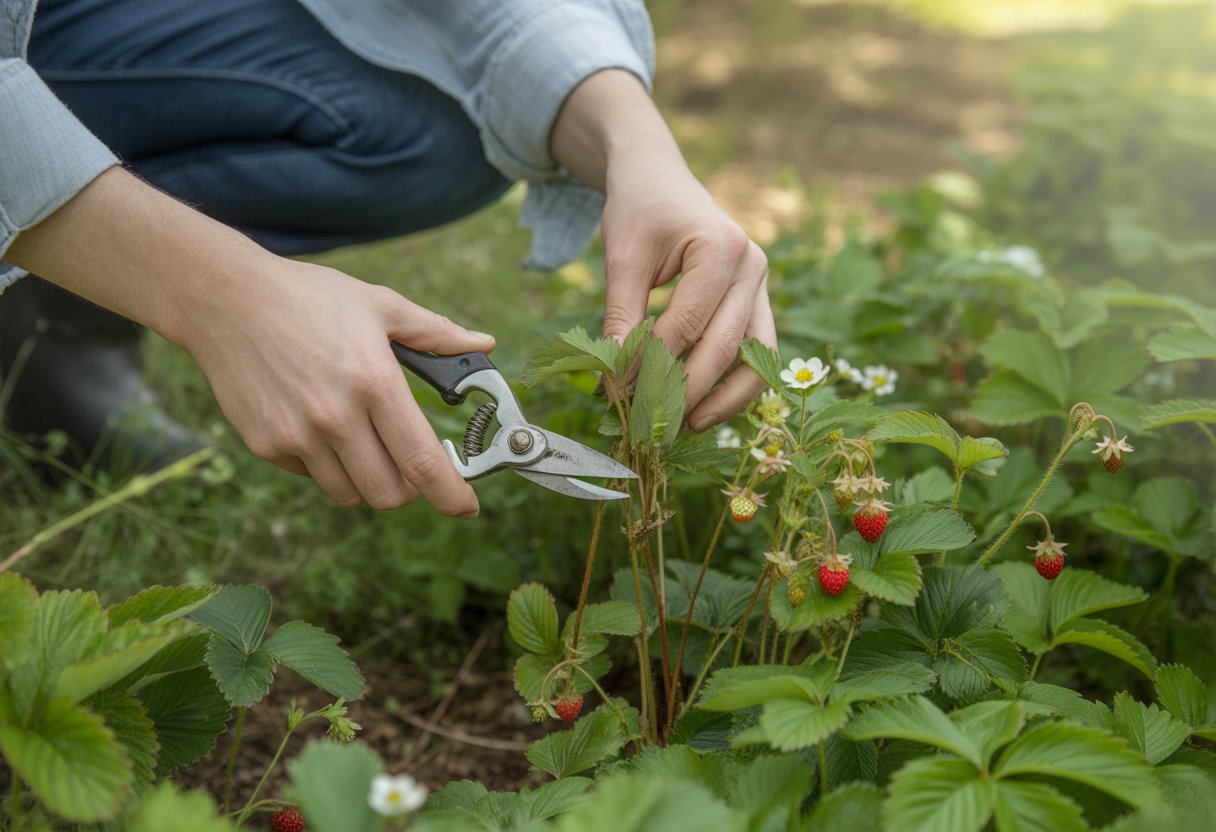
In North America, wild strawberries seem to pop up just about anywhere. But if you let them go wild, the plants get messy and don’t produce as much fruit.
Regular trimming helps control their spread and lets them put more energy into making berries.
It’s important to prune with care so you don’t snip off healthy growth. With a little know-how, you’ll get a solid harvest without a ton of work.
Understanding Wild Strawberry Growth and Needs
Wild strawberries need a bit of specific care to really thrive. It helps to know how they grow, what kind of environment they like, and which varieties you’re dealing with.
If you get the basics down, pruning becomes a lot more effective.
Wild Strawberry Characteristics
Wild strawberries (Fragaria vesca) are part of the rose family. They’re smaller than the big garden varieties most folks are used to.
These little plants hug the ground, sending out runners that root and make new plants. Their leaves come in threes, and they bloom with simple white flowers.
They’re perennials, toughing it out in USDA zones 3 to 9. Cooler climates don’t bother them much.
Wild strawberries pack a punch in flavor, but their fruit is tiny and you won’t get buckets of them. Don’t mix them up with mock strawberries—those have yellow flowers and honestly, they’re not worth eating.
Growing Conditions and Site Selection
Wild strawberries like partial to full sun, though they’ll handle some shade if it gets hot. Shoot for about six hours of sun a day.
They want well-draining, loamy soil that’s just a bit acidic—pH between 5.5 and 6.8 is ideal.
Temperatures between 60°F and 80°F (15°C to 27°C) suit them best. They like steady moisture, but soggy roots spell trouble.
Popular Strawberry Varieties
Besides Fragaria vesca, you’ll see alpine and woodland strawberries. Alpine types give you small, aromatic berries and keep producing longer.
Woodland strawberries look a lot like wild ones but tend to grow more vigorously.
Mock strawberries can fool you by looks, but their fruit is tasteless and not worth growing. Knowing your types helps you pick the right one for your garden.
Best Time and Tools for Pruning Wild Strawberry
Timing matters when you prune wild strawberries. You’ll want the right tools for the job, too—sharp blades make cleaner cuts and help the plants bounce back.
When to Prune
The best time to prune is after fruiting, usually late summer or early fall. That way, plants have time to recover before next year’s growth.
For June-bearing strawberries, prune after you’ve picked the last fruit. Take off old runners and dead leaves now so the plant can focus on new growth and next season’s flowers.
Don’t prune while the plants are flowering. If you cut too soon, you’ll lose out on fruit.
Essential Pruning Tools
Grab a sharp pair of garden shears or scissors to snip runners and dead leaves. Dull blades just mash the stems and open the door to disease.
Wear gloves—strawberry leaves can be rough. Bypass clippers work best since they cut cleanly without crushing.
A small hand rake is handy for clearing debris before you start pruning. It helps you see what actually needs trimming.
Step-by-Step Guide to Pruning Wild Strawberry
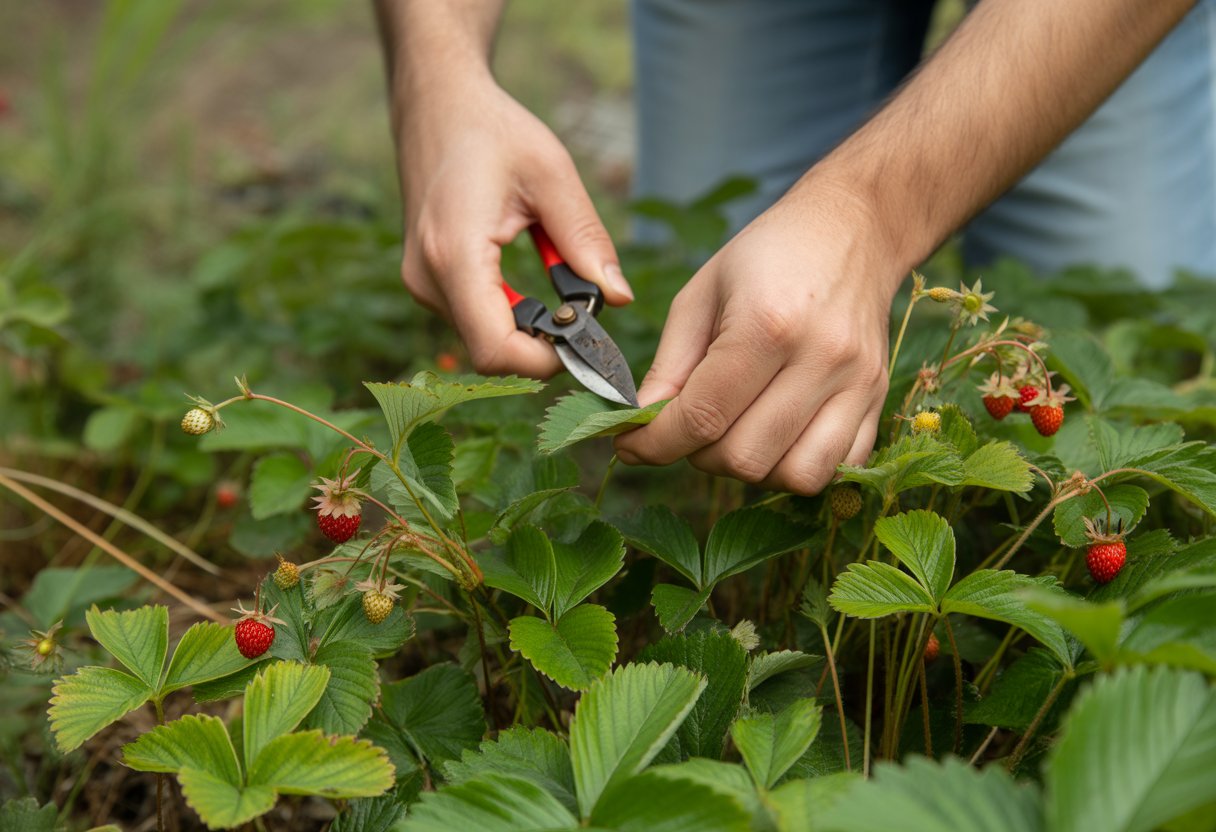
When you prune right, you get healthier growth and more fruit. The job isn’t complicated, but it helps to go step by step.
Preparing the Plants and Area
Start by checking out your strawberry patch. Pull out any weeds or junk that’s crowding the plants.
Make sure the soil drains well and has some organic matter mixed in. If it feels packed down, gently loosen it up.
Water the plants deeply the day before you prune. That softens things up and makes cutting easier.
Keep those shears sharp and clean for the best results.
Removing Old Leaves and Runners
Cut away any dead or yellow leaves right at the base. Getting rid of old foliage lowers the risk of disease and keeps things tidy.
Trim back runners that are too long or making a mess of the patch. This helps the plants put more energy into making berries.
Toss the cuttings in the compost or yard waste—don’t leave them in the bed. Leave a few runners if you want to grow new plants, but don’t let them take over.
Thinning and Shaping for Healthy Growth
Thin out spots where the plants are too dense by snipping weaker crowns. This lets in sunlight and air—both are key for good fruit.
Try to keep the middle of the plant open so water reaches the roots and fungus doesn’t get a foothold.
Once you’re done pruning, spread a layer of organic mulch around the plants. It helps hold moisture and keeps weeds down.
Maintaining Wild Strawberry Plants After Pruning
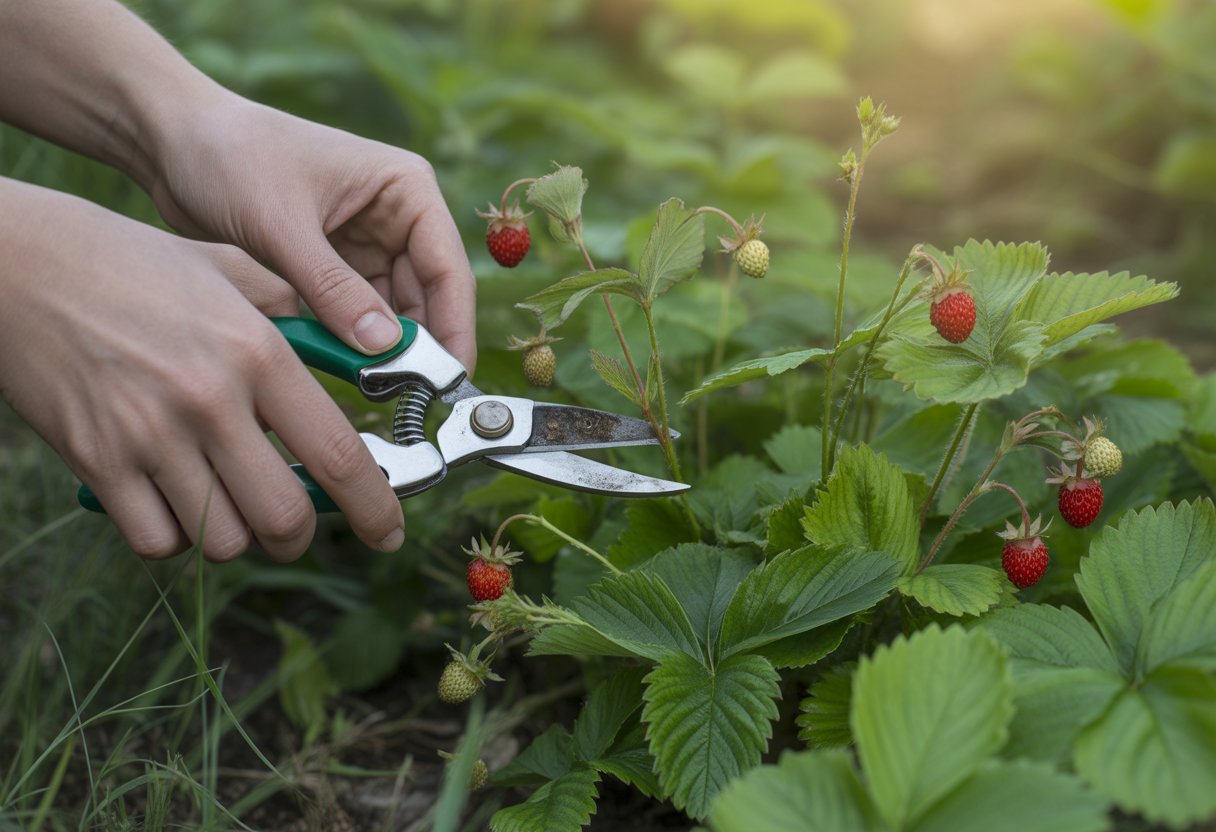
After you prune, wild strawberries need a little extra care to stay healthy and keep producing. Focus on soil, water, pests, and maybe a bit of propagation if you’re feeling ambitious.
Soil Care and Fertilization
Wild strawberries do best in rich, well-drained soil. After pruning, add some compost to boost nutrients and improve structure.
If you’re growing in raised beds, work in a couple inches of compost. It really makes a difference.
Use a balanced, slow-release fertilizer—equal parts nitrogen, phosphorus, and potassium are the way to go. If you’re growing in containers, you’ll probably need to fertilize more often since nutrients wash out faster.
Check your soil pH. Wild strawberries like it slightly acidic—somewhere between 5.5 and 6.5. Adjust with lime or sulfur if you have to.
Mulching and Irrigation
Mulch helps keep soil moist and weeds under control. Straw or pine needles work great and even protect the roots from temperature swings.
Keep watering steady after pruning so the plants don’t get stressed. Drip irrigation or soaker hoses are ideal since they keep leaves dry and lower the risk of fungus.
Aim for about an inch of water per week. Don’t drown them, though—root rot is no joke.
Stick your finger in the soil before watering. Containers dry out faster and might need more frequent checks.
Managing Pests and Diseases
Spider mites and fungal diseases can be a pain with wild strawberries. Check leaves regularly for signs of trouble like stippling or little webs.
Blast mites off with water or use insecticidal soap if you need to. Give your plants some space for better airflow—crowding just invites disease.
Pull off and discard any dead or diseased leaves after pruning.
If you want more fruit, bring in the pollinators. A pollinator garden nearby helps, and companion plants like lavender or borage attract helpful insects.
Honestly, keeping wild strawberries happy isn’t rocket science—just a bit of attention goes a long way.
Harvesting and Plant Propagation
Pick fruit as soon as it ripens. That way, you’ll get more berries over the season.
Wild strawberries pack a punch with vitamin C and fiber. They’re a smart choice if you want a tasty, healthy harvest from your own yard.
You can start new plants by moving runners or planting seeds. Runners root fast, so they’re handy for filling out garden beds or even a few pots.
Seeds need a cold period, which sounds fussy, but they give you more variety in your patch. Some folks like the surprise.
Transplant after pruning. That gives each plant a better shot at nutrients.
Keep the soil healthy and don’t let it dry out. Your strawberries will thank you with bigger, better fruit.

Thanks for this.
Glad you found it useful, rachel55! Best of luck this season. -Plant Native Team
This is useful, thanks.
Glad I found this.