Top 5 Precision Compost Turner for Professional Gardeners in 2025 Reviewed
We independently select all products and services. If you click through links we provide, Plant Native may earn a commission with no extra cost to you. As an Amazon Associate I earn from qualifying purchases.
Last updated: October 1, 2026
Composting is a must for professional gardeners who want healthier soil and a more sustainable way to grow. Compost turners help by mixing and aerating compost piles quickly, making decomposition faster and the resulting compost richer.
Precision compost turners give you more consistent results and save a ton of manual labor. That’s especially important for anyone working on a big scale or running a commercial garden.
These machines come in all shapes and sizes. You’ll find differences in capacity, power source, and how easily you can maneuver them.
Turning depth, mixing uniformity, ease of use, and durability all play big roles in how well these tools work. Picking the right compost turner means weighing these features against your garden’s size, how much compost you’re making, and what kind of organic waste you’re dealing with.
We researched all these details to find the best precision compost turners for professional gardeners. We put several models through their paces to see which ones really deliver consistent, efficient compost management.
Top 5 Precision Compost Turners for Professional Gardeners
We picked out the top compost turners based on how they perform, how sturdy they are, and how easy they are to use. These tools are for gardeners who need equipment they can count on, day in and day out.
Our top pick

- Comfortable, non-slip T-handle grip
- Hinged wings fold and grab compost well
- Lightweight but still tough steel construction
Cons
- Wings sometimes stay closed, which is annoying
- Doesn’t work great on super dense piles
- Limited depth if you’re dealing with a massive heap
We noticed our backs felt less sore after using this aerator instead of a regular fork. The hinged wings made mixing compost simpler, and we didn’t have to bend or twist as much.
The cushioned handle actually stays grippy, even when things get muddy. Sometimes the wings don’t open perfectly on the first try, so we had to wiggle it or try another angle.
For anyone using heap composting, this tool speeds things up without much hassle. Cleaning it is easy—just hose it off and move on.
If you want something simple for routine compost turning, the Double-up Compost Aerator is a solid pick.
Best runner-up
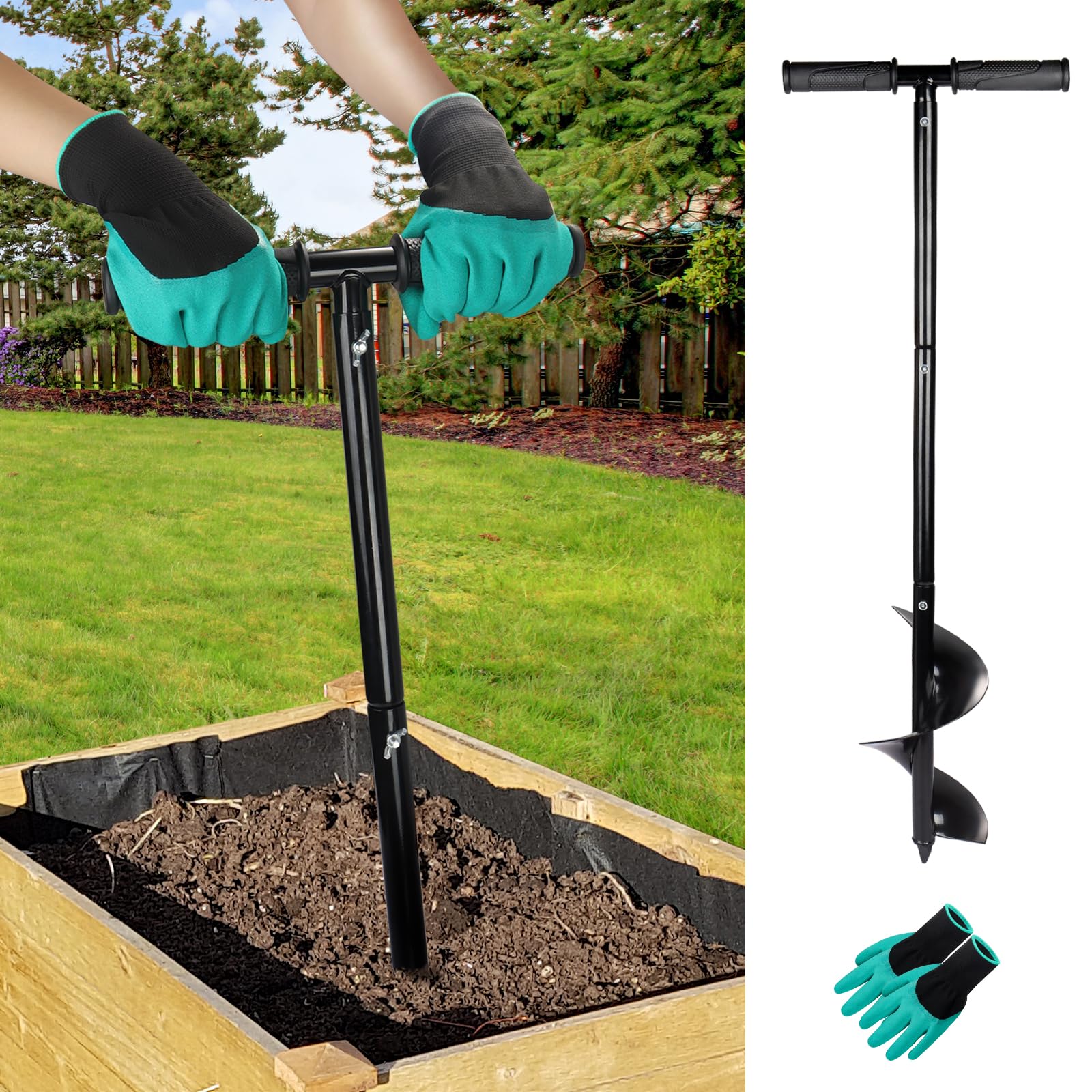
- Rust-resistant build stands up to the weather
- Rotating drill mechanism makes mixing easier
- Cleaning is quick and painless
Cons
- Needs assembly out of the box
- Spiral might be too wide for small bins
- Plastic handle could feel sturdier
After a quick setup, we found the Moonateen aerator easy to use. The drill action really takes the work out of stirring compared to a regular stick.
It handled rain and sun without rusting, even after weeks outside. The smooth finish meant compost didn’t stick, so cleaning was a breeze.
It’s best for medium or large bins. In tight spaces, we had to be careful not to spill compost over the sides. Still, it’s a handy tool if you want compost to break down quickly and evenly.
Best budget option

- Simple enough for beginners
- Steel construction stands up to the elements
- Rotating handle reduces strain
Cons
- Larger piles still take some muscle
- Not made for turning huge volumes
- Some users found the handle joint weak
This tool fits nicely in your hand and slices through dense layers easily. It pulls up material and mixes the pile, getting more oxygen in and helping things break down faster.
It works best if you use it often and tackle smaller sections at a time. The handle spins freely, so the effort stays manageable, but you’ll get the best results with regular turning.
We did see a few complaints about the handle joint breaking under heavy use, so don’t go too hard on it. Overall, it’s a practical manual device that beats using a shovel or fork for regular compost turning.
Best premium choice

- Powder-coated steel resists rust
- Adjustable handle fits different users
- Rolls smoothly over rough ground
Cons
- Gate latch can be finicky
- Filling it up takes a bit of balance
- Basket feels bulky when loaded to the max
Using the compost spreader was straightforward from the start. We only needed a little assembly, and the adjustable handle made it comfortable for everyone.
It moved easily over bumpy spots, and the steel mesh held up well after several uses. Spreading was even, and the side latches kept the basket closed, but we sometimes had to fiddle with the gate latch.
All in all, this spreader made distributing compost a lot less tedious. It’s sturdy and easy to steer, though the gate could use a redesign.
Also great

- Pushes deep without much twisting
- Galvanized steel lasts for ages
- Easier than shoveling or using a fork
Cons
- Needs some upper body strength
- Tough to use in tightly packed piles
- Only aerates—doesn’t mix
The Wingdigger noticeably sped up our compost’s breakdown. We just pushed it down and pulled up, which brought air to the bacteria and helped things decompose faster.
It feels solid and held up after repeated use. It’s heavier than a fork but actually saves energy once you get the motion down.
If your pile is really compacted, you’ll have to put your back into it, but the aeration is better than what we got with a shovel. For gardeners who just want to keep compost healthy without extra features, the Wingdigger is a smart, budget-friendly choice.
The power source—whether it’s electric, diesel, or gasoline—should suit your setup and, honestly, your values. This choice affects what you’ll spend to run it and what kind of emissions you’re putting out there.
Buying Guide
When you’re picking out a precision compost turner, several features jump out as genuinely important. First up: turning capacity. Think about the amount of compost you usually deal with—finding a machine that handles your typical volume means you won’t need to keep going over the same pile.
Durability comes next. I always check for models built with solid stuff, like reinforced steel. That way, you don’t have to worry as much about constant repairs, and it’ll hold up better outside.
Adjustability is another thing I won’t skip. If you can tweak the turning depth and speed, you can fine-tune the composting process for different materials or weather. That’s a real bonus.
And let’s not forget mobility. Compact, easy-to-move machines let you work in all sorts of garden layouts, even the tight ones.
The power source—whether it’s electric, diesel, or gasoline—should suit your setup and, honestly, your values. This choice affects what you’ll spend to run it and what kind of emissions you’re putting out there.
| Feature | What to Look For | Why It Matters |
|---|---|---|
| Turning Capacity | Matches compost volume | Efficient processing |
| Durability | Reinforced steel components | Long lifespan and reliability |
| Adjustability | Adjustable turning depth & speed | Customizes composting |
| Mobility | Compact size, ease of movement | Works in varied spaces |
| Power Source | Suitable fuel type or electric | Cost-effective, low emissions |