Oregon White Oak (Quercus garryana)
Quercus garryana, commonly known as Oregon White Oak, stands as one of the Pacific Northwest’s most iconic and ecologically important native trees. This magnificent deciduous oak is the only oak species native to Washington state and the most widespread oak in Oregon, forming the backbone of unique oak savanna and woodland ecosystems that once covered vast areas of the region. With its distinctive deeply lobed leaves, massive spreading crown, and extraordinary longevity—some specimens living over 500 years—Oregon White Oak represents a living link to the pre-settlement landscape of the Pacific Northwest.
Beyond its impressive stature and longevity, Oregon White Oak supports more species of wildlife than nearly any other Pacific Northwest tree. Over 200 species of moths and butterflies depend on oak trees during some part of their life cycle, and the acorns provide critical food for countless mammals and birds. The tree’s cultural significance is equally profound, having sustained Indigenous peoples for thousands of years and serving as a keystone species in the oak prairies and savannas that defined much of the region’s historical character.
Quick Facts
| Scientific Name | Quercus garryana |
| Family | Fagaceae (Beech) |
| Plant Type | Deciduous Tree |
| Mature Height | 30–100 ft |
| Spread | 40–80 ft |
| Growth Rate | Slow |
| Sun Exposure | Full Sun |
| Water Needs | Low to Moderate (drought tolerant) |
| Soil Type | Well-drained, adaptable |
| Soil pH | 6.0–8.0 (neutral to alkaline) |
| Bloom Time | April – May |
| Flower Type | Catkins (wind-pollinated) |
| Fruit | Acorns (mature in one season) |
| Fall Color | Yellow to yellow-brown |
| Lifespan | 300–500+ years |
| USDA Hardiness Zones | 7–9 |
Identification
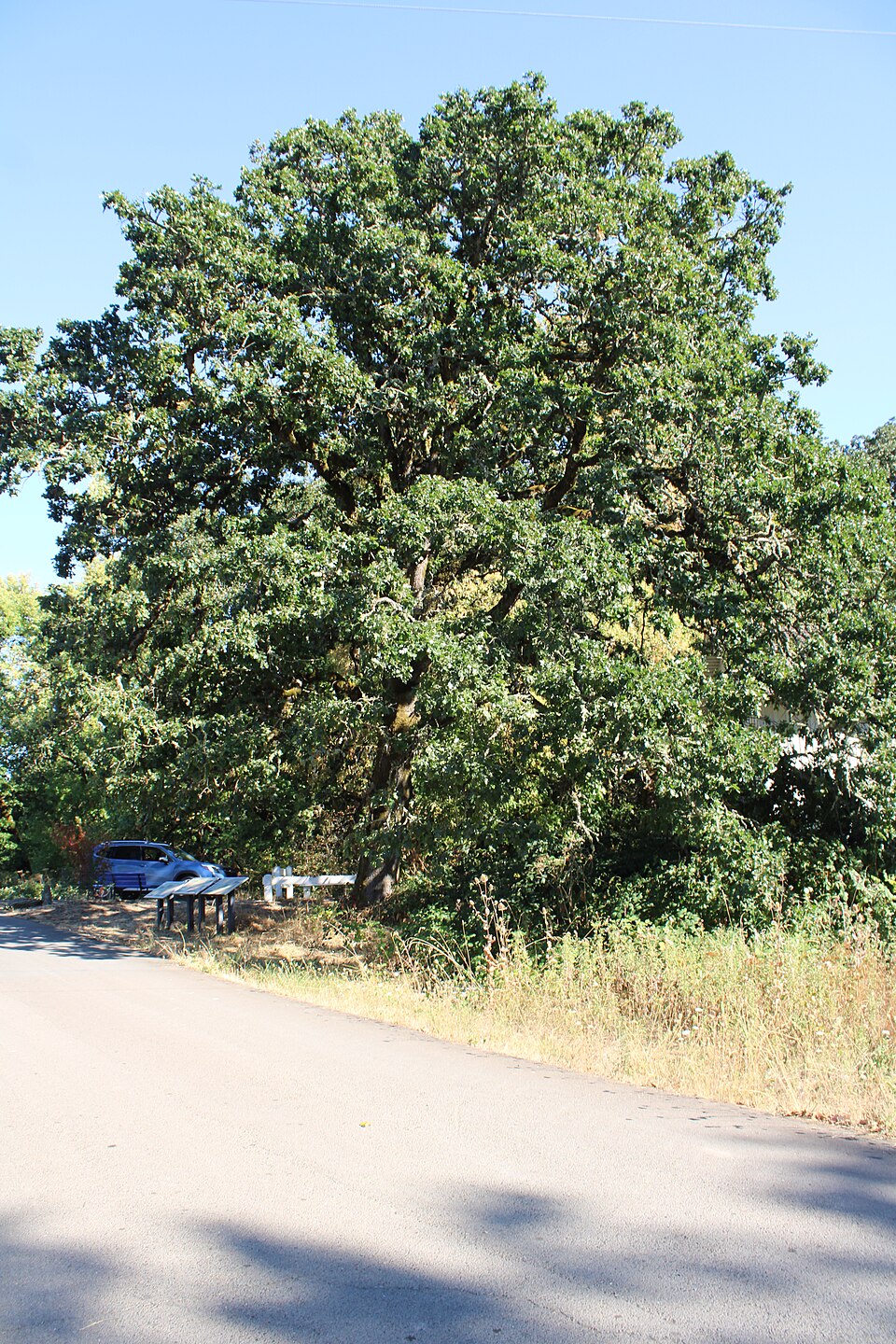
Oregon White Oak is easily recognized by its distinctive deeply lobed leaves and characteristic growth form. Mature specimens develop a broad, rounded crown with massive, spreading branches that often extend horizontally, creating the classic “oak tree” silhouette. The bark is light gray and develops deep furrows with age, creating a distinctive plated appearance on older trees. Young trees may have a more upright form, but develop the characteristic spreading habit as they mature.
Leaves
The leaves are alternate, simple, and typically 3 to 6 inches long with 5 to 9 deep, rounded lobes. The lobes are much deeper than those of most other western oaks, often extending more than halfway to the midrib. Leaves emerge bronze-green in spring, mature to dark green in summer, and turn yellow to yellow-brown in fall before dropping. Young trees and vigorous shoots may retain their leaves through winter (marcescence).
Flowers and Fruit
Oregon White Oak is monoecious, with separate male and female flowers on the same tree. Male flowers appear as drooping catkins 2 to 4 inches long, releasing copious amounts of pollen in late spring. Female flowers are small and inconspicuous. The acorns are relatively large (¾ to 1¼ inches long), oval-shaped, and mature in a single season, typically falling in September and October. The acorn cap covers about one-third of the nut and has distinctive small, tightly overlapping scales.
Native Range
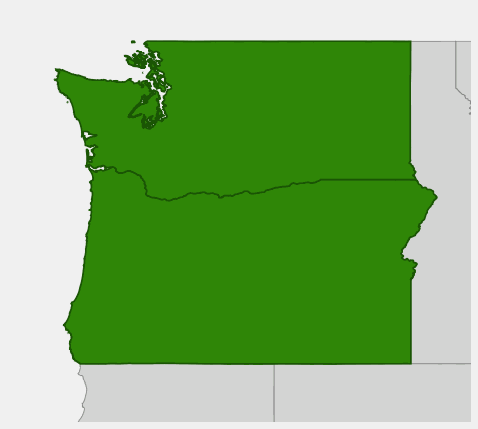
Oregon White Oak has a relatively restricted Pacific Coast distribution, ranging from southern Vancouver Island in British Columbia south through western Washington and Oregon to central California. The species is found primarily in lowland valleys and foothills, typically below 3,000 feet elevation, though it can occur as high as 5,500 feet in southern parts of its range. It grows both west and east of the Cascade Range in Washington and Oregon, but is most abundant in the Willamette, Umpqua, and Rogue river valleys.
Historically, Oregon White Oak formed extensive oak prairies and savannas throughout much of the Puget Sound region and Willamette Valley, maintained by periodic fires set by Indigenous peoples. These oak ecosystems have been dramatically reduced by development, agricultural conversion, and fire suppression, making conservation of remaining oak habitat critically important.
Growing & Care Guide
Oregon White Oak is an excellent choice for large-scale landscapes where its eventual massive size can be accommodated. While slow-growing, it is remarkably long-lived and drought-tolerant once established, making it an ideal tree for sustainable, low-maintenance landscapes.
Site Selection
Choose a location that receives full sun and can accommodate the tree’s eventual 60-80 foot spread. Oregon White Oak needs excellent drainage and cannot tolerate waterlogged soils. It performs best on slopes and well-drained flats, and is naturally adapted to areas with dry summers.
Planting and Establishment
Plant young trees in fall or early spring. Oregon White Oak develops a deep taproot, so plant in the permanent location and avoid transplanting once established. Water regularly the first 2-3 years to encourage establishment, then reduce watering as the tree becomes drought-tolerant. Mulch around the base but keep mulch several feet away from the trunk.
Oregon White Oak demonstrates the remarkable adaptability that characterizes Pacific Northwest flora. Over millions of years, species like Quercus garryana have evolved specific strategies for thriving in the region’s unique climate patterns, developing characteristics that allow them to make the most of wet winters and navigate dry summers with remarkable efficiency.
The ecological relationships surrounding Oregon White Oak illustrate the complex interconnections that define healthy Pacific Northwest ecosystems. From soil microorganisms to large mammals, countless species depend on the resources and habitat structure provided by native plants like Quercus garryana. These relationships have developed over thousands of years, creating intricate webs of interdependence that support regional biodiversity.
Understanding Oregon White Oak’s role in natural succession helps explain its value in restoration and landscaping applications. As ecosystems recover from disturbance or as gardens mature, different species play important roles at different stages. Oregon White Oak contributes to community development in ways that support both immediate ecosystem function and long-term ecological resilience.
Climate change adaptation strategies increasingly recognize the importance of native species like Oregon White Oak in building landscape resilience. Plants that have evolved locally possess genetic diversity and physiological adaptations that help them respond to environmental variability. By incorporating native species into both natural and designed landscapes, we support ecosystems’ capacity to adapt to changing conditions.
Long-term Care
Once established, Oregon White Oak requires minimal care. Avoid summer irrigation near mature trees, as wet soils during the dormant season can promote root rot. Prune only as needed to remove dead, damaged, or interfering branches. The tree is naturally adapted to periodic drought and fire, making it exceptionally resilient in appropriate conditions.
Wildlife & Ecological Value
Oregon White Oak is arguably the most ecologically valuable tree species in the Pacific Northwest. It supports an extraordinary diversity of wildlife and plays a keystone role in its native ecosystems.
For Insects
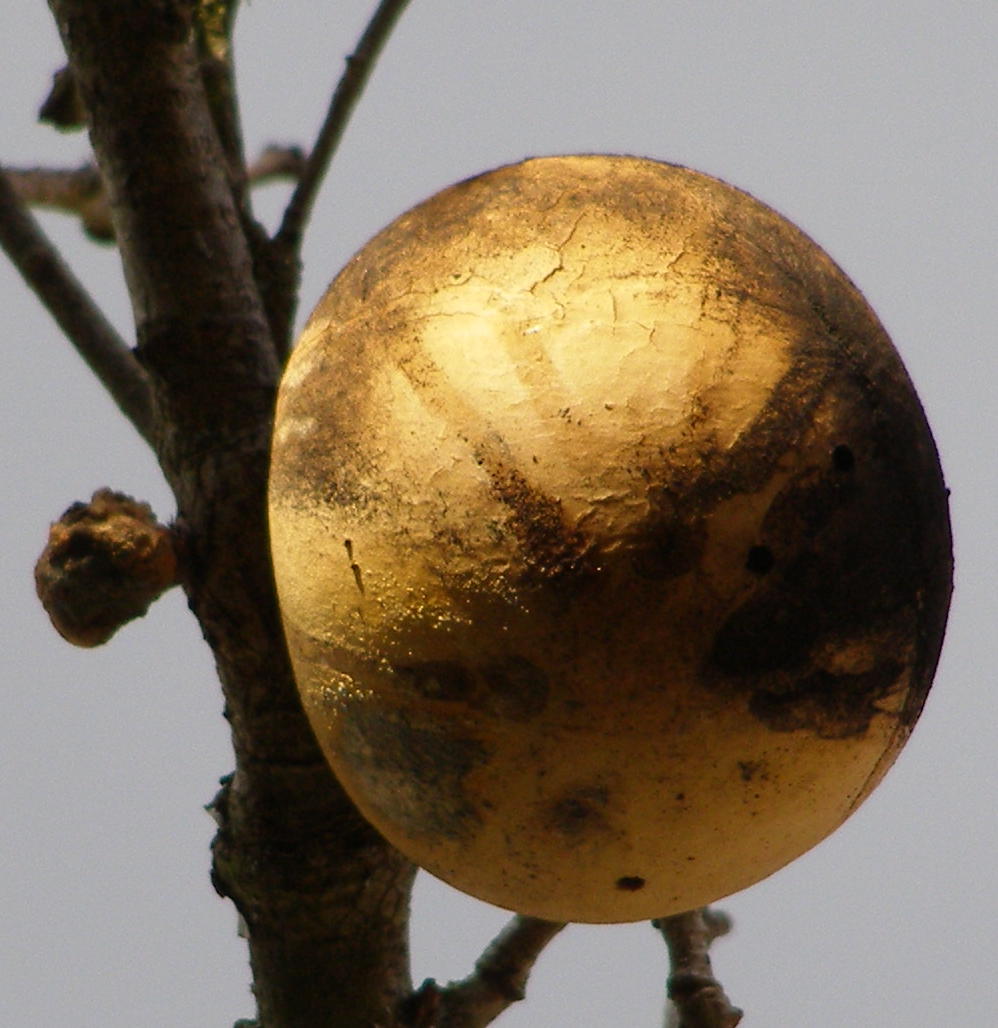
Over 200 species of moths and butterflies depend on Oregon White Oak during some part of their life cycle. The larvae of many species feed on oak leaves, while adults visit the flowers for nectar. This abundance of insects supports numerous bird species throughout the growing season. Oak galls, caused by specialized wasps, provide habitat for additional insect species.
For Birds and Mammals
The acorns are a critical food source for numerous animals including western gray squirrels, Steller’s jays, acorn woodpeckers, band-tailed pigeons, and many other birds. Black bears, deer, and numerous small mammals also depend on acorn crops. The tree’s broad crown provides nesting sites for raptors and large songbirds, while the trunk develops cavities used by woodpeckers and other cavity-nesting species.
Oak Ecosystem
Oregon White Oak forms unique ecosystems—oak prairies and savannas—that support numerous rare and specialized species found nowhere else. These oak-dominated landscapes historically covered hundreds of thousands of acres and supported incredible biodiversity. Today, less than 5% of original oak habitat remains, making conservation and restoration of these ecosystems critically important.
Cultural & Historical Significance
Oregon White Oak has profound cultural and historical significance in the Pacific Northwest. Indigenous peoples managed oak ecosystems for thousands of years through controlled burning, which maintained open oak savannas and prairies while promoting acorn production. Acorns were processed into meal and formed a dietary staple for many tribes. The open oak landscapes also supported game animals and provided materials for basketry and other uses.
The dramatic reduction of oak ecosystems—from over 300,000 acres to fewer than 15,000 acres in the Willamette Valley alone—represents one of the most significant ecological losses in the Pacific Northwest. Today, there is growing recognition of the importance of protecting remaining oak habitat and restoring oak ecosystems where possible.
📋 Regional plant lists featuring Oregon White Oak: Western Oregon & Western Washington

Looking for a nursery that carries Oregon White Oak?
Browse our native plant nursery directory: Oregon · Washington
Frequently Asked Questions
How fast does Oregon White Oak grow?
Oregon White Oak exhibits a moderate to fast growth rate under favorable conditions, typically establishing well within the first few growing seasons. Growth rate varies significantly based on site conditions, with optimal growth occurring in locations that closely mimic the plant’s natural habitat preferences. In suitable conditions with adequate moisture and appropriate light levels, you can expect steady annual growth.
Is Oregon White Oak deer resistant?
Like most Pacific Northwest natives, Oregon White Oak may be browsed by deer and elk, particularly in areas with high wildlife pressure or limited alternative food sources. However, as a native species that co-evolved with these herbivores, it typically recovers well from browsing damage. In areas with consistently heavy deer pressure, young plants may benefit from temporary protection during establishment.
What wildlife does Oregon White Oak support?
Oregon White Oak provides valuable habitat and food resources for a wide variety of Pacific Northwest wildlife, including native birds, beneficial insects, small mammals, and pollinators. The plant’s role in supporting biodiversity makes it an excellent choice for wildlife gardens, restoration projects, and any landscape designed to provide ecosystem services.
When is the best time to plant Oregon White Oak?
In the Pacific Northwest, fall planting (September through November) is typically most successful for native plants, as it allows root system establishment during the mild, wet winter months. Spring planting (March through May) can also be successful, though plants may require supplemental watering during their first summer dry season.
Where can I buy Oregon White Oak?
Oregon White Oak is available from native plant nurseries throughout Oregon and Washington. When possible, seek out locally-sourced stock grown from regional seed sources, as these plants will be better adapted to your specific area’s climate, soil conditions, and wildlife communities. Many restoration supply nurseries also carry the species for larger-scale projects.