
Porcupine Grass (Stipa spartea)
Last updated: August 21, 2026
Stipa spartea, commonly known as Porcupine Grass or Needle-and-Thread Grass, is one of the most distinctive and formidable native grasses of North America’s Great Plains. This robust member of the Poaceae (grass) family commands attention with its dramatic seed awns that can reach over 6 inches long, giving the plant its memorable common name. These sharp, needle-like seeds are both a marvel of natural engineering and a testament to the harsh prairie environment that shaped this remarkable species over millennia.
Standing 2 to 4 feet tall, Porcupine Grass forms dense, imposing clumps that create striking architectural elements in the landscape. The plant’s most famous feature — those long, twisted awns — serves as an ingenious seed dispersal mechanism. Each awn is hygroscopic, meaning it twists and untwists with changes in humidity, literally drilling the attached seed into the soil. This mechanical action, combined with the sharp callus at the seed’s base, allows Porcupine Grass to plant itself effectively in the often-hard prairie soils of its native range.
Beyond its fascinating biology, Porcupine Grass plays a crucial ecological role as a dominant species in mixed-grass and shortgrass prairie communities. Its deep root system and drought tolerance make it an invaluable component of sustainable landscapes, prairie restorations, and erosion control projects. While the sharp seeds require careful handling and consideration in high-traffic areas, this native grass offers unmatched authenticity for prairie gardens and provides essential habitat for grassland wildlife. For those seeking to create truly wild, naturalistic landscapes that capture the essence of America’s Great Plains, Porcupine Grass stands as an iconic and ecologically significant choice.
Identification
Porcupine Grass is unmistakable among native grasses, particularly when in seed. The combination of its robust stature, distinctive foliage, and dramatically long seed awns makes identification straightforward for anyone familiar with prairie vegetation.
Growth Form & Size
This is a large, robust bunchgrass that typically grows 2–4 feet tall, though exceptional specimens can reach 5 feet under ideal conditions. The grass forms tight, dense clumps that can spread 2–3 feet wide over time. Unlike some prairie grasses that create open, airy tufts, Porcupine Grass produces substantial, imposing masses of vegetation that dominate their immediate surroundings.
Foliage Characteristics
The leaves are narrow but substantial, typically ¼ to ½ inch wide and 8–16 inches long. Individual blades are flat to slightly rolled (involute), with rough edges that feel coarse to the touch. The foliage is blue-green to gray-green during the growing season, often with a slightly glaucous (waxy) appearance that helps reflect light and reduce water loss. Leaf sheaths are typically smooth, and the ligule (membrane where leaf blade meets sheath) is prominent and papery-white, reaching up to ¼ inch long.
The Famous Seeds & Awns
The seeds are the plant’s claim to fame and the source of both common names. The actual seed (technically a floret) is about ½ to ¾ inch long, brown to dark brown in color, and covered with stiff hairs. At the base is a sharp, needle-like callus that serves as the “drilling” point. The awn — the long, twisted appendage — extends 4–8 inches from the seed, occasionally reaching 10 inches. These awns have a distinctive twisted, corkscrew appearance near the base, then become straight and hair-like toward the tip. The entire structure is designed for one purpose: driving the seed into the ground through mechanical action driven by humidity changes.
Flowers & Flowering Season
The flowers appear in late spring to early summer (May–July) as narrow, contracted panicles 6–12 inches long. Individual spikelets are large for a grass — up to 1 inch long including the glumes — and are initially pale green to purplish. The flowering display is subtle compared to showier prairie plants, but the developing seed heads quickly become the main attraction as the characteristic long awns emerge and mature.
Seasonal Changes
Porcupine Grass offers distinctive seasonal interest. Spring brings fresh blue-green growth and the emergence of flower spikes. Summer showcases the developing and maturing seed heads with their impressive awns. Fall finds the foliage turning golden-tan to bronze, while the persistent seed heads continue to provide textural interest. Winter reveals the stark, architectural beauty of the dormant clumps, often holding their form well into the following spring.
Quick Facts
| Scientific Name | Stipa spartea |
| Family | Poaceae (Grass) |
| Plant Type | Perennial Bunchgrass |
| Mature Height | 2–4 ft |
| Mature Width | 2–3 ft |
| Growth Rate | Moderate |
| Sun Exposure | Full Sun |
| Water Needs | Low to Moderate |
| Soil Type | Well-drained; tolerates poor, rocky soils |
| Soil pH | 6.0–8.5 (slightly acidic to alkaline) |
| Bloom Time | May – July |
| Flower Color | Pale green to purplish |
| Fall Color | Golden-tan to bronze |
| Deer Resistant | Yes |
| USDA Hardiness Zones | 3–7 |
Native Range
Porcupine Grass is native to the Great Plains of central North America, where it historically dominated vast areas of mixed-grass and shortgrass prairie from southern Canada to the Texas Panhandle. This extensive range reflects the species’ remarkable adaptability to the challenging climate and soils of the continental interior — regions characterized by temperature extremes, irregular precipitation, and often-alkaline soils.
The heart of Porcupine Grass country lies in the northern Great Plains, particularly in the Dakotas, eastern Montana, and the Prairie Provinces of Canada, where it often serves as a dominant or co-dominant species in native grassland communities. Here, it typically grows on upland sites, hillsides, and well-drained flats, often in association with Blue Grama, Western Wheatgrass, and Buffalo Grass. The species shows a particular affinity for calcareous (lime-rich) soils and can thrive in conditions that challenge many other prairie plants.
Historically, Porcupine Grass prairies covered millions of acres across the northern Great Plains, but like most native grasslands, these ecosystems have been dramatically reduced by agriculture and development. Today, remnant populations persist in protected areas, along roadways and railroad rights-of-way, on steep slopes unsuitable for farming, and in carefully managed grazing lands. The species has also been widely used in prairie restoration projects, where its drought tolerance and soil-building capabilities make it valuable for re-establishing sustainable grassland ecosystems on former agricultural lands.
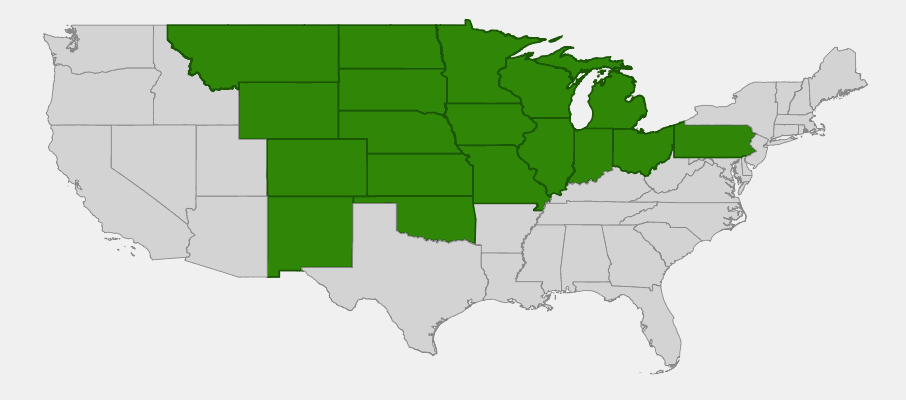
📋 Regional plant lists featuring Porcupine Grass: North Dakota, South Dakota & Western Minnesota
Growing & Care Guide
Porcupine Grass is exceptionally well-suited to low-maintenance, drought-tolerant landscaping, making it an excellent choice for sustainable prairie gardens, xeriscaping, and naturalistic plantings. Once established, this hardy native requires minimal care while providing maximum ecological and aesthetic impact.
Site Selection & Light
Like most prairie grasses, Porcupine Grass performs best in full sun — at least 6–8 hours of direct sunlight daily. While it can tolerate light shade, plants grown in shadier conditions become weak, floppy, and fail to produce the characteristic robust seed heads. Choose the sunniest, most open site available for the best results.
Soil Requirements
One of Porcupine Grass’s greatest strengths is its soil adaptability. It thrives in well-drained soils ranging from sandy to clay, and shows particular tolerance for alkaline conditions (pH 7.0–8.5) that challenge many other plants. The species actually prefers lean, infertile soils and can struggle in overly rich conditions that promote soft, weak growth. Drainage is critical — avoid sites where water stands after rain, as prolonged moisture can lead to root rot.
Watering & Drought Tolerance
Exceptional drought tolerance is perhaps Porcupine Grass’s most valuable attribute. Once established (typically after 2–3 years), plants can survive entirely on natural rainfall across most of their range, even during extended dry periods. During establishment, provide regular watering during dry spells, but avoid overwatering which can promote fungal diseases. In extremely arid regions or during severe droughts, occasional deep watering will maintain better appearance, but it’s rarely essential for survival.
Planting & Establishment
Plant Porcupine Grass in spring after soil temperatures reach 60°F, or in fall 6–8 weeks before hard frost. Space plants 2–3 feet apart for individual specimens, or 18–24 inches apart for prairie restoration plantings. Dig planting holes no deeper than the root ball and twice as wide. Water thoroughly after planting and maintain consistent moisture during the first growing season. Mulch lightly to retain moisture and suppress weeds, but keep mulch away from the plant crown to prevent rot.
Maintenance
Porcupine Grass requires minimal maintenance once established. Cut back to 4–6 inches in late winter or early spring before new growth begins. Many gardeners prefer to leave the attractive seed heads standing through winter for visual interest and wildlife value. The plant rarely needs division, but older clumps can be divided in spring every 5–7 years if desired. Fertilization is unnecessary and can actually be detrimental, promoting weak growth and increased susceptibility to lodging.
Safety Considerations
Important: The sharp seeds can be problematic around people and pets. The needle-like callus and stiff awns can penetrate skin, clothing, and animal fur, potentially causing injury or infection. Avoid planting Porcupine Grass in high-traffic areas, children’s play spaces, or locations where pets frequently run. Consider it best suited for naturalistic areas, prairie restorations, and low-traffic landscape zones where its wild character can be appreciated from a safe distance.
Landscape Applications
- Prairie restoration — authentic component of Great Plains grassland communities
- Erosion control — deep roots stabilize slopes and disturbed soils
- Naturalistic gardens — provides wild, untamed character
- Xeriscaping — exceptional drought tolerance suits water-wise landscaping
- Wildlife habitat — seeds feed birds, clumps provide nesting sites
- Windbreaks — substantial clumps help reduce wind erosion
- Educational plantings — fascinating seed dispersal mechanism teaches natural history
Wildlife & Ecological Value
As a dominant species in Great Plains ecosystems, Porcupine Grass provides significant ecological value that extends far beyond its role as ground cover. This hardy native serves as both a habitat creator and food source while contributing to essential ecosystem processes like soil building and carbon sequestration.
For Birds
The large, nutritious seeds are consumed by numerous prairie bird species, including Greater Prairie-Chickens, Sharp-tailed Grouse, and various sparrows and finches. Despite their formidable awns, many birds have evolved techniques for harvesting and consuming the seeds safely. The dense clumps provide excellent nesting sites for ground-nesting species such as Bobolinks, Dickcissels, and Western Meadowlarks. The substantial winter structure also offers important thermal cover during harsh prairie winters.
For Small Mammals
Prairie voles, deer mice, and ground squirrels collect Porcupine Grass seeds for winter food stores, though they must carefully navigate the sharp awns. The robust clumps create ideal habitat for small mammals, offering protection from predators and weather extremes. The space beneath and around established clumps often becomes a network of small mammal runways and nesting areas.
For Larger Wildlife
While the sharp seeds limit its palatability for large grazers, the early spring growth of Porcupine Grass provides nutritious forage for deer, elk, and livestock before the plant reaches maturity. Native herbivores like American Bison and Pronghorn historically grazed young Porcupine Grass shoots, helping maintain the health and diversity of prairie ecosystems through their grazing patterns.
Soil Building & Carbon Storage
Porcupine Grass is an exceptional soil builder with a deep, extensive root system that can reach 6–8 feet into the ground. This massive root system deposits significant organic matter as roots grow and die back, building soil organic matter and creating channels for water infiltration and aeration. Like other prairie grasses, Porcupine Grass is highly effective at carbon sequestration, storing substantial amounts of atmospheric carbon in both its root system and the resulting soil organic matter. A single mature clump can sequester hundreds of pounds of carbon over its lifetime.
Fire Ecology
Porcupine Grass evolved with periodic fire and responds positively to carefully managed burning. Fire removes accumulated dead material, stimulates vigorous new growth, and helps maintain the open conditions this sun-loving species requires. In restoration settings, prescribed burns every 3–5 years help maintain healthy Porcupine Grass populations and prevent encroachment by woody species.
Cultural & Historical Uses
Porcupine Grass holds significant cultural and historical importance across the Great Plains, where it served Indigenous peoples for countless generations and later played a role in the settlement and ranching history of the American West.
Many Plains tribes, including the Lakota, Dakota, Crow, and Blackfeet peoples, had intimate knowledge of Porcupine Grass and its uses. The seeds, despite their formidable awns, were sometimes collected and processed as a food source during times of scarcity. More commonly, the grass was valued for its role as an indicator of ecosystem health and season progression. The timing of Porcupine Grass seed development served as a natural calendar, helping tribes plan hunting expeditions and seasonal movements.
The long, flexible awns had practical applications as well. Some tribes used them as natural needles for sewing or as kindling material, as the awns ignite readily and burn steadily. The grass also served as a natural barometer — the hygroscopic awns twist and untwist with changes in humidity, allowing experienced observers to predict weather changes.
Early European settlers and ranchers developed a complex relationship with Porcupine Grass. While they recognized its value as an indicator of good rangeland and its drought tolerance during difficult years, the sharp seeds posed significant problems for livestock. Cattle and sheep could suffer serious injuries from the needle-like seeds, leading many ranchers to view large stands of Porcupine Grass as problematic. This perspective contributed to overgrazing and habitat conversion in many areas.
In modern times, Porcupine Grass has gained recognition as a key component of sustainable rangeland management and prairie restoration efforts. Its exceptional drought tolerance and soil-building capabilities make it valuable for healing degraded landscapes and creating resilient grassland ecosystems. The species is now widely propagated by native seed producers and increasingly used in conservation programs aimed at restoring Great Plains ecosystems.
Frequently Asked Questions
Are Porcupine Grass seeds really dangerous?
The seeds can cause injury if they penetrate skin or get into the eyes, mouth, or ears of humans or animals. The needle-like callus is genuinely sharp and designed to drill into hard ground. However, with reasonable precautions — avoiding walking through seed heads and keeping pets away during seed season — the risk is manageable. Many prairie enthusiasts work safely around Porcupine Grass by wearing protective clothing and being mindful of seed timing.
When should I cut back Porcupine Grass to avoid the sharp seeds?
Cut the grass in late fall after seeds have dispersed (typically October–November) or in late winter before new growth begins. Wear protective clothing including long pants, long sleeves, and eye protection. Some gardeners prefer to cut seed heads off immediately after flowering if they’re concerned about seed dispersal in the garden.
Will Porcupine Grass spread throughout my garden?
Porcupine Grass is a clumping species that doesn’t spread by runners. While seeds can potentially establish new plants nearby, this is typically not problematic in managed landscapes. The dramatic, distinctive appearance makes any volunteer seedlings easy to identify and remove if desired.
Can I grow Porcupine Grass from seed?
Yes, but the seeds require cold stratification (30–60 days of cold, moist conditions) and can be challenging to handle safely due to the sharp awns. Many gardeners find it easier to start with nursery-grown plants. If growing from seed, wear gloves and eye protection, and consider removing the awns with scissors before planting.
Is Porcupine Grass suitable for livestock pastures?
While young growth provides nutritious forage, mature plants with developed seeds can injure livestock. In traditional rangeland management, Porcupine Grass areas were often grazed early in the season before seed development, then rested during seed maturity. Modern rotational grazing systems can accommodate Porcupine Grass, but careful timing is essential to avoid injury to animals.

Looking for a nursery that carries Porcupine Grass?
Browse our native plant nursery directory: North Dakota · South Dakota · Minnesota
Bookmarked.
Thank you for the kind words! Wishing you a great growing season. -Plant Native Team