
Wood Lily (Lilium philadelphicum): Native Plant Guide
Last updated: August 21, 2026
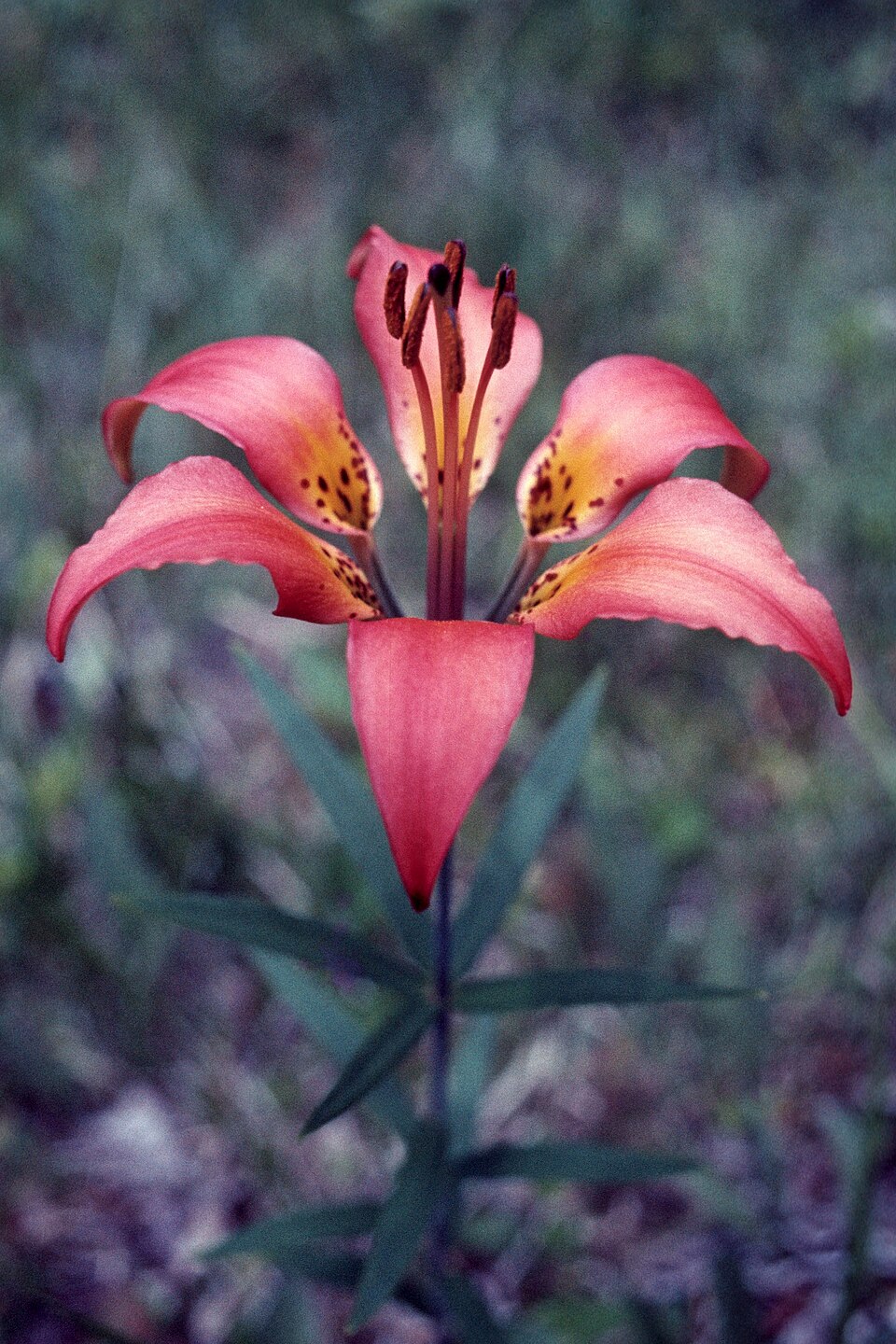
Lilium philadelphicum, commonly known as Wood Lily, Orange Cup Lily, or Philadelphia Lily, is one of North America’s most spectacular native wildflowers, producing brilliant orange-red blooms that seem to glow like flames in woodland clearings and meadows. This member of the Liliaceae (lily) family stands 1–3 feet tall and is distinguished by its upward-facing flowers — a characteristic that sets it apart from most other native lilies, whose blooms typically nod or face downward. The vivid orange to red petals, adorned with distinctive dark purple spots and surrounded by prominent stamens, create one of the most striking displays in the North American flora.
What makes Wood Lily particularly remarkable is its ability to thrive in a variety of habitats, from sunny meadows and prairie edges to partially shaded woodland openings. Unlike many lily species that prefer consistently moist conditions, Wood Lily has adapted to tolerate periodic drought and grows well in well-drained soils, making it more versatile in cultivation than many of its relatives. The plant emerges from a small, white, scaly bulb each spring, sending up a single stem crowned with whorled leaves and topped by one to several stunning flowers that bloom from June through August.
Native to much of northern and western North America, Wood Lily has unfortunately become uncommon to rare throughout much of its historical range due to habitat loss, overcollection, and the challenges of bulb reproduction. This has made it a conservation priority and a particularly prized addition to native plant gardens. Its spectacular flowers, relatively compact size, and adaptability to cultivation make it an outstanding choice for gardeners seeking to add drama and authentic native character to their landscapes while supporting conservation efforts for this remarkable species.
Identification
Wood Lily is a distinctive perennial herb growing from a small, white, scaly bulb buried 4 to 6 inches deep in the soil. The plant typically reaches 1 to 3 feet in height, occasionally growing taller in ideal conditions, with a single, unbranched stem that emerges directly from the bulb. The overall appearance is upright and elegant, with the spectacular flowers serving as the crowning feature that makes this lily unmistakable when in bloom.
Bulb & Root System
The bulb is relatively small for a lily, typically 1 to 2 inches in diameter, composed of thick, white, overlapping scales. Unlike some lily bulbs that produce stolons or offsets, Wood Lily bulbs reproduce primarily through seed production, though they may occasionally produce small bulblets. The bulb produces contractile roots that help pull it to the proper depth in the soil, and it requires a period of cold stratification to break dormancy — an adaptation to the plant’s northern climate origins.
Stem & Leaves
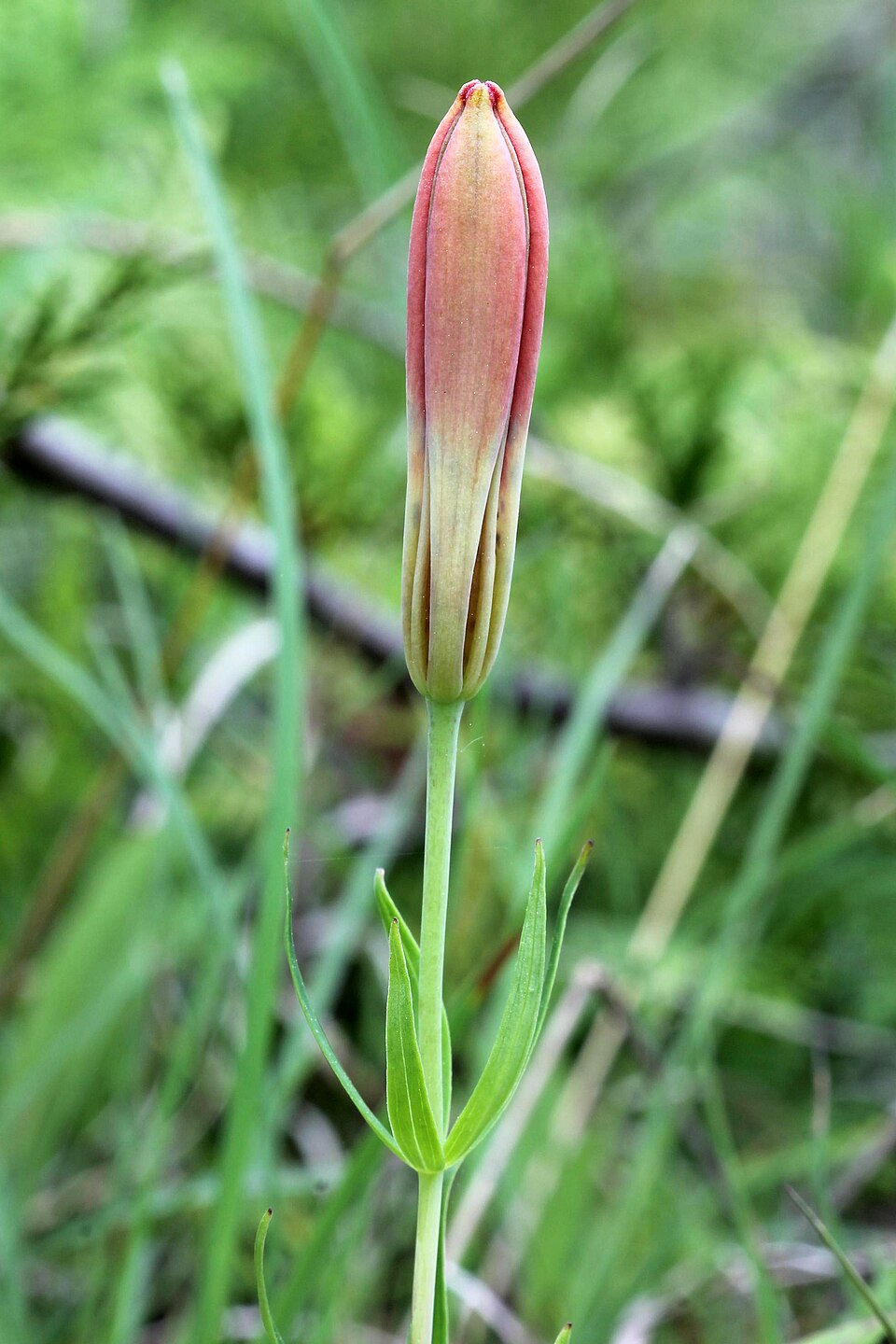
The stem is smooth, green, and typically unbranched, rising directly from the bulb to support the leaves and flowers. The leaves are one of the plant’s distinctive features — they are arranged in 1 to 4 whorls around the stem, with each whorl containing 3 to 8 leaves. Individual leaves are lanceolate, 2 to 4 inches long and 1/2 to 1 inch wide, with smooth margins and prominent parallel venation. The leaves are bright green above and paler beneath, with a somewhat leathery texture that helps the plant conserve moisture.
The whorled leaf arrangement is quite striking and helps distinguish Wood Lily from other plants even when not in flower. The uppermost leaves may be arranged differently, sometimes alternate rather than whorled, and may be smaller than those in the main whorls.
Flowers
The flowers are the plant’s most spectacular feature and the reason for its popularity in both wild and cultivated settings. Wood Lily typically produces 1 to 3 flowers per plant, though exceptional specimens may have up to 5 flowers. Each flower is 3 to 4 inches across and faces upward — a key identifying characteristic that distinguishes it from most other native lilies.
The six petals (technically tepals, as petals and sepals are similar in lilies) are typically bright orange to orange-red, though color can vary from yellowish-orange to deep red depending on soil conditions and genetics. Each petal is adorned with distinctive dark purple to maroon spots, particularly concentrated toward the base, creating a striking contrast against the bright background color. The petals are recurved (curved backwards) at the tips, creating an elegant, open form.
At the center of each flower are six prominent stamens with large, brown to reddish-brown anthers that dust visiting insects with pollen. The single pistil rises above the stamens, with a three-lobed stigma that receives pollen from visiting pollinators. The flowers bloom from June through August, with peak flowering typically in July.
Fruit & Seeds
Following successful pollination, the flowers develop into erect, cylindrical seed capsules that are 1 to 2 inches long. The capsules are initially green, turning brown as they mature in late summer. When ripe, the capsules split along three lines to reveal numerous flat, brown seeds arranged in neat rows. Each seed is equipped with a papery wing that aids in wind dispersal, allowing the plant to colonize new areas.
Quick Facts
| Scientific Name | Lilium philadelphicum |
| Family | Liliaceae (Lily) |
| Plant Type | Perennial Herb (from bulb) |
| Mature Height | 1–3 ft (0.3–0.9 m) |
| Sun Exposure | Full Sun to Part Shade |
| Water Needs | Low to Moderate |
| Bloom Time | June–August |
| Flower Color | Orange to red with dark spots |
| USDA Hardiness Zones | 3–8 |
Native Range
Wood Lily has a broad but somewhat fragmented native range across northern and western North America, reflecting both the species’ adaptability and the complex geological and climatic history of the continent. The species ranges from southern Canada south to the northern United States, with scattered populations extending south in mountainous regions and isolated populations in suitable habitats far from the main range.
In the eastern portion of its range, Wood Lily is found from southern Canada south through the Great Lakes region and New England, with scattered populations extending south along the Appalachian Mountains. In the western regions, it occurs from Canada south through the northern Rocky Mountains and into the southwestern United States, where it is typically found at higher elevations in montane meadows and forest openings.
Historically, Wood Lily was more common and widespread than it is today, but populations have declined significantly due to habitat loss, land development, overcollection for gardens and flower markets, and the inherent challenges of bulb reproduction. The species has been extirpated from many areas where it was once common, particularly in the more densely populated regions of the East. Today, it is considered rare to uncommon throughout most of its range, making conservation efforts critical for the species’ long-term survival.
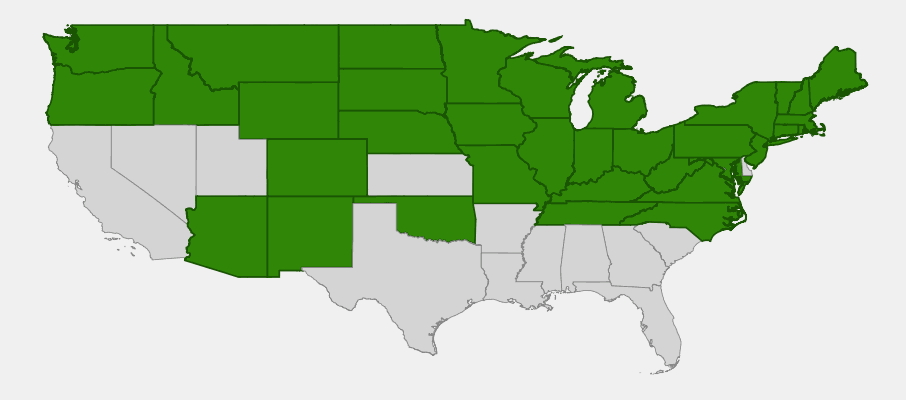
📋 Regional plant lists featuring Wood Lily: North Dakota, South Dakota & Western Minnesota
Growing & Care Guide
Growing Wood Lily successfully requires understanding its specific needs and natural habitat preferences. While more challenging to grow than many native plants, Wood Lily can be a rewarding addition to gardens when its requirements are met. The key to success lies in providing well-drained soil, appropriate light conditions, and patience — Wood Lilies are slow to establish and may take several years to reach blooming size from seed.
Light Requirements
Wood Lily thrives in full sun to partial shade conditions, showing remarkable adaptability to different light levels. In full sun locations, plants tend to be shorter and more compact with intense flower colors, while in partial shade they may grow taller and have slightly more muted but still beautiful blooms. The plant naturally grows in forest openings and meadows where it receives bright light for much of the day but may have some protection from the most intense afternoon sun.
Avoid deep shade locations, as this will result in weak, spindly growth and poor flowering. Similarly, in very hot climates, some afternoon shade can help protect the plants from heat stress and extend the blooming period.
Soil & Drainage
Excellent drainage is absolutely critical for Wood Lily success. The bulbs will quickly rot in waterlogged soils, making well-drained locations essential. The plant prefers sandy loam or sandy soils with good organic content but will tolerate clay soils if drainage is adequate. A slightly acidic to neutral pH (6.0-7.0) is ideal, though the plant is somewhat tolerant of pH variations.
In clay or poorly draining soils, consider creating raised beds or adding coarse sand and organic matter to improve drainage. The bulbs should be planted 4 to 6 inches deep, or about three times the height of the bulb. Good drainage becomes especially important during winter months when bulbs are dormant and susceptible to rot.
Water Management
Wood Lily has moderate water needs and shows good drought tolerance once established, making it more adaptable than many lily species. During the growing season, provide consistent moisture but avoid waterlogged conditions. The plant benefits from regular rainfall or irrigation during active growth and flowering but can tolerate dry periods, particularly after flowering when it begins to go dormant.
Water deeply but infrequently to encourage deep root development and avoid shallow, frequent watering that can promote fungal problems. Mulching around the plants helps conserve moisture and maintain consistent soil temperatures, but keep mulch away from direct contact with the stem to prevent rot issues.
Planting & Establishment
Wood Lily bulbs should be planted in fall, typically October through early November, before the ground freezes. Plant bulbs 4 to 6 inches deep in well-prepared soil, spacing them 12 to 18 inches apart. Handle bulbs carefully, as they can be damaged easily and do not have the protective tunicate (papery covering) found on many other bulbs.
Plants grown from seed require patience — they typically take 4 to 7 years to reach blooming size. Seeds require cold stratification and should be sown in fall for spring germination. First-year plants produce only a single leaf, with the characteristic whorled leaves developing as the plant matures.
Maintenance & Care
Wood Lily is relatively low-maintenance once established but benefits from some specific care practices. Allow foliage to remain until it naturally yellows and dies back in fall — this is critical for bulb energy storage for the following year’s growth. Avoid cutting back green foliage, as this weakens the bulb and may prevent flowering in subsequent years.
The plants naturally go dormant in late summer or fall and may not emerge above ground until late spring — this is normal behavior and not a cause for concern. Mark planting locations to avoid accidentally disturbing dormant bulbs during spring garden work. Light fertilization with a balanced, low-nitrogen fertilizer in early spring can be beneficial but is not strictly necessary in good soil.
Wildlife & Ecological Value
Wood Lily provides important ecological value despite its relatively small size and scattered populations. Its spectacular flowers serve as important nectar sources for a variety of pollinators, while its seeds provide food for birds and small mammals. The plant’s role in woodland edge and meadow ecosystems makes it particularly valuable for supporting biodiversity in these transition habitats.
For Pollinators
The large, brightly colored flowers of Wood Lily are perfectly designed to attract a variety of pollinators, particularly larger insects that can effectively transfer pollen among the relatively few flowers. Bumblebees are among the most important pollinators, as they are large enough to contact both the stamens and stigma while foraging for nectar. Various butterflies and moths are also attracted to the flowers, including swallowtails and larger skippers.
Hummingbirds occasionally visit the flowers, particularly in western portions of the range where broad-tailed and rufous hummingbirds are present. The bright orange-red color and open flower form make the blooms attractive to these avian pollinators, though bee pollination is probably more significant for seed production.
For Birds & Small Mammals
The seeds provide food for various birds, including finches and sparrows, though the relatively small number of flowers per plant limits the overall seed production compared to more prolific wildflowers. Ground-dwelling birds and small mammals may consume seeds that fall to the ground, contributing to local dispersal of the species.
The plant’s woodland edge habitat preference makes it part of the complex ecosystem that supports forest-edge specialist species, including various birds that prefer the transition zone between open areas and closed forest canopy.
Conservation Value
As a rare and declining species throughout much of its range, Wood Lily serves as an indicator species for high-quality woodland edge and meadow habitats. Its presence often indicates relatively undisturbed natural areas with appropriate soil and moisture conditions. Conservation of Wood Lily populations helps protect entire ecosystem complexes that support many other native species.
The species’ declining status makes every cultivated plant potentially valuable for conservation, as garden populations can serve as genetic reservoirs and sources of seed for restoration efforts. However, it’s crucial that garden plants be grown from ethically sourced stock rather than wild-collected bulbs, which can further harm already stressed wild populations.
Cultural & Historical Uses
Wood Lily has a rich cultural history among the Indigenous peoples of North America, who valued the plant both for its practical uses and its striking beauty. The species held particular significance for many tribes across its range, serving roles in medicine, food, and ceremony.
Indigenous Uses
Various Native American tribes used different parts of Wood Lily for medicinal and food purposes. The Ojibwe and other Great Lakes tribes used preparations from the bulbs to treat stomach ailments and as a general tonic, though the bulbs were used sparingly due to their relative scarcity. The Potawatomi used the flowers to make a tea for stomach problems and as a wash for skin conditions.
Some Plains tribes used the bulbs as a food source, typically boiling or roasting them to reduce any bitter compounds and make them more palatable. However, the plant’s relative rarity meant it was never a major food source compared to more abundant native bulbs and roots. The striking flowers also held ceremonial significance for some tribes, being used in rituals and as symbols of beauty and renewal.
The bright orange-red color made the flowers particularly significant in some tribal traditions, where they were associated with the sun, fire, and life force. Some tribes used the petals to create dyes for clothing and ceremonial objects, though the small number of flowers limited the practical scale of such uses.
Early European Settlement
European settlers were immediately struck by the beauty of Wood Lily and many accounts from early naturalists and explorers describe encounters with the spectacular flowers. The species was among the first North American lilies to be described scientifically and was quickly recognized as one of the continent’s most beautiful wildflowers.
Unfortunately, the beauty that made Wood Lily famous also contributed to its decline. During the 19th and early 20th centuries, the flowers were heavily collected for bouquets and the bulbs were dug for gardens, often without understanding the slow-growing nature of the species and its difficulty in cultivation. This commercial and amateur collection significantly reduced wild populations in many areas.
Modern Conservation Efforts
Today, Wood Lily is recognized as a species of conservation concern throughout much of its range, listed as threatened, endangered, or rare in many states and provinces. Modern conservation efforts focus on protecting existing populations, restoring appropriate habitat, and developing sustainable cultivation techniques that can reduce pressure on wild populations.
The species has become an important symbol for native plant conservation, representing both the beauty of North America’s native flora and the vulnerability of many species to human activities. Modern gardeners and conservationists recognize that growing Wood Lily from ethically sourced stock can contribute to conservation while allowing people to experience the beauty of this remarkable flower.
Frequently Asked Questions
Is Wood Lily difficult to grow in gardens?
Wood Lily is more challenging than many native plants but can be successfully grown with attention to its specific needs. The key requirements are excellent drainage, appropriate light levels, and patience — the plants are slow to establish and may take several years to reach full blooming potential. Success is most likely when the plant’s natural habitat preferences are closely matched.
Can I dig Wood Lily bulbs from the wild?
No — collecting Wood Lily bulbs from wild populations is strongly discouraged and often illegal. The species is rare to uncommon throughout its range, and wild collection has contributed significantly to its decline. Purchase bulbs only from reputable nurseries that grow their stock from seed or other ethical sources rather than wild collection.
How long does Wood Lily take to bloom from seed?
Wood Lily typically takes 4 to 7 years to reach blooming size when grown from seed, with most plants first flowering in their 5th or 6th year. The first few years produce only single leaves, with the characteristic whorled leaves and flowering capacity developing as the bulb matures. This slow development is natural and requires patience from gardeners.
Why did my Wood Lily not come up this year?
Wood Lilies naturally go dormant in late summer and may emerge quite late in spring — sometimes not until May or June in northern climates. If the foliage was allowed to die back naturally the previous year and drainage is adequate, the plant is likely just dormant and will emerge when soil temperatures warm sufficiently. Mark planting locations to avoid accidental disturbance.
Can Wood Lily tolerate drought?
Wood Lily shows good drought tolerance once established, particularly compared to many other lily species. However, it performs best with consistent moisture during the growing season and may benefit from supplemental watering during extended dry periods, especially in the first few years after planting. The key is providing adequate moisture without creating waterlogged conditions.
Will Wood Lily multiply in my garden?
Wood Lily bulbs reproduce primarily through seed rather than vegetative division, so multiplication is typically slow compared to many other bulbs. Plants may occasionally produce small bulblets, but the primary means of increase is through successful seed production and germination. This slow reproduction is part of what makes the species vulnerable in the wild and requires patience in gardens.

Looking for a nursery that carries Wood Lily?
Browse our native plant nursery directory: North Dakota · South Dakota · Minnesota
Learn more about lily family plants and their characteristics in our comprehensive guide.
Do deer bother these? That’s my biggest problem — they eat everything.
Good question! Spacing depends on the variety but a general rule is to give them room to breathe. Check the tag or seed packet for specifics. -Plant Native Team
Interesting. My experience has been a little different but every garden is unique I guess.
Thanks for the constructive input! We’ll look into updating with more detail. -Plant Native Team