Silver Sagebrush (Artemisia cana)
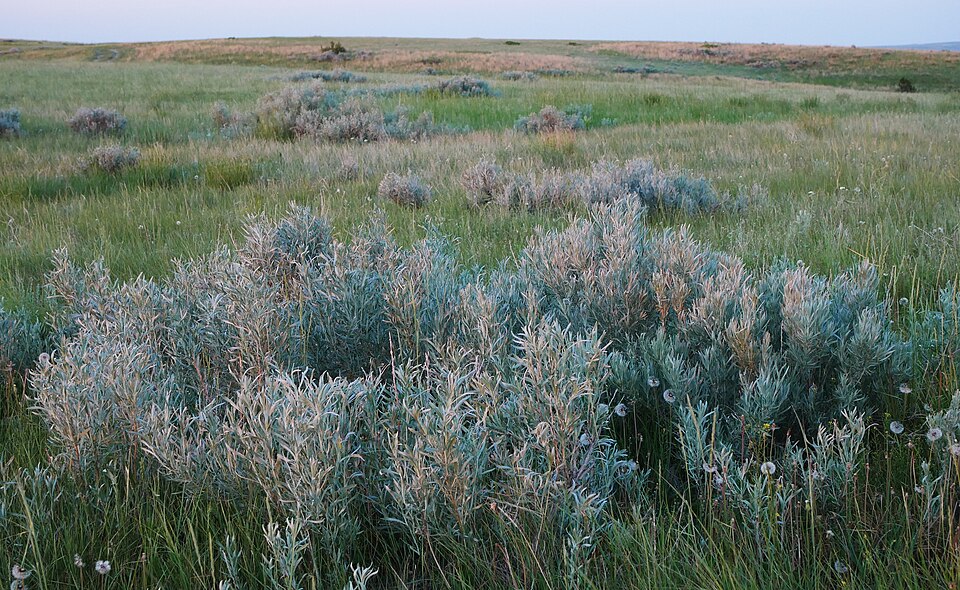
Artemisia cana, commonly known as Silver Sagebrush, is one of the most ecologically important shrubs of the Intermountain West. This semi-evergreen member of the Asteraceae (daisy) family thrives across the vast sagebrush steppe that stretches from eastern Washington and Oregon through the Great Basin and Rocky Mountains, extending far into the northern Great Plains. Silver Sagebrush is instantly recognizable by its narrow, lance-shaped leaves coated in dense silvery hairs that give the entire shrub a striking metallic sheen — particularly beautiful when the wind sweeps across hillsides, turning the silvery undersides of the leaves in unison.
Unlike the more famous Big Sagebrush (Artemisia tridentata), Silver Sagebrush occupies a slightly different ecological niche, preferring mesic to moderately dry sites along stream terraces, valley bottoms, and gentle mountain slopes where soils have some depth and periodic moisture. It forms dense stands — often termed “silver sagebrush communities” — that provide critical winter habitat for Greater Sage-Grouse, Pronghorn, and mule deer across millions of acres of western rangeland. The aromatic oils in its foliage produce that unmistakable sage fragrance that defines the American West.
Silver Sagebrush plays a foundational role in the ecology of western grasslands and shrubsteppes, stabilizing soils, fixing nitrogen through symbiotic soil microbes, and providing year-round food and cover for dozens of wildlife species. Its tolerance for cold winters, periodic drought, and a range of alkaline soils makes it an invaluable plant for restoration, erosion control, and native landscaping in the Intermountain West region.
Identification
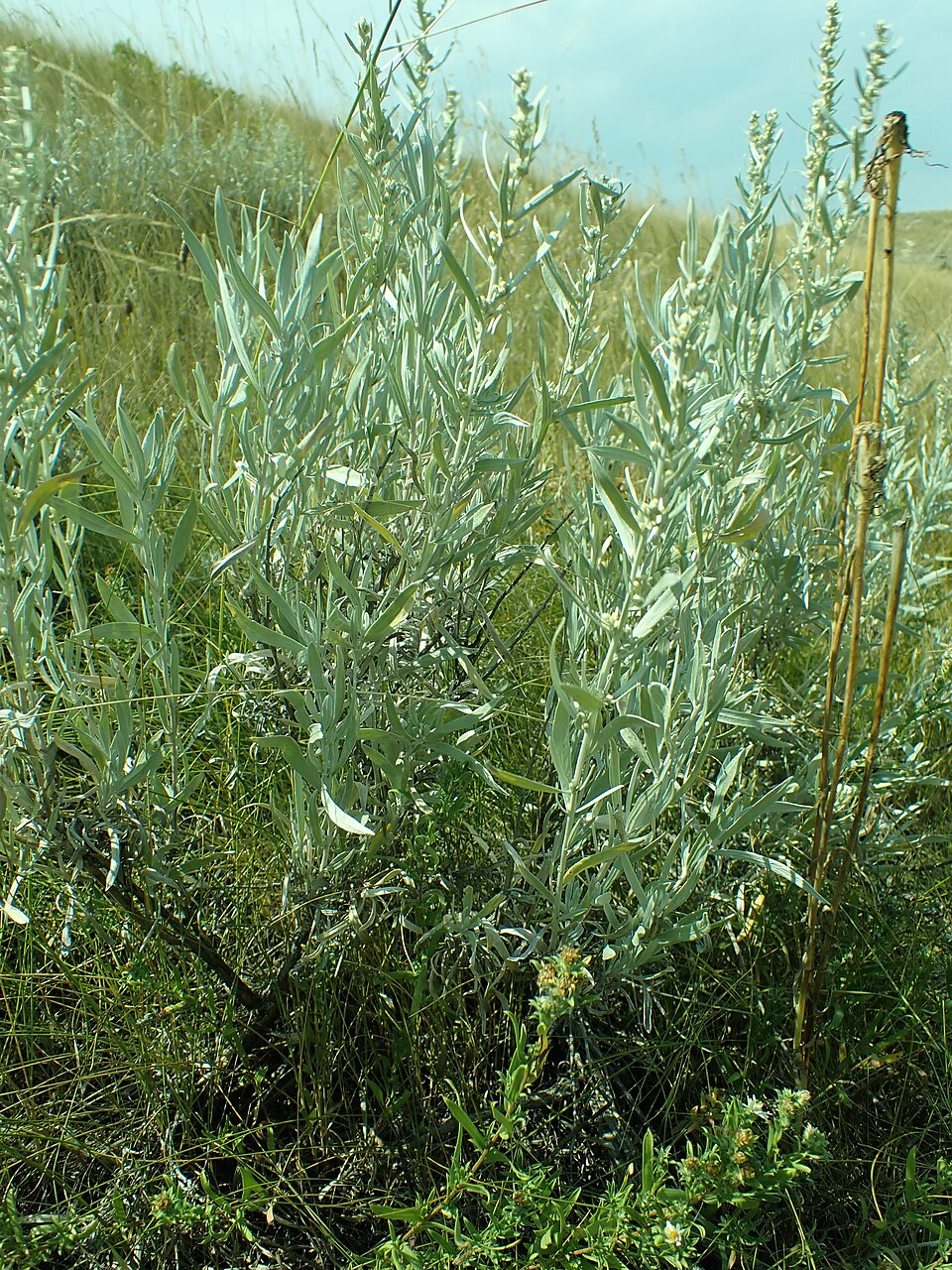
Silver Sagebrush grows as a densely branched, semi-evergreen shrub, typically reaching 3 to 5 feet (0.9–1.5 m) in height, though it can occasionally reach up to 6 feet in favorable conditions. The plant has a rounded to somewhat irregular growth form, with many slender upright branches arising from a woody base. All parts of the plant have a strong, pleasant sage aroma from the aromatic oils coating every surface.
Leaves
The leaves are the most distinctive feature: narrow and linear to lance-shaped, 1 to 4 cm long and typically less than 4 mm wide — much narrower than those of Big Sagebrush. Both surfaces are densely covered with fine, silvery-white hairs (tomentose), giving the entire plant its characteristic silver-gray color. The leaf margins are entire (no teeth or lobes), which also helps distinguish Silver Sagebrush from some related species. Leaves remain on the plant through much of winter, often turning tawny-bronze with cold temperatures before fresh growth appears in spring.
Stems & Bark
Young stems are flexible, slender, and densely silvery-hairy, matching the foliage in color and texture. Older woody stems develop shredding, fibrous gray-brown bark that peels in strips along the lower portions of the plant. The multi-stemmed base is woody and persistent, allowing the plant to resprout vigorously after fire or disturbance — a critical adaptation in fire-maintained sagebrush communities.
Flowers & Fruit
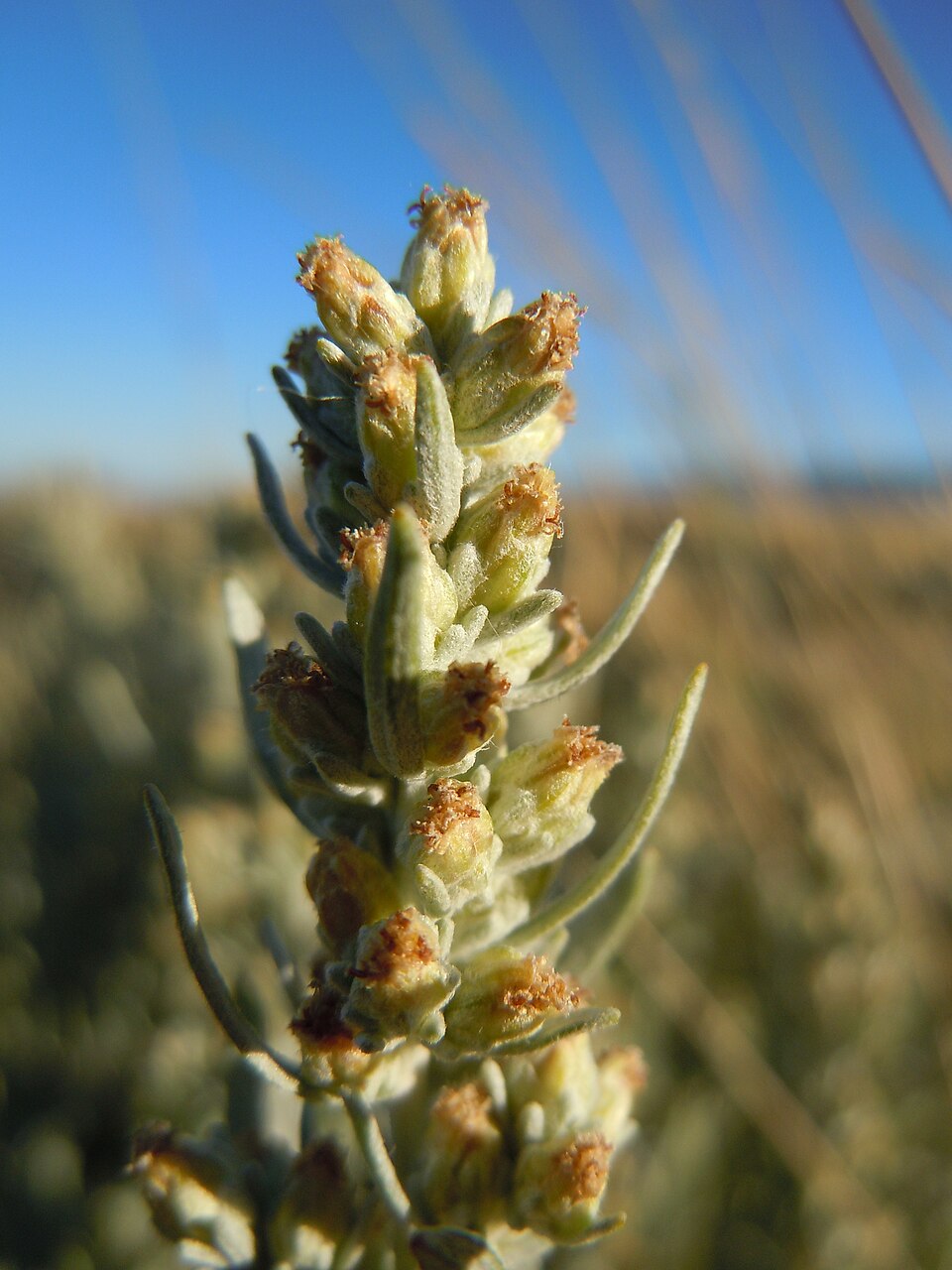
Silver Sagebrush blooms in late summer and fall, from August through October. The tiny flower heads are arranged in dense, leafy panicles or spike-like racemes along the upper portions of the stems. Each individual flower head is small — about 2–4 mm across — and contains only disk flowers (no ray petals), which are pale yellow to cream in color. The flowers are wind-pollinated, releasing abundant pollen that can trigger allergies in sensitive individuals. After bloom, the plant produces tiny, oval achenes (dry one-seeded fruits), each about 1 mm long, which are dispersed by wind and wildlife.
Quick Facts
| Scientific Name | Artemisia cana |
| Family | Asteraceae (Daisy / Sunflower) |
| Plant Type | Deciduous to Semi-Evergreen Shrub |
| Mature Height | 3–5 ft |
| Sun Exposure | Full Sun |
| Water Needs | Low to Moderate |
| Bloom Time | August – October |
| Flower Color | Pale yellow (tiny, wind-pollinated) |
| Soil Type | Well-drained; loam, clay loam, sandy loam |
| Soil pH | 6.5–8.5 (tolerates alkalinity) |
| Deer Resistant | Moderate (aromatic foliage deters heavy browsing) |
| USDA Hardiness Zones | 3–8 |
Native Range
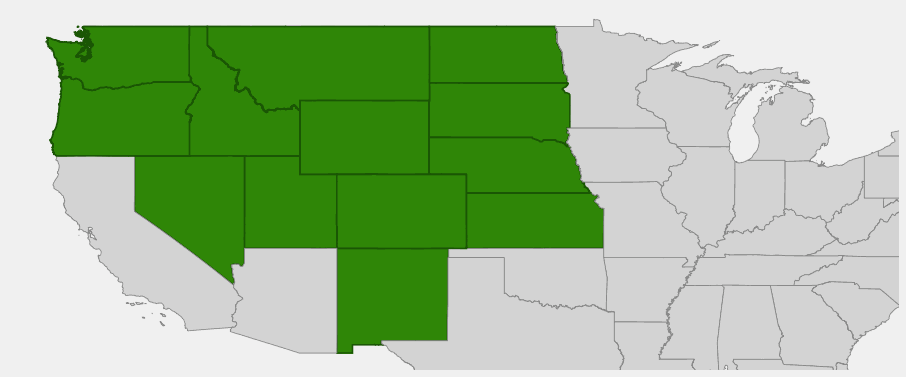
Silver Sagebrush is native to a broad swath of western North America, ranging from southern British Columbia and Alberta east through the Canadian Prairie Provinces to Manitoba, and southward through the intermountain states into the Great Plains. In the United States, it is found from eastern Washington and Oregon through Idaho, Nevada, Utah, Wyoming, Colorado, Montana, and the Dakotas, extending south into Nebraska, Kansas, and northern New Mexico. It is one of the dominant shrubs of the sagebrush-steppe biome that covers tens of millions of acres of the American West.
Within this broad range, Silver Sagebrush typically occupies valley bottoms, stream terraces, gentle slopes, and broad upland flats where soils are moderately deep and receive slightly more moisture than surrounding uplands. It is often found in association with cool-season grasses such as Bluebunch Wheatgrass (Pseudoroegneria spicata) and Idaho Fescue (Festuca idahoensis), forming the classic “silver sagebrush-bunchgrass” plant communities that are among the most wildlife-rich habitats in the West.
Three subspecies are recognized: A. cana ssp. cana (northern Great Plains and northern Rockies), ssp. bolanderi (California and Great Basin), and ssp. viscidula (southern Rockies). Each occupies a somewhat distinct geographic range and shows minor morphological differences, but all share the characteristic narrow, silver-hairy leaves and ecological affinities of the species.
📋 Regional plant lists featuring Silver Sagebrush: Intermountain West
Growing & Care Guide
Silver Sagebrush is a hardy, low-maintenance shrub perfectly adapted to the cold winters and dry summers of the Intermountain West. Once established, it requires minimal intervention, making it an excellent choice for low-water native gardens, restoration projects, and wildlife plantings across the region.
Light
Silver Sagebrush thrives in full sun and requires at least 6–8 hours of direct sunlight per day for best growth and form. In partial shade, the plant becomes open and leggy, loses much of its silver coloration, and becomes less productive for wildlife. Site it in open, unshaded locations for optimal performance — exactly what nature intends for this sun-loving steppe shrub.
Soil & Water
One of Silver Sagebrush’s greatest advantages is its adaptability to a wide range of soil types. It grows in loam, clay loam, sandy loam, and gravelly soils, and tolerates alkaline conditions — even moderately saline soils in some cases. Good drainage is essential; Silver Sagebrush will not tolerate waterlogged conditions or standing water. Once established (typically after 1–2 years), it is quite drought-tolerant and rarely needs supplemental irrigation except during prolonged dry periods. During establishment, water every 1–2 weeks in summer. Mulching the root zone with gravel or organic matter helps conserve moisture and moderate soil temperatures.
Planting Tips
Plant Silver Sagebrush in fall or early spring. Container-grown plants establish more reliably than bare-root stock in the dry western climate. Choose a site with full sun and good air circulation — dense planting or poor air movement can encourage fungal diseases in humid conditions. Space plants 4–6 feet apart for hedgerow or screen plantings; 6–8 feet apart for individual specimens or wildlife habitat plantings. Silver Sagebrush spreads by both seeds and underground rhizomes, eventually forming dense colonies — a great feature for erosion control but something to consider in small gardens.
Pruning & Maintenance
Silver Sagebrush requires very little pruning. In the wild, it is maintained by periodic fire and browsing, which removes old woody growth and stimulates dense new shoots. In the garden, light shearing in late winter or early spring before new growth emerges will rejuvenate the plant and keep it compact. If plants become very woody and open, a hard cutback to 12–18 inches will stimulate vigorous resprouting. Avoid heavy pruning in summer or fall when the plant is preparing for or entering dormancy. Silver Sagebrush has no serious pest or disease problems in well-drained, sunny conditions.
Landscape Uses
Silver Sagebrush shines in naturalistic and low-water western landscapes:
- Xeriscape planting — drought-tolerant once established, perfect for low-water gardens
- Wildlife habitat — essential cover and forage for Sage-Grouse, Pronghorn, and mule deer
- Erosion control on slopes and disturbed sites via rhizome spread
- Hedgerow or windbreak in agricultural and rural settings
- Restoration plantings in degraded sagebrush-steppe communities
- Specimen plant for the distinctive silver foliage color and texture
- Fire-resistant buffer plantings (aromatic shrubs have some fire-retardant properties)
Fire Ecology
Fire plays a defining role in Silver Sagebrush ecology. Unlike many sagebrush species that are killed outright by fire, Silver Sagebrush has an exceptional ability to resprout vigorously from its root crown and underground rhizomes after moderate-severity fires. This adaptation gives it a strong competitive advantage over Big Sagebrush in fire-prone landscapes. Historical fire return intervals in silver sagebrush communities ranged from 10 to 40 years, much shorter than in Big Sagebrush communities, reflecting this resprouting strategy. In garden settings, the plant can be cut to the ground to simulate a “fire reset” and stimulate dense new growth.
Wildlife & Ecological Value
Silver Sagebrush is a keystone plant species in the ecology of western North America. Its dense, semi-evergreen cover, nutritious foliage, and seed production make it one of the most important plants in the sagebrush ecosystem — a biome that supports over 350 wildlife species.
For Birds
The Greater Sage-Grouse (Centrocercus urophasianus) — an iconic and imperiled bird of the West — depends heavily on silver sagebrush for both food and shelter. The buds and leaves provide critical winter nutrition, while the dense cover shelters birds from predators and severe weather. Sage Thrashers, Sage Sparrows (now Sagebrush Sparrows), Brewer’s Sparrows, and Vesper Sparrows nest and forage within silver sagebrush stands. Raptors including Ferruginous Hawks, Prairie Falcons, and Short-eared Owls hunt the small mammals attracted to these shrub communities.
For Mammals
Pronghorn (Antilocapra americana) — the fastest land animal in the Western Hemisphere — rely heavily on silver sagebrush as a primary winter food source, consuming both leaves and stems when grasses are dormant or snow-covered. Mule Deer browse the foliage heavily, particularly in late fall and winter. Pygmy Rabbits, which are the only North American rabbit to dig their own burrows and one of the most sagebrush-dependent mammals, use silver sagebrush for food and cover. Prairie dogs, ground squirrels, and numerous small rodents shelter in dense stands, in turn attracting raptors and carnivores.
For Pollinators
While Silver Sagebrush’s tiny flowers are wind-pollinated and not a primary nectar source, the shrub community it anchors supports remarkable pollinator diversity. The associated forb species that grow among silver sagebrush — including buckwheats (Eriogonum spp.), penstemon, and prairie clover — provide crucial nectar resources for native bees and butterflies. Silver Sagebrush’s aromatic oils may also play a chemical role in structuring insect communities within sagebrush ecosystems.
Ecosystem Role
Silver Sagebrush serves multiple critical ecosystem functions. Its deep root system and rhizome network stabilize soils and reduce erosion across millions of acres of western rangeland. The plant accumulates fine sediments and organic matter, gradually building soil quality in otherwise nutrient-poor environments. Dense stands create snow-catch areas, increasing local soil moisture and supporting associated plant communities. As a long-lived perennial shrub, Silver Sagebrush provides structural persistence in a landscape where grass cover fluctuates dramatically with rainfall — a critical stabilizing influence in the sagebrush biome.
Cultural & Historical Uses
Silver Sagebrush and its relatives have been integral to the lives of Indigenous peoples of the Great Basin and Rocky Mountain West for thousands of years. The Shoshone, Paiute, Bannock, and other Great Basin nations used sagebrush extensively for medicine, fuel, construction, and ceremony. The aromatic leaves were burned as ceremonial incense to purify spaces and people, a practice that continues in many communities today. Dried leaves and stems were also burned as a smudging herb — a tradition sometimes conflated with white sage but entirely distinct in its plant and geographic origins.
Medicinally, Silver Sagebrush leaves were used to treat colds, fevers, headaches, and respiratory ailments. Teas brewed from the leaves served as an anti-inflammatory treatment, and the aromatic steam from simmering leaves was inhaled to relieve congestion. The plant’s antimicrobial properties, now confirmed by laboratory studies, were thus known and applied empirically for generations before formal science. The Blackfeet used sagebrush leaves as a topical treatment for skin conditions, while the Crow employed the seeds as a food supplement during lean periods.
For many Great Plains and Intermountain peoples, Silver Sagebrush stands were also important for fuel in treeless landscapes, for weaving into mats and baskets, and for lining food storage pits and sweat lodges. The fibrous inner bark was used to make ropes and cordage, and bundles of stems served as brooms and brushes. Modern ranchers and land managers recognize Silver Sagebrush as an indicator of range health — its abundance and vigor signal a well-functioning sagebrush-steppe ecosystem, while its disappearance often indicates overgrazing, drought, or invasive annual grasses. Restoration ecologists use it extensively in revegetation projects across degraded western rangelands.
Frequently Asked Questions
What is the difference between Silver Sagebrush and Big Sagebrush?
The most visible difference is leaf shape: Silver Sagebrush has narrow, linear leaves (usually less than 4 mm wide) with silvery hair on both surfaces, while Big Sagebrush (Artemisia tridentata) has wedge-shaped leaves with 3 teeth at the tip and a strong three-lobed appearance. Silver Sagebrush also tends to prefer slightly moister, lower-elevation sites than Big Sagebrush, and critically, it resprouts from the root crown after fire — Big Sagebrush does not. Both are native and ecologically important, but they occupy subtly different niches.
Is Silver Sagebrush edible?
Silver Sagebrush is not consumed directly as food by humans, though some Indigenous peoples used the seeds as a minor food supplement. The leaves contain strong aromatic oils (including camphor and thujone) that are not safe to consume in significant quantities. The plant is used medicinally in small doses as teas and poultices, but should not be ingested regularly or in large amounts.
Will Silver Sagebrush grow in my garden if I live in the eastern US?
Silver Sagebrush is adapted to the dry, continental climate of western North America and generally struggles in the humid summers of the eastern US. It requires excellent drainage and low humidity; in humid conditions, fungal root rots and foliar diseases often kill the plant. It is best suited for gardens west of the 100th meridian, in USDA Zones 3–8.
Does Silver Sagebrush spread aggressively?
Silver Sagebrush spreads by both seeds and underground rhizomes. In disturbed or open sites, it can spread substantially over time, forming large colonies — which is excellent for erosion control and wildlife habitat but should be considered in small, formal gardens. In established plant communities with competition from other plants, spread is much more modest. It is not considered invasive in its native range.
How can I use Silver Sagebrush for erosion control?
Silver Sagebrush is excellent for erosion control on slopes and disturbed soils in dry western climates. Plant container-grown stock in fall or early spring, spaced 3–4 feet apart for dense cover. The rhizome network develops within 2–3 years and binds the soil effectively. On steep slopes, combine with native grasses like Bluebunch Wheatgrass or Western Wheatgrass for immediate grass cover while sagebrush establishes.