Canyon Wild Grape (Vitis arizonica)
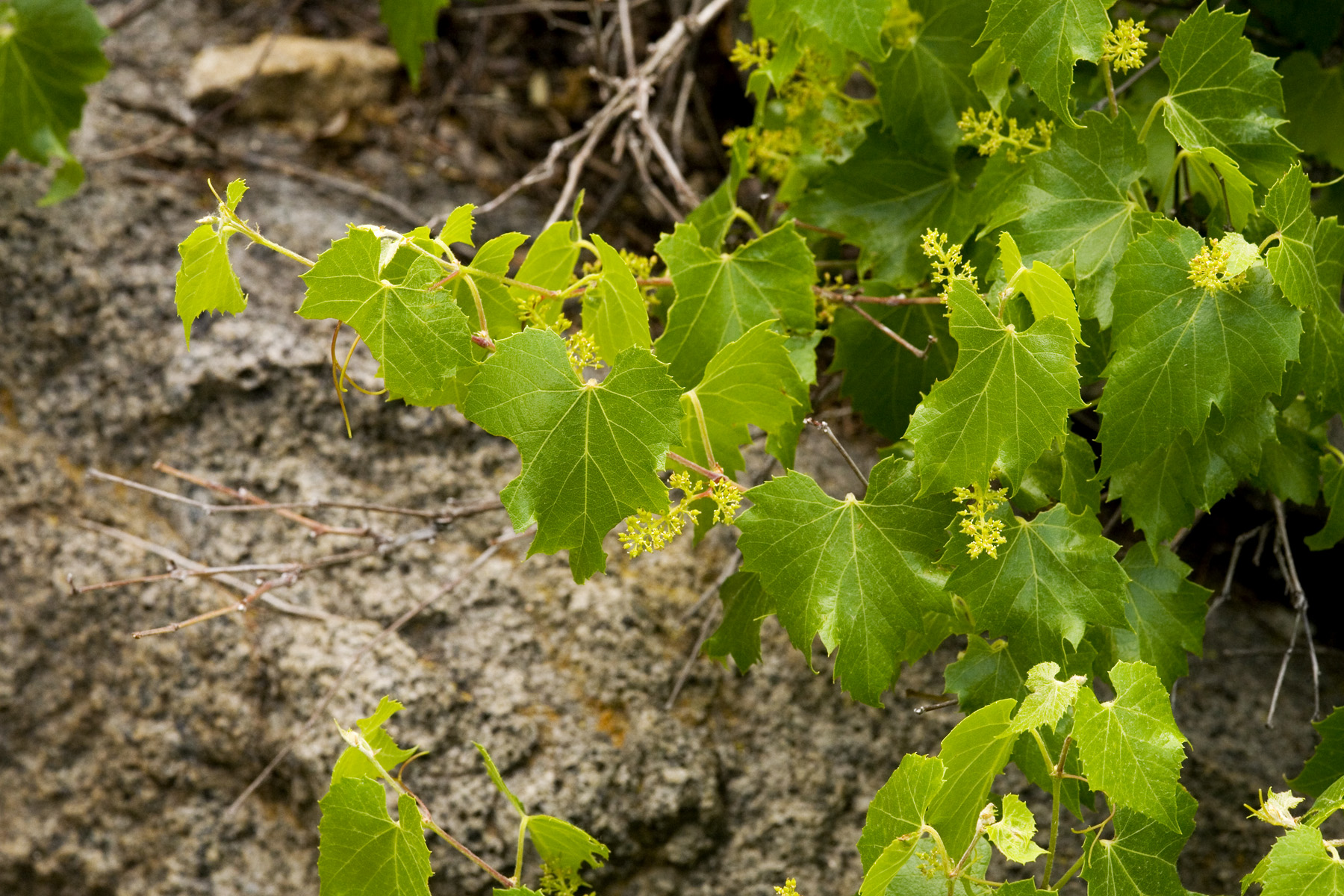
Vitis arizonica, commonly known as Canyon Wild Grape or Arizona Wild Grape, is a vigorous deciduous woody vine native to the canyons, washes, and riparian corridors of the American Southwest. A member of the Vitaceae (grape) family, this tough, adaptable plant scrambles and climbs over shrubs and trees using tendrils, sometimes reaching heights of 20 feet or more when suitable support is available. Its clusters of small, dark purple-black grapes — though tart and slightly tannic compared to cultivated varieties — are eagerly consumed by dozens of bird species and provide critical late-summer and fall nutrition for wildlife throughout the Four Corners region.
Canyon Wild Grape is one of the most ecologically generous plants of Southwestern canyonlands. The dense tangled growth it creates in riparian corridors provides nesting habitat, shelter, and thermal cover for songbirds, small mammals, and reptiles. The flexible, peeling bark has traditionally been used by birds — particularly wrens and sparrows — as nesting material, while the broad lobed leaves offer shade over canyon floors during the intense summer months. Unlike cultivated grapes, this species thrives without irrigation once established and can handle the droughty canyon conditions of Utah, Colorado, Arizona, and New Mexico.
For gardeners and restoration ecologists in the Southwest, Canyon Wild Grape offers an unusual combination of wildlife value, ornamental interest, and adaptability. The vine puts on a spectacular fall color display — leaves turning brilliant red, orange, and yellow before dropping — and the persistent fruit clusters add winter interest. With proper support (a fence, trellis, or existing shrub), Canyon Wild Grape can become a standout feature of any wildlife-focused native garden in the desert Southwest.
Identification
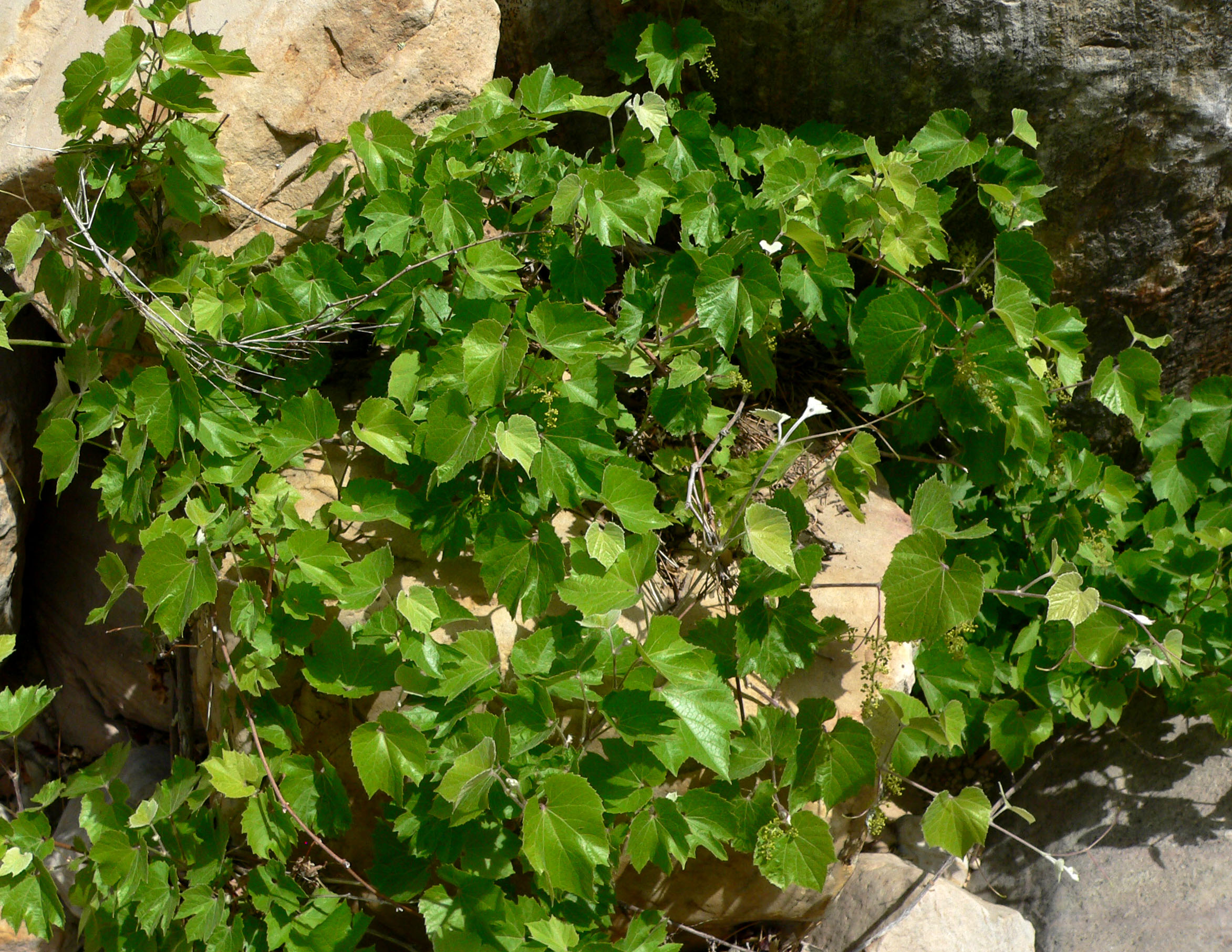
Canyon Wild Grape is a deciduous, woody, climbing vine that uses branched tendrils (opposite the leaves) to attach to supporting structures. The stems are woody, with characteristic shredding, peeling reddish-brown bark on mature growth — a distinctive identification feature shared across the grape family. The vine can climb 10 to 20 feet or more on suitable support.
Leaves
The leaves are the most visually striking part of the plant. They are 3 to 5 inches wide, deeply 3–5 lobed, heart-shaped at the base, and coarsely toothed at the margins — resembling a smaller, denser version of cultivated grape leaves. The upper surface is bright green and somewhat glossy; the underside is paler and may be lightly hairy, especially along the veins. In fall, the foliage transitions through brilliant shades of red, orange, yellow, and purple before dropping — one of the finest fall displays of any native Southwestern vine.
Flowers
The flowers are tiny — just 2–3 mm across — greenish-yellow, and grouped in elongated clusters (panicles) that emerge from leaf axils in late spring to early summer. Though individually inconspicuous, the clusters can be numerous and emit a faint sweet fragrance. The flowers attract native bees, beetles, and other small pollinators. Plants can be either perfect-flowered (bisexual) or functionally male or female, which means some vines may produce fruit while others do not.
Fruit
The fruit is a small round grape, typically ¼ to ½ inch in diameter, produced in loose clusters of 5–20+ berries. Grapes ripen from green to deep purple-black by late summer through fall (August–October). Inside, each grape contains 1–4 hard seeds. The flesh is tart, slightly bitter, and moderately juicy — perfectly suited for wildlife but usually too tart for fresh eating by humans. The grapes persist on the vine into early winter, providing extended food resources for birds and mammals.
Quick Facts
| Scientific Name | Vitis arizonica |
| Family | Vitaceae (Grape) |
| Plant Type | Deciduous Woody Vine |
| Mature Height | Climbing Vine (10–20+ ft with support) |
| Sun Exposure | Full Sun |
| Water Needs | Moderate |
| Bloom Time | May – June |
| Flower Color | Greenish-yellow (inconspicuous) |
| Fruit | Dark purple-black grapes, ¼–½ in, August–October |
| Fall Color | Red, orange, yellow, purple |
| USDA Hardiness Zones | 6–9 |
Native Range
Vitis arizonica is native to the arid and semi-arid regions of the American Southwest, ranging from southern Utah and southwestern Colorado south through Nevada, Arizona, New Mexico, and Texas into northern Mexico. The species is most common in canyon environments, where it thrives along the shaded, relatively moist walls and floors of slot canyons, drainage washes, and riparian corridors — finding moisture unavailable on the open desert floor. It is often encountered growing in association with Cottonwood, Willow, and Sycamore in canyon bottoms.
In Utah, Canyon Wild Grape is found primarily in the canyon country of the southern and central portions of the state — the Colorado Plateau region — where carved sandstone canyons concentrate the limited precipitation. It reaches its upper elevational limit around 7,000 feet in some mountain canyons. In Arizona, it occurs from the lowland Sonoran Desert canyon systems at 2,000 feet up through the oak woodland and pine-oak zones at 6,500 feet, making it one of the most elevational versatile plants of the region.
The species crosses into northern Mexico (Sonora, Chihuahua, and Coahuila), where it continues to follow canyon systems. Its range broadly overlaps with the Chihuahuan and Sonoran Deserts, yet the plant itself always occupies the moister microhabitats within those landscapes — a reminder that even desert canyons harbor significant biodiversity when water is present.
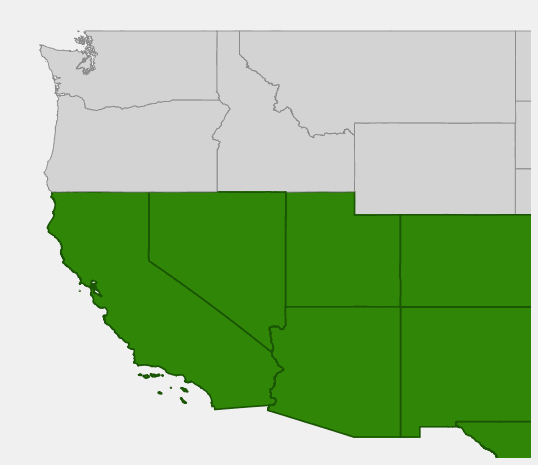
📋 Regional plant lists featuring Canyon Wild Grape: Utah
Growing & Care Guide
Canyon Wild Grape is a remarkably adaptable vine once established, making it an excellent choice for wildlife gardens, restoration projects, and naturalistic landscape designs throughout the desert Southwest. Its vigorous growth and drought tolerance, combined with exceptional fall color and wildlife value, make it well worth the effort of establishment.
Light
Canyon Wild Grape thrives in full sun, which is where it produces the most fruit and the best fall color. It can tolerate partial shade — particularly afternoon shade in the hottest desert climates — but fruit production will be reduced. In its natural canyon habitat, it often grows on canyon rims or along the upper edges of drainages where it receives full sun, sending its roots down toward available moisture.
Soil & Water
Despite its canyon/riparian origins, Canyon Wild Grape is surprisingly drought tolerant once established. It performs best in soils with some organic matter but adapts to sandy, rocky, or clay soils as long as drainage is adequate. Established plants can survive on natural rainfall in areas receiving 10–15 inches per year, though supplemental irrigation during the first 1–2 seasons helps establishment. In garden settings, deep, infrequent watering encourages deep rooting and drought tolerance. Avoid waterlogged soils — good drainage is important.
Planting Tips
Plant in spring or fall. Provide a sturdy support structure from the start — a wire fence, trellis, arbor, or existing shrub/tree are all suitable. Young plants need watering every 1–2 weeks during the first summer; established vines can get by on monthly deep watering or rainfall. Mulch the root zone to conserve moisture. Container-grown plants transplant well; bare-root stock should be planted in early spring before bud break.
Pruning & Maintenance
Canyon Wild Grape is a vigorous grower and may need annual pruning to keep it in bounds. Prune in late winter (February–March) while dormant, cutting back long canes to a manageable framework. The vine blooms and fruits on new growth, so heavy pruning does not reduce fruiting. Remove dead wood as needed. The vine is generally free of serious pest and disease problems in its native Southwest, though grape berry moths and leafrollers may occasionally appear.
Landscape Uses
- Wildlife gardens — the fruit feeds dozens of bird and mammal species
- Arbor or trellis coverage — fast summer growth, spectacular fall color
- Fence cover — creates dense screen and bird habitat
- Riparian restoration — ideal for canyon wash and streambank revegetation
- Slope stabilization — trailing stems root where they contact soil
- Native hedgerow — plant alongside native shrubs for wildlife corridor
Wildlife & Ecological Value
Canyon Wild Grape is one of the most wildlife-productive plants of the desert Southwest. Its fruit, bark, foliage, and structure benefit dozens of species across all seasons.
For Birds
The grape clusters are consumed by an extraordinary variety of birds including American Robins, Cedar Waxwings, Western Bluebirds, Hermit Thrushes, Gray Catbirds, Northern Flickers, Gila Woodpeckers, Lesser Goldfinches, Phainopeplas, and many others. The dense, tangled growth provides excellent nesting sites and predator refuge for songbirds. As noted in the batch data, the shredding bark is actively harvested by birds for nest lining and construction — particularly by wrens, vireos, and orioles that weave strips of bark into their elaborate nests.
For Mammals
White-tailed and mule deer browse the leaves and young stems. Ringtails, Gray Foxes, Coyotes, and a variety of rodents consume the fruit. Black Bears, where present, will also visit Canyon Wild Grape for the late-summer fruit. The dense tangle of stems provides excellent cover for cottontail rabbits and small rodents, making it a productive multi-story habitat feature in riparian restorations.
For Pollinators
The small spring flowers attract native bees, including sweat bees and leafcutter bees, as well as various beetles and flies that serve as pollinators. The flowering period coincides with peak bee activity in late spring, making Canyon Wild Grape a valuable nectar source early in the warm season before many other Southwest natives come into bloom.
Ecosystem Role
In canyon and riparian ecosystems, Canyon Wild Grape fills an important structural niche as a climbing vine, creating vertical habitat complexity by linking ground-level, shrub-level, and tree-level layers. The leaf litter it produces decomposes relatively quickly, adding organic matter to canyon soils. Its roots help stabilize streambanks and canyon wash edges against erosion. The species is an important seed-dispersal partner with birds, which carry seeds to new locations and facilitate the colonization of disturbed canyon habitats.
Cultural & Historical Uses
Canyon Wild Grape has a rich history of use among the Indigenous peoples of the Southwest, including the Hopi, Navajo (Diné), Apache, and Pueblo peoples who inhabited the canyon country where the vine grows. The fruit, while tart, was eaten fresh, dried into raisins, or fermented into wine. Young shoots and tendrils were eaten as cooked vegetables in spring. The large leaves were used to wrap other foods for cooking — a Southwestern equivalent of using grape leaves in Mediterranean cooking.
The flexible young canes were valued for basketry and other woven work, while the bark — which naturally peels in strips — was used as cordage, tinder, and decorative material. Medicinally, the sap of freshly cut vines was used as a wash for eye ailments and the leaves were applied as poultices for skin conditions in various traditional practices across the region.
Early Spanish colonists and Anglo settlers also utilized Canyon Wild Grape extensively. The fruit was harvested for wine, preserves, and vinegar. Attempts were made in the 19th century to use Vitis arizonica as rootstock for cultivated grapevines, as it showed promise for resistance to drought and certain root diseases. Today, Canyon Wild Grape is increasingly recognized by restoration ecologists and wildlife gardeners as one of the most ecologically valuable native vines for the desert Southwest, and it is available from a growing number of native plant nurseries in Arizona, Utah, and New Mexico.
Frequently Asked Questions
Can you eat Canyon Wild Grapes?
Yes — the grapes are edible, though considerably more tart and tannic than cultivated grapes. They can be eaten fresh (especially after a frost, which reduces tartness), made into jelly, dried as raisins, or fermented into wine. They’re best used in processed forms rather than fresh eating. Note that some birds and animals may strip the vine before you get a chance!
How fast does Canyon Wild Grape grow?
Very fast once established — often 6–10 feet of new growth per season under good conditions. In the first year after planting, growth is slower while the root system establishes, but by year 2–3, expect vigorous annual growth. This can be an advantage (quick cover) or a challenge (requires regular pruning to manage).
Does Canyon Wild Grape need a male and female plant to fruit?
Some individual plants are functionally male (producing pollen but little fruit) while others are perfect-flowered (producing both pollen and fruit). If your vine doesn’t fruit well after 2–3 years, try planting another vine nearby to improve pollination. Plants grown from seed have random sex expression; plants propagated from cuttings taken from a known fruiting vine will reliably fruit.
Will Canyon Wild Grape take over my garden?
It can spread aggressively if not managed. Annual pruning in late winter keeps it in bounds. It’s well-behaved on a fence or trellis, but if allowed to scramble across surrounding shrubs or into trees, it can become quite large. Plan for regular maintenance and give it a sturdy support structure from the start.
Is Canyon Wild Grape deer resistant?
No — deer actively browse Canyon Wild Grape, especially the young shoots. If deer pressure is high in your area, protect young plants with wire caging until they grow out of reach (6+ feet). Established vines generally rebound well from deer browsing.

Looking for a nursery that carries Canyon Wild Grape?
Browse our native plant nursery directory: Utah