Wavyleaf Oak (Quercus undulata)
Quercus undulata, commonly known as Wavyleaf Oak, Wavy-leaf Oak, or Rocky Mountain Scrub Oak, is a fascinating and ecologically important evergreen to semi-evergreen shrubby oak of the Rocky Mountain Southwest. Its scientific name, from the Latin undulata (“waved, undulating”), refers to the distinctive wavy or undulate margins of its small, leathery leaves — a feature that immediately distinguishes it from the more deeply lobed Gambel Oak with which it often grows. Native to Utah, Colorado, Arizona, New Mexico, and adjacent states, Wavyleaf Oak is one of the characteristic shrubs of the pinyon-juniper woodland and desert mountain scrub zones at elevations between 5,000 and 9,000 feet.
Wavyleaf Oak occupies a fascinating taxonomic position. It is now generally accepted that what has been called Quercus undulata is primarily a complex of natural hybrids between various western oak species — including Quercus gambelii (Gambel Oak), Quercus havardii (Havard Oak), Quercus mohriana (Mohr Oak), and other species — rather than a single, genetically uniform species. This hybrid origin explains the remarkable variability in leaf shape, size, and texture observed across the range of plants called “Wavyleaf Oak.” Despite this taxonomic complexity, the plant has consistent ecological behavior and landscape characteristics that make it useful to recognize as a distinct entity for horticultural and ecological purposes.
For Utah native plant gardeners, Wavyleaf Oak offers unique advantages. Unlike the taller, more spreading Gambel Oak, Wavyleaf Oak typically stays compact — 4 to 8 feet tall — and often retains its leaves through winter as an evergreen or semi-evergreen shrub. This winter foliage retention, combined with the attractive small, wavy-edged leaves and consistent wildlife value (quail and chipmunk food per the plant list), makes Wavyleaf Oak an excellent low-maintenance, wildlife-supporting shrub for dry gardens in the canyon country of southern and central Utah and the Colorado Plateau.
Identification
Wavyleaf Oak grows as a compact, multi-stemmed deciduous to evergreen shrub, typically 3 to 8 feet tall (rarely exceeding 10 feet), spreading by root sprouts to form low thickets. In sheltered canyon locations with better moisture, it occasionally grows taller. The bark is gray to gray-brown, relatively smooth on young stems, becoming slightly furrowed with age. Like Gambel Oak, it forms clonal colonies through root sprouting. The overall appearance is of a small, dense, leafy shrub with small, attractive, wavy-edged leaves — distinctly different from the large-lobed leaves of Gambel Oak growing nearby.
Leaves
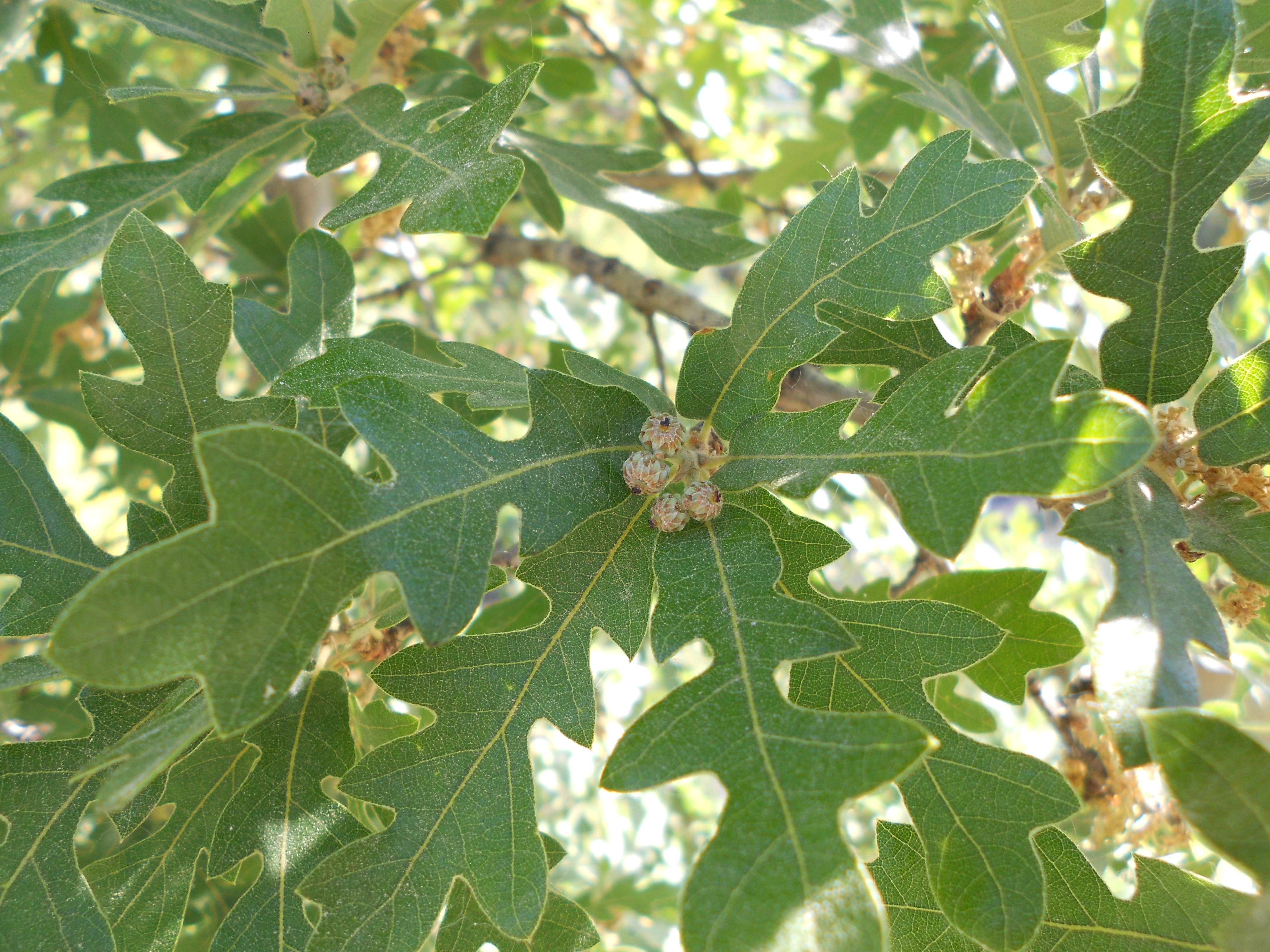
The leaves are the definitive identification feature — small (1 to 3 inches, 2.5–7 cm long), leathery, and with distinctly wavy, undulate to shallowly lobed margins. The lobes, when present, are rounded and shallow — much less deeply cut than typical Gambel Oak leaves. The upper surface is shiny, dark green to gray-green; the underside is pale and often slightly woolly or hairy. In many individuals, the leaves have a slightly convex upper surface with the margins curled slightly downward (revolute) — an adaptation that reduces water loss in the dry environments where the plant grows. The degree of leaf retention through winter varies: in mild years and warmer locations, many leaves persist through winter and the plant appears evergreen; in cold or dry winters, more leaves drop. This semi-evergreen behavior is ecologically valuable for the wildlife cover it provides.
Acorns
Wavyleaf Oak produces small acorns, typically ½ to ¾ inch (12–18 mm) long, with a shallow, bowl-shaped cup. The acorns mature in a single growing season (white oak group), ripening in September and October. The small acorn size, combined with the dense shrubby growth form, makes Wavyleaf Oak acorns particularly accessible to small mammals like chipmunks and ground squirrels, and to low-foraging birds like Gambel’s Quail — explaining the “quail, chipmunk food” notation in the plant list. The acorns are lower in tannins than those of many oaks, making them nutritionally accessible without extensive leaching.
Flowers
Like all oaks, Wavyleaf Oak is monoecious, producing small male catkins and inconspicuous female flowers in spring as leaves emerge. Male catkins are yellowish-green, ½ to 1½ inches long, and wind-pollinated. Pollination typically occurs in April–May. As a hybrid complex, Wavyleaf Oak can cross-pollinate with nearby Gambel Oak plants, and intermediate hybrid forms are common throughout the range.
Quick Facts
| Scientific Name | Quercus undulata |
| Family | Fagaceae (Beech/Oak Family) |
| Plant Type | Evergreen to Semi-Evergreen Shrub |
| Mature Height | 4–8 ft |
| Sun Exposure | Full Sun |
| Water Needs | Low to Moderate |
| Bloom Time | April – May (catkins) |
| Leaf Retention | Semi-evergreen (attractive winter foliage) |
| Acorn Size | Small (accessible to quail, chipmunks) |
| Wildlife Value | High — acorns for quail and chipmunks; dense cover |
| USDA Hardiness Zones | 5–9 |
Native Range
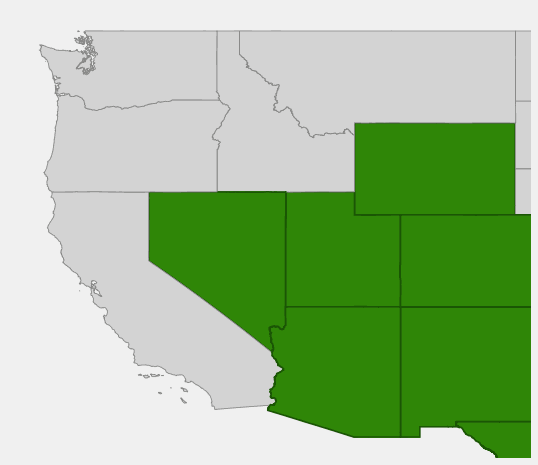
Wavyleaf Oak (in its broad sense, including hybrid complexes) is native to the Rocky Mountain Southwest, with its core range in the Colorado Plateau and adjacent mountain ranges of Utah, Colorado, Arizona, New Mexico, and western Texas, extending into western Oklahoma and parts of Nevada and Wyoming. In Utah, it occurs primarily in the canyon country of the Colorado Plateau and the mountain ranges of the southern and central part of the state — the Colorado Plateau, the Wasatch Plateau, and the southern Rocky Mountain ranges — typically at elevations from 5,000 to 9,000 feet.
Wavyleaf Oak grows in the same general habitat zone as Gambel Oak — the foothill and mountain shrub zone of dry slopes, canyon walls, and mesa rims — but often prefers the drier, rockier, and more exposed aspects where Gambel Oak thickets give way to more open desert scrub. It is commonly found growing alongside Cliffrose (Purshia mexicana), Singleleaf Pinyon (Pinus monophylla), Utah Juniper (Juniperus osteosperma), Mountain Mahogany (Cercocarpus spp.), and Big Sagebrush (Artemisia tridentata). Its tolerance for drier, rockier conditions than Gambel Oak makes it ecologically complementary to that species, occupying niches where Gambel Oak cannot thrive.
The hybrid origin of Wavyleaf Oak means that its distribution is particularly dynamic wherever its parental species overlap. In zones where Gambel Oak and other oak species meet and hybridize, populations of intermediate plants grade continuously from one species to another. This taxonomic fluidity is a characteristic feature of the oak genus worldwide, where hybridization is extremely common and has given rise to hundreds of natural hybrid taxa and nothospecies recognized by oak taxonomists.
📋 Regional plant lists featuring Wavyleaf Oak: Utah
Growing & Care Guide
Wavyleaf Oak is an underutilized native shrub with outstanding potential for low-water, wildlife-supporting landscapes in Utah and the Rocky Mountain Southwest. Its semi-evergreen character, compact and manageable size, and exceptional wildlife value combine to make it a superior choice for anyone wanting an oak’s ecological services in a smaller package than Gambel Oak provides.
Light
Wavyleaf Oak thrives in full sun and is best suited to the hottest, most exposed sites in the garden — south and west-facing slopes, rocky outcrops, and open areas with unobstructed sunlight. It evolved in the intense high-desert and mountain-fringe sun of the Colorado Plateau and performs poorly in shaded conditions. Adequate sun also encourages the dense, compact growth that makes the plant most ornamentally attractive.
Soil & Water
Well-drained, rocky, or gravelly soil is ideal. Wavyleaf Oak is adapted to the thin, alkaline, nutrient-poor soils of the Colorado Plateau and performs best without soil amendment or fertilization. It is moderately drought tolerant once established — significantly more so than many garden shrubs — but benefits from occasional deep watering during prolonged summer drought in the first 2–3 years of establishment. In its natural habitat, annual precipitation typically ranges from 10 to 20 inches; supplemental irrigation that mimics this range is appropriate. Avoid wet or poorly drained soils, which promote root diseases.
Planting Tips
Plant container-grown stock in spring or early fall for best establishment. Like other oaks with spreading root systems, choose a site where the eventual spread by root sprouts is acceptable — or plan for periodic removal of unwanted sprouts. Space plants 5–8 feet apart for group plantings. The compact size and semi-evergreen character of Wavyleaf Oak make it more suitable than Gambel Oak for smaller garden spaces, foundation plantings, and mixed shrub borders where constant size control is not desired.
Pruning & Maintenance
Minimal pruning is required. Remove dead wood in late winter. If thicket spread exceeds desired boundaries, remove outer root sprouts as they appear. The semi-evergreen leaves that persist through winter add ornamental value and should generally be left in place. Like all oaks, avoid pruning between April and July to reduce oak wilt disease risk. Wavyleaf Oak is naturally resistant to most pests and diseases and requires little attention once established in an appropriate site.
Landscape Uses
- Attractive evergreen shrub — semi-evergreen foliage provides year-round interest and wildlife cover
- Wildlife habitat foundation — acorns for quail and chipmunks; cover for many species
- Dry slope stabilization — spreading root system controls erosion on rocky slopes
- Mixed native shrub border — smaller and more compact than Gambel Oak for residential use
- Xeriscape garden — performs well with minimal supplemental irrigation
- Canyon country garden — authentic Great Basin/Colorado Plateau feel
Wildlife & Ecological Value
Like all oak species, Wavyleaf Oak supports an exceptional diversity of wildlife, from insectivorous birds feeding on caterpillars to small mammals collecting and caching acorns for winter. Its compact size and low-to-ground growth make acorns particularly accessible to ground-foraging wildlife species.
For Birds
Gambel’s Quail are significant consumers of Wavyleaf Oak acorns — one of the wildlife notes highlighted in the plant list. The low, shrubby growth makes acorns accessible without requiring the aerial acrobatics that taller oaks demand. Scaled Quail, Canyon Towhees, Spotted Towhees, and various sparrow species also feed on and shelter within Wavyleaf Oak thickets. The dense semi-evergreen growth provides exceptional nesting cover for Black-throated Sparrows, Gray Vireos, and other desert and foothill species. Acorn Woodpeckers visit plants that produce reliable mast crops. The plant supports numerous moth and butterfly caterpillars (450+ Lepidoptera species use Western Quercus) that in turn feed insectivorous birds throughout the breeding season.
For Mammals
Colorado Chipmunks, Cliff Chipmunks, and Rock Squirrels are the primary small mammal consumers of Wavyleaf Oak acorns, as specifically noted in the plant list description. These animals cache acorns extensively, and many cached acorns that are not retrieved eventually germinate — making chipmunks and squirrels important dispersers of oak populations. Mule deer browse the foliage, particularly in winter. The dense, low thickets provide essential escape cover and resting habitat for rabbits, skunks, and ringtails.
For Pollinators
Wavyleaf Oak catkins provide early-season pollen for native bees in April and May. Many specialist native bees collect oak pollen exclusively during a particular period in their life cycle, and the availability of oak pollen is important for population development of these specialists. The leaves support caterpillars and other insects that are critical food for breeding songbirds.
Ecosystem Role
In the Colorado Plateau and southern Rocky Mountain foothill zones, Wavyleaf Oak plays a significant role in maintaining habitat continuity between the forest communities above and the desert shrublands below. Its ability to grow on drier, rockier sites than Gambel Oak means it provides oak-associated wildlife habitat in areas that the larger oak cannot colonize. The semi-evergreen leaf retention means that wildlife cover and habitat structure are maintained through winter, unlike deciduous shrubs that provide minimal cover after leaf drop. The species’ tendency to hybridize with other oaks wherever ranges overlap contributes to high genetic diversity within oak populations — an important source of adaptability in the face of climate change.
Cultural & Historical Uses
The peoples of the Colorado Plateau — including the Ute, Navajo, Southern Paiute, and various Pueblo nations — utilized Wavyleaf Oak much as they did Gambel Oak. The small but nutritious acorns were gathered in fall and processed into flour and meal for mush and cakes. The lower tannin content of white oak group acorns (including Wavyleaf Oak) made them suitable for consumption after moderate leaching, typically by soaking in water and draining repeatedly over several days. Acorn processing was a significant communal activity in fall, with families and groups gathering at productive oak stands for multi-day harvest and preparation sessions.
The wood and bark of Wavyleaf Oak were used medicinally in ways similar to other western oaks. A strong tea made from boiled bark was applied as an astringent wash to sores, cuts, and inflamed skin. The Navajo used oak bark preparations for treating conditions involving swelling and infection. The hard, dense wood of even small stems was valued as firewood — producing excellent cooking coals despite the small stem diameter. Thin oak twigs were occasionally used for basketry materials, and galls produced by wasps on oak leaves were used as a tannin-rich dyestuff for darkening leather and basketry materials.
In contemporary land management on the Colorado Plateau, Wavyleaf Oak (along with Gambel Oak and Cliffrose) is recognized as a cornerstone component of the foothill shrub communities that have been heavily impacted by livestock grazing, off-road vehicle use, and residential development. Conservation efforts in southern Utah increasingly include protection and restoration of native oak shrublands as priority wildlife habitat, recognizing the disproportionate biodiversity value these communities provide relative to the surrounding desert landscape. For homeowners and gardeners in the canyon country of southern and central Utah, planting Wavyleaf Oak and Gambel Oak is a direct contribution to restoring these ecologically critical native plant communities on private land.
Frequently Asked Questions
Is Wavyleaf Oak the same as Gambel Oak?
No, they are distinct (though related). Wavyleaf Oak (Quercus undulata) has small, leathery leaves with shallow, wavy margins and grows as a compact 4–8 ft shrub. Gambel Oak (Quercus gambelii) has larger, deeply lobed deciduous leaves and can grow to 30 ft. Both are native to Utah’s foothill zones, and natural hybrids between the two are common. Wavyleaf Oak is more drought tolerant, more compact, and often semi-evergreen compared to fully deciduous Gambel Oak.
Why does my Wavyleaf Oak keep some leaves in winter?
Wavyleaf Oak is semi-evergreen — it retains a portion of its leaves through mild winters, giving it the “attractive evergreen shrub” description in the plant list. In colder winters or at higher elevations, more leaves drop. This partial winter leaf retention is a normal characteristic of the species, not a sign of stress, and is ecologically valuable as it provides year-round cover for wildlife.
How do I tell Wavyleaf Oak from Gambel Oak?
The key differences: (1) Leaf size and margin — Wavyleaf Oak has smaller leaves (1–3 in.) with shallow, wavy lobes; Gambel Oak has larger leaves (3–7 in.) with deep, rounded lobes. (2) Height — Wavyleaf Oak is typically 4–8 ft; Gambel Oak 6–30 ft. (3) Leaf retention — Wavyleaf Oak often keeps some leaves through winter; Gambel Oak is usually fully deciduous. (4) Habitat preference — Wavyleaf Oak on drier, rockier exposures; Gambel Oak on slopes with more soil and moisture.
Do deer eat Wavyleaf Oak?
Yes — mule deer browse Wavyleaf Oak foliage, particularly in winter when the semi-evergreen leaves are one of the few available green food sources. Heavy deer browse can significantly set back young plants. In areas with high deer pressure, protect young plants with wire cages until they reach 3+ feet tall. Established plants can handle moderate deer browse without lasting damage.
Can I grow Wavyleaf Oak from acorns?
Yes — collect acorns in September–October when they are brown and ripe. Plant immediately (within a few weeks of collection) in well-drained native soil mix, as acorn viability decreases rapidly with storage. Acorns should be covered with ¾ to 1 inch of soil and kept in a cool but unfrozen location through winter (stratification). Germination occurs in spring. Growth is initially slow — expect 6–12 inches per year — but acceleration occurs once the root system is well established, typically after 2–3 years.

Looking for a nursery that carries Wavyleaf Oak?
Browse our native plant nursery directory: Utah