Marsh Marigold (Caltha palustris)
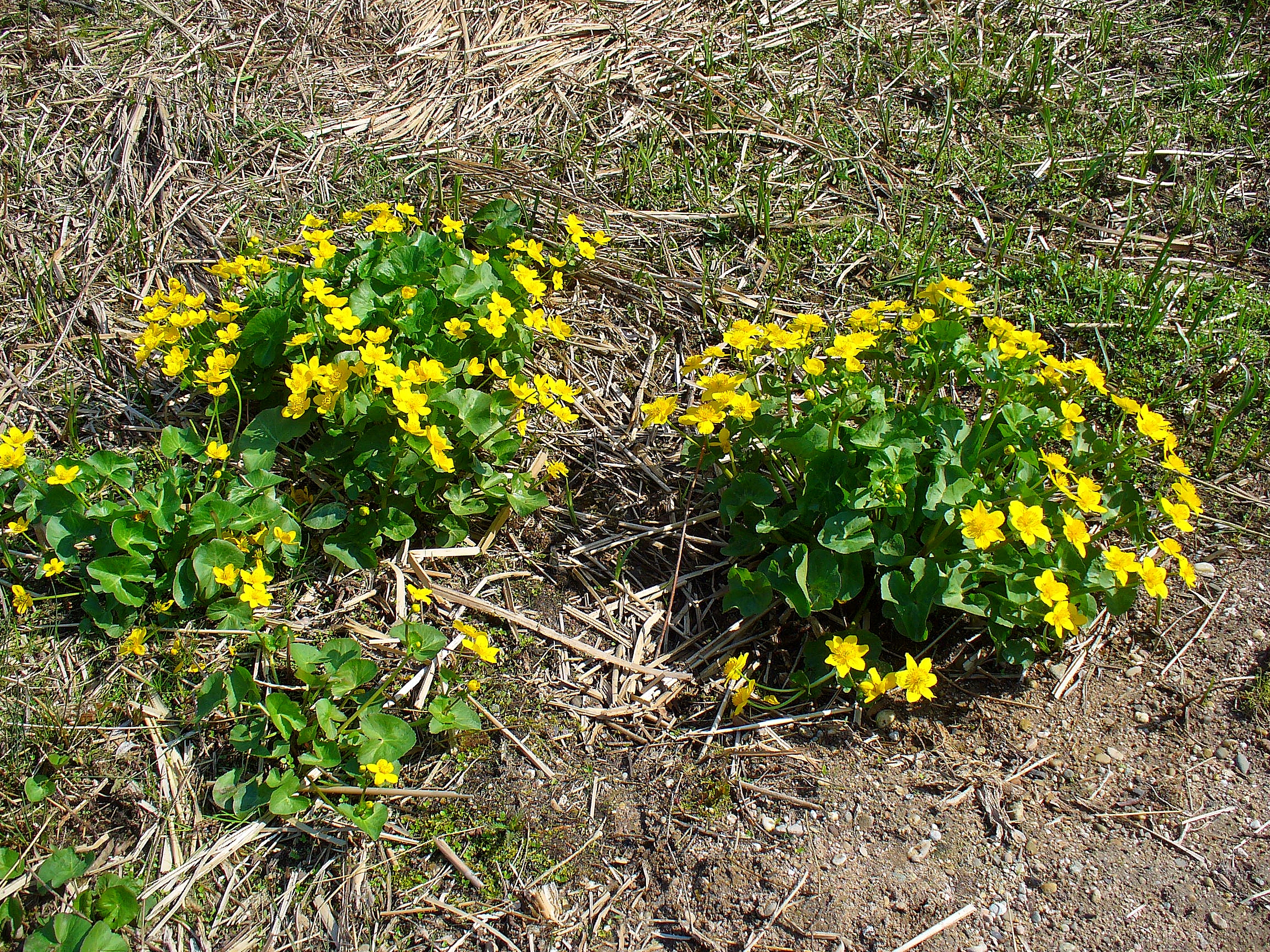
Caltha palustris, known as Marsh Marigold, Cowslip, or King Cup, is one of the earliest and most spectacular native wildflowers in the wetlands and cold-water streams of northeastern North America. This bold perennial, a member of the Ranunculaceae (buttercup) family, produces clusters of gleaming, butter-yellow flowers in early spring — often before the surrounding trees have leafed out — creating vivid bursts of color that are among the most welcome sights of the season. With its large, deep-green, kidney-shaped leaves and thick, hollow stems, Marsh Marigold has a lush, tropical quality entirely at odds with the cold, often icy waters in which it thrives.
Despite its common name, Marsh Marigold is not a true marigold (genus Tagetes) — the name refers to the plant’s preference for marshy habitats and its golden-yellow, marigold-like flowers. The alternate common name “Cowslip” is also used for several unrelated plants, making the scientific name the most reliable identifier. The species name palustris means “of marshes” in Latin, accurately describing the plant’s habitat preference. Marsh Marigold thrives in the coldest, most saturated soils — along spring-fed streams, in wooded swamps, at the edges of ponds, and in wet meadows where standing water is present at least seasonally.
Marsh Marigold is not only ecologically important but also one of the most rewarding native plants for rain gardens, water features, and wet woodland gardens in New England and the Mid-Atlantic. Its spectacular early bloom at a time when few other plants are in flower makes it invaluable for early pollinators, and its large, handsome foliage provides attractive ground cover through summer. For native plant enthusiasts lucky enough to have a consistently wet, low spot in their landscape, Marsh Marigold is a must-have plant.
Identification
Marsh Marigold is a robust perennial herb growing 8 to 24 inches (20–60 cm) tall, with hollow, branching stems emerging from a short, thick rhizome. Plants often grow in spreading clumps, with multiple stems emerging from a common base. In very cold, wet springs, the plants may emerge while ice is still present at the water’s edge — their cold hardiness is extraordinary.
Leaves
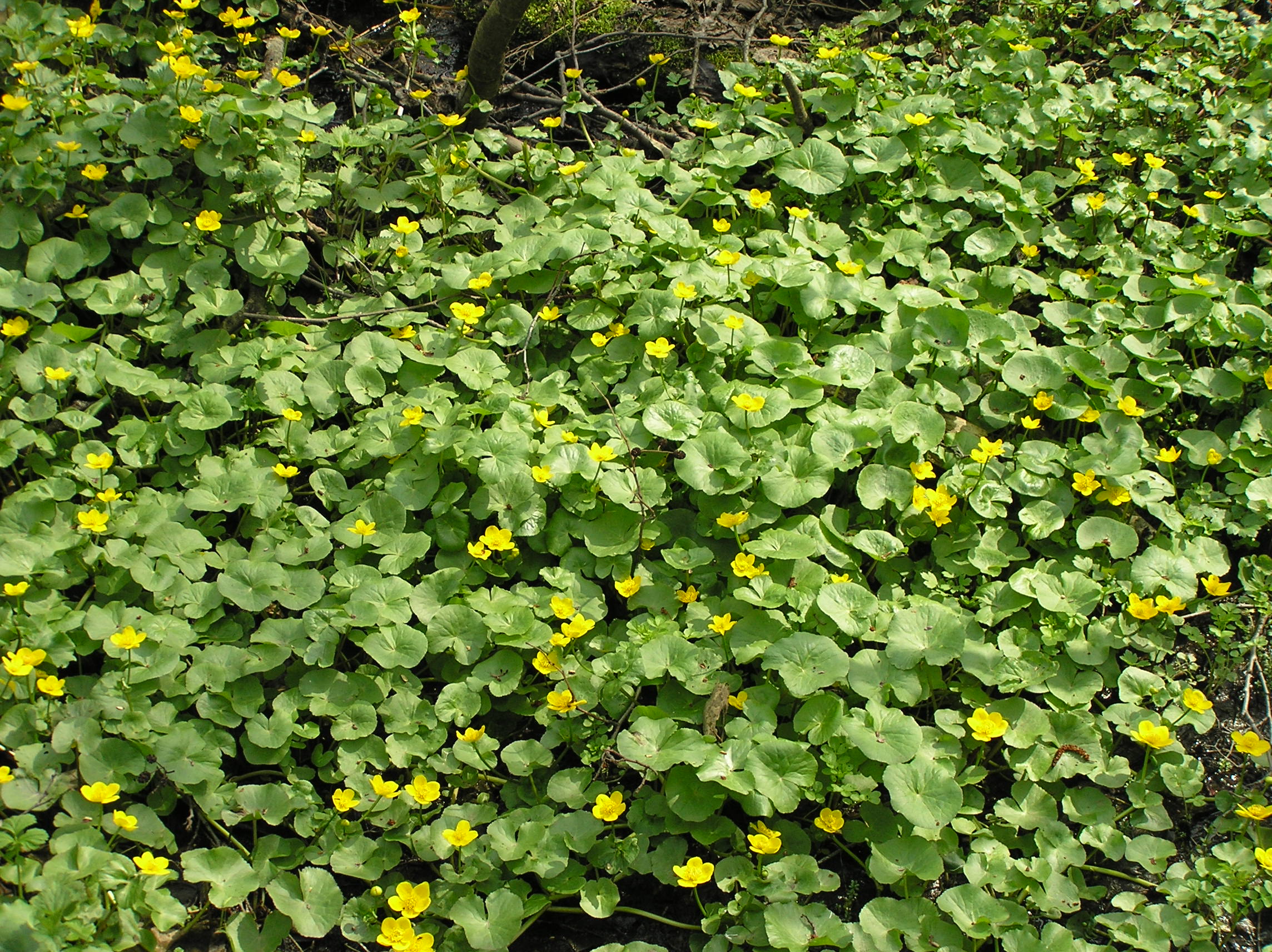
The leaves are large, glossy, and distinctly kidney- to heart-shaped, with a wavy, scallop-toothed margin. Basal leaves can reach 4–7 inches (10–18 cm) across, with a long, channeled petiole. Stem leaves are alternate, progressively smaller up the stem, and may be nearly stalkless near the top. The leaf surface is smooth and bright to deep green, with a prominent venation pattern. The shiny surface and bold shape make the foliage visually attractive even outside of the flowering season, particularly as a water-garden plant.
Flowers
The flowers are 1 to 1½ inches (2.5–4 cm) across, with 5 to 9 glossy, waxy-looking yellow “petals” that are actually sepals (the true petals are absent in this genus). Each flower has numerous yellow stamens in the center, giving it a vivid, sunburst appearance. Flowers are produced in loose clusters at the ends of branching stems, typically opening in March through May depending on latitude and elevation. At peak bloom, a large clump of Marsh Marigold can produce dozens of flowers simultaneously, creating a spectacular display that is one of the highlights of the spring wetland calendar.
Fruit & Seeds
After pollination, each flower develops a cluster of small, beaked follicles (seed pods), each containing several shiny, dark seeds. The seeds mature and are released in late spring to early summer, falling into the water or wet mud where they germinate readily. Fresh seeds have the highest germination rates; seeds that dry out lose viability quickly. In wet conditions, the species can spread efficiently by both seed and vegetative expansion of the rhizome clump.
Quick Facts
| Scientific Name | Caltha palustris |
| Family | Ranunculaceae (Buttercup) |
| Plant Type | Perennial Herbaceous Wildflower (wetland) |
| Mature Height | 8–24 in (20–60 cm) |
| Sun Exposure | Full Sun to Part Shade |
| Water Needs | High (requires consistent wetness or standing water) |
| Bloom Time | March – May |
| Flower Color | Bright golden-yellow |
| Soil Type | Wet to saturated; mucky, alluvial, or clay soils; tolerates standing water |
| Soil pH | 5.0–7.0 |
| Deer Resistant | Yes (toxic compounds deter browsing) |
| USDA Hardiness Zones | 3–7 |
Native Range
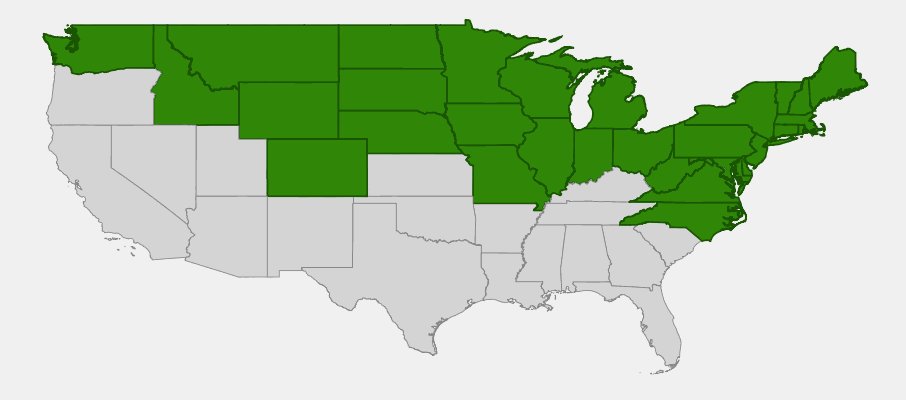
Marsh Marigold is native across a broad swath of temperate and boreal North America, Europe, and Asia — it is one of the most widespread flowering plants in the Northern Hemisphere. In North America, its native range extends from Alaska south and east through Canada and into the northern and central United States, including all of New England, the Great Lakes states, and much of the Appalachian region. It is native as far south as Nebraska, Virginia, and Tennessee in the continental United States, and occurs in Alaska’s wetlands in extraordinary abundance.
Throughout its North American range, Marsh Marigold is a plant of cold, wet places. It is most commonly found along spring-fed brooks and cold-water streams, in wooded swamps with seasonally saturated soils, in wet meadows with a high water table, and at the muddy margins of ponds, lakes, and ditches. It grows most luxuriantly in areas with reliable cold-water seepage, where it can sometimes form colonies covering hundreds of square feet. In the southern Appalachians, it occurs at higher elevations where cold temperatures and spring moisture maintain suitable conditions even in warmer latitudes.
In New England — particularly in Connecticut, Massachusetts, and Rhode Island — Marsh Marigold is a beloved harbinger of spring, blooming in March and April in swamps and along stream edges while the surrounding landscape is still largely brown and leafless. Its spectacular golden flowers in cold, ice-rimmed pools are among the most iconic images of northeastern spring ecology. The plant’s early bloom also makes it critically important for early pollinators, including queen bumblebees, small native bees, and flies that need nectar before other plants have flowered.
📋 Regional plant lists featuring Marsh Marigold: Southeastern U.S.
Growing & Care Guide
Marsh Marigold is one of the most rewarding and undemanding native wildflowers for wet, difficult sites. Its only real requirement is consistent moisture — given that, it is a tough, long-lived, pest-free plant that rewards minimal effort with spectacular spring blooms and attractive summer foliage. It is perfect for rain gardens, water features, naturalizing wet woodland edges, and pond margins.
Light
Marsh Marigold thrives in full sun to part shade. In its natural habitat, it often grows in the open canopy of early spring before trees leaf out, receiving full sun. As the season progresses and the tree canopy develops, it adapts to increasingly shaded conditions. In the garden, morning sun with afternoon shade is ideal for most of its growing season. In consistently wet, cool sites, it tolerates full sun throughout the season. Deep shade significantly reduces flowering, though the foliage remains attractive.
Soil & Water
Soil moisture is the critical factor for Marsh Marigold — it demands consistent wetness and will not survive in average well-drained garden soil. Ideal conditions include saturated soil, shallow standing water (up to 3 inches deep), or consistently wet mucky or clay soils with a high water table. It is perfect for the boggy margins of streams, ponds, and ditches; the edges of water gardens; and the wet spots in rain gardens. The plant goes dormant in summer if conditions become too dry, emerging again the following spring. Soil pH of 5.0–7.0 is acceptable; slightly acidic, mucky soils typical of wooded swamps are ideal.
Planting Tips
Plant Marsh Marigold in spring (just as growth is beginning) or in fall as a dormant rhizome. Water garden baskets or marginal planting shelves (at 0–3 inches depth) work well for pond plantings. For naturalizing in wet woodland areas, plant in groups of 3–5 plants 12–18 inches apart to create a colony effect. The plants establish quickly in wet conditions and often begin blooming the first spring after fall planting. Seed-starting is possible: sow fresh seeds immediately on wet mucky soil in late spring; do not allow seeds to dry out before sowing.
Pruning & Maintenance
Marsh Marigold requires virtually no maintenance. After the spectacular spring bloom, the plant continues to produce attractive foliage through early summer. In many northern gardens, the foliage dies back in midsummer as conditions warm and dry slightly — this is completely normal and not a sign of distress. New growth resumes in fall and the plant overwinters as a rosette. Simply remove any dead or yellowing foliage in late summer or fall. No fertilization is needed; the rich, organic soils of wetland habitats provide all the nutrition the plant requires.
Landscape Uses
Marsh Marigold is indispensable for wet garden niches:
- Rain gardens — thrives in the center zone with standing water
- Pond and water garden margins — stunning at water’s edge or in shallow water
- Bog gardens — classic bog garden plant with outstanding spring interest
- Naturalizing wet woodland edges — spectacular under alders, red maples, and willows
- Spring ephemerals garden — pairs beautifully with Skunk Cabbage, Blue Flag Iris, and Jack-in-the-Pulpit
- Streambank stabilization — rhizomes help hold wet streambank soils
- Winter interest — the bold, glossy foliage adds texture to the winter garden in mild climates
Wildlife & Ecological Value
Marsh Marigold holds a special ecological niche as one of the earliest flowering plants in northeastern wetlands. Its blooming period — often starting in late March or early April — coincides with the emergence of many early pollinators, making it a critical early nectar and pollen source in a season when few flowers are available.
For Pollinators
Marsh Marigold’s bright yellow flowers are visited by queen bumblebees, small native bees (particularly small mining bees of the genus Andrena and metallic green bees), hover flies, bee flies, and early butterflies including Mourning Cloaks and Eastern Commas. The abundant pollen — from the many stamens in each flower — is especially important for bees emerging from winter dormancy that need protein for early brood rearing. In some studies, Marsh Marigold pollen is among the most important early spring pollen sources in cold-temperate wetlands.
For Birds
While Marsh Marigold seeds are not a significant food source for birds, the dense, lush foliage creates important habitat structure in wetland edges. Swamp Sparrows, Common Yellowthroats, and Red-winged Blackbirds nest in or near Marsh Marigold colonies. The insects attracted to the flowers — flies, bees, and beetles — are eaten by insectivorous birds during the spring breeding season.
Ecosystem Role
Marsh Marigold is an important component of cold-water wetland ecosystems. Its extensive root system helps stabilize wetland soils and prevents erosion along streambanks. As an early bloomer, it jumpstarts the pollinator food web in spring, supporting insect populations that in turn support birds, frogs, and other predators. The plant’s toxicity (it contains protoanemonin and other irritating compounds) makes it resistant to most herbivores, allowing it to persist and maintain its ecological role even in areas with high deer pressure.
For Amphibians
Marsh Marigold colonies provide important habitat for spring-breeding amphibians. Wood Frogs, Spotted Salamanders, and Spring Peepers breed in the wet pools and swamps where Marsh Marigold grows, using the plant’s dense stems and root masses as attachment points for egg masses and as cover for newly metamorphosed juveniles.
Cultural & Historical Uses
Marsh Marigold has a remarkably rich history of human use across its vast native range in North America, Europe, and Asia. Indigenous peoples throughout the plant’s North American range used it in many ways, despite — or perhaps because of — its chemical complexity. The Menominee, Ojibwe, and other Great Lakes nations boiled the young leaves and ate them as a spring green, recognizing that prolonged cooking destroys the toxic protoanemonin compounds that make the raw plant irritating and potentially dangerous. This careful processing transformed a toxic plant into a nutritious spring vegetable at a time when few other fresh greens were available. The Iroquois used root infusions medicinally for treating coughs and as an emetic.
In European folk medicine, Marsh Marigold (known there as “Kingcup”) was used in elaborate May Day rituals and celebrations. Garlands of the bright yellow flowers were hung on doors and gateways to ward off evil spirits and celebrate the coming of summer. In medieval England, the plant was associated with the Virgin Mary, and its flowers were used to decorate churches and homes on Lady Day (March 25). In Wales, Marsh Marigold was considered a lucky plant, and carrying its flowers was thought to protect against witchcraft and ill fortune. These cultural associations reflect the profound impression the plant’s brilliant early-spring flowers made on communities living close to the land.
Homoeopathic practitioners used preparations of Marsh Marigold for treating metabolic disorders and rheumatic conditions in the 19th and early 20th centuries. Modern research has confirmed the presence of several bioactive compounds in the plant, including protoanemonin, caltholic acid, and various flavonoids, though none are used in contemporary medicine. Today, Marsh Marigold is celebrated as an ornamental native plant and important wetland indicator species. Its presence signals cold-water, high-quality wetland habitats that are increasingly rare and ecologically valuable. Conserving existing Marsh Marigold populations — and restoring them to suitable sites — is an important component of wetland conservation throughout New England.
Frequently Asked Questions
Can I eat Marsh Marigold?
Raw Marsh Marigold is toxic — it contains protoanemonin, which causes severe skin and mucous membrane irritation. However, Indigenous peoples in the Great Lakes and northeastern regions historically boiled the young leaves for many hours, which destroys the toxic compounds and renders the plant edible as a spring green. This processing is essential; never eat any part of the plant raw. Modern foragers should exercise extreme caution and use only well-established preparation methods.
Why does my Marsh Marigold die back in summer?
Summer dormancy is completely normal for Marsh Marigold, especially if summer conditions become warmer and somewhat drier. The plant channels its energy into root reserves after flowering and seed set, then the aboveground foliage yellows and dies back. New growth resumes in fall. In permanently wet, cool sites, foliage may persist through summer. Simply leave the dying foliage in place until it has completely dried, then remove it.
How deep can Marsh Marigold grow in water?
Marsh Marigold grows best in very shallow water — 0 to 3 inches (0–8 cm) deep — or in saturated soil at the water’s edge. Deeper than 4–6 inches of standing water is generally too much for this species. For water garden plantings, use a planting basket placed on a marginal shelf at 0–3 inch depth, or plant directly in wet soil at the pond’s edge.
Is Marsh Marigold deer resistant?
Yes, Marsh Marigold is strongly deer resistant. The plant contains bitter, irritating compounds (particularly protoanemonin) that make it highly unpalatable to deer, rabbits, and most other mammalian herbivores. This makes it an excellent choice for wet areas where deer pressure is high.
Can Marsh Marigold grow in a regular garden if I water a lot?
Marsh Marigold needs more than just supplemental irrigation — it requires consistently saturated or very wet soil throughout its growing season. Even daily irrigation rarely provides the same conditions as naturally wet soil with a high water table. If you don’t have a naturally wet area, a rain garden, bog garden, or water garden container are the best alternatives for growing this plant successfully.

Looking for a nursery that carries Marsh Marigold?
Browse our native plant nursery directory: Virginia · North Carolina · Georgia