
Prairie Zinnia (Zinnia grandiflora)
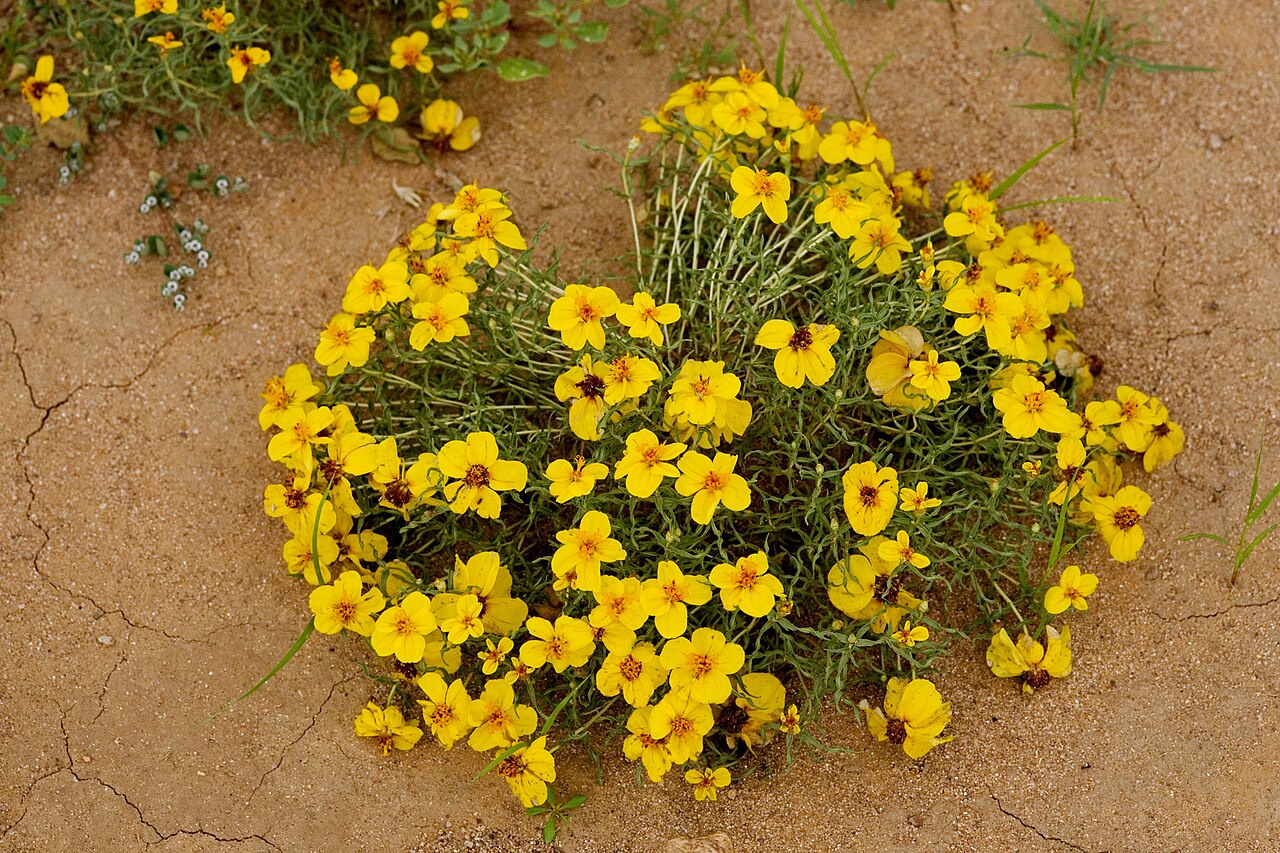
Prairie zinnia is the low, tough-looking relative of the tall annual zinnias familiar from cutting gardens. Zinnia grandiflora forms a small woody-based mound with fine leaves and golden flower heads. It belongs near the ground, where its flowers can spread across the front of a dry planting rather than compete with waist-high border plants. Rocky Mountain zinnia and plains zinnia are other names for this species.
The Arizona regional list describes a 6-inch plant for full sun and dry soil. That is a useful picture of its role: a low flowering layer, not a large specimen shrub. Its underground stems can gradually extend the patch, so allow a little room around the original mound. A single small pot should not be expected to become a finished groundcover immediately; a deliberately spaced group makes a more convincing start.
For an Arizona gardener, the central decision is drainage. The species is suited to open, lean ground and should not be put on the same watering schedule as thirsty bedding plants simply because both are called zinnias. Used thoughtfully, it brings bright summer color to a rock garden, sunny slope, or dry perennial bed while keeping the planting’s overall water demand modest.
Identification
Stems & Growth Form
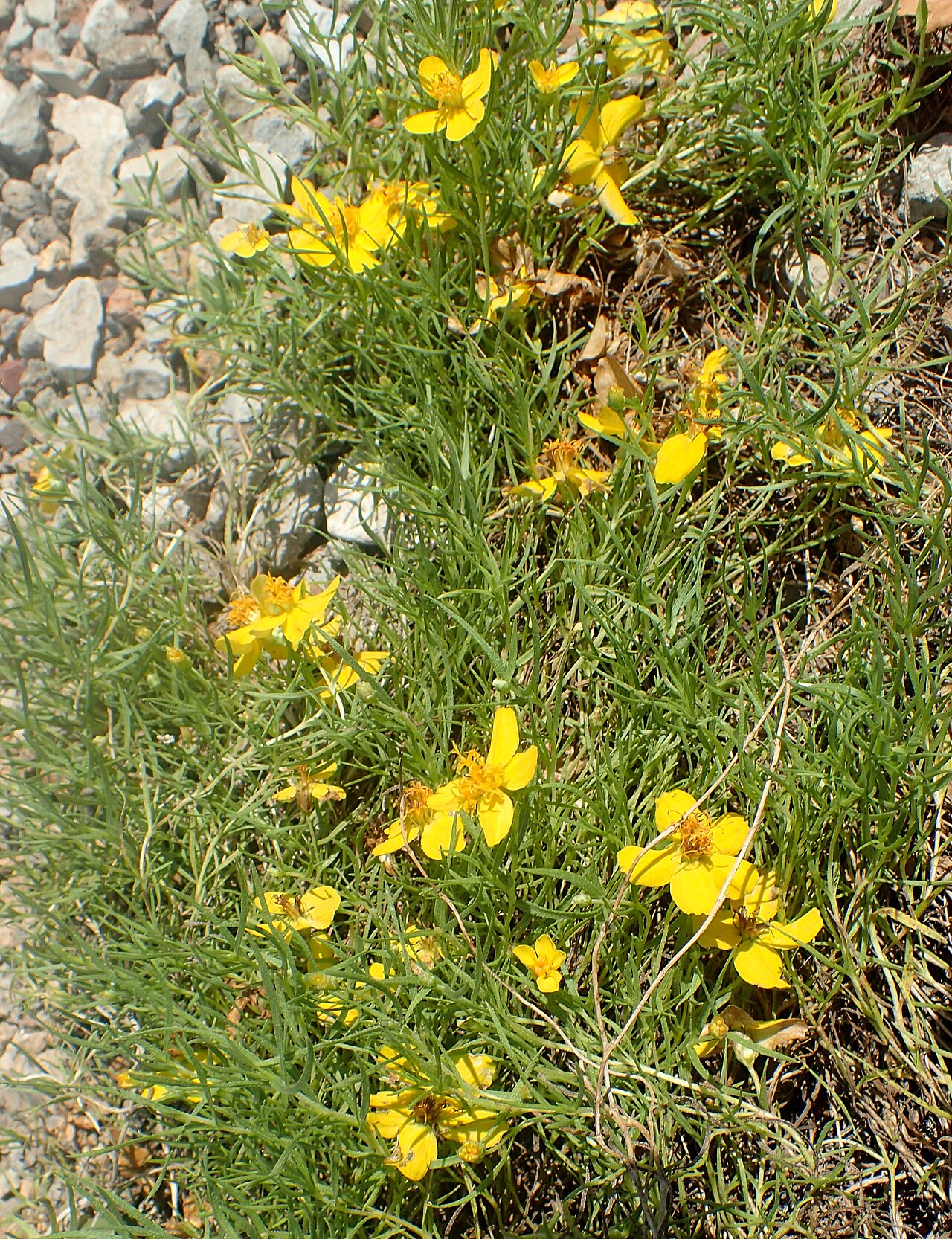
Multiple short branches rise from a woody base. The small, rounded outline can look almost shrubby even though this is commonly grown as a perennial wildflower. Its size makes it easy to lose among taller neighbors, so examine the plant at ground level. The woody base is also a reason not to mistake an older dormant plant for a dead annual at the end of the growing season.
Leaves
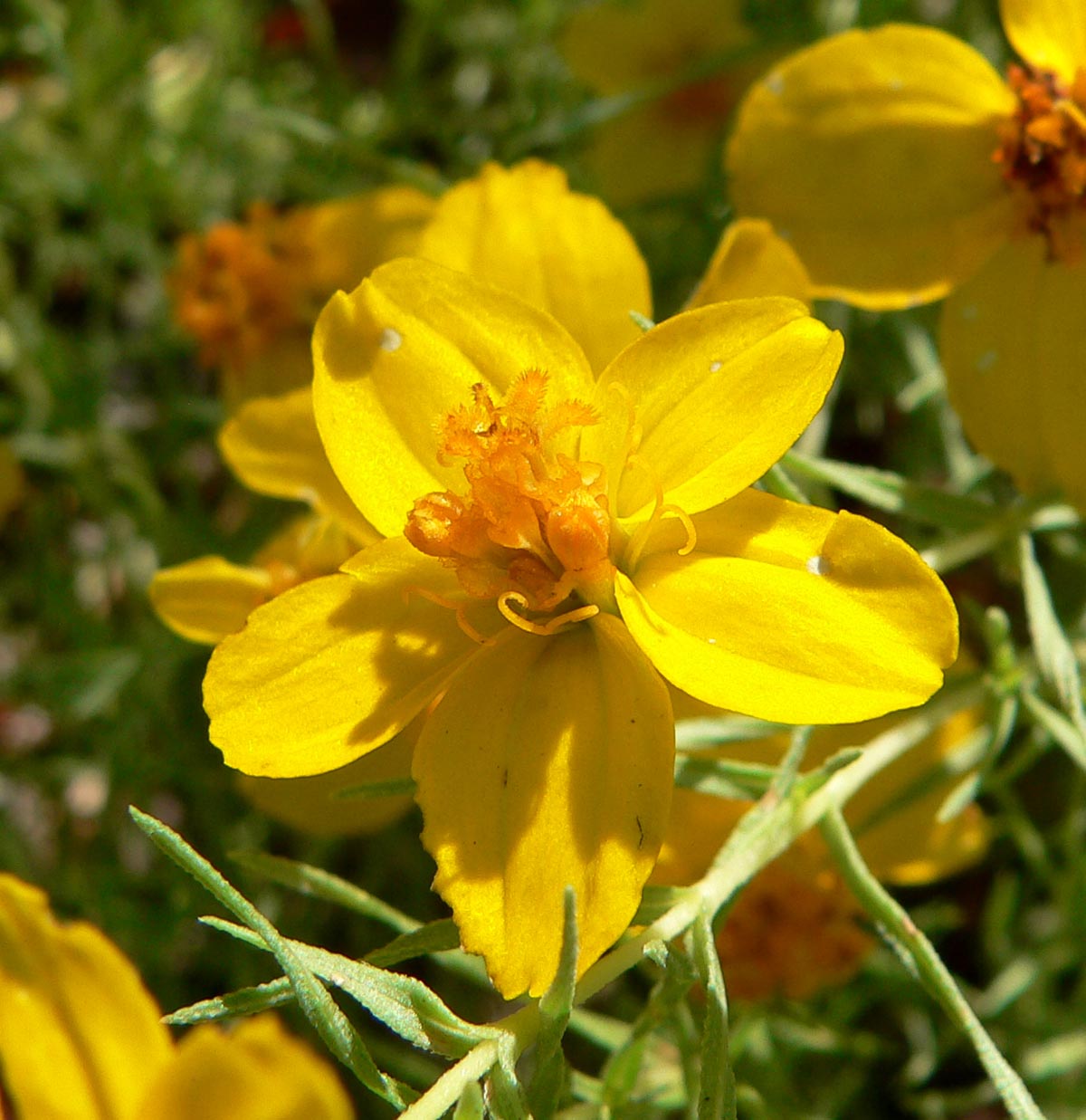
The leaves are small, narrow, and arranged opposite one another. Their fine texture is a useful contrast to the broad leaves of common garden zinnias. Between flowering periods, the foliage remains a quiet part of the planting rather than a large leafy focal point. Use the leaves and growth form along with the flower heads when confirming identity; a yellow flower alone is not enough to distinguish the many Southwestern members of the daisy family.
Flowers
Golden ray florets surround the smaller central florets in each composite flower head. Individual heads can age into a papery appearance, so a patch may carry both fresh and older flowers at once. The relatively large heads stand out against the tiny leaves. This is a low landscape display, not the long-stemmed cut-flower performance of annual Zinnia elegans. Plan a view from a path or sitting area where the plant’s scale makes sense.
Fruit & Seeds
The fruits are dry and small. Leave selected mature heads when seed production or natural recruitment is part of the garden plan. Seed handling should be gentle; NC State notes that seed can be damaged during machine cleaning. For a small garden, a carefully labeled seed lot from a reliable grower is preferable to a packet whose common name does not establish which zinnia species it contains.
Quick Facts
| Scientific Name | Zinnia grandiflora |
| Family | Asteraceae (daisy family) |
| Plant Type | Low perennial wildflower with a woody base |
| Mature Height | Usually 4–8 inches; approximately 6 inches in the Arizona list |
| Mature Spread | Small initial mound; expands through underground stems |
| Growth Rate | Slow |
| Sun Exposure | Full sun preferred |
| Water Needs | Low; dry, freely drained soil after establishment |
| Soil Type | Sandy, gravelly, rocky, or other well-drained mineral soil |
| Soil pH | Tolerates calcareous soils |
| Bloom Time | Summer into fall; local season varies with climate |
| Flower Color | Golden yellow with darker centers |
| Fall Color | No dependable showy leaf-color display |
| Fruit | Small dry one-seeded fruits |
| Deer Resistant | Generally resistant; local browsing still possible |
| USDA Hardiness Zones | 4–8, as listed by NC State; select locally adapted material |
Native Range
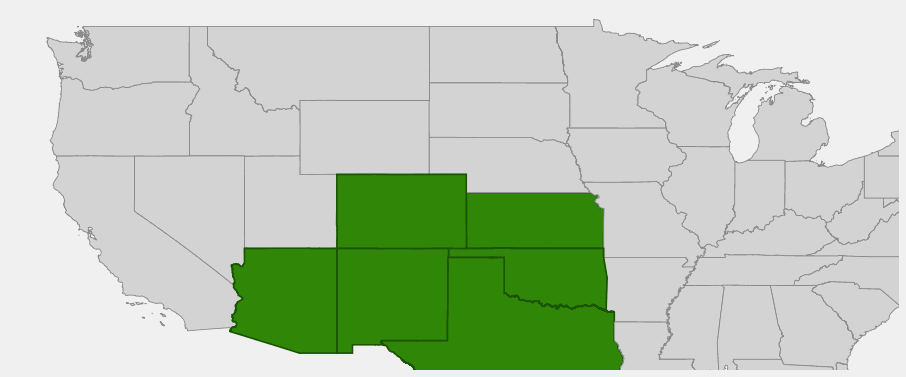
Kew and NC State both list Arizona, Colorado, Kansas, New Mexico, Oklahoma, and Texas in the native U.S. distribution. Kew also records the species in Mexico. Those six states are highlighted on the map below. The shading is a broad geographic summary and should not be read as evidence of occurrence in every county or suitability for every garden within a state.
Dry open ground, including calcareous slopes and shortgrass prairie settings, provides the most useful ecological context for garden placement. The Native Plant Society of Texas describes its rhizomatous growth and use on steep sandy slopes, while the University of Texas herbarium’s wildflower account places it in calcareous prairies in western Texas. These regional descriptions help explain why a wet, shaded bed is such a poor substitute for its natural setting.
Across Arizona, use local growing experience to refine the broad range information. Winter cold, reflected urban heat, and rainfall timing can differ substantially between locations. Ask for nursery material that has been tested under similar conditions. A specimen photographed in a botanical garden outside the native range shows what the plant looks like, not where it originated.
📋 Regional plant list: Arizona
Growing & Care Guide
Light
Give prairie zinnia an open, sunny place. While some horticultural references allow partial shade, full sun is the appropriate default for the Arizona list’s dry-garden use. Watch how nearby plants will grow over the next few seasons: a small shrub installed behind the zinnia can eventually create shade just when the groundcover is settling in. Solve that spacing problem in the original design instead of repeatedly cutting back both plants.
Soil & Water
Drainage comes first. Avoid placing the crown in a depression that receives irrigation runoff, and do not surround it with a deep layer of fine, moisture-holding mulch. A newly planted specimen needs water while roots establish, but its long-term watering regime should allow the soil to dry. Check below the surface before deciding the plant is thirsty; the top of gravel or sand can appear dry while a finer-textured root zone remains wet.
Planting Tips
Plant at the same crown depth as in the nursery pot and leave room for a low spreading patch. Grouping a few plants creates a visible flower display without forcing them shoulder to shoulder. On a slope, make sure water can reach the roots during establishment without collecting permanently around the base. Keep neighboring weeds under control while the zinnia is small, because its low stature offers little protection from taller, faster-growing competitors.
Pruning & Maintenance
Avoid treating the woody base like an annual flower that can be pulled out after frost. Retain a marker and look for seasonal renewal before deciding that a dormant plant has failed. Remove broken or clearly dead material as needed, but do not repeatedly shear the mound into a rigid outline. A natural edge is especially appropriate in a gravel garden where gradual expansion is welcome. Where growth meets paving, make modest, selective adjustments rather than cutting the whole plant back whenever one shoot crosses the line.
Propagation
NC State lists seed, division, stem cuttings, and root cuttings as propagation approaches, with spring suitable for vegetative work. Use healthy cultivated material and keep labels through every stage. Young divisions or cuttings are not immediately drought-proof just because the parent survives dry summers. Protect them from abrupt stress while roots develop, then acclimate gradually to the final exposure. For seed, follow the producer’s instructions and avoid vigorous handling of fragile cleaned material.
Working With Its Spread
Rhizomes help a patch extend and can make the species useful on suitable slopes. That does not mean a few plants can stabilize an eroding bank on their own. Address concentrated runoff, bare disturbed soil, and the larger plant community first. In a garden, observe the actual rate of spread before deciding whether edging is needed. A small expanding colony can be a benefit where it replaces open weedy ground without overwhelming neighboring low plants.
Seasonal Water Decisions
Use the plant’s response and the soil together. A fuller appearance after rain does not establish that constant irrigation is necessary. During establishment, record when water was applied and whether the root zone dried between applications. Once the plant is rooted into the surrounding ground, reduce unnecessary watering rather than following the schedule of nearby annual flowers. If a whole mixed bed cannot share the same regime, separate the irrigation zones or change the companion planting.
Landscape Uses
- Low golden-flowered groups at the front of an Arizona dry perennial bed.
- Rock gardens with open sun and freely draining mineral soil.
- Small patches along gravel paths, set back enough to allow gradual spread.
- Sunny slopes as one component of a broader erosion-conscious planting.
- A fine-textured ground layer near larger native plants, provided those plants do not shade it out.
Wildlife & Ecological Value
For Pollinators
The flower heads attract a range of visiting insects, and NC State lists bees, butterflies, and moths among its wildlife associations. A group of plants is easier for a gardener to observe and can offer more blossoms than an isolated specimen. Combine it with other local species that extend the flowering season rather than assuming one long-blooming plant supplies every resource. Keep insecticide drift away from open flowers.
For Birds
This low wildflower should not be presented as a replacement for fruiting shrubs, seed-rich grasses, or woody cover. Its contribution is part of the ground layer of a diverse native landscape. Retaining some mature flower heads and avoiding unnecessary chemical treatment keeps that layer more functional. Bird habitat is strongest when plants of different heights and seasonal roles fit together without placing a sun-loving zinnia in deep shade.
For Mammals
Horticultural sources describe resistance to deer and rabbits, but local browsing pressure can still affect newly planted stock. If plants disappear soon after installation, inspect for browsing and disturbance rather than immediately changing the irrigation. Temporary protection may help young plants become established. A resistance label should guide expectations, not promise immunity in every season.
Ecosystem Role
Prairie zinnia adds a low perennial component to open-ground plantings and can spread through underground stems. Preserve its role by allowing seasonal growth and a little patchiness instead of requiring an unchanging carpet. Use neighboring plants appropriate to the same moisture regime and retain some unsealed soil. The aim is a working dry-garden community, not simply a decorative yellow surface.
Cultural & Historical Uses
The name prairie zinnia highlights its relationship to open-country habitats, while Rocky Mountain zinnia and plains zinnia reflect other parts of its broad geographic identity. The scientific name is the most dependable label when selecting plants because many annual zinnias are sold under general names that say nothing about their origin or life cycle.
The University of Texas herbarium documents the species through preserved collections from several western Texas regions. That kind of botanical record is valuable alongside horticultural experience: it ties a plant to a place and helps separate native distribution from modern cultivation. Gardeners can support the same clarity by recording where their seed or nursery plants originated.
For contemporary landscape use, prairie zinnia demonstrates that native flowers need not be tall or lush to be useful. Its low habit, bright heads, and dry-soil setting offer an alternative to maintaining thirsty annual color in every sunny corner. Purchase propagated material and let wild populations remain part of their original communities.
Frequently Asked Questions
Is this the same as an annual cutting-garden zinnia?
No. Zinnia grandiflora is a low, woody-based native perennial used in dry landscapes. Its growth form and watering needs differ from the tall annual zinnias commonly grown for bouquets.
How tall does prairie zinnia grow?
A typical range is about 4–8 inches. The Arizona table uses 6 inches as a representative size. Allow horizontal room as well, because underground stems can extend a patch beyond the first mound.
Can it grow in wet soil?
Persistent wetness is a poor fit. Use a freely drained site and distinguish temporary establishment watering from a permanently moist irrigation regime.
Will it spread over a slope?
It can expand through rhizomes on a suitable site, but it is not an instant erosion solution. Combine it with other locally appropriate plants and address concentrated runoff separately.
How should I choose seed?
Buy seed specifically labeled Zinnia grandiflora from a reliable source, ideally with regional provenance. Handle it gently and follow the supplier’s instructions; common-name-only zinnia packets may contain a completely different plant.
Sources & Further Reading
- NC State Extension: Zinnia grandiflora
- Kew Plants of the World Online: Zinnia grandiflora
- Native Plant Society of Texas: prairie zinnia
- University of Texas herbarium: plains zinnia
Find Native Plants
Ask growers about nursery propagation and regional provenance. Browse our Arizona native plant nurseries directory for suppliers.