
Wild Ginger (Asarum canadense)
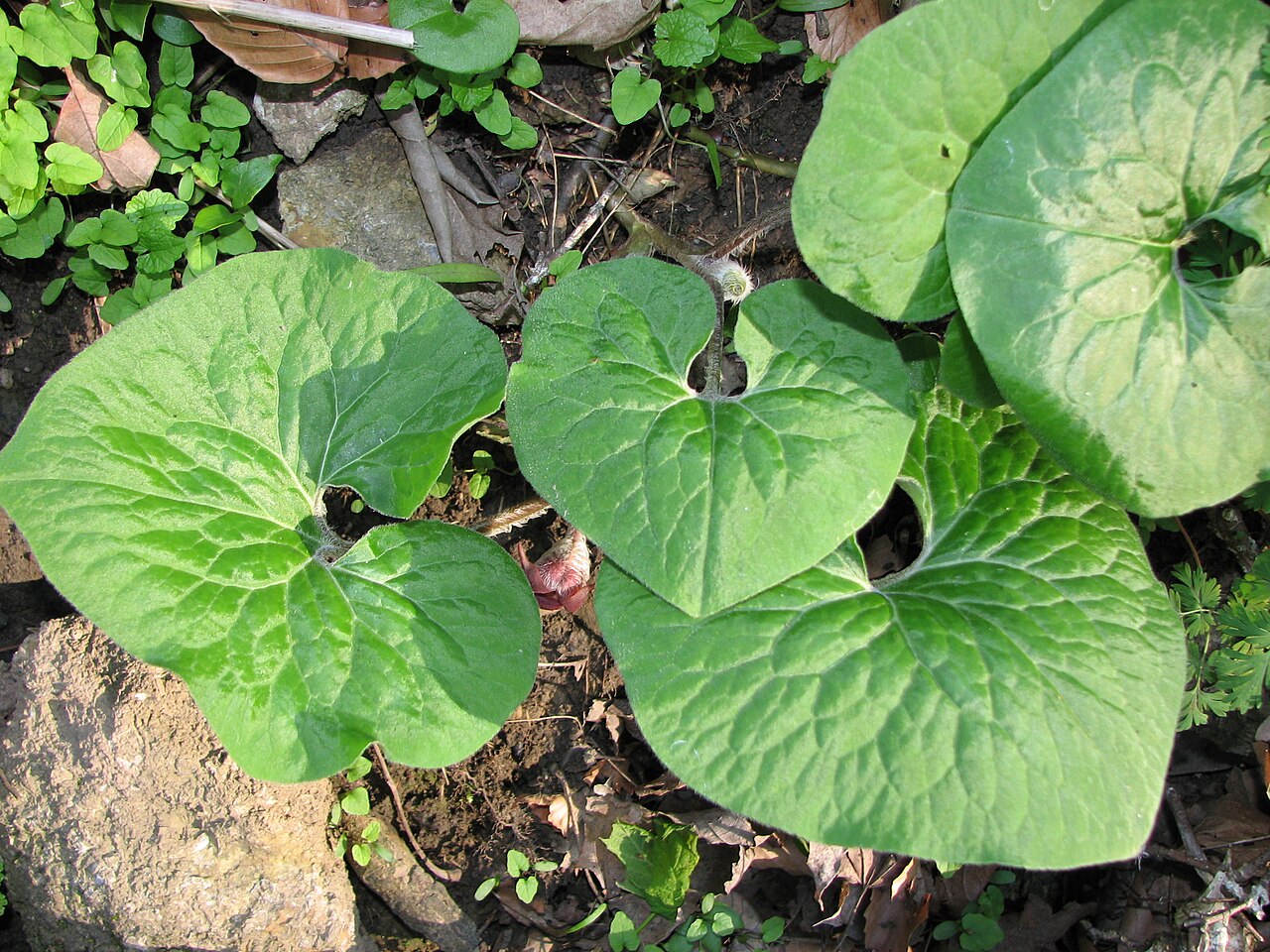
Wild ginger (Asarum canadense) is a low, deciduous woodland perennial with broad, heart-shaped leaves and curious flowers tucked close to the soil. In an eastern shade garden, its main contribution is a calm green carpet rather than a conspicuous floral display. A well-established patch spreads through rhizomes, knitting separate plants into a groundlayer beneath taller woodland vegetation.
Unlike European wild ginger and several southeastern evergreen relatives, this species loses its leaves for winter. Its leaves are softly hairy rather than polished and glossy. That distinction matters when choosing a groundcover: wild ginger can clothe a shaded bed during the growing season, but it is not a year-round substitute for an evergreen plant.
The common name refers to an aromatic rhizome, not a relationship with culinary ginger. Do not eat any part of wild ginger. NC State identifies aristolochic acid as a toxic constituent and explicitly advises against consumption. Its value here is as a native woodland plant, not a source of kitchen spice or home remedies.
Identification
Rhizomes & Leaf Stalks
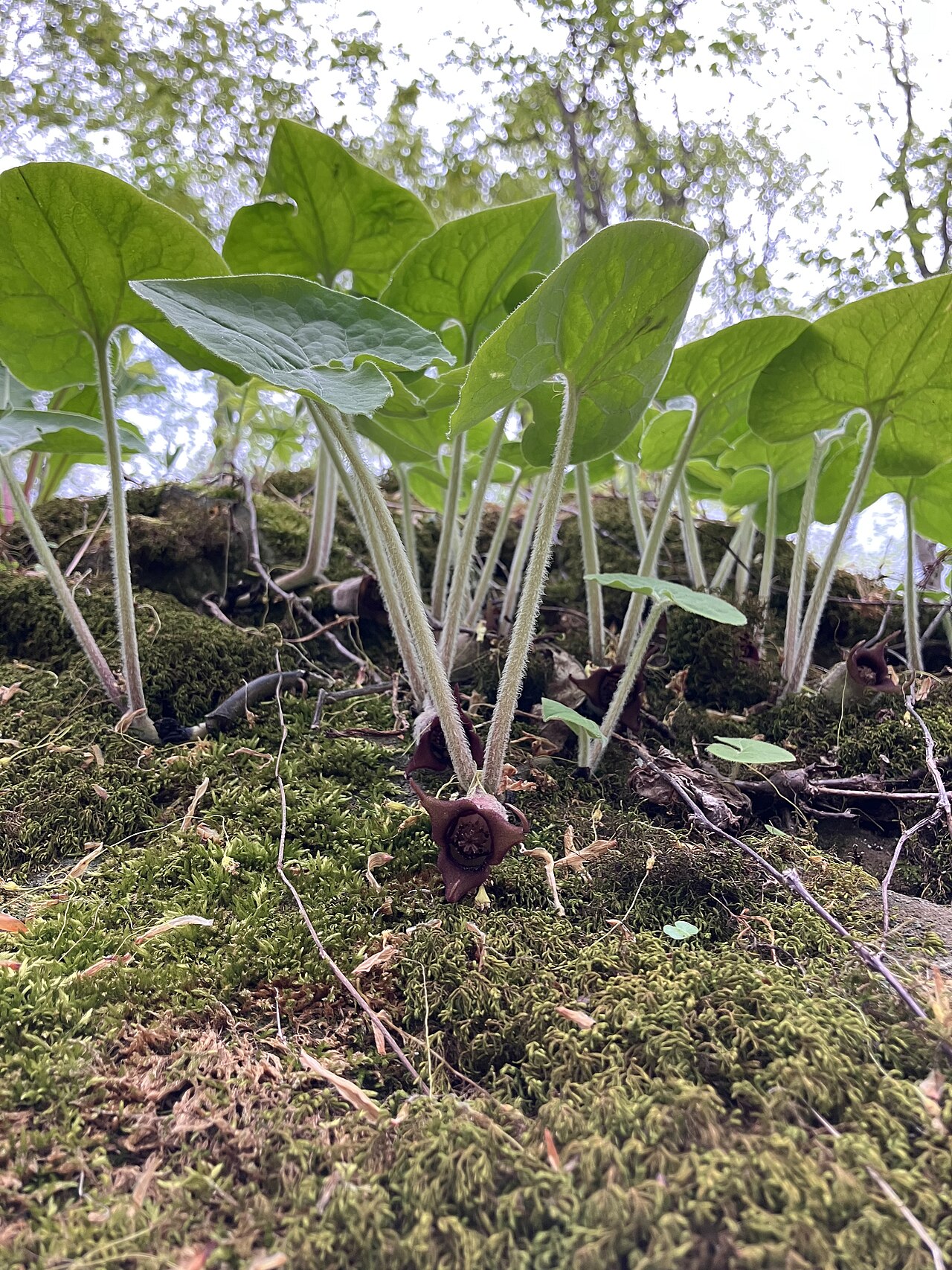
The plant spreads horizontally through underground rhizomes. Above ground, hairy leaf stalks support paired leaves, with the flower nestled low between them. This is an herbaceous perennial, not a miniature shrub: there are no persistent woody branches to prune into shape. The living underground system remains after the visible foliage dies back.
Leaves
Look for broad heart-shaped blades with an obvious notch at the base, strong veins, and fine hairs. Each leaf is simple, not divided into leaflets. The regional tables describe a low 4–6-inch carpet, while botanical and horticultural accounts give broader ranges reaching 8–12 inches in favorable conditions. Height varies with site and with what part of the plant is measured.
Evergreen southeastern Hexastylis species can also have heart-shaped leaves and hidden flowers, but their foliage and details differ. European wild ginger, Asarum europaeum, is another plant entirely. For a native planting, inspect the scientific name and do not accept a generic ‘ginger’ label as adequate identification.
Flowers
The solitary spring flower is reddish brown to purplish brown and has three pointed, spreading or recurved lobes. It rests near ground level and is easily concealed by the leaves and surrounding litter. There are no showy petals like those of a violet. Carefully moving a leaf aside is enough to reveal the flower; do not dig up the plant to look for it.
Blooming is generally in spring, with April through June represented in regional accounts. Because the flowers are low and subdued in color, a patch may flower successfully without attracting notice from a standing observer. Planting beside a low path or raised woodland bed makes these details easier to appreciate.
Fruit & Seeds
A small capsule develops near the soil after flowering. Seed ripening can follow only a few weeks after bloom, so propagation timing is different from that of plants whose seed heads stand above the foliage into autumn. The Wildflower Center notes that stored seed has reduced germination. Fresh seed and patient observation are more promising than treating old dry seed as equivalent to a newly collected batch.
Quick Facts
| Scientific Name | Asarum canadense |
| Family | Aristolochiaceae (pipevine family) |
| Plant Type | Deciduous herbaceous perennial groundcover |
| Mature Height | 4–6 inches in the regional tables; published ranges extend to 8–12 inches |
| Mature Spread | Individual plants are small; rhizomes expand into colonies |
| Growth Rate | Slow |
| Sun Exposure | Shade; partial shade also suitable |
| Water Needs | Average to consistently moist garden soil; poor drought tolerance |
| Soil Type | Humus-rich, moist woodland soil with drainage |
| Soil pH | Acidic to neutral; approximately 6–7 favored by the Wildflower Center |
| Bloom Time | Spring, generally April–June |
| Flower Color | Brown, reddish brown, or purplish brown |
| Fall Color | Deciduous; foliage dies back for winter |
| Fruit | Small capsules near the soil |
| Deer Resistant | Usually resistant to browsing; not a guarantee |
| USDA Hardiness Zones | 3–7 in the Wildflower Center account; avoid hot exposed sites |
Native Range
Wild ginger is native to a large part of eastern and central North America. The Wildflower Center’s U.S. state list extends from the northern Plains and Great Lakes through New England and the Southeast. The map below follows that listed set of states; it is a broad orientation, not proof of occurrence in every county.
The same source lists Manitoba, New Brunswick, Ontario, and Quebec in Canada. Its narrative range and state list are not perfectly identical at the southern edge, so Florida is not added to this map solely from the prose description. In a strict restoration project, consult a state flora or local herbarium before selecting material for a range-edge site.
Its typical setting is woodland with moist, organic-rich soil. In Alabama, Georgia, and Mississippi, shaded ravines and other cooler woodland positions are a better model than an exposed coastal yard. The Wildflower Center warns that high summer heat in Zone 8 can limit performance. A southeastern state appearing on a range map does not make every hot lowland garden suitable.
Native Range at a Glance
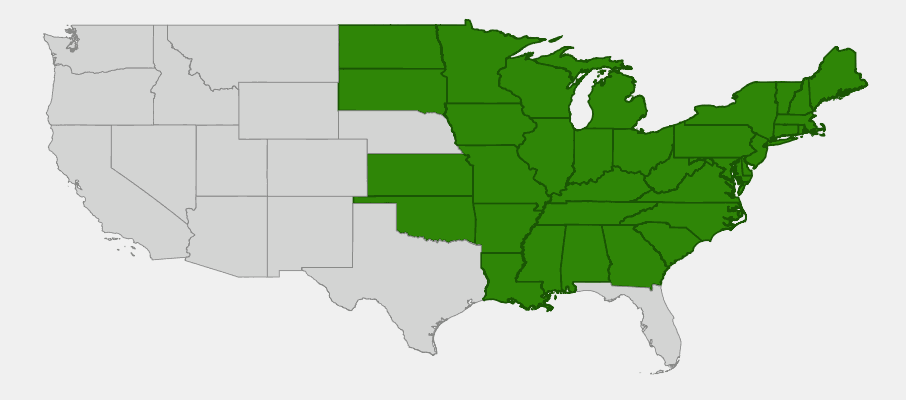
| U.S. States | AL, AR, CT, DC, DE, GA, IA, IL, IN, KS, KY, LA, MA, MD, ME, MI, MN, MO, MS, NC, ND, NH, NJ, NY, OH, OK, PA, RI, SC, SD, TN, VA, VT, WI, WV |
| Canadian Provinces | Manitoba, New Brunswick, Ontario, Quebec (Wildflower Center list) |
| Ecoregion | Eastern and central North American woodland communities |
| Elevation Range | Varies across the broad range; no single numerical range adopted here |
| Habitat | Moist, rich woodlands and shaded slopes |
| Common Associates | Woodland ferns, spring wildflowers, and deciduous forest understory plants appropriate to the local community |
| Range Source | Lady Bird Johnson Wildflower Center; USDA (County-Level Data) |
📋 Explore the Alabama, Georgia & Mississippi native plant list and Iowa, Illinois & Missouri native plant list.
Growing & Care Guide
Light
Choose partial shade to shade. Filtered light beneath deciduous trees fits the woodland habit, provided the root zone is not chronically dry. Shade from a building can also work where the soil and moisture are suitable. Avoid assuming that all shaded ground is moist; established tree roots may remove water rapidly.
Soil & Water
A moist, humus-rich soil is the main requirement. The regional average-moisture code should be read as a reasonably moist garden bed, not drought tolerance. NC State specifically describes poor drought tolerance. Keep newly planted roots from drying while avoiding a permanently stagnant planting pocket.
Leaf mold and a modest litter layer help reproduce the woodland surface. Do not bury crowns under a deep pile of mulch. Published sources allow acidic to neutral conditions, with the Wildflower Center favoring roughly pH 6–7; use a soil test before attempting major pH adjustments. Heavy fertilization is not a substitute for an appropriate woodland site.
In hot weather, check soil below the surface rather than irrigating automatically. A cool-looking shaded bed can still be dry several inches down. Conversely, wilt in saturated soil is not solved by another watering. Persistent decline warrants a look at drainage, root condition, and the heat load of the site.
Planting Tips
Plant nursery-propagated divisions or plugs at their original depth. Arrange them with room to expand into a patch rather than crowding them for immediate coverage. Retain access for early weeding: small weeds are easier to remove before their roots become entangled with the ginger rhizomes.
Under established trees, work around major roots instead of cutting them to fit a geometric planting pattern. A smaller plant can be installed in a suitable gap with less disturbance. Where the entire site is a dry root mat, consider a different groundlayer plant rather than repeatedly digging and amending the same failing bed.
Pruning & Maintenance
Routine pruning is unnecessary. Allow healthy leaves to remain through the growing season so they can support the underground plant. Remove damaged material only where needed, and leave a marker at the patch edge if winter dormancy might otherwise lead to accidental digging.
A living groundcover is not a walking surface. Put stepping stones or a defined path beside the patch, not through its center. As the colony expands, divide or redirect its edge where it approaches delicate neighbors. The spread is useful when planned for, but should not be described as an instant or maintenance-free lawn replacement.
Propagation
Division of established cultivated rhizomes is the most straightforward garden method. The Wildflower Center recommends fall root division and also lists summer cuttings. Keep divisions moist and shaded while handling them, retain viable roots and growing points, and replant promptly.
Seed propagation is slower and benefits from fresh material. Label the date and parent source, and do not discard a seed tray merely because it fails to behave like a fast annual. Buy propagated plants rather than removing a woodland colony. For ecological projects, ask about regional provenance rather than treating every nursery source as interchangeable.
Landscape Uses
- A deciduous groundlayer in a moist native woodland garden.
- Low edging along a shaded path where the hidden flowers can be examined.
- A foliage contrast beside fine-textured ferns and taller woodland perennials.
- A replacement for unsuitable turf in shade where foot traffic can be excluded.
- A small patch in a cooler, sheltered southeastern garden, with summer moisture monitored.
Wildlife & Ecological Value
For Pollinators
NC State identifies flies and beetles among the pollinators and notes that the flowers can self-pollinate. The low flowers illustrate why a pollinator garden is not limited to brightly colored blooms at eye level. Keep the groundlayer free of unnecessary broad-spectrum insecticide applications, particularly while it is flowering.
For Birds
The plant contributes a low layer of cover and leaf litter habitat rather than a conspicuous crop of fleshy fruit. Do not equate a general wildlife-garden label with a documented major food source for every bird. A varied woodland garden includes shrubs and trees that supply other resources above this groundlayer.
For Mammals
Wild ginger is listed as resistant to deer browsing, although local animal pressure can still affect a planting. Its toxicity makes it unsuitable as forage or a pet snack. A name associated with a familiar food is not a reliable guide to plant safety, and neither a root scent nor an animal’s curiosity establishes edibility.
Ecosystem Role
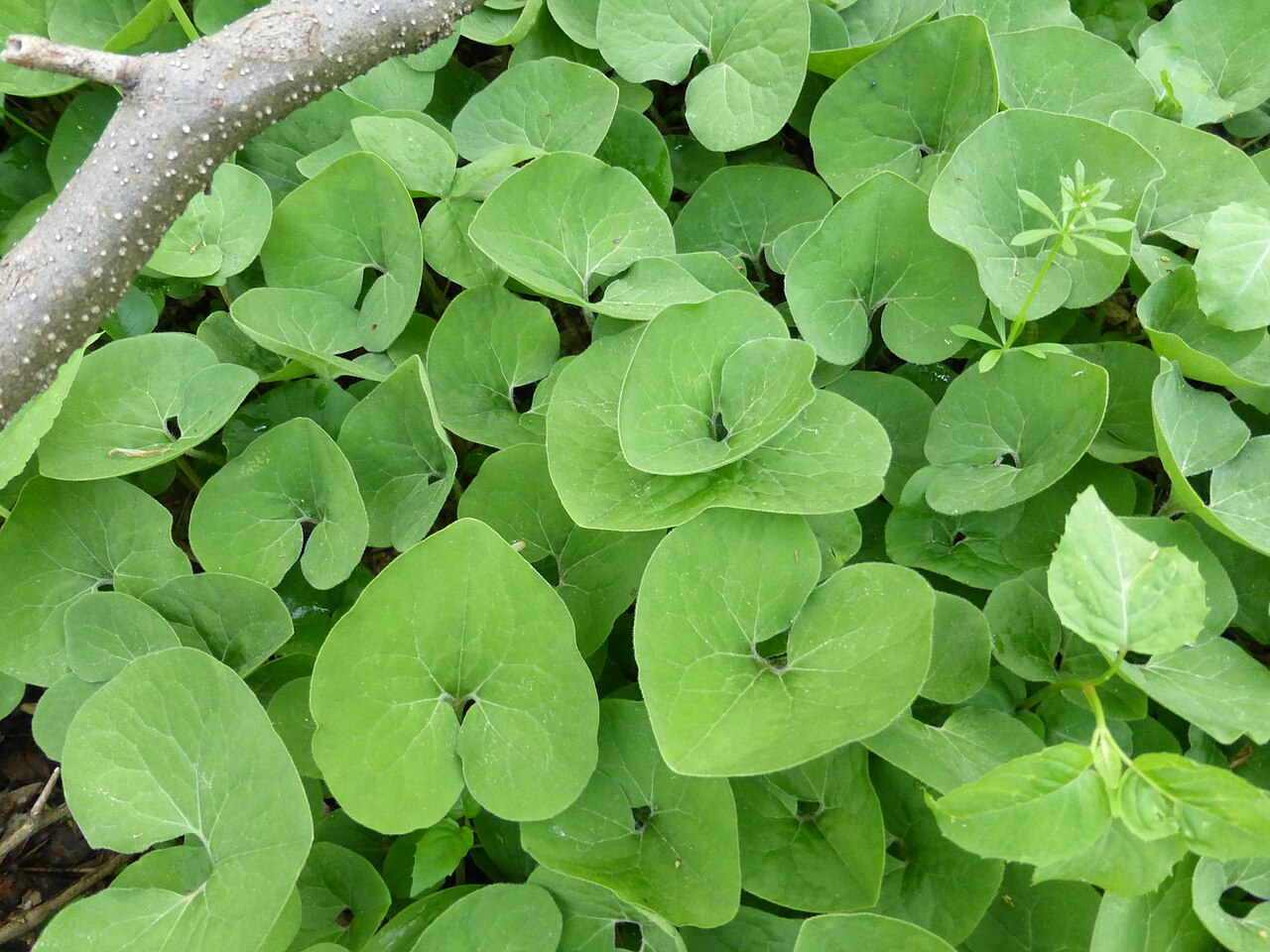
Rhizome growth helps create a continuous herbaceous layer over shaded soil. The leaves intercept light close to the ground, while seasonal litter becomes part of the woodland surface. NC State and the Wildflower Center also list it as a host for pipevine swallowtail larvae; that relationship is not a guarantee of butterfly colonization in every garden. Surrounding habitat and local butterfly presence matter.
Cultural & Historical Uses
The ginger-like scent of the rhizome explains the common name and historical comparisons with culinary ginger. NC State records past use as a ginger substitute. That history should be understood as a record of practice, not modern dietary advice.
The same extension account identifies a serious toxicity concern and says not to consume the plant. This guide therefore gives no recipes, teas, doses, or medicinal preparations. Culinary ginger belongs to a different family and should not be replaced with a woodland lookalike.
For gardeners, the useful cultural distinction is between a plant valued for foliage and ecology and a plant grown for harvest. Labeling Asarum canadense clearly helps visitors appreciate the hidden flowers without confusing it with edible ginger or the evergreen species sold under similar names.
Frequently Asked Questions
Is wild ginger evergreen?
Not this species. Asarum canadense is deciduous. The regional-table comments describing it as evergreen and glossy have been corrected; those descriptions are more suggestive of other plants sold as wild ginger.
Can I use the root in cooking?
No. NC State advises against eating any part of the plant because of its toxic constituents. A ginger-like scent and historical use do not establish safety. Use culinary ginger for food.
Why can I not see the flowers?
They are borne close to the soil, below the leaves, and can be hidden in litter. Look gently beneath a leaf in spring without pulling up the plant or stripping the patch bare.
Will it thrive in dry shade?
Dry shade is a poor match. Wild ginger prefers moist organic soil and has poor drought tolerance. Address the site’s water limitations or choose another locally native plant rather than relying on shade alone.
How does it spread?
It expands through rhizomes and can form a colony over time. Divide cultivated material when needed to establish a new patch or control an edge. It is not a fast-germinating annual or a groundcover intended for regular foot traffic.
Sources & Further Reading
- NC State Extension Plant Toolbox — Asarum canadense
- Lady Bird Johnson Wildflower Center — Wild Ginger
Find Native Plants Near You
Ask for nursery-propagated stock. Browse native plant nurseries for Alabama, Georgia, Mississippi, or Iowa and Illinois.