
ʻŌhiʻa Lehua (Metrosideros polymorpha)
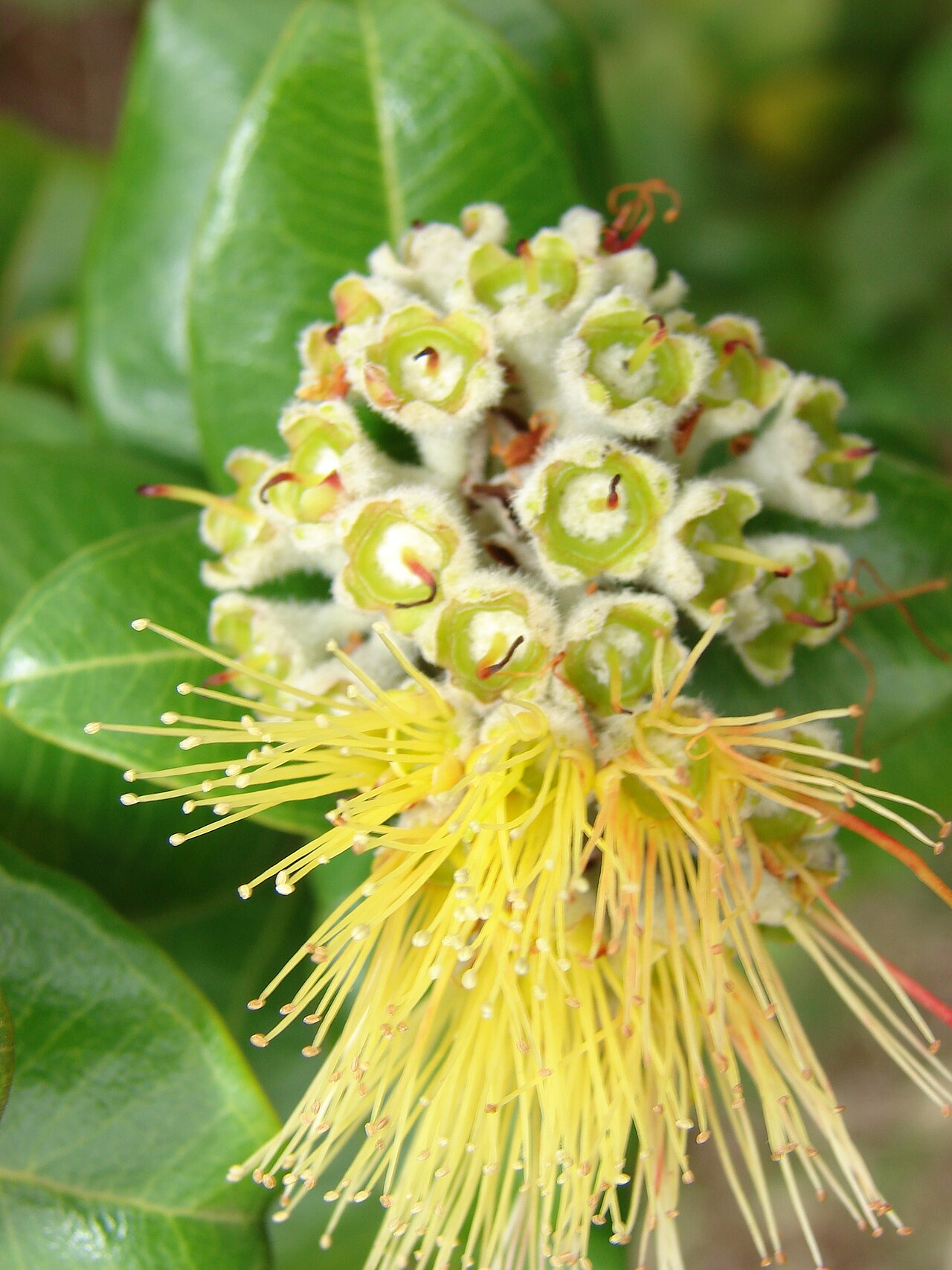
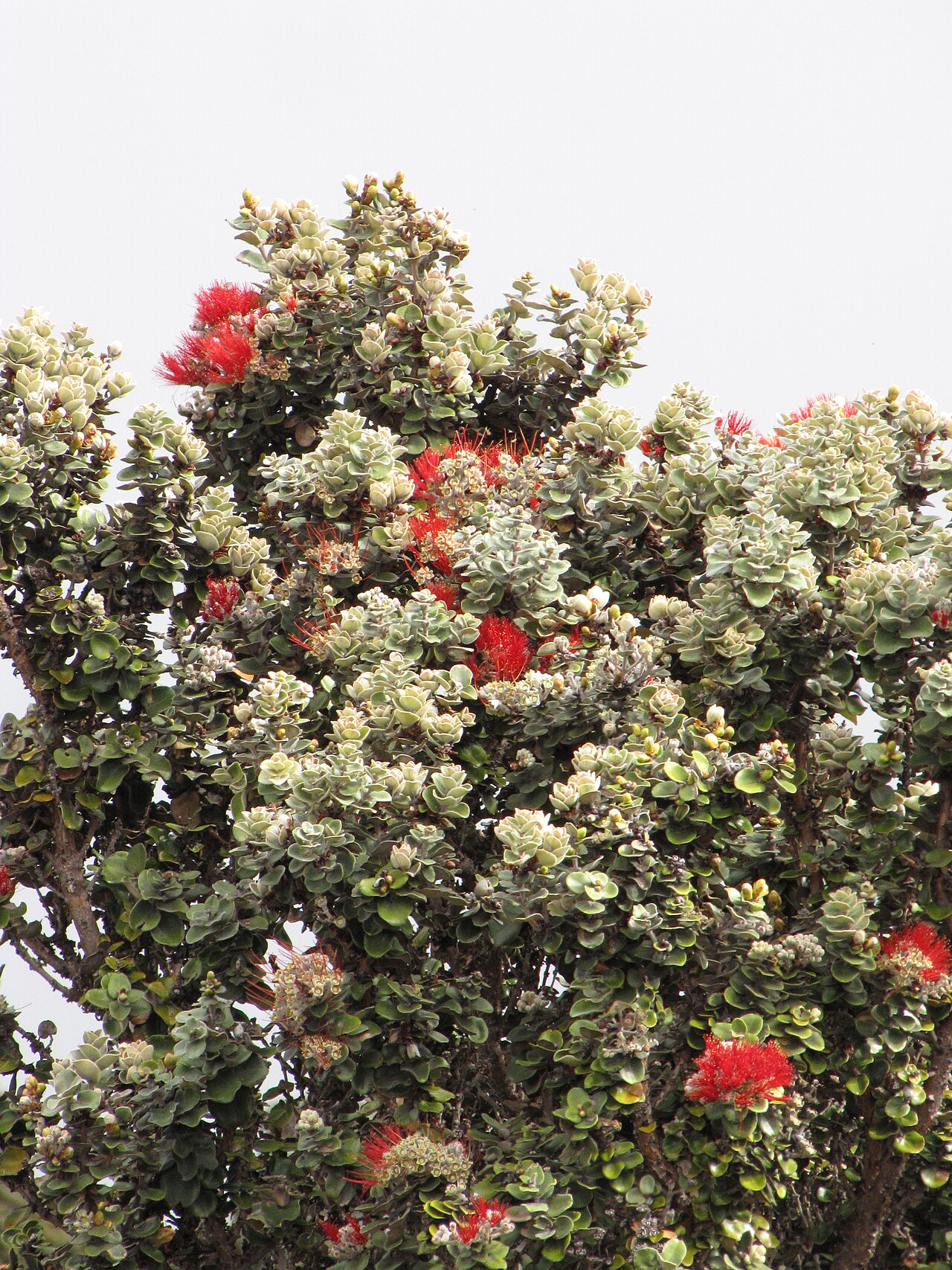
ʻŌhiʻa lehua (Metrosideros polymorpha) is one of the defining trees of Hawaiʻi. Its flowers are made conspicuous by a brush of long stamens, often red but also naturally yellow, orange, pink, or cream-colored. The yellow-flowered tree pictured here and the red-flowered form below illustrate real variation within the species, not a change in identity.
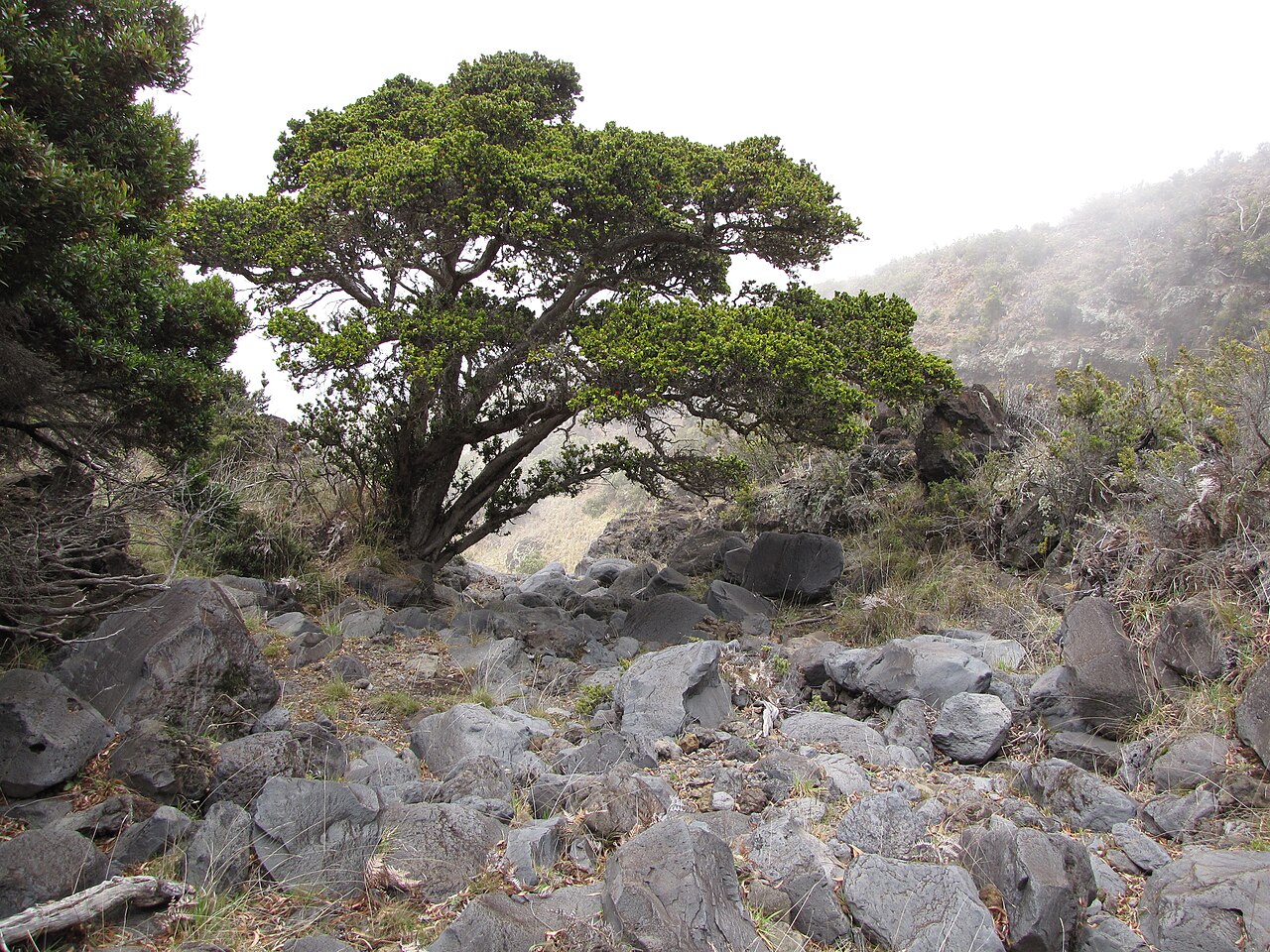
This member of the myrtle family, Myrtaceae, is endemic to the Hawaiian Islands. It can form a substantial forest tree, a smaller spreading landscape tree, or a low shrub in exposed or otherwise demanding habitats. The 20–80-foot height range in our tree list describes common tree-sized forms; it should not be treated as the eventual height of every plant bearing the species name.
For landscaping, source matters. A nursery-grown ʻōhiʻa suited to the island, elevation, and exposure is a better starting point than selecting only for flower color. Its root system deserves particularly gentle treatment. Give it adequate light, good drainage, and a permanent location where neither construction nor routine garden maintenance will repeatedly disturb its roots.
Identification
Bark & Stems
Mature ʻōhiʻa may have an irregular crown and a rugged trunk, while younger plants can be comparatively compact. Tree shape alone is not diagnostic because wind, moisture, rooting conditions, and genetic variation all influence growth. Avoid damaging the bark to inspect the wood. A planted tree should have a protected base, free from tight ties, mower injury, or piled mulch.
Leaves
Leaves occur in opposite pairs and range considerably in size, texture, and hairiness. Some plants have smooth, glossy foliage; others have conspicuous hairs beneath the leaves or on new growth. The tender expanding growth, known as liko, may show striking warm colors. Those differences are part of the appeal of the species, but they also explain why a single close-up cannot represent every ʻōhiʻa in Hawaiʻi.
Flowers
The projecting stamens give lehua flowers their brushlike appearance. Blooming can be sporadic or recur through the year, with local conditions affecting the display. Do not confuse the species with every introduced ornamental “bottlebrush” or other red-flowering myrtle. A reliable identification combines leaf arrangement, fruit, flowers, growth form, and provenance rather than flower color alone.
Fruit & Seeds
After flowering, woody capsules develop and release very small seeds. These are not fleshy berries for people or birds. For propagation, obtain clean, documented material from a reputable grower rather than moving branches, wood, or soil from a forest. A nursery should be able to explain the parent source and whether a plant was raised from seed or propagated to retain a particular ornamental form.
Quick Facts
| Scientific Name | Metrosideros polymorpha |
| Family | Myrtaceae |
| Plant Type | Evergreen tree or shrub; highly variable |
| Mature Height | 20–80 ft for tree forms; exposed-site forms can be much smaller |
| Mature Spread | Variable with growth form; allow space for a substantial tree canopy |
| Growth Rate | Variable with source and site |
| Sun Exposure | Full sun; partial sun tolerated |
| Water Needs | Dry to wet native habitats; garden plants require source-matched moisture and excellent drainage |
| Soil Type | Well-drained volcanic and organic soils |
| Bloom Time | Sporadic or recurring through the year |
| Flower Color | Red, yellow, orange, pink, or cream |
| Fruit | Small woody capsules with tiny seeds |
| Soil pH | Match the planting soil to locally successful nursery stock; do not lime routinely |
| Fall Color | Evergreen; no conventional temperate autumn display |
| Deer Resistant | Protect young plants from introduced browsing animals |
| USDA Hardiness Zones | Hawaiian tropical to subtropical sites; match elevation and exposure locally |
Native Range
ʻŌhiʻa lehua is native and endemic to Hawaiʻi, not a Polynesian-introduced tree. Its ecological breadth is exceptional: Hawaiian sources describe it in dry, mesic, and wet forests, on lava substrates, exposed ridges, and high-elevation environments. Small bog plants and large forest trees demonstrate how much its form can change across that range.
The tree is an important component of native forest, often growing with koa and a varied understory. Appropriate associates depend on the actual locality. A wet upland planting may include hāpuʻu and moisture-loving forest plants, while a drier site calls for a different community. Matching those relationships is more informative than choosing every plant labeled Hawaiian native for the same irrigated bed.
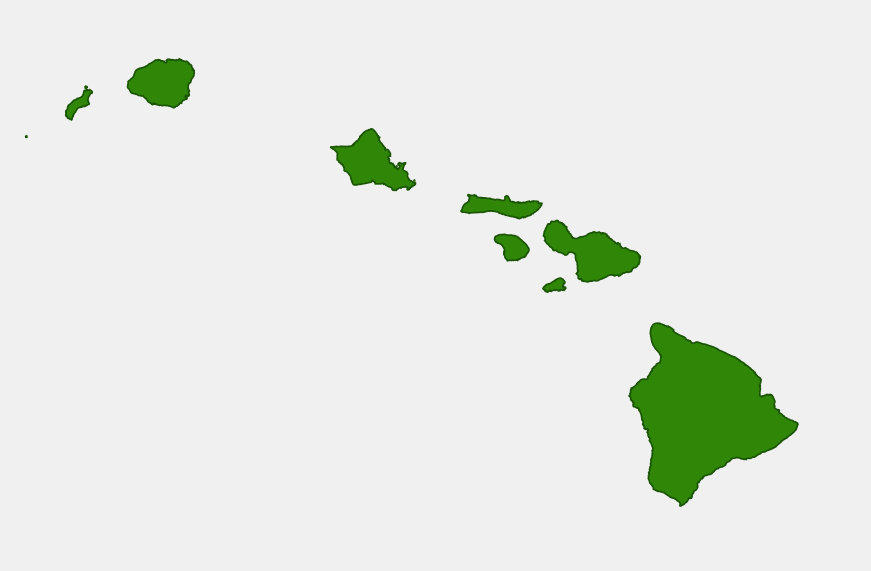
The map is a Hawaii state overview, not a claim that all shaded islands or elevations support the same form. Likewise, the species’ occurrence in wet forest does not mean a nursery tree should be installed in a waterlogged hole. Garden watering, drainage, natural rainfall, and local adaptation are separate considerations that need to be evaluated together.
Native Range
| U.S. States | Hawaii |
| Hawaiian Islands | Widespread across the main Hawaiian Islands; form and local occurrence vary |
| Mexico / Canadian Provinces | None in the natural range |
| Ecoregion | Hawaiian dry, mesic, and wet forests and high-elevation vegetation |
| Elevation Range | From low elevations into high montane and subalpine environments |
| Habitat | Forest, lava substrates, ridges, and bogs; different forms occupy different sites |
| Common Associates | Koa and site-appropriate native forest understory |
USDA PLANTS profile (MEPO5). Species identity verified; this link is not a guarantee of county-level distribution data.
📋 Find additional plants for a site-matched landscape in the Hawaii native plant list.
Growing & Care Guide
Light
Full sun generally supports a good crown and flower display, although plants may tolerate partial sun. Before planting, consider the shade a neighboring canopy will cast as it grows. If a tree must lean through a narrow opening toward light, the planting position is unlikely to produce the balanced specimen imagined from a nursery photograph.
Soil & Water
Provide well-drained soil and adjust irrigation to the tree’s source and the site. The wide natural range of ʻōhiʻa does not justify a single statewide watering schedule. During establishment, monitor moisture within the original root ball, not only at the surrounding surface. Irrigate when needed to moisten the rooting area, while allowing excess water to leave.
Repeated shallow watering can leave deeper roots dry, while frequent irrigation on poorly drained soil creates a different problem. Observe how the planting area behaves after rainfall and check whether roof runoff or a lawn sprinkler adds water unexpectedly. Avoid trying to correct a badly draining location by simply placing a handful of coarse material under the root ball.
Planting Tips
Choose a vigorous nursery plant before it becomes badly root-bound. Prepare the permanent location first, then move and handle the root ball carefully. Plant at the established nursery depth rather than burying the lower trunk. Do not break apart or aggressively prune the roots as a routine transplanting step; if the root system is seriously deformed, select healthier stock.
Create a mulched, low-traffic root zone, keeping mulch away from the trunk. Plan irrigation, access, and neighboring plant positions before roots occupy the area. Digging trenches for pipes or installing paving beneath an established tree is not equivalent to ordinary surface weeding. The easiest root damage to manage is damage prevented through the initial layout.
Pruning & Maintenance
Use only light, purposeful pruning when necessary. Avoid topping or reshaping a mature tree to fit beneath a structure. Inspect a new planting for loose supports, rubbing ties, and signs of stress, and keep a simple record of irrigation and growth. Sudden browning should prompt an assessment of roots, weather, and disease rather than an automatic application of fertilizer.
Rapid ʻŌhiʻa Death is a serious disease issue, not a reason to avoid responsible nursery planting. Follow current University of Hawaiʻi guidance on cleaning tools and footwear and on not moving ʻōhiʻa wood or potentially contaminated material. Keep wound prevention and hygiene part of normal management. A plant with a suddenly browning crown needs expert diagnosis; appearance alone does not confirm a particular pathogen.
Propagation
Seed propagation can produce variable offspring, including differences in growth and ornamental traits. If a particular flower color or form is important, ask the nursery how it was propagated and what is actually known about the plant. Keep propagation containers clean and retain source labels. Do not mix collections with different island or locality histories and then sell or plant them as if their provenance were identical.
Landscape Uses
- Native specimen tree: choose a form whose expected size matches the garden.
- Habitat planting: combine with suitable native understory plants and protect the soil from disturbance.
- Cultural garden: interpret lehua flowers and liko through locally informed educational work.
- Forest restoration: use documented, site-appropriate nursery material within a managed project.
Wildlife & Ecological Value
For Pollinators
The flowers provide nectar for visiting insects as well as birds. Avoid spraying blooms, and remember that abundant insect activity does not mean every visitor is native. A diverse planting with different flowering periods can offer resources beyond one tree’s peak bloom.
For Birds
Lehua nectar is important to Hawaiian honeycreepers, including ʻapapane and ʻiʻiwi where those birds occur. A lowland garden is not guaranteed visits simply because it contains ʻōhiʻa; the wider habitat and the birds’ present distributions matter. Protecting forest at a landscape scale remains different from planting a single attractive tree.
For Mammals
Introduced browsing animals can interfere with native forest regeneration. Protect young plantings where livestock or feral ungulates have access, and do not interpret a native-plant label as a deer-resistance guarantee. Conservation plantings may need coordinated fencing and weed management, not just guards on individual trunks.
Ecosystem Role
ʻŌhiʻa supplies much of the living structure of Hawaiian native forest. Its canopy, litter, and roots support ecological relationships extending far beyond the flowers. It can also establish on young volcanic substrates. Those capacities do not make it indifferent to root injury or disease when planted in a garden: the health of individual trees and the integrity of forest habitat both deserve attention.
Cultural & Historical Uses
Lehua blossoms and liko have a longstanding place in lei making and Hawaiian cultural practice. Different colors and forms are recognized in Hawaiian names. Cultural knowledge is more detailed than a generic statement that a plant was “used traditionally,” and interpretation is strongest when it involves local practitioners rather than treating all practices as interchangeable.
The hard wood of ʻōhiʻa was worked into a variety of tools, implements, and structural parts. Modern woodworking also uses it. Historical use is not a recommendation to harvest a living tree in a park or forest; a garden can communicate the importance of the species without collecting from wild populations.
In a home landscape, an ʻōhiʻa can be a living focus for learning about native plants and caring for them. Use nursery-propagated material, keep source information, and follow local hygiene advice when visiting other plantings. Stewardship includes what is left undisturbed as well as what is planted.
Frequently Asked Questions
Must ʻōhiʻa flowers be red?
No. Natural variation includes yellow, orange, pink, and cream-toned flowers as well as red. The flower photograph and nursery identity should be considered together.
Will every ʻōhiʻa become an 80-foot tree?
No. Growth form varies greatly with source and habitat. Ask the grower about the particular plant rather than using a statewide maximum as a prediction.
Can I dig up a wild ʻōhiʻa for my garden?
Use nursery-propagated plants instead. Wild collection can damage habitat, injure sensitive roots, and move soil or plant material that should remain on site.
Does wet-forest origin mean constant irrigation?
No. Root-zone drainage and provenance matter. Water a garden plant according to its establishment needs and actual soil moisture, not a habitat label alone.
What should I do if the crown suddenly turns brown?
Seek local extension or arboricultural advice and follow current Rapid ʻŌhiʻa Death hygiene guidance. Several stresses can cause decline, and a photo cannot by itself establish the cause.
Sources & Further Reading
- University of Hawaiʻi: current Rapid ʻŌhiʻa Death information and prevention guidance
- University of Hawaiʻi, Native Plants Hawaiʻi species profile
- USDA Forest Service, Common Forest Trees of Hawaii species account
Botanical range, identification, and cultural information are based on these sources. Garden-management advice should be adapted to local soil, exposure, and nursery provenance.
Find Native Plants Near You
Look for correctly identified, nursery-propagated plants with documented Hawaiian provenance. Visit our Hawaii native plant nursery directory and ask about stock suited to your island, elevation, and rainfall.