
Wiliwili (Erythrina sandwicensis)
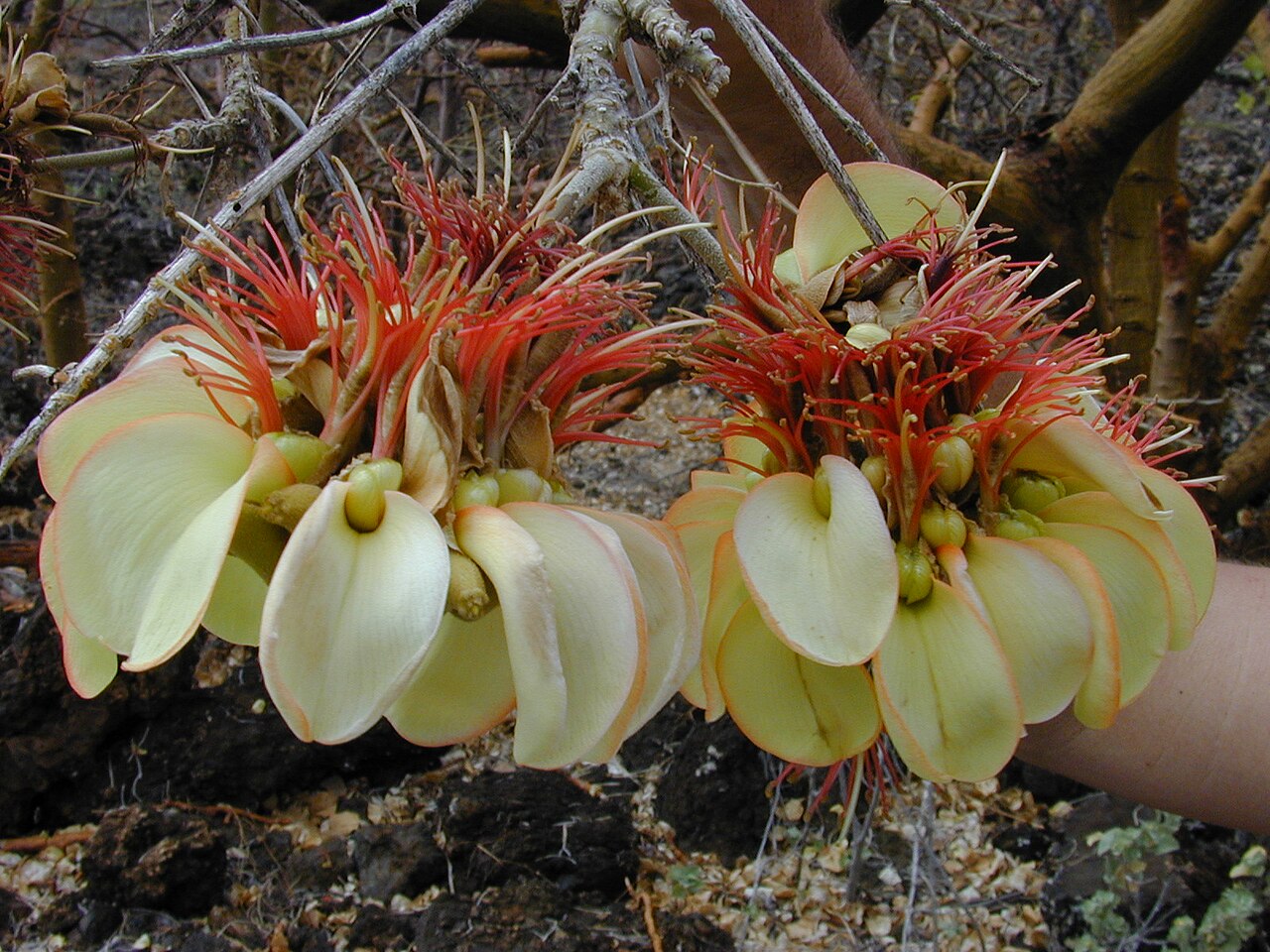
Wiliwili (Erythrina sandwicensis) is an endemic Hawaiian dry-forest tree with a silhouette unlike a dense, evergreen shade tree. Its broad limbs may stand nearly bare when flowers open, making the seasonal display particularly striking. The flowers vary naturally from pale greenish-white and yellow to orange and other warm tones; the pale flowers pictured here are a normal part of that variation.
A member of the pea family, Fabaceae, wiliwili is the only Erythrina native to Hawaiʻi. Introduced coral trees are not interchangeable with it. A plant sold under the English name “coral tree” should therefore be checked for its scientific identity, especially if the purpose of the planting is to support a Hawaiian native garden.
Wiliwili is suited to a sunny, freely draining landscape where its seasonal leaf loss will be appreciated rather than treated as a defect. It is not a reliable source of year-round dense shade. Leave room for the crown, keep irrigation separate from thirsty lawn or bedding plants, and use nursery-grown material with a documented Hawaiian source.
Identification
Bark & Stems
The spreading crown and substantial branches give an older tree a sculptural quality. The trunk can have a yellowish cast and prickles, especially on younger growth. Do not place the tree where pedestrians will continually brush against its trunk or low branches. A nursery specimen may look modest before its lateral framework develops, so plan for its form rather than judging only the height of the pot-grown tree.
Leaves
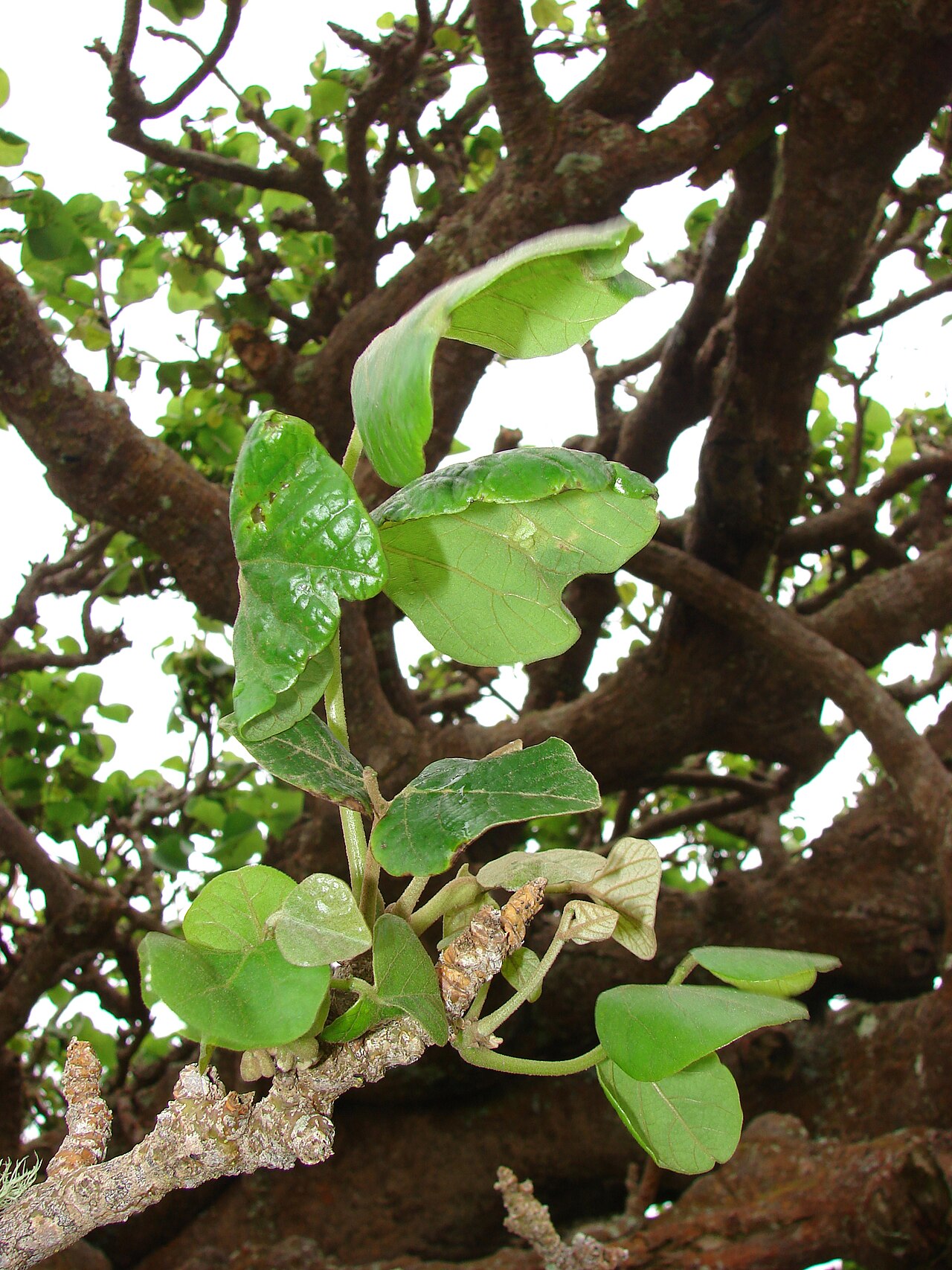
The leaves are compound, with three broad leaflets. Wiliwili is one of the relatively few native Hawaiian trees that are deciduous. Its leafless stage can be part of the normal flowering and growth cycle, not necessarily evidence of a water shortage. Compare a tree’s condition with its usual seasonal behavior before increasing irrigation in response to bare branches.
Flowers
Flower clusters appear prominently against bare or sparsely leafy branches. The unusual petal arrangement and projecting stamens make them worth examining closely. Natural populations can include multiple colors, and flower color alone does not establish a different species. For identification, consider the leaves, pods, trunk, and verified source as well as the bloom.
Fruit & Seeds
Legume pods contain a small number of hard, conspicuous seeds, often reddish or orange-toned but variable. The seeds have been used in lei; they are not food. Keep loose seeds and seed jewelry away from young children and pets that may chew them. A cultural use as an ornament does not imply that seeds are safe to ingest.
Quick Facts
| Scientific Name | Erythrina sandwicensis |
| Family | Fabaceae |
| Plant Type | Seasonally deciduous native tree |
| Mature Height | 15–30 ft; size varies with site |
| Mature Spread | Broad spreading crown; allow generous lateral room |
| Growth Rate | Varies with establishment and site |
| Sun Exposure | Full sun |
| Water Needs | Dry once established; provide establishment water and excellent drainage |
| Soil Type | Freely draining dryland soils, including volcanic cinder |
| Bloom Time | Seasonal; often flowering with few leaves |
| Flower Color | Variable: greenish-white, yellow, orange, and warm intermediate tones |
| Fruit | Pods with a few hard seeds; not edible |
| Soil pH | Match the planting soil to locally successful nursery stock; do not lime routinely |
| Fall Color | Seasonal leaf loss rather than a temperate fall-color display |
| Deer Resistant | Protect young plants from introduced browsing animals |
| USDA Hardiness Zones | Hawaiian tropical to subtropical sites; match elevation and exposure locally |
Native Range
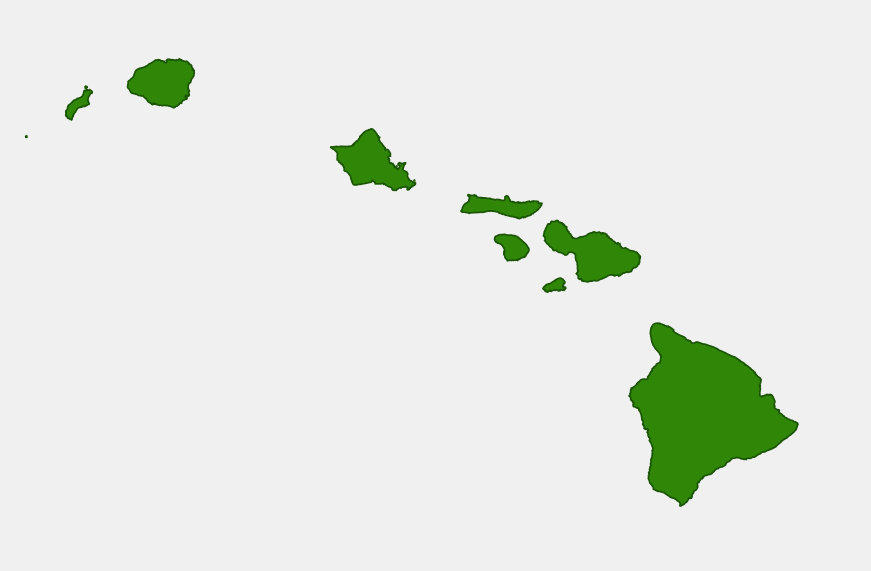
Wiliwili is endemic to Hawaiʻi and occurs naturally in dry forest on the leeward sides of the main islands. The University of Hawaiʻi profile places its habitat broadly from sea level to about 1,970 feet. This is a dryland native, not a tree whose occurrence in Hawaiʻi is explained by Polynesian introduction.
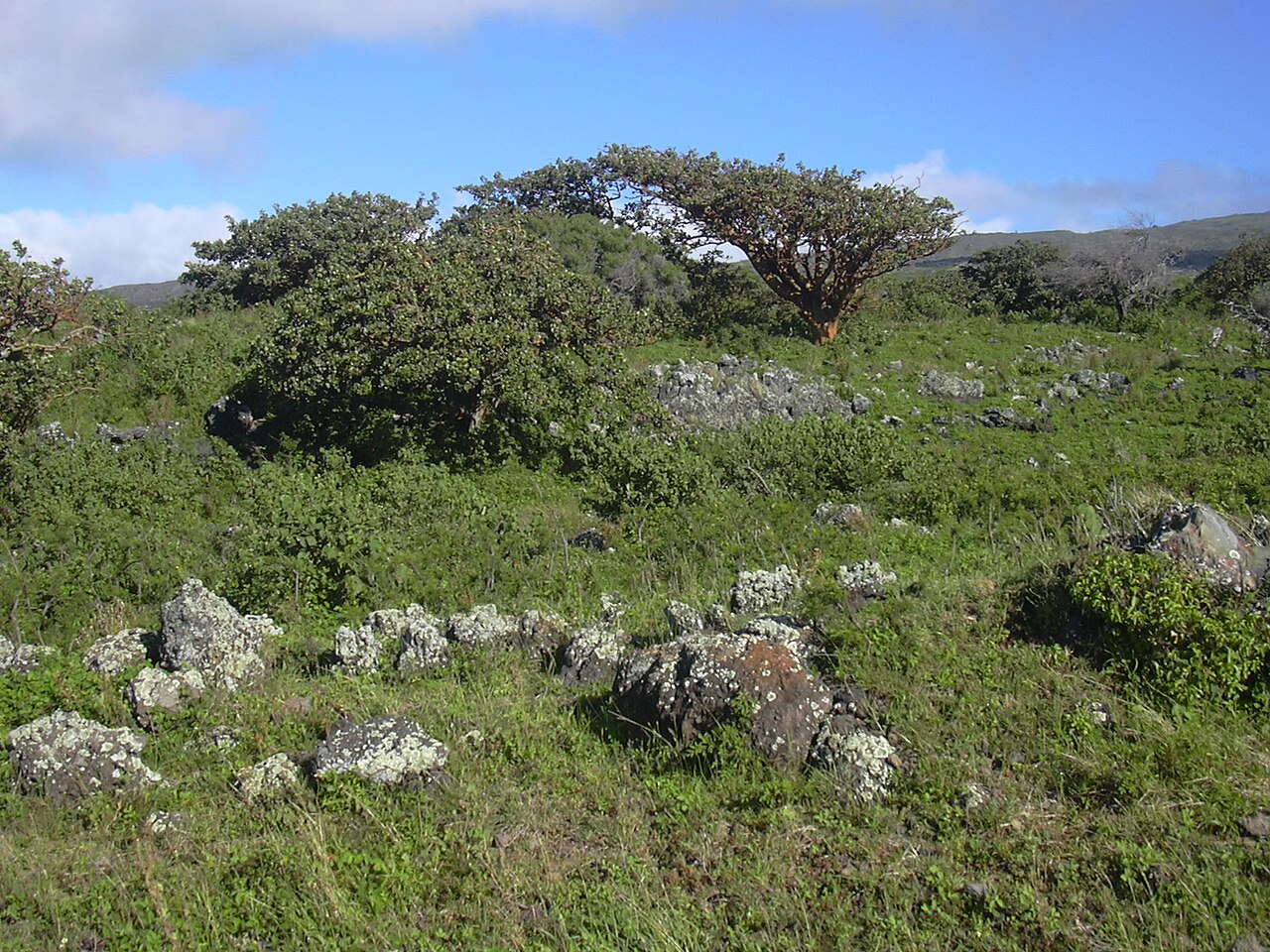
Its native landscape has been greatly affected by land-use change and introduced plants and animals. A surviving tree in open pasture or grassland may be a remnant of a former native community rather than evidence that that altered ground layer is ideal habitat. Restoring a community involves controlling competition and protecting regeneration as well as retaining mature trees.
The map marks Hawaii at state scale. It does not show individual surviving stands or permission to collect seed. Garden planting and ecological restoration have different requirements: a nursery-grown specimen may suit a home landscape, while a restoration project should follow locality-specific sourcing and management advice.
Native Range
| U.S. States | Hawaii |
| Hawaiian Islands | Native on the main Hawaiian Islands |
| Mexico / Canadian Provinces | None in the natural range |
| Ecoregion | Hawaiian tropical dry forest |
| Elevation Range | Sea level to about 1,970 ft |
| Habitat | Leeward dry forest and dry open woodland |
| Common Associates | Site-specific native dry-forest trees and shrubs |
USDA PLANTS profile (ERSA11). Species identity verified; this link is not a guarantee of county-level distribution data.
📋 Compare other dryland choices in our Hawaii native plant list.
Growing & Care Guide
Light
Plant wiliwili in full sun. A shaded, crowded corner does not reproduce its open dryland setting. Consider how neighboring trees and buildings will affect it as the crown expands. Give it enough room to develop broad branches without depending on repeated hard pruning to keep a path or roof clear.
Soil & Water
Excellent drainage is the first requirement. Dry-garden conditions suit an established tree, but newly planted roots still need appropriate establishment water. Monitor moisture at the root ball and let excess water drain away. Do not put the tree in the same irrigation zone as a lawn that is watered frequently or a bed of plants that require continuously moist soil.
Seasonal leaf loss is not, by itself, a command to water more. Check the soil, recent weather, and the tree’s normal cycle first. A bare but healthy tree and a declining tree can require different responses. If branches are dying back or new growth is persistently distorted, seek a diagnosis rather than repeatedly increasing water or fertilizer.
Planting Tips
Choose healthy, correctly identified nursery stock and a site with room for the mature canopy. Keep the root collar at the established planting depth, not buried in an amended mound. Backfill so that the root ball makes good contact with soil, then water and reassess settlement without piling more soil against the trunk.
Keep a weed-managed area around the young tree. Mulch can help with moisture fluctuations, but it should remain away from the trunk base. In a dry landscape, also consider how accumulated weeds and dead vegetation affect the broader planting. Do not expect one drought-adapted tree to make a neglected, weed-filled site into a functioning dry forest.
Pruning & Maintenance
Work with the natural architecture rather than forcing the tree into a dense hedge or a tightly rounded crown. Before removing a substantial branch, consider the size of the resulting wound and whether the problem could have been avoided through spacing. A large established tree near buildings or public access deserves assessment by an arborist familiar with its structure.
Wiliwili has been affected by the erythrina gall wasp, which can distort young shoots and foliage. Biological control has been part of Hawaii’s response. Monitor new growth, but do not interpret every damaged leaf as a reason for indiscriminate spraying. Current management should be based on local guidance, pest identification, and the condition of the whole tree.
Propagation
Hard seeds are used in nursery propagation, with appropriate pretreatment to encourage germination. Obtain a tested method from the seed supplier or a Hawaiian propagation guide rather than using an improvised treatment on an entire collection. Label the parent source and retain those records as plants move through containers.
For conservation planting, seed origin is part of the plant’s value. Do not collect casually from a rare remnant stand or substitute another Erythrina because it is easier to obtain. A reputable native nursery can help distinguish garden stock from material intended for a particular restoration site.
Landscape Uses
- Dry native garden: a distinctive canopy and flowering tree in full sun.
- Specimen planting: showcase its branch structure and seasonal changes with room around the crown.
- Cultural interpretation: connect a living tree with the history of lei, lightweight wood, and canoe-related uses.
- Dry-forest restoration: use appropriate provenance within a managed project that addresses weeds and browsing.
Wildlife & Ecological Value
For Pollinators
Flowers supply resources to animal visitors during the bloom period. Observe which visitors occur locally instead of assuming the same interactions take place in every urban and wild setting. Avoid applying broad-spectrum insecticides to flowers and maintain other native plants that provide resources when wiliwili is not blooming.
For Birds
The crown and branches contribute structure to a dryland planting. Its ecological value should not be reduced to an unsupported list of birds supposedly attracted to the hard seeds. A varied native community, protection from disturbance, and healthy regeneration provide a more meaningful habitat objective than a single-species wildlife promise.
For Mammals
Introduced browsing animals can damage young plants and prevent forest regeneration. Where livestock or feral ungulates occur, plan effective exclusion rather than relying on prickles or a native-plant label. Tree survival and future replacement matter as much as the retention of a single mature specimen.
Ecosystem Role
Wiliwili belongs to Hawaii’s dry-forest community and participates in nitrogen-fixing associations. As a tree grows, its shade and litter change the conditions beneath it. Those changes can support a developing planting, but weed management is still necessary: the same sheltered space can also be occupied by aggressive introduced plants.
Cultural & Historical Uses
Wiliwili’s light wood had uses quite different from Hawaii’s very dense hardwoods. Hawaiian accounts describe its use in floats and canoe-related objects, as well as surfboards. That contrast makes it a useful species for explaining how the properties of different native woods informed their uses.
The seeds and flowers have been used in lei. Durable seed lei and temporary flower lei represent different materials and techniques; neither use makes the seed edible. For educational activities, work with knowledgeable practitioners and handle plant material appropriately.
A living garden tree can make these connections visible without collecting from wild stands. Keep its seasonal cycle legible in the landscape, use its Hawaiian name accurately, and let the planting demonstrate care for dryland habitat rather than treating the species only as a source of craft material.
Frequently Asked Questions
Why has my wiliwili lost its leaves?
Seasonal leaf loss can be normal, especially around flowering. Check the tree’s usual cycle and actual soil moisture before changing irrigation; dieback or persistent shoot damage deserves separate diagnosis.
Is every coral tree native to Hawaiʻi?
No. Wiliwili is Erythrina sandwicensis. Other coral trees are introduced, so verify the scientific name on nursery stock.
Are the seeds edible?
No. Treat wiliwili seeds as potentially poisonous and keep them away from children or animals likely to chew them.
Will it shade a patio all year?
Not reliably. It is seasonally deciduous, so design for a changing canopy rather than permanent dense shade.
Can it share a heavily watered lawn?
A separate, freely draining dry-garden area is a better match. Frequent lawn irrigation can conflict with its needs, especially if the trunk base stays wet.
Sources & Further Reading
- Hawaii Department of Agriculture: Wiliwili gall wasp and biological control
- University of Hawaiʻi, Native Plants Hawaiʻi species profile
- USDA Forest Service, Common Forest Trees of Hawaii species account
Botanical range, identification, and cultural information are based on these sources. Garden-management advice should be adapted to local soil, exposure, and nursery provenance.
Find Native Plants Near You
Look for correctly identified, nursery-propagated plants with documented Hawaiian provenance. Visit our Hawaii native plant nursery directory and ask about stock suited to your island, elevation, and rainfall.