
Koaiʻa (Acacia koaia)
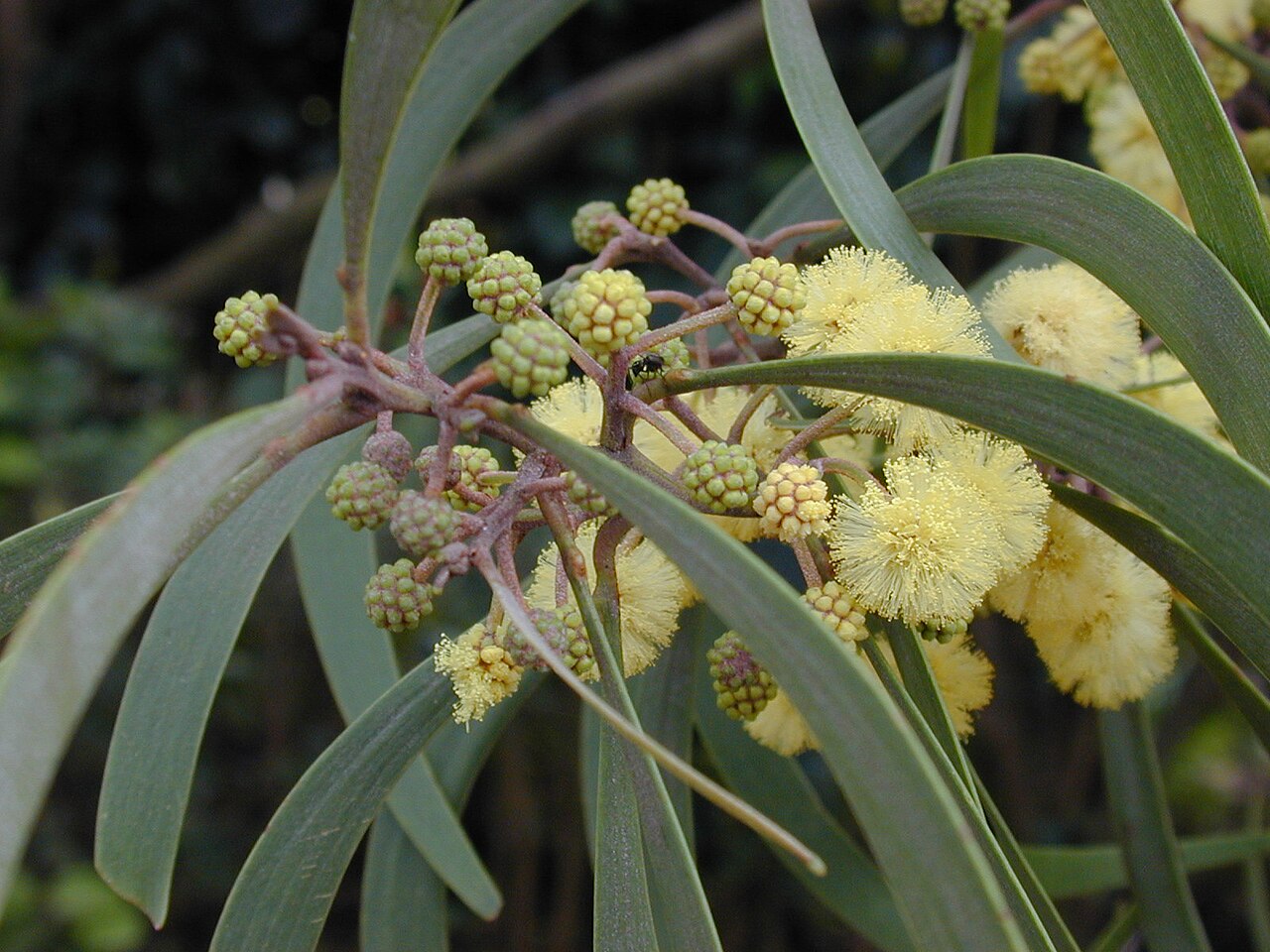
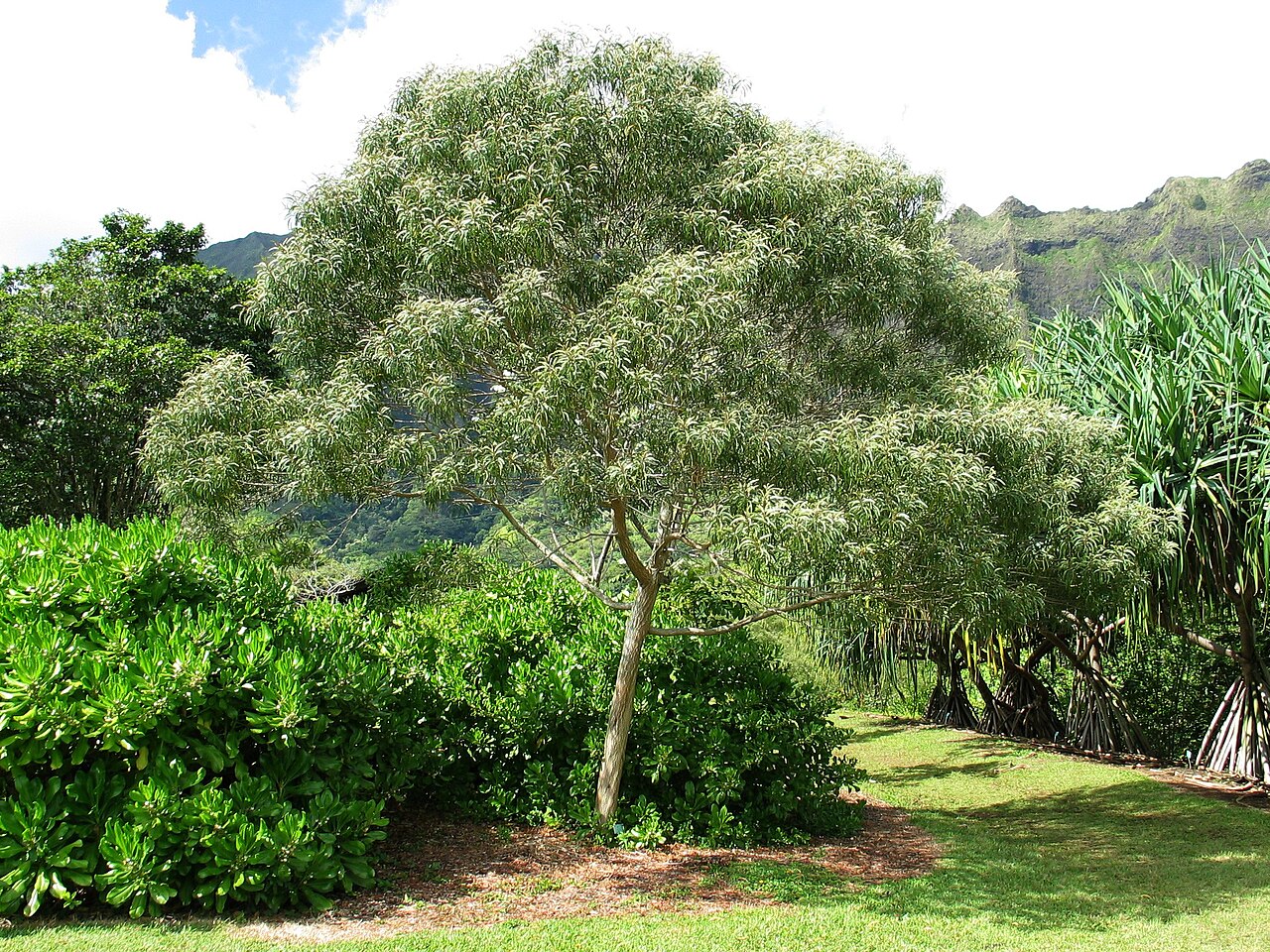
Koaiʻa (Acacia koaia) is a small Hawaiian native tree that deserves to be considered on its own merits, not merely as a miniature koa. Its gray-green phyllodes, pale yellow flower heads, and spreading crown give a dry garden a distinctly Hawaiian character. It can be a more practical choice than large-growing koa where the site is relatively dry and the space is limited.
Koaiʻa belongs to the pea family, Fabaceae, and is endemic to Hawaiʻi. It is closely related to koa, and botanical treatments have not always agreed on their separation. Here the name follows the University of Hawaiʻi Native Plants profile and the verified USDA PLANTS record for Acacia koaia. Nursery identity and provenance remain important, especially where intermediate plants or mixed collections may occur.
Its smaller stature does not make it a carefree pavement tree. Koaiʻa has a strong lateral root system that can be vulnerable to traffic and injury. Plant it where the crown can broaden naturally, the soil drains freely, and the ground beneath it can remain a protected planting area rather than a shortcut, storage space, or tightly mown lawn.
Identification
Bark & Stems
Open-grown koaiʻa often develops a rounded or irregular crown and a relatively low, branching framework. Some plants are gnarled or spreading rather than upright. These forms are useful in a naturalistic garden but are not the basis for a perfectly uniform clipped hedge. Choose a specimen with a sound structure instead of assuming that repeated pruning can turn every plant into the same shape.
Leaves
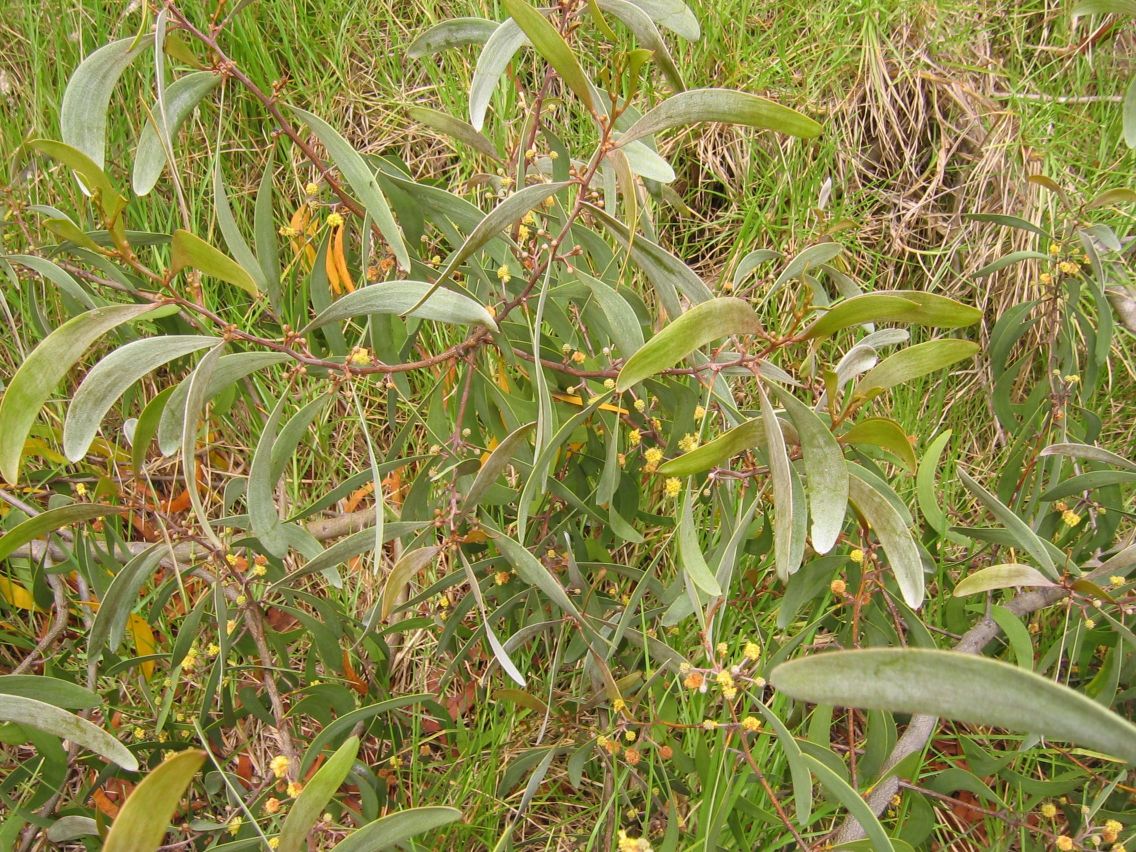
The mature green structures are phyllodes: flattened leaf stalks that act as the main photosynthetic organs. Compared with koa, they tend to be narrower, shorter, and straighter. Young plants can also carry finely divided juvenile true leaves. That combination is normal development and should not be removed in an attempt to make the plant look mature sooner.
Leaf shape alone is not enough to resolve every identification. Closely related acacias vary, and intermediate plants can complicate a quick comparison. Look at pods and seed arrangement when available, and retain nursery documentation. A label based on a known collection is more useful than a guess based on one curved green phyllode.
Flowers
Rounded, fluffy heads of small pale-yellow flowers appear among the phyllodes. Flowering can be sporadic, with the University of Hawaiʻi profile identifying January through March as a common peak. The display is delicate rather than a mass of large petals, so position the tree where branches can be appreciated at a reasonable viewing distance.
Fruit & Seeds
Pods are narrower than those of koa, and the seeds are arranged lengthwise along the pod rather than crosswise. That distinction is an important botanical character. Obtain propagation seed from a documented source and keep it separated by collection. A seed pod from an unidentified ornamental acacia is not a reliable substitute for koaiʻa stock.
Quick Facts
| Scientific Name | Acacia koaia |
| Family | Fabaceae |
| Plant Type | Evergreen native small tree |
| Mature Height | 15–30 ft horticultural category; many plants remain around 16 ft or less |
| Mature Spread | Often around 20 ft; rounded crown may be as wide as the tree is tall |
| Growth Rate | Variable with source, soil, and establishment |
| Sun Exposure | Full sun; partial sun tolerated |
| Water Needs | Dry once established; avoid waterlogging |
| Soil Type | Freely draining volcanic and other suitable dryland soils |
| Bloom Time | Sporadic, often peaking January–March |
| Flower Color | Pale yellow to cream |
| Fruit | Narrow legume pods; seeds arranged lengthwise |
| Soil pH | Match the planting soil to locally successful nursery stock; do not lime routinely |
| Fall Color | Evergreen; no conventional temperate autumn display |
| Deer Resistant | Protect young plants from introduced browsing animals |
| USDA Hardiness Zones | Hawaiian tropical to subtropical sites; match elevation and exposure locally |
Native Range
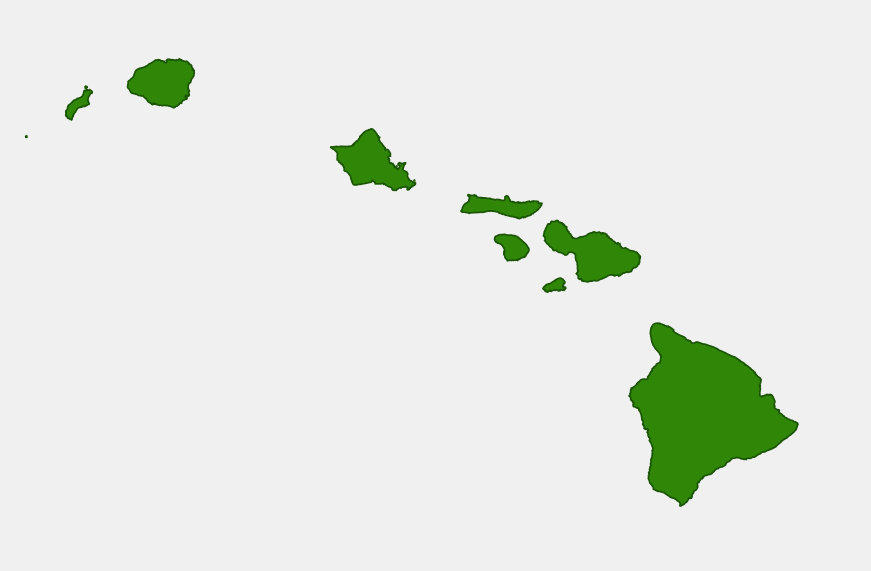
Koaiʻa is endemic to the Hawaiian Islands and associated with open, relatively dry habitats. The University of Hawaiʻi records a natural range on Kauaʻi, Molokaʻi, Lānaʻi, Maui, and Hawaiʻi Island. Its profile does not confirm a native Oʻahu population, so the statewide map must not be read as proof of occurrence there.
Surviving trees and stands reflect a landscape altered by grazing and conversion of habitat. Seeing koaiʻa in pasture does not mean continual livestock access is harmless to young trees. A mature remnant and successful regeneration are different measures of habitat condition. Protection of seedlings and roots is central when rebuilding a planting.
The map below highlights the state of Hawaiʻi, not individual populations or collection sites. For restoration, use material approved for the particular project and locality. For home landscaping, ask about the seed source and its performance under similar rainfall and elevation rather than selecting solely for compact size.
Native Range
| U.S. States | Hawaii |
| Hawaiian Islands | Kauaʻi, Molokaʻi, Lānaʻi, Maui, Hawaiʻi; Oʻahu nativity not confirmed in the UH profile |
| Mexico / Canadian Provinces | None in the natural range |
| Ecoregion | Hawaiian dry woodland and dry forest |
| Elevation Range | Dry lowland to upland settings; match nursery provenance to the site |
| Habitat | Open dry habitats; remnant stands and scattered trees |
| Common Associates | Locally appropriate native dryland trees, shrubs, and ground layer |
USDA PLANTS profile (ACKO2). Species identity verified; this link is not a guarantee of county-level distribution data.
📋 Compare koaiʻa with other choices in our Hawaii native plant list.
Growing & Care Guide
Light
Full sun is best for vigorous growth, although partial sun can be tolerated. The site should have enough open space for a broad crown, not just a bright patch above the nursery pot. Avoid a position where buildings or competing trees will force growth into an inconvenient direction and create a future need for heavy cutting.
Soil & Water
Koaiʻa is well suited to a dry garden once established, but it still needs appropriate water while roots expand beyond the container. Check the root ball and adjacent soil rather than watering automatically every day. Allow drainage between applications and keep water from collecting around the trunk. The species is not a choice for persistently waterlogged soil.
As the tree establishes, adapt irrigation to actual weather and rooting depth. A schedule that worked during a dry spell may be excessive after rain. Separate the tree from beds or lawn zones that require frequent watering. If leaves look stressed, investigate drainage, root damage, and pests as well as drought before deciding that additional irrigation is the answer.
Planting Tips
The regional table allows 15–30 feet for koaiʻa, while the USDA fact sheet describes many plants as considerably smaller, rarely more than about 16 feet. Those different descriptions are a useful reminder to ask about the actual nursery source and growth form. Provide lateral room even for a relatively short tree; its canopy can be nearly as wide as it is tall.
Plant at the existing nursery depth with the root collar visible. Choose healthy stock rather than attempting to rescue a severely root-bound plant through aggressive root cutting. Establish a mulched area beneath the developing canopy, leave mulch off the bark, and keep maintenance machinery away. In rocky soil, surface roots may become conspicuous and should not be treated as obstacles to shave off.
Do not place a bench, regularly used shortcut, or vehicle turning area directly over the future rooting space. Compaction and abrasion can occur before a crown shows obvious decline. Protecting the site from the start is easier than diagnosing why a previously healthy tree deteriorated after years of traffic.
Pruning & Maintenance
Prune only when there is a clear purpose, and keep cuts minimal. The tree’s compact appearance should not invite repeated shearing into a formal hedge. Pruning wounds can increase susceptibility to pests and disease, and a naturally irregular crown can be an attractive feature rather than a flaw to eliminate.
Koaiʻa shares some potential pests and diseases with koa, including wilt problems, fungi, and twig borers. It should not be sold as immune simply because it can perform better in some dry lowland landscapes. Monitor changes in the whole plant, retain irrigation and maintenance history, and seek local diagnosis for persistent branch decline.
Propagation
Seed propagation generally uses methods similar to koa: the hard seed coat needs an appropriate pretreatment, and compatible root-associated bacteria are relevant to nursery production. Ask the supplying nursery for a tested approach. Keep a small trial separate when evaluating a treatment instead of exposing a valuable entire seed lot to an improvised heat or soaking regime.
Label containers with the collection source as well as the species name. Young seedlings need clean, draining media and enough space to develop sound roots. A plant can be tall while having poor roots, so propagation success should be judged by quality at planting time, not only by germination count or top growth.
Landscape Uses
- Dry native specimen: a compact tree with a broad crown and fine-textured foliage.
- Lowland native garden: a possible alternative to large koa, after checking the local source and site.
- Educational planting: compare juvenile leaves, phyllodes, and pod characters with those of koa.
- Naturalistic screen: allow irregular spacing and form rather than expecting a tightly clipped, uniform hedge.
- Dryland restoration: use documented material with coordinated browsing and weed management.
Wildlife & Ecological Value
For Pollinators
Flower heads provide resources to visiting insects. Watch a flowering branch at different times rather than relying on a generic list of pollinators that may not occur at the site. Avoid spraying flowers and combine koaiʻa with suitable native plants that extend the seasonal availability of floral resources.
For Birds
The crown adds perching and shelter structure to a native planting. Its habitat value is strongest as part of a varied, healthy community, not as a promise that one tree will attract a particular rare bird. Avoid substituting broad wildlife claims for the practical work of maintaining appropriate understory and protecting the soil.
For Mammals
Livestock can readily consume young seedlings. If browsing animals can reach a planting, arrange exclusion before trees go into the ground. A mature tree surviving in pasture does not show that seedlings can withstand the same pressure, and protection must be maintained as plants grow.
Ecosystem Role
Koaiʻa participates in nitrogen-fixing relationships and contributes litter and shade to dryland vegetation. These processes can support the developing plant community, but they do not remove the need to control invasive competitors. Manage the ground layer so that a valuable native canopy does not simply shelter a dense crop of introduced weeds.
Cultural & Historical Uses
The dense, hard wood of koaiʻa was used for tools, fishing implements, spears, and other crafted objects. Its properties differ from those of koa, despite the trees’ close relationship. Discussing the two together can show how careful knowledge of materials informed Hawaiian woodworking.
Koaiʻa is not a small-scale substitute for a tall canoe-hull koa tree. Historical accounts emphasize different uses, and the species’ compact, sometimes irregular form helps explain that distinction. An interpretive planting should preserve the correct name and avoid transferring every use of koa to its relative.
Today a nursery-grown koaiʻa can be valued as a living part of a native garden. Documenting its source, keeping roots undamaged, and allowing natural growth are practical ways to respect the plant. Cultural interpretation is best developed with knowledgeable local practitioners rather than through harvesting bark or branches merely for display.
Frequently Asked Questions
Is koaiʻa just a young koa?
No. It is a closely related named taxon with a smaller growth habit and distinguishing pod and foliage characters. Retain the scientific identity supplied by a reliable nursery.
How tall will it become?
Many plants remain around small-tree size, while Hawaiian horticultural sources allow a broader 15–30-foot category. Ask about the actual source and allow room for its spreading canopy.
Can I walk regularly beneath the tree?
A low-traffic planted root zone is preferable. Its lateral roots can be close to the surface and vulnerable to compaction or injury.
Does it need constant pruning to stay compact?
No. Choose a source and site that suit its natural form. Minimal pruning is preferable to repeatedly shearing or reducing the crown.
Is it native to every Hawaiian island?
Do not assume that. The University of Hawaiʻi profile records several islands but does not confirm native Oʻahu specimens; the state-level map is not an island-by-island occurrence record.
Sources & Further Reading
Botanical range, identification, and cultural information are based on these sources. Garden-management advice should be adapted to local soil, exposure, and nursery provenance.
Find Native Plants Near You
Look for correctly identified, nursery-propagated plants with documented Hawaiian provenance. Visit our Hawaii native plant nursery directory and ask about stock suited to your island, elevation, and rainfall.