
Prairie Smoke (Geum triflorum)
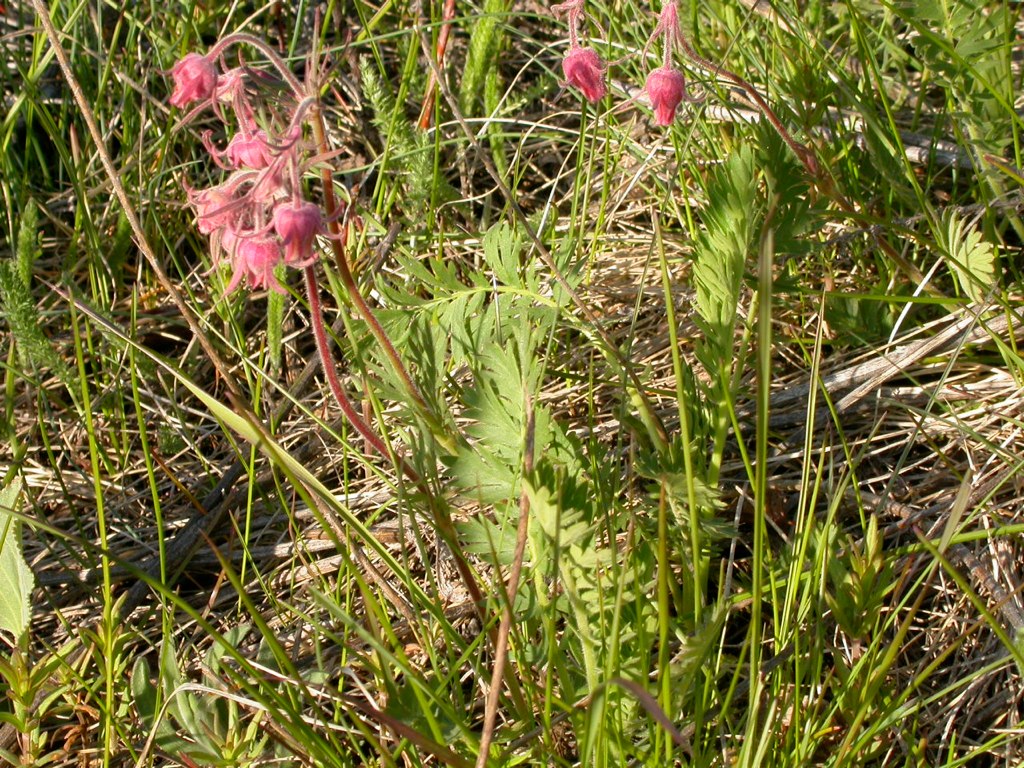
Prairie smoke is named for what happens after its flowers finish. The nodding pink-red spring blooms give way to clusters of long, feathery styles that catch the light like wisps of smoke. Geum triflorum is a low perennial in the rose family, best appreciated close to a path or at the front of a sunny native planting.
Its foliage forms a much lower layer than its flowering stems. The old regional row gave only 6 inches; the corrected entry uses 6–16 inches, consistent with University of Wisconsin guidance and a more useful description of the full spring display. Leave that vertical room even when a newly planted rosette seems very small.
Within the Iowa, Illinois, and Missouri regional list, Kew documents native occurrence in Iowa and Illinois but does not list Missouri. That distinction should guide local-restoration use. In a garden, its most important practical needs are sun, drainage, spring moisture, and freedom from aggressive competitors. A tall, densely packed prairie border can be a worse home than a modest open rock-garden bed.
Identification
Crown & Growth Form
A low clump of basal foliage sends up the flowering stems. This is not a tall meadow plant or a sprawling woody shrub. Keep the crown visible enough to distinguish it from surrounding weeds. A healthy plant may look quiet outside its main spring display, so do not judge survival solely by whether flower stalks are present.
Leaves
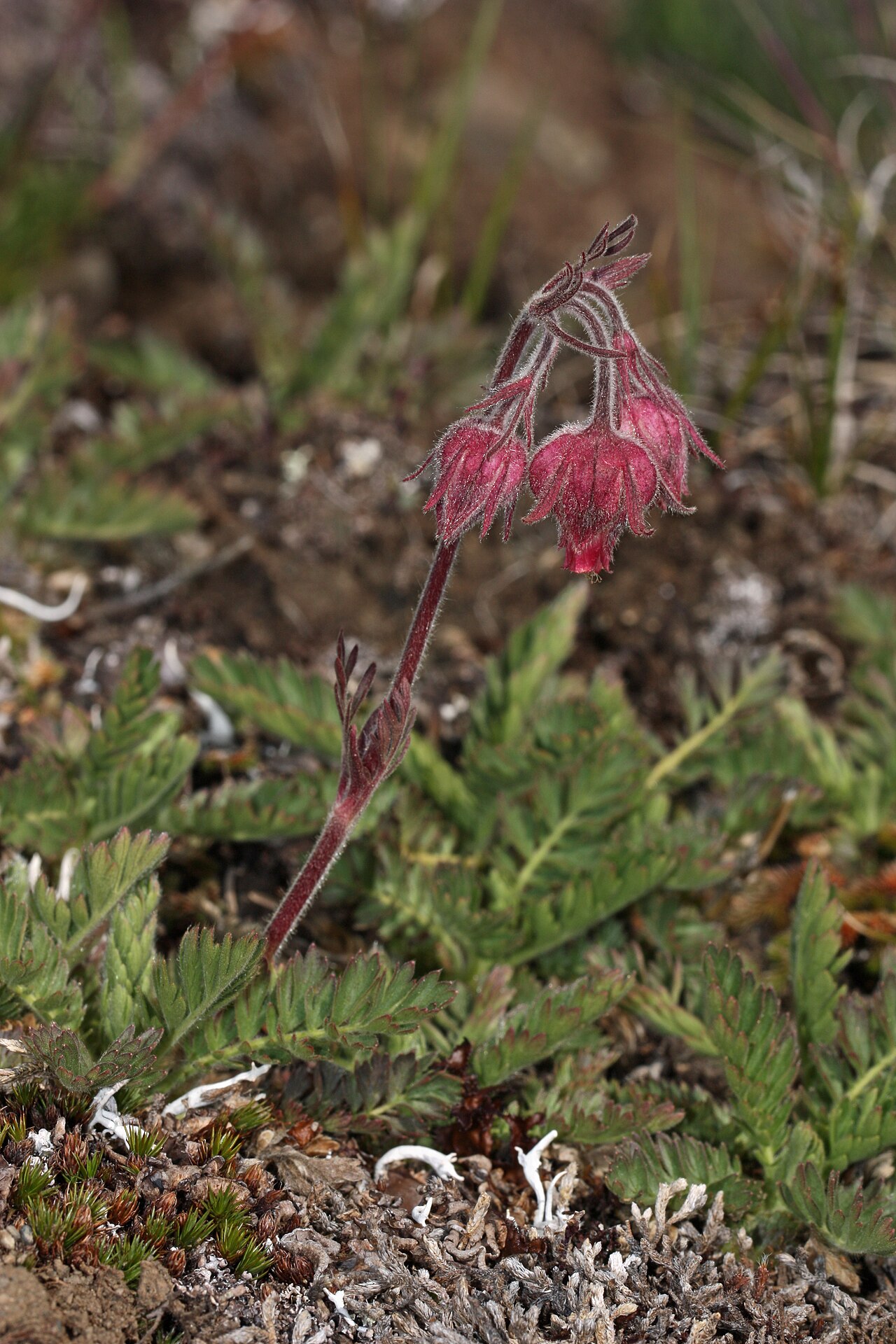
The leaves are divided into a series of leaflets, giving the basal foliage a soft, fernlike impression. It is a flowering plant, not a fern. The low foliage remains important after the seed heads fade, and its texture works well beside the narrow leaves of small prairie grasses. Avoid burying the crown in thick mulch that conceals new growth.
Flowers
The spring flowers nod downward and can look more like closed buds than wide-open blossoms. Their restrained form is part of the plant’s character, not evidence that every flower has failed to open. Observe from the side at ground level. The flower and fruit stages are different displays, and both deserve room in the planting plan.
Fruit & Seeds
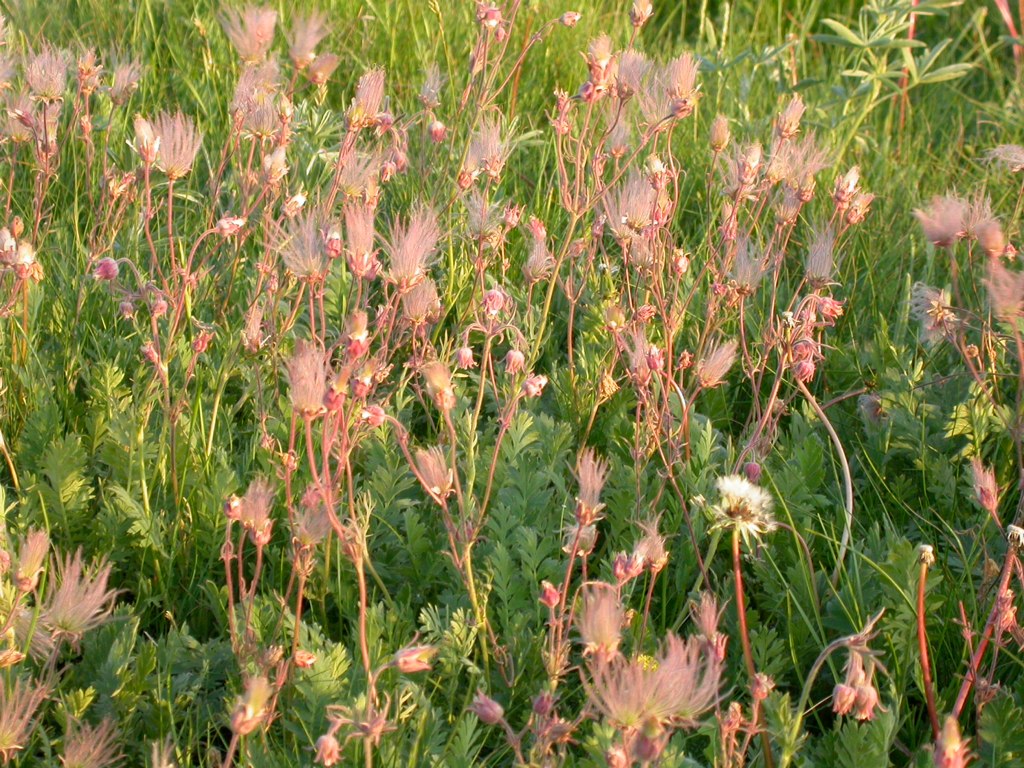
After flowering, the styles elongate into the feathery structures responsible for the common name. These are associated with the developing fruits, not a second flush of petals. Backlighting makes the effect particularly visible. Leave the heads through this stage instead of cutting them away as soon as the nodding flowers fade.
Quick Facts
| Scientific Name | Geum triflorum |
| Family | Rosaceae (rose family) |
| Plant Type | Low herbaceous perennial |
| Mature Height | About 6–16 inches including flowering stems |
| Mature Spread | A low, gradually enlarging clump |
| Growth Rate | Moderate to slow; vulnerable to vigorous competitors |
| Sun Exposure | Full sun |
| Water Needs | Average spring moisture; tolerates drier summer conditions |
| Soil Type | Well-drained sandy, gravelly, loamy, or suitable clay soil |
| Soil pH | Use locally appropriate prairie or rock-garden soil |
| Bloom Time | Spring to early summer |
| Flower Color | Nodding pink to reddish flower structures |
| Fall Color | Foliage may develop red-purple tones |
| Fruit | Achenes with long feathery styles, producing the smoke effect |
| Deer Resistant | Do not rely on complete browsing resistance |
| USDA Hardiness Zones | 3–7 in University of Wisconsin guidance |
Native Range
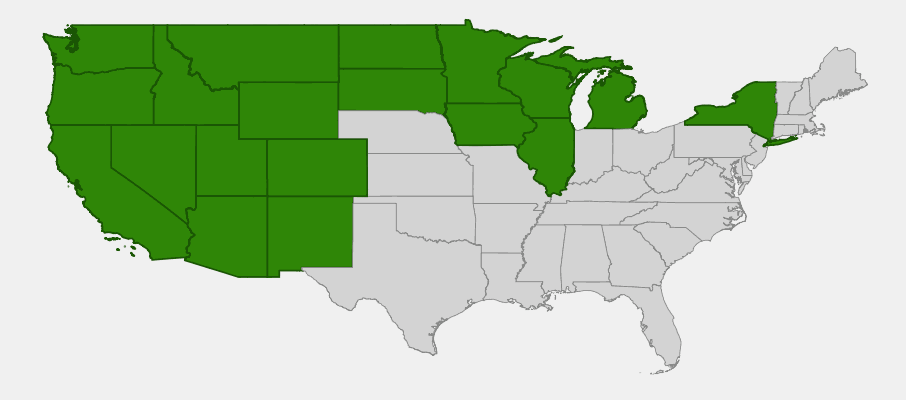
Kew records a broad northern and western North American range, extending through much of southern Canada and parts of the United States. Iowa and Illinois are included. The map follows the species-level state list, which includes western populations as well as the Midwestern ones; it is not a map of one particular regional variety or seed source.
The University of Wisconsin describes prairie and open-woodland habitats and notes its occurrence on shallow or gravelly ground as well as loamy sites. That range of soils does not remove the need for drainage. Winter wetness and competition from vigorous neighboring plants are especially important considerations when translating a native habitat into a maintained garden.
Choose regionally appropriate nursery stock or seed. A species with populations from Midwestern prairie to western mountains can contain plants adapted to different seasonal patterns. For restoration in Iowa or Illinois, provenance is more specific than a nationwide native label. For Missouri gardens, describe it as a regional gardening choice rather than silently claiming local nativity.
📋 Regional plant list: Iowa, Illinois & Missouri
Growing & Care Guide
Light
Full sun supports the best flowering display. In partial shade, foliage may persist while flowers become less abundant. Position taller companions so they do not close over the rosette by late spring. The low stature makes small changes in neighbor height important; a plant that seemed sunny at installation may be shaded once nearby grasses mature.
Soil & Water
Provide spring moisture and good drainage, allowing a drier regime later in the season. University of Wisconsin guidance emphasizes avoiding wet winter conditions. Do not place the crown where a downspout or path runoff keeps it saturated. Water new transplants while roots establish, then evaluate actual rainfall and soil moisture before adding more. A dry-looking gravel surface is not a reliable measurement of moisture below it.
Planting Tips
Use a position where the low foliage and taller seed heads can both be seen. Prepare the site by removing persistent weeds before planting; the species is not a strong competitor against a dense weed cover. Plant at the existing crown depth and leave space around the rosette. In a mixed border, a small group reads more clearly than isolated plants hidden between large perennials.
Pruning & Maintenance
Keep the developing seed heads, since they are the reason many gardeners choose prairie smoke. Remove exhausted stems only after the desired display or seed collection is complete. Avoid cutting healthy basal foliage merely to make the plant match a neat geometric outline. In spring, clear smothering debris gently so new leaves are not damaged. Hand management near the crown is safer than repeated deep cultivation.
Propagation
University of Wisconsin describes spring seed sowing, with cold-moist treatment for indoor starts, and also notes division as an option. Its guidance suggests roughly four to six weeks of cold stratification for seed started indoors. Follow the supplier’s protocol for the particular lot, label the source, and keep seedlings free of competition. Divisions need establishment care even when the parent is drought-tolerant.
Protecting Young Plants
A volunteer seedling can disappear beneath a vigorous neighbor long before the gardener notices. Mark known seedlings and selectively reduce competition around them. Do not maintain an entirely bare bed if the goal is a functioning prairie planting, but do preserve enough light and space for this small species. Where rabbits or other animals disturb young stock, temporary protection may be more useful than changing the watering regime.
Designing Around the Season
Combine prairie smoke with plants that provide interest after its spring seed-head display without overwhelming it. Small grasses and restrained perennials are better companions than a wall of tall spreading plants. Place it where low-angle sunlight illuminates the fruits, but keep access for weeding. The best design celebrates a seasonal peak rather than demanding conspicuous flowers every month.
Landscape Uses
- A low spring-flowering group in Iowa or Illinois native gardens.
- Sunny rock gardens and gravelly beds with drainage through winter.
- Path edges where the nodding flowers and feathery fruits can be viewed closely.
- Short prairie mixtures with restrained, compatible companions.
- An educational planting illustrating the transition from flowers to specialized seed structures.
Wildlife & Ecological Value
For Pollinators
The spring flowers add to the seasonal resources of a diverse native planting. Observe the visitors rather than assuming every insect uses the plant in the same way. Avoid spraying the flowers or surrounding ground as a routine maintenance step. Combine it with other local species so resources remain available after its main bloom period.
For Birds
Prairie smoke is a low perennial, not a substitute for the shelter of shrubs or the structure of larger grasses. Retain some mature stems and include it within a broader habitat design. Do not promise a particular bird response without local observation; the strongest reason to plant it is its fit as a small native component of an open-ground community.
For Mammals
Browsing and physical disturbance can affect small plants even when a mature colony is relatively resilient. Inspect damage directly and protect establishment where needed. A low rosette is particularly easy to overlook when evaluating trampling or repeated digging. Use pathways and deliberate access points to keep maintenance traffic off the planting.
Ecosystem Role
This species adds diversity to a prairie or open-woodland ground layer. Its success depends partly on keeping competition in balance, not simply supplying more water or fertilizer. Preserve locally appropriate companions and reduce invasive competitors. A garden can support the full flowering and fruiting cycle while still being carefully maintained.
Cultural & Historical Uses
Prairie smoke and old man’s whiskers both describe the feathery fruiting display. Three-flowered avens is another name associated with Geum triflorum. Those names refer to the same botanical species rather than to separate ornamental varieties.
The plant is closely associated with the visual identity of spring prairie gardens, yet its range extends well beyond the central Midwest. Keeping provenance records helps preserve that geographic meaning. A generic seed packet labeled only prairie smoke may not tell a restoration gardener enough about where the material originated.
Its modern landscape value lies in a combination of modest stature, distinctive seasonal structures, and compatibility with well-drained native plantings. Purchase nursery-propagated material and leave wild colonies intact. Existing prairie remnants are complete communities, not a source of free garden divisions.
Frequently Asked Questions
What makes the smoky effect?
Long feathery styles develop with the fruits after flowering. They are not a second set of petals, so leave the heads in place as the flowers finish.
How tall is prairie smoke?
The foliage is low, but the full flowering plant is roughly 6–16 inches. The regional row has been updated to reflect that rather than showing only a low 6-inch figure.
Is it native in Missouri?
Kew’s species distribution includes Iowa and Illinois but does not list Missouri. Use local records for restoration and avoid treating the three-state gardening list as proof of nativity in each state.
Why does it disappear in a lush border?
It can be outcompeted by taller or faster-spreading plants. Improve light and reduce competing growth rather than automatically adding fertilizer.
Does it need a wet site?
No. Spring moisture is useful, but drainage is essential and wet winter conditions are a poor fit. Establishment watering should not become permanent saturation.
Sources & Further Reading
- University of Wisconsin Extension: prairie smoke
- University of Wisconsin: Prairie Primer
- Kew Plants of the World Online: Geum triflorum
Find Native Plants
Ask growers about nursery propagation and regional provenance. Browse our Iowa native plant nurseries, Missouri native plant nurseries directory for suppliers.