
Olopua (Nestegis sandwicensis)
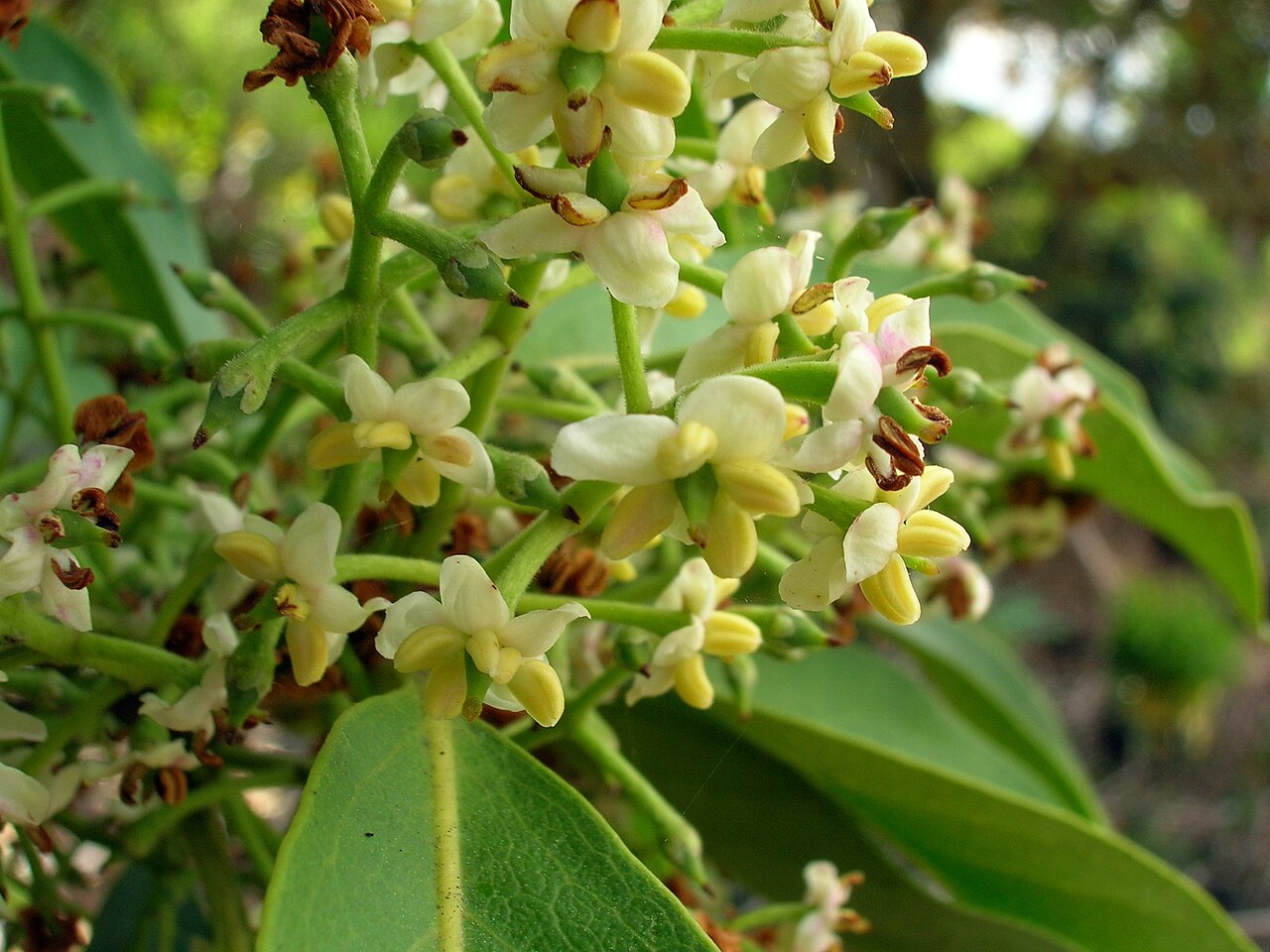
Olopua (Nestegis sandwicensis) is an endemic Hawaiian tree in the olive family, Oleaceae. Its opposite, leathery leaves and small olive-shaped fruits make the family connection visible, but this is not an orchard olive. It is a native forest tree whose value lies in its evergreen crown, durable wood, and place in Hawaiian plant communities.
Older Hawaiian forestry accounts use the name Osmanthus sandwicensis. That is a botanical synonym, not a different tree to add separately to a garden collection. The University of Hawaiʻi Native Plants profile uses Nestegis sandwicensis, which is the name followed here.
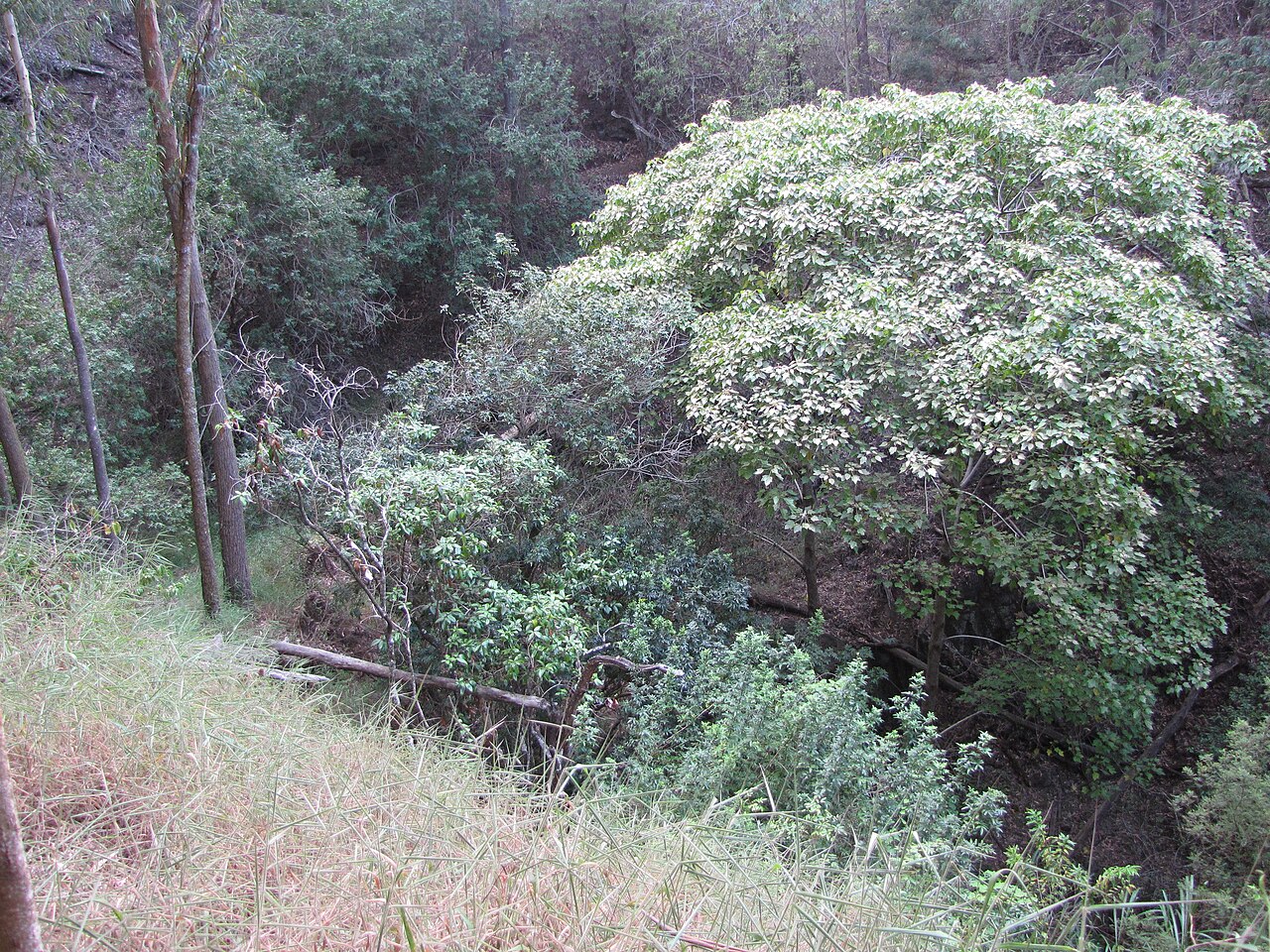
Olopua deserves room. Many trees remain around 20 feet, while larger specimens can reach roughly 60 feet or more, so nursery size does not predict the final canopy. Use it as a permanent tree in well-drained ground rather than a small shrub to be kept in bounds through repeated hard pruning.
Identification
Bark & Stems
The trunk can be stout and the crown rounded. Bark becomes gray and rough, with ridges and plates on older trees. Young stems carry paired leaf scars. These features help put the foliage in context, but an old trunk will not look the same as a young nursery plant.
Leaves
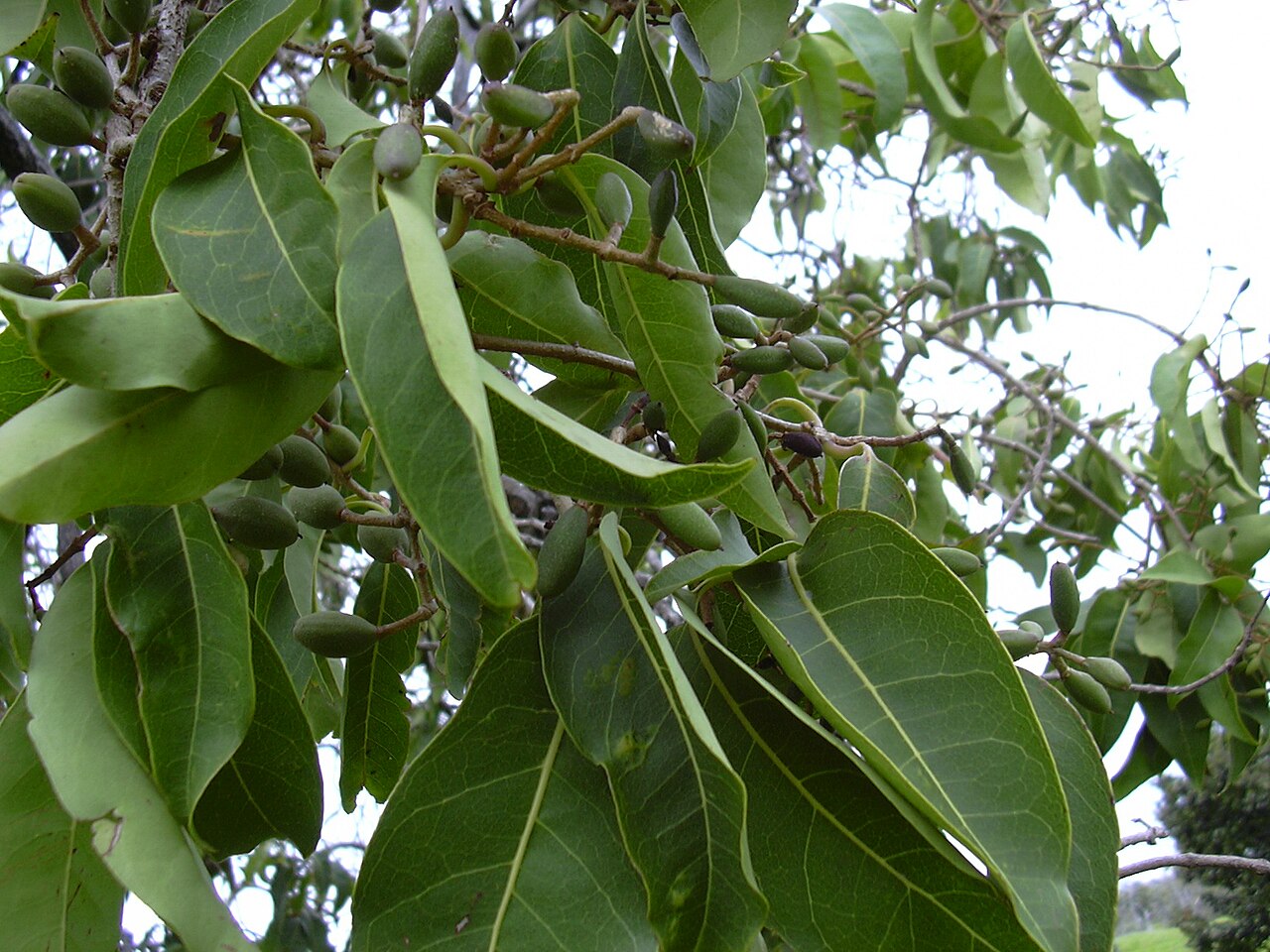
Leaves are simple and opposite, usually elliptical to lance-shaped. Their leathery texture, lighter veins, and paler underside can be useful identification features. The margins may appear slightly wavy or the blade somewhat folded. Compare both surfaces and the paired arrangement rather than relying only on a distant green crown.
Flowers
Small pale flowers occur in clusters at the leaf bases. White, yellowish, and greenish tones make the display subtle, especially in a large canopy. Do not promise a strongly perfumed tree merely because it belongs to a family that also includes fragrant ornamentals; Hawaiian horticultural accounts do not establish a conspicuous olopua fragrance.
Fruit & Seeds
The drupes change from green to dark purple or bluish-black. A relatively large stone occupies the fruit. Their resemblance to olives explains the English name Hawaiian olive, but the fruits are not edible table olives and should not be offered as such.
Quick Facts
| Scientific Name | Nestegis sandwicensis |
| Family | Oleaceae |
| Plant Type | Evergreen native tree |
| Mature Height | 20–60 ft; some forest trees can be larger |
| Mature Spread | About 25–30 ft or more |
| Growth Rate | Allow time for a permanent tree to establish |
| Sun Exposure | Full sun to partial sun |
| Water Needs | Dry to average; well-drained soil |
| Soil Type | Well-drained, site-appropriate soils; protect roots from compaction |
| Soil pH | Assess actual soil and local nursery performance; do not amend routinely |
| Bloom Time | Seasonal to sporadic; timing varies with source and conditions |
| Flower Color | Small white to pale-yellow flowers |
| Fall Color | Evergreen; new growth may provide seasonal contrast |
| Fruit | Dark-purple to bluish-black drupes; not edible |
| Deer Resistant | Protect young plants from introduced browsing animals |
| USDA Hardiness Zones | Hawaiian tropical to subtropical sites; match island, elevation, and exposure |
Native Range
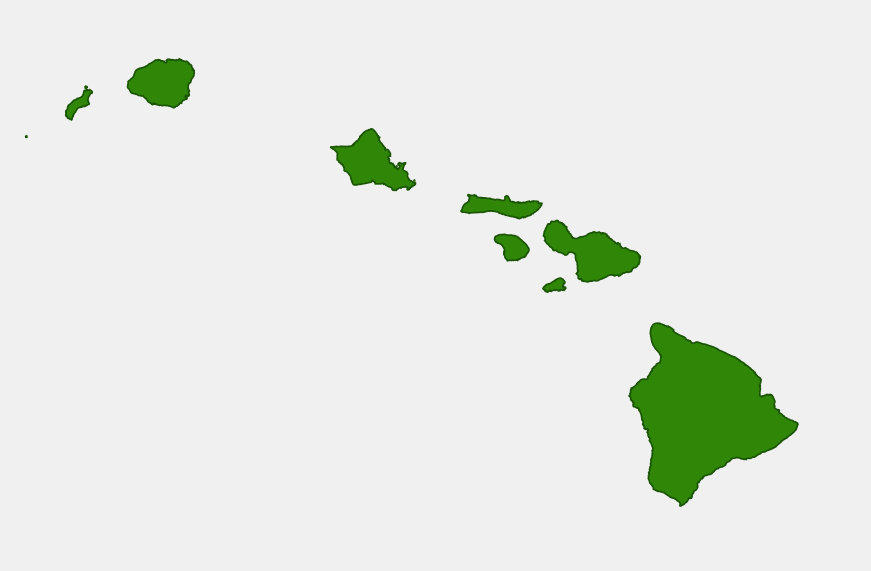
Olopua is endemic to Hawaiʻi, occurring naturally in dry-to-mesic forest. Hawaiian sources describe it across the islands, with the University of Hawaiʻi profile reporting habitats from roughly 100 to 4,265 feet. The older Forest Service account emphasizes upland dry forests within a narrower part of that broad range.
Its presence in a dry forest does not mean that a new planting requires no water. Mature roots and established soil relationships differ from those of a nursery container. Match source and site, and consider the entire plant community when using olopua in a native landscape.
The map below is a state-level overview, not a detailed distribution of stands. It should not be used to justify moving seed into a natural area without locality-specific guidance. Conservation plantings need documented stock and a plan for maintaining suitable habitat around it.
Native Range
| U.S. States | Hawaii |
| Hawaiian Islands | Main Hawaiian Islands; consult locality records for restoration |
| Mexico / Canadian Provinces | Not included in the verified native range used here |
| Ecoregion | Hawaiian tropical forest and woodland |
| Elevation Range | About 100–4,265 ft |
| Habitat | Dry to mesic forest |
| Common Associates | Locally appropriate native trees and understory matched to the same habitat |
USDA PLANTS profile (NESA2). Species identity verified; this link is not a guarantee of county-level distribution data.
📋 Find more options in our Hawaii native plant list.
Growing & Care Guide
Light
Full sun is preferred, with partial sun also tolerated. Check the space above and around the proposed planting, not only the light reaching the pot. An olopua that will eventually be crowded by buildings or neighboring trees is likely to require interventions that a better initial position would avoid.
Soil & Water
Provide well-drained soil. Established trees tolerate dry conditions and can also grow with more moisture where drainage remains adequate. During establishment, check moisture within the root ball and surrounding soil before watering. Do not assume that the two materials dry at the same rate.
Keep irrigation responsive to rainfall. Repeated saturation around the stem is not the same as maintaining useful moisture across the developing root zone. If the site receives runoff from paving or a roof, assess that contribution before adding a regular irrigation schedule.
Planting Tips
Allow room for a mature spread around 25–30 feet or more. A tree planted close to a path may later put both branches and roots into conflict with circulation. Use its expected crown as a design feature, and keep the future root zone out of parking, storage, and heavy foot traffic.
Set the tree at its nursery depth with the root collar visible. Protect the young root system from repeated digging and competition while avoiding mulch piled against the bark. Choose sound nursery stock rather than a large top whose roots have been held too long in an undersized container.
Pruning & Maintenance
Let the natural crown develop. Prune for a clear structural need rather than routinely reducing a native tree to fit a space intended for a shrub. Major work on an established tree near people or structures is best assessed by an arborist familiar with Hawaiian trees.
Monitor new growth and canopy condition over time. Before feeding a slow or stressed tree, consider whether roots are too wet, compacted, or recently disturbed. Recording irrigation and maintenance changes is useful when asking a nursery or extension specialist to help interpret symptoms.
Propagation
Use correctly identified seed or nursery plants and retain the source information. Olopua fruit should not be mixed with that of an introduced olive merely because of a similar shape. Follow a Hawaiian propagation reference or the supplying nursery’s method for cleaning and handling the seed.
For restoration, collection should represent the intended locality and follow a managed plan. A garden specimen with unknown ancestry can still be an attractive tree, but that does not automatically make it an appropriate source for a wild population.
Landscape Uses
- Permanent native canopy: provide an evergreen structural tree with room for its crown.
- Dry-to-mesic garden: combine with locally suitable native understory and well-drained soil.
- Educational planting: compare a native olive relative with familiar introduced olives without implying edible fruit.
- Forest restoration: use documented stock and manage the surrounding habitat for long-term regeneration.
Wildlife & Ecological Value
For Pollinators
Small flowers can be easy for people to overlook. Observe flowering branches and avoid spraying blooms, while recognizing that an insect visitor is not automatically a native pollinator. A diverse native planting provides a more complete sequence of resources than one tree alone.
For Birds
Olopua’s crown supplies habitat structure and its fruit is part of the reproductive life of the forest. Avoid turning that general value into an unsupported promise of visits from a particular rare bird. Habitat quality includes the surrounding vegetation and the absence of damaging disturbance.
For Mammals
Protect young trees where introduced browsing animals or livestock have access. Even a durable mature trunk does not imply that young shoots and seedlings can withstand continual damage. Successful replacement of older trees is an important measure of a functioning planting.
Ecosystem Role
The Forest Service account identifies olopua as a host for Hawaiian land snails. This is a reminder that the ecological community includes small, easily overlooked organisms as well as flowers and birds. Do not move snails between sites or collect them to populate a garden tree; preserve existing habitat and seek expert conservation guidance where rare species occur.
Cultural & Historical Uses
Olopua wood is notably heavy, hard, and durable. Hawaiian uses included tools, handles, digging sticks, and other implements for which those properties were valuable. The tree’s role in craftsmanship is different from that of a light-wooded species such as wiliwili.
Historical accounts also describe its value as fuelwood and its use in construction. These descriptions explain past choices of material; they are not a recommendation to harvest a scarce living native tree from a garden or forest.
A cultural landscape can make the connection between material properties and traditional knowledge visible through the living plant. Keep the Hawaiian and scientific names together, explain the older synonym when relevant, and involve local practitioners in interpretation rather than reducing the tree to a list of products.
Frequently Asked Questions
Can I eat its olive-like fruit?
No. Olopua is not a table-olive crop; the resemblance does not make the fruit edible.
Is Osmanthus sandwicensis a different tree?
No. That older botanical name refers to the olopua treated here as Nestegis sandwicensis.
Will it stay small?
Not necessarily. Some plants remain around 20 feet, but larger trees can exceed 60 feet. Give the species adequate long-term space.
Are the flowers strongly scented?
Do not buy it on that assumption. Its small pale flowers are subtle, and a strong fragrance is not established in the Hawaiian horticultural profile.
Can it grow in a dry garden?
Yes, with suitable source material, good drainage, and establishment care. Dry-site tolerance does not remove the need to monitor a newly planted root ball.
Sources & Further Reading
- University of Hawaiʻi, Native Plants Hawaiʻi species profile
- USDA Forest Service: Olopua, under the synonym Osmanthus sandwicensis
Botanical range, identification, and cultural information are based on these sources. Garden-management advice should be adapted to local soil, exposure, and nursery provenance.
Find Native Plants Near You
Look for correctly identified, nursery-propagated plants with documented Hawaiian provenance. Visit our Hawaii native plant nursery directory and ask about stock suited to your island, elevation, and rainfall.